I'm from Hanoi, Viet Nam.
I'm an author of Dot Chuoi Non (dotchuoinon.com/author/hangbelu/), a blog on Positive thinking, founded by Dr. Tran Dinh Hoanh, an attorney in Washington DC.
I'm a co-founder of Conversations on Vietnam Development - cvdvn.net, a virtual think tank. I am a co-founder of two companies in Viet Nam working on children education services. I advise companies on STEAM education, English language education for children and students in Vietnam.
I'm studying the Buddha's teaching and the teaching of Jesus. I practice mindful living including meditation.
I hold a PhD on Sustainable Energy Systems from University of Lisbon and Aalto University.
I graduated from Hanoi University of Technology on Environmental Engineering. I obtained a Master degree of the same major from Stanford University and Nanyang Technological University.
My English-language blog at: hangbelu.wordpress/.
I play table tennis as a hobby.
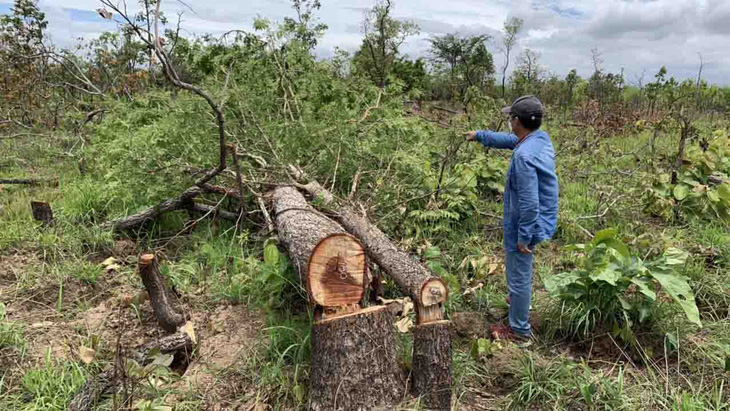
TTO – Tôi viết những dòng này trong tâm trạng xót xa khi báo chí đưa tin lại có thêm 382ha rừng ở xã Ya Tờ Mốt, huyện Ea Súp, Đắk Lắk bị lâm tặc tàn phá.
Hiện trường vụ phá gần 400ha rừng tại xã Ya Tờ Mốt, Ea Súp, Đắk Lắk – Ảnh: TÂM AN
382ha! Một con số không hề nhỏ chút nào! Một vụ phá rừng với diện tích khủng nhất tại địa phương.
Để phá được chừng ấy diện tích rừng, dù là rừng nghèo, “sản lượng gỗ thất thoát là không đáng kể vì rừng trồng và cây nhỏ, ít có giá trị về kinh tế” như một vị lãnh đạo Chi cục Kiểm lâm tỉnh từng nói, hẳn lâm tặc đã phải huy động một lực lượng lớn người, xe cộ và máy móc.
Chỉ riêng những âm thanh ghê rợn phát ra từ cưa máy, tiếng cây đổ ầm ầm cũng đủ khiến người yếu tim cảm thấy ớn lạnh.
Họ đã ra tay tàn sát những thân cây vô tội, rừng Ea Tờ Mốt đau đớn và tuyệt vọng trước sự bạo tàn của con người. Một cảnh tượng rùng rợn diễn ra trong suốt hai tuần nhưng lại như tàng hình trước tai mắt của chính quyền địa phương và lực lượng kiểm lâm.
Có phải do thời tiết xấu, đêm tối, địa hình phức tạp và cả dịch bệnh COVID-19 nữa đã cản trở “tầm nhìn”, diện “phủ sóng” của nhà chức trách?
Quảng Nam vừa được Chính phủ đồng ý thí điểm kinh doanh tín chỉ carbon (CO2). Đây là tín hiệu vui cả cho sự phát triển kinh tế lẫn công tác bảo vệ môi trường, bảo vệ rừng.
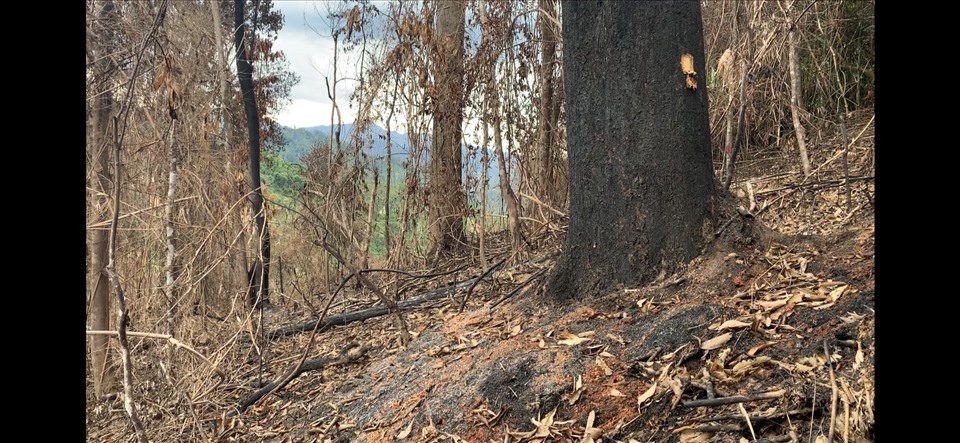
Một vụ đốt rừng để trồng rừng vừa xảy ra giữa tháng 5.2021 tại huyện Phước Sơn, Quảng Nam. Ảnh: Huy Kha
UBND Quảng Nam cho biết, Văn phòng Chính phủ vừa có Công văn gửi cho Bộ NN&PTNT và chính quyền tỉnh này về việc đồng ý cho phép Quảng Nam lập đề án thí điểm kinh doanh tín chỉ carbon.
Theo Bộ NN&PTNT, mỗi năm Việt Nam có thể bán ra thị trường thế giới 57 triệu tín chỉ carbon. Nếu được giá bán 5 USD/tín chỉ, thì mỗi năm Việt Nam có thể thu về hàng trăm triệu USD.
Trong đó, Quảng Nam với 628.000 ha rừng tự nhiên, mỗi năm có khả năng bán được 1 triệu tín chỉ carbon ra thị trường thế giới. Nếu thành công với đề án này thì bình quân mỗi năm tỉnh này sẽ thu được từ 5 triệu đến 10 triệu USD.
It took more than a decade for Europe’s carbon market to start cutting emissions, but the world no longer has the luxury of waiting that long for the world’s biggest polluter to improve its system
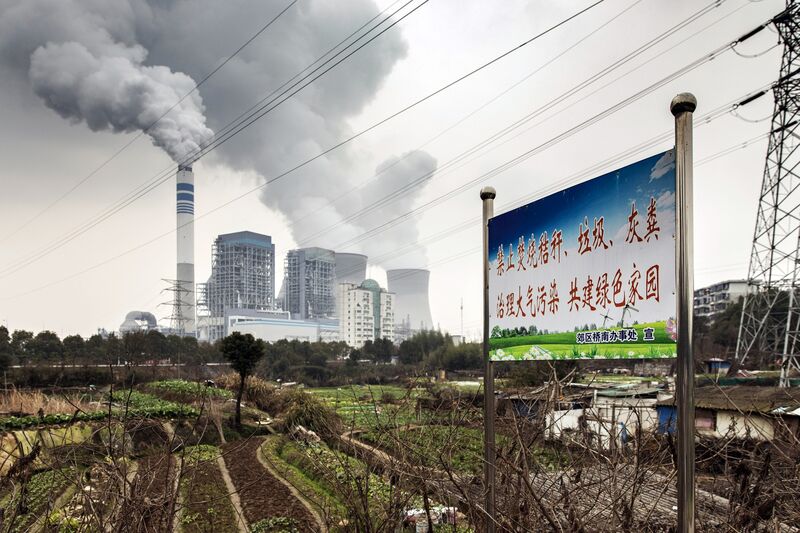
Emissions rise from cooling towers at a coal-fired power station in China.Photographer: Qilai Shen/Bloomberg
ByBloomberg News 18 April 2022 at 17:00 GMT+7
China’s carbon market, hindered by low prices and thin trading, has struggled to become a useful tool in the country’s efforts to rein in its world-leading emissions. Now, accusations of data fabrication and questions over verification methods have added a new roadblock.More fromBloombergGreen
A recent provincial inspection unearthed widespread problems with emissions data submitted by power plants, who have to pay for every ton of carbon dioxide they generate that exceeds an allocated amount. Four consulting firms that help utilities prepare their submissions were criticized last month in connection with negligence or falsifying data.
The world is in deep trouble on climate change, but if we really put our shoulder to the wheel we can turn things around. Loosely, that’s the essence of today’s report by the Intergovernmental Panel on Climate Change (IPCC).
The IPCC is the world’s official body for assessment of climate change. The panel has just released its Synthesis Report, capping off seven years of in-depth assessments on various topics.
The report draws out the key insights from six previous reports, written by hundreds of expert authors. They spanned many thousands of pages and were informed by hundreds of thousands of comments by governments and the scientific community.
SKĐS – Chu kỳ La Nina chấm dứt để chuyển sang El Nino, dự báo mùa hè năm 2023 sẽ khắc nghiệt với khô hạn diện rộng, nắng nóng gay gắt với nền nhiệt cao.
Nắng nóng đến sớm
Theo Trung tâm Khí tượng thủy văn quốc gia nhận định, nắng nóng có khả năng xuất hiện cục bộ tại Tây Bắc Bộ, vùng núi phía Tây Bắc và Trung Trung Bộ trong nửa cuối tháng 3, đầu tháng 4/2023; riêng khu vực Nam Bộ có thể xuất hiện nhiều ngày nắng nóng, tập trung ở các tỉnh miền Đông Nam Bộ.
Cao điểm nắng nóng năm nay xuất hiện từ tháng 6 đến tháng 8, chủ yếu ở Bắc Bộ và Trung Bộ, cường độ nắng nóng có thể gay gắt hơn so với cùng thời kỳ năm 2022. Trong các tháng này, nhiệt độ trên phạm vi cả nước phổ biến ở mức cao hơn khoảng 0,5 độ C so với trung bình nhiều năm cùng thời kỳ.
Cũng theo cơ quan khí tượng, từ tuần sau, các hình thế thời tiết gây nắng nóng bắt đầu xuất hiện đó là vùng áp thấp nóng phía Tây mở rộng về nước ta, áp cao cận nhiệt đới ổn định và khối khí biển từ vịnh Bengal thổi tới theo hướng Tây Nam. Đối với Bắc Bộ và Trung Bộ, thời gian xảy ra nắng nóng dự báo khoảng từ ngày 21 đến ngày 24/03, còn Nam Bộ khả năng cường độ nắng sẽ tiếp tục duy trì.
Mùa hè năm nay sẽ đến sớm và nắng nóng gay gắt hơn.
Phim tài liệu ‘Children of the Mist’ (‘Những đứa trẻ trong sương’) của đạo diễn người Tày 30 tuổi Hà Lệ Diễm có tên trong danh sách rút gọn của đề cử Oscar lần thứ 95, theo thông tin công bố rạng sáng 22/12 (giờ Hà Nội).
Trong danh sách rút gọn của hạng mục “Phim tài liệu dài xuất sắc” tại Oscar 2023 đăng tải trên trang Indiewire, Children of the Mist (Những đứa trẻ trong sương) là một trong 15 đề cử. Phim đứng chung các tác phẩm All That Breathes (Anh), All the Beauty and the Bloodshed (Mỹ), Bad Axe (Mỹ),Descendant (Mỹ), Fire of Love (Mỹ – Canada),Hallelujah: Leonard Cohen, a Journey, a Song (Mỹ – Canada), Hidden Letters (Trung Quốc), A House Made of Splinters (Đan Mạch), The Janes (Mỹ),Last Flight Home (Mỹ), Moonage Daydream (Đức – Mỹ), Navalny (Mỹ), Retrograde (Mỹ),The Territory (Mỹ – Anh – Brazil – Đan Mạch).
Danh sách đề cử sẽ tiếp tục rút gọn một lần nữa để có top 9 cuối cùng tranh giải. Trong khi, phim còn lại của Việt Nam được gửi đến Oscar năm nay – 578: Phát đạn của kẻ điên – có sự góp mặt của hoa hậu H’Hen Niê bị loại khỏi top 15 “Phim truyện quốc tế xuất sắc”.
Poster phim tài liệu ‘Children of the Mist’. Ảnh: Fanpage Children of the Mist
Đây là phim đầu tiên mang quốc tịch Việt Nam tham gia danh sách rút gọn tại đề cử Oscar. Năm 1993, phim Mùi đu đủ xanh của đạo diễn Trần Anh Hùng được Viện Hàn lâm Khoa học và Điện ảnh Mỹ xếp vào top 5 đề cử cuối cùng cho “Phim nói tiếng nước ngoài xuất sắc” ở giải thưởng này. Tác phẩm đó có câu chuyện về người Việt, lời thoại tiếng Việt, đạo diễn và dàn diễn viên gốc Việt nhưng được quay ở Pháp và được đứng tên bởi hãng phim Pháp.
The split between the two main sects within Islam goes back some 1,400 years.
SARAH PRUITT UPDATED:JAN 10, 2022ORIGINAL:JUL 31, 2019
Though the two main sects within Islam, Sunni and Shia, agree on most of the fundamental beliefs and practices of Islam, a bitter split between the two goes back some 14 centuries. The divide originated with a dispute over who should succeed the Prophet Muhammad as leader of the Islamic faith he introduced.
Today, about 85 percent of the approximately 1.6 billion Muslims around the world are Sunni, while 15 percent are Shia, according to an estimate by the Council on Foreign Relations. While Shia represent the majority of the population in Iran, Iraq, Bahrain and Azerbaijan and a plurality in Lebanon, Sunnis are the majority in more than 40 other countries, from Morocco to Indonesia.
Despite their differences, Sunni and Shia have lived alongside each other in relative peace for most of history. But starting in the late 20th century, the schism deepened, exploding into violence in many parts of the Middle East as extreme brands of Sunni and Shia Islam battle for both religious and political supremacy.
The Aftermath of Muhammad’s Death
The roots of the Sunni-Shia divide can be traced all the way back to the seventh century, soon after the death of the prophet Muhammad in A.D. 632. While most of Muhammad’s followers thought that the other elite members of the Islamic community should choose his successor, a smaller group believed only someone from Muhammad’s family—namely his cousin and son-in-law, Ali—should succeed him. This group became known as the followers of Ali; in Arabic the Shiat Ali, or simply Shia.
“The essence of the problem is that Muhammad died without a male heir, and he never clearly stated who he would want to be his successor,” says Lesley Hazleton, author of After the Prophet: The Epic Story of the Sunni-Shia Split in Islam. “This was important, because by the time he died, he had basically brought all the tribes of Arabia together into a kind of confederation that became the ummah—the people or nation of Islam.”
Eventually the Sunni majority (named for sunna, or tradition) won out, and chose Muhammad’s close friend Abu Bakr to become the first caliph, or leader, of the Islamic community. Ali eventually became the fourth caliph (or Imam, as Shiites call their leaders), but only after the two that preceded him had both been assassinated.
The key question is whether ASEAN can make a constructive and meaningful contribution to resolving its own internal divisions, let alone to influencing the behavior of China and the United States. Such outcomes may be unlikely but not impossible if the ASEAN states can develop a coherent, continuing, and collective response to the challenges they face.
The Association of Southeast Asian Nations (ASEAN) currently faces a series of major, historically unprecedented, challenges. Perhaps the most consequential of these new threats is the intensifying strategic, economic, and even institutional competition between the United States and China. ASEAN’s rather predictable response to this geopolitical contest has been to “hedge” and avoid choosing between the two great powers. While this strategy may be understandable, it threatens to undermine ASEAN’s much vaunted “centrality” and the geopolitical and diplomatic relevance of the organization as a whole. This article explores the background to these developments and Southeast Asia’s relationship with both the United States and China. I argue that the limited impact of ASEAN-style multilateralism helps to explain why great powers are creating alternative forums or simply paying lip service to the notion of ASEAN centrality.
VTV.vn – Thương trò vất vả, có một cô giáo suốt 18 năm đưa học sinh đi học qua sông.
Xóm Nhạc, xã Đồng Ruộng là vùng sâu vùng xa đặc biệt khó khăn của huyện Đà Bắc, tỉnh Hòa Bình. Nằm lọt thỏm trong lòng hồ sông Đà, người dân chủ yếu phải di chuyển bằng thuyền, ghe. Thế nhưng, với gần 60% gia đình thuộc hộ nghèo và cận nghèo, có những người chẳng thể mua nổi 1 chiếc thuyền. Con đường đến trường của những đứa trẻ cũng vì thế mà khó khăn hơn.
Thương trò vất vả, cô Quách Thị Bích Nụ – Phó Hiệu trưởng Trường Mầm non Đồng Ruộng, Đà Bắc, Hoà Bình suốt 18 năm đưa học sinh đi học qua sông. Cần mẫn và bền bỉ từng ấy năm, cô Nụ đã chở biết bao lứa học sinh tới trường.
Lo trò nguy hiểm, cô Nụ bán đi đôi bò vốn được cha mẹ trang bị cho làm của hồi môn, để có phương tiện đưa học sinh đến lớp.
Cô Quách Thị Bích Nụ – Phó Hiệu trưởng Trường Mầm non Đồng Ruộng, Đà Bắc, Hoà Bình chia sẻ: “Dù có 1 cháu, 10 hay 17 cháu, tôi vẫn sẽ tiếp tục công việc này. Chưa bao giờ có ý nghĩ vất vả quá thì thôi. Nếu ngừng thì các cháu sẽ không được đến lớp. Tôi rất vui vì đã giúp chút chút cho các con được đến trường”.
In 2021, there were roughly 30 million more men than women in China, and a study estimates that there are over 62 million “missing” women—females who would be alive without gender discrimination. This gap may become a factor contributing to social instability.
For centuries, China boasted the largest population of any country, giving it significant global heft. That is changing as China’s population shrinks and ages at a faster rate than almost any other country. In 2022, China’s population dropped for the first time in decades, and in 2023 India surpassed China to become the world’s most populous nation. China’s changing demographics pose major, prolonged challenges for the country and its leaders. China has for decades reaped the economic dividends that came with having a young workforce to fuel China’s emergence as a global industrial powerhouse. Now, the number of Chinese retirees will soon skyrocket, reducing the size of China’s workforce and putting pressure on China’s social safety net and healthcare system.
China’s population grew at a breakneck pace during the mid-twentieth century, swelling nearly 50 percent between 1950 and 1970. Driven by fears of the extraordinary challenges of effectively governing a rapidly expanding population, the Chinese government began to institute population control measures in the 1970s. The “later, longer, fewer” (晚稀少) campaign, which was initiated in 1973, raised the legal age of marriage to 23 for women and 25 for men, encouraged at least a three-year period between births, and limited births to two children. Those who did not adhere to the new regulations faced penalties. This policy proved successful. Between 1970 and 1980, China’s fertility rate (the number of births per woman) plummeted from 6.1 to 2.7.https://datawrapper.dwcdn.net/8tnj5/1/SHARE
The UNDROP Declaration (1) adopted by the General Assembly of the United Nations on December 17, 2018 reaffirms the UN Declarations on the right to development (2) , the rights of indigenous peoples (3) and the universality of all human rights. It recognises the special relationship and interaction among peasants and other groups working in rural areas and their contribution to conserving and improving biodiversity as well as their own and world-wide food security.
Article 1 of the Declaration defines peasants as any person who engages in small-scale agricultural production for subsistence and/or for the market, who relies significantly on family, household or other non-monetarized labour and who has a special dependency on the land.
It recognises that peasants and people working in rural areas, including youth and the ageing, are migrating to urban areas due to a lack of incentives and the drudgery of rural life, due to insecure land tenure, discrimination and the lack of access to productive resources, financial services and information. The Declaration is based on a concern that peasants and rural workers are burdened with environmental degradation and climate change and suffer disproportionately from poverty, hunger and malnutrition. This Declaration is an important contribution to the advancement of a paradigm for development where the agency of peasants, indigenous and forest peoples is at its foundation.
#1 Philippines #2 India #3 Malaysia #4 China #5 Indonesia #6 Myanmar #7 Brazil #8 Vietnam #9 Bangladesh #10 Thailand
Many high-income countries generate high amounts of plastic waste, but are either better at processing it or exporting it to other countries. Meanwhile, many of the middle-income and low-income countries that both demand plastics and receive bulk exports have yet to develop the infrastructure needed to process it.
Visualized: Ocean Plastic Waste Pollution By Country
Ở Đồng bằng sông Cửu Long (ĐBSCL), chỉ riêng năm 2011, lượng cát khai thác là 50 triệu tấn, dẫn đến hệ lụy không có giặc ngoại xâm mà đất đai vẫn bị mất dần. Theo ước tính của Bộ NN-PTNT, mỗi năm ĐBSCL bị mất 500ha, chỉ vài chục năm sau, diện tích ĐBSCL sẽ mất đi một nữa.
Nhu cầu về cát cho xây dựng ở ĐBSCL hiện rất lớn, trong khi nguồn cát bồi đắp từ sông Mê Kông ngày một ít đi
ĐÌNH TUYỂN
Nguồn tài nguyên quý hiếm không thể tái sinh
Một “mỏ cát” thường được hình thành vài trăm năm, thậm chí cả ngàn năm, nên nhiều nhà khoa học cho rằng đây là loại tài nguyên không tái tạo vì khi nó bị mất đi thì rất khó và rất lâu mới hình thành một khối lượng cát giá trị khai thác.
Cát sa mạc hình thành do sự ma sát, bào mòn chủ yếu do gió nên bị tròn nhẵn, mất khả năng kết dính với các loại vữa xi măng nên gần như không sử dụng cho xây dựng, nhiều quốc gia có sa mạc như ở vùng Trung Đông vẫn phải nhập cát về xây dựng.
Sand is the foundation of human construction and a fundamental ingredient in concrete, asphalt, glass and other building materials.
But sand, like other natural resources, is limited and its ungoverned extraction is driving erosion, flooding, the salination of aquifers and the collapse of coastal defences.
The United Nations Environment Programme (UNEP) has partnered with Kenyan spoken word poet Beatrice Kariuki to shed light on the problems associated with sand mining, part of a wider push towards a zero waste world.
“We must redouble our efforts to build a circular economy, and take rubble to build structures anew,” Kariuki says in a new video. “Because without new thinking, the sands of time will run out.”
Sand is the second-most used resource on Earth, after water. It is often dredged from rivers, dug up along coastlines and mined. The 50 billion tonnes of sand thought to be extracted for construction every year is enough to build a nine-storey wall around the planet.
A 2022 report from UNEP, titled Sand and Sustainability: 10 Strategic Recommendations to Avert a Crisis, found that sand extraction is rising about 6 per cent annually, a rate it called unsustainable. The study outlined the scale of the problem and the lack of governance, calling for sand to be “recognized as a strategic resource” and for “its extraction and use… to be rethought.”
The report builds on UNEP research from 2019 that found increasing demand for sand, which saw a three-fold growth over 20 years, had caused river pollution and flooding, while also shrinking aquifers and deepening droughts.
UNEP has identified solutions to the problems linked to sand mining, including the creation of legal frameworks for sand extraction. There is also a need to develop a circular economy for sand and other building materials, accurately map and monitor sand resources, and restore ecosystems damaged by sand mining.
Recycling construction material from demolition sites and developing the potential of ore-sand are two simple ways to reduce the consumption of new sand, while contributing to global circular economy ambitions, the Sand and Sustainability report found. Ore-sand is a by-product of mineral processing designed for construction and industrial application that reduces the production of mine tailings and potentially provide an alternative source of sand.
To fight the pervasive impact of pollution on society, UNEP launched #BeatPollution, a strategy for rapid, large-scale and coordinated action against air, land and water pollution. The strategy highlights the impact of pollution on climate change, nature and biodiversity loss, and human health. Through science-based messaging, the campaign showcases how transitioning to a pollution-free planet is vital for future generations.
Để nâng công suất hoạt động của thuyền, ông Liêm cải tiến thân thuyền rộng lắp tấm pin năng lượng lớn, dùng thêm bộ phát điện chạy bằng sức nước.
Hơn hai tháng nay, “kỹ sư nông dân” Huỳnh Thiện Liêm (xã Trường Xuân, Tháp Mười, Đồng Tháp) đi sớm về khuya cùng cộng sự Huỳnh Văn Trăng và một số công nhân cải tiến chiếc thuyền du lịch chạy bằng năng lượng mặt trời. Ông từng giới thiệu mô hình thuyền tại hội chợ công nghệ Techmart 2015 ở Hà Nội khiến nhiều người chú ý, một số đơn vị đặt hàng để phục vụ du lịch.
Ông Liêm (áo xanh) cùng cộng sự liên tục cải tiến chiếc thuyền hoạt động hiệu quả hơn. Ảnh: Hoàng Phương.
Chiếc thuyền ban đầu hoạt động trên nguyên tắc tích trữ năng lượng từ ánh sáng mặt trời qua tấm pin rồi nạp vào bình ắc quy, giúp chạy khoảng 30 km liên tục trong 3 tiếng với vận tốc 8-12 km/giờ. Thuyền được đánh giá là phương tiện đầu tiên ở đồng bằng sông Cửu Long ứng dụng được năng lượng xanh để khai thác du lịch.