I'm from Hanoi, Viet Nam.
I'm an author of Dot Chuoi Non (dotchuoinon.com/author/hangbelu/), a blog on Positive thinking, founded by Dr. Tran Dinh Hoanh, an attorney in Washington DC.
I'm a co-founder of Conversations on Vietnam Development - cvdvn.net, a virtual think tank. I am a co-founder of two companies in Viet Nam working on children education services. I advise companies on STEAM education, English language education for children and students in Vietnam.
I'm studying the Buddha's teaching and the teaching of Jesus. I practice mindful living including meditation.
I hold a PhD on Sustainable Energy Systems from University of Lisbon and Aalto University.
I graduated from Hanoi University of Technology on Environmental Engineering. I obtained a Master degree of the same major from Stanford University and Nanyang Technological University.
My English-language blog at: hangbelu.wordpress/.
I play table tennis as a hobby.
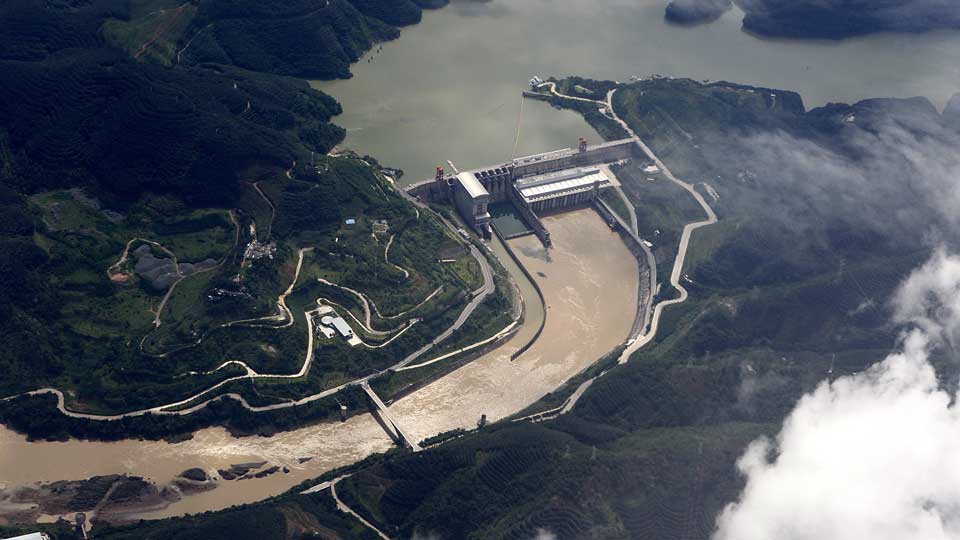
File image of the aerial view of the Jinghong Hydropower Station on the Lancang River, the Chinese part of the Mekong River, in Jinghong city, Xishuangbanna Dai Autonomous Prefecture, southwest China’s Yunnan province. Imaginechina Limited / Alamy Stock Photo
The rainy season would usually start in May, but this was late June and it was still not raining much. Niwat Roykaew, who grew up on the bank of the Mekong River in Thailand’s northern Chiang Rai province, noticed.
Born and raised in the Chiang Khong district, Roykaew, 63, was taught to observe the Mekong River to tell the season. But, in the past two decades, the river has become unpredictable like it has “pulsated out of tune”.
Niwat Roykaew is a Thai activist who campaigns for China to share data about water restrictions by its dams upstream.
“The water would get high for two days, then on the third day it would suddenly drop, even during the rainy season,” said Roykaew.
Local residents like him knew that this delay could mean another year of drought. Since at least 2019, that’s what has happened: the monsoon rain is late, and when it comes, it departs early.
The Mekong River’s water levels in the lower basin, including in Thailand, are now very unstable, being heavily affected both by climate change and hydropower dams upstream that are mostly powered by China, according to local residents, activists, and experts.
Kết luận thanh tra của Bộ Công Thương đã đưa ra nhiều nguyên nhân chi tiết về thiếu điện thời gian vừa qua.
Theo kết luận thanh tra, trong thời kỳ thanh tra (từ ngày 1/1/2021 đến ngày 1/6/2023), EVN và các đơn vị có liên quan đã đóng góp phần quan trọng trong việc đáp ứng nhu cầu điện cho sự phát triển kinh tế-xã hội của đất nước, đời sống sinh hoạt của người dân.
Tuy nhiên, trong công tác chỉ đạo, quản lý, điều hành cung cấp điện giai đoạn 2021-2023, EVN và một số đơn vị có liên quan đến cung cấp điện đã để xảy ra những tồn tại, hạn chế, khuyết điểm và vi phạm.
Nhiều hồ thủy điện cạn nước trong tháng 5, 6
Vận hành thủy điện chưa sát thực tế
Theo kết luận thanh tra, từ tháng 7/2022, các đơn vị của EVN vẫn tăng cường khai thác nước phục vụ phát điện của các nhà máy thủy điện lớn khu vực phía Bắc. Bao gồm 8 hồ chứa thủy điện là Hòa Bình, Sơn La, Lai Châu, Bản Chát, Tuyên Quang, Thác Bà (thuộc lưu vực sông Hồng); Trung Sơn (thuộc lưu vực sông Mã); Bản Vẽ (thuộc lưu vực sông Cả).
Điều này làm giảm mực nước các hồ so với Kế hoạch vận hành hệ thống điện năm 2022 mặc dù đã được dự báo và quan trắc về số liệu thủy văn về lưu lượng nước về chỉ đạt 60-80% so với trung bình nhiều năm.
Kết luận thanh tra cho rằng: Việc huy động vận hành các hồ chứa thủy điện nêu trên làm giảm mực nước các hồ chứa so với kế hoạch năm và thấp hơn đáng kể so với mực nước dâng bình thường, ảnh hưởng đến việc điều tiết chuẩn bị nước cho phát điện mùa khô năm 2023 và dẫn đến công tác vận hành chưa sát thực tế thủy văn, chưa chủ động trong các kịch bản ứng phó, đảm bảo cung cấp điện.
Trong các tháng 3, 4, 5 năm 2023 các nhà máy thủy điện vẫn được huy động cao, dẫn đến giảm mực nước các hồ thủy điện.Trong tháng 3/2023, lưu lượng nước về các hồ có dấu hiệu giảm, sản lượng điện theo nước về toàn hệ thống thấp hơn 563 triệu kWh so với kế hoạch năm. Tính đến hết tháng 3, tổng sản lượng thủy điện tích được trong các hồ thấp hơn kế hoạch năm là 462 triệu kWh. Tháng 4/2023, lưu lượng nước về các hồ thủy điện tiếp tục giảm mạnh, sản lượng theo nước về trong tháng 4 thấp hơn khoảng 765 triệu kWh so với kế hoạch năm. Đến hết tháng 4, lượng nước tích trong các hồ thủy điện thiếu hụt so với kế hoạch năm là 1,632 tỷ kWh.Kết luận thanh tra của Bộ Công Thương
Theo kết luận thanh tra, việc định hướng hạ mực nước cho cuối năm 2022 làm mực nước các hồ thủy điện giảm so với mực nước trong kế hoạch vận hành hệ thống điện được duyệt, gây ảnh hưởng đến việc điều tiết chuẩn bị nước cho phát điện mùa khô năm 2023. Điều này là không tuân thủ kế hoạch đã được Bộ Công Thương phê duyệt tại Quyết định số 3063/QĐ-BCT ngày 31/12/2021.
As clashes continue between the Sudanese military and rapid support forces, the current and historic role of foreign governments in Sudanese affairs is under close examination.
Unsurprisingly, the Sudan conflict has amplified concerns from the US and other countries about the roles Russia and China are playing in Sudan specifically, and in Africa.
Researchers had been concerned that Beijing’s loans for infrastructure and development to countries including Sudan might be “debt-trap diplomacy”, a predatory attempt to acquire key foreign infrastructure such as ports.
Analysts had previously suggested the implications of China’s growing military engagement with Africa including establishing naval bases and its use of security contractors are examples of Beijing wanting to expand its military power and political influence abroad.
Others have suggested that Russian activity in Africa could be a return to Soviet-era levels of influence through arms sales, joint military exercises, and installing their own set of security contractors to train the Sudanese military.
The Wagner Group, a high profile group of Russian mercenaries, has denied any involvement in events in Sudan, saying in a post on Telegram: “Due to the large number of inquiries from various foreign media about Sudan, most of which are provocative, we consider it necessary to inform everyone that Wagner staff have not been in Sudan for more than two years.”
China favours stability
Our work for PeaceRep, an international research consortium led by Edinburgh law school, suggests that the US and Europe should be cautious about lumping Russia and China’s goals in Africa together. It found that Beijing and Moscow are taking different approaches. China has its own set of interests, but its approach appears to fundamentally favour stability.
As a result, China is keener to work with the broader international community on issues such as peacekeeping and mediation of conflicts. Conversely, Russia pursues its interests in Africa without as much cooperation with international institutions.
Our new report looks at the available data for pre-war Sudan to see how well claims from scholars and commentators match Russia and China’s behaviour.
We consolidated data from the United Nations, Stockholm International Peace Research Institute, the AidData research lab on Chinese and Russian engagement with Sudan, as well as news reports to examine how well the arguments from scholars and policymakers hold up.
From pivotal legislative pushes in the U.S. and elsewhere, to ongoing probes into deposed leaders and tax dodgers, the impact of the largest ever offshore investigation is still being felt around the world.
The project took readers deeper than ever inside an offshore financial system that perpetuates corruption and authoritarianism and widens gaps between rich and poor. A U.S. senator called the investigation a “wake-up call to all who care about the future of democracy.”
More than 600 journalists at 151 news organizations in 117 countries worked together to make the Pandora Papers a reality — the largest collaboration in journalism history.
The Pandora Papers’ revelations about the financial secrets of prime ministers, oligarchs, mobsters and other powerful figures spawned action by governments and international groups, triggering investigations, legislation and rule changes in dozens of countries.
FILE – The United States players hold the trophy as they celebrate winning the Women’s World Cup final soccer match against The Netherlands at the Stade de Lyon in Decines, outside Lyon, France on July 17, 2019. More prize money than ever will be awarded at this year’s Women’s World Cup, and the players stand to get direct payments from FIFA this time. (AP Photo/Francisco Seco, File)
ASSOCIATED PRESSRead More
2 of 2 |
The United States team celebrates a win against Wales during a FIFA Women’s World Cup send-off soccer match in San Jose, Calif., Sunday, July 9, 2023. (AP Photo/Josie Lepe)
A group of players across the globe asked FIFA late last year to increase the prize money for this summer’s Women’s World Cup. There had been pleas from the women to boost those funds before, but this time it was different.
The players not only wanted a prize pool equal with the men’s World Cup, they also sought a guarantee that a percentage of the prize money would go directly to the players themselves.
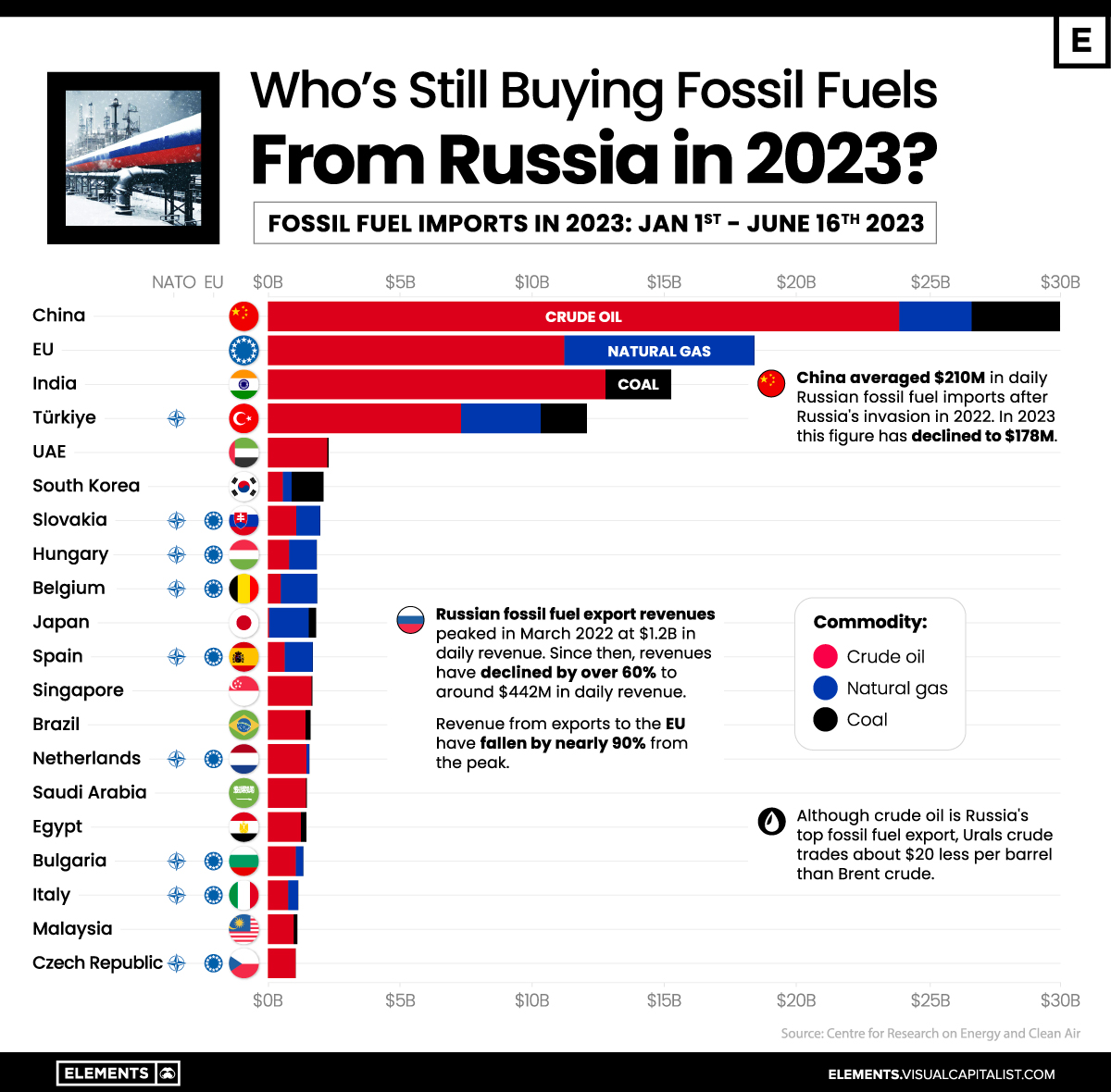
While Russia’s revenues from fossil fuel exports have declined significantly since their peak in March of 2022, many countries are still importing millions of dollars a day worth of fossil fuels from Russia.
Revenue from fossil fuels exported to the EU has declined more than 90% from their peak, but in 2023 the bloc has still imported more than $18 billion of crude oil and natural gas so far.
This graphic uses data from the Centre for Research on Energy and Clean Air (CREA) to visualize the top-importing countries of fossil fuels from Russia so far this year.
China Remains Russia’s Top Fossil Fuel Importer
China continues to be Russia’s top buyer of fossil fuels, with imports reaching $30 billion in 2023 up until June 16, 2023.
With nearly 80% of China’s fuel imports being crude oil, Russia’s average daily revenues from Chinese fossil fuel imports have declined from $210 million in 2022 to $178 million in 2023 largely due to the falling price of Russian crude oil.
Following China are EU nations collectively, which despite no longer importing coal from Russia since August of 2022, still imported $18.4 billion of fossil fuels in a 60/40 split of crude oil and natural gas respectively.
Country
Russian Fossil Fuel Imports* (Total)
Crude Oil
Natural Gas
Coal
China
$30B
$23.9B
$2.7B
$3.3B
EU
$18.4B
$11.2B
$7.2B
$0
India
$15.2B
$12.8B
$0
$2.5B
Türkiye
$12.1B
$7.3B
$3B
$1.7B
UAE
$2.3B
$2.3B
$0
$0
South Korea
$2.1B
$0.6B
$0.3B
$1.2B
Slovakia
$2.0B
$1.1B
$0.9B
$0
Hungary
$1.9B
$0.8B
$1.1B
$0
Belgium
$1.9B
$0.5B
$1.4B
$0
Japan
$1.8B
$0
$1.5B
$0.3B
Spain
$1.7B
$0.6B
$1.1B
$0
Singapore
$1.7B
$1.7B
$0
$0
Brazil
$1.6B
$1.4B
$0
$0.2B
Netherlands
$1.6B
$1.5B
$0.1B
$0
Saudi Arabia
$1.5B
$1.4B
$0
$0
Egypt
$1.4B
$1.3B
$0
$0.2B
Bulgaria
$1.3B
$1.1B
$0.3B
$0
Italy
$1.2B
$0.8B
$0.4B
$0
Malaysia
$1.1B
$1.0B
$0
$0.1B
Czech Republic
$1.0B
$1.1B
$0
$0
*Over the time period of Jan 1, 2023 to June 16, 2023 in U.S. dollars
After China and the EU bloc, India is the next-largest importer of Russian fossil fuels, having ramped up the amount of fossil fuels imported by more than 10x since before Russia’s invasion of Ukraine, largely due to discounted Russian oil.
Türkiye is the only other nation to have imported more than $10 billion worth of Russian fossil fuels in 2023, with every other country having imported fewer than $3 billion worth of fuels from Russia this year.
Navigating the Crude Reality of Oil Exports
Although crude oil is Russia’s chief fossil fuel export, the nation’s Urals crude traded at a $20 per barrel discount to Brent crude throughout most of 2023. While this discount has narrowed to around $16 following Russia’s announcement of further oil export cuts of 500,000 bpd (barrels per day), the price of Urals crude oil remains just 40 cents below the $60 price cap put in place by G7 and EU nations.
The rising demand for sand to resume post-pandemic growth drives unregulated and illegal sand mining in the Mekong River, where people living along its banks have lost their houses and fortunes to severe erosion.
By Le Dinh Tuyen, Pratch Rujivanarom, Teng Yalirozy and Lay Sopheavotey
One October morning in Vietnam’s Dong Thap province, 72-year-old Nguyen Thi Cam sat on the banks of the Mekong River, staring at dredgers hoovering up sand in the distance.
“My house was over there before,” she said, pointing to a raft floating about 50 meters from the riverbank.
“After running away from erosion twice, the house is now located here,” she said of the old, dilapidated building by the river, where the shore was jagged and looked as if it could collapse at any time.
For more than a decade, sand mining had eaten away at the foundations of Cam’s old houses. A 25-hectare islet where she used to source corn and vegetables had disintegrated too.
The insatiable hunger for sand has intensified in the Mekong region – the home to Cambodia, Laos, Myanmar, Thailand and Vietnam – in the past decade due to urbanization and growing construction sectors that promise development in these countries.
Many expressways are planned or have been built, especially in Cambodia and Vietnam, where road networks are seen as the main source of investment. Infrastructure projects – ranging from airports and ports to railways – will likely be revived in the post-Covid-19 pandemic era for economic recovery.
The demand for real estate is strong in Thailand as the growing number of middle-class seek new houses and condominium units, while the sector remains one of the most profitable investment opportunities.
An ICIJ investigation examines networks of companies, people and business practices that draw profit from cross-border labor trafficking and sex trafficking.
By Michael Hudson Image: Rocco Fazzari / ICIJ June 12, 2023
On any given day, the United Nations estimates, nearly 28 million adults and children around the world are trapped in jobs that are so oppressive that they amount to modern slavery or human trafficking.
They are forced to work long hours for little or no pay, toiling on farms and construction sites, in sweatshops and restaurants, as janitors and, in some cases, sex workers. They are exploited by recruiters and employers who use their poverty, isolation and immigration status against them, often threatening them with violence, arrest or deportation or ensnaring them in debts they struggle to repay.
A new investigation by the International Consortium of Investigative Journalists and other media partners has begun examining human trafficking in Asia, Africa, the Middle East and the United States.
The investigation, Trafficking Inc., focuses on two forms of human trafficking: labor trafficking and sex trafficking. Both involve using force, fraud or coercion to induce someone to work or provide a service.
ICIJ and its reporting partners are working to bring to light untold stories of hardship and abuse suffered by trafficked people — and expose the networks of companies, individuals and business practices that set the traps and profit from them.
Internet freedom remained restricted in Vietnam, as the government enforced stringent controls over the country’s online environment. Though the government did not disrupt connectivity or throttle Facebook servers as it had done previously, the state continued mandating that companies remove content and imposed draconian criminal sentences for online expression. A COVID-19 surge in late 2021 propelled government surveillance, and authorities have also sought to expand control over content on social media platforms.
Vietnam is a one-party state, dominated for decades by the ruling Communist Party of Vietnam (CPV). Although some independent candidates are technically allowed to run in legislative elections, most are banned in practice. Freedom of expression, religious freedom, and civil society activism are tightly restricted. Judicial independence is absent.
Key Developments, June 1, 2021 – May 31, 2022
Government officials ordered international social media companies to remove thousands of pieces of content, particularly targeting criticism of the authorities (see B2).
New regulations tightened content restrictions on websites that host advertisements and increased administrative fines on companies found to be hosting online speech that authorities deem illegal (see B3, B6, and C2).
Authorities imposed prison sentences on human rights defenders and everyday internet users for their online activities, including a ten-year sentence issued to activist Trịnh Bá Phương (see C3).
The expansion of government-run COVID-19 apps and the creation of a central database for new identification cards have raised privacy concerns (see C5).
A Obstacles to Access
A1 0-6 pts
Do infrastructural limitations restrict access to the internet or the speed and quality of internet connections?
4 6
The internet penetration rate was 71 percent by the end of 2021, according to data from the Ministry of Infomation and Communications (MIC).1 Mobile broadband has played a significant role in increasing access to faster internet service. As of May 2022, the median mobile download speed stood at 35.29 megabits per second (Mbps) while the upload speed stood at 16.89 Mbps according to Ookla’s Speedtest Global Index. The median fixed broadband download speed was 71.79 Mbps and upload speed was 67.20 Mbps.2 Market data aggregator Statista estimated smartphone penetration at 61.37 percent as of May 2021.3 Fixed broadband remains a relatively small market segment.
As of December 2021, 4G signal covered 99.8 percent of Vietnam’s territory, while 5G had been tested in 16 provinces, according to the MIC.4
Disruptions to international internet cables took place repeatedly during the coverage period when the country was in full or partial lockdowns due to COVID-19 outbreaks.5 In February 2022, three undersea cables—the Intra-Asia, Asia-America Gateway, and Asia-Pacific Gateway cables—were disrupted at the same time, seriously affecting internet users nationwide.6 The cables are pivotal for connectivity to the international internet.
A2 0-3 pts
Is access to the internet prohibitively expensive or beyond the reach of certain segments of the population for geographical, social, or other reasons?
It understands the value of education and manages its teachers well
They’re on the ball image: alamy
Jun 29th 2023 | SINGAPORE
Ho chi minh, the founding father of Vietnam, was clear about the route to development. “For the sake of ten years’ benefit, we must plant trees. For the sake of a hundred years’ benefit, we must cultivate the people,” was a bromide he liked to trot out. Yet despite years of rapid economic growth, the country’s gdp per person is still only $3,760, lower than in its regional peers, Malaysia and Thailand, and barely enough to make the average Vietnamese feel well-nurtured. Still, Ho Chi Minh was alluding to a Chinese proverb extolling the benefits of education, and on that front Vietnam’s people can have few complaints.
Their children go through one of the best schooling systems in the world, a status reflected in outstanding performances in international assessments of reading, maths and science. The latest data from the World Bank show that, on aggregate learning scores, Vietnamese students outperform not only their counterparts in Malaysia and Thailand but also those in Britain and Canada, countries more than six times richer. Even in Vietnam itself, student scores do not exhibit the scale of inequality so common elsewhere between the genders and different regions.
A child’s propensity to learn is the result of several factors—many of which begin at home with parents and the environment they grow up in. But that is not enough to explain Vietnam’s stellar performance. Its distinctive secret lies in the classroom: its children learn more at school, especially in the early years.
In a study in 2020, Abhijeet Singh of the Stockholm School of Economics gauged the greater productivity of Vietnam’s schools by examining data from identical tests taken by students in Ethiopia, India, Peru and Vietnam. He showed that between the ages of five and eight Vietnamese children race ahead. One more year of education in Vietnam increases the probability that a child can solve a simple multiplication problem by 21 percentage points; in India the uplift is six points.
This paper examines the nature and drivers of Vietnam’s paradoxical performance in the Program for International Student Assessment (PISA) – consistently high student achievement despite being the poorest of all participating countries and a centralized education system. The authors first document ‘Vietnam advantage’ in a wide-range of supply and demand-related indicators such as school participation rate, educational inequality, inputs and expenditure in cross-country regression models. They then estimate an augmented educational production function to show that these supply and demand-side advantages don’t explain away Vietnam’s positive deviance in PISA when compared to other participating developing and developed countries. The authors then conduct student-level analysis to examine Vietnam’s performance in PISA 2012 in a regional context, vis-a-vis three high-spending but low-performing ASEAN member countries (Malaysia, Indonesia and Thailand) and two high performing Asian countries (South Korea and Singapore). Pooled regression estimates show that, holding differences in various indices of socioeconomic background, the gap in average student test scores between Vietnam and South Korea in Reading and Science becomes statistically insignificant. Moreover, once school-specific differences are also accounted for, Vietnamese students do just as well as Singaporean across all subjects – equalizing for existing socioeconomic differences between countries would give Vietnam an even better advantage in the PISA. A similar gain in PISA scores is absent in the case of Malaysia, Indonesia and Thailand. The paper concludes by offering a cultural explanation for the significant variation in educational performance among high-spending East Asian countries.
Maurice StierlResearcher at the Institute for Migration Research and Intercultural Studies at Osnabrück University, Germany
Published On 17 May 202317 May 2023
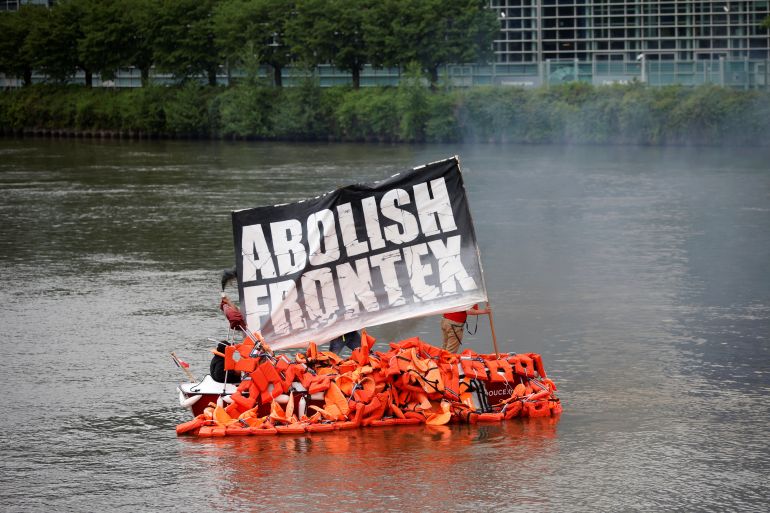
Members of German NGO migrant rescue Sea-Watch and art Kollektiv Ohne Namen sail a boat with life vests during a symbolic art action to bring attention to the plight of refugees crossing the Mediterranean Sea, on the Ill River in front of the European Parliament in Strasbourg, France, May 9, 2023. The slogan reads ‘Abolish Frontex’ [File: Johanna Geron/Reuters]
When boats with refugees are at risk of capsizing in the Mediterranean Sea, the speed of rescue operations is essential. Any delay in the emergency response can lead to serious bodily harm or the loss of life.
Still, offering a speedy response in such situations is not one of Europe’s priorities. In a study recently published in the journal Security Dialogue, I argue that time has become increasingly “weaponised” in Mediterranean migration governance.
Over the last decade, and in order to prevent arrivals, European Union authorities have sought out ways to slow down rescue engagement while accelerating interceptions to Libya.
The end of Italy’s humanitarian-military operation Mare Nostrum in 2014 marked a turning point. As a response to a devastating shipwreck on October 3, 2013 near Lampedusa, this operation sped up rescue activities off the Libyan coast, leading to the rescue of about 150,000 people. However, it was denounced by critics as a “pull-factor” that would incentivise the arrival of refugees. Mare Nostrum ended and gave way to successive European operations that experimented with delays in emergency responses.
This handout image provided by Greece’s coast guard on June 14 shows scores of people on a battered fishing boat that later capsized and sank off southern Greece, drowning hundreds of migrants.
Hellenic Coast Guard via AP
Many around the world closely followed the plight last week of five wealthy men who went missing aboard a Titanic-bound submersible. Meanwhile, researchers at the United Nations’ International Organization for Migration (IOM) updated the number of migrants who have died trying to reach Europe by sea this year: nearly 2,000.
The number of people who lose their lives each year in the crossing is staggering, and this year is on track to be worse than the last. Here are some of the reasons why this year has become so deadly:
Hundreds died aboard the Adriana
According to IOM data, at least 1,999 migrants died between January 1 and June 26 of this year, mostly from drowning. In the same period last year, 1,358 died. These tallies include those who died in the three major routes across the Mediterranean, as well as at the Atlantic route from West Africa.
One enormous tragedy accounts for a large portion of the uptick: the capsizing of the fishing boat Adriana two weeks ago in deep waters off the coast of Greece. The boat had departed Libya crammed with hundreds of people. When it capsized, it took the lives of most of the migrants on board, and IOM estimates the number who perished at 596.
Migrants from Eritrea, Libya and Sudan crowd the deck of a wooden boat as they wait to be assisted by aid workers of the Spanish NGO Open Arms, in the Mediterranean sea about 30 miles north of Libya, on June 17.
Joan Mateu Parra/AP
More people are attempting the crossing
Another factor is that the overall number of migrants attempting to cross the Mediterranean is higher than it was last year.
Sponsor Message
Italy in particular has seen a significant increase in the number of migrants arriving: more than 60,000 so far this year, compared with fewer than 27,000 at this point last year. IOM estimates that the total arrivals of migrants by sea to Mediterranean Europe are more than 82,000 this year, compared to fewer than 49,000 by this time last year.
Many of the migrant boats are aiming for the tiny Italian island of Lampedusa, which sits about halfway between Tunisia and Sicily. Two flows of migrants are now arriving at Lampedusa: those from Tunisia and those from Libya.Last week, 37 migrants went missing after their boat capsized between Tunisia and Lampedusa.
Migrants are traveling on boats not made for high seas
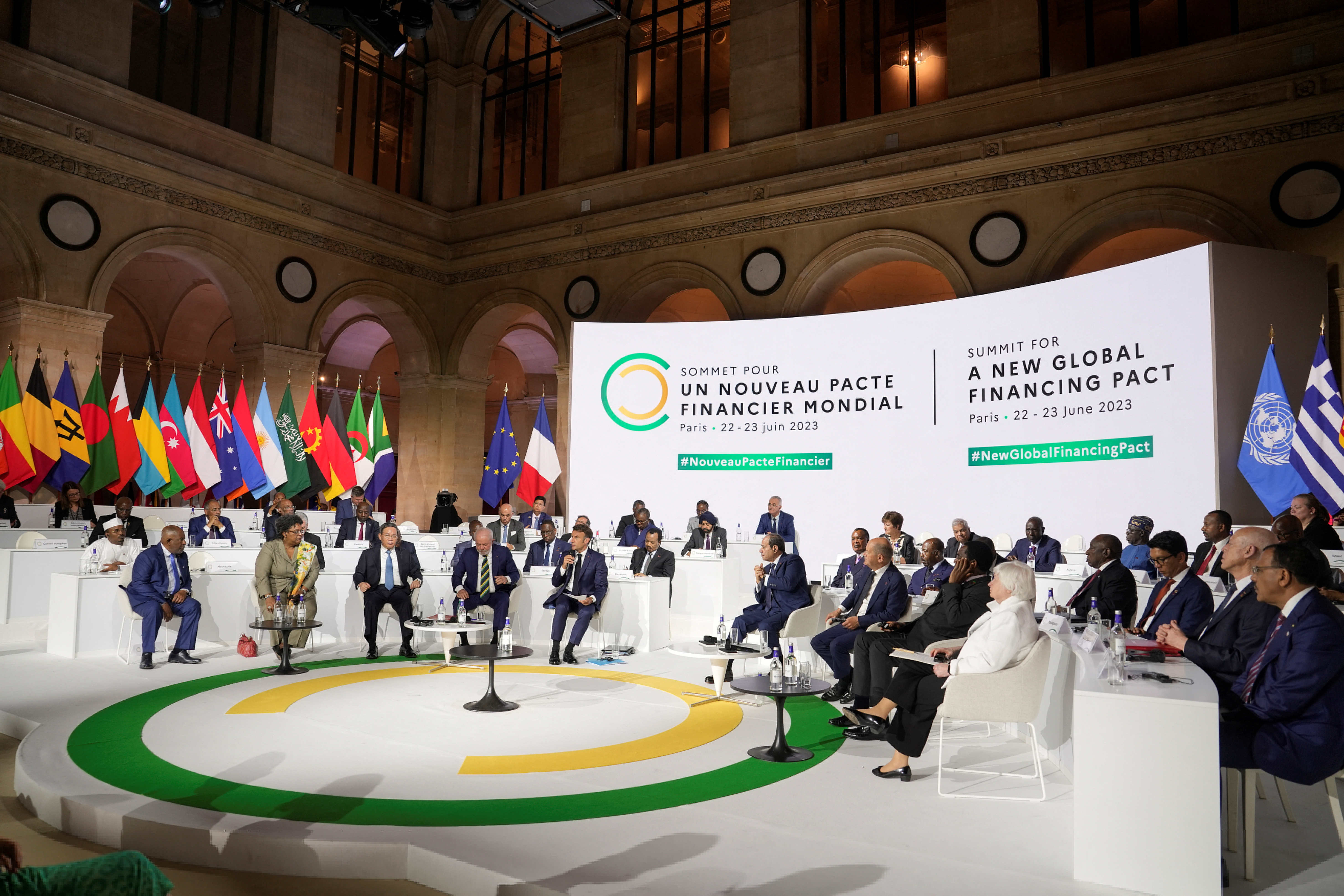
World leaders and finance bosses attend the closing session of the New Global Financial Pact Summit, Friday, June 23, 2023 in Paris, France. The aim of the two-day climate and finance summit was to set up concrete measures to help poor and developing countries whose predicaments have been worsened by the devastating effects of the COVID-19 pandemic and the war in Ukraine better tackle poverty and climate change. Lewis Joly/Pool via REUTERS
Summary
Roadmap for genuine change’ -Barbados’ Persaud
Eyes on IMO meet as shipping tax idea gathers steam
Critics say summit fell short of world’s needs
PARIS, June 23 (Reuters) – A Paris summit to discuss reforming the world’s financial system scored some notable wins that should tee up greater action before climate talks later this year, though some participants were disappointed with progress to address poorer states’ debt.
The Summit for a New Global Financing Pact saw French President Macron host around 40 leaders, many from the Global South, to debate changes to multilateral finance institutions in the face of climate change and other development challenges.
Much of the discussion centred on the key requests of developing nations, framed through the “Bridgetown Initiative” led by Barbados leader Mia Mottley, and her adviser Avinash Persaud said he was pleased with the outcome of the talks.
“It’s a roadmap for genuine change,” he told Reuters on the sidelines of the talks. “What’s emerged here is a real … understanding of the scale and pace of what is required.”
Among the highlights were confirmation that the richer world will likely hit a long-overdue target of providing $100 billion annually in climate finance to poorer countries, a long-delayed debt deal for Zambia, and a package to boost Senegal’s renewable energy capacity.
The World Bank and others also said they would start adding clauses to lending terms that allow vulnerable states to suspend debt repayments when natural disaster strikes.
Yet it was the wording of the final statement from attendees and subtle changes in the tone of discussions behind the scenes that gave hope to Persaud that even greater change was coming.
Specifically, for the first time, the document acknowledged the potential need for richer countries to provide fresh money to multilateral development institutions like the World Bank. This came alongside a plan to draw on more of their current assets, to the tune of $200 billion over 10 years.
Another first was in the explicit target for multilateral development banks to leverage “at least” $100 billion a year in private sector capital when they lend.
A reference was also made to finding “new avenues for international taxation”, as well as other Bridgetown Initiative requests including offering investors foreign exchange guarantees.
“That was widely discussed here and (there’s) lots of support behind an initiative that’s happening outside of Paris, at the International Maritime Organisation in a couple weeks time, on a levy on shipping emissions,” Persaud added.
Still, the summit was not without its critics.
“Unfortunately, the Paris Summit has not provided the breakthrough needed to find the funding for our planet’s survival,” Teresa Anderson, Global Lead on Climate Justice for ActionAid International, said, pointing to new funding pledges being loans or temporary debt relief instead of grants.
All eyes now turn to more traditional events later in the year, including the International Monetary Fund and World Bank annual meetings, a G20 meeting in September and the COP28 climate talks in Dubai.
Persaud said his focus would be on making sure the plan to scale up multilateral development bank lending was in place by the time of annual meetings in October, and that pilot work began on reducing the cost of capital for developing countries.
The summit, held against a backdrop of criticism that the world is moving far too slowly to address climate change, was a success in that it delivered a roadmap requiring specific actions by specific dates, some observers said.
“They’ve got a clear timetable of what they want to see happen and it’s that timeline that puts the pressure on and means that it’s harder to just kick things into the long grass,” said Sonia Dunlop from think tank E3G.
Reporting by Simon Jessop, Leigh Thomas and Tommy Reggiori Wilkes, editing by Mark Heinrich
The 1% of Vietnamese households without electricity rely on decentralized, micro renewable systems for power supply. Are such innovations sustainable?
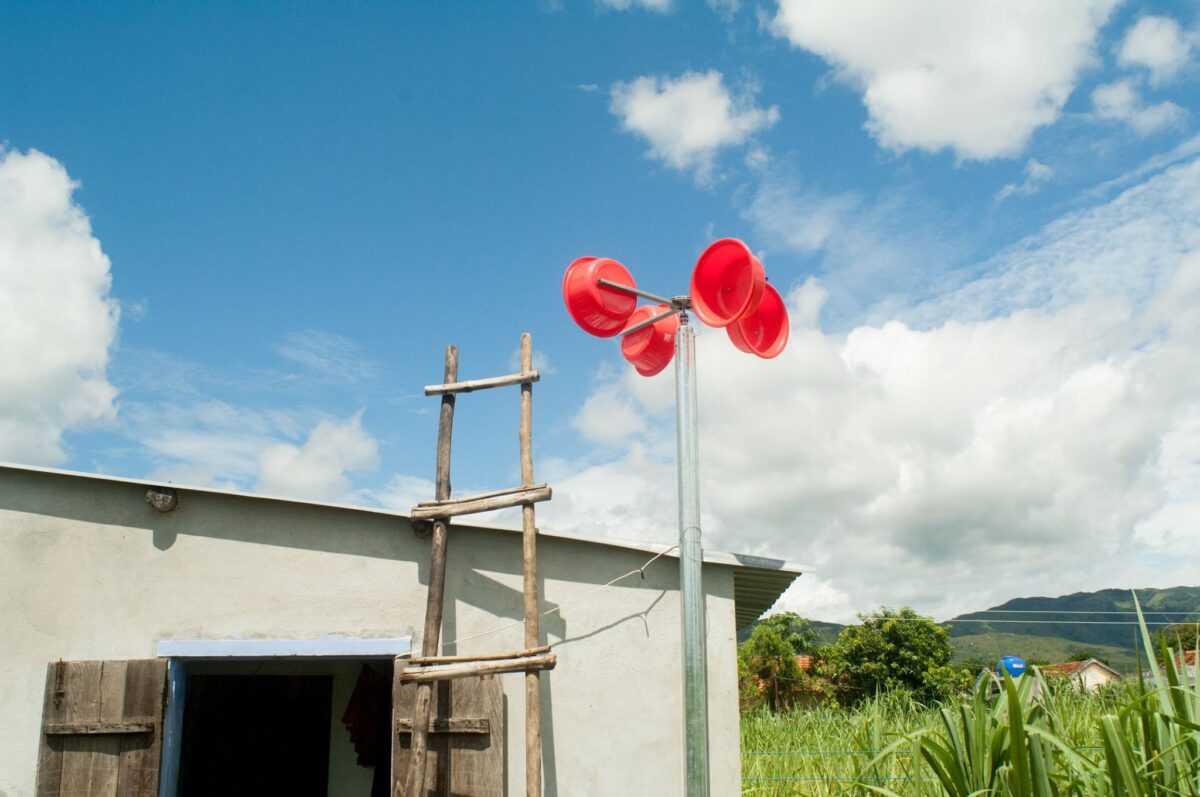
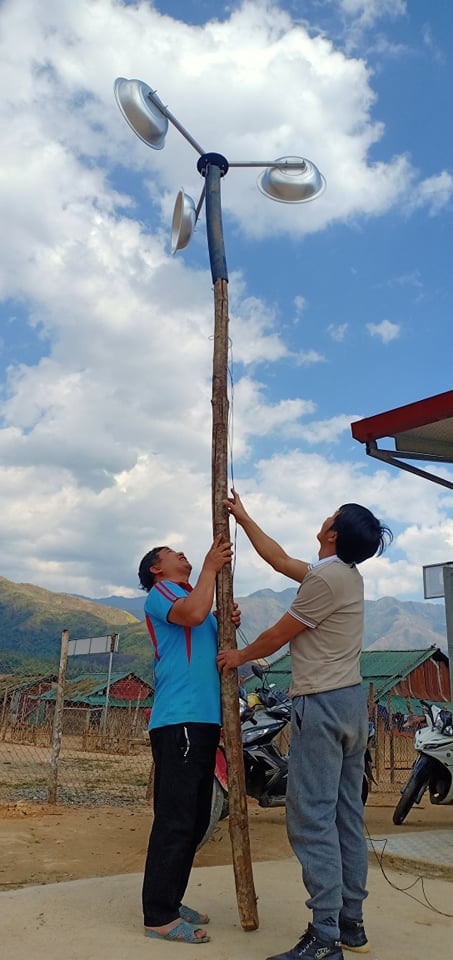
A mini wind turbine set up in the countryside of Vietnam. PHOTO: 1516 energy
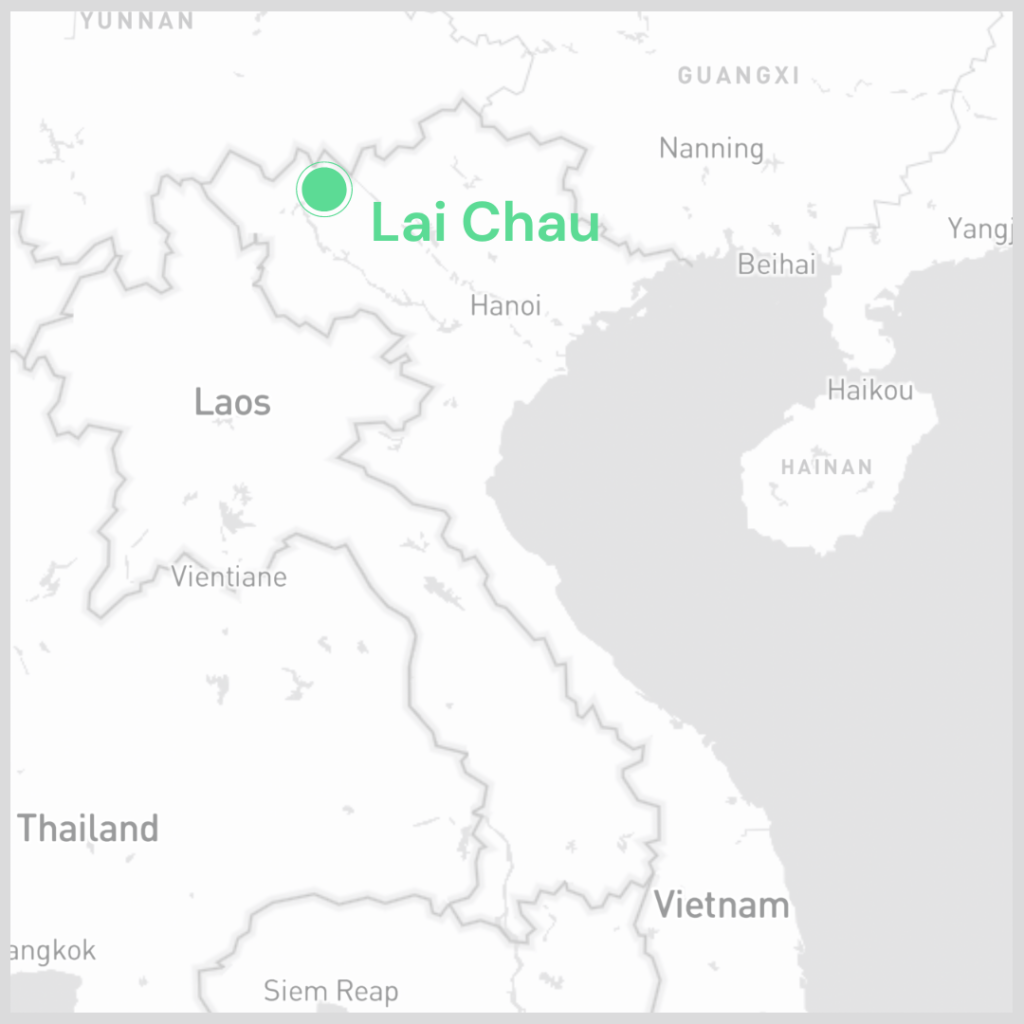
LAI CHAU, VIETNAM – In November 2019, teachers and students at the Pa U elementary boarding school in Muong Te district in Vietnam’s Lai Chau province had electricity for the first time.
The power came from a rudimentary micro wind turbine system, which was sold and delivered to the school by a local startup named 1516 and assembled by the teachers.
The setup was simple: aluminum tubs affixed to a sturdy wooden rod, linked to a sun box that contains a charge controller, a solar battery and an inverter to generate electricity.
Source: Mapbox
“The children were so excited to see those turbines in action,” recalled teacher Bui Thi Minh Khuyen. Despite a limited output that can only sustain the school’s energy needs until 10pm, the new power supply has made a vast difference.
Pa U schoolteachers assemble a wind turbine. PHOTO: 1516 energy
Previously, the school only had light bulbs powered by cheap solar panels imported from China. Fans, radios, TVs, phones and laptops were luxuries the school could not power.


 China
China EU
EU India
India Türkiye
 UAE
UAE South Korea
 Slovakia
 Hungary
 Belgium
 Japan
Japan Spain
Spain Singapore
 Brazil
 Netherlands
 Saudi Arabia
 Egypt
Egypt Bulgaria
 Italy
Italy Malaysia
 Czech Republic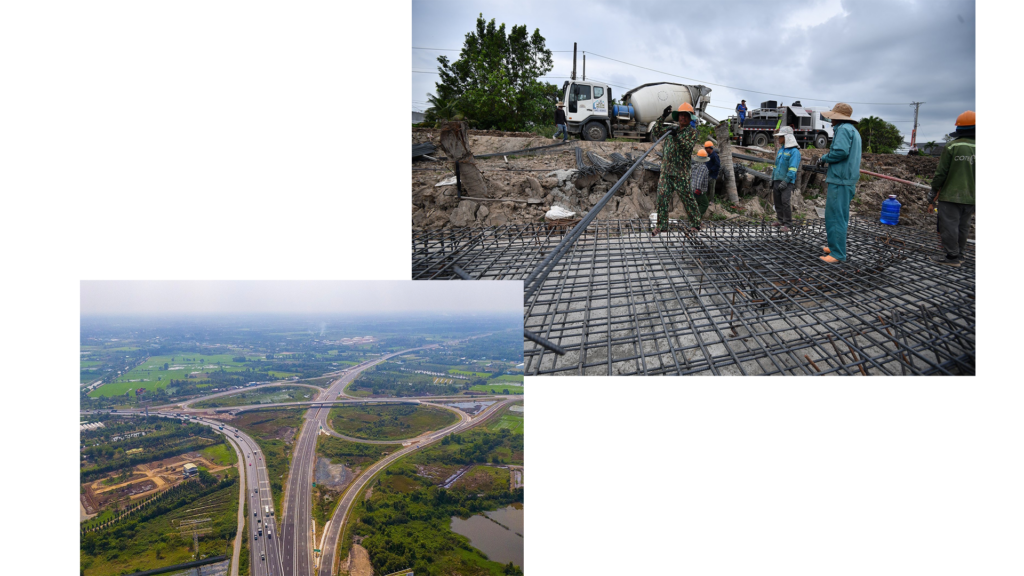




 CVD
CVD 