Financing the Coal Transition

Rocky Mountain Institute

This report aims to contribute to growing conversations about coal finance mechanisms, particularly as they move from concept to reality. RMI believes that financial mechanisms can be a transformational tool in coal transition efforts—but only if implemented well. Ultimately, the devil will be in the detail as to how financial mechanisms are designed and governed to meet the critical needs of all stakeholders and help deliver a rapid and smooth pathway to a climate-safe future.

RMI’s report, Financing the Coal Transition, shows how financial mechanisms can complement policy and regulation to help achieve a rapid, equitable, and smooth coal transition.

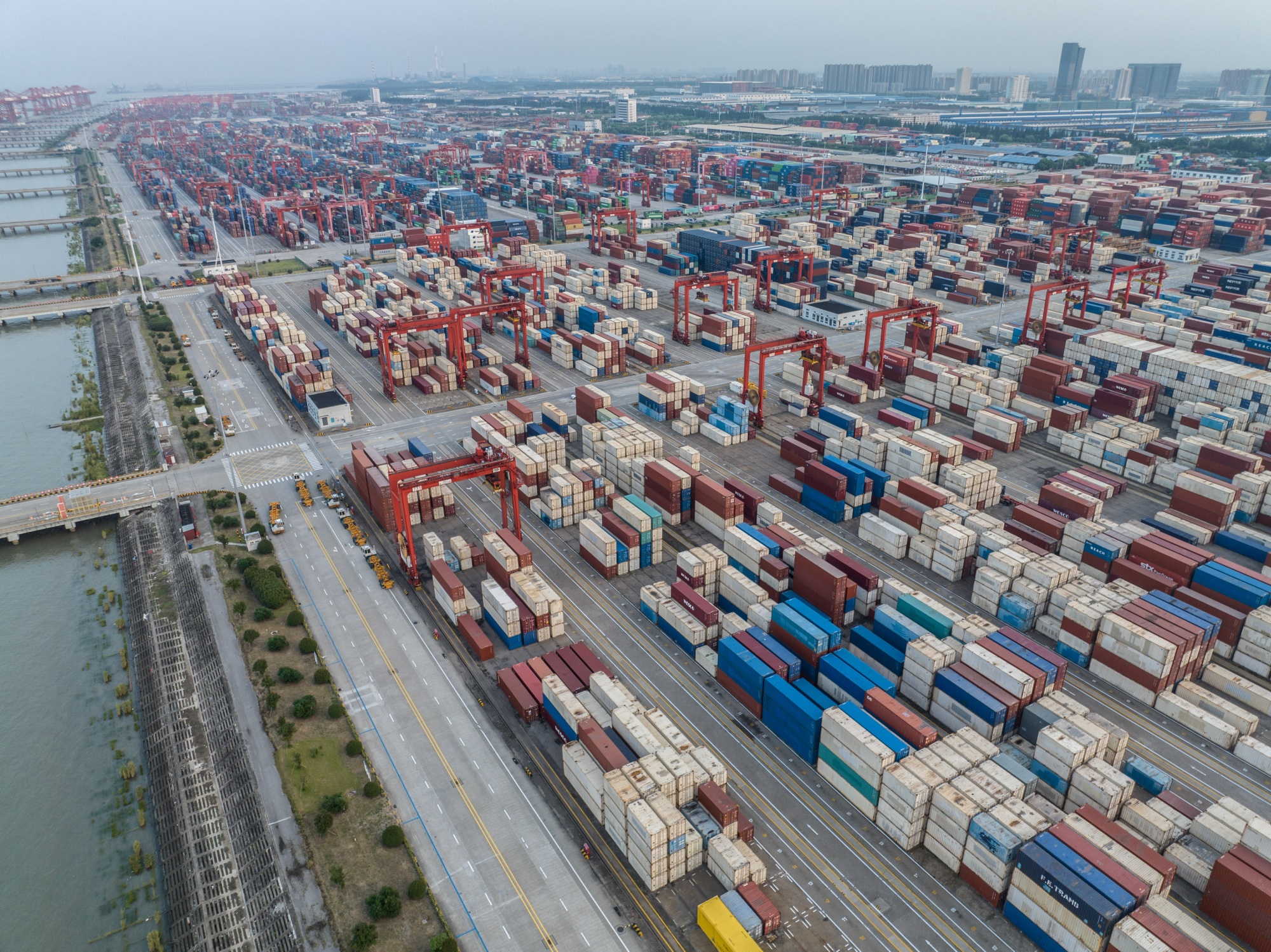
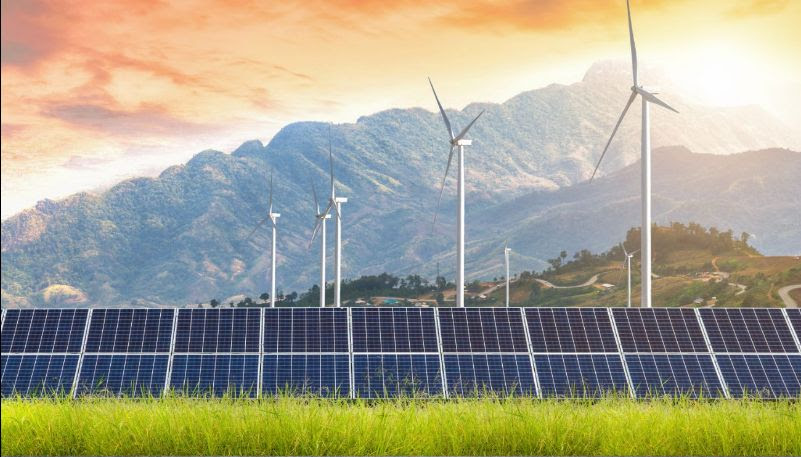
The economics of power generation are shifting rapidly in favor of clean energy, challenging coal’s long history as a mainstay of economic development throughout the world. However, much more work needs to be done to transition the existing coal fleet in line with climate and development goals.

The privileged place coal has occupied in power generation for over a century has entrenched complex barriers—from the way that grids have been built to the incentive structures within electricity systems—that prevent markets from catching up to the economic trend toward clean energy. In the absence of solutions to address these barriers, the costs of uneconomic coal will fall largely on local communities through direct costs and unpriced impacts on local health and the environment.

The global community needs new solutions to address the social and economic complexities of the coal transition while responding to the urgency of the climate challenge. One set of solutions currently under development are the innovative financial mechanisms designed to support the transition from coal to clean energy.

This report helps make sense of the various financial mechanisms proposed to date, and models the impacts of using different financial mechanisms to transition existing coal power plants. While it finds that financial mechanisms have the potential to generate wins for both the climate and communities, it also recognizes the risks of using finance to support the coal transition. To manage these risks, RMI proposes five key principles to guide the design of credible financial mechanisms.

five key principles to guide the design of financial mechanisms for coal transitionFive key principles to guide the design of financial mechanisms for coal transition

Download report here

‘The sleeping giant has awoken’: The legacy of the 2023 Women’s World Cup

Aljazeeraa.com

As the record-breaking 2023 Women’s World Cup ends, many see an exciting future – and many challenges – for the game.

Spain’s Jennifer Hermoso celebrates after winning the World Cup [Amanda Perobelli/Reuters]

By Alex Thomas Published On 21 Aug 202321 Aug 2023

Sydney, Australia – The success of the World Cup in Australia and New Zealand has led to some grand predictions about the future of women’s football – and perhaps the boldest is that it will eventually surpass the men’s game.

“I’ve always said this and people thought I’m crazy but I think women’s football will be bigger than men’s football”, former New Zealand captain Rebecca Smith told Al Jazeera.

It might look like a contentious claim but few know the game as well as Smith.

Tiếp tục đọc “‘The sleeping giant has awoken’: The legacy of the 2023 Women’s World Cup”

CLIMATE INEQUALITY REPORT 2023, FAIR TAXES FOR A SUSTAINABLE FUTURE IN THE GLOBAL SOUTH

World Inequality Database

The climate crisis has begun to disrupt human societies by severely  affecting the very foundations of human livelihood and social organisation. Climate impacts are not equally distributed across the world: on average,  low- and middle-income countries suffer greater impacts than their richer counterparts. At the same time, the climate crisis is also marked by significant inequalities within countries. Recent research reveals a high concentration of global greenhouse gas emissions among a relatively small fraction of the population, living in emerging and rich countries. In addition, vulnerability to numerous climate impacts is strongly linked to income and wealth, not just between countries but also within them.

The aim of this report is twofold. It endeavours first to shed light on these various dimensions of climate inequality in a systematic and detailed analysis, focusing on low- and middle-income countries in particular. It then builds on these insights, together with additional empirical work and interviews with experts, to suggest pathways to development cooperation,and tax and social policies that tackle climate inequalities at their core.

Full report: https://wid.world/wp-content/uploads/2023/01/CBV2023-ClimateInequalityReport-2.pdf

Data point: fighting wealth inequality through climate policy

economist.com

Can progressive carbon taxes help alleviate poverty?

With unsustainable industrial development and unfettered capitalism driving climate change, it is no surprise that income inequality and carbon inequality are intrinsically linked. The latest report from the Intergovernmental Panel on Climate Change (IPCC) highlights the indisputable inequitable human impacts of climate change. Can climate policy interventions like carbon taxes address the complex and interconnected nature of global warming and wealth? 

Small carbon

More money, more carbon

Research shows that the richest 1% are responsible for twice as much carbon pollution as the poorest half of humanity. Yet those living in low-income areas and who are already facing the multidimensional burdens of poverty will bear the brunt of the impacts of climate change.

The 2022 World Inequality report further emphasises the notion of “carbon inequality”, finding that global greenhouse-gas (GHG) emissions are concentrated amongst a small percentage of people: the top 10% of emitters are responsible for close to 50% of GHG emissions. As the findings show, this is not necessarily a “rich” vs “poor” country problem, as there are high emitters across all regions. Those high emitters, however, are almost always part of a high-income earning bracket. 

If carbon taxes are effectively redistributed, they can fund policies that address both the social and environmental implications of climate change.

Can progressive carbon taxes help tackle carbon and income inequality?

Instruments like carbon taxes are essential to curbing emissions—something The Economist has argued for years. Some believe, however,  that these types of policy interventions can be regressive, and end up disproportionately burdening low-income communities and small businesses while allowing richer, high-emitting individuals and corporations to continue to pollute—as long as they can pay. These concerns sparked the now infamous 2018 “yellow vest” protests in Paris. 

Fortunately, if carbon taxes are effectively redistributed, they can fund policies that address both the social and environmental implications of climate change. Analysis shows that if every country adopted a uniform global carbon tax and returned revenues to citizens on an equal per-capita basis, it is possible to limit global warming to 2 degrees celsius by 2100 above pre-industrial levels. This type of redistributive carbon tax would also increase wellbeing, reduce inequality and could alleviate poverty across the world. 

Taliban edicts suffocating women and girls in Afghanistan: UN experts

UN Human rights

GENEVA (19 June 2023) – Relentless edicts issued by the Taliban since taking power in Afghanistan in August 2021 have severely restricted the rights of women and girls and suffocated every dimension of their lives, UN experts* said today.

“Women and girls in Afghanistan are experiencing severe discrimination that may amount to gender persecution – a crime against humanity – and be characterised as gender apartheid, as the de facto authorities appear to be governing by systemic discrimination with the intention to subject women and girls to total domination,” the experts said.

Tiếp tục đọc “Taliban edicts suffocating women and girls in Afghanistan: UN experts”

Explainer: Why nuclear-powered France faces power outage risks

reuters.com Reuters

December 9, 20227:02 PM GMT+7Updated 8 months ago

Visit at EDF's Penly Nuclear Power Plant

[1/2]View of French utility EDF’s Penly Nuclear Power Plant in Petit-Caux, near Dieppe, France, December 9, 2022. REUTERS/Benoit Tessier Acquire Licensing Rights

  • Companies

PARIS, Dec 9 (Reuters) – France is bracing for possible power outages in the coming days as falling temperatures push up demand while state-controlled nuclear group EDF struggles to bring more production on line.

WHY CAN’T FRANCE MEET DEMAND?

France is one of the most nuclear-powered countries in the world, typically producing over 70% of its electricity with its fleet of 56 reactors and providing about 15% of Europe’s total power through exports.

Tiếp tục đọc “Explainer: Why nuclear-powered France faces power outage risks”

Biden to sign strategic partnership deal with Vietnam in latest bid to counter China in the region

politico.com

The new strategic partnership agreement opens the door to closer diplomatic, economic and technological cooperation with former foe — and China’s neighbor — Hanoi.

Close-up of Joe Biden.

The deal adds to President Joe Biden’s string of successful diplomatic initiatives aimed to reassert U.S. influence in Asia in the face of China’s growing economic, diplomatic and military muscle in the region. | Alex Brandon/AP Photo

By PHELIM KINE08/18/2023 05:42 PM EDT

President Joe Biden will chalk up a fresh victory in his campaign to boost U.S. influence in the Indo-Pacific by sealing a deal with Vietnam next month aimed to draw Hanoi closer to Washington at a time of rising tensions with Beijing.

Biden will sign a strategic partnership agreement with Vietnam during a state visit to the Southeast Asian country in mid-September, according to three people with knowledge of the deal’s planning. They were granted anonymity because they weren’t authorized to speak on the record about the agreement.

The agreement will allow for new bilateral collaboration that will boost Vietnam’s efforts to develop its high technology sector in areas including semiconductor production and artificial intelligence.

Tiếp tục đọc “Biden to sign strategic partnership deal with Vietnam in latest bid to counter China in the region”

Vụ thu hẹp khu bảo tồn thiên nhiên Tiền Hải: ‘Không thể đánh đổi như Thái Bình’

tienphong.vn
“Quan điểm là chắc chắn không thể đánh đổi và thực hiện như tỉnh Thái Bình đang làm được. Bởi khu vực này nằm trong nhiều chương trình liên quan đến ứng phó với biển đổi khí hậu theo Nghị quyết 102 của Quốc hội, và được nhiều tổ chức quốc tế đầu tư vào đây”. Ông Đoàn Hoài Nam – Trưởng phòng Quản lý rừng đặc dụng, phòng hộ (Cục Lâm nghiệp)
TP – Đại diện Cục Lâm nghiệp – Bộ Nông nghiệp và Phát triển Nông thôn cho biết, việc điều chỉnh quy hoạch ở khu vực Bảo tồn thiên nhiên đất ngập nước Tiền Hải cần sự đồng thuận của các bộ, ngành. Tuy nhiên, sau khi gửi văn bản mang tính chất thông báo, UBND tỉnh Thái Bình lại im lặng không phản hồi và tự ra quyết định thay đổi quy hoạch khiến bộ hết sức ngỡ ngàng. Trao đổi với PV Tiền Phong, ông Đoàn Hoài Nam – Trưởng phòng Quản lý rừng đặc dụng, phòng hộ, Cục Lâm nghiệp – cho biết, khu Bảo tồn thiên nhiên đất ngập nước Tiền Hải, một trong hai vùng lõi của khu Dự trữ sinh quyển châu thổ sông Hồng và được UNESCO công nhận là một trong những vùng lõi quan trọng của khu dự trữ sinh quyển thế giới. Tiếp tục đọc “Vụ thu hẹp khu bảo tồn thiên nhiên Tiền Hải: ‘Không thể đánh đổi như Thái Bình’”

Youths sued Montana over climate change and won. Here’s why it matters.

washingtonpost.com

The ruling, the first of its kind, is reverberating worldwide, especially among young climate activists. But it still faces hurdles.

Plaintiffs in the landmark Held v. Montana climate change lawsuit arrive at the Lewis and Clark County Courthouse on June 12 in Helena, Mont. (Robin Loznak/AFP/Getty Images)

  1. Who are the youths, and why are they suing?
  2. What makes this case significant?
  3. What does this mean for climate cases in other states?
  4. What has been the response from the defendants?
  5. Will the case survive an appeal?
  6. How are people, young and old, reacting?

Tiếp tục đọc “Youths sued Montana over climate change and won. Here’s why it matters.”

What is the UN cybercrime treaty and why does it matter?

chathamhouse.org

Explaining the UN cybercrime treaty, its potential benefits and risks, key issues in the negotiations, and likely paths forward.

What is the UN cybercrime treaty?

Since May 2021, UN member states have been negotiating an international treaty on countering cybercrime. If adopted by the UN General Assembly, it would be the first binding UN instrument on a cyber issue. The treaty could become an important global legal framework for international cooperation on preventing and investigating cybercrime, and prosecuting cybercriminals.

But without a clearly defined scope and sufficient safeguards, the treaty could endanger human rights – both online and offline – and repressive governments could abuse its provisions to criminalize online free speech. It could also threaten digital rights by legitimizing intrusive investigations and unhindered law enforcement access to personal information.

What is cybercrime?

There is no universally accepted definition of cybercrime. A common approach is to define it in two categories: cyber-dependent crimes and cyber-enabled crimes.

Cyber-dependent crimes are crimes that can only be committed by using Information and Communication Technologies (ICTs). A notorious example is ransomware: hacking into an organization or individual’s device, encrypting data and demanding payment for decryption.

Without a clearly defined scope and sufficient safeguards, the treaty could endanger human rights – both online and offline – and repressive governments could abuse its provisions to criminalize online free speech.

Tiếp tục đọc “What is the UN cybercrime treaty and why does it matter?”

Công ước quốc tế về các Quyền dân sự và chính trị 

moi.gov.vn

MỘT SỐ TÀI LIỆU LIÊN QUAN ĐẾN CÔNG ƯỚC VỀ CÁC QUYỀN DÂN SỰ – CHÍNH TRỊ (CÔNG ƯỚC ICCPR)

  • 2. Binh luan chung – VN.pdf
  • 3. Binh luan chung – EN.pdf
  • 4. Bao cao ICCPR lan thu 3 – VN.pdf
  • 4.1. Phu luc Bao cao ICCPR lan 3 – VN.pdf
  • 5. Bao cao ICCPR lan 3 – Phu luc – EN.pdf
  • Bộ Tư Pháp – Pháp Luật quốc tế

    Công ước Quốc tế về các Quyền Dân sự và Chính trị (tiếng Anh: International Covenant on Civil and Political Rights, viết tắt: ICCPR) là một công ước quốc tế do Đại hội đồng Liên Hiệp Quốc thông qua ngày 16 tháng 12 năm 1966 và có hiệu lực từ ngày 23 tháng 03 năm 1976, nêu tổng quan các quyền dân sự và chính trị cơ bản của con người. Cụ thể, các bên tham gia ký kết sẽ phải tôn trọng các quyền dân sự và chính trị của từng cá nhân, bao gồm quyền sống, quyền tự do tôn giáo, tự do phát biểu, tự do hội họp, quyền bầu cử và quyền được xét xử bình đẳng và theo đúng trình tự pháp luật. Công ước này, cùng với Tuyên ngôn toàn thế giới về nhân quyền (1948, viết tắt là UDHR) và Công ước quốc tế về các quyền kinh tế, xã hội và văn hóa (1966, viết tắt là ICESCR) hợp thành một “bộ luật nhân quyền quốc tế”. Ngoài ra, trong năm 2012, có thêm hai Nghị định thư bổ sung cho ICCPR liên quan đến giải quyết khiếu nại cá nhân và bãi bỏ hình phạt tử hình. Tính đến nay, đã có 72 nước ký vào Công ước và 167 bên tham gia. Việt Nam trở thành thành viên của ICCPR (Việt Nam gia nhập Công ước này vào ngày 24/9/1982).

    Tiếp tục đọc “Công ước quốc tế về các Quyền dân sự và chính trị “

    Thúc đẩy không gian xã hội dân sự ở Việt Nam nhằm thực hiện nghĩa vụ quốc tế về quyền con người

    Viện nghiên cứu lập pháp UBTVQH

    TS. NGUYỄN LINH GIANG – Viện Nhà nước và Pháp luật, Viện Hàn lâm KHXH Việt Nam. ThS. NGÔ THỊ THU HÀ – Phó Giám đốc Trung tâm Hỗ trợ giáo dục và nâng cao năng lực cho phụ nữ

    Trong những năm gần đây, sự tham gia tích cực của các tổ chức xã hội dân sự (XHDS) trong tiến trình bảo đảm và thúc đẩy quyền con người (QCN) trên toàn thế giới đã được Liên hợp quốc (LHQ) và các tổ chức quốc tế ghi nhận. Việc mở rộng không gian XHDS nhằm thực hiện nghĩa vụ quốc tế về QCN, vì thế đã trở thành một xu thế chung trên toàn thế giới và Việt Nam cũng không nằm ngoài tiến trình đó. 

    1. Thực hiện nghĩa vụ quốc tế về quyền con người

    Thực hiện nghĩa vụ quốc tế về QCN, trước tiên là thực hiện nghĩa vụ của một quốc gia thành viên của LHQ và thực hiện nghĩa vụ quốc gia thành viên của các Công ước quốc tế về QCN. Nếu xét ở nghĩa rộng, thực hiện nghĩa vụ quốc tế về QCN có rất nhiều việc phải làm, trong đó có những nghĩa vụ khá trừu tượng như tôn trọng Hiến chương LHQ, tôn trọng các nguyên tắc căn bản của pháp luật quốc tế, trong đó có pháp luật quốc tế về QCN. Nhưng cụ thể, để thực hiện nghĩa vụ một quốc gia thành viên của LHQ và thực hiện nghĩa vụ quốc gia thành viên của các Công ước quốc tế về QCN bao gồm những công việc sau:

    Tiếp tục đọc “Thúc đẩy không gian xã hội dân sự ở Việt Nam nhằm thực hiện nghĩa vụ quốc tế về quyền con người”

    Chuyển đổi đất rừng làm dự án: Đối diện thực tế mất rừng

    nguoidothi.net.vn  Thứ tư, 02/08/2023 0

    Mặc dù đã có nhiều chấn chỉnh từ chỉ đạo cho đến việc sửa đổi quy định liên quan nhưng sau 5 năm, nguy cơ mất rừng bởi các dự án phát triển kinh tế vẫn chưa có dấu hiệu hạ nhiệt.

    Hiện nay, cả nước đang rà soát và điều chỉnh lại quy hoạch 3 loại rừng, gồm rừng đặc dụng, rừng phòng hộ, rừng sản xuất. Một nhà khoa học ngành lâm nghiệp đang tham gia quá trình này ở nhiều tỉnh thành đã thốt lên: “Chúng ta cần nhìn thẳng và chấp nhận sự thật là diện tích rừng hiện không còn bao nhiêu!”. 

    Ông cho biết thực tế có những tỉnh sau khi rà soát, diện tích rừng được gọi đúng khái niệm rừng(*) chỉ còn khoảng 1/3 diện tích so với con số báo cáo. Nhiều diện tích đất rừng từ lâu người dân đã làm rẫy, xâm canh, trồng hoa màu, cây công nghiệp… Thậm chí, có tỉnh để đạt được mục tiêu độ che phủ rừng đề ra của địa phương mà lấy cả diện tích rừng ngoài quy hoạch, tức đất nông nghiệp đang trồng các loại cây công nghiệp lâu năm như keo lá tràm của người dân đưa vào quy hoạch 3 loại rừng. 

    Tiếp tục đọc “Chuyển đổi đất rừng làm dự án: Đối diện thực tế mất rừng”

    Thái Bình: ‘Xóa sổ’ hơn 11.000 ha khu bảo tồn đất ngập nước để xây khu đô thị nghỉ dưỡng, sân golf?

    nguoidothi.net.vn – Thứ sáu, 11/08/2023

    Hơn 11.000 hectares (ha) rừng đặc dụng ven biển Tiền Hải đã bị “xóa sổ” theo quyết định số 731/QĐ-UBND do UBND tỉnh Thái Bình phê duyệt vào ngày 17.4.2023. Điều này cũng có thể gây nguy cơ xóa sổ Khu dự trữ sinh quyển thế giới sông Hồng…

    Giảm 90% diện tích rừng đặc dụng – khu bảo tồn thiên nhiên

    Theo Quyết định 731, rừng đặc dụng – Khu Bảo tồn thiên nhiên đất ngập nước Tiền Hải chỉ còn 1.320 hectares, gồm 632 hectares rừng ngập mặn và 688 hectares là đất chưa có rừng; nằm trên địa phận ba xã ven biển gồm xã Nam Phú, Nam Hưng và Nam Thịnh, huyện Tiền Hải. 

    Quyết định 2159/QĐ-UBND do UBND tỉnh Thái Bình phê duyệt ngày 26.9.2014 cho thấy, rừng đặc dụng – Khu Bảo tồn thiên nhiên đất ngập nước Tiền Hải có tổng diện tích là 12.500 hectares, bao gồm diện tích rừng ngập mặn, đất bãi bồi và đất ngập nước. 

    Do đặc thù của vùng cửa sông nên diện tích toàn bộ Khu Bảo tồn thiên nhiên đất ngập nước Tiền Hải là vùng lõi, thuộc diện tích bảo vệ, và không phân thành các phân khu chức năng như các khu bảo tồn thiên nhiên khác. 

    Phải chăng việc chính quyền tỉnh Thái Bình “xóa sổ” 90% tổng diện tích rừng đặc dụng ven biển nói trên là nhằm phục vụ cho mục tiêu phát triển kinh tế tỉnh, bao gồm để xây dựng Khu đô thị, dịch vụ, nghỉ dưỡng sân golf Cồn Vành – Cồn Thủ quy mô 3.348 hectares? Khu đô thị này đã được UBND tỉnh Thái Bình phê duyệt đồ án Quy hoạch phân khu xây dựng 1/2.000 theo quyết định 2478/QĐ-UBND ngày 21.8.2020. 

    Tiếp tục đọc “Thái Bình: ‘Xóa sổ’ hơn 11.000 ha khu bảo tồn đất ngập nước để xây khu đô thị nghỉ dưỡng, sân golf?”