I'm from Hanoi, Viet Nam.
I'm an author of Dot Chuoi Non (dotchuoinon.com/author/hangbelu/), a blog on Positive thinking, founded by Dr. Tran Dinh Hoanh, an attorney in Washington DC.
I'm a co-founder of Conversations on Vietnam Development - cvdvn.net, a virtual think tank. I am a co-founder of two companies in Viet Nam working on children education services. I advise companies on STEAM education, English language education for children and students in Vietnam.
I'm studying the Buddha's teaching and the teaching of Jesus. I practice mindful living including meditation.
I hold a PhD on Sustainable Energy Systems from University of Lisbon and Aalto University.
I graduated from Hanoi University of Technology on Environmental Engineering. I obtained a Master degree of the same major from Stanford University and Nanyang Technological University.
My English-language blog at: hangbelu.wordpress/.
I play table tennis as a hobby.
Phụ huynh, giáo viên nhà trường, và người lớn trong xã hội ảnh hưởng lớn đến thông tin trẻ nhận được và cách trẻ đón nhận và đánh giá thông tin.
Báo cáo tổng hợp các xu hướng chính, thống kê và nghiên cứu về hành vi tiêu thụ tin tức của Gen Alpha, tập trung vào: nền tảng và thiết bị sử dụng, đặc điểm tâm lý – hành vi, so sánh khu vực (Bắc Mỹ, châu Âu, châu Á, Việt Nam), ảnh hưởng của gia đình – giáo dục – mạng xã hội, khác biệt so với Gen Z/Millennials, và bối cảnh hậu COVID-19 cùng sự phát triển của AI.
Generation Alpha (Gen Alpha) được định nghĩa là thế hệ sinh từ khoảng năm 2010 đến giữa thập niên 2020 – nhóm đầu tiên sinh ra hoàn toàn trong thế kỷ 21. Khác với các thế hệ trước, Gen Alpha lớn lên cùng công nghệ kỹ thuật số ngay từ tấm bé, với 96% trẻ 5-14 tuổi ở các nước phát triển sử dụng thiết bị thông minh trong gia đình. Báo cáo năm 2025 cho thấy Gen Alpha dự kiến đạt quy mô 2 tỷ người, trở thành thế hệ đông đảo nhất lịch sử. Bối cảnh này tạo nên những đặc trưng độc đáo trong cách Gen Alpha tiếp cận và tương tác với tin tức trên phạm vi toàn cầu, cũng như tại Việt Nam.
BBWV – AI đang làm thay đổi căn bản công thức tăng trưởng của các doanh nghiệp IT Việt Nam, tạo nên một “nghịch lý” trên biểu đồ nhân sự. Thay vì mở rộng quy mô bằng cách gia tăng nhân lực, thị trường đang chứng kiến xu hướng làm nhiều hơn với một đội ngũ tinh gọn nhờ sức mạnh tự động hóa. Đồ thị tuần này sẽ bóc tách những con số biết nói đằng sau sự sụt giảm.
09 tháng 01, 2026 lúc 3:20 PM
Có những cuộc trò chuyện khiến những người làm nội dung như tôi phải suy ngẫm lâu hơn bình thường. Đầu năm 2025, tôi trao đổi nhanh với lãnh đạo một doanh nghiệp IT của Mỹ, với toàn bộ đội ngũ đặt tại Việt Nam. Lo lắng hàng đầu của họ lúc ấy là AI xuất hiện nhanh hơn mọi kịch bản mà họ từng vẽ ra, buộc ban điều hành phải từ nửa kia bán cầu về Việt Nam họp khẩn để bàn lại chiến lược.
Cùng thời gian đó, một lập trình viên 5 năm kinh nghiệm tại công ty IT Nhật ở Việt Nam chia sẻ rằng doanh nghiệp của anh đang cắt giảm nhân sự và đầu tư mạnh cho AI. “Tuy vậy thực tế không hề đơn giản. Đôi khi việc sửa lỗi các dòng code do AI viết còn tốn nhiều thời gian hơn là tự viết từ đầu,” anh nói.https://flo.uri.sh/visualisation/27121961/embed
Những câu chuyện này phản ánh trên đồ thị trung tâm của tuần này: Lý do khiến doanh nghiệp IT tại Việt Nam không mở rộng hoặc cắt giảm tuyển dụng đang thay đổi. Theo khảo sát của ITViec công bố năm 2025, tỉ lệ doanh nghiệp chọn “tăng hiệu suất nhờ AI” làm lý do không tuyển thêm nhân sự tăng từ 5,9% năm 2024 lên 20,2% năm 2025 và dự kiến đạt 34,3% vào năm 2026. Đây là mức tăng mạnh nhất trong tất cả các nhóm lý do, cho thấy AI đang dần đóng vai trò thay thế nhu cầu tuyển mới.
Bức tranh nền của thị trường IT Việt Nam càng làm thay đổi này trở nên rõ nét. Dữ liệu từ 2020 đến 2026 cho thấy tỉ trọng doanh nghiệp “tăng trưởng bùng nổ” (trên 50% quy mô nhân sự) giảm từ khoảng 18,6% xuống 11%. Trong khi đó, nhóm doanh nghiệp không tăng trưởng hoặc thu hẹp quy mô tăng mạnh, từ khoảng 4,9% năm 2021 lên 31% năm 2026.
Song song với việc “không tuyển thêm người”, doanh nghiệp lại tăng đầu tư cho AI. Năm 2026, 47,5% doanh nghiệp ưu tiên tích hợp AI vào các quy trình kinh doanh cốt lõi; 28,8% tập trung cải thiện hiệu quả hoạt động và 25,4% giảm chi phí vận hành. Đáng chú ý, gần hai phần ba doanh nghiệp dự kiến tăng ngân sách AI.
Tuy nhiên, thách thức lớn nhất lại quay về con người. Theo khảo sát của ITviec, 54,3% doanh nghiệp coi mức lương cao là rào cản lớn nhất khi tuyển dụng nhân tài AI; 41% khó tìm ứng viên có kinh nghiệm AI thực tế và 34,3% thiếu kỹ năng AI chuyên sâu. Cấu trúc đội ngũ AI đang hình thành nhưng vẫn nhỏ: 40,5% doanh nghiệp đã có đội AI chuyên trách, 34,2% triển khai theo mô hình liên phòng ban, đa số dưới 10 người.
“Trong 5–10 năm tới, AI sẽ tái định hình các ngành, mang lại hiệu suất vượt trội và mở ra những cơ hội mới. Nhưng sau cùng, chỉ có con người mới đủ tư cách ký duyệt và chịu trách nhiệm sau cùng. Trong thế giới ngày một tự động hoá, để xây dựng niềm tin chúng ta vẫn cần đến con người,” ông Lâm Quốc Vũ, nhà sáng lập kiêm CEO Katalon nhận định với Bloomberg Businessweek Vietnam.
Xét cho cùng, thị trường IT, cùng nhiều thị trường khác mà tôi quan sát, không hẳn đang “ít việc đi”, mà đang đòi hỏi mỗi người làm được nhiều hơn. AI dần trở thành công cụ mặc định, còn tuyển dụng đại trà không còn là lựa chọn ưu tiên. Trong bối cảnh đó, câu hỏi với nhiều nhân sự có lẽ không còn là “mình có còn chỗ đứng trong kỷ nguyên AI hay không”, mà là “mình tạo ra giá trị gì trong một đội ngũ ngày càng tinh gọn”.
CNA More than half of Chinese adults are overweight or obese, a potential ticking timebomb for the country’s healthcare sector. So, last March, China announced greater efforts to tackle rising obesity rates, with health authorities rolling out a nationwide weight management campaign during the annual ‘Two Sessions’ meeting.
How did China go from food scarcity two generations ago to rapid weight gain now? What does diet, lifestyle and education have to do with it? As beating obesity becomes a national priority, can China beat the bulge?
In November, 115 states voted in favor, eight voted against, and 44 abstained from voting on a resolution adopted by the General Assembly’s First Committee that examines the possible risks of integrating AI into nuclear weapons systems. Image: depositphotos
The United Nations rarely moves fast on disarmament. This year, though, it did something unusual. On November 6, the General Assembly’s First Committee, where states debate over questions of disarmament and international security, adopted a resolution that directly looks at the possible risks of integrating artificial intelligence into nuclear weapons systems, especially in nuclear command, control, and communications, known as NC3. Austria, El Salvador, Kazakhstan, Kiribati, Malta, and Mexico pushed the text, bringing into a formal setting a problem that has mostly lived in expert circles and informal dialogues.
With 115 states voting in favor, eight voting against, and 44 abstaining, support was broad. Nuclear-armed states and many of their allies voted against the resolution or chose to abstain. In contrast, the Global South and most non-nuclear-weapon states expressed strong support. This split reflects how each group views threats and what policies they prioritize. It also reveals how early and unsettled global thinking on AI in the nuclear field still is. Rather than seeing the outcome of the vote as a clear-cut failure or success, it may be best read as an initial test case. In other words, the resolution was an early attempt to translate a fast-moving technical debate into diplomatic language.
CNA Few countries are better prepared against China threatening their rare earth supplies than Japan, says David Fickling for Bloomberg Opinion.
A labourer works at a site of a rare earth metals mine at Nancheng county, Jiangxi province, China, on Mar 14, 2012. (File photo: Reuters)
David Fickling 09 Jan 2026 05:59AM(Updated: 09 Jan 2026 09:30AM)
SYDNEY: To a hammer, every problem is a nail. If your most potent means of geopolitical leverage is threatening supplies of high-strength magnets, rare earth elements will always be the solution.
The most obvious victim of this threat will be rare earth magnets made with the elements neodymium and praseodymium, and increasingly spiced up with rarer samarium, dysprosium and terbium. They’re used everywhere from charging cables to the switchgear in wind turbines to motors powering electric vehicles, missile guidance systems and aircraft flaps.
(BKTO) – Qua kiểm toán các Chương trình mục tiêu quốc gia (MTQG), Kiểm toán nhà nước (KTNN) chỉ ra hàng loạt bộ, ngành, địa phương được giao dự toán vượt quá khả năng thực hiện, dẫn đến tỷ lệ giải ngân thấp, thậm chí kéo dài từ năm này sang năm khác..
Dư nguồn lớn, quyết toán nhỏ giọt
Kết quả kiểm toán năm 2024 của KTNN đối với các Chương trình MTQG cho thấy: Việc giao dự toán chưa phù hợp khả năng thực hiện, dẫn đến tỷ lệ giải ngân thấp, thậm chí có đơn vị không giải ngân hết kinh phí sự nghiệp kéo dài từ năm 2022 sang 2023.
(sav.gov.vn) – Kiểm toán nhà nước (KTNN) vừa công bố kết quả kiểm toán công tác quản lý, bảo vệ môi trường tại các khu công nghiệp, cụm công nghiệp và công tác quản lý, bảo vệ môi trường nước phục vụ sản xuất và cung cấp nước sinh hoạt giai đoạn 2021-2023. Kết quả kiểm toán đã chỉ ra hàng loạt bất cập, hạn chế.
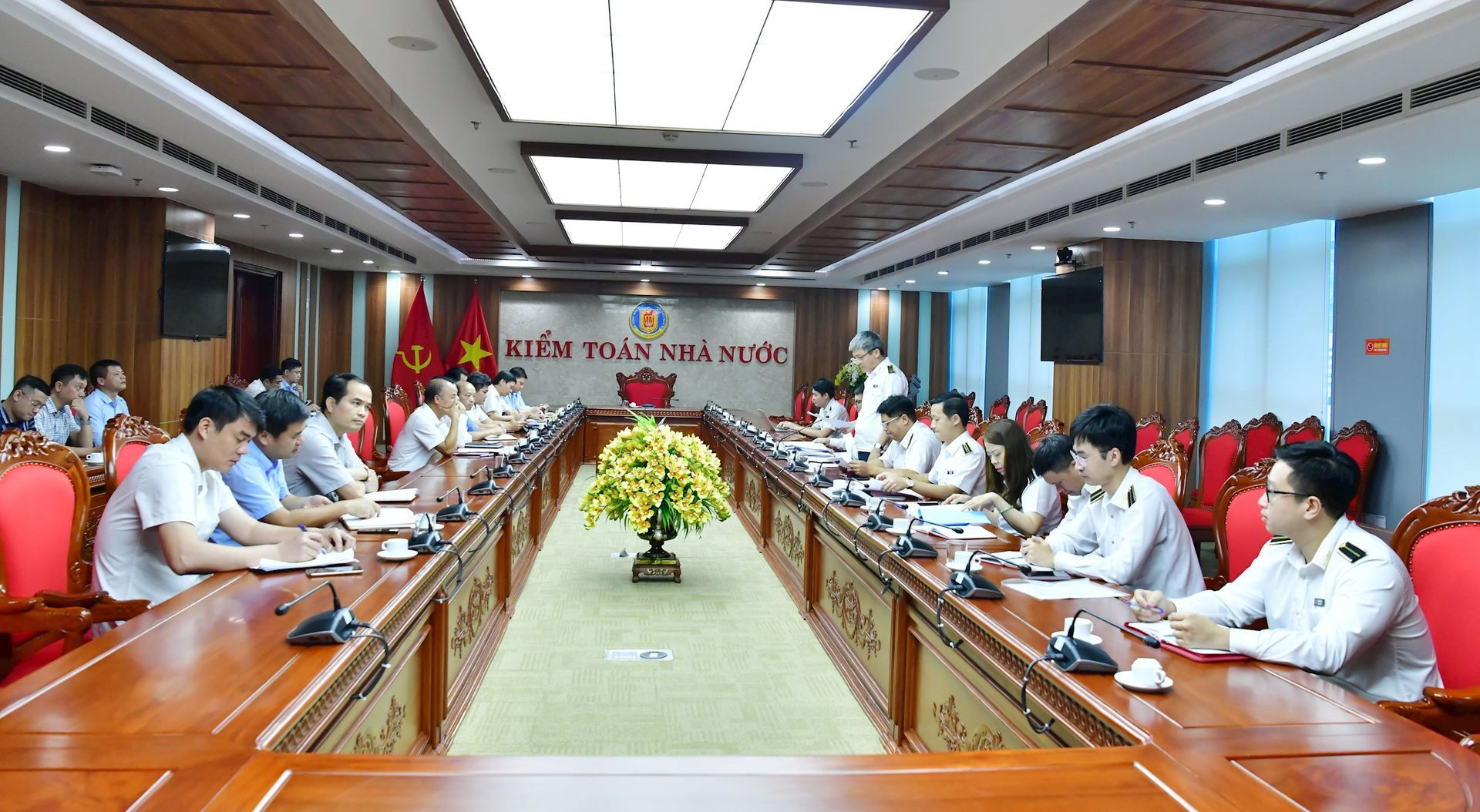
Hội nghị công bố Quyết định kiểm toán hoạt động công tác quản lý, bảo vệ môi trường nước phục vụ sản xuất và cung cấp nước sinh hoạt giai đoạn 2021-2023 tại 4 thành phố: Hà Nội, Hồ Chí Minh, Cần Thơ, Đà Nẵng, ngày 09/9/2024. Ảnh: TL
Trở lại Khu bảo tồn Vườn Quốc gia (VQG) Tràm Chim những ngày cuối tháng 9, nhìn những cá thể sếu đầu đỏ được tiếp nhận từ vườn thú Thái Lan vào cuối tháng 4 đang tung cánh, chúng tôi không khỏi xúc động. Bởi, để có thể đưa đàn sếu trở lại VQG Tràm Chim đó là cả một hành trình dài, là nỗ lực bền bỉ của nhiều cán bộ, nhà khoa học, cộng đồng, cùng sự đồng hành giúp sức của bạn bè quốc tế dành cho Đồng Tháp.
QUYẾT TÂM PHỤC HỒI HỆ SINH THÁI
Có thời điểm, loài sếu đầu đỏ gần như biến mất khỏi VQG Tràm Chim, nơi từng là ngôi nhà của chúng. Nguyên nhân không chỉ đến từ biến đổi khí hậu, mà còn do sự suy giảm sinh cảnh cùng những tác động tiêu cực từ hoạt động sản xuất của con người. Sự vắng bóng của sếu đầu đỏ là hồi chuông báo động, cảnh báo về nguy cơ tổn thương nghiêm trọng của hệ sinh thái Ramsar thứ 2.000 của thế giới.
Bài viết này nêu lên một số vấn đề ảnh hưởng tới chất lượng đại biểu Quốc hội Việt Nam theo quy định của pháp luật hiện nay; đồng thời, đề xuất một số giải pháp nhằm nâng cao chất lượng đại biểu Quốc hội trong thời gian tới.
Những khuyết điểm, yếu kém của một bộ phận không nhỏ cán bộ và những hạn chế, bất cập trong công tác cán bộ cũng là một nguyên nhân chủ yếu làm cho đất nước phát triển chưa tương xứng với tiềm năng, thế mạnh và mong muốn của chúng ta, làm suy giảm niềm tin của nhân dân đối với Đảng và Nhà nước[1]. Quốc hội khóa XIV chưa bầu đủ 500 đại biểu, vẫn còn trường hợp sau khi trúng cử phát hiện không đủ tư cách đại biểu Quốc hội[2] (ĐBQH) và vấn đề nhức nhối hơn cả là mới đến kỳ họp thứ 5 mà đã có tới 06 ĐBQH miễn nhiệm, bãi nhiệm do vi phạm. Chính vì thế, việc xây dựng đội ngũ cán bộ ĐBQH phải được tiến hành thường xuyên, thận trọng, khoa học, chặt chẽ và hiệu quả.
19-year-old Long is a deaf artist in Hanoi, navigating the world with autism and physical challenges. He found his voice and focus in art, and in creating detailed oil paintings that capture Hanoi’s Old Quarter architecture. Long’s devoted single mother raised him, always believing in his talent. For them, his art is more than expression—it is the means to support the family.
The documentary follows Long as he prepares for a solo exhibition. The pressure is high. Can he shed the easy label of “disabled artist” and achieve recognition based purely on his talent? This is an inspiring story of grit and determination, showing how Long’s passion for art does not let his impairments hold him back, but instead drives him to excel.
Youths make up some 80% of new cases there, and social conservatism may be contributing to the virus’ spread.
HIV cases have increased by 500% in the Philippines. This means the archipelago has the fastest rate of transmission of the virus in Asia Pacific. Some officials have called it a public health crisis. What’s more alarming, youth make up the bulk of transmission numbers. About 80% of the new cases are of those below the age of 35. If nothing is done, the country could have half a million HIV patients by 2030. Why is HIV spreading so quickly in the Philippines? How does social conservatism, stigma and the lack of awareness create the perfect environment for the virus to spread?
00:00 A surge of HIV cases in the Philippines 04:35 How HIV is transmitted 06:37 Lack of HIV awareness in the Philippines 09:47 Mandated sex education and resistance 13:52 Influence of religion in the Philippines 15:50 Contradictions in Filipino culture 17:33 Controversy around Comprehensive Sexuality Education (CSE) 20:10 Stigma around condoms 22:44 Finding out your partner gave you HIV 25:16 Filipino sex work industry and HIV risk 28:36 How HIV affects the body and high youth deaths 30:38 Stigma around HIV testing 32:08 Treating and managing HIV 35:05 US funding cuts impact HIV control efforts 37:15 What is PrEP and PEP 38:52 Solutions for the Philippines’ HIV crisis
YANGON, Myanmar – More than 12 million people in Myanmar will face acute hunger in 2026, with a projected one million people hitting emergency levels that will require lifesaving assistance, the United Nations World Food Programme (WFP) warned today. Intensifying conflict and a sharp jump in displacement now risks pushing an underfunded hunger crisis to breaking point.
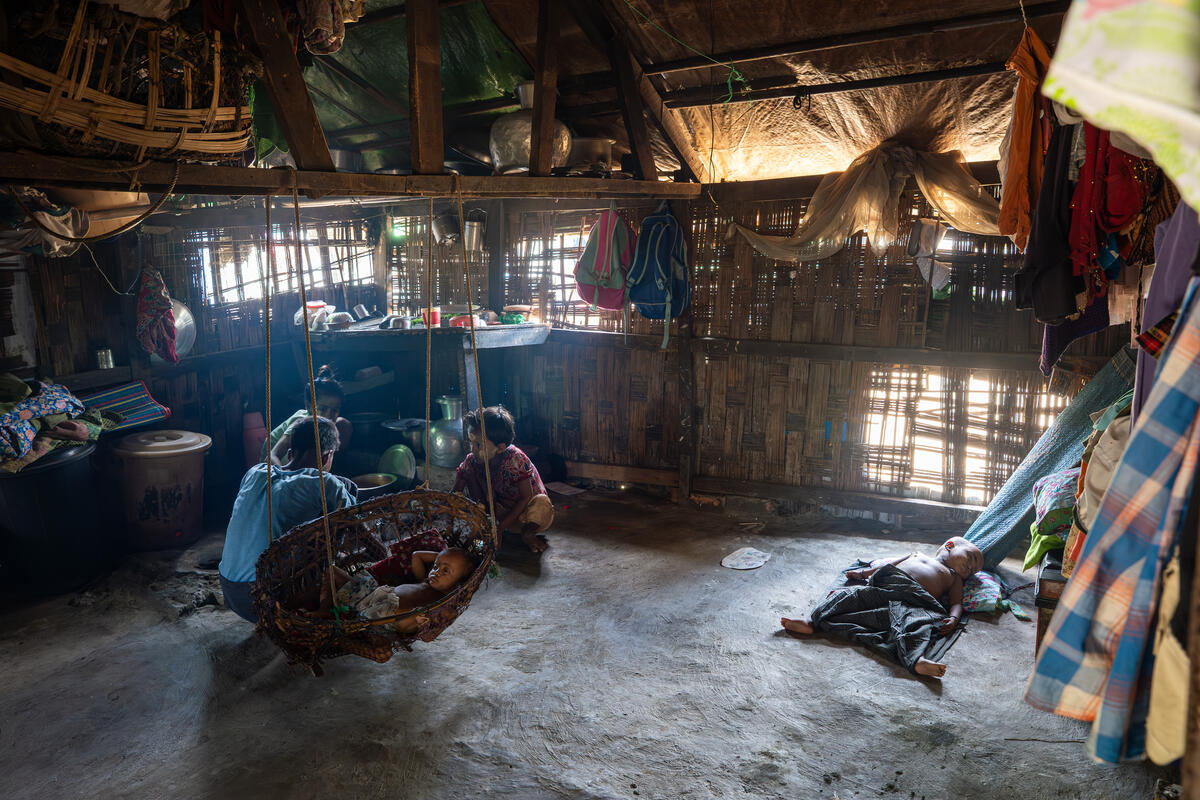
The people of Myanmar already face dire levels of hunger; a place where mothers cannot afford enough food to sustain their health, and malnutrition has become a new reality for thousands of children. More than 400,000 young children and mothers with acute malnutrition are surviving on nutrient-deprived diets of plain rice or watery porridge.
“Conflict and deprivation are converging to strip away people’s basic means of survival, yet the world isn’t paying attention,” said Michael Dunford, WFP Country Director in Myanmar. “This is one of the worst hunger crises on the planet, and one of the least funded. We cannot allow this level of suffering to remain invisible. The scale of need is far outpacing our ability to respond.”
Internal displacement is expected to rise from 3.6 million to 4 million next year, according to the latest United Nations Office for the Coordination of Humanitarian Affairs (OCHA) Myanmar Humanitarian Needs and Response Plan. This surge threatens to push millions of households who are barely coping into extreme deprivation.
“We’re on the ground. We’re delivering food and nutrition every day under extremely challenging conditions. But we are massively underfunded,” said Dunford. “The international community must act. Sustained funding and diplomatic support are needed to stop this crisis worsening next year.”
In 2026, WFP aims to assist 1.3 million people — a fraction of the more than 12 million in need — with humanitarian support requiring a budget of US$125 million.
The United Nations World Food Programme is the world’s largest humanitarian organization saving lives in emergencies and using food assistance to build a pathway to peace, stability and prosperity for people recovering from conflict, disasters and the impact of climate change.
Satellite analysis has identified 517 suspected riverbank mines in Laos, many likely illegal, with clusters along key Mekong tributaries, raising fears of widespread, unmonitored contamination.
Officials in Attapeu province confirmed illegal mining remains pervasive despite crackdowns, with most operations missing from official records and many linked to Vietnamese or Chinese supply chains.
The mining surge, including gold and rare earth extraction, poses major risks to ecosystems and communities in the Mekong Basin, where water testing capacity is weak and signs of declining fish populations and polluted rivers are emerging.
Researchers say Mekong countries must coordinate regionally and engage China, the main importer of the region’s mining output, while strengthening enforcement and environmental oversight to address a rapidly expanding, largely unregulated mining sector.
While Buddhism has branched into a number of sects over the centuries, its rich tradition of peace activism continues
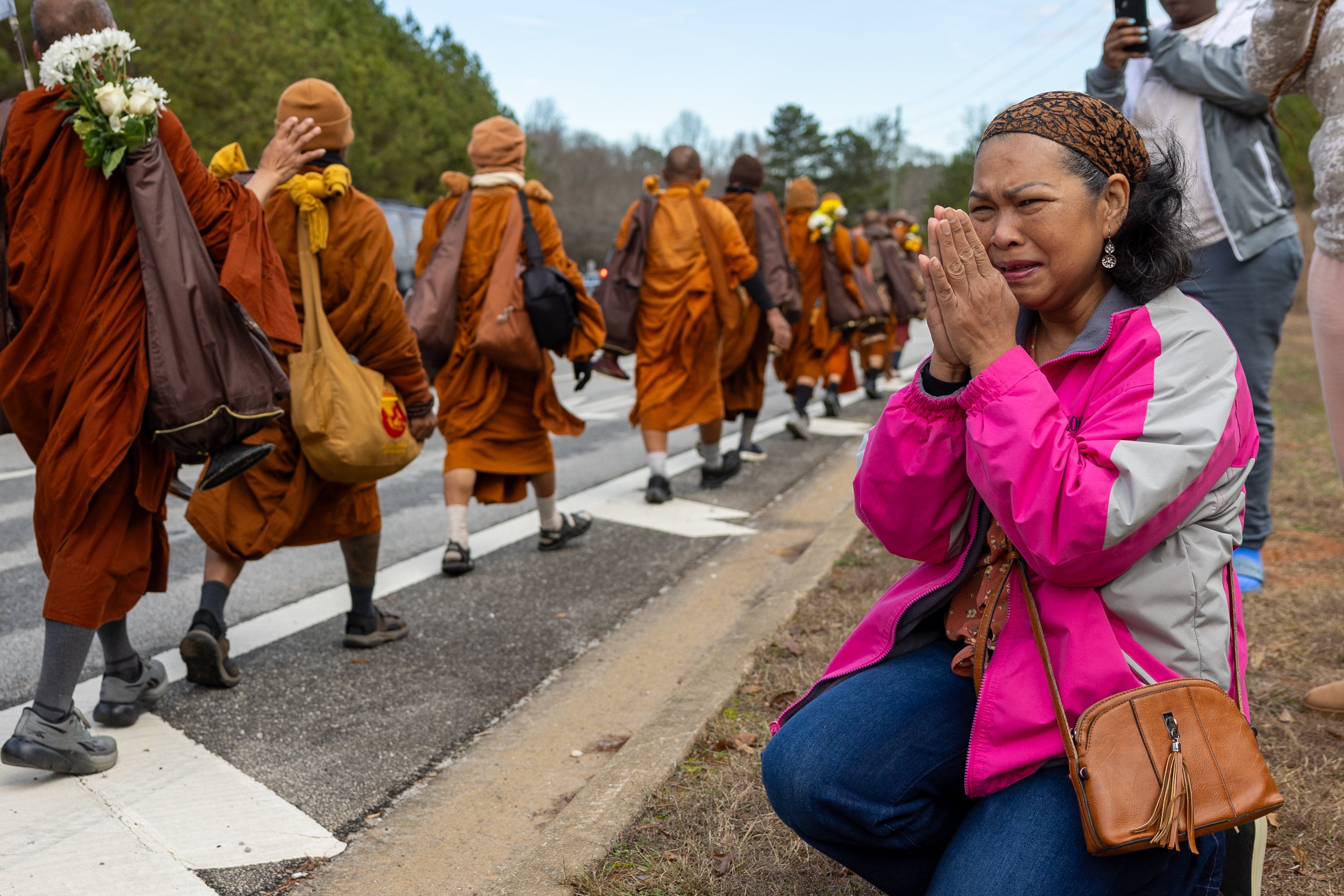
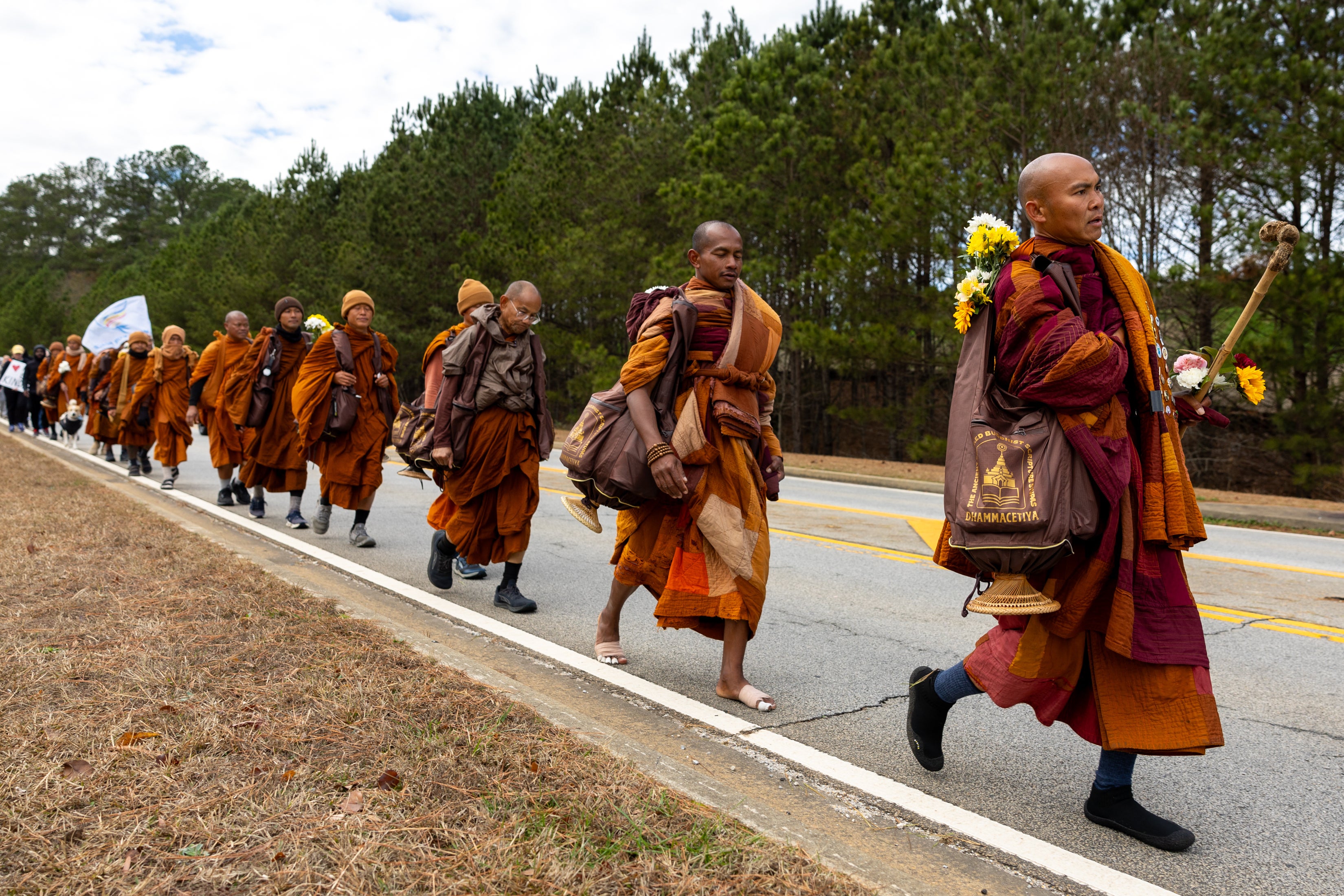
A woman reacts as Buddhist monks on a ‘Walk for Peace’ trek on Veterans Parkway in Fayetteville, Ga., on Monday, Dec. 29, 2025 (Arvin Temkar/Atlanta Journal-Constitution via AP)
A group of Buddhist monks hasn’t let a car wreck stop them from walking across much of the U.S. to promote peace.
After starting their walk in Fort Worth, Texas, on Oct. 26, the group of about two dozen monks has made it to Georgia as they continue on a path to Washington, D.C., highlighting Buddhism’s long tradition of activism for peace.
The group planned to walk its latest segment through Georgia on Tuesday from the town of Morrow to Decatur, on the eastern edge of Atlanta. Marking day 66 of the walk, the group invited the public to a Peace Gathering in Decatur Tuesday afternoon.
The monks and their loyal dog Aloka are traveling through 10 states en route to Washington, D.C. In coming days, they plan to pass through or very close to Athens, Georgia; the North Carolina cities of Charlotte, Greensboro and Raleigh; and Richmond, Virginia, on their way to the nation’s capital city.
The group has amassed a huge audience on social media, with more than 400,000 followers on Facebook. Aloka has its own hashtag, #AlokathePeaceDog.
Buddhist monks walk through Trilith in Fayetteville, Ga., on Monday, Dec. 29, 2025, from Texas to Washington, D.C. (Arvin Temkar/Atlanta Journal-Constitution via AP)
The group’s Facebook page is frequently updated with progress reports, inspirational notes and poetry.
“We do not walk alone. We walk together with every person whose heart has opened to peace, whose spirit has chosen kindness, whose daily life has become a garden where understanding grows,” the group posted recently.
The trek has not been without danger. Last month outside Houston, the monks were walking on the side of a highway near Dayton, Texas, when their escort vehicle, which had its hazard lights on, was hit by a truck, Dayton Interim Police Chief Shane Burleigh said.
The truck “didn’t notice how slow the vehicle was going, tried to make an evasive maneuver to drive around the vehicle, and didn’t do it in time,” Burleigh said at the time. “It struck the escort vehicle in the rear left, pushed the escort into two of the monks.”
One of the monks had “substantial leg injuries” and was flown by helicopter to a hospital in Houston, Burleigh said. The other monk with less serious injuries was taken by ambulance to another hospital in suburban Houston. The monk who sustained the serious leg injuries was expected to have a series of surgeries to heal a broken bone, but his prognosis for recovery was good, a spokeswoman for the group said.
The group has amassed a huge audience on social media, with more than 400,000 followers on Facebook. Aloka has its own hashtag, #AlokathePeaceDog (Arvin Temkar/Atlanta Journal-Constitution via AP)
Buddhism is a religion and philosophy that evolved from the teachings of Gautama Buddha, a prince turned teacher who is believed to have lived in northern India and attained enlightenment between the 6th and 4th centuries B.C.
The religion spread to other parts of Asia after his death and came to the West in the 20th century. The Buddha taught that the path to end suffering and become liberated from the cycle of birth, death and reincarnation, includes the practice of non-violence, mental discipline through meditation and showing compassion for all beings.
While Buddhism has branched into a number of sects over the centuries, its rich tradition of peace activism continues. Its social teaching was pioneered by figures like the Dalai Lama and Thich Nhat Hanh, who have applied core principles of compassion and non-violence to political, environmental and social justice as well as peace-building efforts around the world.
In 2025, Vietnamese cuisine has garnered widespread recognition from prestigious global rankings. Beloved street foods and traditional market dishes have been named among the world’s best.
Vietnam secured 4th place in the list of the 15 countries with the most attractive cuisines globally, as voted by Condé Nast Traveller.
At the 6th World Culinary Awards, Vietnam was honored as “Asia’s Leading Culinary Destination 2025.” In December, Taste Atlas – a globally respected food mapping site – ranked Vietnamese cuisine 16th among the top 100 world cuisines, up three spots from the previous year.
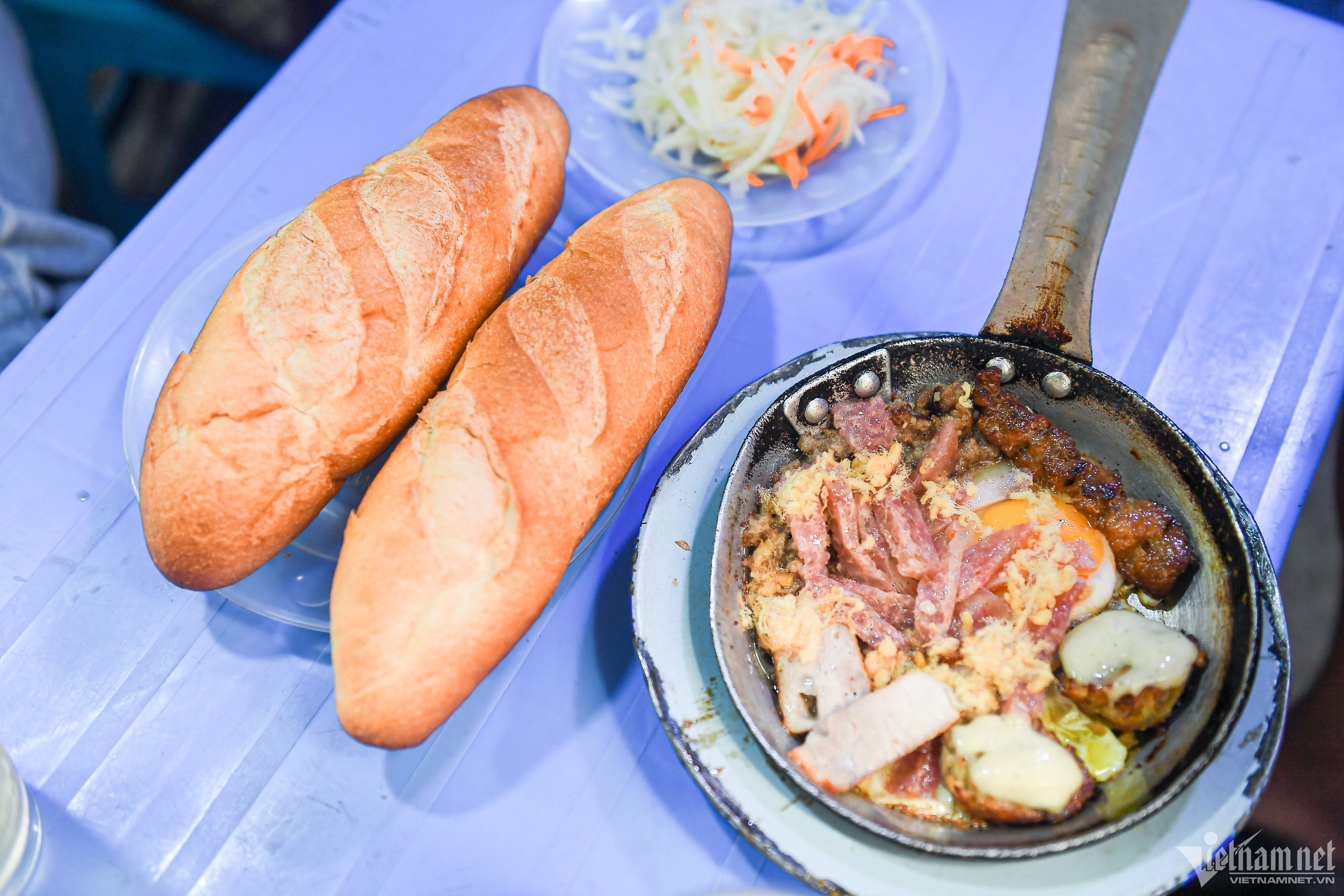
Banh mi
On November 15, CNN Travel included Vietnamese banh mi in its list of the 25 best sandwiches in the world.
According to CNN Travel, banh mi can be found on nearly every street corner across Ho Chi Minh City, Hanoi, and other provinces, captivating global diners with its signature crispy crust and richly varied fillings.
The classic “thap cam” version, featuring pork, Vietnamese sausage, pickled vegetables, herbs, and a distinctive sauce, offers an addictive balance of savory and sweet flavors. Other variations like chicken banh mi and vegetarian options add to its diversity.

 In November, 115 states voted in favor, eight voted against, and 44 abstained from voting on a resolution adopted by the General Assembly’s First Committee that examines the possible risks of integrating AI into nuclear weapons systems. Image: depositphotos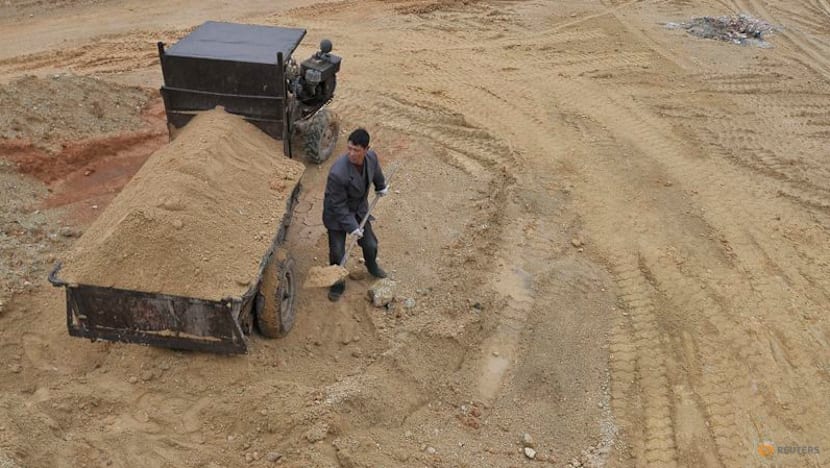



 CVD
CVD 