I'm from Hanoi, Viet Nam.
I'm an author of Dot Chuoi Non (dotchuoinon.com/author/hangbelu/), a blog on Positive thinking, founded by Dr. Tran Dinh Hoanh, an attorney in Washington DC.
I'm a co-founder of Conversations on Vietnam Development - cvdvn.net, a virtual think tank. I am a co-founder of two companies in Viet Nam working on children education services. I advise companies on STEAM education, English language education for children and students in Vietnam.
I'm studying the Buddha's teaching and the teaching of Jesus. I practice mindful living including meditation.
I hold a PhD on Sustainable Energy Systems from University of Lisbon and Aalto University.
I graduated from Hanoi University of Technology on Environmental Engineering. I obtained a Master degree of the same major from Stanford University and Nanyang Technological University.
My English-language blog at: hangbelu.wordpress/.
I play table tennis as a hobby.
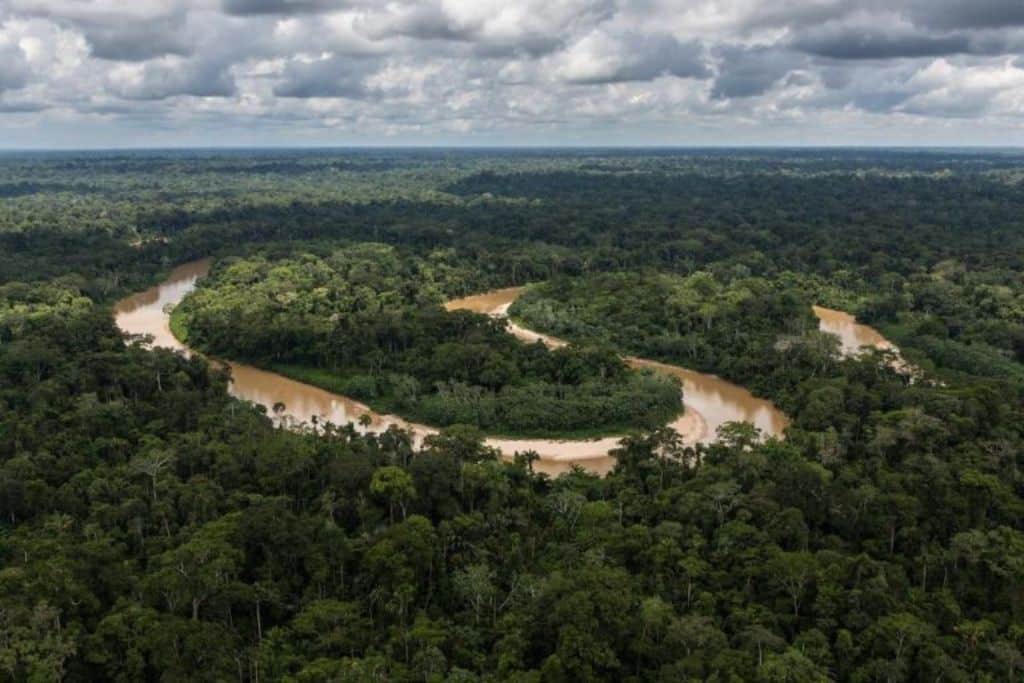
The months-long drought – a 1 in 100 years event – has dried up large parts of the Amazon River, with water levels at their lowest in more than a century.
—
Climate change is the main driver behind the exceptional drought that has been affecting the Amazon River since mid-2023, with the return of El Niño further exacerbating the situation, new research suggests.
A group of scientists from the World Weather Attribution (WWA) group used published peer-reviewed methods to assess the role of climate change and El Niño in influencing the drought, which is affecting an estimated 30 million people that rely on the river for transport, food, and power. They found that climate change-driven high temperatures were the main driver of the historic drought – a 1 in 100 year event on the Standardized Precipitation Index (SPI). On the other hand, the El Niño – a phenomenon that warms the Pacific Ocean and historically a driver of drought – had a “much smaller influence.”
President of Belarus Alexander Lukashenko attends the CSTO Collective Security Council meeting in Minsk, Belarus, 23 November 2023. [EPA-EFE/SERGY GUNEEV / KREMLIN / POOL]
Belarusian propaganda positions the EU as its main enemy, but several other features make it a unique case among its European neighbours.
*The author of this text remains anonymous due to fear of repercussions in their home country.
The most important and, at the same time, the most destructive peculiarity of disinformation in Belarus is strong Russian influence, which has deep historical roots and covers various spheres, from economy and culture to the military sector.
However, nowadays, Russian propaganda is helped by Belarusian colleagues who work to follow the same narrative.
This narrative includes turning EU countries into an economically and politically unstable military threat in the eyes of Belarusians while ignoring benefits and positives.
Innovative aircraft-based technique records carbon emissions not tracked before from the industrial region
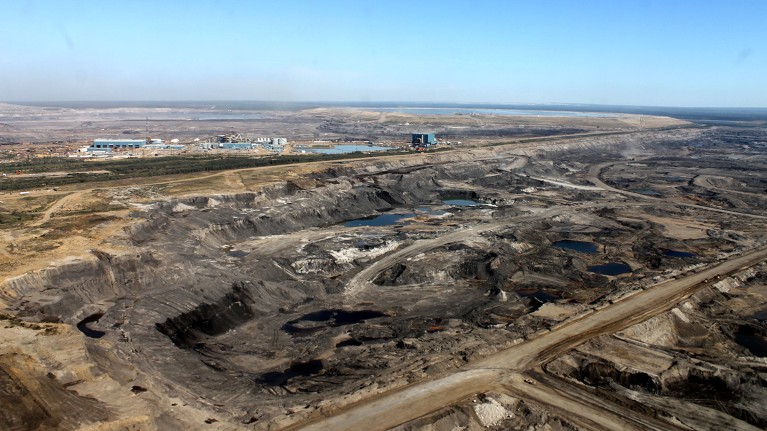
Researchers flew an aeroplane over the oil sands in Alberta, Canada, to measure all of their carbon-based emissions. Credit: John Liggio, Andrea Darlington and Andrew Elford
Canada’s controversial oil-producing tar sands generate a substantial amount of unaccounted-for carbon-based emissions that can affect air quality, according to measurements taken by aircraft. The sands release more of these pollution-causing gases than megacities such as Los Angeles, California, and about the same as the rest of Canada’s human-generated sources combined — including emissions from motor traffic and all other industries.
“No rules have been broken, or guidelines exceeded here,” says Janetta McKenzie, an oil and gas analyst for the Pembina Institute, a think tank in Calgary, Canada. “But that speaks to some issues in our rules and our guidelines.”How a dangerous stew of air pollution is choking the United States
The team that conducted the study — led by environmental engineer Drew Gentner at Yale University in New Haven, Connecticut, and chemist John Liggio at the federal agency Environment and Climate Change Canada (ECCC) in Toronto — used an innovative approach to measure all the carbon-based molecules in the air over oil sands in the province of Alberta. The researchers factored out greenhouse gases such as carbon dioxide and instead tracked only molecules important to air quality, many of which haven’t been monitored at the oil sands before. These carbon-based gases can seed particulate pollution in the air and react with other chemicals to form ground-level ozone.
The organization warns that escalating attacks on ships in the Red Sea are adding strain to shipping routes already hit by conflict and climate change.
The UN’s trade and development body, UNCTAD, has raised profound concerns over escalating disruptions to global trade.
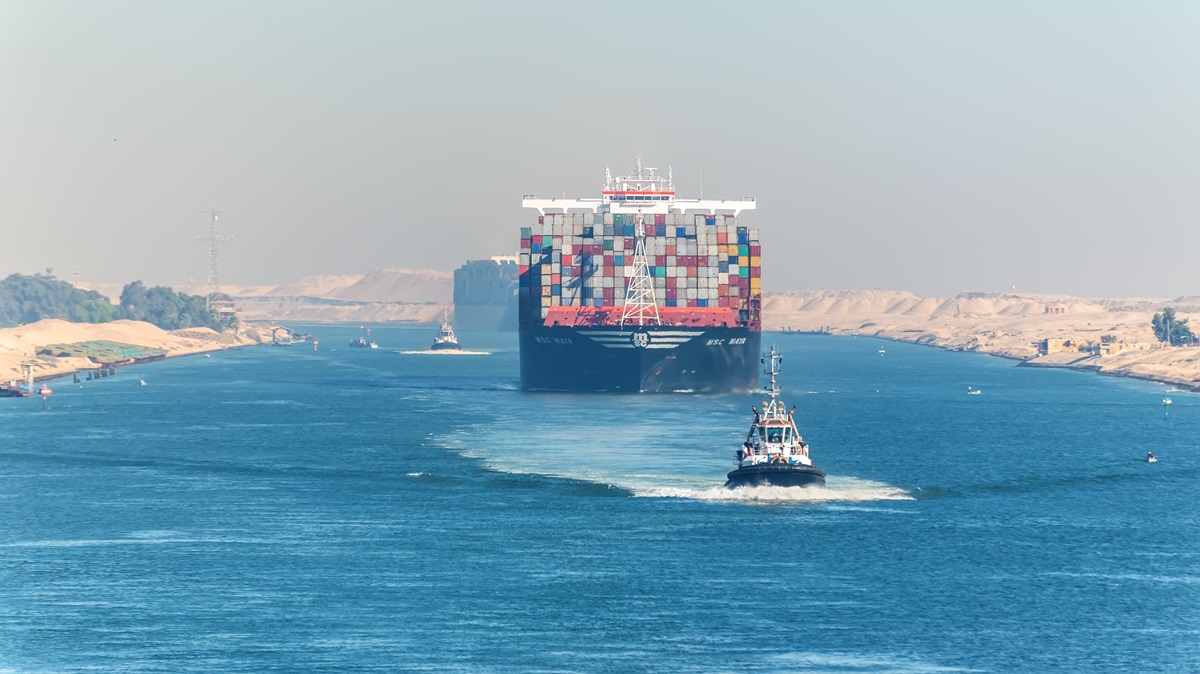
It says that recent attacks on ships in the Red Sea, combined with geopolitical tensions affecting shipping in the Black Sea and the impacts of climate change on the Panama Canal, have given rise to a complex crisis affecting key trade routes.
UNCTAD’s head of trade logistics, Jan Hoffmann, outlined the organization’s detailed analysis of the situation at the UN’s daily press briefing on 26 January. He underlined maritime transport’s critical role in international trade, noting that it is responsible for approximately 80% of the global movement of goods.
Disruptions in the Black Sea and Panama and Suez Canals
The Suez Canal, a critical waterway connecting the Mediterranean Sea to the Red Sea, handled approximately 12% to 15% of global trade in 2023. UNCTAD estimates that the trade volume going through the Suez Canal decreased by 42% over the last two months.
Red Sea crisis: Suez Canal traffic plummets
Suez Danal, daily transits, 28-day rolling average, 2016–23 January 2024, Index, Average=100201620172018201920202021202220232024020406080100120140160180200
The ongoing conflict in Ukraine has also triggered substantial shifts in oil and grain trades, reshaping established trade patterns.
Meanwhile, the Panama Canal, another key artery for global trade, is grappling with a severe drought that has diminished water levels, resulting in a staggering 36% reduction in total transits over the past month compared to a year ago.
Mosquito-borne disease once largely limited to Dhaka spreads countrywide as higher rainfall and heat lead to fivefold rise in cases in a year, with children the hardest hit
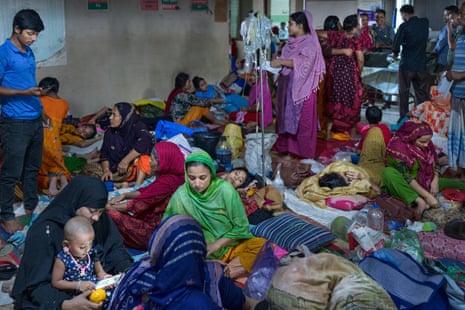
Corridors in Dhaka Medical College hospital crowded with dengue patients amid a shortage of beds. Bangladesh’s worst outbreak of dengue on record comes after unusually heavy rain, torrid temperatures and high humidity led to an explosion in the mosquito population
All photographs by Fabeha Monir for WHO
In a small, dimly lit control room at the Directorate General of Health Services (DGHS) in Dhaka, data on Bangladesh’s dengue outbreak flashes across multiple computer screens. Government analysts here have been busy collecting and monitoring the impact of the disease across the country since cases were first reported last April.
In 2023, the total reported cases of dengue numbered 321,179, with 1,705 deaths recorded, a massive jump from the year before, when 62,000 people were known to have had the virus, and 281 died. It was the highest number of annual deaths caused by the mosquito-transmitted disease ever recorded in Bangladesh.
We can’t afford to admit her to hospital so I’ve been doing whatever I can to protect her at home
Masuma Begum
The deaths last year included at least 113 children. According to Save the Children, the majority of these deaths were of children under the age of 10, with 38 deaths among those under five.
“Children make up around 30% of all dengue cases in Bangladesh and are particularly vulnerable to the virus because of underdeveloped immune systems,” says Dr Shamim Jahan, Bangladesh director of Save the Children. “Those under five are particularly at risk from developing severe symptoms, such as dehydration and shock.”
Over the past few months, the surge in cases has pushed Bangladesh’s health system to the limit, with hospital corridors overflowing with patients as wards run out of beds.
Wolves and black-billed magpies scavenge at a dump where carcasses are stored in Yellowstone National Park.
PUBLISHED JULY 10, 2020
LARAMIE, WYOMINGTwenty-five years after gray wolves returned to Yellowstone National Park, the predators that some feared would wipe out elk have instead proved to be more of a stabilizing force. New research shows that by reducing populations and thinning out weak and sick animals, wolves are helping create more resilient elk herds.
Released today, the annual Piracy and Armed Robbery Report of the ICC International Maritime Bureau (IMB) raises concern over the first successful Somali based hijacking since 2017.
The IMB annual report recorded 120 incidents of maritime piracy and armed robbery against ships in 2023 compared to 115 in 2022. It reveals that 105 vessels were boarded, nine attempted attacks, four vessels hijacked and two fired upon.
Where the number of 2023 reported incidents has slightly increased compared to 2022, the IMB urges caution for crew safety as the number of crew taken hostage and kidnapped increased from 41 to 73 and from two to 14 in 2022 and 2023 respectively. A further 10 crew were threatened, four injured and one assaulted in 2023.
Alarming first successful hijacking off Somalia since 2017
On 14 December 2023, the report recorded the first successful hijacking of a vessel off the coast of Somalia since 2017.
A process has begun to allow the Vietnam Shipbuilding Industry Corporation (SBIC) to declare bankruptcy, according to Deputy Minister of Transport Nguyen Xuan Sang.
A fishing trawler built by the Ha Long Shipbuilding Company, a subsidiary of SBIC, in 2018. (Photo: SBIC)
Hanoi (VNS/VNA) – A process has begun to allow the Vietnam Shipbuilding Industry Corporation (SBIC) to declare bankruptcy, according to Deputy Minister of Transport Nguyen Xuan Sang.
The Ministry of Transport (MoT) said the bankruptcy was, at this point, an inevitable conclusion and the ministry is now aiming for an overhaul of the corporation’s core businesses while trying to retain as many experienced managers and workers as possible.
Environmental activists from the Irish Wildlife Trust and Extinction Rebellion called on the Irish Government to introduce legislation in the form of a Biodiversity Act at a protest outside the National Biodiversity Conference in Dublin Castle on June 8, 2022. Credit: Niall Carson/PA Images via Getty Images
Ireland—a nation synonymous with its abundant, verdant landscapes—is considering a nationwide referendum on the rights of nature and the human right to a healthy environment.
If that happens, Ireland would become the first European country to constitutionally recognize that ecosystems, similar to humans and corporations, possess legal rights. More than two-thirds of the 27 European Union countries already recognize a universal human right to a healthy environment.
In December, a legislative committee proposed that the Irish government take a series of administrative measures to draft proposed constitutional amendments recognizing that nature has inherent rights to exist, perpetuate and be restored, and that humans have a right to a clean environment and stable climate.
To take legal effect, the proposed amendments must be approved by both houses of parliament, the Dáil Éireann (the lower house) and the Seanad (the upper house), and win a majority of the popular vote.
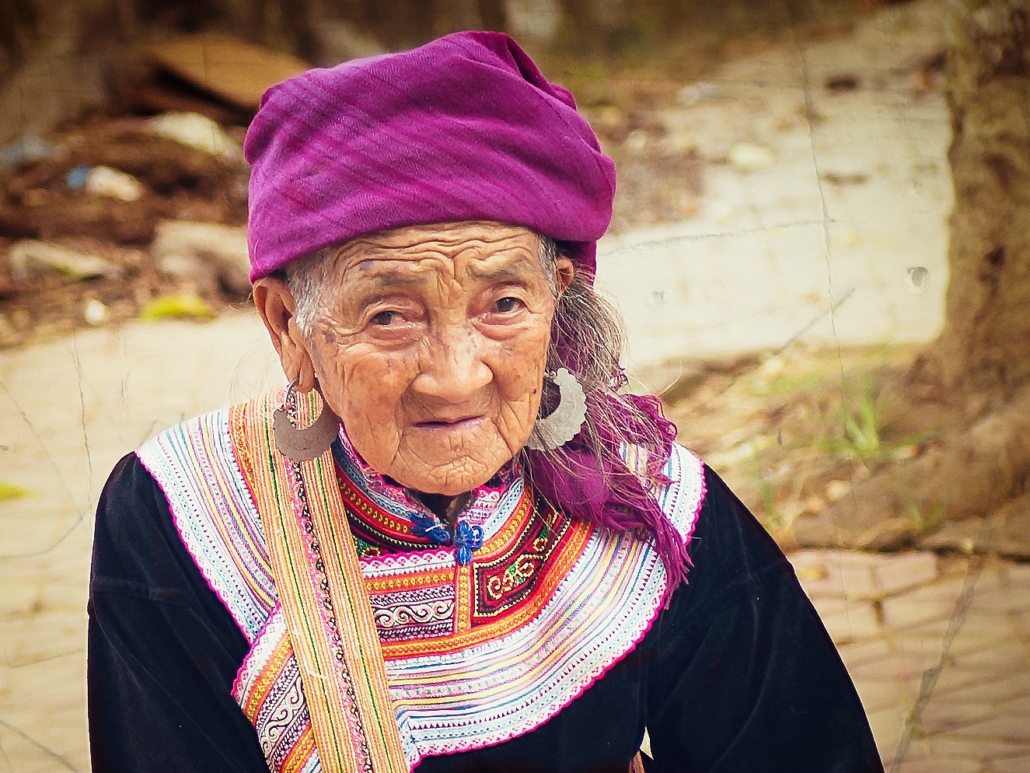
Elderly poverty in Vietnam is a significant issue considering that Vietnam currently has one of the highest rates of aging populations in the world. Right now, Vietnam is still a young country, despite the fact that its elderly population has increased from 4.9% in 1975 to 7.9% as of 2020. There is reason to have some concern over the aging population. Even just between 2009 and 2019, the elderly population older than the age of 60 increased by 2%. The World Bank has calculated that Vietnam could be the country that is aging fastest globally.
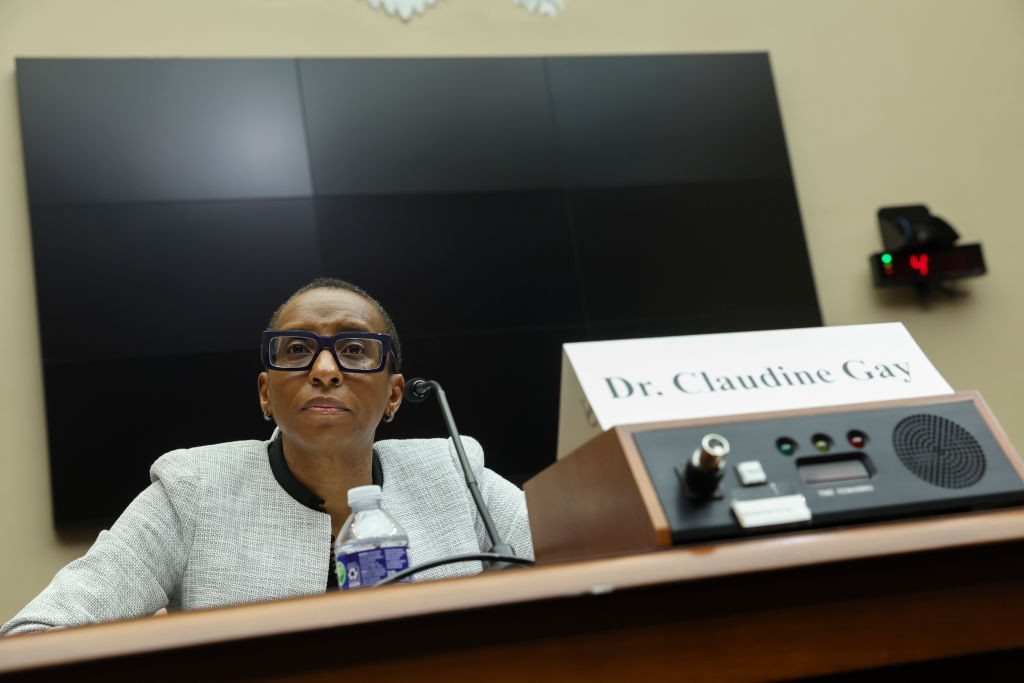
Dr. Claudine Gay testifying before the House Education and Workforce Committee at the Rayburn House Office Building on December 05, 2023 in Washington, DC. She has since resigned from her post as President of Harvard University.Kevin Dietsch—Getty Images
The end of Claudine Gay’s brief and turbulent presidency at Harvard has hardly put an end to controversies about elite university leadership and governance. Bill Ackman, the “activist” donor and Harvard graduate, is calling for further resignations from the Harvard Corporation, while baiting MIT’s President, Sally Kornbluth, with the Shakespearean query: “et tu?” Meanwhile, Mark Rowan, the board member who engineered the takedown of the University of Pennsylvania’s erstwhile president, Elizabeth McGill—the first of the Washington three to step down—has now been pressing his advantage in calling for major reforms of an academic nature at Penn. Philanthropy and academic freedom are colliding in ways that have the potential to undermine the true purpose and mission of our universities.
As much as these, and some other, donors have appeared to embody popular discontent with those at the pinnacle of higher education, it is easy to forget that not long ago the scandals around these universities had to do with donors who used their gifts as leverage to secure admission for their children, making visible the problematic relationship between some individual philanthropy and private interests. We all called for firewalls then but seem now to have forgotten those critiques of the relationship between private interests and higher education.
Though the 100 incidents in 2023 increased by 19 per cent over 2022, these were small-time robberies, with theft of items such as nominal value wires, brass ship products, engine spares and scraps, Regional Cooperation Agreement on Combating Piracy and Armed Robbery, says executive director
PTI Singapore Published 09.01.24, 06:06 PM
Representational picture.File picture
No report of piracy incidents occurred on the Asian high seas but 99 actual incidents and one attempted armed robbery against ships occurred in Southeast Asian waters in 2023, a Singapore based maritime organisation reported said on Tuesday.
Though the 100 incidents in 2023 increased by 19 per cent over 2022, these were small-time robberies, with theft of items such as nominal value wires, brass ship products, engine spares and scraps, Regional Cooperation Agreement on Combating Piracy and Armed Robbery (ReCAAP) executive director Krishnaswamy Natarajan said at the annual press conference.
Such incidents were five in India in 2023, the same as those in 2022, while Bangladesh and Malaysia reported one incident each, compared to five and two incidents in 2022, respectively.
Reviewing the year, Natarajan pointed out that the increase in incidents occurred in Indonesia, the Philippines, the Straits of Malacca and Singapore (SOMS), Thailand and Vietnam.
Of concern was the occurrence of incidents in SOMS with 63 incidents compared to 55 incidents in 2022, said the former Director General of Indian Coast Guard.
In the Sulu-Celebes Seas, there was no report of the abduction of crew for ransom by the Abu Sayyaf Group (ASG), which was achieved through the concerted efforts of the Philippine and Malaysian authorities, he highlighted.
As part of the Centre’s continuous efforts to ensure that the evolving needs of the shipping industry are met, the ReCAAP Information Sharing Centre (ISC) launched various initiatives in 2023, to keep the shipping community abreast of the latest piracy and ARAS situation in Asia and to facilitate ship masters in the timely reporting of incidents to the nearest coastal State.
The initiatives include the launch of the ReCAAP Data Visualisation Map and Panel (Re-VAMP) — an interactive dashboard to enable the viewing and analytics of past and current incidents of piracy and ARAS in Asia.
The initiative also includes the production of a poster containing the guidelines and updated contact details of law enforcement agencies of the littoral States of the SOMS; and engagement of the shipping industry through various events including conferences, forums and shipping dialogue sessions, he elaborated.
Except for the headline, this story has not been edited by The Telegraph Online staff and has been published from a syndicated feed.
Sitting on my tiny rooftop garden, how much I cherish the early morning tea with the sweet sounds of a bird family, who has graciously made my roof their home since the day I settled here.
How thankful I am for this precious gift of sound, offered by my birdy friends despite the city noise that they have to compete with. How unbearable it would be, imagine one day, I find no birdy singing on my roof nor in any other corner of this Earth.
In the quiet corners of our world, where nature once thrived and rang its melody, Rachel Carson’s “Silent Spring” warned us about a future where the symphony of Nature would be no bird chirping, no insect buzzing, not even leaf rustling, but replaced by creepy hush, only. And that scary destructive silence was caused by the pesticide and herbicide.
These days, we find ourselves in a different strike of silence, one that haunts the holiday season in Gaza, Palestine – a Silent Christmas, where the laughters of children and the voices of joyous carols are muted by the horrors of war and genocide.
This is not a Christmas story from a distant land; this haunting silence deeply matters to our conscience. For this silence echoes the death of humanity. For this silence is the death of the voice in our heart.
“We detained 48 foreign women – 32 Indonesians, 13 Thais and three Vietnamese – along with a man from Afghanistan.” he said.
KUALA LUMPUR: The Immigration Department detained 48 foreign women in raids on three suspected prostitution dens in the city.
Immigration deputy director-general (Operation) Jafri Embok Taha said the raids on Friday (Jan 5) night also busted the activities of a syndicate.
“We detained 48 foreign women – 32 Indonesians, 13 Thais and three Vietnamese – along with a man from Afghanistan.” he said.
Jafri added in a statement on Sunday (Jan 7) that three local men were detained, saying that two were caretakers of the premises while a third was a transporter.
He said that eight of the Thai women detained had valid social visit passes while the remaining female foreigners did not have any travel documents or passes.
“We seized various items, including condoms, eight Thai passports, RM300 cash, towels, CCTV equipment and a car,” he added.
Jafri said the syndicate would promote the services of the women by uploading their photos on Telegram and WhatsApp and added that the women would be sent to a specific hotel or location based on the preference of the customers.