The pattern of capital flows into Asia in the last decade

The pattern of capital flows into Asia in the last decade

asiapathways-abdi: Looking at the varying patterns of the capital flows into Asia in the last decade, the period after the taper tantrum on 21 May 2013 until 31 October 2015 is of particular interest from both global and local perspectives. Globally, the wave of capital flows became more volatile due to various international factors: (i) the pace of monetary policy normalization in the United States (US), (ii) the slowdown in the People’s Republic of China, (iii) the slide in oil prices, and (iv) higher political uncertainty and elevated geopolitical tensions. Locally, the growth momentum in Asia slowed down due to weaker balance of payments, worsening external debt conditions, and reduction in real economic activity. Monetary policy in Asia therefore became more accommodative to support growth. This, in turn, lowered expected relative interest returns and caused capital to flow out of Asia. Moreover, the exchange rate return on investing in Asian assets, which previously had been a byproduct of investment, declined. This is because there was greater risk aversion on Asian assets and there was downward pressure on all emerging Asian currencies due to weaker economic fundamentals. Tiếp tục đọc “The pattern of capital flows into Asia in the last decade”

Antibiotic Resistance Requires Global Response Similar to AIDS, Climate Change

Unregulated sales of antibiotics are contributing to growing resistance. Credit: Adil Siddiqi/IPS

IPSnews – UNITED NATIONS, Jun 12 2016 (IPS) – Addressing antibiotic resistance will require a global political response similar to the way the world has reacted to climate change or HIV / AIDS, Sweden’s Minister of Public Health Gabriel Wikstrom, told IPS recently.

“(These problems) began with a small group of experts discussing and trying to warn the rest of us and it was not until it was politically addressed that it really became an issue that was solvable.”
Tiếp tục đọc “Antibiotic Resistance Requires Global Response Similar to AIDS, Climate Change”

7 KEYS TO SHAPING SUSTAINABLE CITIES

worldwatch – Cities are the world’s future. More than half of the world’s people live in cities, and the urbanization trend is continuing. Will the world invest in shaping livable, equitable, and sustainable cities?

“The path to a sustainable city starts with a vision,” explains Gary Gardner, co-director of the our newest book, Can a City Be Sustainable? “A well-crafted vision can rally public support and mobilize civic energy for a long-term urban makeover.”

“A well-crafted vision can rally public support and mobilize civic energy for a long-term urban makeover.”

Here are Worldwatch’s top 7 tips for cities who want to unlock sustainability:

sustainable-cities-1

1. Reduce, circulate, and clean up material flows.

Perhaps the biggest single step that cities can take toward a sustainable future is to create economies that greatly reduce materials use and (re)circulate materials. Good examples are car sharing and tool libraries, which reduce a person’s materials footprint.
Tiếp tục đọc “7 KEYS TO SHAPING SUSTAINABLE CITIES”

Vietnam approves $60 mln wind power project

By Dam Tuan   July 28, 2016 | 02:35 pm GMT+7

A Singaporean company plans to tap the potential for wind power in southern Vietnam.

e.vnexpress – Southeast Asia’s leading renewable energy developer, The Blue Circle, has been awarded an Investment Certificate from Vietnamese authorities for a 40 Megawatt (MW) Dam Nai wind project worth $60 million in the southern province of Ninh Thuan.

Tiếp tục đọc “Vietnam approves $60 mln wind power project”

Vietnam Starts 120-Megawatt Wind Farm in Central Highlands

March 13, 2015 — 6:44 AM WET

bloomberg_Vietnam began constructing a 120-megawatt wind farm with a total investment of 6 trillion dong ($281 million) in the Central Highlands province of Dak Lak.
HBRE Wind Power Solution Co. will build the project in three phases through 2020, Chairman Ho Ta Tin said on Friday. The Ho Chi Minh City-based company is expected to be able to produce 400 million kilowatt-hour a year, equal to the demand of 200,000 households.
General Electric Co. will provide the project’s 60 turbines, Tin said on March 13. The first phase, which uses 14 two-megawatt turbines, would start generating electricity next year. Tiếp tục đọc “Vietnam Starts 120-Megawatt Wind Farm in Central Highlands”

Drought and ‘Rice First’ Policy Imperil Vietnamese Farmers

Huynh Anh Dung, 34, at his family farm in Soc Trang Province, Vietnam. His rice crop failed in February because of salty water. Credit The New York Times

nytimes – SOC TRANG, Vietnam —When the rice shoots began to wither on Lam Thi Loi’s farm in the heart of the Mekong Delta, a usually verdant region of Vietnam, she faced a hard choice: Let them die in the parched earth, or pump salty water from the river to give them a chance..

Tiếp tục đọc “Drought and ‘Rice First’ Policy Imperil Vietnamese Farmers”

Colonial Mentality: A Filipino Heritage?

Một bài viết rất thú vị về tâm lý thuộc địa của người Phillipines. Trong cùng một bối cảnh của bài viết, nếu thay người Phillipines thành người Việt Nam, chúng ta sẽ thấy rất nhiều điểm tương đồng trong tâm lý thuộc địa của người Phillipines, người Việt Nam và các nước thuộc địa khác như thế nào?


This is a very interesting article. In the same context, if we replace the Filipinos by the Vietnamese, we’ll see many similarities in the colonial mentality of the Filipinos, of the Vietnamese and other colonial countries.

ĐTH

——————————————————————————————————–

by: Maris Cay E. Garbones

“Tangkilikin ang saraling atin,” (Patronize what is ours), we hear this statement spoken quite often. Cliché as it may sound but Filipinos do not live by it.

Skechers, Havaianas, Converse and Crocs’ sales in the Philippines reach hundred millions a year while the Marikina Shoe industry remains an underdog. A kid prefers to eat Hershey’s Kisses rather than enjoy Goya chocolate. The Hunger Games and other Hollywood films attract more audiences than Ang Babae sa Septic Tank and other Filipino movies. The current trend in the Philippines is very far from what former President Carlos P. Garcia had envisioned when he initiated the Filipino First Policy during his administration. The program’s main objective was to free the Philippine economy from foreign control and supervision. Although there are Filipinos who try to follow the path of nationalism that Jose Rizal and other heroes had taken, there are more who are driven by colonial mentality. Tiếp tục đọc “Colonial Mentality: A Filipino Heritage?”

50 Sản phẩm thiết yếu có khả năng trợ giúp người khuyết tật

DOWNLOAD DANH SÁCH CÁC SẢN PHẨM ĐƯỢC LIỆT KÊ BỞI  TỔ CHỨC Y THẾ GIỚI

Một số định nghĩa

Công nghệ trợ giúp là việc ứng dụng các kiến thức và kỹ năng có hệ thống liên quan đến các sản phẩm trợ giúp, bao gồm cả các hệ thống và dịch vụ. Công nghệ trợ giúp là một nhóm của công nghệ y tế.

Sản phẩm trợ giúp: Bất kỳ sản phẩm bên ngoài (bao gồm thiết bị, thiết bị, dụng cụ hoặc phần mềm), đặc biệt là được sản xuất hoặc có sẵn, mục đích chính của các sản phẩm này là duy trì hoặc cải thiện chức năng và sự độc lập của một cá nhân, và do đó thúc đẩy phúc lợi của họ. Sản phẩm hỗ trợ cũng được sử dụng để ngăn chặn sự suy yếu và nguy cơ về tình trạng sức khỏe của người khuyết tật
Các sản phẩm trợ giúp cần ưu tiên: Những sản phẩm có nhu cầu lớn , và tuyệt đối cần thiết để duy trì hoặc cải thiện chức năng của một cá nhân và cần phải có sẵn ở một mức giá mà cộng đồng / nhà nước có thể đủ khả năng chi trả.

In photos: Elderly Vietnamese woman devotes life to disabled sons

TUOI TRE NEWS

UPDATED : 07/24/2016 19:04 GMT + 7

A septuagenarian woman in the central Vietnamese province of Quang Binh has raised and taken care of her two disabled sons who are victims of Agent Orange (AO)/dioxin on her own for more than four decades.

Nguyen Van Hai, 44, and Nguyen Van Hien, 41, who are both victims of dioxin, have been in the loving care of their 73-year-old mother Tran Thi Dang, of Le Thuy District, in the last 44 years.
Tiếp tục đọc “In photos: Elderly Vietnamese woman devotes life to disabled sons”

Why green growth is the key to Southeast Asia’s future

By Vaidehi Shah

NCCS – The “grow now, clean up later” approach which has dominated economic development for the past century just isn’t working anymore as multiple environmental crises prove. Green growth may be a better way forward for Southeast Asia and the world.

Solar panels on Sumba Island, Indonesia. Over 8.1 million people are now working in renewable energy worldwide. Image: Asian Development Bank, CC BY-NC-ND 2.0.
Multiple environmental crises facing the planet today such as climate change and dwindling resources send a clear message to the global community: “Business-as-usual” ways of production and consumption are no longer acceptable. Tiếp tục đọc “Why green growth is the key to Southeast Asia’s future”

The 50 Essential Products That Could Help People With Disabilities

Priority Assistive Products List.

Assistive technology is the application of organized knowledge and skills related to  assistive products, including systems and services. Assistive technology is a subset of health technology.
Assistive products: Any external product (including devices, equipment, instruments or software), especially produced or generally available, the primary purpose of which is to maintain or improve an individual’s functioning and independence, and thereby promote their well-being. Assistive products are also used to prevent impairments and secondary
health conditions.
Priority assistive products: Those products that are highly needed, an absolute necessity to maintain or improve an individual’s functioning and which need to be available at a price the community/state can afford.

Sex education from church and state sends mixed messages in Vietnam

in Hanoi

theguardian: As church activists hand out information on ‘safe sex days’ to students, Vietnam’s high abortion rate suggests a need for accurate contraception advice

MDG : Abortion and family planning in Vietnam

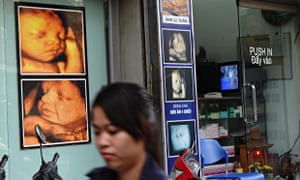
A clinic offering 4D foetus imaging in Hanoi. For decades, communist Vietnam enforced a two-child policy, using a mix of administrative penalties and subsidised family planning. Photograph: Hoang Dinh Nam/AFP/Getty Images

On a Saturday morning, about 100 people gather for mass at Thai Ha church in Hanoi. During the sermon, the priest talks about the dangers of sex before marriage and the sin of killing an unborn child. Behind the pews, on a table, sits a small coffin containing foetuses and stillborn babies collected by volunteers over the week from private clinics. Today there are 13 in the box. Tiếp tục đọc “Sex education from church and state sends mixed messages in Vietnam”

Sexuality Education

UNESCO

https://i0.wp.com/www.unesco.org/new/fileadmin/MULTIMEDIA/HQ/HIV-AIDS/images/teacher_sex_education.haiti.amelia.shaw_photoshare.jpg

Comprehensive Sexuality Education (CSE) is an age-appropriate, culturally relevant approach to teaching about sex and relationships by providing scientifically accurate, realistic, non-judgemental information. Sexuality education provides opportunities to explore one’s own values and attitudes and to build decision-making, communication and risk reduction skills about many aspects of sexuality.   Tiếp tục đọc “Sexuality Education”