Dân lấp “ổ voi” gây tai nạn, bị cán bộ truy “ai cho phép làm”

GiadinhNet – “Ổ voi” xuất hiện nhiều năm, gây ra nhiều vụ tai nạn nhưng không được đơn vị quản lý đường bộ sửa chữa. Khi dân bức xúc tự mang bê tông ra trám đường thì bị cán bộ đến dọa đòi lập biên bản xử phạt hành chính.

Đây là câu chuyện xảy ra ở khu vực km24, QL70 qua huyện Bảo Thắng, tỉnh Lào Cai được chia sẻ và bình luận nhiều trên mạng xã hội mấy ngày qua.

Theo đó, khi nhìn thấy hành động đẹp của người dân, một Facebooker tên là Vương Mạnh đã ghi hình và đẩy lên mạng xã hội. Tiếp tục đọc “Dân lấp “ổ voi” gây tai nạn, bị cán bộ truy “ai cho phép làm””

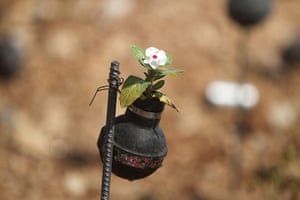
West Bank garden of teargas canisters – in pictures

theguardian _ The Palestinian residents of Bilin have come up with a novel use for the teargas canisters left over from clashes with Israeli soldiers during the weekly protest against the West Bank separation barrier

Tiếp tục đọc “West Bank garden of teargas canisters – in pictures”

A Gender Power Shift in the Making

FULL ARTICLE

Highlights

  • The number of female chief executives of Fortune 500 companies is 5%. Only 4% of chair people of the boards of Europe’s largest publicly quoted companies are women
  • The Credit Suisse Research Institute examined 2,400 companies worldwide and found in 2012 that investors would fare better holding shares in those with at least one woman on the board
  • For a long time, the debate about gender equality was confined to women. Over the past decade, senior men have started to take responsibility for leading change
    Status will instead rely increasingly on unique skills and talents, or the ability to connect people, or being an inspiring leader
  • Women are leading the way in reshaping how jobs are done, including at senior levels
  • In the US, the number of women-owned firms grew at 1.5 times the national average between 2007 and 2014, according to a study commissioned by American Express OPEN
  • Women hold much greater sway in Eastern Europe and Southeast Asia than in most Western economies. Russia tops the table with women in 43% of senior roles
  • Work-life conflict used to be seen primarily as a problem for women. But now employed fathers in dual-earning couples are more likely to experience such conflict
  • Companies have focused their “gender diversity” efforts increasingly on top talent, and it has distracted attention from even bigger gender divides

Women and politics in East Asia

19 June 2016
Author: Katharine H.S. Moon, Wellesley CollegeEastasiaforum – This is supposed to be the Asian century, with East Asian countries leading the way. The world admires many East Asian countries for their miraculous economic growth, democracy-building and cultural innovation. But can East Asia also provide a model for developing women’s rights and political power? East Asia has no coherent pattern to boast or export.https://i0.wp.com/www.eastasiaforum.org/wp-content/uploads/2016/06/Moon-400x280.jpgEast Asians are known for creating wealth nationally and personally but this does not necessarily produce women’s political empowerment or participation. One of the poorest countries in the world, Rwanda, sits atop the very wealthy Nordic states, the United States and newly rich Asia with the highest female representation in national politics worldwide.

In East Asia, the Philippines boasts the highest representation of women in political institutions. Nearly 30 per cent of the Philippines’ lower house is occupied by women, and women form a quarter of the upper house. In local politics, women also fare well, with 17 out of 80 provinces having voted for female governors in 2013. Since 2010, women have also made up 40–45 per cent of the highest civil service positions. Tiếp tục đọc “Women and politics in East Asia”

TRÍ ÓC VÀ TÂM HỒN – KHOA HỌC VÀ HÒA BÌNH

Chào các bạn,

Mấy năm trước học ở Singapore, mình ở ký túc xá cùng với một cô bạn (không phải người Việt). Bạn này rất xinh và hiền, nhưng sống hơi khép kín, không giao tiếp bạn bè nhiều và khá tiêu cực với thế giới xung quanh. Gần như lúc nào cô bạn cũng căng thẳng chuyện học hành. Ban đầu mình nghĩ cô bạn có tính ít nói nên cũng không để ý lắm. Sau đó mình biết là bạn học về công nghệ thông tin, chuyên thiết kế các trò chơi online và rất nhiều sản phẩm, trong đó có các trò chơi bạo lực chém giết. Trên bàn học cô có treo những poster là hình gươm dao súng đạn mà các bạn hay thấy trong các trò chơi điện tử. Mình chỉ thỉnh thoảng nói chuyện được và không biết làm thế nào giúp đỡ cô bạn đỡ căng thẳng hơn. Giờ nghĩ lại mình vẫn thấy thương bạn này và không rõ hậu quả cuộc sống stress đó đã và sẽ dẫn cô đến đâu. Mình không còn liên lạc được với cô ấy sau khi học xong ở đó nữa.

Cũng thời gian đó, mình có một cô bạn khác ở ngay phòng bên cạnh. Bạn này rất giỏi, thông minh, học về robotic và tự động hóa. Trước khi học tiếp PhD, cô được đề nghị một công việc ở Châu Âu. Nhưng sau khi phát hiện ra công ty có liên quan đến việc phát triển và buôn bán vũ khí, cô đã từ chối công việc để tiếp tục đi học PhD với mức lượng thấp hơn nhiều lần so với công việc kia. Tiếp tục đọc “TRÍ ÓC VÀ TÂM HỒN – KHOA HỌC VÀ HÒA BÌNH”

Fukushima and the oceans: What do we know, five years on?

sciencedaily :  30, 2016Source:Goldschmidt ConferenceSummary:A major international review of the state of the oceans five years after the Fukushima disaster shows that radiation levels are decreasing rapidly except in the harbor area close to the nuclear plant itself where ongoing releases remain a concern.

A major international review of the state of the oceans 5 years after the Fukushima disaster shows that radiation levels are decreasing rapidly except in the harbour area close to the nuclear plant itself where ongoing releases remain a concern. At the same time, the review’s lead author expresses concern at the lack of ongoing support to continue the radiation assessment, which he says is vital to understand how the risks are changing.

These are the conclusions of a major 5 year review, with multi-international authors who are all working together as part of a Scientific Committee on Oceanic Research (SCOR) Working Group. The report is being presented at the Goldschmidt geochemistry conference in Japan. The review paper is also published in Annual Review of Marine Science*. The main points made by the report are: Tiếp tục đọc “Fukushima and the oceans: What do we know, five years on?”

Who are nuclear weapons scientists?

Most people study nuclear warfare by studying the new developments in the weapons themselves. Hugh Gusterson takes a different approach. Instead of studying the weapons, he studies the nuclear scientists who created them. He took to the TEDxFoggyBottom stage to share what he learned.

Dr. Gusterson’s research focuses on the interdisciplinary study of the conditions under which particular bodies of knowledge are formed and deployed, with special attention to the science of war, the military, and nuclear weapons.

His research addresses the problem of how to understand knowledge as a cultural formation, and how to analyze the historical and structural transformations of science and technology. He asks questions such as: How do cultures of science initiate and shape participants? How can we critically assess universalist claims about scientific and military “truths?” How do scientists justify their complicity with the projects of nation-states?

This talk was given at a TEDx event using the TED conference format but independently organized by a local community

Buying and selling hacked passwords: How does it work?

theconversation – Data breaches are a regular part of the cyberthreat landscape. They generate a great deal of media attention, both because the quantity of information stolen is often large, and because so much of it is data people would prefer remained private. Dozens of high-profile breaches over the last few years have targeted national retailers, health care providers and even databases of the federal government, getting Social Security numbers, fingerprints and even background-check results. Though breaches affecting consumer data have become commonplace, there are other resources that, when targeted, lead to major security concerns. Recently, a hacker claimed to be selling over 32 million Twitter usernames and passwords on an underground marketplace. Tiếp tục đọc “Buying and selling hacked passwords: How does it work?”

Background on Southeast Asian Parenting: Helping Youth Succeed: Bicultural Parenting for Southeast Asian Families

University of Minnesota – Extension  

Background on Southeast Asian Parenting

Daniel Detzner, College of Human Ecology, University of Minnesota; Blong Xiong, College of Human Ecology, University of Minnesota; Patricia A. Eliason, General College, University of Minnesota

Reviewed April 2010 by the author (Daniel Detzner).

Eastern Values and Beliefs

To understand Southeast Asian parenting and chlld-rearing practices, we must first understand the cultural values and beliefs that influence parents, especially regarding family life and interpersonal relationships.

Traditionally, Southeast Asians tend to have a large extended family, usually up to three or four generations living together (Vandeusen et al., 1980). Nuclear families typically have four to eight children, depending on socioeconomic status and ethnic group. Tiếp tục đọc “Background on Southeast Asian Parenting: Helping Youth Succeed: Bicultural Parenting for Southeast Asian Families”

Helping businesses see the benefits of the Sustainable Development Goals


eco-business: Panelists at a forum for business leaders say that aligning business targets and sustainability practices as well as partnerships are essential in achieving the UN Sustainable Development Goals.

Tiếp tục đọc “Helping businesses see the benefits of the Sustainable Development Goals”

A Human Approach to World Peace

DALAI LAMA

When we rise in the morning and listen to the radio or read the newspaper, we are confronted with the same sad news: violence, crime, wars, and disasters. I cannot recall a single day without a report of something terrible happening somewhere. Even in these modern times it is clear that one’s precious life is not safe. No former generation has had to experience so much bad news as we face today; this constant awareness of fear and tension should make any sensitive and compassionate person question seriously the progress of our modern world.
Tiếp tục đọc “A Human Approach to World Peace”

Làm thế nào tôi bắt đầu một cuộc cách mạng băng vệ sinh

TED

Tôi đã cố gắng làm một việc tốt nho nhỏ cho vợ mình. Điều khiến tôi đứng ở đây, sự nổi tiếng, tiền tài, tôi không bàn về chúng. Thế nên, những gì tôi đã làm, tôi đã quay trở lại những ngày đầu của cuộc hôn nhân của mình. Những gì bạn làm trong những ngày đầu của cuộc sống vợ chồng, là cố gắng gây ấn tượng với vợ của bạn. Tôi đã làm như vậy. Vào buổi đó, tôi đã thấy vợ mình mang theo một cái gì đó như thế này. Tôi đã thấy. “Là gì vậy?” Tôi hỏi. Vợ tôi trả lời, “Không phải là việc của anh.” Thế rồi, là người làm chồng, tôi chạy theo vợ mình và nhìn thấy cô ấy có một miếng giẻ lau bẩn. Tôi thậm chí còn không dùng nó để làm sạch chiếc xe máy của mình. Sau đó tôi hiểu ra rằng – vợ mình dùng phương pháp mất vệ sinh đó để xoay sở trong những ngày hành kinh.

Tiếp tục đọc “Làm thế nào tôi bắt đầu một cuộc cách mạng băng vệ sinh”

Study: climate change warming Asian waters, altering monsoon

FILE - A farmer works in a rice paddy field at Reba Maheswar village, 56 kilometres (35 miles) east of Guwahati, India, on July 3, 2015. Photo: AP

NEW DELHI: Each year as temperatures rise across India, farmers look to the sky and pray for rain.

The all-important monsoon forecast becomes a national priority, with more than 70 percent of India’s 1.25 billion citizens engaged in agriculture and relying on weather predictions to decide when they will sow their seeds and harvest their crops.


But getting the forecast right remains a challenge, thanks to the complex — and still poorly understood — ways in which South Asia’s monsoon rains are influenced by everything from atmospheric and ocean temperatures to air quality and global climate trends. Even the amount of ice in Antarctica is suspected to have an impact. Tiếp tục đọc “Study: climate change warming Asian waters, altering monsoon”

Biến đổi khí hậu thách thức sinh kế 10 triệu dân ĐBSCL

TTO – Các đại biểu tham gia diễn đàn Đồng bằng sông Cửu Long năm 2016 tổ chức tại TP.HCM vào ngày 27-6 đều nhấn mạnh biến đổi khí hậu sẽ thách thức sinh kế của 10 triệu dân vùng đất này.

Biến đổi khí hậu thách thức sinh kế 10 triệu dân ĐBSCL
Phó thủ tướng Chính phủ Vương Đình Huệ phát biểu tại diễn đàn Đồng bằng sông Cửu Long 2016 sáng 27-6 – Ảnh: DUYÊN PHAN

Tham dự diễn đàn có Thủ tướng Nguyễn Xuân Phúc, Phó thủ tướng Vương Đình Huệ cùng đại diện Ngân hàng Thế giới, các bộ ban ngành và đại diện các tỉnh đồng bằng sông Cửu Long.

Phát biểu tại diễn đàn, Thủ tướng Nguyễn Xuân Phúc nhấn mạnh tầm quan trọng của đồng bằng sông Cửu Long trong chiến lược phát triển kinh tế – xã hội của VN.

Được coi là vùng sản xuất nông nghiệp, thủy sản hàng hóa lớn nhất VN, đồng bằng sông Cửu Long đóng góp gần 41% giá trị sản xuất nông nghiệp, gần 70% kim ngạch xuất khẩu thủy sản, 90% sản lượng gạo xuất khẩu.

Tuy nhiên “vựa lúa lớn nhất VN” đang đứng trước khó khăn và thử thách, nhất là biến đổi khí hậu, nước biển đang xâm nhập mặn. Tiếp tục đọc “Biến đổi khí hậu thách thức sinh kế 10 triệu dân ĐBSCL”

EVN được Chính phủ bảo lãnh vay nợ gần 10 tỷ USD

Tập đoàn Điện lực Việt Nam (EVN) chiếm hơn một phần ba tổng số nợ mà Chính phủ phải bảo lãnh, tính đến hết năm 2015.

vnexpress – Theo báo cáo vừa được Bộ Tài chính gửi lên Chính phủ, Tập đoàn Điện lực Việt Nam – công ty mẹ hiện có nợ vay 9,7 tỷ USD, chiếm 61,2% số vay nợ được bảo lãnh của lĩnh vực điện. Ngoài ra, Tổng công ty truyền tải điện Việt Nam (EVN/NPT) cũng được bảo lãnh nợ 445 triệu USD. Cơ cấu vay nợ chủ yếu là nước ngoài.

Riêng trong năm 2015, EVN được cấp bảo lãnh hơn 2 tỷ USD cho 2 dự án mà tập đoàn làm chủ đầu tư trực tiếp.

Tiếp tục đọc “EVN được Chính phủ bảo lãnh vay nợ gần 10 tỷ USD”