Vietnam’s sex industry and the sticky subject of legalizing it

Vietnam's sex industry and the sticky subject of legalizing it

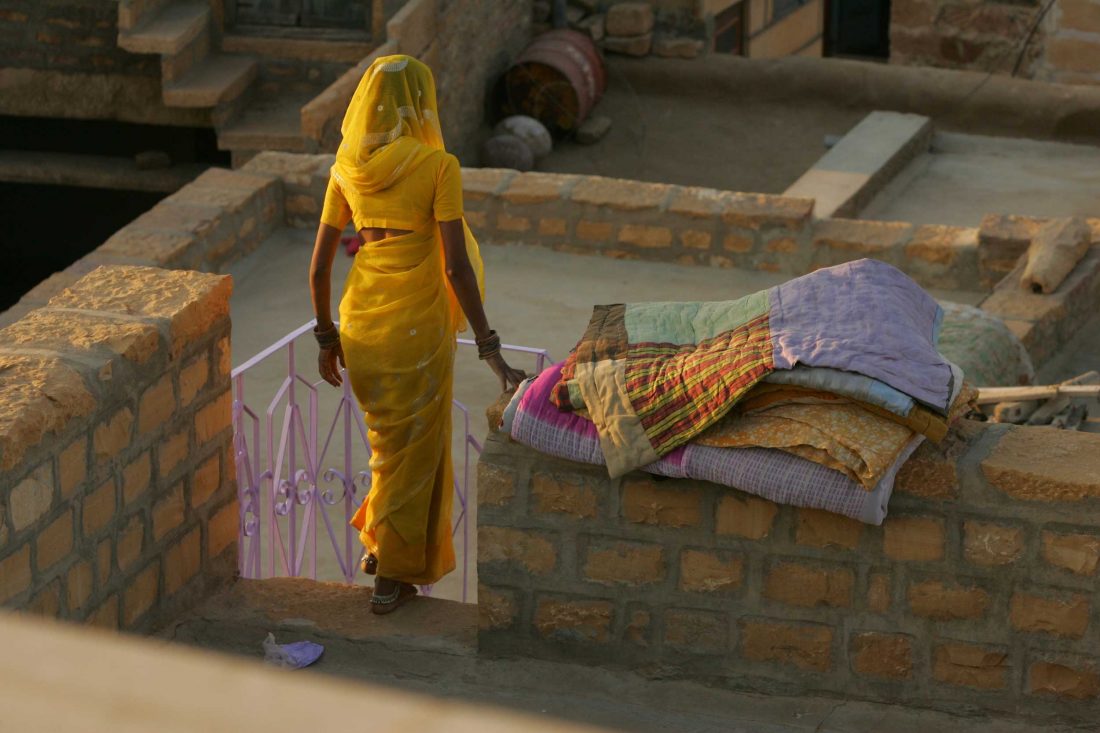
A sex worker looks for customers at a public park in downtown Hanoi, as shown in a file photo by AFP.

‘Sex workers should have the right to make a living, contribute to society, and enjoy welfare in terms of healthcare and education.’

Vietnamese officials have expressed their concerns about the complicated nature of recognizing prostitution as a job.

Despite being illegal in Vietnam, prostitutes can still be found all over the country’s biggest cities, and the rackets controlling them have come up with countless ways to dodge the law with authorities seemingly helpless to stop the industry’s unchecked development.

Data may vary, but figures from the International Labor Organization (ILO) suggest that there are nearly 101,300 sex workers, including 72,000 women, in Vietnam.

Tiếp tục đọc “Vietnam’s sex industry and the sticky subject of legalizing it”

Visualizing Data to Build Climate Resilience

WRI.org

PREPdata, an open-source platform that improves access to the highly credible information that adaptation decision-makers and practitioners need to plan for climate change.

Webinar Recording

About the Webinar

Decision-makers from urban planners to corporate executives are grappling with tough questions in a changing climate. Should city officials in the Caribbean update building codes to climate-proof infrastructure against storm surges from monster hurricanes like Maria or move to higher ground? Should farmers in drought-prone regions of sub-Saharan Africa adopt more efficient irrigation systems or switch to climate-resilient seeds? Tiếp tục đọc “Visualizing Data to Build Climate Resilience”

Tuberculosis: new hope for an ancient disease

blogs.worldbank.org

Miriam Schneidman's picture

Photo: Miriam Schneidman / World Bank

The global community is coming together to tackle an ancient disease that still inflicts interminable human suffering.  Globally, one person dies of TB every 20 seconds.  While progress has been made over the past decade much remains to be done.  Annually, there are still 10.4 million new cases and 1.7 million deaths. One of the key challenges is to find the 4 million missing cases, individuals who develop TB but are missed by health systems and continue to transmit the disease. With the global commitment to end TB, there is a renewed sense of hope in the battle against TB.

Lives and faces behind the numbers

On a hot afternoon in New Delhi, a 45-year old woman explained to visiting guests the devastation unleashed on her family when several members were diagnosed with multi-drug resistant tuberculosis (MDR-TB), a lethal form of the disease.  Due to delayed diagnosis and overcrowding, the disease spread to other family members and several succumbed, including the main breadwinner. Tiếp tục đọc “Tuberculosis: new hope for an ancient disease”

Five lessons in infrastructure pricing from East Asia and Pacific

Photo: © Dini Sari Djalal/World Bank

In the infrastructure domain, “price” is a prism with many façades.

An infrastructure economist sees price in graphic terms: the coordinates of a point where demand and supply curves intersect.

For governments, price relates to budget lines, as part of public spending to develop infrastructure networks.

Utility managers view price as a decision: the amount to charge for each unit of service in order to recover the costs of production and (possibly) earn a profit.

But for most people, price comes with simple question: how much is the tariff I have to pay for the service, and can I afford it? Tiếp tục đọc “Five lessons in infrastructure pricing from East Asia and Pacific”

March for Our Lives awakens the spirit of student and media activism of the 1960s

theconversation

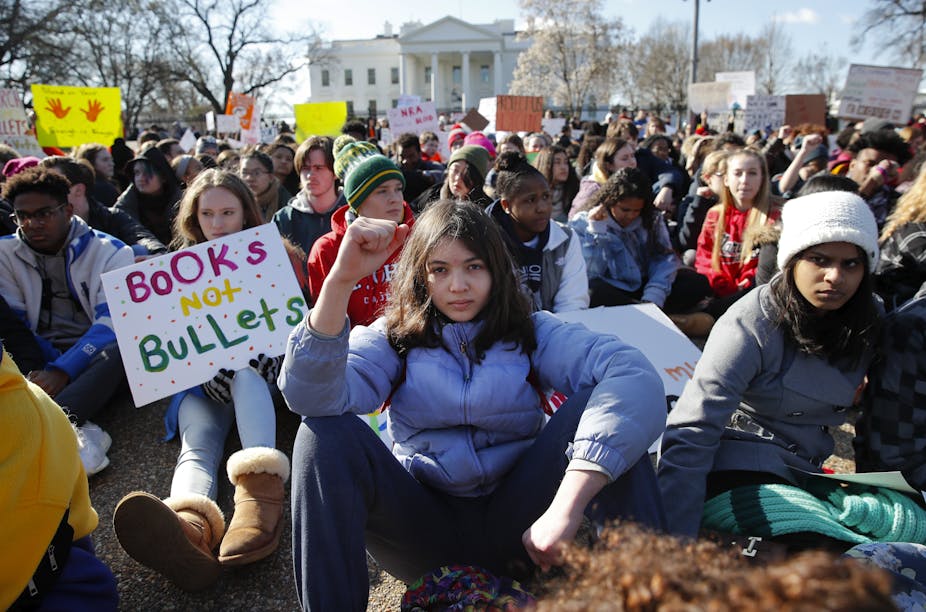
Students rally in front of the White House in Washington, March 14, 2018. AP Photo/Carolyn Kaster
student movement against gun violence is receiving sustained news coverage and was instrumental in building momentum around the March For Our Lives Rally Saturday March 24 in Washington D.C. and other U.S. cities.

Students are using social and news media to build momentum and advocate for legislation in the wake of a Feb. 14 shooting at Marjory Stoneman Douglas High School in Parkland, Florida. A former student opened fire in the school, killing 17 people. Tiếp tục đọc “March for Our Lives awakens the spirit of student and media activism of the 1960s”

Hiện tượng thủy triều đỏ trên các vùng biển và đề xuất với Việt Nam

T.S Dư Văn Toán

thiennhien.net

“Thuỷ triều đỏ” là thuật ngữ ngày càng phổ biến và quen thuộc. Nó không thuần chỉ là một hiện tượng tự nhiên tuyệt vời đầy kì bí như nhiều người vẫn nghĩ mà thực chất là một vấn đề môi trường nhức nhối cần quan tâm.

“Thủy triều đỏ” chỉ sự nở hoa của các loài vi tảo biển. Đây là hiện tượng tự nhiên xảy ra do mật độ tế bào vi tảo gia tăng lên đến hàng triệu tế bào/lít (thông thường có khoảng 10 – 100 tế bào vi tảo/ml nhưng trong trường hợp “nở hoa”, mật độ có thể lên trên 10.000 tế bào/ml), làm biến đổi màu của nước biển từ xanh lục đậm, đỏ cho đến vàng xám.
Tiếp tục đọc “Hiện tượng thủy triều đỏ trên các vùng biển và đề xuất với Việt Nam”

Hội thảo Kiến trúc bền vững, Hà Nội 27.3.2018

Mình (Hằng) sẽ có mặt ở hội thảo, mong gặp các bạn và trao đổi tại hội thảo 


HỘI THẢO KIẾN TRÚC BỀN VỮNG, Hà Nội 27.3.2018

Trình diễn Mô phỏng công trình cho thiết kế trường học Điếc & Khiếm thính & Chia sẻ kinh nghiệm từ CHLB Đức

Nằm trong khuôn khổ của Chương trình Kiến trúc Bền vững – Trao đổi kiến thức về Ứng dụng Mô phỏng Hiệu năng công trình xây dựng giữa Việt Nam và CHLB Đức, Hội thảo Kiến trúc Bền vững được tổ chức nhằm chia sẻ nền tảng quan điểm, kinh nghiệm về kiến trúc bền vững từ chuyên gia kĩ sư khí hậu người đến từ CHLB Đức và Việt Nam.

Các hoạt động chính tại hội thảo bao gồm:

– Tham quan triển lãm thiết kế trường học Điếc & Khiếm thính và lắng nghe trình bày các kết quả mô phỏng hiệu năng công trình; – Giao lưu và thảo luận mở giữa các cá nhân, tổ chức quan tâm tới mô phỏng hiệu năng công trình và kĩ sư khí hậu đến từ hai quốc gia.

Thời gian: 13:30 – 17:00 thứ Ba ngày 27 tháng 03 năm 2018
Địa điểm: Phòng U204, tầng 2, nhà U, Trường ĐH Kiến trúc Hà Nội, Km 10, Nguyễn Trãi, Hà Đông, Hà Nội

DIỄN GIẢ HỘI THẢO KIẾN

Giáo sư Volkmar Bleicher với hơn 20 năm kinh nghiệm về mô phỏng hiệu năng công trình là CEO tập đoàn Transsolar – nằm trong danh sách các công ty hàng đầu thế giới về kỹ thuật công trình thích ứng khí hậu. Đồng thời ông là giáo sư giảng dạy tại ĐH Khoa học Ứng dụng HFT Stuttgart, CHLB Đức.
Tại Hội thảo Kiến trúc Bền vững diễn ra vào chiều thứ Ba ngày 27/03 sắp tới, Giáo sư sẽ chia sẻ những nền tảng quan điểm, kinh nghiệm về kĩ sư khí hậu và mô phỏng hiệu năng công trình xây dựng.

Nếu bạn muốn đăng ký tham gia hội thảo, hãy liên hệ hòm thư:
een.vn.vsse@gmail.com hoặc hotline: 024 6655 3445


Succeeding in China’s $9.4 T E-commerce Market: Why Culture and Context Matters

asiapacfic.ca

China’s cross-border e-commerce has been growing in recent years in terms of both volume and value. With increasingly sophisticated customers who have rapidly evolving expectations, Asia’s largest economy is expected to become the world’s largest e-commerce market by 2020, with e-commerce transactions expected to reach almost 50 trillion yuan, or approximately C$9.4 trillion.

This report is intended for Canadian firms contemplating expansion into e-commerce in China. In addition to providing an overview and statistics, as well as primary data insights into key challenges and considerations, the report also offers two case studies to provide further insights into this explosive sector in China.

Read our infographic summary of the report below, or click the download button to read the full text.
Tiếp tục đọc “Succeeding in China’s $9.4 T E-commerce Market: Why Culture and Context Matters”

Climate change promotes the spread of mosquito and tick-borne viruses

sciencedaily.com

March 16, 2018

Source:European Commission Joint Research Centre

Summary:Scientists find that global warming has allowed disease-bearing insects to proliferate, increasing exposure to viral infections.

FULL STORY

Spurred on by climate change, international travel and international trade, disease-bearing insects are spreading to ever-wider parts of the world.

This means that more humans are exposed to viral infections such as Dengue fever, Chikungunya, Zika, West Nile fever, Yellow fever and Tick-borne encephalitis.

For many of these diseases, there are as yet no specific antiviral agents or vaccines.

Global warming has allowed mosquitoes, ticks and other disease-bearing insects to proliferate, adapt to different seasons, migrate and spread to new niche areas that have become warmer.
Tiếp tục đọc “Climate change promotes the spread of mosquito and tick-borne viruses”

At this rate, it’s going to take nearly 400 years to transform the energy system

technologyreview

Here are the real reasons we’re not building clean energy anywhere near fast enough.

Fifteen years ago, Ken Caldeira, a senior scientist at the Carnegie Institution, calculated that the world would need to add about a nuclear power plant’s worth of clean-energy capacity every day between 2000 and 2050 to avoid catastrophic climate change. Recently, he did a quick calculation to see how we’re doing.

Not well. Instead of the roughly 1,100 megawatts of carbon-free energy per day likely needed to prevent temperatures from rising more than 2 ˚C, as the 2003 Science paper by Caldeira and his colleagues found, we are adding around 151 megawatts. That’s only enough to power roughly 125,000 homes.

At that rate, substantially transforming the energy system would take, not the next three decades, but nearly the next four centuries. In the meantime, temperatures would soar, melting ice caps, sinking cities, and unleashing devastating heat waves around the globe (see “The year climate change began to spin out of control”).

Caldeira stresses that other factors are likely to significantly shorten that time frame (in particular, electrifying heat production, which accounts for a more than half of global energy consumption, will significantly alter demand). But he says it’s clear we’re overhauling the energy system about an order of magnitude too slowly, underscoring a point that few truly appreciate: It’s not that we aren’t building clean energy fast enough to address the challenge of climate change. It’s that—even after decades of warnings, policy debates, and clean-energy campaigns—the world has barely even begun to confront the problem. Tiếp tục đọc “At this rate, it’s going to take nearly 400 years to transform the energy system”

Why Are Minerals Companies Trying to Make Batteries?

greentechmedia

Lithium Australia is the latest in a series of firms looking downstream.

An Australian lithium mine.

An Australian lithium mine.

Lithium Australia last month became the latest in a growing list of mineral extraction firms to branch out into battery manufacturing.

The Perth, Western Australia-based lithium company announced acceptance of an offer for 99.7 percent of the Very Small Particle Company (VSPC), an Australian firm that develops and produces nanoscale metal oxides for lithium-iron-phosphate electric vehicle batteries.

Lithium Australia said VSPC, of Queensland, had spent 14 years and AUD $30 million (USD $23 million) developing “the world’s most advanced cathode production technology for lithium-ion batteries.” Tiếp tục đọc “Why Are Minerals Companies Trying to Make Batteries?”

Four Things to Know About Gender-Based Violence in Asia

asiafoundation.org

March 14, 2018

By Barbara RodriguezSofia Shakil and Adrian Morel

woman in IndiaGlobally, one in three women have experienced physical and/or sexual violence in their lifetime. On March 6, The Asia Foundation in Washington, D.C., hosted a panel discussion on why gender-based violence remains so prevalent in Asia and the legal frameworks that exist (or don’t, but should) to protect women and girls. Here are four key takeaways from our presentations and the ensuing discussion. Tiếp tục đọc “Four Things to Know About Gender-Based Violence in Asia”
Fire season in Southeast Asia

earthobservatory NASA

It’s Fire Season in Southeast Asia

acquired February 3, 2018

Every January through March, vast numbers of small fires spring up across the countryside in Southeast Asia. Those months usually bring cool, dry weather—perfect conditions for burning.

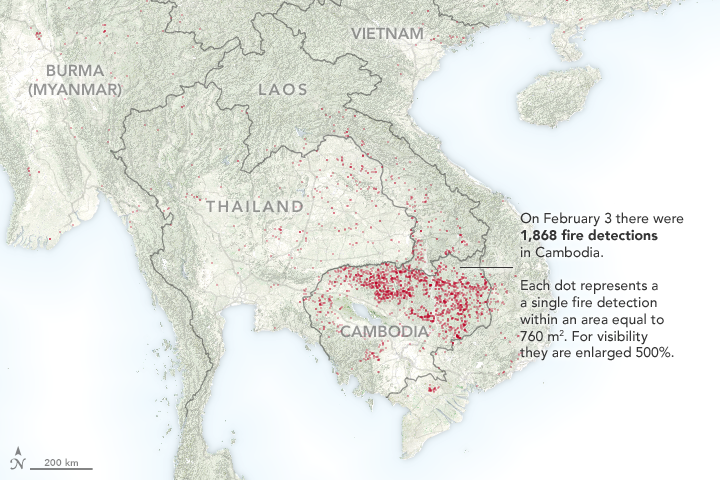
The Visible Infrared Imaging Radiometer Suite (VIIRS) on the Suomi NPP satellite captured data (above) showing the locations of hundreds of fires burning in Cambodia, Vietnam, Thailand, Laos, and Myanmar (Burma) on February 3, 2018. Each red dot on the map depicts one fire detection from the VIIRS 750-meter active fire data product. (Note that there is also a 375-meter active fire data product that detects more fires, but the 750-meter product is the basis for this useful mapping tool.)

On that day, there were significantly more fires in Cambodia than in neighboring countries. VIIRS detected 1,868 hot spots in Cambodia, 185 in Laos, 77 in Myanmar, 217 in Thailand, and 114 in Vietnam. The large number of fires in Cambodia were the most VIIRS has observed on a single day in 2018. The pattern is consistent with recent years: As depicted in the map below, the instrument has detected four-to-five times as many fires in northern Cambodia as it did in Vietnam and Thailand between August 2016 and February 2018. Northern Laos also had a relatively high number of fires. Tiếp tục đọc “Fire season in Southeast Asia”

Vietnam and U.N. to build storm-proof housing for coastal communities

Vietnam is one of 10 countries most affected by climate change, according to the latest annual Climate Risk Index published by the research organization Germanwatch.

Coastal residents are particularly vulnerable as storms increase in frequency and intensity. They are often trapped in poverty, accumulating debt or spending savings to rebuild or repair their homes, businesses and possessions.

Tiếp tục đọc “Vietnam and U.N. to build storm-proof housing for coastal communities”

Using artificial intelligence to investigate illegal wildlife trade on social media

Sciencedaily.com

Date:March 12, 2018 Source:University of Helsinki

FULL STORY

These are Southern white rhinoceros (Ceratotherium simum simum) in an undisclosed protected area in South Africa.
Credit: Enrico Di Minin

Illegal wildlife trade is one of the biggest threats to biodiversity conservation and is currently expanding to social media. This is a worrisome trend, given the ease of access and popularity of social media. Efficient monitoring of illegal wildlife trade on social media is therefore crucial for conserving biodiversity.

In a new article published in the journal Conservation Biology, scientists from the University of Helsinki, Digital Geography Lab, argue that methods from artificial intelligence can be used to help monitor the illegal wildlife trade on social media. Tiếp tục đọc “Using artificial intelligence to investigate illegal wildlife trade on social media”