Europe’s biggest insurance group Allianz stops insuring coal companies

DW

Europe’s biggest insurance group, Germany-based Allianz, stops selling policies to coal companies effective immediately under efforts to reduce the use of fossil fuel and foster climate-saving energy policies.

    
Allianz Versicherungskonzern Zentrale bei München (picture-alliance/dpa)

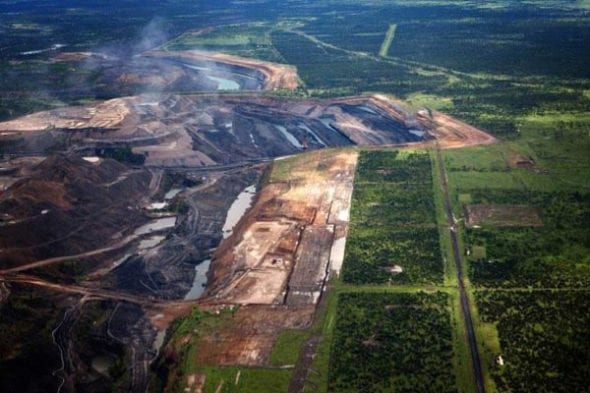
Munich, Germany-based Allianz Group announced on Friday that it would refuse insurance coverage of coal-fired power plants and coal mines with immediate effect, and would aim to get rid of all coal risks in its business by 2040.

Read more: How can the world move beyond fossil fuels?

In addition, Europe’s biggest insurer said it would stop investing in companies that do not cut their greenhouse gas emissions.

“We want to promote the transition to a climate-friendly economy,” said chief executive Oliver Bäte, adding that the company wanted to get “even more serious on global warming.” Tiếp tục đọc “Europe’s biggest insurance group Allianz stops insuring coal companies”

Vietnam: An Up-and-Coming Clean Energy Leader?

WRI

Vietnam has a significant challenge ahead: power its remarkable economic growth with less polluting and more affordable clean energy.
Tiếp tục đọc “Vietnam: An Up-and-Coming Clean Energy Leader?”

Vietnam’s Champion for Renewable Energy: Q&A with Goldman Prize Winner Khanh Nguy Thi

WRI

Khanh Nguy Thi grew up near a coal plant in Bac Am, a village in northern Vietnam. While Nguy Thi’s lifelong dream was to become a diplomat, the memory of pollution in her hometown pulled her toward work in water conservation and community development.

In 2011, Khanh founded the Green Innovation and Development Centre (GreenID) to promote sustainable energy development in Vietnam. She also started the Vietnam Sustainable Energy Alliance, a network of 11 Vietnamese and international environmental organizations that collaborate on regional energy issues. Tiếp tục đọc “Vietnam’s Champion for Renewable Energy: Q&A with Goldman Prize Winner Khanh Nguy Thi”

China’s intimidation in the South China Sea poses an economic threat to Vietnam

eastasiaforum
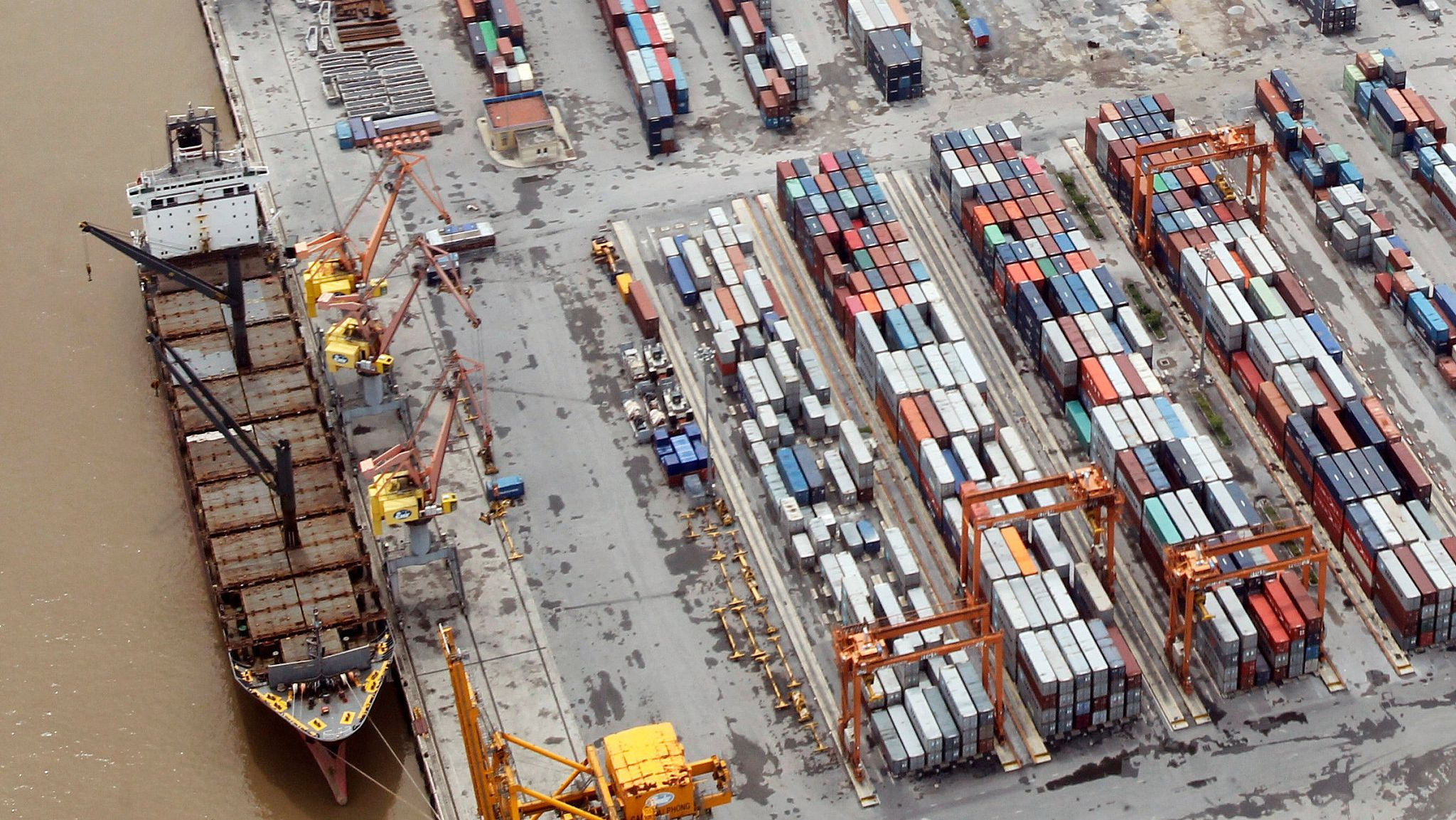
Author: Bill Hayton, Chatham HouseVietnam has lost another sea battle: a US$200 million oil and gas development project — known as the ‘Red Emperor’ development — off Vietnam’s southeast coast has been suspended, possibly cancelled. Hanoi’s hopes of a hydrocarbon boost to its stretched government budget have been dashed. And the culprit is Vietnam’s ‘good neighbour, good comrade and good friend’ to the north.

A Chinese Coast Guard vessel passes near the Chinese oil rig, Haiyang Shi You 981 in the South China Sea, 13 June 2014 (Photo: Reuters/Nguyen Minh).

The project, many years in the making, was a joint venture between Repsol of Spain, Mubadala of Abu Dhabi and the state-owned energy company PetroVietnam. Commercial drilling was due to begin this April and oil and gas were expected to flow for at least 10 years. A specialised platform built in the port of Vung Tau lies idle, as do the contracted drilling rig and storage tanker. Tiếp tục đọc “China’s intimidation in the South China Sea poses an economic threat to Vietnam”

What are the political drivers for GMOs in developing countries?

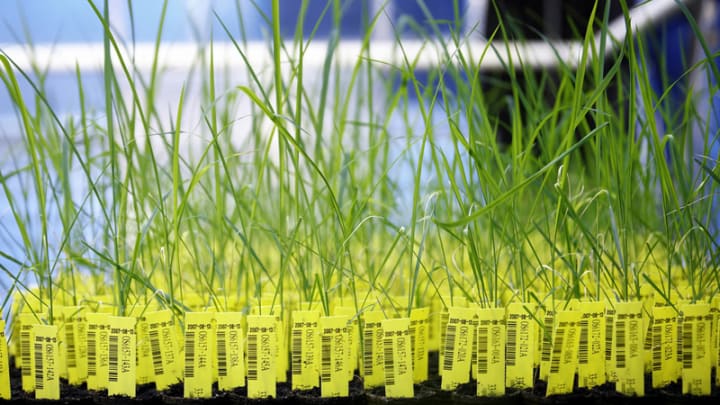
Each genetically modified rice plant in the greenhouses at CropDesign has a barcode and transponder, allowing it to be accurately identified at any time. Photo by: BASF / CC BY-NC-ND

CANBERRA — In developing nations across the globe, governments are grappling with questions of what role, if any, genetically modified organisms should play in helping address a range of agriculture, nutrition, and climate challenges.


Concerns have been raised over the environmental and health impacts of GMOs, as well as their impact on traditional farming methods and issues around seed patents, and farmers having to be dependent on corporations.

Governments of developing countries are responding to those concerns in a variety of ways with some banning GMOs outright, some embracing them, and others attempting to find balance between the concerns and needs of all sides.

Developing countries are slowly increasing approved legislation and opening the door to research and commercialization of GMO crops. As these countries seek to expand their export markets, improve domestic living conditions, and address food insecurity in the wake of conflict and climate change, some are seeing a solution in genetically engineered crops. Tiếp tục đọc “What are the political drivers for GMOs in developing countries?”

Nearly two-thirds of global workforce in the ‘informal’ economy – UN study

news.un.org

More than 61 per cent of the world’s employed population – two billion people – earn their livelihoods in the informal sector, the United Nations labour agency said on Monday, stressing that a transition to the formal economy is critical to ensure rights’ protection and decent working conditions.

The high incidence of informality in all its forms has multiple adverse consequences for workers, enterprises and societies and is a major challenge for the realization of decent work for all,” said Rafael Diez de Medina, the Director of the Department of Statistics at the UN International Labour Organization (ILO).

The findings are revealed in ILO’s latest report, Women and men in the informal economy: A statistical picture. The study also provides comparable estimates on the size of the informal economy and a statistical profile of the sector, using criteria from more than 100 countries.

“Having managed to measure this important dimension, now included in the Sustainable Development Goals (SDGs) indicators framework, this can be seen as an excellent step towards acting on it, particularly thanks to more available comparable data from countries,” added Mr. Diez de Medina.

The geographic distribution of employment in the informal sector presents a striking picture. Tiếp tục đọc “Nearly two-thirds of global workforce in the ‘informal’ economy – UN study”

Renewable power could make hydrogen cheaper than gas, study finds

A pioneering power plant in northeast Germany that converts renewable energy into hydrogen could be a common sight in the near future.

Hydrogen prices are set to fall dramatically if enough surplus solar and wind energy can be utilised in the gas’s production, according to a new study which says hydrogen could even become cheaper than natural gas.

A major dilemma for European electricity providers and grid operators is how best to integrate intermittent renewables into the current system. Clean power often goes to waste because of inflexibility and insufficient storage options.

Electricity interconnectors are expensive projects that often have a political dimension to them and battery technologies are still not at a point where they can be rolled out on a large scale. Tiếp tục đọc “Renewable power could make hydrogen cheaper than gas, study finds”

Very few pages devoted to climate change in introductory science textbooks

sciencedaily.com
Less than 2 percent of pages discussed climate change in leading biology, chemistry and physics textbooksDate:April 30, 2018

Source:Arizona State University

Summary:In new research researchers examined more than the 15,000 combined pages from current editions of 16 of the leading physics, biology and chemistry undergraduate textbooks published between 2013 and 2015. They found that less than 4 percent of pages were devoted toward discussing climate change, global warming, related environmental issues or renewable energy applications.

As an ASU graduate student, Rachel Yoho wanted to push the boundaries of renewable energy research. What she didn’t fully anticipate is that it would also lead her to questioning how climate change is taught in today’s universities.

In the Biodesign Center for Environmental Biotechnology, led by director and ASU Regents’ Professor (and recent Stockholm Water Prize winner) Bruce Rittmann, she found a welcome home to make her research thrive.

There, she focused on microbes that were giving the renewable energy field a literal jolt. For her dissertation work, led under the guidance of mentor César Torres, she published several groundbreaking papers on advances in microbial fuel cells, which turn waste into electricity through a bacterial biofilm that has the ability to grow and thrive on an electrode.

“They breathe the metal, and give us electrons for energy in the process,” said Yoho. Tiếp tục đọc “Very few pages devoted to climate change in introductory science textbooks”

Inside the Jordan refugee camp that runs on blockchain

technologyreview

Syrian refugees could regain legal identities that were lost when they fled their homes.

A few times a month, Bassam pushes a shopping cart through the aisles of a grocery store stocked with bags of rice, a small selection of fresh vegetables, and other staples. Today he’s wearing a black sweater tucked into denim jeans, which are themselves tucked into calf-high boots caked in mud. The Tazweed Supermarket, where he’s shopping, is on the periphery of a 75,000-person refugee camp in the semi-arid Jordanian steppe, six and a half miles from the Syrian border.

Tiếp tục đọc “Inside the Jordan refugee camp that runs on blockchain”

Military applications of Artificial Intelligent

thebulletin

Advances in artifcial intelligence (AI), deep-learning, and robotics are enabling new military capabilities that will have a disruptive impact on military strategies. The effects of these capabilities will be felt across the spectrum of military requirements – from intelligence, surveillance, and reconnaissance to offense/defense balances and even on to nuclear weapons systems themselves.

In this package, five top experts in AI and its potential uses in autonomous weapons and sensing systems weigh in on the moral and practical challenges of managing the explosion of military AI research and development around the world. The goal: to keep fast-paced advances in machine learning from sparking a worldwide AI arms race that poses a new existential risk to humanity.

The promise of AI—including its ability to improve the speed and accuracy of everything from logistics and battlefield planning to human decision making—is driving militaries around the world to accelerate research and development. Here’s why.
Tiếp tục đọc “Military applications of Artificial Intelligent”

Why it’s so hard for doctors to understand your pain

theconversation

We’re all human beings, but we’re not all alike.

Each person experiences pain differently, from an emotional perspective as well as a physical one, and responds to pain differently. That means that physicians like myself need to evaluate patients on an individual basis and find the best way to treat their pain.

Today, however, doctors are under pressure to limit costs and prescribe treatments based on standardized guidelines. A major gap looms between the patient’s experience of pain and the limited “one size fits all” treatment that doctors may offer.

Concerns about the opioid epidemic make the problem worse. Opioids – including heroin and fentanyl – killed more than 42,000 people in the U.S. in 2016. Four in 10 of these deaths involved prescription painkillers such as hydrocodone and oxycodone. Physicians are increasingly reluctant to prescribe opioids for pain, fearing government scrutiny or malpractice lawsuits.

https://datawrapper.dwcdn.net/i4IlW/1/

Where does this leave the patient whose experience of pain is outside the norm? How can physicians in all specialties identify these patients and do our best to manage their pain, even when their needs don’t match our expectations or experience?

Pain differences

Tiếp tục đọc “Why it’s so hard for doctors to understand your pain”

Rethinking tourism – from vulnerability to resilience

ec.europa.eu

JRC scientists have mapped tourism hotspots in Europe for all four seasons and created an index on the estimated vulnerability of regions to shocks in the tourism sector.

With travel becoming easier and less expensive, tourism has become an important economic sector in the European Union. In 2016, the EU had an estimated 40.5% market share of global international tourist arrivals.

The total contribution of the travel and tourism sector to the EU’s GDP in 2016 was 10.2%, but with strong variation between countries, ranging from more than 20% in Malta, Croatia and Cyprus to about 5% in Poland, the Netherlands and Romania.

A recent JRC study looks at patterns of tourism in Europe. Scientists combined data from Eurostat, national statistical offices and major online booking systems to map tourist density in Europe. Tiếp tục đọc “Rethinking tourism – from vulnerability to resilience”

Buổi học cách cài đặt hệ điều hành Mã nguồn mở tại Cần Thơ, FOSSASIA 3/5/2018

[Tiếng Việt ở dưới ]

Đăng ký: https://eventyay.com/e/abb7107d/

Join our meetup to learn about open source and useful applications for education. At the meetup, we will learn together how to install Open Source Operating System of your choice and play around with some basic command line. The first five participants successfully installing the OS will receive our FOSSASIA T-shirt.

Tham gia buổi meetup để tìm hiểu về Mã nguồn mở và các ứng dụng hữu ích dành cho giáo dục. Tại đây, chúng ta sẽ cùng học cách cài đặt hệ điều hành mã nguồn mở và làm quen với một số câu lệnh cơ bản. Năm bạn đầu tiên cài đặt thành công hệ điều hành sẽ nhận được áo thun FOSSASIA.

Organized by FOSSASIA

FOSSASIA is an open-source organization registered in Singapore with two offices: one in Vietnam and one in Germany. FOSSASIA develops software applications for social change using a wide-range of technologies. Projects range from Free and Open Source software, to design, graphics and hardware. FOSSASIA runs a network of 25,000 members across the globe, offers technical consultancy services on open source solutions and organize education program and tech events around the world.

We calculated how much money trees save for your city

theconversation

Megacities are on the rise. There are currently 47 such areas around the globe, each housing more than 10 million residents.

More than half the global population now lives in urban areas, comprising about 3 percent of the Earth. The ecological footprint of this growth is vast and there’s far more that can be done to improve life for urban residents around the world. Tiếp tục đọc “We calculated how much money trees save for your city”

Good Morning Vietnam, Energy-wise

energyathass

Vietnam, a leading indicator for the rest of the developing world, has seen tremendous growth in per capita energy consumption.

During a recent family vacation in Vietnam, I learned that the country is a microcosm for several major trends in energy consumption in the developing world: (1) there’s a thriving middle class, (2) hot and humid weather is driving air conditioning demand and (3) rural electrification rates are very high. (We also loved the food, culture and beaches, and we were gripped by the poignant remnants of the American War, as it’s known locally. I highly recommend it as a vacation destination if that’s your thing.)

Let’s start with some basic facts: Vietnam has seen extraordinary growth in per capita energy consumption over the past several decades. Since 1990, the earliest year for which data are available for most countries, total per capita energy consumption in Vietnam has more than doubled. (All the country-level data in this post come from the World Bank Development Indicators.) This puts Vietnam in the top 3% of countries in the world in terms of growth in per capita energy consumption. Of the countries with more than 5 million people, only China and Thailand have had more rapid growth. Tiếp tục đọc “Good Morning Vietnam, Energy-wise”