TUYÊN BỐ CHUNG CỦA CÁC LIÊN MINH TỔ CHỨC XÃ HỘI NGHỀ NGHIỆP HOẠT ĐỘNG TRONG CÁC LĨNH VỰC BẢO VỆ QUYỀN – SỨC KHỎE – MÔI TRƯỜNG – NĂNG LƯỢNG – PHÁP LÝ VỀ VIỆC XÂY DỰNG CÁC NHÀ MÁY NHIỆT ĐIỆN THAN TRÊN LÃNH THỔ VIỆT NAM

GreenID

CHÚNG TÔI, những người đứng đầu và đại diện cho các Liên minh, Mạng lưới, Nhóm công tác của các Tổ chức xã hội và các tổ chức NGO, gồm:

  • Liên minh Phòng chống bệnh không lây nhiễm Việt Nam – Vietnam Non-communicable Diseases Prevention Alliance
  • Liên minh Năng lượng bền vững Việt Nam – Vietnam Sustainable Energy Alliance
  • Nhóm Công lý, Môi trường và sức khỏe – Action Group of Justice, Environment and Health
  • Liên minh Truyền thông và Quyền của những người dễ bị tổn thương – Coalition for Right to access to information and Media for Vulnerable group
  • Mạng lưới Sông ngòi – Vietnam Rivers Network
  • Liên minh hành động vì Khí hậu Việt Nam (VCCA)
  • Và các tổ chức xã hội khác trong danh sách ký tên

Đã nhóm họp tại Hà Nội, ngày 30 tháng 12 năm 2019, để thảo luận về lộ trình và mục tiêu thực hiện phát triển bền vững (SDGs, 2030) mà Việt Nam đã cam kết tham gia và là một thành viên tích cực. Trong đó đã phân tích ý kiến đề xuất của Chủ tịch Hiệp hội Năng lượng Việt Nam Trần Viết Ngãi và ý kiến của Thủ tướng Chính phủ Nguyễn Xuân Phúc về việc xây dựng các nhà máy nhiệt điện than theo Quy hoạch điện VII (điều chỉnh) tại Hội nghị tổng kết ngành công thương tổ chức tại Hà Nội ngày 27 tháng 12 năm 2019. Tiếp tục đọc “TUYÊN BỐ CHUNG CỦA CÁC LIÊN MINH TỔ CHỨC XÃ HỘI NGHỀ NGHIỆP HOẠT ĐỘNG TRONG CÁC LĨNH VỰC BẢO VỆ QUYỀN – SỨC KHỎE – MÔI TRƯỜNG – NĂNG LƯỢNG – PHÁP LÝ VỀ VIỆC XÂY DỰNG CÁC NHÀ MÁY NHIỆT ĐIỆN THAN TRÊN LÃNH THỔ VIỆT NAM”
Công bố kết quả kiểm tra chi phí sản xuất kinh doanh điện năm 2018 của EVN

EVN

Chiều 18/12, tại Hà Nội, Thứ trưởng Bộ Công Thương Hoàng Quốc Vượng chủ trì họp báo công bố kết quả kiểm tra chi phí sản xuất kinh doanh điện năm 2018 của Tập đoàn Điện lực Việt Nam (EVN), Kế hoạch cung cấp điện và vận hành hệ thống điện quốc gia năm 2020.

Đoàn kiểm tra chi phí sản xuất kinh doanh điện năm 2018 của EVN gồm đại diện: 

– Bộ Công Thương;

– Bộ Tài chính;

– Bộ Lao động – Thương binh và Xã hội;

– Văn phòng Chính phủ;

– Ủy ban Kinh tế của Quốc hội;

– Ủy ban Trung ương Mặt trận Tổ quốc Việt Nam;

– Hội Điện lực Việt Nam;

– Hội Bảo vệ người tiêu dùng Việt Nam;

– Phòng Thương mại và Công nghiệp Việt Nam.

Chi phí sản xuất kinh doanh điện đảm bảo minh bạch Tiếp tục đọc “Công bố kết quả kiểm tra chi phí sản xuất kinh doanh điện năm 2018 của EVN”

Bhutan: Statistics and the pursuit of happiness

medium.com

Within the South Asia region, where about a third of the world’s poor live, Bhutan has had astonishing success in reducing poverty and boosting shared prosperity. Following the development philosophy of Gross National Happiness, Bhutan has increased its GDP per capita to US$3,398 in 2018, exceeding South Asia’s average of US$1,905 in the same year.¹

GDP per capita (current US$)

Data: World Bank

Bhutan’s economic growth has been driven by its public sector through hydropower development, with hydropower contributing as much as 30% of the GDP.² In comparison, Bhutan’s private sector is weak given its mountainous terrain, small domestic market, sparse population, high transportation costs, skill shortages, and other factors.³

Tiếp tục đọc “Bhutan: Statistics and the pursuit of happiness”

More Water Shortages Mean Energy Investors Need New Ways to Manage Drought Risk

WRI.org

On July 5, 2015, the first of six thermal power generation units at the Parli Thermal Power Station in Maharashtra, India shut down. Unable to draw enough water from the nearby Majalgaon dam, which had nearly run dry, the coal-powered unit was unable to run its cooling system and was forced to halt electricity production. This was just the start, as each of the five additional units subsequently shut down as well. Between July 2015 and December 2016, Parli stopped generating electricity entirely for 226 days solely due to water shortages, and during the days it wasn’t entirely shut down, it was largely paralyzed.

Imagine this picture replicated in other parts of India and around the world. Recent research is beginning to link climate change to drought, which suggests that risks to water availability will likely get worse.

That water shortages can prove costly to energy companies is old news. What is less understood is how much water shortages can impact utilities’ bottom lines.

In our new study, Financial Implications of Parched Power, we find that water shortage-induced outages to thermal power generation didn’t just turn off customers’ lights, they also caused occasional and sometimes major financial impacts to thermal power companies. This finding can have important implications for both thermal power companies and their investors. Tiếp tục đọc “More Water Shortages Mean Energy Investors Need New Ways to Manage Drought Risk”

Manage Deforestation Risk in Supply Chains

The world lost 12 million hectares of tropical forests in 2018, according to Global Forest Watch, and nearly 40 percent of deforestation is commodity-driven. Why is it so hard for companies to stop deforestation? Commodities like palm oil, cocoa, beef and soy may change hands dozens of times from the moment they’re harvested until they end up in candy bars, toothpaste or baby formula, making it nearly impossible to track deforestation in products. Today, it is finally possible for a company or bank of any size to analyze and manage deforestation risk using GFW Pro.

What’s stopping corporates from switching to clean energy in Vietnam?

Eco-business.com

Large-scale solar energy uptake is growing in Vietnam, but barriers persist to a thriving market for corporate renewable energy. How can Vietnam move faster to fulfill its clean energy ambitions?

Less than a year after having no large-scale solar farms, Vietnam expects to have more than 4,200 megawatts (MW) of large-scale solar deployed and supplying power to the country’s grid by the end of June 2019 when the first feed-in-tariff (FIT) programme expires.The onshore and offshore wind FIT incentive was recently increased, renewing investor interest and leading to estimates that more than 4,600 MW of wind projects could be completed by 2021.By any measure, Vietnam adding more than 8,000 MW of new solar and wind to its energy mix within a few years is impressive, particularly as the country strives to reduce its emissions by up to 25 per cent while also meeting electricity demand that is expected to grow an average of 8 per cent annually through 2035.
Tiếp tục đọc “What’s stopping corporates from switching to clean energy in Vietnam?”

Key Questions When Considering On-Site Solar PV: An Introductory Guide for Commercial & Industrial Facilities in Vietnam

Clean Energy Investment Accelerator Vietnam 

If you decide that on-site PV is of interest to you, based on this checklist, the next step would be to perform a more detailed technical and engineering feasibility assessment. Checklist to Determine if Your Factory Should Explore Solar PV Key questions to ask about your facility are listed below. More detail for each can be found in the sections that follow.

✓ Does your factory own the building or have a long-term lease (20+ years)?

✓ Do you have space available on your roof for solar panels and/or sufficient land for a ground-mounted system?

✓ Is the roof structurally sound and will it be in place for the duration of the economic life of the solar PV system (typically, 20-25 years?)

✓ Are there any trees, walls, buildings or other structures that shade the area where the solar panels would be located?

✓ Does the factory’s operational schedule and electricity consumption align with solar production?

✓ Does your company allow the use of operational budgets to lease equipment? Or does your company’s budget allow for equipment to be purchased with capital budgets?

✓ If your company is interested in a solar lease, would it be able to sign at least a 10-year contract?

✓ Would your solar PV system qualify for incentives, such as net metering and tax breaks? If you answer YES to all these questions, your factory is well positioned to consider solar. If you answered NO to some of these questions, there may still be other options for renewable energy procurement. The following sections provide a deeper look at these considerations and offer a more detailed explanation of the primary and current financing options for on-site solar PV electricity in Vietnam.


Full guideline https://static1.squarespace.com/static/5b7e51339772aebd21642486/t/5bec9bdecd83667c6998cc79/1542233057233/Key+Questions+to+Assess+Solar+Investment+Opportunities+in+Vietnam.pdf

Nghiên cứu của QS cho biết cái nhìn của sinh viên quốc tế về giáo dục đại học Anh Quốc hậu Brexit – sau khi nước Anh rời khỏi Châu Âu

English: QS research reveals international students’ views on UK higher education post-Brexit

Sự thay đổi linh hoạt về nhu cầu của sinh viên quốc tế, các giải pháp duy trì và quan hệ quốc tế là thách thức mà các trường đại học phải vượt qua (dựa theo báo cáo mới của QS – một công ty giáo dục đại học hàng đầu toàn cầu cung cấp bảng xếp hạng và tuyển sinh đại học).

Một khảo sát lớn với hơn 75.000 sinh viên từ 191 quốc gia cho biết: 23.557 trong số này quan tâm đến việc học tập tại Vương quốc Anh. Bản báo cáo khảo sát khuyến nghị hiện tại là thời điểm Chính phủ Anh hợp tác với ngành giáo dục đại học để đảm bảo rằng hệ thống nhập cư sau Brexit được chuẩn bị tốt nhất cho phát triển giáo dục toàn cầu.
Tiếp tục đọc “Nghiên cứu của QS cho biết cái nhìn của sinh viên quốc tế về giáo dục đại học Anh Quốc hậu Brexit – sau khi nước Anh rời khỏi Châu Âu”

Bom trong phố: Vì sao việc di dời cây xăng vẫn giậm chân tại chỗ?

vovgiaothong.vn
Đến nay, 28/32 cây xăng thuộc diện di dời ở Hà Nội vẫn tiếp tục hoạt động. Vì sao việc di dời các cây xăng không an toàn ra khỏi nội thành vẫn giậm chân tại chỗ? Hà Nội sẽ làm gì hay đợi đến vụ cháy tiếp theo?
Việc di dời các cây xăng này ra khỏi nội đô, nhất là những cây xăng sát khu dân cư đã được UBND TP.Hà Nội xem xét từ năm 2013, sau vụ cháy nghiêm trọng cây xăng Trần Hưng Đạo

Nghe nội dung chi tiết tại đây:

Tiếp tục đọc “Bom trong phố: Vì sao việc di dời cây xăng vẫn giậm chân tại chỗ?”

Gravest threat to Mekong delta today is sediment starvation not rising seas

wwf.panda.org

Posted on 10 December 2019

New research shows that the increasing vulnerability of the Mekong delta to floods, salt intrusion and erosion is caused by insufficient sediment in the river not climate-induced rise in sea levels.

Published in the journal Nature Scientific Reports, the findings of the Rise and Fall Project at Utrecht University are clear: the growing threat to the Mekong Delta – and the communities, cities, rice fields and biodiversity that depend on it – posed by higher tides and salt intrusion is almost entirely due to the loss of river sediment because of upstream dams and sand mining in the delta.

Rising tides in the delta have major ramifications for flooding in subsiding and increasingly vulnerable cities, and river bank erosion. While sea level rise and climate change have received most attention in relation to the sinking and shrinking of the Mekong delta, the research shows that in the last 20 years, they have driven less than 5% of these trends.
Tiếp tục đọc “Gravest threat to Mekong delta today is sediment starvation not rising seas”

NGUỒN Ô NHIỄM KHÔNG KHÍ Ở MIỀN BẮC TỪ ĐÂU?

Báo chí Biến đổi Khí hậu và Năng lượng

NGUỒN Ô NHIỄM KHÔNG KHÍ Ở MIỀN BẮC LÀ GÌ? CÂU TRẢ LỜI BAN ĐẦU TỪ DỊCH VỤ GIÁM SÁT KHÍ QUYỂN CỦA EU

Sau bài báo của tờ The New York Times về đường đi toàn cầu của bụi mịn sử dụng dữ liệu của Dịch vụ Giám sát Khí quyển Copernicus châu Âu (CAMS), Media Climate Net đã liên hệ với CAMS về các quan sát của họ đối với tình hình ô nhiễm không khí ở Việt Nam. Trả lời câu hỏi về nguồn gây ô nhiễm ở miền Bắc Việt Nam, tiến sĩ Johannes Flemming, nhà nghiên cứu chính của CAMS cho hay:

“Trả lời câu hỏi của các bạn một cách kỹ lưỡng sẽ đòi hỏi các nghiên cứu hết sức kì công. Nhưng tôi nghĩ không nghi ngờ gì, khu vực xung quanh Hà Nội là một nguồn ô nhiễm không khí đáng kể và các chất ô nhiễm di chuyển tầm xa cũng góp phần gây ô nhiễm không khí ở Việt Nam.”

Dịch vụ Giám sát Khí quyển Copernicus đã tiến hành quan sát ô nhiễm không khí trên toàn cầu từ vệ tinh và dự báo chất lượng không khí toàn cầu kể từ 2003. Bên cạnh dữ liệu của các trạm đo trên mặt đất, dữ liệu từ vệ tinh là một nguồn thông tin quan trọng góp phần xác định nguồn gây ô nhiễm. Tiếp tục đọc “NGUỒN Ô NHIỄM KHÔNG KHÍ Ở MIỀN BẮC TỪ ĐÂU?”

Ô nhiễm không khí lên mức ‘khủng khiếp’, tất cả… im lặng

tuoitre.vn

13/12/2019 11:56 GMT+7

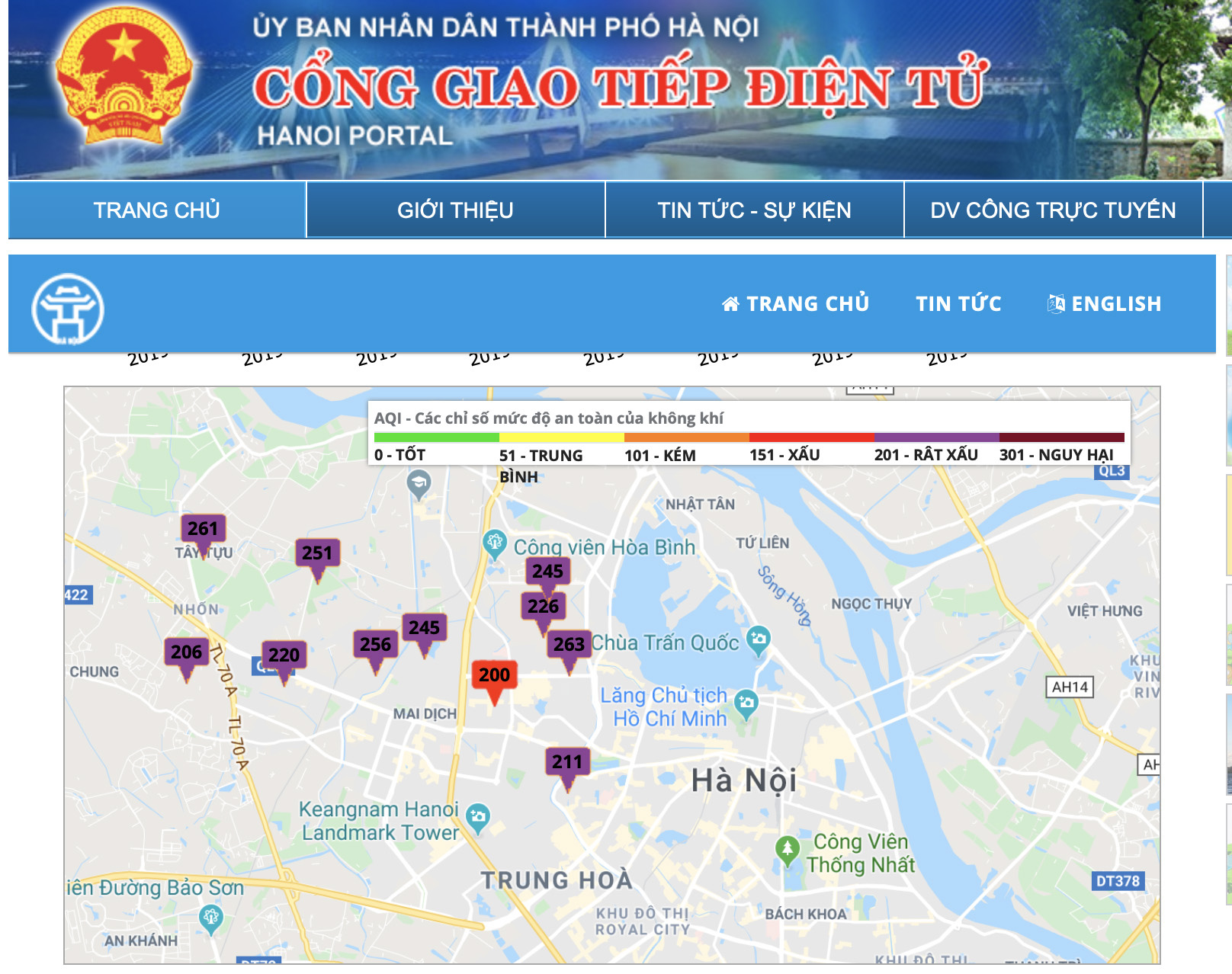
TTO – TS Hoàng Dương Tùng, chủ tịch Mạng lưới không khí sạch Việt Nam: Đây là đợt ô nhiễm không khí khủng khiếp ở một số tỉnh miền Bắc và Hà Nội, đến hôm nay 13-12 đã sang ngày thứ năm.
Ô nhiễm không khí lên mức khủng khiếp, tất cả... im lặng - Ảnh 1.

Chỉ số chất lượng không khí thể hiện màu tím ngắt – ngưỡng chất lượng không khí xấu ở hầu hết các điểm quan trắc của thành phố Hà Nội – Ảnh: XUÂN LONG

Ngày 13-12, mức độ ô nhiễm không khí ở một số tỉnh miền Bắc và Hà Nội càng tệ hơn, tới mức ảnh hưởng nghiêm trọng tới sức khoẻ con người nhưng cả Sở Tài nguyên – môi trường Hà Nội và Tổng cục Môi trường đều không có khuyến cáo gì.

Ô nhiễm không khí khủng khiếp, các cơ quan im lặng? Tiếp tục đọc “Ô nhiễm không khí lên mức ‘khủng khiếp’, tất cả… im lặng”

Làm sáng tỏ những hiểu lầm về việc đọc và hội chứng khó đọc

English: Unraveling the Myths Around Reading and Dyslexia

Giáo viên đang tìm kiếm phương pháp đào tạo mới để hiểu về khoa học não bộ liên quan đến hội chứng khó đọc (dyslexia), một khuyết tật được cho là phổ biến nhất ở trẻ em.

>Trong 17 năm là giáo viên các môn xã hội ở trường trung học cơ sở tại Nashville, Tennessee, Su Williams hay gặp những học sinh có khó khăn trong việc đọc ở trình độ cơ bản, và những kiến thức mà cô học được trong trường sư phạm và kinh nghiệm giảng dạy trong gần 2 thập kỷ không giúp được gì cho cô.

Cô nói “Tôi học được từ những lớp học của tôi đó là những gì tôi đã được đào tạo – Toàn bộ Ngôn ngữ và phương pháp tập đọc cân bằng – không hề có tác dụng (với trẻ mắc chứng khó đọc). Điều đó đã thức tỉnh tôi”. Không có thời gian để dạy học sinh lớp năm cách đọc lưu loát  hoặc hiểu thấu đáo về cơ chế sinh học cách thức trẻ em học đọc, Williams tiếp tục tập trung vào môn học mà cô phải dạy trong 1 năm học, hy vọng việc đọc của bọn trẻ sẽ dần dần được cải thiện.

Tiếp tục đọc “Làm sáng tỏ những hiểu lầm về việc đọc và hội chứng khó đọc”

Challenges facing Vietnam’s innovation ecosystem

Vietnam’s Innovation Ecosystem 2019 report

Startups in Vietnam have great potential to grow, however, the community also faces a number of challenges. Most local startups are small in scale, at seed stage, have limited ability to make a breakthrough, and are in need of further incubation. Some of the prominent challenges currently faced by startups in Vietnam are:

Ability to access finance: In 2016, the major financial sources of domestic investors came from three major venture capital firms: IDG Ventures Vietnam, Cyber Agent, and DFJ VinaCapital. Altogether, they invested over US$120 million in funding and consulting for several brands.

However, it is hard to convince local investors to take risks and invest in early-stage startups. More often than not, those startups have to bootstrap at the beginning. While early-stage startups may rely heavily on funding from angel investors, this type of investor is new to the scene and has not had much impact in the community to date Tiếp tục đọc “Challenges facing Vietnam’s innovation ecosystem”