
thebulletin.org By David A. Wargowski | August 6, 2025
 Photojournalist Yoshito Matsushige, in front of the first image he took at Miyuki-bashi Bridge, a little over two hours after the United States dropped a nuclear bomb on Hiroshima. He took a total of 5 images, the only recorded evidence of that day that changed history. (Photo by John van Hasselt/Corbis via Getty Images)Share
In the late morning hours of August 6, 1945, a single shutter clicked in Hiroshima and recorded what no camera had ever captured before, and none has again: the immediate, lived aftermath of a city annihilated by nuclear weapons.
Equipped with one camera and two rolls of film, totaling just 24 possible exposures, Yoshito Matsushige, then a 32-year-old photojournalist, ventured toward the city that morning to report for duty. Fires blocked access to his office, so he turned back and reached Miyuki Bridge (about 2,300 meters from ground zero) where he encountered the unfathomable: charred schoolgirls, civilians with melted skin, and a landscape of human agony.
He could barely bring himself to document it. But his five surviving images—the only known photographs of Hiroshima’s destruction on the day of the bombing itself—are among the most harrowing visual records of the nuclear age.
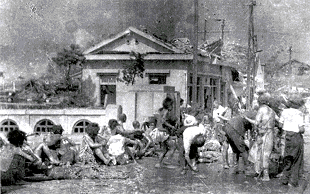
A Witness with a Camera
Born in 1913 in Kure, Hiroshima Prefecture, Matsushige joined the Geibinichinichi Newspaper Corporation in 1941, and later worked for the Chugoku Shimbun after a wartime media consolidation. He also held a secondary role as a military press officer at the Chugoku Regional Army Headquarters.
On the morning of August 6, he was at home in Midori-cho, about 1.7 miles from the bomb’s hypocenter, just outside the radius of complete destruction. Though his home was damaged, Matsushige survived relatively uninjured.
Over the next 10 hours, emotionally paralyzed by the suffering and fearful of provoking survivors’ ire, he pressed his camera shutter just seven times. Lacking clean water and darkroom resources, Matsushige was unable to develop the film immediately. He waited 20 days before processing the images outdoors, at night, using a radioactive stream to rinse them. Two of the exposures were ruined.
The other five stark and unflinching photographs—presented here with Matsushige’s own recollections and other early images included in his 1996 book, Atomic Bomb Photo Testament—are now considered iconic evidence of the Hiroshima bombing and the unimaginable consequences of nuclear war.

 CVD
CVD 