NREL
Jan. 2, 2020
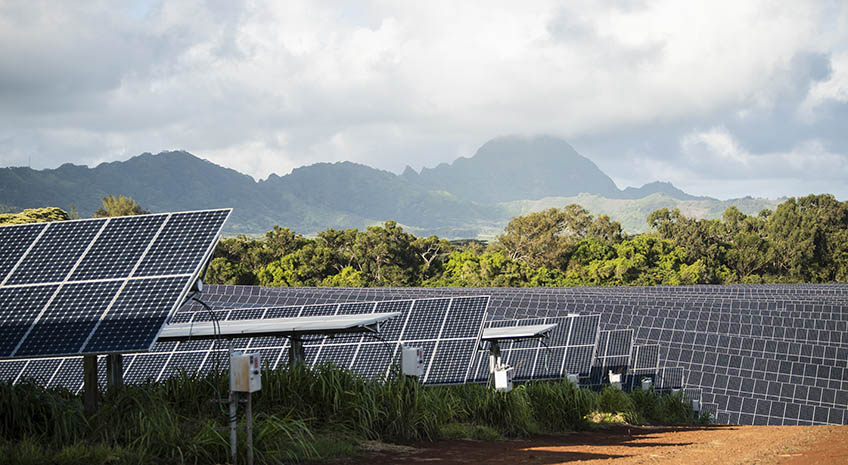
The AES Corporation, based in Virginia, installed the world’s largest solar-plus-storage system on the southern end of the Hawaiian island of Kauai. A scaled-down version was first tested at NREL. Photo by Dennis Schroeder, NREL
An oft-repeated refrain—the sun doesn’t always shine, and the wind doesn’t always blow—is sometimes seen as an impediment to renewable energy. But it’s also an impetus toward discovering the best ways to store that energy until it’s needed.
Declining costs in available technologies have propelled interest in energy storage forward like never before. The price of lithium-ion batteries has fallen by about 80% over the past five years, enabling the integration of storage into solar power systems. Today, nearly 18% of all electricity produced in the United States comes from renewable energy sources, such as hydropower and wind—a figure that is forecast to climb. And as communities and entire states push toward higher percentages of power from renewables, there’s no doubt storage will play an important role.
Compared with the same period a year earlier, the United States saw a 93% increase in the amount of storage deployed in the third quarter of 2019. By 2024, that number is expected to top 5.4 gigawatts, according to a forecast by market research firm Wood Mackenzie Power & Renewables. The market value is forecast to increase from $720 million today to $5.1 billion in 2024. Driving such growth is an increased focus on adding renewable energy sources to the nation’s grid. Tiếp tục đọc “Declining Renewable Costs Drive Focus on Energy Storage” →






 CVD
CVD 