Congolese protesters scale the perimeter wall of the compound of United Nations peacekeeping force’s warehouse in Goma, in the North Kivu province of the Democratic Republic of Congo, July 26, 2022.”/>
The United Nations said that three of its peacekeepers were killed in ongoing anti-U.N. protests that turned violent in eastern Congo on Tuesday, while several civilians were also killed in the violence.
“At the MONUSCO Butembo base today, violent attackers snatched weapons from Congolese police and fired upon our uniformed personnel,” U.N. spokesman Farhan Haq told reporters at U.N. headquarters in New York.
MONUSCO is the acronym for the U.N. Stabilization Mission in the Democratic Republic of Congo. Protesters in Butembo, in the eastern province of North Kivu, accuse the U.N. of having failed to protect them from an escalation of violence from armed groups.
EU Approves Vaccine for Monkeypox in Wake of WHO Emergency DeclarationThe European Union (EU) followed Canada and the United States in approving Bavarian Nordic’s smallpox vaccine for use against monkeypox (Reuters), the Danish drugmaker said. The step comes after the World Health Organization (WHO) declared monkeypox a public health emergency of international concern and urged countries to step up their disease surveillance and response efforts. WHO Director General Tedros Adhanom Ghebreyesus overruled an inconclusive WHO panel of advisors to make the declaration, saying “too little” is understood (NYT) about the current outbreak. More than sixteen thousand monkeypox cases have been reported in seventy-five countries since early May. Vaccines have been made available in some countries, though their global supply is relatively small (Vox).
While the G7 group of nations (Canada, France, Germany, Italy, Japan, the United Kingdom, and the United States together with the European Union) has been meeting in Germany, the BRICS nations (Brazil, Russia, India, China, and South Africa) have been meeting in China for the 14th Summit. The contrasts could not be more different – one the grouping of mainly white, powerful Western nations, representing contemporary global leadership, the other a grouping of globally powerful emerging markets wanting a larger say in the developing world. The BRICS nations differ from the G7 in two main factors, most notably in the populations they serve – 3 billion as opposed to the G7’s 987 million (including the EU), and GDP, where the G7’s GDP is currently US$33.93 trillion and the BRICS about US$23.5 trillion.
Western economists as a result tend to talk up the G7’s role in global financial strength however the growth rates of both the G7 and BRICS predicted by the IMF suggest that the latter could be responsible for 50% of all global trade by the 2030’s. This means that paying attention to the BRICS consensus leads to some direction over how the global economy is likely to change over the next decade.
At present, the G7 appear determined to continue with the existing world order, which China and Russia in particular view as ‘unipolar’, meaning centered around the United States and directed by whatever US foreign, global and domestic policies are at the time. Both countries (and others) are looking for a more inclusive role in global affairs as befits their status. China for example is the world’s second largest economy, and India the fifth. Yet neither have the percentage say in global financial institutions such as the World Bank and IMF they would like – hence the development of alternative policy banks such as the Asian Infrastructure Investment Bank and the BRICS own New Development Bank. There are also accusations that global institutions such as the United Nations (based in New York) has begun to be too influenced by Washington’s policies than global ones. Calls for reform are increasingly being heard.
The need for peacebuiliding in post-conflict societies grew out of the realization that true and enduring peace requires more than just signing agreements to stop the fighting. But while many of peacebuilding’s objectives seem self-evident, it is often laborious and expensive—and easily undone. Learn more when you subscribe to World Politics Review (WPR).
French President Emmanuel Macron delivers a speech at the opening session of the Paris Peace Forum at the Villette Conference Hall in Paris, France, Nov. 11, 2018 (SIPA photo by Eliot Blondet via AP Images). Tiếp tục đọc “How to make sure peace endures once the fighting ends”→
A 10-day world tour ended with a meeting of NATO defense ministers in Brussels.
By Jack Detsch, Foreign Policy’s Pentagon and national security reporter, and Robbie Gramer, a diplomacy and national security reporter at Foreign Policy.
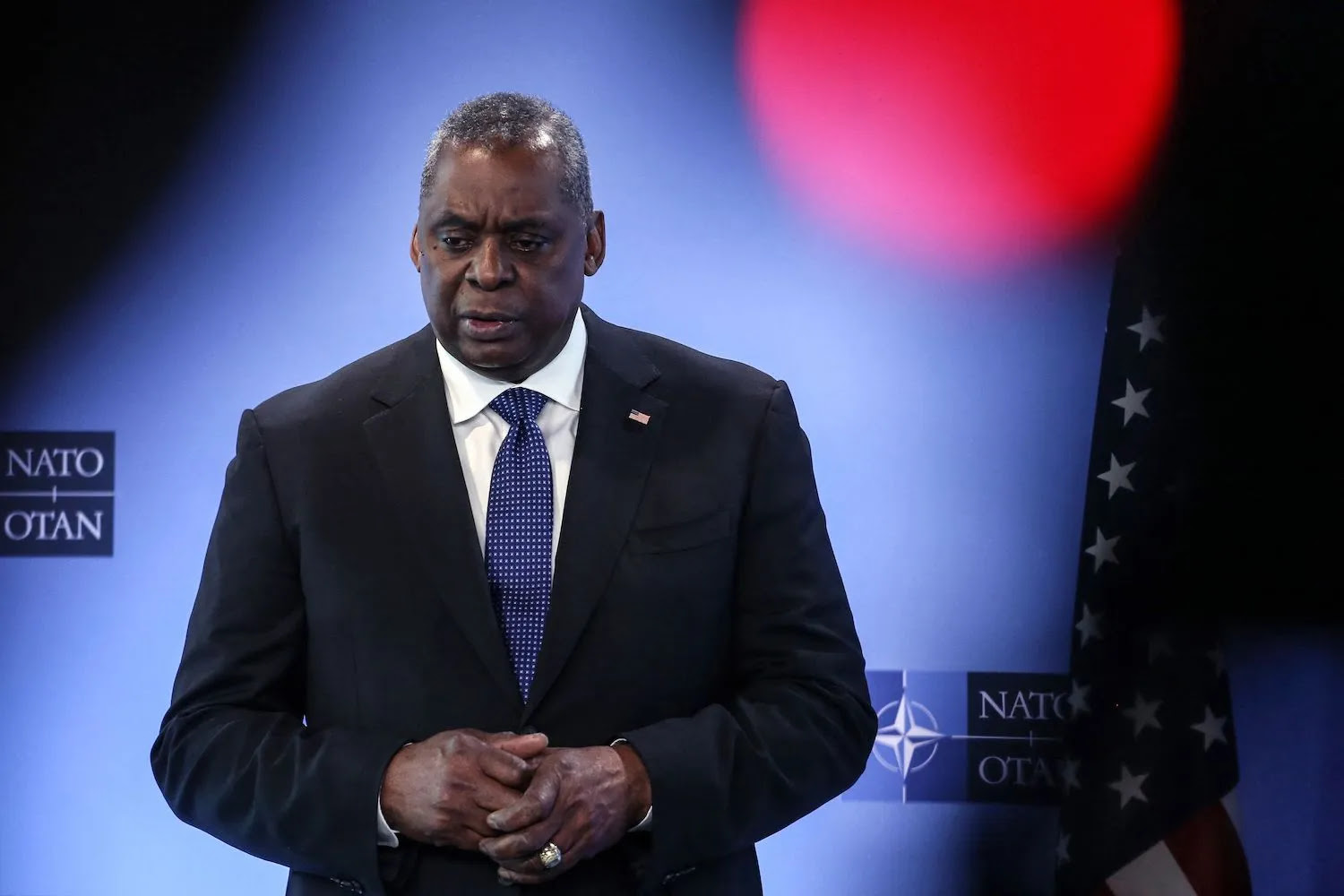
U.S. Defense Secretary Lloyd Austin makes a statement on the second day of a NATO defense ministers’ meeting at the NATO headquarters in Brussels on June 16. VALERIA MONGELLI/AFP VIA GETTY IMAGES
BRUSSELS—NATO nations are preparing to significantly bulk up the 30-country alliance’s forces in Eastern Europe, NATO Secretary-General Jens Stoltenberg said today, part of a plan to stand tall in the face of Russia’s military revanchism as Europe faces its most serious security threat from the Kremlin since the Cold War with Russia’s full-scale invasion of Ukraine.
“Russia’s aggression is a game-changer, so NATO must maintain credible deterrence and strong defense,” Stoltenberg said.
“This will mean more NATO forward-deployed combat formations to strengthen our battlegroups in the eastern part of our alliance. More air, sea, and cyber defenses, as well as prepositioned equipment and weapon stockpiles,” he added.
Editor’s note: There will be no Daily Brief on Monday, May 30, in observance of Memorial Day.
Top of the Agenda
Blinken Details U.S. Strategy Toward ChinaU.S. Secretary of State Antony Blinken laid out (CNN) the Joe Biden administration’s strategy toward China in a speech yesterday (State Dept.), calling Beijing “the most serious long-term threat to the international order.” Blinken said Washington is determined to avoid a conflict or new Cold War with China.
The U.S. approach—called “invest, align, compete”—hinges on efforts to invest in domestic sources of strength, align with allies and partners, and compete with China on issues such as technological innovation. Blinken reiterated that the U.S. strategy toward Taiwan is unchanged, and that Washington seeks to engage and cooperate with China where possible, especially on climate change. Officials said President Biden could hold a phone call (Politico) with Chinese President Xi Jinping within weeks.
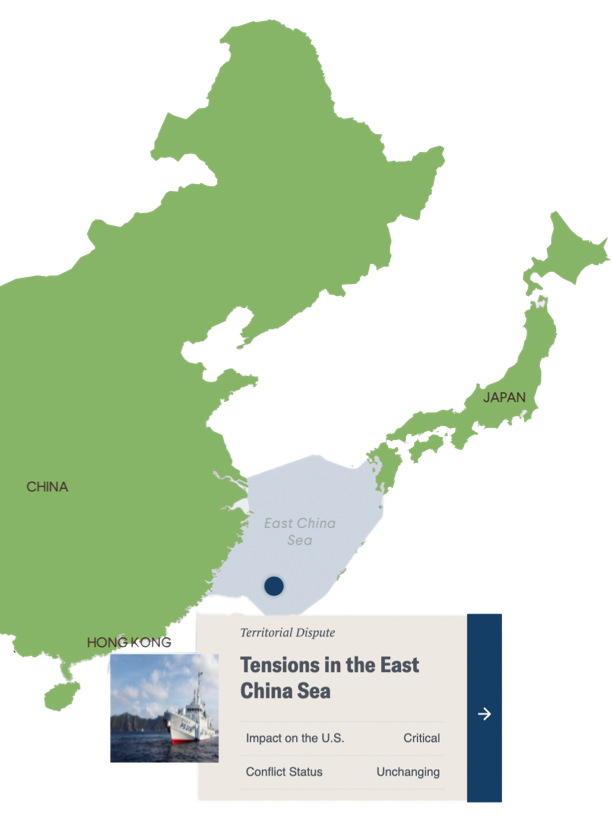
Council on Foreign Relations: Monitor World Conflicts
The Global Conflict Tracker identifies conflicts around the world, follows their evolution, and assesses their impact on U.S. national security. Our newly redesigned and expertly researched tool from CFR’s Center for Preventive Action includes live data, background information, the latest developments, and critical resources to provide insight on the world’s strife.
Conflict in Ukraine Conflict status: Worsening Russia’s military invasion risks a wider European conflict. Stay up to date.
War in Afghanistan Conflict status: Worsening Decades of instability continue amid the 2021 Taliban takeover. Read about the history.
North Korea Crisis Conflict status: Unchanging The nation’s leader continues to provoke a global crisis with his nuclear ambitions. Learn about attempts at rapprochement.
Conflict with Al-Shabab Conflict status: Unchanging Up to 450 U.S. troops return to Somalia for a mission against the al-Qaeda affiliate. Stay current.
When vladimir putin was first elected president of Russia in 2000, he changed little in the office he inherited from Boris Yeltsin. Yet in place of a pen on the desk, Mr Putin put a television remote control, one visitor noted. The new president would obsess over the media, spending the end of his days watching coverage of himself. One of his first moves was to bring under Kremlin control the country’s television networks, including ntv, an independent oligarch-owned channel, which had needled the new president with unflattering depictions of him as a dwarf in a satirical show called Kukly, or Puppets.
After more than two decades in power, today Mr Putin is the puppet master. The state controls the country’s television channels, newspapers and radio stations. The Kremlin gives editors and producers metodichki, or guidance on what to cover and how. As young audiences shift online, the Kremlin seeks to control the conversation there, leaning on social networks and news aggregators, blocking or undermining unco-operative digital media and flooding popular platforms, such as the messaging app Telegram, with state-approved content. Propaganda has long propped up Mr Putin’s regime. Now it fuels his war machine.
Since the president announced a “special military operation” in Ukraine on February 24th, control over information has become even tighter. Censorship laws bar reporting that cites unofficial sources. Calling the war a “war” is a crime. Protesters are detained for holding signs that contain eight asterisks, the number of letters in the Russian for “no to war”. Many Western social networks and platforms, including Facebook, Twitter and Instagram, have been banned or blocked. The last remaining influential independent media bastions have been pushed off air. Dozhd, an online tv station, has suspended its streams; Novaya Gazeta, a liberal newspaper whose editor recently won the Nobel Peace Prize, has halted publication; Echo Moskvy, a popular liberal radio station, no longer broadcasts from its longtime Moscow home on 91.2FM.
The Russia-Ukraine War could cost the global economy $950bn in 2022, but which countries will be hit hardest? ODI index ranks 118 LICs & MICs and finds Belarus, Armenia, Kyrgyz Republic & Lebanon are most vulnerable.
Russia’s Continuing Ties to Southeast Asia—and How They Factor Into the Ukraine War: Part 1
Longstanding ties and weapons sales to a number of countries in Southeast Asia insulate Russia from ASEAN criticism over Ukraine war.
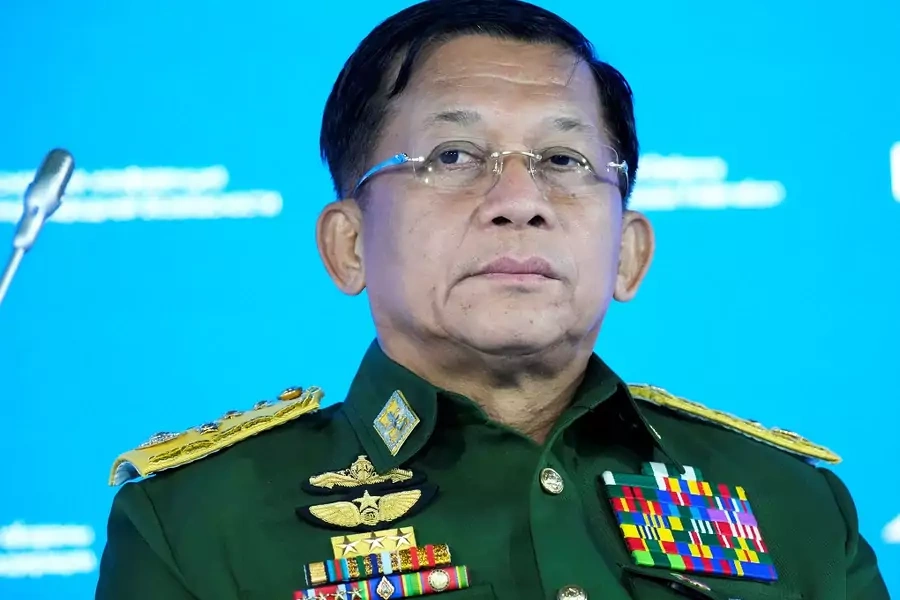
Commander-in-Chief of Myanmar’s armed forces, Senior General Min Aung Hlaing, attends the IX Moscow conference on international security in Moscow, Russia, on June 23, 2021. Alexander Zemlianichenko/Pool via Reuters
In recent years, Russia, which had not had much of a strategic or economic presence in Southeast Asia, has become a more involved player once again. It has cultivated close ties with Myanmar, regularly selling weapons to Myanmar and cultivating strategic ties. Particularly after the February 2021 Myanmar coup, when even Beijing seemed to have doubts about how the coup had destabilized the country and led to potential risks to China’s investments, Russia stood strongly behind the junta. Russian officials participated in a prominent military ceremony in Myanmar after the coup, Russian continued to supply large numbers of arms to the junta, even as it launched a scorched earth policy against coup opponents and ethnic minority groups, and the Kremlin invited junta leader Min Aung Hlaing to Moscow in June (before he had any major visits to Beijing), sending a strong signal of support to Naypyidaw.
Statement of the G7 Foreign Ministers on Russia’s war of aggression against Ukraine
07.04.2022 – Press release
1. We, the G7 Foreign Ministers of Canada, France, Germany, Italy, Japan, the United Kingdom, and the United States of America, and the High Representative of the European Union, condemn in the strongest terms the atrocities committed by the Russian armed forces in Bucha and a number of other Ukrainian towns. Haunting images of civilian deaths, victims of torture, and apparent executions, as well as reports of sexual violence and destruction of civilian infrastructure show the true face of Russia’s brutal war of aggression against Ukraine and its people. The massacres in the town of Bucha and other Ukrainian towns will be inscribed in the list of atrocities and severe violations of international law, including international humanitarian law and human rights, committed by the aggressor on Ukrainian soil.
Tuyên bố của các Bộ trưởng Ngoại giao G7 về chiến tranh xâm lược Ukrainecủa Nga
07.04.2022 – Thông cáo báo chí
1. Chúng tôi, Bộ trưởng Ngoại giao G7 của Canada, Pháp, Đức, Ý, Nhật, Vương quốc Anh và Hoa Kỳ, và Đại diện Cao cấp của Liên minh châu Âu, cùng lên án bằng những lời lẽ mạnh mẽ nhất những dã man do quân đội Nga ở Bucha và một số thị trấn khác của Ukraine gây ra. Những hình ảnh ám ảnh về những cái chết của dân thường, nạn nhân bị tra tấn, và hành quyết rõ ràng, cũng như các báo cáo về hãm hiếp và phá hủy cơ sở hạ tầng dân sự cho thấy bộ mặt thật của chiến tranh xâm lược tàn bạo của Nga đối với Ukraine và dân Ukraine. Những thảm sát ở thị trấn Bucha và các thị trấn khác của Ukraine sẽ được khắc vào danh sách những dã man và vi phạm nghiêm trọng luật quốc tế, kể cả luật nhân đạo và nhân quyền quốc tế, do kẻ xâm lược gây ra trên đất Ukraine.
We, the G7 Foreign Ministers of Canada, France, Germany, Italy, Japan, the United Kingdom, and the United States of America, and the High Representative of the European Union, condemn in the strongest terms the atrocities committed by the Russian armed forces in Bucha and a number of other Ukrainian towns. Haunting images of civilian deaths, victims of torture, and apparent executions, as well as reports of sexual violence and destruction of civilian infrastructure show the true face of Russia’s brutal war of aggression against Ukraine and its people. The massacres in the town of Bucha and other Ukrainian towns will be inscribed in the list of atrocities and severe violations of international law, including international humanitarian law and human rights, committed by the aggressor on Ukrainian soil.
In the presence of the Foreign Minister of Ukraine, Dmytro Kuleba, we expressed today our heart-felt solidarity with the Ukrainian people and our deepest condolences to the victims of this war and their families. We underline our unwavering support for Ukraine within its internationally recognised borders and express our readiness to assist further, including with military equipment and financial means, to allow Ukraine to defend itself against Russia’s aggression and to rebuild Ukraine.
We underscore that those responsible for these heinous acts and atrocities, including any attacks targeting civilians and destruction of civilian infrastructure, will be held accountable and prosecuted. We welcome and support the ongoing work to investigate and gather evidence of these and other potential war crimes and crimes against humanity, including by the ICC Office of the Prosecutor, the Commission of Inquiry mandated by the UN Human Rights Council, the Human Rights Monitoring Mission Ukraine of the OHCHR, and the OSCE’s mission of experts mandated by OSCE Participating States. We will provide investigative support, technical experts and funding. We will continue to promote accountability for all those complicit in Moscow’s war of choice, including the Lukashenka regime in Belarus. We are convinced that now is the time to suspend Russian membership of the Human Rights Council.
Russia must immediately comply with the legally binding order of the International Court of Justice (ICJ) to suspend the military operations that it commenced on 24 February 2022 in the territory of Ukraine. Further, we urge Russia to withdraw completely its military forces and equipment from the entire territory of Ukraine within its internationally recognised borders.
We warn against any threat or use of chemical, biological or nuclear weapons. We recall Russia’s obligations under international treaties of which it is a party, and which protect us all. Any use by Russia of such a weapon would be unacceptable and result in severe consequences. We condemn Russia’s unsubstantiated claims and false allegations against Ukraine, a respected member of the Biological and Toxin Weapons Convention and the Chemical Weapons Convention that is in compliance with its legal obligations under those instruments. We express concern about other countries and actors that have amplified Russia’s disinformation campaign.
We express our gravest concern with Russia forcefully seizing control of nuclear facilities, and other violent actions in connection with a number of nuclear facilities, nuclear and other radioactive material, which have caused and continue to pose serious and direct threats to the safety and security of these facilities and their civilian personnel, significantly raising the risk of a nuclear accident or incident, which endangers the population of Ukraine, neighbouring States and the international community.
We reiterate our demand that Russia upholds its obligations under international humanitarian law and desists from further blatant abuses. The Russian leadership must immediately provide for safe, rapid and unimpeded humanitarian access and make safe passages work, enabling humanitarian aid to be delivered to besieged cities and civilians to reach safety.
We commit to supporting the Government of Ukraine’s humanitarian coordination structure and to disburse humanitarian support quickly. We ask others to join in this effort. A humanitarian push including more funding is urgently needed for Ukraine and beyond as Russia’s ruthless war and actions are having massive consequences on global commodity and food prices. The resulting rise in food insecurity is being felt disproportionately by the most vulnerable. We stand in solidarity with our partners across the world who have to bear the rising price of President Putin’s unilateral choice to wage war in Europe. We will make coherent use of all instruments and funding mechanisms to address food insecurity, keep markets open, and build resilience in the agriculture sector on all continents. We will actively counter Russia’s narrative that Western sanctions have caused the rise in global food prices and call it out for what it is: a blatant lie.
In light of Russia’s ongoing aggression against Ukraine, carried out with Belarus’ complicity, we have already adopted unprecedented and coordinated economic and financial sanctions against Russia that impose a significant cost on its economy. We stress the necessity of further increasing the economic pressure inflicted on Russia and the Lukashenka regime in Belarus. Together with international partners, the G7 will sustain and increase pressure on Russia by imposing coordinated additional restrictive measures to effectively thwart Russian abilities to continue the aggression against Ukraine. We will work together to stop any attempts to circumvent sanctions or to aid Russia by other means. We are taking further steps to expedite plans to reduce our reliance on Russian energy, and will work together to this end.
We commend those neighbouring states to Ukraine that demonstrated great solidarity and humanity by welcoming Ukrainian refugees and third country nationals affected by the conflict. We confirm the need for increased international assistance and will continue to support these countries, including by receiving more refugees. President Putin’s war of aggression against Ukraine has already forced millions of civilians, especially women, children, and elderly, to flee their homes. Over 4.2 million crossed the border to other countries, almost all of them to the EU and the Republic of Moldova. We reiterate our concern about the risk to this vulnerable population, including the risk of human trafficking and our commitment to protect these refugees.
Ministers paid special attention to the Republic of Moldova, which hosts the largest group of refugees from Ukraine per capita. The Ministers agreed to further coordinate their assistance for Moldova’s humanitarian response and long-term resilience following the Moldova Support Conference co-hosted by Germany, France and Romania on 5 April in Berlin and the establishment of the Moldova Support Platform.
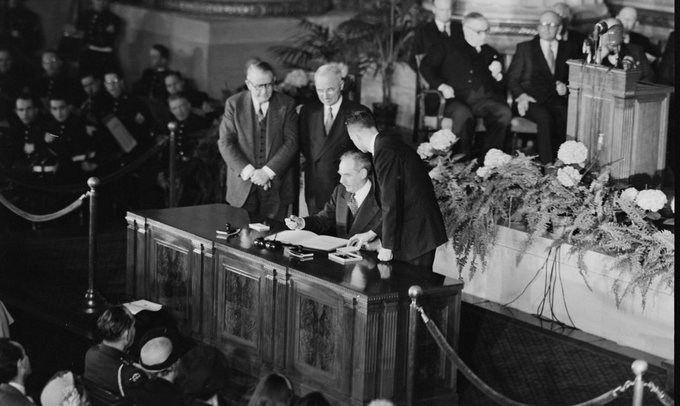
On April 4, 1949, Secretary of State Dean Acheson and President Harry S Truman were present for the signing of the treaty that created North Atlantic Treaty Organization.
OVERVIEW
Formed in 1949 with the signing of the Washington Treaty, NATO is a security alliance of 30 countries from North America and Europe. NATO’s fundamental goal is to safeguard the Allies’ freedom and security by political and military means. NATO remains the principal security instrument of the transatlantic community and expression of its common democratic values. It is the practical means through which the security of North America and Europe are permanently tied together. NATO enlargement has furthered the U.S. goal of a Europe whole, free, and at peace.
Article 5 of the Washington Treaty — that an attack against one Ally is an attack against all — is at the core of the Alliance, a promise of collective defense. Article 4 of the treaty ensures consultations among Allies on security matters of common interest, which have expanded from a narrowly defined Soviet threat to the critical mission in Afghanistan, as well as peacekeeping in Kosovo and new threats to security such as cyber attacks, and global threats such as terrorism and piracy that affect the Alliance and its global network of partners.
In addition to its traditional role in the territorial defense of Allied nations, NATO leads the UN-mandated International Security Assistance Force (ISAF) in Afghanistan and has ongoing missions in the Balkans and the Mediterranean; it also conducts extensive training exercises and offers security support to partners around the globe, including the European Union in particular but also the United Nations and the African Union.
MEMBER STATES
The NATO Alliance consists of 30 member states from North America and Europe. Article Five of the treaty states that if an armed attack occurs against one of the member states, it should be considered an attack against all members, and other members shall assist the attacked member, with armed forces if necessary.
Over the past two decades, the Alliance has developed a network of structured partnerships with countries from the Euro-Atlantic area, the Mediterranean and the Gulf region, as well as individual relationships with other partners across the globe. NATO pursues dialogue and practical cooperation with many partner countries and engages actively with other international actors and organisations on a wide range of political and security-related issues.
NATO is comprised of two main parts, the political and military components. NATO Headquarters is where representatives from all the member states come together to make decisions on a consensus basis. It also offers a venue for dialogue and cooperation between partner countries and NATO member countries, enabling them to work together in their efforts to bring about peace and stability.The key elements of NATO’s military organisation are the Military Committee, composed of the Chiefs of Defence of NATO member countries, its executive body, the International Military Staff, and the military Command Structure (distinct from the Force Structure), which is composed of Allied Command Operations and Allied Command Transformation, headed respectively by the Supreme Allied Commander Europe (SACEUR) and the Supreme Allied Commander, Transformation (SACT).
The primary role of Alliance military forces is to protect peace and to guarantee the territorial integrity, political independence and security of the member states. Alliance forces must be able to deter and defend effectively. The Alliance remains subject to a wide variety of military and non-military risks that are multi-directional and often difficult to predict.
The term NATO Military Exercise includes all exercises for which NATO is the initiating or the joint initiating authority. Associated with NATO Military Exercises are building blocks, such as: seminars, study periods and workshops.
A NATO Military Exercise is scheduled by a NATO Commander. It aims to establish, enhance and display NATO’s Military Capability across the Alliance’s full mission spectrum which is based on the three Alliance military missions:
Article 5 Collective Defence;
Non-Article 5 Crisis Response; and
Consultation and Co-operation.
OPERATIONS
NATO is an active and leading contributor to peace and security on the international stage. It promotes democratic values and is committed to the peaceful resolution of disputes. However, if diplomatic efforts fail, it has the military capacity needed to undertake crisis-management operations, alone or in cooperation with other countries and international organisations. Through its crisis-management operations, the Alliance demonstrates both its willingness to act as a positive force for change and its capacity to meet the security challenges of the 21st century.
Foreign Ministers Meetings and Defense Ministers Meetings provide an opportunity for NATO Allies to address many of NATO’s most pressing security challenges at the some of the highest levels of government. Key strategic issues discussed at these meetings have included Afghanistan, Capabilities, Kosovo, and Missile Defense. Generally attended also by many of NATO’s partners, these meetings are a chance for NATO to strengthen its relationships around the world.
WHY NATO MATTERS
As a political and military alliance, what we do together at NATO directly contributes to the security, the prosperity, and liberty of the people of the United States and every Ally.Our NATO links are solid, forged over 70 years of history. NATO promotes democratic values and encourages consultation and cooperation on defense and security issues to build trust and, in the long run, prevent conflict. NATO is committed to the peaceful resolution of disputes. If diplomatic efforts fail, it has the military capacity needed to undertake crisis-management operations. These are carried out under Article 5 of the Washington Treaty — NATO’s founding treaty — or under a UN mandate, alone or in cooperation with other countries and international organizations. In the history of NATO, Article 5 has been invoked just once, and that was in response to the 9/11 terrorist attacks in the United States.


 Daily News BriefJuly 25, 2022

 The
The 



 CVD
CVD 