From violent westward expansion to interwar isolationism to ruinous military interventions, discover which U.S. foreign policy decisions left the most tarnished legacies.
From securing America’s sovereignty to expanding its continental reach to creating the post-World War II institutions that ushered in unprecedented peace and prosperity, discover which U.S. foreign policy decisions left the most positive legacies.
At a time when other popular parts of Asia are struggling with dwindling tourist numbers, how is Vietnam hitting record numbers of visitors?
Vietnam has kicked off the new tourism year by shattering records. According to the national tourism authority, VNAT, almost 2.5 million international visitors arrived in January – the highest number ever recorded in a single month and an 18.5 per cent jump over the previous year.
While these figures represent an economic triumph, they also highlight a shifting geopolitical map.
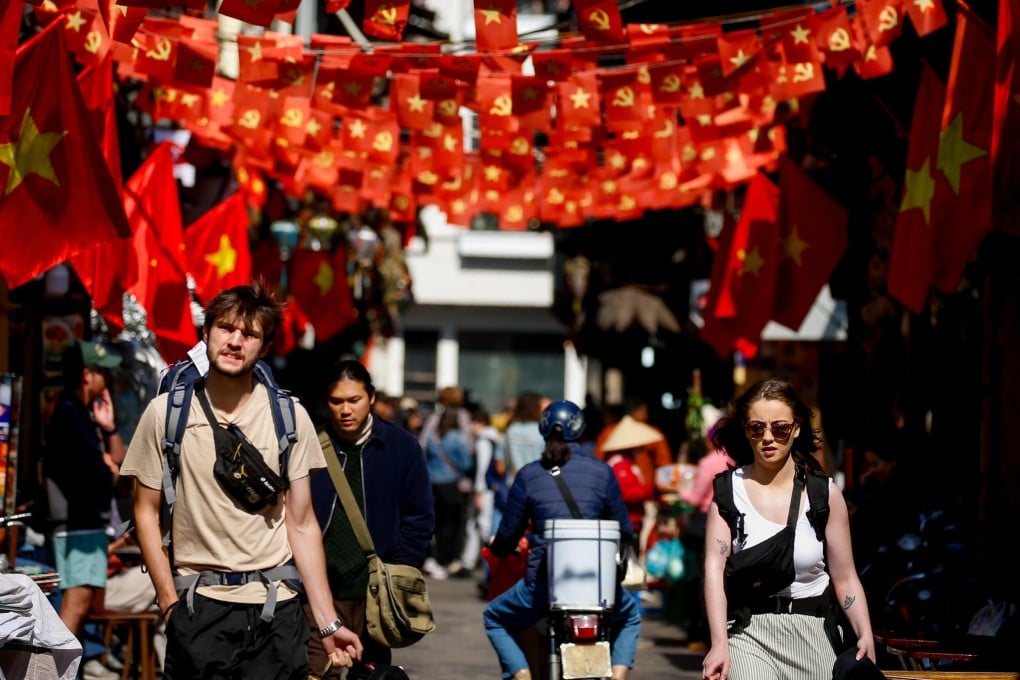
Travellers are increasingly bypassing the smouldering border disputes between Thailand and Cambodia in favour of the relative stability found in Hanoi and Ho Chi Minh City. However, this new-found “stability” brings its own set of growing pains.
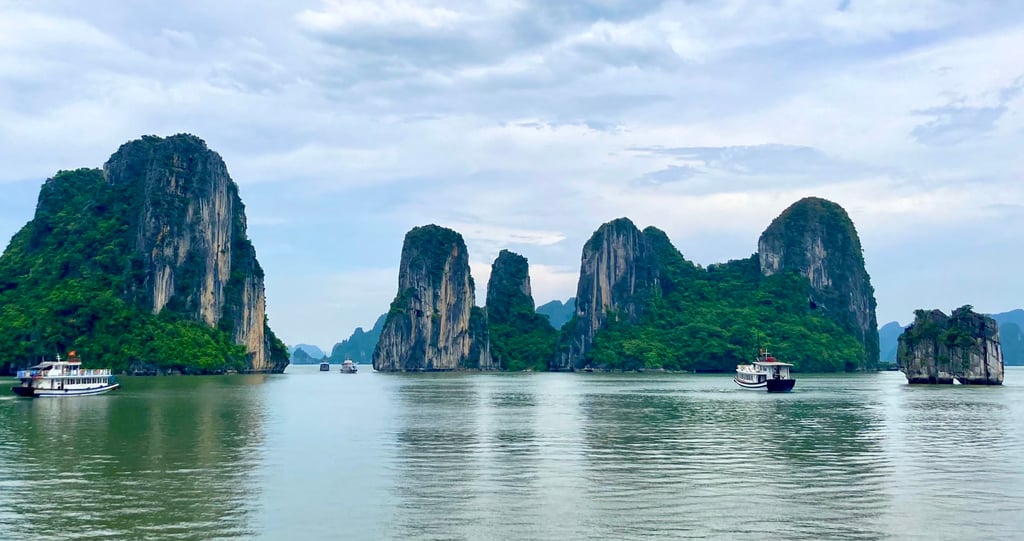
Tourist boats sail through the world-famous waterscape of Halong Bay. Photo: dpa
This surge is being driven by a diversifying demographic.
While most visitors still hail from within Asia, European arrivals are climbing significantly. VNAT credits this boom to eased visa rules – such as the 45-day visa-free stay for German citizens – alongside a rise in direct international flights and Vietnam’s growing reputation as a premier long-haul winter escape.
Hanoi and HCMC now proportionately more expensive than Singapore and Tokyo
HO CHI MINH CITY — To get by in Vietnam’s crowded, bustling capital Hanoi, university employee Nguyen Bich Ha shares a room with her husband and two kids that is 16.5 square meters in size, little bigger than a parking space for a car.
She wishes that the four of them could have a home of their own instead of living in a room in her husband’s parents’ house. She and her husband depend on the in-laws for help taking their children to and from school but sometimes disagree with them on issues related to bringing up the kids and the timing of meals.
“There isn’t much privacy either since there are many shared living spaces,” said Ha, 36. “And since it’s their house, we can’t make decisions on decoration or changes around the house.
Gần đây, trong một cuộc trò chuyện với bạn bè, bỗng dưng một doanh nhân nổi đóa: “Nói chuyện gì thì nói, đừng nói chuyện tiền!”. Thấy mọi người chưng hửng, ông bỗng tuôn ra một tràng dài: nào là phải đóng cửa ba công ty, nào là sa thải người lao động, rồi chuyện làm ăn giờ khó khăn ra sao…
Ông ấy là một doanh nhân, một đại gia có tiếng mà còn than vãn như vậy, thì những người khác có lẽ còn khó khăn hơn.
Sự vắng vẻ ở nhiều con phố, trung tâm thương mại và chợ hàng hóa có thể nói nên nhiều điều.
Nhiều cửa hàng ở trên các mặt phố lớn ở Hà Nội đóng cửa do kinh doanh ế ẩm.
Ngay cả trong nửa đầu năm nay, đã có 127 nghìn doanh nghiệp đóng cửa, nâng tổng số doanh nghiệp rời khỏi thị trường lên đến 862.376 trong giai đoạn từ đầu năm 2020 đến nay – một giai đoạn mà nền kinh tế đã trải qua biết bao khó khăn, cả khách quan lẫn chủ quan.
Thị trường tài sản mã hóa mang đến cơ hội, nhưng cũng đầy rẫy cạm bẫy. Trong bối cảnh các thủ đoạn lừa đảo ngày càng tinh vi, các nhà đầu tư cần học cách nhận diện, phòng tránh các mô hình lừa đảo để tự bảo vệ mình.
Trong những năm gần đây, thị trường tài sản mã hóa (crypto) đã bùng nổ tại Việt Nam, thu hút một lượng lớn nhà đầu tư, đặc biệt là giới trẻ. Với tiềm năng lợi nhuận cao và tốc độ tăng trưởng ấn tượng của các đồng tiền như Bitcoin, Ethereum, hay các mô hình tài chính phi tập trung (DeFi), không ít người đã kỳ vọng đây sẽ là cơ hội đổi đời.
Cạm bẫy lừa đảo ngày càng tinh vi trên thị trường tài sản mã hóa.
Theo số liệu từ Triple-A, năm 2024 có hơn 17 triệu người Việt Nam đang sở hữu tài sản mã hóa, chiếm gần 17% dân số. Tuy nhiên, sự phát triển nhanh chóng này cũng đi kèm một lỗ hổng lớn: phần lớn nhà đầu tư là người mới, tiếp cận thị trường thông qua mạng xã hội hoặc lời rỉ tai, không có nền tảng về công nghệ blockchain, pháp lý tài sản số hay các phương thức lừa đảo phổ biến hiện nay.
Mới đây, thông tin về “Madam Ngo” bị Interpol truy nã vì tội lừa đảo đầu tư tiền điện tử và ngoại hối, lừa đảo hơn 2.000 nạn nhân người Việt Nam số tiền khoảng 300 triệu USD đã gióng lên hồi chuông cảnh báo về những rủi ro tiềm ẩn trong thị trường này.
Jonathan Hanitzsch rests after collecting trash off the coast of Hon Mot Island on Feb. 7, 2025, in Nha Trang, Vietnam. (AP Photo/Yannick Peterhans)
By YANNICK PETERHANS and ANIRUDDHA GHOSALUpdated 9:02 AM GMT+7, March 5, 2025Share
NHA TRANG, Vietnam (AP) — The gentle waves off the coast of central Vietnam’s Nha Trang obscure an open secret: The life-giving coral reefs below are dying. The waters are eerily devoid of fish. The bounty of the ocean is coming to an end.
This is why Binh Van — who fished in these waters for over two decades — now charters his boat to Vietnamese tourists wanting to experience the thrill of fishing in the deep waters of the South China Sea. But there is only squid, which is flourishing in oceans warmed by climate change, to catch. His passengers don’t mind as the boat moves away from Nha Trang’s twinkling beach resorts. But Van is pensive.
Nguyen Tuan Hai drives Rainbow Diver’s boat to Madonna Rock, Feb. 7, 2025, in Nha Trang, Vietnam. (AP Photo/Yannick Peterhans)
It wasn’t always like this. There was a time when he’d catch 70 kilograms (154 pounds) of fish, like tuna and grouper, in one night. He can’t make money on the squid.
As well as sending remittances, many are returning to their homeland
Photograph: Hannah Reyes Morales/New York Times/Redux /Eyevine
May 22nd 2025|HO CHI MINH CITYShareListen to this story
Fifty years ago Thinh Nguyen left his homeland aboard an American navy ship. Some of his compatriots escaped in helicopters. Tens of thousands fled in makeshift boats. Many more, including Mr Nguyen’s father and brother, were left behind as troops from North Vietnam stormed into Saigon, then the capital of American-backed South Vietnam. The chaotic evacuation marked the end of the Vietnam war, badly damaged American credibility and left Vietnam in Communist hands. It also helped create one of the world’s biggest diasporas.
The intricate histories and niche experiences that we love about Saigon can make it difficult to explore. If you enjoy reading about Saigoneer’s favorite destinations, Urbanist Travel can help create a tailor-made itinerary based on your requests. More Informatio
Read this article in Vietnamese at Sài·gòn·eer.From the very first discussions in 1868 regarding a new marketplace for Saigon, it was not until 1914, that Bến Thành Market became a reality. The birth of the market was like a dream come true, one that came together after nearly five decades of debate in search of solutions for the city’s infrastructure woes.
The five-decade quest to seek a “worthy” marketplace
In her research conducted on the vendors of Bến Thành, anthropologist Ann Marie Leshkowich recounts the lengthy discussions of then Saigon’s colonial administration regarding the establishment of a new commercial center, one that, according to them, must become a place “worthy” of the metropolis they were helping to create.
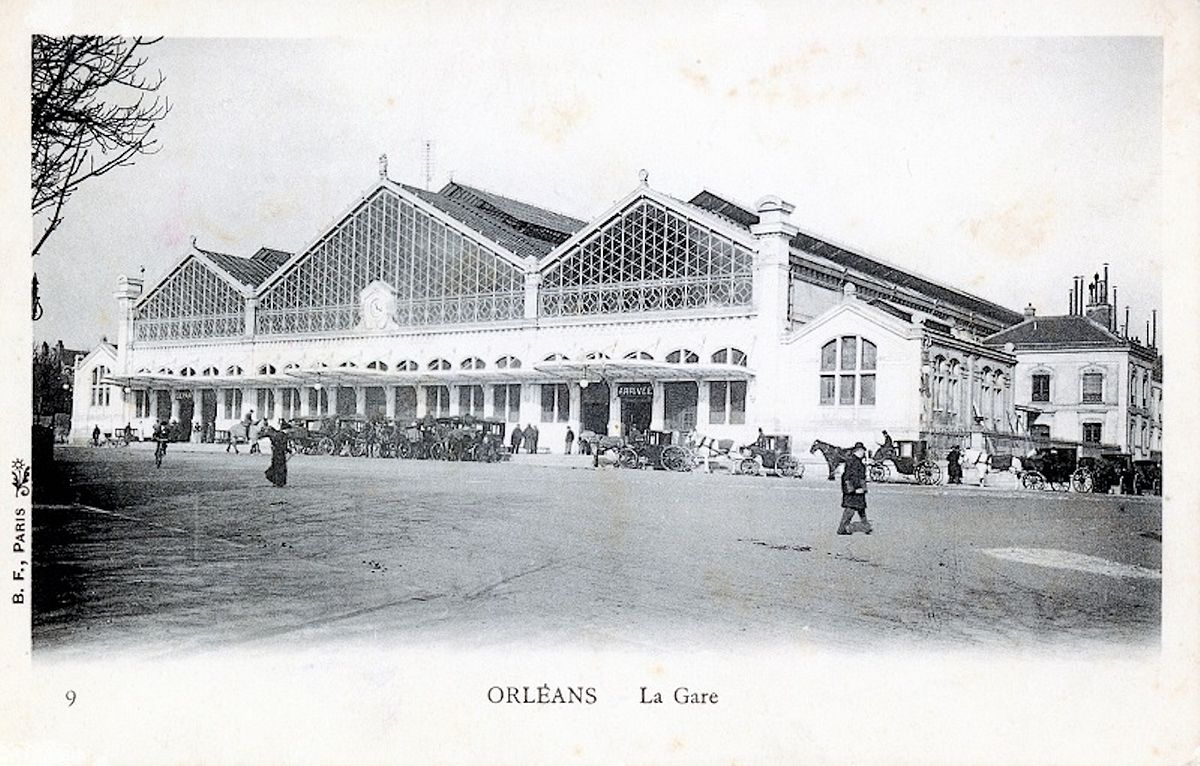
In 1868, the French had only spent about one decade trying to install a colonial network in Vietnam. Members of the Municipal Council (Conseil Municipal) had the thought of building a new marketplace from metal, replacing traditional thatch markets. In 1869, a budget of 110.000 francs was greenlit, but by 1870, the estimated expenditure had ballooned threefold, causing them to reconsider the planned building methods and amount of materials.
We mark 50 years since the end of the U.S. war on Vietnam with the acclaimed Vietnamese American writer Viet Thanh Nguyen. On April 30, 1975, North Vietnamese troops took control of the South Vietnamese capital of Saigon as video of U.S. personnel being airlifted out of the city were broadcast around the world. Some 3 million Vietnamese people were killed in the U.S. war, along with about 58,000 U.S. soldiers. Hundreds of thousands of Lao, Hmong and Cambodians also died, and the impact of the war is still being felt in Vietnam and the region.
Nguyen says while the Vietnam War was deeply divisive in the United States during the 1960s and ’70s, American interference in Southeast Asia goes back to President Woodrow Wilson in 1919, when he rejected Vietnamese demands for independence from France. “And from that mistake, we’ve had a series of mistakes over the past century, mostly revolving around the fact that the United States did not recognize Vietnamese self-determination,” says Nguyen.
We Are Here Because You Are There”: Viet Thanh Nguyen on How U.S. Foreign Policy Creates Refugees
Pulitzer Prize-winning Vietnamese American writer Viet Thanh Nguyen discusses why he chooses to use the term “refugee” in his books, and speaks about his own experience as a refugee. His new novel tells the story of a man who arrives in France as a refugee from Vietnam, and explores the main character’s questioning of ideology and different visions of liberation. Titled “The Committed,” the book is a sequel to “The Sympathizer,” which won the Pulitzer Prize for Fiction in 2016. Nguyen says his protagonist is “a man of two faces and two minds” whose ability to see beyond Cold War divisions makes him the perfect figure to satirize the facile stories people tell themselves about the world. “He’s always going beyond the surface binaries to look underneath.” Nguyen is the chair of English and professor of English and American studies and ethnicity at the University of Southern California. His other books include “The Refugees” and the edited collection “The Displaced: Refugee Writers on Refugee Lives.”
Viet Thanh Nguyen Interview: The Vietnam War Refugee Experience Behind The Sympathizer
Pulitzer Prize-winning author Viet Thanh Nguyen reflects on his childhood as a refugee in America, his writing career, and family: from the trauma of displacement to the healing found in fatherhood and literature. Nguyen shares how these experiences have shaped his life and work, from his novel The Sympathizer to his commentary on war, cultural identity, and American life.
00:00 Introduction to Viet Thanh Nguyen and The Sympathizer
00:49 Refugee journey, family separation, and overcoming trauma
03:43 Humor, cultural expectations, and Vietnamese Catholic roots 05:29 Cultural identity, rebellion, and hidden writing career
07:14 Family relationships, cultural silence, and lessons in parenting 09:35 Impact of fatherhood, learning from children, and rediscovering play
12:13 Art, personal identity, and American cultural values 14:49 Vietnamese American identity, racism, and vision for the future
17:27 Teaching about war, challenges of digital information overload
20:31 Apocalypse Now, self identity struggles, and power of storytelling
24:41 Vietnam War legacy, draft-era resistance vs. modern volunteer military
26:47 Family history, generational trauma, and refugee story from Vietnam
*On the boil newsletter co-founded by 2 girls with a dream to see Vietnam become a leader in the fight against climate change. The newsletter delivers the information in a digestible format,
Global climate change and sustainability news?
Updates on the environment and sustainability projects in Vietnam?
Inspiring stories of climate leaders and their projects?
From Zero to hero, the various case of Vietnam’s renewable energy
In January, a humble “S-shaped” country in South East Asia became the talk of the town. Having been “chasing the sun”, Vietnam saw a boom in rooftop solar installations at the end of 2020. It beat all forecasts, even that of Bloomberg, who made an entire podcast episode featuring Vietnam’s race to green energy.
Before we get to the real meat of what happened, let us first take a step back to look at the whole relationship between energy and climate, and why moving to green energy matters.
All living things on the planet contain carbon [insert Sir. David Attenborough‘s voiceover here]. When organisms died hundreds of millions of years ago, their remains got buried deep under layers of sediment and rock. Under high heat and pressure, they were slow-cooked into carbon-rich deposits we now call fossil fuels, i.e. coal, oil and natural gas.
Fast forward to the 18th century. The Industrial Revolution unlocked the huge potential of fossil fuels as an abundant source of energy. Since then, fossil fuels have rapidly established themselves as the major source of power, supplying about 84% of global energy in 2019.
Now back to Chemistry 101: when we burn fossil fuels for energy, the carbon atoms (C) that have been stored away for millennia meet with oxygen (O), releasing an enormous amount of CO2. Unsurprisingly, 81% of total CO2 emissions from 1959 to 2019 comes from burning oil, coal, and natural gas. This is bad news for our friend Earth, as CO2 is a long-lived greenhouse gas capable of trapping heat from sunlight, causing global warming.
The answer is no…if 1) we move away from fossil fuels and into low-carbon, renewable energy (RE) and 2) we reduce energy consumption and increase energy efficiency. In this issue, we’ll zoom in on the first solution.
From 1965 to 2019, the share of renewables (e.g. solar, wind, hydropower) in the energy mix almost doubled from 6% to 11%. This seems…puny compared to that of fossil fuels. On the bright side, the recent net-zero emission targets set by the world’s major economies as well as big corporates in an effort to slow climate change are expected to accelerate renewables’ growth.
Vietnam is also encouraging a shift from fossil fuel to renewables, in order to meet its CO2 emission mitigation target.
The article goes on to praise Prime Minister Narendra Modi for his ‘fight against corruption.
ANI | New Delhi Last Updated at September 1, 2017 15:11 IST
Image: Shutterstock
If the statistics furnished by the Transparency International (TI), an anti-corruption global civil society organisation, are anything to go by, India has a long way ahead to fulfil one of the many objectives as told by the current Indian government – defeating the malice of corruption.
A recent survey by the Transparency International states that India is the most corrupt country in Asia.
Depicting how pervasive the problem is across Asia, a list released by Forbes – Asia’s Five Most Corrupt Countries – says that India beats Vietnam, Thailand, Pakistan and Myanmar, when it comes to bribery rate.
The Forbes article, which rates India the highest in the list with 69 per cent bribery rate, describes India as: “In five of the six public services – schools, hospitals, ID documents, police, and utility services – more than half the respondents have had to pay a bribe.”
The article goes on to praise Prime Minister Narendra Modi for his ‘fight against corruption’.
“However, Prime Minister Narendra Modi’s fight against corruption has made a mark: 53 per cent of the people think he is going it fairly or very well. And it has led to people feeling empowered, as 63 per cent believe ordinary people can make a difference,” it adds.
India is closely followed by Vietnam at 65 per cent bribery rate.
India’s neighbour, Pakistan, stands fourth in the list with 40 per cent bribery rate. The article describes the nation as: “In Pakistan, about three-fourths of respondents perceive most or all of the police to be corrupt. Of the people who encountered either the police or the courts, nearly seven in ten had to pay a bribe. Sadly, people don’t feel things can change-only a third think ordinary people can make a difference.”
The 18-month long survey by Transparency International was concluded after talking to more than 20,000 people in 16 countries, regions and territories in the Asia Pacific.
The Berlin-based corruption watchdog had put India at rank 76 out of 168 countries in its Corruption Perception Index last year.
The country’s 2015 corruption perception score remained the same as 2014’s – 38/100 – showing lack of improvement.
According to figures published in March, 2017, while citizens of Pakistan were the most likely of any country to be asked for bribes in law and order institutions, for India the police bribery rate was 54 per cent and for China a low 12 per cent.
India had the highest bribery rates of all the countries surveyed for access to public schools (58 per cent) and healthcare (59 per cent).
(Only the headline and picture of this report may have been reworked by the Business Standard staff; the rest of the content is auto-generated from a syndicated feed.)
First Published: Fri, September 01 2017. 14:59 IST
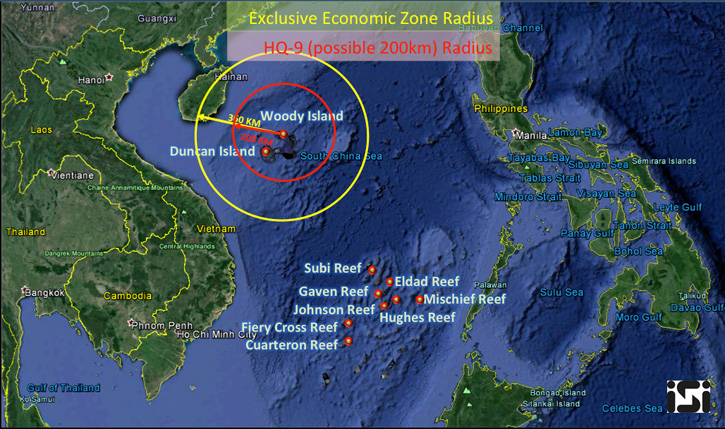
The recent deployment of missile launchers and jet fighters on Woody Island of the Paracel islands have put the spotlight on the South China Sea (SCS).
Fig 1: The 200 mile Economic Exclusion Zone claimed by China around Woody Island and the overlapping 108 nm range of the HQ-9 SAM system. Image via ISI. [Image Sat International] http://defense-update.com/20160218_woody_island_hq9.html
Students and young professionals are among the volunteers stepping in to help the sick and homeless elderly, who otherwise die alone and uncared-for on the streets
Volunteer Chu Thương Minh Trang, 22, talking to Nguyen, a 70-year-old homeless man.
HANOI: It is 1am and medical student Chu Thương Minh Trang, 22, is squatting on the cold pavement listening intently to Nguyen, a 70-year-old homeless man with a toothy smile on his face.
The street is poorly lit and dirty, but it is this man’s only refuge and home on some nights.
Huddled against the wind chill, Mr Nguyen, who is wrapped up in three layers of clothes, grumbles about how his hands are sore, and his back painful from repairing bicycles. Without hesitation, Ms Chu reaches across and gently massages his knobby fingers.
Hanoi’s streets (in 2007, above) are now full of motorcycles and scooters, and shop shelves are no longer bare. Photograph by Chau Doan/Getty Images
harvardmagazine – A RECENT Monday morning, during a class on global trade, the professor reviewed the effects of nations’ limits on such commerce: tariffs, quotas, and the “voluntary” restraints exporting countries impose on their shipments to eager customers (lest protected interests in the importing area wilt). His students, arrayed in a teaching amphitheater laid out like the classrooms at Harvard Business School (HBS)—complete with laminated placards bearing each Tiếp tục đọc “A Nation, Building”→








 CVD
CVD 