Investigating mass evictions at Cambodia’s world-famous Angkor Wat

Al Jazeera English – 24-7-2024

Cambodia’s Angkor Wat, or “City of Temples”, is the largest religious structure in the world.

A truly spectacular place, it is deeply revered across Cambodia and depicted on its flag as the defining image of the nation.

In 1992, UNESCO designated Angkor as a World Heritage Site.

The UN agency also affirmed it as a “living” site whose traditional communities were as important as the stones.

But now, locals accuse the Cambodian government of the mass forced eviction of thousands of people from those communities, while the government claims each one has voluntarily moved after settling illegally in Angkor. It also says the relocations are at UNESCO’s behest.

People & Power went to Cambodia to investigate.

UNESCO approves dossier seeking recognition of monuments and landscapes complex

VNN – March 22, 2024 – 09:27

UNESCO said the dossier meets all technical requirements outlined in the World Heritage Convention.

Chùa Đồng (Bronze Temple), a temple in the complex, is situated atop the highest peak of the Yên Tử Mountain and is cast entirely from bronze. — VNA/VNS Photo

HÀ NỘI – UNESCO has responded to the dossier seeking its recognition of the Yên Tử – Vĩnh Nghiêm – Côn Sơn, Kiếp Bạc Monuments and Landscapes Complex as a world heritage site, according to the Cultural Heritage Department under the Ministry of Culture, Sports and Tourism.

UNESCO said the dossier meets all technical requirements outlined in the World Heritage Convention.

Tiếp tục đọc “UNESCO approves dossier seeking recognition of monuments and landscapes complex”

Đằng sau quyết định tái gia nhập UNESCO của Mỹ

Người đưa tin – Ngày đăng: 01/07/2023 – 18:08

Sau 5 năm dài vắng bóng, Mỹ đã chính thức tái gia nhập Tổ chức Văn hóa, Khoa học và Giáo dục của Liên Hợp Quốc (UNESCO) vào ngày 30/6.

Trong một phiên họp bất thường hôm 30/6, 193 quốc gia thành viên của UNESCO đã phê duyệt đề xuất tái gia nhập tổ chức của Mỹ với 132 phiếu thuận và 10 phiếu chống.

Mỹ đã rút khỏi UNESCO vào năm 1984, dưới thời chính quyền Tổng thống Ronald Reagan, sau đó quay trở lại vào năm 2004.

Tuy nhiên, mối quan hệ của chính phủ Mỹ với UNESCO này trở nên căng thẳng vào tháng 10/2011, khi các thành viên của cơ quan này bỏ phiếu chấp nhận Palestine là thành viên của tổ chức.

Động thái này đã khiến Hoa Kỳ và đồng minh thân cận Israel tức giận, đồng thời buộc chính quyền của Barack Obama phải ngừng tài trợ cho cơ quan này. Năm 2017, Tổng thống Donald Trump tuyên bố, đất nước của ông sẽ rời khỏi UNESCO hoàn toàn với cáo buộc tổ chức này thiên vị và chống lại Israel. Mỹ và Israel sau đó đã chính thức rời UNESCO vào cuối năm 2018. 

Tiếp tục đọc “Đằng sau quyết định tái gia nhập UNESCO của Mỹ”

Artificial Intelligence and education: Guidance for policy-makers

See UNESCO full report, here

SHORT SUMMARY

AI and education: Promise and implications

Artificial Intelligence (AI) has the potential to address some of the biggest challenges in education today, innovate teaching and learning practices, and ultimately accelerate the progress towards SDG 4. However, these rapid technological developments inevitably bring multiple risks and challenges, which have so far outpaced policy debates and regulatory frameworks. This publication offers guidance for policy-makers on how best to leverage the opportunities and address the risks, presented by the growing connection between AI and education. It starts with the essentials of AI: definitions, techniques and technologies. It continues with a detailed analysis of the emerging trends and implications of AI for teaching and learning, including how we can ensure the ethical, inclusive and equitable use of AI in education, how education can prepare humans to live and work with AI, and how AI can be applied to enhance education. It finally introduces the challenges of harnessing AI to achieve SDG 4 and offers concrete actionable recommendations for policy-makers to plan policies and programmes for local contexts.

UNESCO: General and Regional Histories

General and Regional Histories

UNESCO has launched a series of collected works – People writing their own history. Instead of just tracing the past of nations, these collections aim to provide a greater understanding of civilizations.

The world’s memory is composed of more than just kings and heroes, battles and conquests, great cathedrals and monumental undertakings.

Through this broad perspective, readers gain a global understanding of the evolution of societies, flourishing of cultures, major currents of exchange and interaction with other parts of the world.

These collections also aim to provide a culturally relevant perspective. They provide the point of view of the populations concerned, whose past has often been distorted, discredited or treated as peripheral to the history of the colonizers and the dominant nations – those who usually write history. The idea here is to rediscover a people’s consciousness and the vision it develops of its own destiny. This shift in perspective is reflected by the significant number of local historians, with impeccable academic credentials, who contributed to these collections as editors and authors.

Tiếp tục đọc “UNESCO: General and Regional Histories”

Mother tongue vital for improved literacy, numeracy skills —UNESCO

punching.com

The United Nations Educational, Scientific and Cultural Organisation has said that every mother tongue is vital to literacy because it facilitates the acquisition of basic reading and writing skills, as well as basic numeracy, during the first years of schooling.

The UNESCO, in marking the 20th International Mother Language Day on Thursday, particularly called for the recognition and enforcement of the Rights of Indigenous Peoples. Tiếp tục đọc “Mother tongue vital for improved literacy, numeracy skills —UNESCO”

UNESCO: Climate Change and World Heritage

World Heritage properties are affected by the impacts of climate change at present and in the future. Their continued preservation requires understanding these impacts to their Outstanding Universal Value and responding to them effectively.

World Heritage properties also harbour options for society to mitigate and adapt to climate change through the ecosystem benefits, such as water and climate regulation, that they provide and the carbon that is stored in World Heritage forest sites. Cultural heritage, on the other hand, can convey traditional knowledge that builds resilience for change to come and leads us to a more sustainable future.

World Heritage properties serve as climate change observatories to gather and share information on applied and tested monitoring, mitigation and adaptation practices. The global network of World Heritage also helps raise awareness on the impacts of climate change on human societies and cultural diversity, biodiversity and ecosystem services, and the world’s natural and cultural heritage. Tiếp tục đọc “UNESCO: Climate Change and World Heritage”

List of World Heritage Sites threatened by climate change

Report by the United Nations Educational, Scientific and Cultural Organization (UNESCO), the United Nations Environment Program (UNEP), and the Union of Concerned Scientists (UCS), 2016.

[TĐH: The ancient town of Hội An is on this list]

* Download full report

Complete list of locations

Explore in-depth case studies and snapshots of World Heritage sites at risk. Links go to the relevant sections of the full report (requires PDF download).

Africa

Tiếp tục đọc “List of World Heritage Sites threatened by climate change”

We’re Covering Heritage Sites Threatened by Climate Change. The List Just Got Longer.

Kendra Pierre-Louis

By Kendra Pierre-Louis Oct. 16, 2018 New York Times

Want climate news in your inbox? Sign up here for Climate Fwd:, our email newsletter.

Cedars grow sparsely in the mountains near Jaj, Lebanon.CreditJosh Haner/The New York Times
Children swim by moai statues off the coast of Easter Island.CreditJosh Haner/The New York Times

One of the cruelties of global warming is that it threatens humanity’s past as well as its future.

That was brought into sharp focus by a study issued Tuesday. It says that some of the most important ancient sites in the Mediterranean region — the Greek city of Ephesus, Istanbul’s historic districts, Venice’s canals — might not survive the era of climate change.

Tiếp tục đọc “We’re Covering Heritage Sites Threatened by Climate Change. The List Just Got Longer.”

Trách nhiệm pháp lý Bảo tồn Di Sản Thế Giới Phong Nha – Kẻ Bàng và Sơn Đoòng

Cập nhật: 24/2/2018 9:00 AM

400 triệu năm để hình thành Phong Nha – Kẻ Bàng, mấy năm thì phá bỏ?

Vì tầm mức quốc gia, và đôi khi lên đến tầm mức thế giới, của các Vườn Quốc Gia và Vùng Bảo Tồn tương đương, phải chăng nên để một cơ quan cấp quốc gia trực tiếp quản lý, thay vì giao cho các cấp địa phương khác nhau với nhiều bất cập khác nhau?

Vườn Quốc Gia Phong Nha – Kẻ Bàng được UNESCO công nhận là Di Sản Thế Giới năm 2003, với Giá Trị Hoàn Vũ Nổi Bật (Outstanding Universal Value).[1] Hang Sơn Đoòng là hang động thiên nhiên lớn nhất thế giới, nằm trong quần thể Phong Nha – Kẻ Bàng.[2] Đây là những di sản lớn của quốc gia và của cả thế giới, cần được bảo tồn cho mọi thế hệ nhân loại mai sau.

Có 3 loại nghĩa vụ pháp lý về bảo tồn Vườn Quốc Gia Phong Nha – Kẻ Bàng. (1) Danh vị Di Sản Thế Giới bao gồm với nó những nghĩa vụ pháp lý quốc tế về bảo tồn di sản trong Công ước Quốc tế về Bảo vệ Di sản Thiên Nhiên và Văn hóa Thế giới năm 1972 (tên tắt là Công ước Di Sản Thế Giới) mà Việt Nam là thành viên. (2) Nghĩa vụ pháp lý về bảo tồn với UNESO khi Việt Nam đề nghị và được UNESCO đồng ý ghi Vườn Quốc Gia Phong Nha – Kẻ Bàng vào danh sách Di Sản Thế Giới.  (3) Bên cạnh đó còn có nghĩa vụ pháp lý bảo tồn di sản cho mọi thế hệ con cháu Việt Nam tương lai cho đến nghìn sau.

Các lãnh đạo Quảng Bình, trong 4 năm nay, với cung cách kiên trì thúc đẩy hai dự án xây dựng cơ sở du lịch giải trí đại trà bên trong Vườn Quốc Gia – dự án cáp treo Sơn Đoòng và dự án zipline – có tiềm năng hủy hoại môi trường tự nhiên và các hệ sinh thái trong vườn, bị pháp luật Việt Nam ngăn cấm triệt để, và phản lại trách nhiệm pháp lý quốc tế, cho thấy các vị không quen thuộc với, hoặc đơn giản là phe lờ, các trách nhiệm pháp lý quốc gia và quốc tế về bảo tồn di sản. Tiếp tục đọc “Trách nhiệm pháp lý Bảo tồn Di Sản Thế Giới Phong Nha – Kẻ Bàng và Sơn Đoòng”

UNESCO: 264 million children have no access to school

UNESCO: 264 million children have no access to school
Syrian girl heads to school in Ghouta town [Amer Almohibany/AFP/Getty Images]

Over 260 million children and youths across the world, equivalent to the combined population of Russia, Poland and Germany, have no access to education, according to a new report from the UNESCO.

There are 61 million children of primary school-age (6-11 years) disadvantaged, 60 million of lower secondary school-age (12-14 years), and upper secondary school-age (15-17 years) set at 142 million. Tiếp tục đọc “UNESCO: 264 million children have no access to school”

Tín ngưỡng thờ Mẫu tam phủ – 3 bài

  • Tôn vinh các vị nữ thần
  • Đạo Mẫu ‘dệt’ thần thánh từ anh hùng lịch sử
  • Mở vali khăn chầu áo ngự

***

Tín ngưỡng thờ Mẫu tam phủ: Tôn vinh các vị nữ thần

10:08 AM – 05/12/2016 TN

Một nghi thức hầu đồng /// Ảnh: Đoàn Kỳ Thanh

Một nghi thức hầu đồng ẢNH: ĐOÀN KỲ THANH

Như Thanh Niên đã thông tin, tín ngưỡng thờ Mẫu tam phủ của người Việt vừa được UNESCO vinh danh là Di sản văn hóa đại diện của nhân loại.

Loạt bài viết sau đây nhằm để độc giả hiểu thêm những nét văn hóa độc đáo về tín ngưỡng này. Tiếp tục đọc “Tín ngưỡng thờ Mẫu tam phủ – 3 bài”

Tín ngưỡng thờ Mẫu chính thức trở thành Di sản của nhân loại

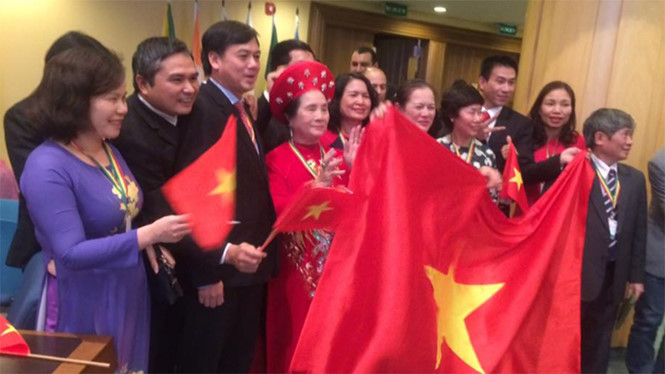
DT “Thực hành Tín ngưỡng thờ Mẫu Tam phủ của người Việt” đã chính thức được UNESCO ghi danh tại Danh sách Di sản văn hóa phi vật thể đại diện của nhân loại vào hồi 21h15 (giờ Việt Nam) ngày 1/12.

add_qcea

Đoàn Việt Nam tại Phiên họp Uỷ ban Liên Chính phủ về bảo vệ di sản văn hóa phi vật thể lần thứ 11 của UNESCO diễn ra tại thành phố Addis Ababa, Cộng hòa dân chủ Liên bang Ethiopia. Ảnh: Phạm Cao Quý.

Tiếp tục đọc “Tín ngưỡng thờ Mẫu chính thức trở thành Di sản của nhân loại”

Mạng lưới “Thành phố học tập toàn cầu” của UNESCO

Moet – 19/08/2016

Học tập suốt đời không phải là một khái niệm mới. Trong thực tế, nó hiện hữu xuyên suốt quá trình tồn tại của loài người như một phần của tái sản xuất xã hội và ăn sâu bám rễ vào tất cả các nền văn hóa và văn minh.

Tiếp tục đọc “Mạng lưới “Thành phố học tập toàn cầu” của UNESCO”

Giáo dục Công dân Toàn cầu: Chủ đề và Mục tiêu học tập

Global citizenship edu

GCEVN – UNESCO đã và đang thúc đẩy chương trình giáo dục công dân toàn cầu ngay khi Tổng thư ký Liên Hợp Quốc ban hành Sáng kiến Đầu tiên về Giáo dục Toàn cầu (Global Education First Initiative – GEFI) năm 2012 — đưa việc đào tạo công dân toàn cầu trở thành một trong ba mục tiêu giáo dục ưu tiên hàng đầu. Tiếp tục đọc “Giáo dục Công dân Toàn cầu: Chủ đề và Mục tiêu học tập”