The State of Southeast Asia 2019

Download report >>

Abstract: The ASEAN Studies Centre at ISEAS-Yusof Ishak Institute conducted the “State of Southeast Asia: 2019” online survey between 18 November and 5 December 2018 to seek the views of Southeast Asians onregional affairs. The survey used the purposive sampling method, canvassing views from a total of 1,008 Southeast Asians who are regional experts and stakeholders from the policy, research, business, civil society, and media communities. As such, the results of this survey are not meant to be representative. Rather, it aims to present a general view of prevailing attitudes among those in a position to inform or influence policy on regional political, economic and social issues and concerns.

The survey is divided into five sections.

The first section sketches out the nationality and affiliation of the respondents.

Section II explores the political and economic outlook for 2019, as well as providing views on major developments in the year ahead and security concerns. Some of the issues covered in this section include the Regional Comprehensive Economic Partnership (RCEP), the Comprehensive and Progressive Agreement for Trans-Pacific Partnership (CPTPP), the US-China trade war, denuclearisation in the Korean Peninsula and Rohingya issue.

Section III examines major power relations in the region, with a specific focus on the US and China.

Section IV looks into the region’s perception of the major powers (China, the European Union, India, Japan, Russia and the US) and provides some clues as to which major power does the region trust the most (or the least).

The survey concludes with Section V which looks at three aspects of soft power – tertiary education, tourism and foreign language – as proxies of the major powers’ influence in Southeast Asia.

It’s decision time for Southeast Asia as power demand soars

Still stuck on coal, the region is missing out on massive price cuts in renewables, writes Courtney Weatherby.
Southeast Asia’s energy demand is expected to grow by two-thirds by 2040, requiring massive investment in new energy generation and transmission. Installed capacity will double from 240 gigawatts to 565 gigawatts, which amounts to adding a bit more than Japan’s total electricity capacity. Tiếp tục đọc “It’s decision time for Southeast Asia as power demand soars”

Betel and areca chewing custom in Asia – Tục lệ ăn trầu cau ở Châu Á

> BETEL CHEWING IN SOUTH-EAST ASIA

> Vietnamese people’s betel chewing custom and its existence in today’s modern society

> CNN: Nothing to smile about: Asia’s deadly addiction to betel nuts << The term is incorrect because the areca-nut, not betel-nut, is chewed.

Image result for betel and areca chewing

The ubiquitous red-stained lips and blackened teeth associated with betel chewing are sported by one-tenth of the human race and one-fifth of the global population. The custom pervades Asia, yet it is hardly known outside of the continent. It has no sex barriers and embraces all ages and classes. Even though it has long-established roots in Asian culture, history of the custom relies mainly on oral tradition, probably because it is most prevalent amongst the agrarian population. Since the eleventh century, however, the royal use of betel in South-East Asia is described in written records which provide a rich source of details about the protocol of sharing a quid with a king and the use of betel in royal ceremonies.From the sixteenth century onwards, when Europeans reached the East, accounts include descriptions of the royal use of betel but the custom has consistently been misrepresented by early western travellers who wrote about it, either from their own observations or those of others.

The custom, so alien to foreigners, was viewed from a western perspective. Nearly all of them were repelled by it and called betel chewing an ‘…unhygienic, ugly, vile, and disgusting…’ habit. Even the name given to the custom by Europeans, ‘betel-nut chewing’ is a misnomer. The term is incorrect because an areca-nut, not a betel-nut, is chewed. Tiếp tục đọc “Betel and areca chewing custom in Asia – Tục lệ ăn trầu cau ở Châu Á”

Bringing electricity to all corners of Southeast Asia

IEA

By Ali Al-Saffar
IEA Energy Analyst
19 December 2017

Grid extensions have formed the bulk 

This commentary draws from the Southeast Asia Energy Outlook 2017, a WEO Special Report, published in October.

Providing electricity access for all remains a critical topic in many parts of the developing world. The challenge is especially acute in Southeast Asia, one of the most dynamic regions of the global energy system, but whose rich and varied environment defies one-size-fits-all energy solutions.

Thanks to growing economies and burgeoning and urbanising middle classes, energy demand in Southeast Asia grows at one of the fastest rates in the world. Still, around 65 million people across the ten Association of Southeast Asian Nations (ASEAN) countries are without access to electricity. In a recent special report on the region, we looked in detail at how to close this gap.
Tiếp tục đọc “Bringing electricity to all corners of Southeast Asia”

Power stacked against Southeast Asia’s poor as China dams Mekong

channelnewsasia

Communities along the mighty Mekong blame China for their shrinking catches. (Photo: AFP/TANG CHHIN SOTHY)

Read more at https://www.channelnewsasia.com/news/asiapacific/power-stacked-against-southeast-asia-s-poor-as-china-dams-mekong-9841686

KANDAL, Cambodia: Cambodian fisherman Sles Hiet lives at the mercy of the Mekong: A massive river that feeds tens of millions but is under threat from the Chinese dams cementing Beijing’s physical – and diplomatic – control over its Southeast Asian neighbours.

The 32-year-old, whose ethnic Cham Muslim community live on rickety house boats that bob along a river bend in Kandal province, says the size of his daily catch has been shrinking by the year. Tiếp tục đọc “Power stacked against Southeast Asia’s poor as China dams Mekong”

Southeast Asia’s largest wind project gets $1.1 billion funding injection

Southeast Asia’s leading nation for solar energy—Thailand—could now be the frontrunner in wind energy after renewables developer WEH secured funding for the region’s biggest wind power project yet.

Eco-business_The Chaiyaphum Wind Farm in Thailand’s Subyai district, Chaiyaphum province. Rising energy use in Southeast Asia is shifting the global energy system’s center of gravity towards Asia. Image: © Asian Development Bank .

Thai renewables developer Wind Energy Holdings Co. Ltd (WEH) has raised US$1.1 billion to finance five new onshore wind farms in what is billed as Southeast Asia’s biggest wind energy project yet.Located in Thailand’s northeastern provinces of Nakhon Ratchasima and Chaiyaphum, the wind farms will add up to 450 megawatts of energy to the national grid on completion, slated for early 2019.Towering at a height of 157 metres, the wind farms will boast the tallest towers in the region, and will use the latest technology supplied by Vestas and General Electric. Siam Commercial Bank is financing the project. Tiếp tục đọc “Southeast Asia’s largest wind project gets $1.1 billion funding injection”

Unfolding various academic mobility experiences of Southeast Asian women

Pages 1-19 | Received 19 Dec 2016, Accepted 17 Aug 2017, Published online: 08 Nov 2017

http://www.tandfonline.com/

This article draws on data from a qualitative research study undertaken with the main aim of investigating the issue of the gender dimension of the academic mobility of Southeast Asian women. Our research describes Southeast Asian women’s experiences of mobility, narrating why they choose to be mobile, how the experience of going abroad was responded to and/or rejected by their family, how they experienced life in a different country, and what evaluations they make about these experiences in personal, familial, and professional terms. The article stresses the need to improve the understanding of the factors that are still determining the chances of women to be mobile and obtain fruitful gains from these experiences. For this to be attained, the article follows through an intersectional approach to mobility, considering it is of much use as it allows to comprehend that the disadvantages associated with gender are cumulative, multi-layered, resulting from effects of several variables, including of the emotional, social, economic, and political contexts. Tiếp tục đọc “Unfolding various academic mobility experiences of Southeast Asian women”

Biển Đông-Cuộc chiến quyền lực ở châu Á – Chương 5: Dầu khí ở Biển Đông

SP – [Trích] Bill Hayton- BIỂN ĐÔNG – Cuộc chiến quyền lực ở châu Á

Chương 5

Được miếng và tay không
Dầu khí ở Biển Đông

Something and Nothing
Oil and Gas in the South China Sea

Tháng 8 năm 1990, Đông Nam Á đã trở nên rất phấn khởi về việc ‘Trung Quốc trở lại’. Đã một năm kể từ khi vụ thảm sát tại quảng trường Thiên An Môn và nhiều nhân vật có ảnh hưởng nghĩ rằng đã tới lúc quay trở lại với công việc [bang giao]. Phô trương ầm ĩ, Thủ tướng Lí Bằng, một trong những người đằng sau vụ thảm sát, đã bắt tay vào một chuyến thăm khu vực 9 ngày. Tiếp tục đọc “Biển Đông-Cuộc chiến quyền lực ở châu Á – Chương 5: Dầu khí ở Biển Đông”

Child refugees held in ‘harrowing’ conditions across south-east Asia

Report reveals young people detained in cells 24 hours a day without enough food or proper access to healthcare, often forced to sleep on the floor

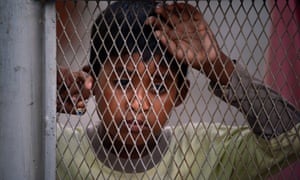
A young Rohingya refugee from Myanmar is held at a detention centre in Medan, Indonesia.
A young Rohingya refugee from Myanmar is held at a detention centre in Medan, Indonesia. Photograph: Romeo Gacad/AFP/Getty Images

Thousands of children are languishing in “dangerous and harrowing” conditions in detention centres across south-east Asia, a report has revealed. Children, including babies, are being held in cells 24 hours a day, alongside dozens of unrelated adults, and are frequently separated from family members. Tiếp tục đọc “Child refugees held in ‘harrowing’ conditions across south-east Asia”

Southeast Asia’s war on drugs doesn’t work – here’s what does

theconversation_Philippine President Rodrigo Duterte’s bloody war on drugs is just the latest in a region where drug use has usually been met with draconian measures. Thailand embarked 13 years ago on a drug war that strikes eerie parallels with the Philippine situation.

Today, lawmakers in the Philippines are plotting the restoration of the death penalty to bolster the anti-drug campaign. But this, too, is par for the course in the region. Tiếp tục đọc “Southeast Asia’s war on drugs doesn’t work – here’s what does”

Đông Nam Á cần tái thiết lập các thỏa thuận thương mại

English: South-east Asia needs a reset on trade deals

Singapore đã ký Hiệp định Thương mại tự do (FTA) song phương với New Zealand vào năm 2000. Sau đó không lâu, các quốc gia khác như Malaysia và Thái Lan đã bắt đầu vào cuộc.

Năm 2003, ASEAN 10 quyết định biến các hiệp định thương mại của mình về hàng hóa, dịch vụ và đầu tư trong những năm 1990 thành Cộng đồng Kinh tế ASEAN (AEC), một bước tiến lớn trong hội nhập kinh tế khu vực.

Trong khi Singapore tăng số lượng thỏa thuận thương mại song phương qua các năm, những quốc gia kém phát triển hơn trong khu vực, như Lào và Campuchia, trở thành một phần của các Hiệp định Thương mại tự do thông qua các thể chế của khu vực của Asean thực hiện các thỏa thuận thương mại với Trung Quốc, Nhật Bản, Hàn Quốc, Ấn Độ, Australia và New Zealand. Tiếp tục đọc “Đông Nam Á cần tái thiết lập các thỏa thuận thương mại”

South-east Asia needs a reset on trade deals

Since the early 2000s, countries in South-east Asia have seen a plethora of trade pacts.

Singapore signed a bilateral Free Trade Agreement (FTA) with New Zealand in 2000. Soon, others like Malaysia and Thailand got in on the act.

In 2003, the Asean 10 resolved to turn their trade agreements of the 1990s on goods, services and investments into the Asean Economic Community (AEC), a major advance in regional economic integration. Tiếp tục đọc “South-east Asia needs a reset on trade deals”

Transitioning to sustainable fisheries

Economist_Discussion at The Economist’s South-East Asia and Pacific Regional Fisheries Summit examined how the fisheries sector in Southeast Asia can become sustainable

The Asia-Pacific region dwarfs the rest of the world in seafood production and consumption. Almost 70% of the world’s fishing vessels are in Asia, placing intense pressure on fish stocks. Evidence of overfishing is widespread. Countries like Indonesia, whose territorial seas are vast and whose population depends on seafood for food security, are starting to search for solutions to the problem. With this in mind, the fisheries industry and financial and governance experts from around the world gathered on July 27th and 28th at The Economist’s to discuss how to speed the transition to sustainable fisheries in Southeast Asia.

Trawling through options Tiếp tục đọc “Transitioning to sustainable fisheries”

Who are the future consumers of South-East Asia?

Weforum_As business leaders convene for the Kuala Lumpur meeting of the World Economic Forum, they have many uncertainties to ponder, from the trajectory of China’s economy to whether the new ASEAN Economic Community (AEC) launched at the start of the year will vault South-East Asia up to a new level of economic dynamism.

Demographics and the granularity of growth needs to be part of their thinking. The question today is not so much where to find entire growth markets, but which specific demographic groups have the most potential?

Radical demographic shifts are transforming consumer markets around the world. In the past, market growth was fuelled largely by expanding populations; today, incomes are the force to reckon with.
Tiếp tục đọc “Who are the future consumers of South-East Asia?”