Electricity generated by solar and on-shore wind is the cheapest in Australia, even after the significant expense of integrating them into the power grid is factored in, according to new analysis from the CSIRO.
This artist’s rendering provided by Solar AquaGrid, shows a wide-span solar canal canopy being piloted in California’s Central Valley. Solar AquaGrid is preparing to break ground in the fall of 2023 on the first solar-covered-canal project in the United States. Solar panels are installed over canals in sunny, water-scarce regions where they make electricity and reduce evaporation. (Solar AquaGrid via AP)
FILE – Indian laborers work amid installed solar panels atop the Narmada canal at Chandrasan village, outside Ahmadabad, India, Feb. 16, 2012. The project brings water to hundreds of thousands of villages in the dry, arid regions of western India’s Gujarat state. (AP Photo/Ajit Solanki, File)
FILE – A worker washes his hands as installed solar panels are visible atop the Narmada canal at Chandrasan village, outside of Ahmadabad, India, Feb. 16, 2012. The project brings water to hundreds of thousands of villages in the dry, arid regions of western India’s Gujarat state. (AP Photo/Ajit Solanki, File)
BY BRITTANY PETERSON AND SIBI ARASUPublished 11:27 PM GMT+7, July 20, 2023
DENVER (AP) — Back in 2015, California’s dry earth was crunching under a fourth year of drought. Then-Governor Jerry Brown ordered an unprecedented 25% reduction in home water use. Farmers, who use the most water, volunteered too to avoid deeper, mandatory cuts.
Brown also set a goal for the state to get half its energy from renewable sources, with climate change bearing down.
Yet when Jordan Harris and Robin Raj went knocking on doors with an idea that addresses both water loss and climate pollution — installing solar panels over irrigation canals — they couldn’t get anyone to commit.
America invented silicon solar cells in the 1950s. It spent more on solar R&D than any other country in the 1980s. It lost its technological advantage anyway.
American researchers experimented with unconventional solar-energy designs, such as this thermoelectric panel. (Universal History Archive / Universal Images Group / Getty)
You wouldn’t know it today, but the silicon photovoltaic solar cell—the standard, black-and-copper solar panel you can find on suburban rooftops and solar farms—was born and raised in America.
The technology was invented here. In 1954, three American engineers at Bell Labs discovered that electrons flow freely through silicon wafers when they are exposed to sunlight.
It was deployed here. In 1958, the U.S. Navy bolted solar panels to Vanguard 1, the second American satellite in space.
Vietnam’s largest wind power plant begins operation in central Ninh Thuan Province on April 16, 2021. Photo courtesy of Government’s Portal.
HCMC-based energy firm Trungnam Group Friday has put its wind power plant in central Ninh Thuan Province into operation, considered the country’s largest to date.
The plant, which spreads over an area of 900 hectares in Thuan Bac District, has 45 turbines with a total capacity of 151.95 megawatts that costs VND4 trillion ($173.4 million), the Government portal reported.
The wind power plant is combined with a 204 MW solar power plant to form the solar-wind farm complex considered the largest in Southeast Asia. The complex will supply a total 950 million kWh per year for the country’s grid.
The private energy company has added a total 1,064 MW to the national grid comprising hydropower, solar and wind power. It plans to have a renewable output of nearly 10,000 MW by 2027.
Tran Quoc Nam, chairman of Ninh Thuan, said the province is now taking the lead with 32 solar power projects with a total capacity of 2,257 MW, and three wind power projects with an accumulative capacity of 329 MW.
Vietnam has great potential for renewable energy with its long coastline and 2,700 hours of sunshine a year on average.
Solar power currently accounts for just 0.01 percent of the country’s total power output, but the government plans to increase the ratio to 3.3 percent by 2030 and 20 percent by 2050.
Vietnam aims to produce 10.7 percent of its electricity from renewable energy sources by 2030, mainly through solar and wind power projects.
By Dat Nguyen October 13, 2020 | 12:13 pm GMT+7 VNExpressAn aerial view of the 500kV substation of the Trung Nam Thuan Nam Solar Power Plant in the central province of Ninh Thuan. Photo courtesy of Trungnam Group.
The largest solar farm in Southeast Asia has been commissioned in Vietnam’s central province of Ninh Thuan.
The 450 megawatt Trung Nam Thuan Nam Solar Power Plant, which spreads over an area of nearly 560 hectares in Thuan Nam District, went on stream on Monday evening, 102 days after construction began in mid-May.
By Dat Nguyen October 10, 2020 | 08:00 am GMT+7 VNExpressAn artist’s impression of a 257MW solar power plant backed by the Asian Development Bank (ADB) in the central province of Phu Yen. Photo courtesy of the ADB.
The Asian Development Bank (ADB) is leading a group of lenders to provide $186 million for the development of a solar power plant in the central province of Phu Yen.
The financing comprises a $27.9 million loan from the ADB, a $148.8 million syndicated loan funded by commercial banks with ADB as Lender of Record, and a $9.3 million loan provided by the Leading Asia’s Private Infrastructure Fund (LEAP).
The loan will fund a 257-megawatt power plant in Phu Hoa District. The plant will be the largest single operating solar power plant in Vietnam and one of the largest in Southeast Asia, the ADB said in a statement.
It will help reduce carbon dioxide emissions every year by 123,000 tons while directly serving the electricity demand of Quang Ngai Province and Nha Trang Town in central Vietnam as well as surrounding areas.
Covid-19 and the slow implementation of power transmission projects may make it impossible for solar power projects to connect to the national grid by the end of the year.
Investors of solar power projects are concerned that they may fail to connect to the national grid and this be able to enjoy the preferential FIT (feed in tariff) of 7.09 cent per kwh.
Under current regulations, the price is only applied to projects which become operational and connect to the national grid no later than December 31, 2020.
By Anh Minh August 26, 2020 | 11:57 am GMT+7 vnexpressWorkers install solar power panels on a rooftop in Ho Chi Minh City. Photo courtesy of Vietnam Electricity.
Over 45,000 households and organizations in the country have installed rooftop solar panels, whose prices have been falling rapidly in recent years.
Le Anh Tuan, lecturer at Can Tho University in southern Can Tho City, spent VND130 million ($5,600) to install a 3.9 kWp rooftop solar power system in his home four years ago and is now enjoying the fruits of his investment.
Tuan was able to save up to VND1.2 million each month compared to using normal electricity, twice the amount of monthly deposit interests.
The Vietnamese authorities have submitted a complaint to the World Trade Organization (WTO) to request formal consultations with Washington over its recently announced 30% tariff on crystalline silicon PV imports.
The Ninh Thuan province is located in the south central coastal region of Vietnam and has some of the best solar conditions in the country.
Image: Nguyen Thanh Quang/Wikipedia
Hanoi joins China and South Korea in formally requesting compensation in its complaint over new U.S. safeguard measures on solar cell and module imports, which were announced in January. In late February, the governments of the Philippines and Malaysia also filed complaints, following similar moves by Singapore and the E.U.
We already published a great article from Nexus Media regarding Lazard’s new report showing the extremely low (and falling) costs of solar power and wind power. However, I’ve been wanting to highlight these awesome new findings since Larmion shared the updated report with us earlier this month, and I want to break out the amazing news in 5 specific ways.
A solar power factory on Côn Đảo Island in Bà Rịa-Vũng Tàu Province. VNA/VNS Photo Ngọc Hà
HCM CITY — Developing renewable energy sources is more urgent than ever to meet demand for power, ensure sustainable growth and cope with climate change in the country, experts said yesterday at a meeting held in HCM City.
Rainer Brohm, GIZ consultant, said that solar photovoltaic (PV) energy could replace expensive sources such as coal and gas and could quickly meet needed power capacity. Tiếp tục đọc “Renewable energy a must for Viet Nam”→
VietNamNet Bridge – The government policy encouraging investment in the power sector has created a firm framework for the development of solar energy.
To generate 1 MW of electricity, solar energy investors need 1.1 hectares of land. However, despite the large land fund needed, economists think that developing solar energy has many advantages.
As equipment, operation and maintenance costs are getting cheaper, solar energy is becoming more attractive than other types of clean energy.
To generate 1 MW of electricity, solar energy investors need 1.1 hectares of land. However, despite the large land fund needed, economists think that developing solar energy has many advantages.
Investors are pouring billions of dollars into clean energy projects in Binh Thuan province, which is bestowed by nature with abundance of wind and sun.
The solar power factory in Côn Đảo Island in Bà Rịa-Vũng Tàu Province. — VNA/VNS Photo Ngọc Hà
Viet Nam News HÀ NỘI — Opportunities to invest in Việt Nam’s solar energy sector are abundant after Prime Minister Nguyễn Xuân Phúc issued a decision to encourage the development of solar power projects.
Under Decision 11/2017/QĐ-TTg, which takes effective from June 1, 2017, all output produced by solar power projects will be purchased for VNĐ2,086 (US 9.3 cent)/kWh (excluding VAT) – a profitable rate for investors. Tiếp tục đọc “Decision paves way for solar power development”→
Reuters_Vietnam’s Daklak province on Saturday granted licences and signed memorandums of understanding for the development of several solar power projects worth a combined $3.3 billion.
Vietnam has been mostly reliant on coal-fired and hydro power plants to accommodate its annual electricity demand growth of around 11 percent, but wants to boost its renewable energy output amid rising resources scarcity and environmental issues.
U.S. group AES Corporation signed an memorandum of understanding with the province to invest $750 million in a solar plant with expected capacity of 300-500 megawatts.
Vietnamese private firm Xuan Thien Daklak on Saturday received a provincial government licence to invest $2.2 billion in a 2,000-megawatt solar power project in Daklak province in the Central Highlands.
South Korea’s Solar Park Global also received a certificate to invest $45 million in a solar power project and Vietnamese Long Thanh Infrastructure Development and Investment Company will invest $308 million in a 250-megawatt solar plant.
Indonesia, Thailand and Vietnam are seeking to secure sources of solar energy and have introduced targets to fire up green energy generation as global agreements to curb pollution take effect. (Reporting by Mai Nguyen; Editing by Sam Holmes)


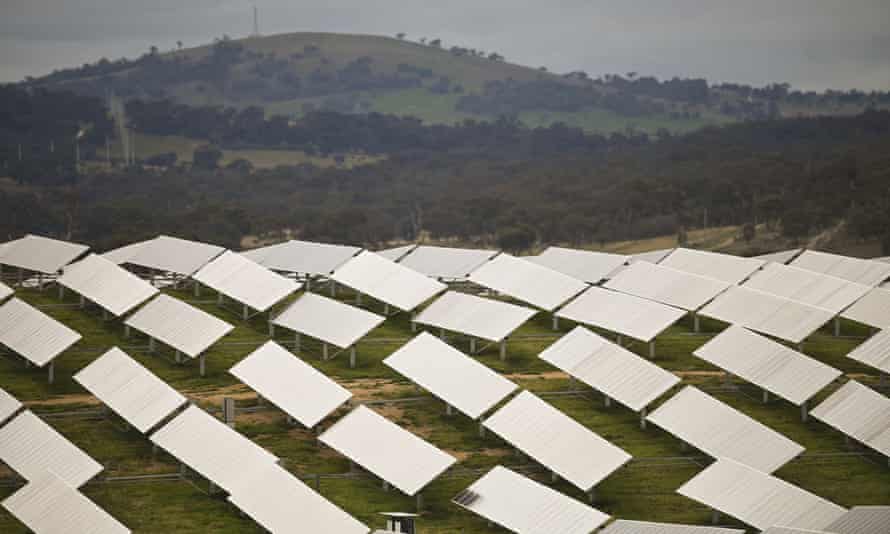


 An aerial view of the 500kV substation of the Trung Nam Thuan Nam Solar Power Plant in the central province of Ninh Thuan. Photo courtesy of Trungnam Group.
 An artist’s impression of a 257MW solar power plant backed by the Asian Development Bank (ADB) in the central province of Phu Yen. Photo courtesy of the ADB.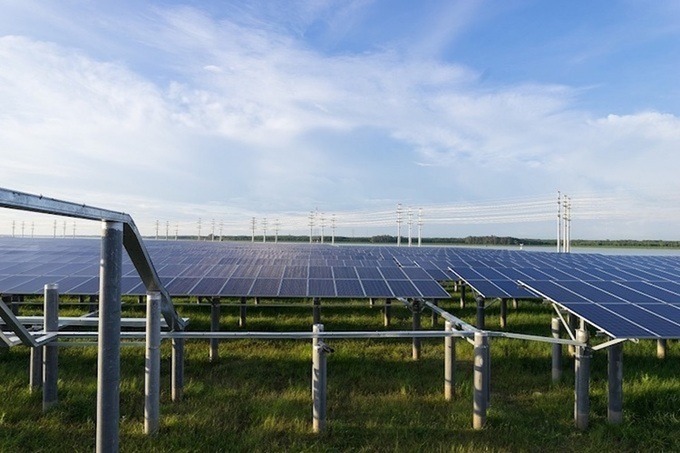
 Workers install solar power panels on a rooftop in Ho Chi Minh City. Photo courtesy of Vietnam Electricity.


 CVD
CVD 