G7 Leaders’ Statement

MAY 08, 2022•STATEMENTS AND RELEASES The White House

  1. Today, on 8 May, we, the Leaders of the Group of Seven (G7), alongside Ukraine and the wider global community, commemorate the end of the Second World War in Europe and the liberation from fascism and the National Socialist reign of terror, which caused immeasurable destruction, unspeakable horrors and human suffering. We mourn the millions of victims and offer our respect, especially to all those who paid the ultimate price to defeat the National Socialist regime, including the western Allies and the Soviet Union.
  2. Seventy-seven years later, President Putin and his regime now chose to invade Ukraine in an unprovoked war of aggression against a sovereign country. His actions bring shame on Russia and the historic sacrifices of its people. Through its invasion of and actions in Ukraine since 2014, Russia has violated the international rules-based order, particularly the UN Charter, conceived after the Second World War to spare successive generations from the scourge of war.
  3. Today, we were honoured to be joined by Ukraine’s President Volodymyr Zelenskyy. We assured him of our full solidarity and support for Ukraine’s courageous defence of its sovereignty and territorial integrity, and its fight for a peaceful, prosperous and democratic future within its internationally recognised borders, with the liberties and freedoms that so many of us enjoy today.
  4. President Zelenskyy underlined the strong resolve of Ukraine to protect its sovereignty and territorial integrity. He stated that Ukraine’s ultimate aim is to ensure full withdrawal of Russia’s military forces and equipment from the entire territory of Ukraine and to secure its ability to protect itself in the future and thanked G7 members for their support. In this regard, Ukraine emphasised that it relies on its international partners, in particular on G7 members, in providing necessary assistance in the domain of defense capabilities, as well as with a view to ensuring a swift and effective recovery of Ukraine’s economy and to securing its economic and energy security. Ukraine has entered into discussions with international partners on security mechanisms for a viable post-war peace settlement. Ukraine remains committed to working closely with G7 members to support Ukraine’s macroeconomic stability in the face of the challenges posed by the full-scaled Russian invasion, massive destruction of critical infrastructure and disruption of traditional shipping routes for Ukrainian exports. President Zelenskyy noted his country’s commitment to uphold our common democratic values and principles, including respect for human rights and the rule of law.
  5. Today, we, the G7, reassured President Zelenskyy of our continued readiness to undertake further commitments to help Ukraine secure its free and democratic future, such that Ukraine can defend itself now and deter future acts of aggression. To this end, we will pursue our ongoing military and defence assistance to the Ukrainian Armed Forces, continue supporting Ukraine in defending its networks against cyber incidents, and expand our cooperation, including on information security. We will continue to support Ukraine in increasing its economic and energy security.
  6. Together with the international community, we, the G7, have provided and pledged additional support since the start of the war exceeding USD 24 billion for 2022 and beyond, in both financial and material means. In the coming weeks, we will step up our collective short-term financial support to help Ukraine close financing gaps and deliver basic services to its people, while also developing options – working with the Ukrainian authorities and international financial institutions – to support long-term recovery and reconstruction. In this regard, we welcome the establishment of the International Monetary Fund’s Multi-Donor Administered Account for Ukraine and the European Union announcement to develop a Ukraine Solidarity Trust Fund. We support the World Bank Group’s support package to Ukraine and the European Bank for Reconstruction and Development’s Resilience Package.
  7. We call on all partners to join our support for the Ukrainian people and for refugees, and to help Ukraine to rebuild its future.
  8. We reiterate our condemnation of Russia’s unprovoked, unjustifiable and illegal military aggression against Ukraine and the indiscriminate attacks against civilians and civilian infrastructure, which has resulted in terrible humanitarian catastrophe in the heart of Europe. We are appalled by the large-scale loss of human life, assault on human rights, and destruction that Russia’s actions have inflicted on Ukraine.
  9. Under no circumstances can civilians and those not taking an active part in the hostilities be legitimate targets. We will spare no effort to hold President Putin and the architects and accomplices of this aggression, including the Lukashenko regime in Belarus, accountable for their actions in accordance with international law. To this end, we will continue to work together, along with our allies and partners around the world. We reaffirm our support for all efforts to ensure full accountability. We welcome and support the ongoing work to investigate and gather evidence on this, including by the Prosecutor of the International Criminal Court, the independent investigation commission mandated by the United Nations Human Rights Council and the Organization for Security and Co-operation in Europe’s mission of experts.
  10. We further condemn Russia’s attempts to replace democratically elected Ukrainian local authorities with illegitimate ones. We will not recognise these acts in violation of Ukraine’s sovereignty and territorial integrity.
  11. We will continue to counter the Russian strategy of disinformation, which deliberately manipulates the global – including the Russian – public in the hope of shrouding the Russian regime’s culpability for this war.
  12. Our unprecedented package of coordinated sanctions has already significantly hindered Russia’s war of aggression by limiting access to financial channels and ability to pursue their objectives. These restrictive measures are already having a significant impact on all Russian economic sectors – financial, trade, defence, technology, and energy – and will intensify pressure on Russia over time. We will continue to impose severe and immediate economic costs on President Putin’s regime for this unjustifiable war. We collectively commit to taking the following measures, consistent with our respective legal authorities and processes:

    a. First, we commit to phase out our dependency on Russian energy, including by phasing out or banning the import of Russian oil. We will ensure that we do so in a timely and orderly fashion, and in ways that provide time for the world to secure alternative supplies. As we do so, we will work together and with our partners to ensure stable and sustainable global energy supplies and affordable prices for consumers, including by accelerating reduction of our overall reliance on fossil fuels and our transition to clean energy in accordance with our climate objectives.

    b. Second, we will take measures to prohibit or otherwise prevent the provision of key services on which Russia depends. This will reinforce Russia’s isolation across all sectors of its economy.

    c. Third, we will continue to take action against Russian banks connected to the global economy and systemically critical to the Russian financial system. We have already severely impaired Russia’s ability to finance its war of aggression by targeting its Central Bank and its largest financial institutions.

    d. Fourth, we will continue our efforts to fight off the Russian regime’s attempts to spread its propaganda. Respectable private companies should not provide revenue to the Russian regime or to its affiliates feeding the Russian war machine.

    e. Fifth, we will continue and elevate our campaign against the financial elites and family members, who support President Putin in his war effort and squander the resources of the Russian people. Consistent with our national authorities, we will impose sanctions on additional individuals.
  13. We continue to work with our international partners and invite them to stand with us and to follow suit with similar actions, including to prevent sanctions evasion, circumvention and backfilling.
  14. President Putin’s war is causing global economic disruptions, impacting the security of global energy supply, fertiliser and food provision, and the functioning of global supply chains in general. The most vulnerable countries are affected most severely. Together with partners globally, we are stepping up our efforts to counter these adverse and harmful impacts of this war.
  15. President Putin’s war against Ukraine is placing global food security under severe strain. Together with the United Nations, we call on Russia to end its blockade and all other activities that further impede Ukrainian food production and exports, in line with its international commitments. Failure to do so will be seen as an attack on feeding the world. We will step up efforts to help Ukraine to keep producing in view of the next harvest season and exporting, including by alternative routes.
  16. In support of the United Nations Global Crises Response Group, we will address the causes and consequences of the global food crisis through a Global Alliance for Food Security, as our joint initiative to ensure momentum and coordination, and other efforts. We will closely cooperate with international partners and organisations beyond the G7, and, with the aim of transforming political commitments into concrete actions as planned by various international initiatives such as the Food and Agriculture Resilience Mission (FARM) and key regional outreach initiatives, including towards African and Mediterranean countries. We reiterate that our sanctions packages are carefully targeted so as not to impede the delivery of humanitarian assistance or the trade of agricultural products and reaffirm our commitment to avoid food export restrictions which impact the most vulnerable.
  17. The G7 and Ukraine stand united in this difficult time and in their quest to ensure Ukraine’s democratic, prosperous future. We remain united in our resolve that President Putin must not win his war against Ukraine. We owe it to the memory of all those who fought for freedom in the Second World War, to continue fighting for it today, for the people of Ukraine, Europe and the global community.

###
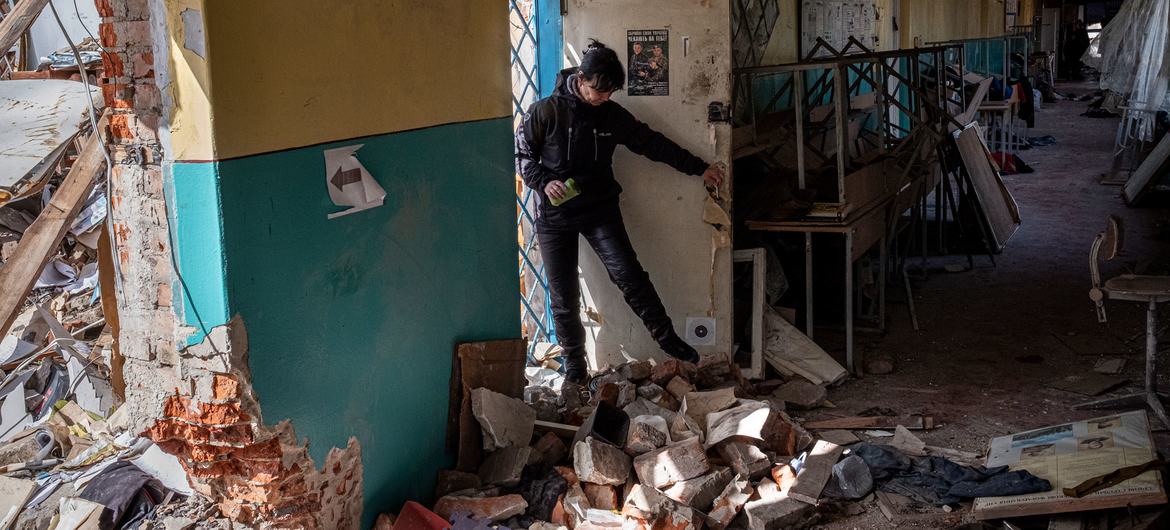
Ukraine: ‘Cycle of death, destruction’ must stop, UN chief tells Security Council

UN.org

The principal of a school in Chernihiv, Ukraine, surveys the damage caused during an aerial bombardment.

© UNICEF/Ashley Gilbertson VII Photo

The principal of a school in Chernihiv, Ukraine, surveys the damage caused during an aerial bombardment.

5 May 2022

Peace and Security

Briefing the Security Council on his shuttle diplomacy last week in Russia and Ukraine, Secretary-General António Guterres declared that he “did not mince words” during meetings with Presidents Putin and Zelenskyy, on the need to end the brutal conflict.

“I said the same thing in Moscow as I did in Kyiv…Russia’s invasion of Ukraine is a violation of its territorial integrity and of the Charter of the United Nations,” he told the Ambassadors.    

“It must end for the sake of the people of Ukraine, Russia, and the entire world…the cycle of death, destruction, dislocation and disruption must stop.” 

The UN chief said he had gone into an active war zone in Ukraine, after first travelling to Moscow, without much prospect of any ceasefire – as the east of the country continues to face “a full-scale ongoing attack”.

Tiếp tục đọc “Ukraine: ‘Cycle of death, destruction’ must stop, UN chief tells Security Council”

A new realization dawns for Washington, Europe, Kyiv and Moscow

Stephen Collinson Profile

Analysis by Stephen Collinson, CNN

CNN talks to Ukrainians fleeing Russian occupation

(CNN)This was the week when the war in Ukraine truly transitioned from one nation’s bloody fight for liberation against Russia’s vicious onslaught to a potentially years-long great power struggle.

Every day brought a sense of grave, historic events and decisions that will not just decide who wins the biggest land war between two countries in Europe since World War II, but will shape the course of the rest of the 21st century.

President Joe Biden declared Thursday that two months of fighting in the war triggered by Russian President Vladimir Putin’s unprovoked invasion had brought the world to a critical point.

Tiếp tục đọc “A new realization dawns for Washington, Europe, Kyiv and Moscow”

Russian troops use rape as ‘an instrument of war’ in Ukraine, rights groups allege

By Tara John, Oleksandra Ochman and Sandi Sidhu, CNN

Updated 0420 GMT (1220 HKT) April 22, 2022

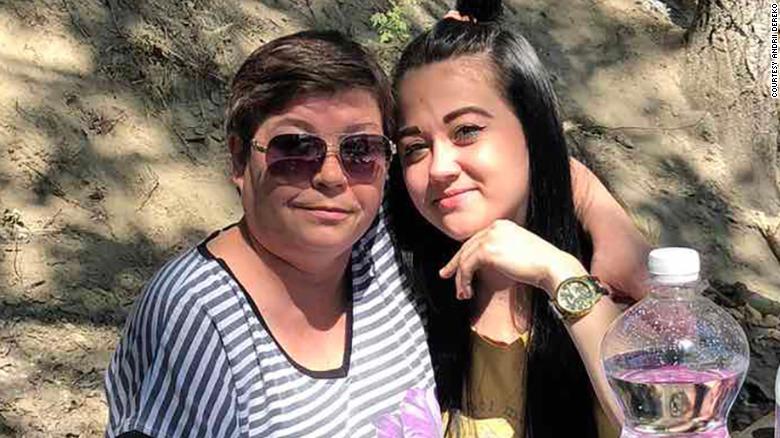
Karina Yershova, right, is pictured with her grandmother in an undated photograph provided by the family.

Karina Yershova, right, is pictured with her grandmother in an undated photograph provided by the family.

Lviv, Ukraine (CNN)When Russian troops invaded Ukraine and began closing in on its capital, Kyiv, Andrii Dereko begged his 22-year-old stepdaughter Karina Yershova to leave the suburb where she lived.

But Yershova insisted she wanted to remain in Bucha, telling him: “Don’t talk nonsense, everything will be fine — there will be no war,” he said.

With her tattoos and long brown hair, Yershova stood out in a crowd, her stepfather said, adding that despite living with rheumatoid arthritis, she had a fiercely independent spirit: “She herself decided how to live.”

Yershova worked at a sushi restaurant in Bucha, and hoped to earn her university degree in the future, Dereko said: “She wanted to develop herself.”

Unclaimed and unidentified: Bucha empties its mass graves

Unclaimed and unidentified: Bucha empties its mass graves 03:24

As Russian soldiers surrounded Bucha in early March, Yershova hid in an apartment with two other friends. On one of the last occasions Dereko and his wife, Olena, heard from Yershova, she told them she had left the apartment to get food from a nearby supermarket.

Tiếp tục đọc “Russian troops use rape as ‘an instrument of war’ in Ukraine, rights groups allege”

Ukraine and Russia: What you need to know right now

By Reuters | April 24, 2022, at 11:40 p.m.

Reuters

FILE PHOTO: A view shows damaged buildings, with the Azovstal Iron and Steel Works plant in the background, in the southern port city of Mariupol, Ukraine April 19, 2022. REUTERS/Alexander Ermochenko – REUTERS

(Reuters) – Washington’s top diplomat and its defense secretary pledged additional military aid to Ukraine and a return of U.S. envoys to Kyiv as they made the first official U.S. visit since Russia invaded two months ago.

FIGHTING

* Russian forces again attempted to storm the Azovstal steel plant, the main remaining Ukrainian stronghold in Mariupol, Ukrainian officials said, adding that more than 1,000 civilians are also sheltering there.

* Russia’s defence ministry said its high-precision missiles struck nine Ukrainian military targets, including four arms depots in the Kharkiv region, where artillery was stored. Russia forces have failed to capture any major city since they began their invasion on Feb. 24.

Tiếp tục đọc “Ukraine and Russia: What you need to know right now”

Russia-Ukraine: What do young Russians think about the war?

aljazeera.com

Young Russians tell us about a war few wanted and how the sanctions are affecting their lives.

People walk past a currency exchange office screen displaying the exchange rates of U.S. Dollar and Euro to Russian Rubles in Moscow's downtown
Sanctions on Russia following its invasion of Ukraine have targeted banks, oil refineries and key members of the Russian regime and oligarchs close to the Kremlin, but have also led caused the value of the rouble to plummet and inflation to soar, impacting the daily lives of Russian citizens [Pavel Golovkin/AP Photo]

By Delaney Nolan

Published On 18 Mar 202218 Mar 2022

Since Russia invaded Ukraine on February 24, an outcry has arisen around the world. On March 2, the UN voted overwhelmingly to approve a resolution demanding the end of the invasion, with only five countries opposing – Russia, Belarus, North Korea, Eritrea, and Syria. As the war rages on, thousands have been killed according to Ukrainian authorities and many more injured.

In response, the US, EU, UK and other countries have levelled sanctions, both general and targeted, and doors have closed to Russians around the world, from research institutions to sporting events, in protest at Russia’s invasion.

Tiếp tục đọc “Russia-Ukraine: What do young Russians think about the war?”

Collective action to release oil stocks in response to Russia’s invasion of Ukraine: IEA confirms member country contributions

IEA.org

7 April 2022

Following an agreement on 1 April by IEA member countries for a new emergency release of oil stocks, the IEA Governing Board confirmed today that the total amount committed to date stands at 120 million barrels, making it the largest stock release in IEA history.

The unanimous agreement among IEA member countries on 1 April for a second collective action this year came in response to the significant strains in oil markets resulting from Russia’s invasion of Ukraine. In the days since the decision, each IEA member country has been considering how much it could contribute to the announced response plan, given its domestic circumstances.

The commitments submitted by members reached 120 million barrels to be released over a six month period, demonstrating strong unity. The United States will contribute about 60 million barrels, which are part of the larger drawdown from its Strategic Petroleum Reserve (SPR) that was announced on 31 March.

Tiếp tục đọc “Collective action to release oil stocks in response to Russia’s invasion of Ukraine: IEA confirms member country contributions”

War gives Poland, Ukraine chance to bury troubled past

By Alexandra Brzozowski | EURACTIV.com

 15 Apr 2022

Poland’s Deputy Prime Minister and the Minister of Culture Piotr Glinski, 13 October 2021. [EPA-EFE/Jonas Ekströmer]

Poland has shown immense support for Ukraine since the Russian invasion started. What is less known is that the two countries share a history of oppression and bloodshed, but according to Poland’s Deputy Prime Minister Piotr Gliński, the war has given them a chance to achieve full reconciliation.

Tiếp tục đọc “War gives Poland, Ukraine chance to bury troubled past”

How the Russia-Ukraine Conflict is Affecting Businesses in Vietnam

vietnam-briefing.com

As the Russia-Ukraine conflict unfolds and completes a month, Vietnam Briefing looks at the impact of the conflict on Vietnam as well as businesses in the country. While it’s still early to determine long-term effects, we examine the short-term effects that will play a key role in how the economy moves forward.

The Russia-Ukraine conflict which began on February 24, sent shockwaves to global markets and led to an unprecedented response from countries around the world in the form of economic sanctions and other restrictive measures. In doing so, western countries and allies are sending a clear signal that they want to cut off Russia from the global financial system and isolate Putin politically.

While analysts state the impact of the Russia-Ukraine conflict is likely to have limited direct consequences on Vietnam, the fallout of the conflict is likely to have significant consequences on trade and businesses in Vietnam. From disrupting trade and global supply chains to causing tensions geopolitically, we discuss the impact that is likely to be felt by businesses operating in Vietnam.

Tiếp tục đọc “How the Russia-Ukraine Conflict is Affecting Businesses in Vietnam”

Russia’s Continuing Ties to Southeast Asia—and How They Factor Into the Ukraine War (3 parts)

cfr.org

Russia’s Continuing Ties to Southeast Asia—and How They Factor Into the Ukraine War: Part 1

Longstanding ties and weapons sales to a number of countries in Southeast Asia insulate Russia from ASEAN criticism over Ukraine war.

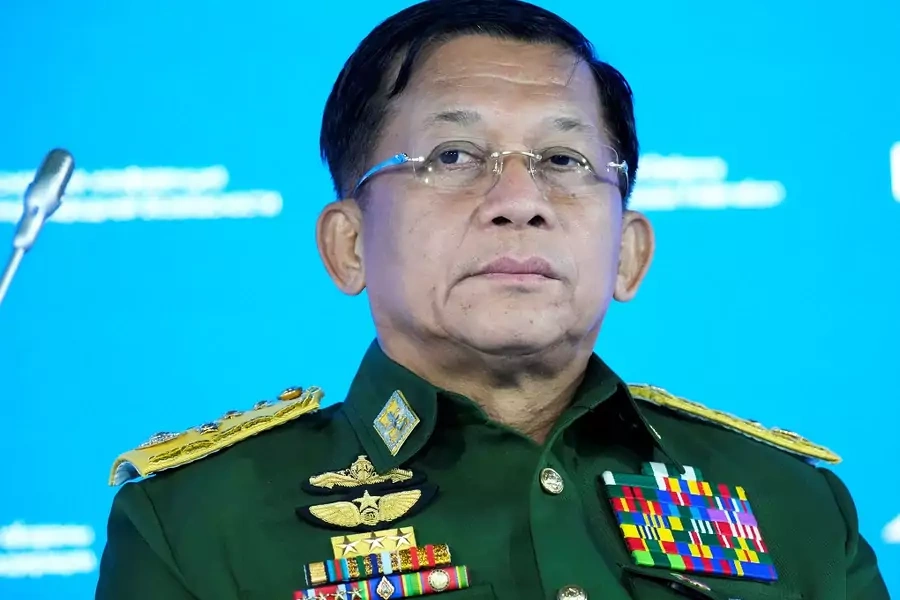
Commander-in-Chief of Myanmar's armed forces, Senior General Min Aung Hlaing, attends the IX Moscow conference on international security in Moscow, Russia, on June 23, 2021.
Commander-in-Chief of Myanmar’s armed forces, Senior General Min Aung Hlaing, attends the IX Moscow conference on international security in Moscow, Russia, on June 23, 2021. Alexander Zemlianichenko/Pool via Reuters

Blog Post by Joshua Kurlantzick

March 8, 2022 4:08 pm (EST)

In recent years, Russia, which had not had much of a strategic or economic presence in Southeast Asia, has become a more involved player once again. It has cultivated close ties with Myanmar, regularly selling weapons to Myanmar and cultivating strategic ties. Particularly after the February 2021 Myanmar coup, when even Beijing seemed to have doubts about how the coup had destabilized the country and led to potential risks to China’s investments, Russia stood strongly behind the junta. Russian officials participated in a prominent military ceremony in Myanmar after the coup, Russian continued to supply large numbers of arms to the junta, even as it launched a scorched earth policy against coup opponents and ethnic minority groups, and the Kremlin invited junta leader Min Aung Hlaing to Moscow in June (before he had any major visits to Beijing), sending a strong signal of support to Naypyidaw.

Tiếp tục đọc “Russia’s Continuing Ties to Southeast Asia—and How They Factor Into the Ukraine War (3 parts)”

Tuyên bố của các Bộ trưởng Ngoại giao G7 về chiến tranh xâm lược Ukraine của Nga

Statement of the G7 Foreign Ministers on Russia’s war of aggression against Ukraine

07.04.2022 – Press release

1. We, the G7 Foreign Ministers of Canada, France, Germany, Italy, Japan, the United Kingdom, and the United States of America, and the High Representative of the European Union, condemn in the strongest terms the atrocities committed by the Russian armed forces in Bucha and a number of other Ukrainian towns. Haunting images of civilian deaths, victims of torture, and apparent executions, as well as reports of sexual violence and destruction of civilian infrastructure show the true face of Russia’s brutal war of aggression against Ukraine and its people. The massacres in the town of Bucha and other Ukrainian towns will be inscribed in the list of atrocities and severe violations of international law, including international humanitarian law and human rights, committed by the aggressor on Ukrainian soil.
Tuyên bố của các Bộ trưởng Ngoại giao G7 về chiến tranh xâm lược Ukraine của Nga

07.04.2022 – Thông cáo báo chí

1. Chúng tôi, Bộ trưởng Ngoại giao G7 của Canada, Pháp, Đức, Ý, Nhật, Vương quốc Anh và Hoa Kỳ, và Đại diện Cao cấp của Liên minh châu Âu, cùng lên án bằng những lời lẽ mạnh mẽ nhất những dã man do quân đội Nga ở Bucha và một số thị trấn khác của Ukraine gây ra. Những hình ảnh ám ảnh về những cái chết của dân thường, nạn nhân bị tra tấn, và hành quyết rõ ràng, cũng như các báo cáo về hãm hiếp và phá hủy cơ sở hạ tầng dân sự cho thấy bộ mặt thật của chiến tranh xâm lược tàn bạo của Nga đối với Ukraine và dân Ukraine. Những thảm sát ở thị trấn Bucha và các thị trấn khác của Ukraine sẽ được khắc vào danh sách những dã man và vi phạm nghiêm trọng luật quốc tế, kể cả luật nhân đạo và nhân quyền quốc tế, do kẻ xâm lược gây ra trên đất Ukraine.
Tiếp tục đọc “Tuyên bố của các Bộ trưởng Ngoại giao G7 về chiến tranh xâm lược Ukraine của Nga”

Statement of the G7 Foreign Ministers on Russia’s war of aggression against Ukraine

07.04.2022 – Press release

  1. We, the G7 Foreign Ministers of Canada, France, Germany, Italy, Japan, the United Kingdom, and the United States of America, and the High Representative of the European Union, condemn in the strongest terms the atrocities committed by the Russian armed forces in Bucha and a number of other Ukrainian towns. Haunting images of civilian deaths, victims of torture, and apparent executions, as well as reports of sexual violence and destruction of civilian infrastructure show the true face of Russia’s brutal war of aggression against Ukraine and its people. The massacres in the town of Bucha and other Ukrainian towns will be inscribed in the list of atrocities and severe violations of international law, including international humanitarian law and human rights, committed by the aggressor on Ukrainian soil.
  2. In the presence of the Foreign Minister of Ukraine, Dmytro Kuleba, we expressed today our heart-felt solidarity with the Ukrainian people and our deepest condolences to the victims of this war and their families. We underline our unwavering support for Ukraine within its internationally recognised borders and express our readiness to assist further, including with military equipment and financial means, to allow Ukraine to defend itself against Russia’s aggression and to rebuild Ukraine.
  3. We underscore that those responsible for these heinous acts and atrocities, including any attacks targeting civilians and destruction of civilian infrastructure, will be held accountable and prosecuted. We welcome and support the ongoing work to investigate and gather evidence of these and other potential war crimes and crimes against humanity, including by the ICC Office of the Prosecutor, the Commission of Inquiry mandated by the UN Human Rights Council, the Human Rights Monitoring Mission Ukraine of the OHCHR, and the OSCE’s mission of experts mandated by OSCE Participating States. We will provide investigative support, technical experts and funding. We will continue to promote accountability for all those complicit in Moscow’s war of choice, including the Lukashenka regime in Belarus. We are convinced that now is the time to suspend Russian membership of the Human Rights Council.
  4. Russia must immediately comply with the legally binding order of the International Court of Justice (ICJ) to suspend the military operations that it commenced on 24 February 2022 in the territory of Ukraine. Further, we urge Russia to withdraw completely its military forces and equipment from the entire territory of Ukraine within its internationally recognised borders.
  5. We warn against any threat or use of chemical, biological or nuclear weapons. We recall Russia’s obligations under international treaties of which it is a party, and which protect us all. Any use by Russia of such a weapon would be unacceptable and result in severe consequences. We condemn Russia’s unsubstantiated claims and false allegations against Ukraine, a respected member of the Biological and Toxin Weapons Convention and the Chemical Weapons Convention that is in compliance with its legal obligations under those instruments. We express concern about other countries and actors that have amplified Russia’s disinformation campaign.
  6. We express our gravest concern with Russia forcefully seizing control of nuclear facilities, and other violent actions in connection with a number of nuclear facilities, nuclear and other radioactive material, which have caused and continue to pose serious and direct threats to the safety and security of these facilities and their civilian personnel, significantly raising the risk of a nuclear accident or incident, which endangers the population of Ukraine, neighbouring States and the international community.
  7. We reiterate our demand that Russia upholds its obligations under international humanitarian law and desists from further blatant abuses. The Russian leadership must immediately provide for safe, rapid and unimpeded humanitarian access and make safe passages work, enabling humanitarian aid to be delivered to besieged cities and civilians to reach safety.
  8. We commit to supporting the Government of Ukraine’s humanitarian coordination structure and to disburse humanitarian support quickly. We ask others to join in this effort. A humanitarian push including more funding is urgently needed for Ukraine and beyond as Russia’s ruthless war and actions are having massive consequences on global commodity and food prices. The resulting rise in food insecurity is being felt disproportionately by the most vulnerable. We stand in solidarity with our partners across the world who have to bear the rising price of President Putin’s unilateral choice to wage war in Europe. We will make coherent use of all instruments and funding mechanisms to address food insecurity, keep markets open, and build resilience in the agriculture sector on all continents. We will actively counter Russia’s narrative that Western sanctions have caused the rise in global food prices and call it out for what it is: a blatant lie.
  9. In light of Russia’s ongoing aggression against Ukraine, carried out with Belarus’ complicity, we have already adopted unprecedented and coordinated economic and financial sanctions against Russia that impose a significant cost on its economy. We stress the necessity of further increasing the economic pressure inflicted on Russia and the Lukashenka regime in Belarus. Together with international partners, the G7 will sustain and increase pressure on Russia by imposing coordinated additional restrictive measures to effectively thwart Russian abilities to continue the aggression against Ukraine. We will work together to stop any attempts to circumvent sanctions or to aid Russia by other means. We are taking further steps to expedite plans to reduce our reliance on Russian energy, and will work together to this end.
  10. We commend those neighbouring states to Ukraine that demonstrated great solidarity and humanity by welcoming Ukrainian refugees and third country nationals affected by the conflict. We confirm the need for increased international assistance and will continue to support these countries, including by receiving more refugees. President Putin’s war of aggression against Ukraine has already forced millions of civilians, especially women, children, and elderly, to flee their homes. Over 4.2 million crossed the border to other countries, almost all of them to the EU and the Republic of Moldova. We reiterate our concern about the risk to this vulnerable population, including the risk of human trafficking  and our commitment to protect these refugees.
  11. Ministers paid special attention to the Republic of Moldova, which hosts the largest group of refugees from Ukraine per capita. The Ministers agreed to further coordinate their assistance for Moldova’s humanitarian response and long-term resilience following the Moldova Support Conference co-hosted by Germany, France and Romania on 5 April in Berlin and the establishment of the Moldova Support Platform.
Tiếp tục đọc “Statement of the G7 Foreign Ministers on Russia’s war of aggression against Ukraine”

Fallout in Southeast Asia of Russia’s Invasion of Ukraine

March 11, 2022 CSIS

Southeast Asian nations have been rather subdued in their responses to Russia’s invasion of Ukraine, although all but two—Vietnam and Laos—voted in the United Nations in early March to condemn Moscow’s aggression. The fighting erupted thousands of miles away, but the effects, particularly of the sanctions imposed by the United States, Europe, Japan, Australia, and others, will still have economic reverberations in Southeast Asia.

Overall, Russia and Ukraine are relatively minor economic players in Southeast Asia, with Russia making up just over 0.64 percent of global trade with the region while Ukraine accounts for just 0.11 percent, according to ASEANstats. But Moscow’s Economic Development Ministry has said that it will work to boost trade and economic links with Asia to balance sanctions.

Tiếp tục đọc “Fallout in Southeast Asia of Russia’s Invasion of Ukraine”

Russia’s Brutality in Ukraine Has Roots in Earlier Conflicts

Its experience in a string of wars led to the conclusion that attacking civilian populations was not only acceptable but militarily sound.

nytimes.com

Ukrainian emergency workers at a maternity hospital damaged by shelling in Mariupol last week.
Ukrainian emergency workers at a maternity hospital damaged by shelling in Mariupol last week.Credit…Evgeniy Maloletka/Associated Press
Max Fisher

By Max Fisher

Published March 18, 2022Updated March 22, 2022

As Russian artillery and rockets land on Ukrainian hospitals and apartment blocksdevastating residential districts with no military value, the world is watching with horror what is, for Russia, an increasingly standard practice.

Its forces conducted similar attacks in Syria, bombing hospitals and other civilian structures as part of Russia’s intervention to prop up that country’s government.

Moscow went even further in Chechnya, a border region that had sought independence in the Soviet Union’s 1991 breakup. During two formative wars there, Russia’s artillery and air forces turned city blocks to rubble and its ground troops massacred civilians in what was widely seen as a deliberate campaign to terrorize the population into submission.

Now, Vladimir V. Putin, whose rise to Russia’s presidency paralleled and was in some ways cemented by the Chechen wars, appears to be deploying a similar playbook in Ukraine, albeit so far only by increments.

Tiếp tục đọc “Russia’s Brutality in Ukraine Has Roots in Earlier Conflicts”