Frankenswine? No, but research on “zombie pigs” raises life-or-death ethics questions

thebulletin.org

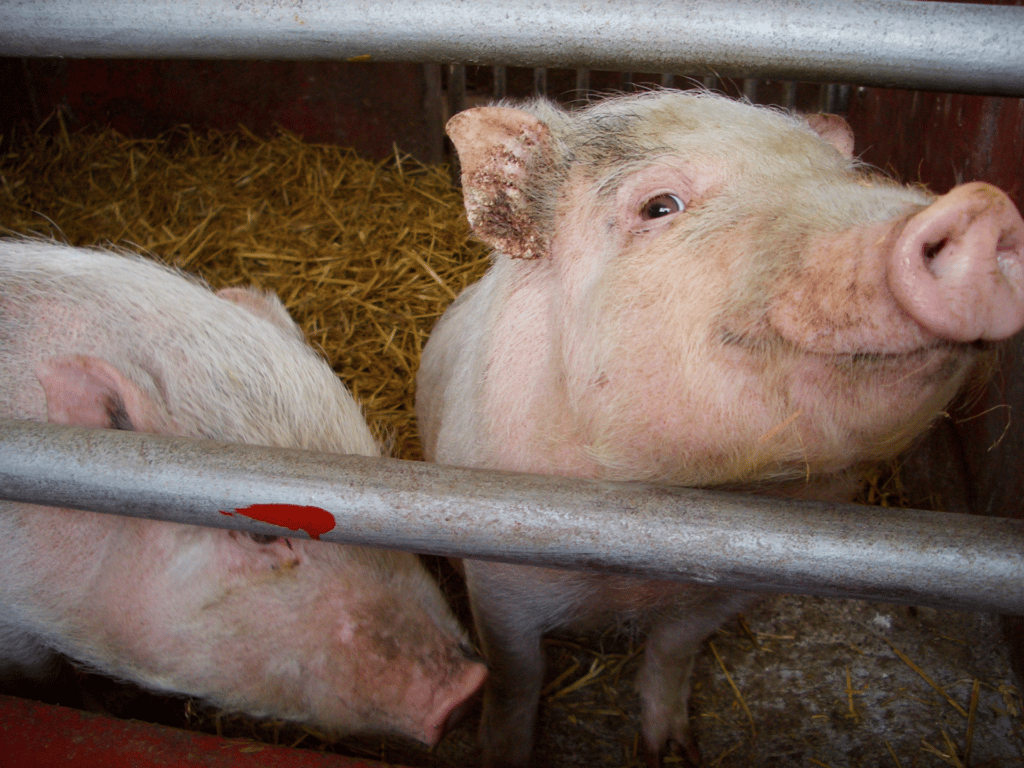
Pigs. Pigs. Credit: or titanium22. CC BY-SA 2.0

It used to be that nothing was certain but death and taxes. Now scientists have taken a step that casts some doubt on the former claim. In a study published Wednesday in Nature, Yale University researchers described a technology for restoring significant organ activity in pigs that had died of a cardiac arrest an hour before. The main goal for the work, they say, will be to improve the harvesting of organs for transplant, but the technique could also potentially be used to revive, for example, drowning victims.

Using a “device similar to a heart-lung machine” and a fluid containing the animals’ blood and a variety of drugs, including anticoagulants, the Yale team was able to observe several signs of restored function in the dead pigs, including heart contraction and some liver and kidney activity. Their hearts were contracting (though not fully beating), their organs were showing signs of metabolism, and genes responsible for cellular repair were active. “These cells are functioning after they should not be,” Nenad Sestan, a Yale University professor and one of the authors of the new study told The Wall Street Journal.

Tiếp tục đọc Frankenswine? No, but research on “zombie pigs” raises life-or-death ethics questions

These are the most international universities in the world in 2022

weforum.org

Knowledge diplomacy among interconnected international universities can solve many of the world's challenges

Better by degrees … a 2022 survey ranks the world’s most international universitie

  • Times Higher Education’s (THE) survey of over 10,000 academics features internationally oriented universities leading global academic collaboration efforts through knowledge diplomacy.
  • Knowledge diplomacy values scientific exchange and diverse, international student bodies and research teams
  • Universities in politically insular countries are increasingly working with research partners from around the world.

While the diplomatic world faces many challenges on the political front, knowledge diplomacy, led by many top international universities, “may be our last and best tool for rebuilding a broken world”.

This was the stirring message of Safwan Masri, Executive Vice-President for global development at Columbia University at a keynote speech at Times Higher Education’s MENA Universities Summit in 2021.

Masri lamented that much of the world is grappling with misunderstanding, division, polarization and cynicism. He adds that “We are living in profoundly undiplomatic times. The inability to understand and comprehend one another is turning neighbor against neighbor. Everything seems broken.”

Have you read?

For Masri and other delegates at the THE summit, global research universities are a shining light in difficult times, with Masri stating that: “Universities exist to increase our comprehension of the world and to enhance mutual understanding”.

Tiếp tục đọc “These are the most international universities in the world in 2022”

The shifting sands of ‘gain-of-function’ research

nature.com

The mystery of COVID’s origins has reignited a contentious debate about potentially risky studies and the fuzzy terminology that describes them.

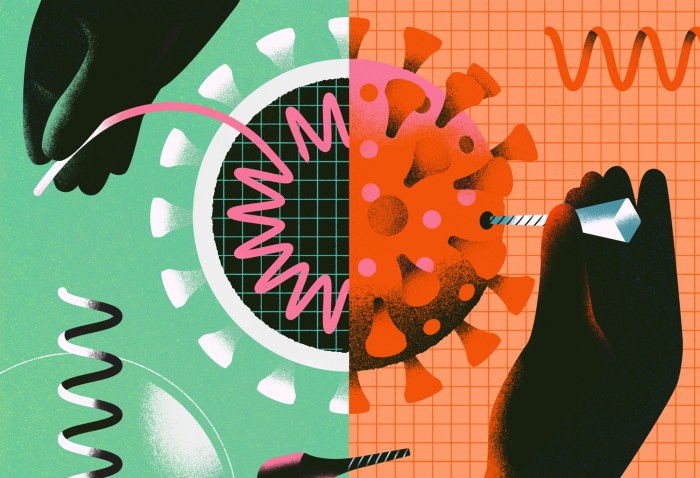
Conceptual illustration showing a virus being edited.
Illustration by Kasia Bojanowska

In Greek mythology, the Chimaera was a fire-breathing monster, a horrifying mishmash of lion, goat and snake that laid waste to the countryside. In 2015, virologists led by Ralph Baric at the University of North Carolina in Chapel Hill reported the creation of their own chimaera. They took a version of the coronavirus responsible for the deadly outbreak of severe acute respiratory syndrome (SARS) in the early 2000s — now known as SARS-CoV — and adorned it with surface proteins from a different coronavirus taken from Chinese horseshoe bats. In the laboratory, this particular mash-up was able to break into human cells and also make mice ill1. This chimaera came with a message: other coronaviruses have the potential to spark a human pandemic. In just a few years’ time, that warning would prove prescient, as a distant cousin of SARS-CoV has now killed more than 4.9 million people worldwide.

Tiếp tục đọc “The shifting sands of ‘gain-of-function’ research”

Làm sao vực dậy đời sống khoa học xã hội?

nhanhoc.hcmussh.edu.vn – tháng 8-2006 – Trần Hữu Quang

Tầm quan trọng của khoa học xã hội-nhân văn tại Mỹ

Tại sao lại có hiện tượng coi thường khoa học xã hội? Đâu là căn nguyên của tình trạng sa sút trong hoạt động nghiên cứu khoa học xã hội? Tại sao phải bàn về quyền tự do tư tưởng trong hoạt động trí tuệ?

Khi bàn về nhu cầu cải tổ hoạt động nghiên cứu khoa học ở nước ta vốn đang lâm vào tình cảnh suy thoái ngày càng nặng nề, người ta thường hay nói nhiều nhất tới nguyên nhân cơ chế quản lý. Theo một cuộc thăm dò cán bộ khoa học gần đây của Sở KH&CN TP. Hồ Chí Minh, có 97,8 % trong số 233 người trả lời cho rằng cần đổi mới chính sách và cơ chế quản lý hoạt động khoa học1. Có lẽ cũng chính vì thế mà chính phủ đã ban hành Nghị định 115 (5-9-2005) về cơ chế tự chủ, tự chịu trách nhiệm của các tổ chức nghiên cứu công lập nhằm nỗ lực cải cách theo hướng ấy. Cải tổ cơ chế quản lý khoa học là điều rất đúng đắn và cần thiết vào lúc này; tuy nhiên, theo thiển ý chúng tôi, nếu chỉ dừng lại ở đó mà thôi thì hoàn toàn chưa đủ vì mới chỉ đụng chạm vào cái thân chứ chưa đột phá tới những chiều sâu gốc rễ của vấn đề. Đặc biệt là trong lĩnh vực khoa học xã hội mà bài này muốn bàn luận đến.

Tiếp tục đọc “Làm sao vực dậy đời sống khoa học xã hội?”

How to get the most out of research when universities and industry team up

theconversation.com

Australia has long been seen as failing to fully capitalise on its ground-breaking research. A consultation paper on university research commercialisation is the latest federal government effort to increase the impact of research. Its focus is on creating incentives for industry-university collaboration to translate and commercialise research.

Any government scheme resulting from these consultations might boost the number of such collaborations. Yet our research suggests many of these projects are unlikely to reach their full potential unless academics and their research partners working in industry strengthen their collaborative relationships.


Read more: Who cares about university research? The answer depends on its impacts Tiếp tục đọc “How to get the most out of research when universities and industry team up”

Năng lực nghiên cứu ở các quốc gia thu nhập thấp: Đánh giá hiện trạng

English:  Research capacity in lower-income countries: assessing the status quo

Sau khi tiến hành và phân tích bài đánh giá tổng quan một cách hệ thống nội dung các nghiên cứu về phát triển năng lực nghiên cứu (đặc biệt về vấn đề y tế, nhưng có ứng dụng ở các lĩnh vực khác), tôi tin rằng rõ ràng các phương pháp nhằm phát triển năng lực ở các nước thu nhập trung bình và là không đủ và thường bị phân tán. Mặc dù cần phải thừa nhận rằng có rất nhiều yếu tố tác động, nhưng vẫn cần phải tập trung xem xét hai rào cản lớn nhất trong việc đẩy mạnh các nỗ lực phát triển năng lực, cả hai yếu tố này đều liên quan tới thiết kế và ý định của các chương trình nghiên cứu và mô hình phát triển, đó là: sự phụ thuộc vào các nước có thu nhập cao (HÍC), và các mục tiêu nghiên cứu hạn hẹp đánh đổi với các tác động mang tính bền vững.
Tiếp tục đọc “Năng lực nghiên cứu ở các quốc gia thu nhập thấp: Đánh giá hiện trạng”

Modest level of research: weakness of Vietnam’s universities

Last update 10:08 | 15/03/2018
VietNamNet Bridge – Despite the sharp increase in the numbers of professors and associate professors, and lecturers with master degrees and doctorates, no Vietnamese university is included in international university rankings. 

vietnam economy, business news, vn news, vietnamnet bridge, english news, Vietnam news, news Vietnam, vietnamnet news, vn news, Vietnam net news, Vietnam latest news, Vietnam breaking news, MOET, professor, research

Students of Duy Tan University

The Science, Education and Environment Advisory Council, at a recent conference on post-graduate training and talent development, pointed out a number of problems in higher education and academic research.

While the number of research works is high, the quality is low and the results cannot be applied in real life. The number of internationally published articles remains modest, especially in social sciences. Tiếp tục đọc “Modest level of research: weakness of Vietnam’s universities”