Gold mining suspected as cause of Cambodian mass poisonings

Bờ biển đẹp trở thành bãi chứa hàng tấn rác thải

NZ – 07:00 17/06/2018

 Suốt nhiều năm, người dân xả thải bừa bãi ra bờ biển làm bãi cát đẹp trở thành nơi chứa rác thải, ô nhiễm nghiêm trọng.

Trên bãi biển ô nhiễm, những đứa trẻ ở thị trấn Phan Rí Cửa (huyện Tuy Phong, Bình Thuận) dùng rác làm đồ chơi, chạy nhảy trên cát đầy rẫy túi nylon và mảnh sành, thủy tinh.
Bo bien dep tro thanh bai chua hang tan rac thai hinh anh 1
Tình trạng ô nhiễm đang diễn ra ở bãi biển thị trấn Phan Rí Cửa (huyện Tuy Phong, Bình Thuận). Tại đây, gần 2 km bãi cát ngập trong các loại rác thải, chất thải.

Tiếp tục đọc “Bờ biển đẹp trở thành bãi chứa hàng tấn rác thải”

‘Khủng khiếp’, bình quân mỗi người Việt tiêu thụ 0,9-1kg thuốc BVTV/năm

Thuốc độc ở chính trong ta:

NN – 27/07/2018, 08:42 (GMT+7) Hiện có khoảng 200 doanh nghiệp tham gia sản xuất kinh doanh thuốc BVTV, khoảng 100 nhà máy sản xuất thuốc BVTV và hơn 30 ngàn đại lý buôn bán thuốc BVTV. Đáng chú ý là thực sự chỉ khoảng 15-20 doanh nghiệp chi phối...

Lợi ích nhóm

Theo ông Trương Quốc Tùng – nguyên Phó Chủ tịch Thường trực Hội Khoa học Kỹ thuật Bảo vệ Thực vật (BVTV) Việt Nam, lịch sử dùng thuốc BVTV ở nước ta được bắt đầu ở miền Bắc vào năm 1955. Nó tỏ ra là phương tiện quyết định, nhanh chóng dập tắt các dịch sâu bệnh trên diện rộng. Nếu không có thuốc BVTV nhiều dịch hại cây trồng có thể làm giảm 40-60% năng suất trên diện rộng, cục bộ có thể mất trắng.

08-37-56_dsc_0465
Vỏ bao thuốc BVTV vứt bừa bãi ở một vùng trồng rau sạch

Tiếp tục đọc “‘Khủng khiếp’, bình quân mỗi người Việt tiêu thụ 0,9-1kg thuốc BVTV/năm”

Làm nông nghiệp hữu cơ: Câu chuyện từ nhận thức đến thực tiễn – 5 bài

***
Đừng kinh doanh “hữu cơ” trong bóng tối”

Jerry Do – 09:55, 13/05/2018

TheLEADER Giấc mơ “hữu cơ” nào cũng đáng quý, mặc dù không có giấc mơ nào giống nhau, chỉ có điều chúng ta phải trung thực với những gì có thể làm hay nói cách khác là minh bạch thông tin vườn trồng cũng như sản phẩm để cộng đồng lựa chọn.

Đừng kinh doanh "hữu cơ" trong bóng tối

Sản phẩm nông nghiệp hữu cơ vẫn còn là giấc mơ của nhiều người. Tiếp tục đọc “Làm nông nghiệp hữu cơ: Câu chuyện từ nhận thức đến thực tiễn – 5 bài”

Nghịch lý ngành xi măng (3 bài)

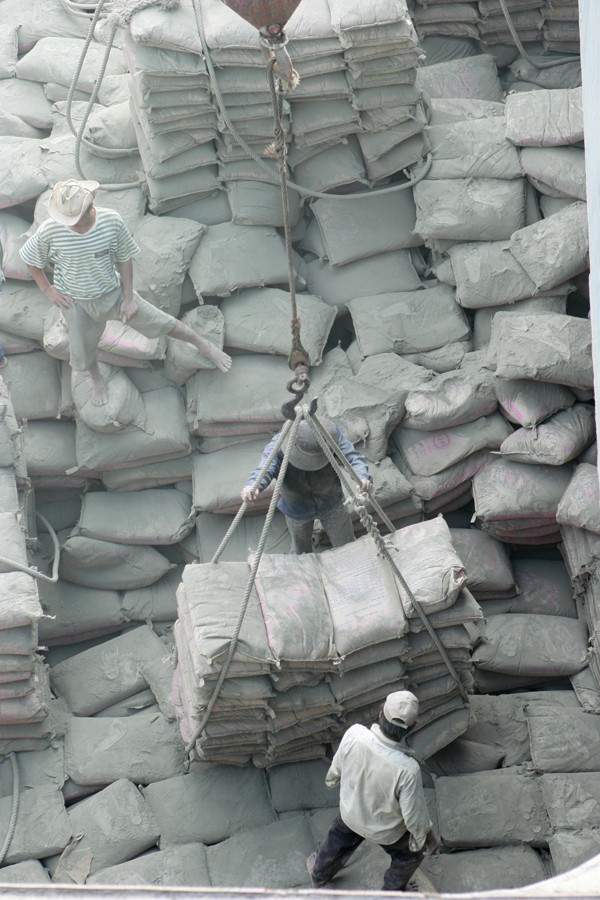
Nghịch lý ngành xi măng - ảnh 1
Xi măng trong nước ế ẩm, xuất khẩu giá rẻ. Ảnh: ngọc châu

***

Giá xuất khẩu chỉ hơn nửa giá trong nước:

Nghịch lý ngành xi măng

TP – Giá xi măng xuất khẩu chỉ bằng hơn nửa giá bán trong nước, chỉ giải quyết tình trạng tồn kho; ngân sách không thu được gì, thậm chí mất tài nguyên, gây ô nhiễm.

Tiếp tục đọc “Nghịch lý ngành xi măng (3 bài)”

10 Rivers Contribute Most of the Plastic in the Oceans

ScientificAmerica

The 10 rivers that carry 93 percent of that trash are the Yangtze, Yellow, Hai, Pearl, Amur, Mekong, Indus and Ganges Delta in Asia, and the Niger and Nile in Africa. The Yangtze alone dumps up to an estimated 1.5 million metric tons of plastic waste into the Yellow Sea.


Credit: Amanda Montañez; Source: “Export of Plastic Debris by Rivers into the Sea,” by Christian Schmidt et al., in Environmental Science & Technology, Vol. 51, No. 21; November 7, 2017

Our seas are choking on plastic. A staggering eight million metric tons wind up in oceans every year, and unraveling exactly how it gets there is critical. A recent study estimates that more than a quarter of all that waste could be pouring in from just 10 rivers, eight of them in Asia.

“Rivers carry trash over long distances and connect nearly all land surfaces with the oceans,” making them a major battleground in the fight against sea pollution, explains Christian Schmidt, a hydrogeologist at the Helmholtz Center for Environmental Research in Leipzig, Germany.
Tiếp tục đọc “10 Rivers Contribute Most of the Plastic in the Oceans”

Polluted waste water causes 2,000 rivers to die

07:21 | 22/05/2018

VietNamNet BridgeMore than 2,000 large rivers with 10 kilometers or longer in Vietnam are being threatened by untreated waste water from households, industrial production and craft villages.

vietnam economy, business news, vn news, vietnamnet bridge, english news, Vietnam news, news Vietnam, vietnamnet news, vn news, Vietnam net news, Vietnam latest news, Vietnam breaking news, mass fish deaths, Hai Duong, river pollution
Fish have died in Hai Duong province

The people farming fish in cages on Luc Dau, Kinh Thay and Thai Binh in Hai Duong province have shouted for help as their fish have died en masse because of polluted waste water discharged into rivers. Tiếp tục đọc “Polluted waste water causes 2,000 rivers to die”

The Challenge of Agricultural Pollution : Evidence from China, Vietnam, and the Philippines

Thumbnail
In emerging East Asia, agricultural output has expanded dramatically over recent decades, primarily as a result of successful efforts to stimulate yield growth. This achievement has increased the availability of food and raw materials in the region, drastically diminished hunger, and more generally provided solid ground for economic development. The intensification of agriculture that has made this possible, however, has also led to serious pollution problems that have adversely affected human and ecosystem health, as well as the productivity of agriculture itself. In the region that currently owes the largest proportion of deaths to the environment, agriculture is often portrayed as a victim of industrial and urban pollution, and this is indeed the case. Yet agriculture is taking a growing toll on economic resources and sometimes becoming a victim of its own success. In parts of China, Vietnam, and the Philippines—the countries studied in The Challenge of Agricultural Pollution—this pattern of highly productive yet highly polluting agriculture has been unfolding with consequences that remain poorly understood. With large numbers of pollutants and sources, agricultural pollution is often undetected and unmeasured. When assessments do occur, they tend to take place within technical silos, and so the different ecological and socioeconomic risks are seldom considered as a whole, while some escape study entirely. However, when agricultural pollution is considered in its entirety, both the significance of its impacts and the relative neglect of them become clear. Meanwhile, growing recognition that a “pollute now, treat later” approach is unsustainable—from both a human health and an agroindustry perspective—has led public and private sector actors to seek solutions to this problem. Yet public intervention has tended to be more reactive than preventive and often inadequate in scale. In some instances, the implementation of sound pollution control programs has also been confronted with incentive structures that do not rank environmental outcomes prominently. Significant potential does exist, however, to reduce the footprint of farms through existing technical solutions, and with adequate and well-crafted government support, its realization is well within reach.
Citation
“Cassou, Emilie; Jaffee, Steven M.; Ru, Jiang. 2018. The Challenge of Agricultural Pollution : Evidence from China, Vietnam, and the Philippines. Directions in Development—Environment and Sustainable Development;. Washington, DC: World Bank. © World Bank. https://openknowledge.worldbank.org/handle/10986/29187 License: CC BY 3.0 IGO.”


Evidence mounts for Alzheimer’s, suicide risks among youth in polluted cities

sciencedaily.com

Date: April 13, 2018
Source: The University of Montana
Summary: Researchers have published a new study that reveals increased risks for Alzheimer’s and suicide among children and young adults living in polluted megacities.

FULL STORY

This is pollution haze over Mexico City.
Credit: Lilian Calderón-Garcidueñas

A University of Montana researcher and her collaborators have published a new study that reveals increased risks for Alzheimer’s and suicide among children and young adults living in polluted megacities.

Dr. Lilian Calderón-Garcidueñas said her group studied 203 autopsies of Mexico City residents ranging in age from 11 months to 40 years. Metropolitan Mexico City is home to 24 million people exposed daily to concentrations of fine particulate matter and ozone above U.S. Environmental Protection Agency standards. The researchers tracked two abnormal proteins that indicate development of Alzheimer’s, and they detected the early stages of the disease in babies less than a year old. Tiếp tục đọc “Evidence mounts for Alzheimer’s, suicide risks among youth in polluted cities”

Petroleum company caught dumping untreated waste in protected Hanoi forest

VNExrpess By Vo Hai, Phan Anh   March 14, 2018 | 10:03 pm GMT+7

Petroleum company caught dumping untreated waste in protected Hanoi forest

Plastic bags are seen from the discharge by a petroleum company in a Hanoi forest. Photo by VnExpress/Chien Minh

Locals say the company has been trying to cover up the evidence and switched to operating at night following complaints.

A petroleum company has been caught red-handed dumping untreated waste in a protected forest on the outskirts of Hanoi.

Residents of Soc Son District started noticing lines of trucks queuing up to dump tons of waste shortly before the Lunar New Year (Tet).

Tiếp tục đọc “Petroleum company caught dumping untreated waste in protected Hanoi forest”

Nhuệ-Đáy river basin polluted despite clean-up efforts

vietnamnews Update: February, 03/2018 – 09:00

A part of the Nhuệ River running through Thanh Trì District’ Hữu Hòa and Tả Thanh Oai communes. — VNA/VNS Photo Trọng Đạt
Viet Nam News HÀ NỘI — The Nhuệ-Đáy river basin continues to suffer from pollution despite a range of environmental protection projects that have been carried out by several agencies, including Hà Nội’s Department of Natural Resources and Environment. 

Lê Tuấn Định, deputy head of the department, said the level of pollution in the water had steadily worsened and that many stretches of the river were seriously polluted, especially during the dry season.

He said, the water quality in the Nhuệ and Đáy rivers would improve when they received water from the Hồng (Red) River.

However, statistics from the department show that the water level of the Hồng River has been low since 2003. Tiếp tục đọc “Nhuệ-Đáy river basin polluted despite clean-up efforts”

Dangerous levels of untreated waste in water samples

Last update 11:51 | 26/01/2018
VietNamNet Bridge – The content of untreated waste in a pond at a company in the northwestern province of Dien Bien exceeded national standards dozens of times, said the provincial Environmental Police Department.
Dangerous levels of untreated waste, wastewater samples, Vietnam economy, Vietnamnet bridge, English news about Vietnam, Vietnam news, news about Vietnam, English news, Vietnamnet news, latest news on Vietnam, Vietnam
Dien Bien Province’s Environmental Police Department reports content of untreated waste in the Hong Diep–Dien Bien Starch JSC’s pond exceeded the national standard dozens of times. — Photo vov.vn

Local media reported on January 14 and 15 that hundreds of cubic metres of wastewater flowed into the Nam Nua Stream after a waste tank, belonging to a cassava starch-processing factory of Hong Diep–Dien Bien Starch JSC, cracked open, polluting the stream with a foul-smelling dark liquid and killing hundreds of fish. Tiếp tục đọc “Dangerous levels of untreated waste in water samples”

Forty per cent of global e-waste comes from Asia

Forty per cent of global e-waste comes from Asia

Copyright: Panos

Speed read

  • E-waste generated in 2016 equivalent to 4,500 Eiffel Towers
  • Asian countries account for 40 per cent of the discarded goods
  • Developing countries still lack formal e-waste recycling systems

scidev.net_[NEW DELHI] Humans generated a staggering 44.7 million metric tonnes of electronic waste (e-waste) in 2016 — the equivalent of 4,500 Eiffel Towers, and five per cent more than the electrical and electronic goods discarded just two years earlier, says a new study.

The trend is set to continue, with volumes of e-waste expected to rise to 52.2 million metric tonnes by 2021. Tiếp tục đọc “Forty per cent of global e-waste comes from Asia”

Plankton decline hits marine food chain

DW_Plankton is the basis for the entire marine food web – and it is under threat. From the Mediterranean to the Pacific, animals have been struggling to survive, due apparently to changes with plankton.

Food chains represent the greatest interdependency within the webs of life. The marine food chain, for instance, is essential for oceans – and depends on plankton. But environmental changes and human activities may be threatening plankton– and therefore all marine animals.

According to a recent study,the biomass of sardines and anchovies has been decreasing at alarming rates in the Mediterranean Sea. At the same time, sea lions are struggling to forage on the coasts of California. Both cases have shed light on how a single food chain element can affect all others.

While it is still unknown whether species will be able to adapt to new conditions, the marine food chain is already experiencing drastic changes – and plankton plays a crucial role across the board.

“If anything happens to the plankton, an immediate cascade effect will take place on the food chain,” Ivan Nagelkerken, a University of Adelaide’s biology professor, told DW.

Shark swimming (Picture: Imago/OceanPhoto)Even top predators depend on plankton – indirectly

Building blocks of life

Plankton are tiny aquatic organisms that drift through the sea, forming the basis of the marine food chain.

For plankton, both quantity and quality – in terms of nutrients – affect life up the food chain. Tiếp tục đọc “Plankton decline hits marine food chain”

Phú Quốc Island drowning in rubbish

vietnamnews Update: October, 20/2017 – 09:00

Garbage heap in Phú Quốc Island’s Dương Đông Town in the Mekong Delta province of Kiên Giang. — VNS Photo Thái Hà
Viet Nam News KIÊN GIANG — Phú Quốc Island in the southern province of Kiên Giang – among the most popular tourist destinations in Việt Nam – is being threatened by environmental pollution caused by rubbish dumps, Lao động (Labour) newspaper reported. Tiếp tục đọc “Phú Quốc Island drowning in rubbish”