What are the political drivers for GMOs in developing countries?

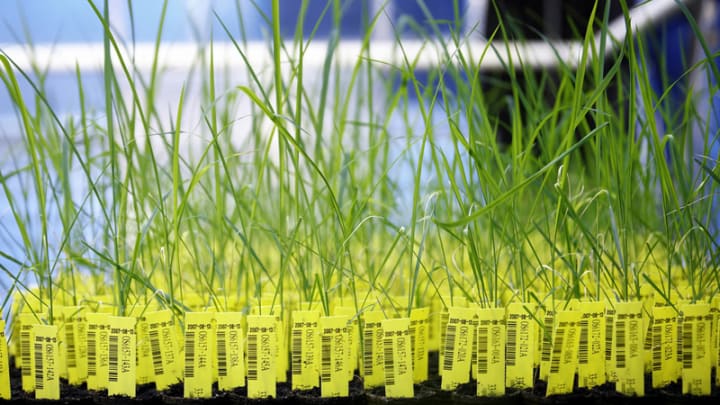
Each genetically modified rice plant in the greenhouses at CropDesign has a barcode and transponder, allowing it to be accurately identified at any time. Photo by: BASF / CC BY-NC-ND

CANBERRA — In developing nations across the globe, governments are grappling with questions of what role, if any, genetically modified organisms should play in helping address a range of agriculture, nutrition, and climate challenges.


Concerns have been raised over the environmental and health impacts of GMOs, as well as their impact on traditional farming methods and issues around seed patents, and farmers having to be dependent on corporations.

Governments of developing countries are responding to those concerns in a variety of ways with some banning GMOs outright, some embracing them, and others attempting to find balance between the concerns and needs of all sides.

Developing countries are slowly increasing approved legislation and opening the door to research and commercialization of GMO crops. As these countries seek to expand their export markets, improve domestic living conditions, and address food insecurity in the wake of conflict and climate change, some are seeing a solution in genetically engineered crops. Tiếp tục đọc “What are the political drivers for GMOs in developing countries?”

Glyphosate: The key points in an endless debate

DW_The European Union is deciding about the future of glyphosate — a controversial herbicide that may be linked with cancer. DW offers an overview on the most important points of the debate.

Bottles of RoundUp herbicide (picture-alliance/AP Photo/J. Roberson)

Despite warnings over potential risks to human health and the environment, farmers around the world are dependent on chemical giant Monsanto’s herbicide Roundup. Active ingredient: glyphosate.

In June 2016, European Union member states delayed a final decision on renewal for the weed killer, instead extending the license for 18 months. In October and November 2017, the European Commission again pushed back a vote on the issue.

The European Commission must make a decision, as the current license is due to expire on December 15. Although the European Commission on Food Safety had been pushing for a 10-year renewal of the license for glyphosate, this has been pedaled back to a five-year renewal. Tiếp tục đọc “Glyphosate: The key points in an endless debate”

Mỹ “bắt nạt ” các quốc gia đang phát triển phải chấp nhân sinh vật biến đổi gen GMOs

English: USA “bullying’ developing nations to accept genetically modified organisms
Công nhân Javier Alcantar chăm sóc vụ mùa ngô tại các cánh đồng thử nghiệm của Monsanto ở Woodland, California, Mỹ, vào ngày 10 tháng 8, năm 2012. Công ty Monsanto, một tập đoàn đa quốc gia về công nghệ sinh học nông nghiệp Mỹ, là nhà sản xuất dẫn đầu thế giới của các loại thuốc diệt cỏ glyphosate và là nhà sản suất lớn nhất của hạt giống biến đổi gen bằng kỹ thuật. PHOTO: Bloomberg

Thứ Tư 29 Tháng 5, 2013

Monsanto đang phải đối mặt với sự chống đối toàn cầu, nhưng Việt Nam lại chào đón những nhà sản xuất chất độc da cam và công nghệ đáng hoài nghi này.

Chị Thủy cau mày và gần như ngay lập tức lắc đầu khi được hỏi nếu có loại thực phẩm nào được bán tại siêu thị của chị mà có mang nhãn biến đổi gen(GM).

“Dán nhãn không phải là chính sách công ty của chúng tôi,” các nhân viên của đại lý siêu thị Co.opmart tại Tp Hồ Chí Minh, quận 1 nói. “Nhưng tại sao anh phải bận tâm về việc dán nhãn? Có phải vì các loại thực phẩm biến đổi gen GM thì tốt hơn?” Tiếp tục đọc “Mỹ “bắt nạt ” các quốc gia đang phát triển phải chấp nhân sinh vật biến đổi gen GMOs”

Monsanto lobbyists barred from European Parliament

Monsanto Lobbyists cannot enter the doors of the European Parliament until further notice. [Shutterstock]

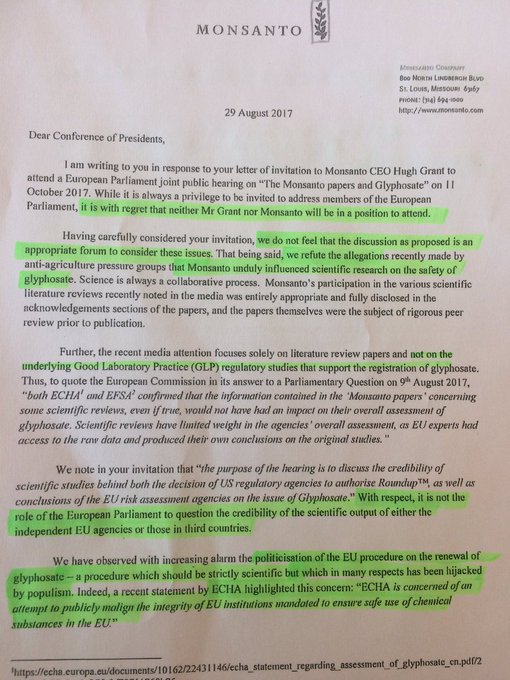
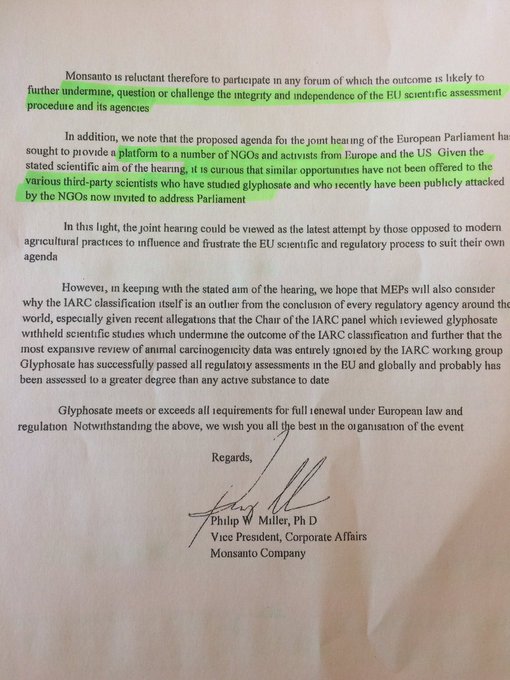
euractive_Monsanto has paid for its refusal to appear before the European Parliament by losing its right to enter it, as MEPS have shut the door on their lobbyists until further notice. EURACTIV France reports.

The Conference of the Presidents – composed of the leaders of the European Parlaiment’s groups – decided on Thursday (28 September) to withdraw the right of the American company’s lobbysts to access the Parliament’s buildings.

“We have just officially refused access to the European Parliament to Monsanto lobbyists. This decision has been taken by the Conferenfe of the Presidents on 28 September,” explained Marc Tarabella, head of the Belgian Socialist Party delegation, in a press release.

55 Years After Agent Orange Was Used In Vietnam, One Of Its Creators Is Thriving Here

Monsanto is expanding in a country it once helped destroy.

KUNI TAKAHASHI VIA GETTY IMAGES
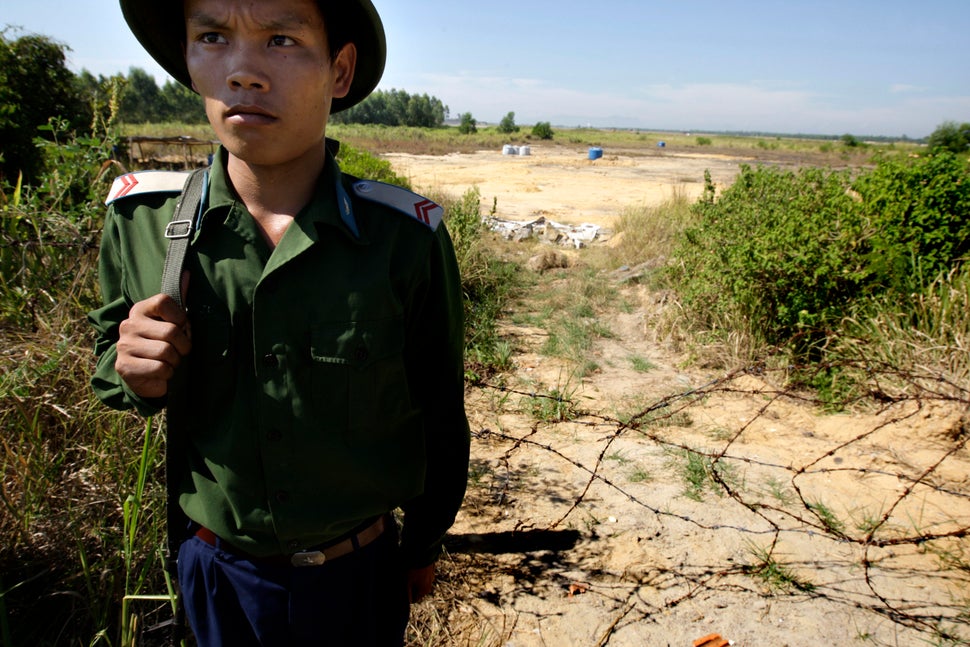
A Vietnamese soldier guards the contaminated site at the edge of the Da Nang Airfield on July 1, 2009 in Da Nang, Central Vietnam. During the Vietnam War, the U.S. military stored more than four million of gallons of herbicides, including Agent Orange, at the military base that is now a domestic and military airbase.

HO CHI MINH CITY, Vietnam ― Fifty-five years ago this month, the U.S. Army began spraying millions of gallons of the toxic defoliant known as Agent Orange over large swaths of southern Vietnam. Today, however, instead of resentment and isolation from the U.S., the country is awash with Americanophilia. Tiếp tục đọc “55 Years After Agent Orange Was Used In Vietnam, One Of Its Creators Is Thriving Here”

Scant oversight, corporate secrecy preceded U.S. weed killer crisis

 vietnamnet

Last update 17:01 | 09/08/2017

As the U.S. growing season entered its peak this summer, farmers began posting startling pictures on social media: fields of beans, peach orchards and vegetable gardens withering away.

U.S., weed killer crisis, crop damage, investigation
John Weiss looks over his crop of soybeans, which he had reported to the state board for showing signs of damage due to the drifting of Monsanto’s pesticide Dicamba, at his farm in Dell, Arkansas, U.S. July 25, 2017.

The photographs served as early warnings of a crisis that has damaged millions of acres of farmland. New versions of the herbicide dicamba developed by Monsanto and BASF, according to farmers, have drifted across fields to crops unable to withstand it, a charge authorities are investigating. Tiếp tục đọc “Scant oversight, corporate secrecy preceded U.S. weed killer crisis”

Monsanto Tribunal Judges Slam Monsanto over Violation of Human Rights

Posted on Apr 18 2017 – 4:57pm by Sustainable Pulse

Today the five international judges for the Monsanto Tribunal presented their legal opinion, which include key conclusions, both on the conduct of Monsanto and on the need for important changes to international laws governing multinational corporations.

International_Monsanto_Tribunal

The judges conclude that Monsanto has engaged in practices that have impinged on the basic human right to a healthy environment, the right to food and the right to health. Additionally, Monsanto’s conduct has a negative impact on the right of scientists to freely conduct indispensable research. Tiếp tục đọc “Monsanto Tribunal Judges Slam Monsanto over Violation of Human Rights”

Monsanto’s Superfund Secret

DISSENT Magazine

Monsanto elemental phosphorous plant, Soda Springs, Idaho (Kevin Beebe / Flickr)

The world’s most widely used herbicide, Roundup, has faced intense scrutiny in recent weeks, since documents surfaced revealing a close relationship between Monsanto, the creator of Roundup, and EPA officials tasked with regulating herbicide use in the United States. One email exchange included a Monsanto executive boasting that an EPA official had told him he “should get a medal” if he could “kill” an agency investigation into the herbicide.Ư

This news was troubling, considering the fact that the World Health Organization recently declared Roundup’s active ingredient “probably carcinogenic to humans.” The 2015 WHO announcement raised major alarms because roughly 89 percent of American corn and over 90 percent of all soybeans produced in the United States—millions of tons of which are exported every year to dozens of countries around the world—are genetically engineered to be herbicide resistant, Roundup Ready being a preferred variety. These findings gave new scientific fodder to many GMO opponents who have long alleged that the world’s food supply is awash in dangerous chemicals. Tiếp tục đọc “Monsanto’s Superfund Secret”

Monsanto’s Roundup linked to liver disease, study says

Dekalb Việt Nam lọt Top 100 doanh nghiệp phát triển bền vững 2016

NN – 14/11/2016, 14:05 (GMT+7)

Mới đây, Phòng Thương mại và Công nghiệp Việt Nam (VCCI) và Hội đồng Doanh nghiệp vì sự phát triển bền vững Việt Nam (VBCSD) tổ chức công bố Bảng xếp hạng 100 doanh nghiệp phát triển bền vững năm 2016.

14-45-30_le-tro-giiToàn cảnh lễ trao giải Tiếp tục đọc “Dekalb Việt Nam lọt Top 100 doanh nghiệp phát triển bền vững 2016”

Local Residents Force Monsanto to Tear Down GMO Seed Plant in Argentina

Share:
Submitted by Food Democracy Now on August 7, 2016 – 2:23pm

Monsanto have announced that they will dismantle their half-built multi-million dollar GMO seed plant in Malvinas, Argentina, following protests from local citizens over the past 3 years.

malvinas 2

Local Malvinas citizens and GMO Free campaigners from across Argentina forced Monsanto to stop the construction of their GMO seed plant in 2014, through well-coordinated protests at the construction site. Tiếp tục đọc “Local Residents Force Monsanto to Tear Down GMO Seed Plant in Argentina”

Heroin, Nazis, and Agent Orange: Inside the $66 Billion Merger of the Year

These companies used to sell heroin and Agent Orange. Now, they want to form the world’s largest supplier of seeds and pesticides.

BB – September 15, 2016 — 12:09 AM ICT

Two giants of the farming and chemical industries agreed to merge Wednesday in a $66 billion deal: the U.S.’s Monsanto and Germany’s Bayer, the original maker of aspirin. Tiếp tục đọc “Heroin, Nazis, and Agent Orange: Inside the $66 Billion Merger of the Year”

Tác động của Hiệp định thương mại tự do Thái Lan – EU lên giống cây trồng, đa dạng sinh học và an ninh lương thực

HN – Được viết ngày Thứ ba, 22 Tháng 9 2015 04:17

biodiversity

Nếu Thái Lan chấp nhận các điều khoản về sở hữu trí tuệ đang đàm phán theo Hiệp định thương mại tự do với EU, Thái Lan sẽ phải sửa đổi Đạo luật bảo vệ giống cây trồng năm 1999 để phù hợp hơn với Công ước UPOV 1991. Điều này có thể tác động đến người nông dân, sự đa dạng sinh học và an ninh lương thực, cụ thể như sau: Tiếp tục đọc “Tác động của Hiệp định thương mại tự do Thái Lan – EU lên giống cây trồng, đa dạng sinh học và an ninh lương thực”

First Agent Orange, now Roundup: what’s Monsanto up to in Vietnam? Ecologist Special Investigation

The Ecologist, Mick Grant
10th October 2016

A keyboard player, blind from birth due to a genetic defect induced by Agent Orange, performing at the War Remnants Museum. Photo: Mick Grant.

With the International Monsanto Tribunal beginning this week (14-16 October) in The Hague, MICK GRANT reports from Vietnam with this special investigation for The Ecologist five decades after the company’s lethal herbicide Agent Orange first devastated the country – and discovers the agribusiness giant is sneaking its way back into Vietnam with modern herbicides and ‘Roundup-Ready’ GMO crops.

Tiếp tục đọc “First Agent Orange, now Roundup: what’s Monsanto up to in Vietnam? Ecologist Special Investigation”

EU glyphosate tantrum could leave people exposed to cancer risk