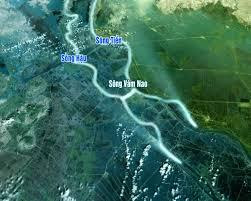
Thông cáo của Liên minh cứu sông Mekong về quy trình tham vấn thủy điện Pak Beng (VNese – English)

mekongblog

Đăng vào 04/05/2017


Thông cáo của Liên minh cứu sông Mê Kông

Cần hoãn Quy trình Tham vấn trước đối với dự án thủy điện Pak Beng cho đến khi hoàn thiện Nghiên cứu Hội đồng và đánh giá tác động trên toàn lưu vực

Liên minh cứu sông Mê Kông gồm các thành viên thuộc các quốc gia thuộc Lưu vực sông Mê Kông. Chúng tôi hoạt động dựa trên nhận thức rằng sông Mê Kông là tài sản chung, mang lại nguồn tài nguyên nuôi sống hàng triệu người dân Đông Nam Á và đóng góp một cách bền vững cho sự phồn thịnh về kinh tế và xã hội của khu vực. Liên minh cứu sông Mê Kông và các thành viên đã và đang giám sát quá trình ra quyết định đối với các đập trên dòng chính Hạ lưu sông Mê Kông, bao gồm cả việc tham gia các cuộc họp Tham vấn trước cấp quốc gia và khu vực đối với dự án thủy điện Xayaburi và Don Sahong. Trải nghiệm từ các cuộc tham vấn khiến chúng tôi càng thêm lo ngại cho tương lai của con sông Mê Kông và người dân lưu vực. Tiếp tục đọc “Thông cáo của Liên minh cứu sông Mekong về quy trình tham vấn thủy điện Pak Beng (VNese – English)”

53 pangolins released to the wild

vietnam news

Update: May, 08/2017 – 18:30

Experts release a pangolin into the wild. Photo courtesy Save Vietnam’s Wildlife
HÀ NỘI – Save Vietnam’s Wildlife (SVW) and Cúc Phương National Park have successfully released 53 Java pangolins (Manis javanica) to the wild.The animals were released on Saturday night, bringing the number of pangolins returned to their natural habit within a week to 93 — the largest pangolin release in Việt Nam, the SVW said. Tiếp tục đọc “53 pangolins released to the wild”

VN struggles to preserve biodiversity

vietnamnews

Update: May, 06/2017 – 09:00

The tropical margrove forest in Cà Mau Cape National Park. The World Environment Organisation recognised the national park as a Ramsar site of the world—the fifth in Việt Nam—in 2012. — VNA/VNS Photo An Hiếu

Viet Nam News HÀ NỘI – Preserving biodiversity in Việt Nam was the main topic of discussion at a workshop yesterday in Hà Nội.

Nguyễn Quốc Dựng, from the Forest Inventory and Planning Institute under the Ministry of Agriculture and Rural Development emphasised the need for a strategic framework and action plan for the Core Environment Program (CEP)’s phase 3 (2018-2022), building a legal framework for biodiversity corridors in Việt Nam.

Marine protected areas and mangroves in Việt Nam are smaller than in other nations so biodiversity corridors will help develop biodiversity.

“It is necessary to set up detailed projects for coastal provinces in the context of Việt Nam being affected by climate change,” Dựng said.

“Forests have been planted in the country to cope with climate change, with 42 projects in coastal provinces. [But]we have no national-scale project for the restoration of coastal forests and biodiversity preservation, although Việt Nam has high biodiversity,” he said.

“Restoring and preserving biodiversity is very difficult and costly here.”

Problems and disagreements between agencies on biodiversity preservation hamper the work, harming scientific research and environmental protection projects.

Phạm Hùng Cường, from the Việt Nam Academy of Science and Technology, said developing ecosystems in remote areas owned by local people should be based on saving the native ecosystem.

“Biodiversity in traditional farming must be associated with natural landscape,” he said.

“Việt Nam should learn from developed countries like Japan to maintain and restore the traditional ecosystem.”

An expert from the Ministry of Natural Resources and Environment said a shortage of financial resources for environmental protection, limited staff capacity, ineffective international co-operation and poor State management were issues they face when building legal documents on biodiversity corridors.

Sumit Pokhrel, deputy chairman of the Bangkok-based Environment Operation Centre, the unit responsible for co-ordinating the CEP in the region, detailed three main targets of CEP Strategic Framework and Action Plan : green growth and reducing carbon emissions, climate change adaptation and disaster risk management and biodiversity landscape and natural resources.

At the workshop, Pokhrel said a great challenge was building biodiversity in all six CEP nations.

CEP’s phase 3 will have four main tasks: facilitating regional collaboration and the management of natural resources; providing policy advice and technical support for member nations, supporting information management, and supplying financing and investment services.

Prof. Nguyễn Thế Chinh, director of the Institute of Strategy and Policy on Natural Resources and Environment said the Vietnamese Party and Government affirmed their commitment to addressing challenges of natural resources, the environment and climate change through promulgating many policies to ensure sustainable development.

The CEP, funded mainly by Asian Development Bank, has been implemented in the six nations of the Greater Mekong Sub-region (The GMS countries are Cambodia, China, Laos, Myanmar, Thailand, and Việt Nam), for ten years.– VNS

Sands of time: VN faces severe shortage

Last update 16:13 | 05/05/2017

VietNamNet Bridge – Poor planning and management of sand mining has led to a stunning but unsurprising warning: Viet Nam is very likely to run out of sand in less than 15 years.

Sand mining,  sand exploited illegally, Vietnam economy, Vietnamnet bridge, English news about Vietnam, Vietnam news, news about Vietnam, English news, Vietnamnet news, latest news on Vietnam, Vietnam
Serious bank erosion on the Krong Pak River in Dak Lak Province near the site of the Doan Ket sand mining Co. – Photo: VNA/VNS 

A report by the Department of Construction Materials (DoCM) of the Ministry of Construction says the demand for sand in 2015 stood at 92 million cubic metres, and will surge by some 40 per cent to about 130 million in 2020.

The driving force behind the increase is the construction frenzy across Viet Nam, a developing nation pouring more and more cash into infrastructure investment, especially in cities. Tiếp tục đọc “Sands of time: VN faces severe shortage”

Illegal landfills obstruct flood drainage routes

vietnamnews

Update: May, 05/2017 – 18:10

A construction landfill by the side of the Red River in Hà Nội. — VNA/VNS Photo
HÀ NỘI — Some 80 per cent of construction landfills along the capital city’s riverbanks are operating without licences, the Department of Agriculture and Rural Development said.Survey results from the Hà Nội Sub-department of Irrigation, Storm and Flood Prevention reveal that 183 from over 220 landfills in the city are operating illegally, the Tiền Phong (Vanguard) newspaper reported. Tiếp tục đọc “Illegal landfills obstruct flood drainage routes”

Báo cáo chất lượng không khí Quý 1 – 2017

Trung tâm Phát triển Sáng tạo Xanh (GreenID) vừa phát hành báo cáo Chất lượng không khí quý I năm 2017 tại Hà Nội và tp. Hồ Chí Minh. Bản báo cáo này dựa trên những dữ liệu sẵn có của Đại sứ quán Mỹ ở Hà Nội và Lãnh sự quán Mỹ tại tp. Hồ Chí Minh và là một hoạt động thường xuyên của GreenID trong việc giám sát chất lượng không khí ở Việt Nam.

Với chỉ số chất lượng không khí (AQI) trung bình trong quý I – 2017 là 123 (so với AQI trung bình quý I – 2016 là 144), chất lượng không khí tại Hà Nội đã có cải thiện. Tuy nhiên, vẫn có hơn 50% số ngày trong quý I (37/90 ngày), nồng độ bụi PM 2.5 vượt quá Quy chuẩn Quốc gia, nồng độ PM 2.5 cao nhất trong quý I đạt 234 μg/m3 vào lúc 11:00 sáng ngày 15/2. Chi tiết chất lượng không khí tại Hà Nội Q1-2017.  Tiếp tục đọc “Báo cáo chất lượng không khí Quý 1 – 2017”

Vietnam refinery permitted to discharge wastewater into sea

TUOI TRE NEWS

Updated : 05/04/2017 12:27 GMT + 7

A north-central Vietnamese province has given the green light for an under-construction oil refinery to release treated wastewater directly into the sea for the next ten months.

The Thanh Hoa administration confirmed on Wednesday that it had granted a wastewater discharge license to the Nghi Son Refinery & Petrochemical LLC (NSRP), the developer of the Nghi Son refinery.

The license entitles NSRP to the approval to release wastewater produced during the facility’s cleaning and trial-run processes into the near-shore waters off Hai Yen Commune, Tinh Gia District for a ten-month period ending February 28, 2018.

The allowable volumes of water discharged range from 480 cubic meters to 500 cubic meters per 24-hour period, according to the approval document signed by the provincial deputy chairman Nguyen Duc Quyen.

NSRP is required to meet all standards of wastewater treatment and regularly monitor the discharge. Should the developer fail to meet the required standards, it will be forced to cease dumping the wastewater and be held legally responsible.

The Thanh Hoa environment department and Tinh Gia administration have been tasked with overseeing the refinery’s wastewater release.

The US$9.3 billion Nghi Son refinery broke ground in October 2013 and had initially been scheduled for completion by December 31, 2016.

Nguyen Van Thi, head of the management board of all industrial parks in Thanh Hoa, said the months-long delay of the refinery’s completion did not result in any serious consequences.

“Construction work took longer than expected, but that isn’t an issue in the EPC [Engineering, Procurement, and Construction] contract,” Thi was quoted by Dan Tri (Intellectual) newswire as saying.

The official said the Nghi Son refinery is scheduled to produce its first batch of products during a test run in July and officially begin operations in October.

The Nghi Son refinery is located along Vietnam’s central coast, some 150km north of the Taiwanese-developed Formosa steel mill in Ha Tinh Province.

The Formosa facility is responsible for dumping improperly treated wastewater directly into the ocean, resulting in massive fish deaths along the coast last year.

National forest protection plan unveiled

vietnamnews

Update: May, 05/2017 – 09:20

Rangers in the central province of Thừa Thiên-Huế check on the growth of a mangrove forest in Hương Phong Commune along the Tam Giang Lagoon. — VNA/VNS Photo Quốc Việt

HÀ NỘI – Increasing forest cover to 45 per cent of national territory and contributing to an eight per cent reduction of greenhouse gas emissions by 2030 are among the targets of a national environmental action plan introduced yesterday in Hà Nội.

The National Action Programme aimed to trim greenhouse gas emissions by stemmig deforestation and forest degradation, sustainable management of forest resources, conservation and enhancement of forest carbon stocks by 2030. Tiếp tục đọc “National forest protection plan unveiled”

Environmental minister proposes solutions on landslides

vietnamnews

Update: May, 04/2017 – 17:05

The accident site where 16 houses collapsed following a landslide on April 22 in Chợ Mới District, An Giang Province. — VNA/VNS Photo Công Mạo
Viet Nam News AN GIANG — Minister of Natural Resources and Environment Trần Hồng Hà has proposed an emergency solution to avoid further devastation in the aftermath of the landslide that destroyed 14 houses last month in Mekong Delta An Giang Province.

The use of gabions, wattle screens, bamboo, wooden poles and sand packs was one of the emergency solutionsproposed to the Prime Minister after the environmental minister completed a field trip to the devastated area on April 25-26. Tiếp tục đọc “Environmental minister proposes solutions on landslides”

Vietnam province requests relocation of 20,000 houses over riverbank collapse

TUOI TRE NEWS

Updated : 04/26/2017 12:04 GMT + 7

Authorities in the southern Vietnamese province of An Giang have requested the relocation of 20,000 households due to the threat of increasingly serious subsidence along local rivers.

A delegation from the Ministry of Natural Resources and Environment convened a working session with authorities in An Giang on Tuesday evening, discussing the collapse of the Vam Nao riverbank that sunk at least 14 houses last weekend.

Speaking at the meeting, Tran Dang Duc, director of the An Giang environment department, said that the subsidence had affected an area 70 meters across and 35 meters into the riverbank. Tiếp tục đọc “Vietnam province requests relocation of 20,000 houses over riverbank collapse”

Chuyên mục buôn lậu: “Tiêu chuẩn kép” ở Việt Nam về buôn lậu ngà voi

English: Exclusive: Vietnam’s ‘double standards’ in ivory trade

Báo cáo của đơn vị điều tra kênh truyền thông Al Jazeer đặt ra câu hỏi về cam kết của Việt nam trong việc ngăn chặn nạn buôn lậu động vật hoang dã

Xem Video

http://players.brightcove.net/665003303001/4k5gFJHRe_default/index.html?videoId=5208754730001

Đơn vị điều tra Al Jazeera có bằng chứng cho thấy Việt Nam tiếp tục là thị trường lớn cho các sản phẩm bất hợp pháp từ động vật hoang dã, mặc dù Hà Nội đã tuyên bố cam kết giải quyết vấn đề này.

Kết quả điều tra được đưa ra ít ngày trước khi các quốc gia Đông Nam Á tổ chức hội thảo quốc tế về việc ngăn chặn nạn buôn bán bất hợp pháp.
Tiếp tục đọc “Chuyên mục buôn lậu: “Tiêu chuẩn kép” ở Việt Nam về buôn lậu ngà voi”

Hà Nội inagurates first waste-to-energy plant

vietnamnews

Update: April, 24/2017 – 18:45

The NEDO Factory, the first industrial waste-to-energy facility, is considered a pioneering project of Việt Nam’s industrial waste treatment industry.—VNA/VNS Photo Mạnh Khánh

HÀ NỘI — Hà Nội on Monday inaugurated its first industrial waste-to-energy (WtE) facility in Nam Sơn Waste Treatment Complex, supplying electricity to the national power grid.The plant, the first of its kind in Việt Nam, completed its first production batch of 1.93MW of electricity on March 16, of which 1.2 MW was successfully connected to the national power grid. The remaining power was used for the factory’s production. Tiếp tục đọc “Hà Nội inagurates first waste-to-energy plant”

Vòng đeo hạt rừng từ vườn Núi Chúa

01/04/2017 12:38 GMT+7

TTO – Mùa khô ở Vườn quốc gia (VQG) Núi Chúa, lá cây không rụng mà khọp lại, giòn rụm. Lách qua bụi mọc xen đá núi, những người phụ nữ Raglai dang nắng đi lượm hạt rừng với giá 25.000 đồng/kg.

Vòng đeo hạt rừng từ vườn Núi Chúa
Chị Biểu (trái) có tay nghề khoan, xỏ hạt cây rừng giỏi nhất thôn Cầu Gãy. Chế tác từ hạt cây rừng là một phần nguồn sống mỗi ngày của gia đình chị và 26 chị em trong thôn – Ảnh: T.HÂN
“Tôi nghĩ sản phẩm này có tương lai vì mang đậm bản sắc địa phương. Vĩnh Hy, Hang Rái là những địa điểm du lịch nổi tiếng, chỉ cần 10% du khách đến đây mua sản phẩm là cộng đồng đủ sống
Anh LƯƠNG ĐỨC THIỆN

Tiếp tục đọc “Vòng đeo hạt rừng từ vườn Núi Chúa”

HCM City residents plagued by overloaded dumps

Last update 11:57 | 21/04/2017


VietNamNet Bridge – HCM City faces a shortage of garbage collection stations, with empty pavements in public areas often used as makeshift stations.

HCM City, overloaded dumps, garbage collection stations, Vietnam economy, Vietnamnet bridge, English news about Vietnam, Vietnam news, news about Vietnam, English news, Vietnamnet news, latest news on Vietnam, Vietnam
A garbage collection station in District 3 of HCM City. 

At the collection stations, rubbish is collected, sorted for disposal and then transferred to dumping sites or treatment zones, but these unhygienic tasks have been performed in public areas.

Meanwhile, current garbage stations are dilapidated and overloaded, polluting the environment and becoming a nightmare for those living nearby.

A garbage collection station located at the Quang Trung-Tan Son Intersection in Go Vap District is an example. The station has become a nightmare for local people, including hundreds of students and teachers from the school nearby.

Le Van Truc, resident in Ward 8, told Ha Noi Moi (New Ha Noi) newspaper that the garbage collection station was built ten years ago, causing a terrible odour and traffic chaos.

He said locals asked authorised agencies to move the station, but received no reply.

In the area near September 23 Park in District 1, three stations plague the downtown area of the city. The one on Hai Ba Trung Road has become overloaded due to the large amount of rubbish collected from Ben Nghe and Ben Thanh wards.

Pham Le Nghia, resident in Ben Nghe Ward, said garbage was collected twice a day. Tiếp tục đọc “HCM City residents plagued by overloaded dumps”

Shrimp waste used to make animal feed, biological derivatives

Last update 10:15 | 16/02/2017

VietNamNet Bridge – Shrimp waste – heads and shells – are being used to produce animal feed and biological derivatives, resulting in high profits and a reduction of air pollution at processing plants. 

vietnamnet bridge, english news, Vietnam news, news Vietnam, vietnamnet news, TPP, US President Obama, Vietnam net news, Vietnam latest news, vn news, Vietnam breaking news, shrimp hatchery, Mekong Delta, shrimp waste

Six years ago in Ca Mau province, the ‘metropolis’ of the aquaculture and seafood processing industry, shrimp shells discharged from processing were in piles as high as a mountain.

Every day, Minh Phu Seafood JSC threw away 50-100 tons of shrimp heads and shells. The mountain of shrimp waste produced a bad odor after being exposed to the sun and rain.

This prompted Hoang Viet Tung, a member of the board of directors of VNF, to draw up a plan to take advantage of the waste. He signed contracts with large seafood companies on buying shrimp waste from them.

VNF collects more than 100 tons of waste products every day. The company undertakes all the steps of the waste collection process to ensure quality and hygiene of the waste.

Shrimp waste – heads and shells – are being used to produce animal feed and biological derivatives, resulting in high profits and a reduction of air pollution at processing plants

In the past, shrimp heads and shells thrown on the ground contained impurities. Now, VNF sets up conveyor belts to put shrimp waste into tanks.

With the belts, VNF can collect shrimp heads and shells just 30 minutes after the waste is split from seafood processing factories. The biggest value is that it can help settle environmental problems using high technology. Tiếp tục đọc “Shrimp waste used to make animal feed, biological derivatives”