What happens when the river that feeds 70 million people is pushed to the brink?
The Mekong River runs over 5,000 km and across 6 countries: China, Burma, Laos, Thailand, Cambodia, and Vietnam, where it ends with its famous delta.
For hundreds of years, it has provided shelter, food, and all kinds of natural resources to over 60 million people who lived in harmony with the generous mother of all rivers. However, with the rapid growth that South East Asia is experiencing, as witnessed by the ever-increasing constructions and economic development projects, the fragile balance of communities living by and from its waters is at stake.
Facing a threat as well as an opportunity, the future of the Mekong lies in the diversity of its cultures and the beauty of its landscapes, shaped both by the river and its inhabitants.
00:00 – Introduction: Mother of All Rivers 01:33 – Laos: Boatmakers & River Traditions 06:57 – Prosperity and Struggles Along the Mekong 08:33 – Food, Insects & Rice: Life by the River 15:49 – Giant Fish and Ancient Conflicts 22:36 – Cambodia: The Mekong and Tonle Sap Lake 29:35 – Cambodia’s Dependence on the River 35:28 – Vietnam’s Mekong Delta: Nine Dragons of Asia 43:19 – Floating Markets & Rice Harvests 46:09 – Shrimp Farms and Environmental Challenges 50:55 – The Mekong’s Fragile Future
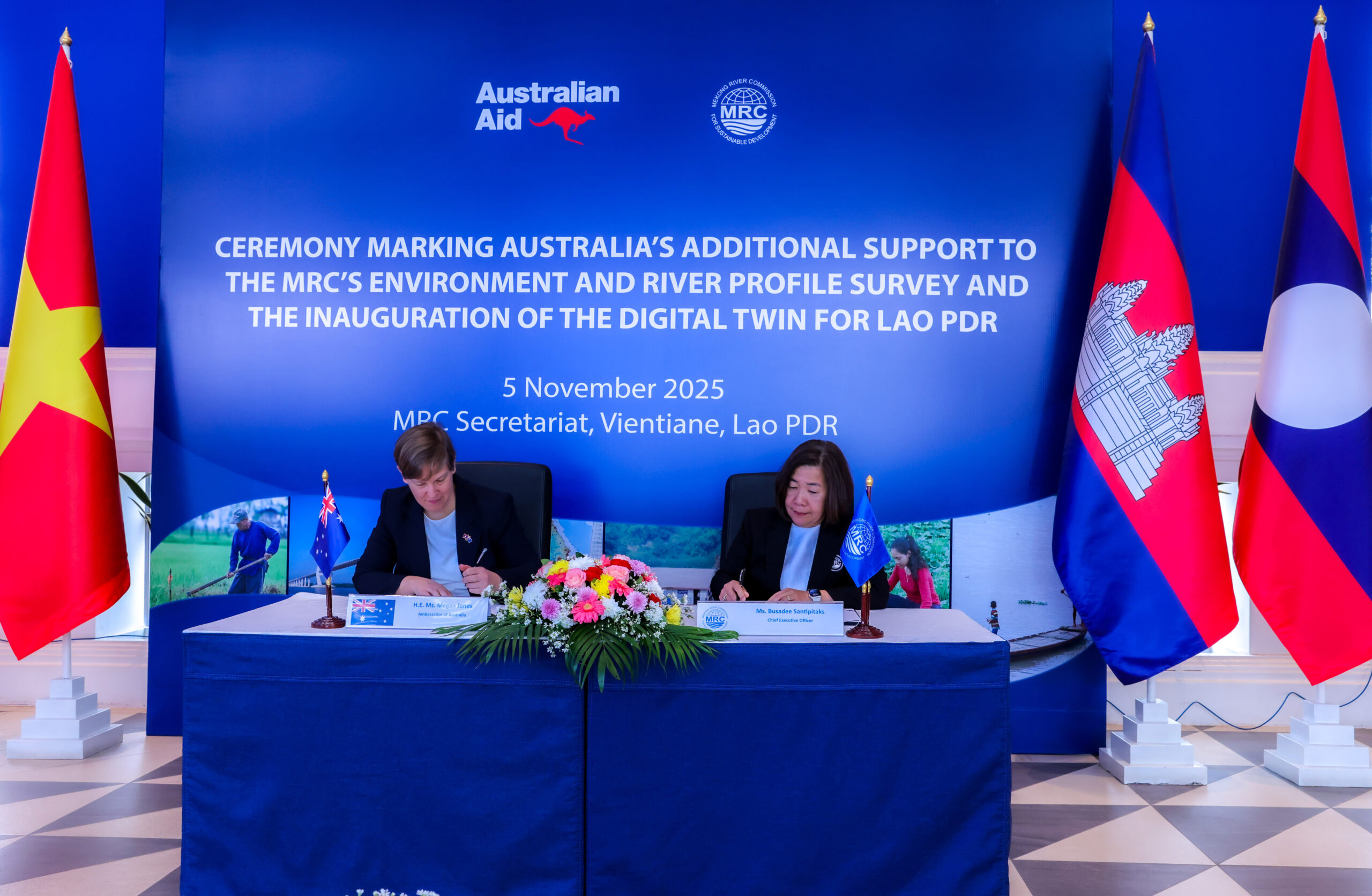
Vientiane, Lao PDR, 6 November 2025 – The Mekong River Commission (MRC) and the Government of Australia have reinforced their long-standing partnership through additional Australian support and the use of new digital innovations to enhance water monitoring and management in the Mekong region.
At a ceremony held today at the MRC Secretariat in Vientiane, Australia formalised an additional USD 1.71 million to support the MRC’s Environment and River Profile Survey, a key program that helps the MRC to enhance monitoring of river conditions, improve forecast changes, and better assess the health of the basin. This ensures the MRC can continue gathering and analysing data effectively that inform decisions on the river’s management and protection.
Australia’s support for the Environment and River Profile Survey builds on its core support to the MRC under the Mekong-Australia Partnership, which seeks to strengthen water security, economic resilience and sustainable growth in the sub-region. “Australia is proud to support this project as it will benefit the MRC, its member countries, and the river’s communities, economy, and environment” said H.E. Ms Megan Jones, Australian Ambassador to Lao PDR.
Joining the event was His Excellency Dr Linkham Douangsavanh, Minister of Agriculture and Environment of Lao PDR. Together with the MRC and Australia, he witnessed the formal launch of a new “Digital Twin” platform, a real-time modelling tool that integrates hydrological, meteorological and spatial data to help visualise how changes in rainfall, flow or land-use could affect communities and ecosystems.
“With this Digital Twin platform, we are giving our communities and partners a window into the river’s future,” said Dr Douangsavanh. “When we see what may come, we can plan better, respond faster and protect the peoples and their livelihoods and nature that depend so much on the Mekong.”
“Today we harness new digital capabilities and advanced capabilities so that we can ensure shared benefits for the sustainable development of the Mekong River Basin. The MRC is grateful for this timely support from Australia that has allowed this to happen,” said H.E. Ms Busadee Santipitaks, Chief Executive Officer of the MRC Secretariat.
About the Mekong River Commission
The MRC is an intergovernmental organisation established in 1995 to boost regional dialogue and cooperation in the Lower Mekong River Basin. Based on the Mekong Agreement among Cambodia, Lao PDR, Thailand, and Viet Nam, the MRC serves as both a regional platform for water diplomacy and a knowledge hub – to manage water resources and support sustainable development of the region.
This April, China and Cambodia finalised a deal to build the Funan Techno Canal. It is a 180km waterway which will connect the Mekong River to the Gulf of Thailand. The USD 1.8 billion infrastructure project will be undertaken jointly by the Cambodian government and Chinese investors. The project has an ambitious completion date of 2028.
Cambodia argues that the canal will finally allow the country to control its own destiny. Currently, about a third of Cambodia’s global cargo are relying on Vietnamese ports for export, via the Mekong. The canal will allow the shipments to be exported through Cambodia’s own ports, reducing its reliance on its neighbour. The Kingdom sees the canal as a source of economic independence and growth, as well as a way to boost its transport links.
But Vietnam is concerned that the canal will divert water flows from the Mekong. Indochina’s most important river is already under threat by upstream dams and climate change. A massive new canal could well starve Vietnamese farmlands of much needed water. Cambodia on the other hand, insists that the canal will have minimal impact. As construction of the canal gets underway, what will be the long-term impact of this monumental project? Tiếp tục đọc “Cambodia’s mega canal has Vietnam worried: What does it mean for the Mekong?”→
LTS. Gần 20 năm tâm huyết với các vấn đề trên dòng Mekong cũng như đồng bằng sông Cửu Long (ĐBSCL), bác sĩ Ngô Thế Vinh không chỉ là một nhà văn với hai tác phẩm Cửu Long cạn dòng, Biển Đông dậy sóng và Mekong – dòng sông nghẽn mạch, ông còn là một nhà hoạt động môi trường bền bỉ. Ông đã có những chuyến đi dọc dòng Mekong dài 4.800km, từ Tây Tạng đổ xuống Biển Đông. Người Đô Thị có cuộc phỏng vấn ông Ngô Thế Vinh về các vấn đề nóng bỏng hiện nay trên dòng Mekong và ĐBSCL.
Thưa, dù đã 17 năm trôi qua, từ những chuyến đi dọc dòng sông Mekong dài 4.800km, bức tranh sống động mà ông “phác họa” về những tác hại khủng khiếp do các con đập thủy điện gây ra cho đời sống người dân lưu vực sông Mekong đến nay vẫn nóng hổi tính thời sự. Từ những dự cảm rất sớm về những hậu quả do các đập thủy điện gây ra trên dòng Mekong và cho ĐBSCL nói riêng, ông nhận định gì về thực trạng hiện nay?
Năm 2000, khi nói “Cửu Long cạn dòng”, nhiều người xem đó là phát biểu “nghịch lý” bởi đó là năm có lụt lớn ở miền Tây. Một vị tu sĩ đang tất bật lo việc cứu trợ, mới nghe tên cuốn sách đã phát biểu: “Đang lũ lụt ngập trời với nhà trôi người chết mà lại nói “Cửu Long cạn dòng” là thế nào?” Nhưng cần hiểu rằng lũ và hạn tương ứng với mùa mưa và mùa khô là chu kỳ tự nhiên đã có hàng ngàn năm trên dòng Mekong và các vùng châu thổ, và đến nay thì mức độ càng trầm trọng và gay gắt.
Chúng ta không thể đổ lỗi hết cho “thiên tai”, mà cần can đảm gọi cho đúng tên những yếu tố “nhân tai” bởi do chính con người gây ra qua suốt quá trình phát triển không bền vững và có tính tự hủy từ nhiều thập niên qua, đã làm gãy đổ sự cân bằng của cả một hệ sinh thái vốn phức tạp nhưng cũng hết sức mong manh của dòng Mekong.
Băng qua Biển Hồ đến khu Bảo tồn sinh thái Tonle Sap (nguồn: tư liệu Ngô Thế Vinh)
A general view of the future site of the Luang Prabang dam is seen on the Mekong River outskirt of Luang Prabang province, Laos, February 5, 2020. Photo by Reuters/Panu Wongcha-um
The Mekong River Commission (MRC) has unveiled the Xieng Kok water level monitoring station in Laos that’s expected to reduce downstream vulnerability to unexpected flows.
This could benefit millions who live downstream the Mekong River, an MRC Friday press release said.
VNE – By Reuters January 14, 2022 | 09:57 am GMT+7
A canal runs dry in An Giang Province of Vietnam’s Mekong Delta, March 2020. Photo by VnExpress/Huu Khoa
The Mekong River Commission on Thursday called on China and Southeast Asian to better coordinate management of Mekong hydropower dams and reservoirs after three years of record low flows and extra dry conditions.
The Mekong River’s flow dropped to the lowest levels in more than six decades from 2019 to 2021 due to an increased number of reservoirs, dams and other water storage, a worsening of the climate situation and unusually low rainfall, a new MRC river flow report showed.
Dry conditions in the past three years have affected navigation, river ecosystems and riverbank stability in the region where tens of millions of people depend on the Mekong for their livelihoods.
Thứ Ba, 07-09-2021, 18:53 – Lưu vực sông Mekong. (Ảnh: Duy Khương/TTXVN)
ND – Số lượng nước sông Mê Công từ thượng nguồn về đồng bằng sông Cửu Long năm 2020 giảm 157 tỷ m3 so với năm 2011. Lượng phù sa bùn cát năm cũng giảm tương ứng 14 triệu tấn so với năm 2017…
Trong khuôn khổ Đại hội Tổ chức các cơ quan Kiểm toán tối cao châu Á (ASOSAI) 15 diễn ra ngày từ ngày 6 đến 8/9 theo hình thức trực tuyến, Kiểm toán Nhà nước Việt Nam đã trình bày, chia sẻ báo cáo kết quả kiểm toán việc quản lý nguồn nước lưu vực sông Mê Công gắn với việc thực hiện mục tiêu phát triển bền vững.
Đây là một trong những nội dung quan trọng của Tuyên bố Hà Nội – sáng kiến được Việt Nam đề xuất với vai trò Chủ tịch Tổ chức các cơ quan Kiểm toán tối cao châu Á (ASOSAI) nhiệm kỳ 2018-2021 (Đại hội ASOSAI 14).
By Viet Anh September 16, 2020 | 10:02 am GMT+7 vnexpressThe Xayaburi dam in the lower Mekong River in Laos. Photo by CK Power/Handout via AFP.
Germany has provided equipment to the Mekong River Commission to monitor the environmental impacts of two mainstream dams on the lower reaches of the Mekong River.
The equipment, worth around $600,000, meant to help monitor the impacts of Laos’s Xayaburi and Don Sahong dams, was handed over on Tuesday as part of the German government’s support for the MRC’s Joint Environment Monitoring of Mekong Mainstream Hydropower Projects (JEM) program, which is now in the pilot stage.
Các nhóm hoạt động bảo vệ dòng Mekong yêu cầu Trung Quốc hợp tác và công khai thông tin liên quan đến các đập thủy điện mà nước này phát triển ở thượng nguồn.
Vị trí được cho là sẽ có thêm một dự án đập thủy điện ở ngoại vi Luang Prabang (Lào). Ảnh: ReutersĐộng thái mới nhất vừa được loan đi sau khi nhiều quốc gia phía hạ nguồn sông Mekong đang trải qua một đợt hạn hán khốc liệt, gây thiệt hại nặng nề kéo dài suốt từ năm ngoái đến nay.
Southeast Asia’s most critical river is entering uncharted waters Stefan Lovren – Bình Yên Đông lược dịch
National Geographic – January 31, 2020
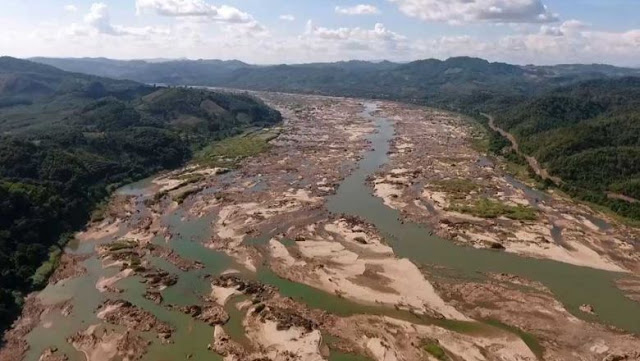
Không ảnh, chụp ngày 28 tháng 10 năm 2019, cho thấy khúc sông Mekong dài 185 miles từ đập Xayaburi ở Lào. Đáy sông khô cạn ở hạ lưu đập đã khuấy động sự phản đối của các nhà bảo tồn và dân làng dựa vào hệ sinh thái đa dạng để sinh sống.
Dòng sông nầy đã nuôi dưỡng nhiều nền văn minh hàng ngàn năm. Ngày nay, nó đang khô cạn, bị tấn công bởi việc xây đập, đánh bắt bừa bãi, và khai thác cát.
PHNOM PENH, CAMBODIA – Nhiều tháng trước, một con cá heo Irrawaddy hiếm hoi bị vướng vào lưới và mất phương hướng ở rất xa nơi cư trú thông thường ở đông bắc Cambodia trên sông Mekong đang vùng vẫy ở Đông Nam Á (ĐNA). Các nhà bảo tồn đang tranh đua để đưa ra một kế hoạch giúp cho loài cá sắp tuyệt chủng trước khi quá trễ, nhưng thời gian không còn bao lâu. Tiếp tục đọc “Con sông quan trọng nhất Đông Nam Á đang đi vào vùng nước lạ”→
1. Mekong là một con sông quốc tế và không chia cắt
Sông Mekong bắt nguồn từ cao nguyên Tây Tạng, kết thúc hành trình ở Biển Đông sau khi chảy qua các nước Trung Quốc (TQ), Myanmar, CHDCND Lào, Vương Quốc Thái Lan, Vương quốc Campuchia và Việt Nam.
Chiều dài sông Mekong là 4909 kilomét. Lưu vực rộng 795.000 km2 (thượng lưu vực 185.000 km2 bằng 23,3% tổng lưu vực, hạ lưu vực 610.000 km2) và tổng lưu lượng năm là 475 km3, trên thượng lưu vực là 16%. Các thông tin này được biết khá rộng rãi 3. Tiếp tục đọc “TRẢ LẠI CHO SÔNG MEKONG TÍNH QUỐC TẾ VÀ KHÔNG CHIA CẮT CỦA NÓ”→
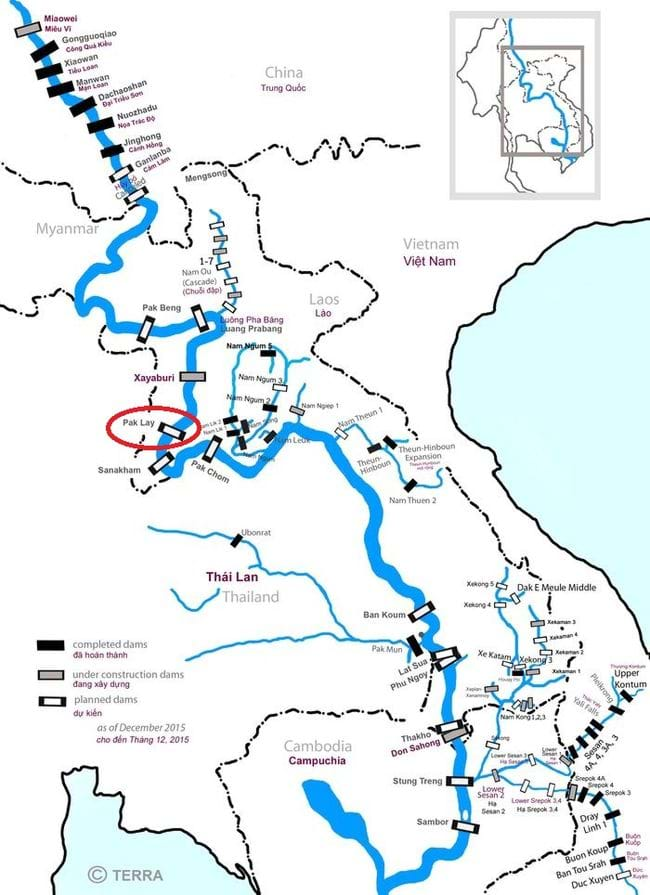
Trước thông tin đập thủy điện thứ 4, có tên Pak Lay của Lào được xây dựng trên dòng chính hạ lưu Mekong, hôm nay Mạng lưới Sông ngòi Việt Nam (VRN) vừa có thông cáo đề nghị Lào cần có đánh giá đầy đủ các tác động tổng thể, tích lũy của các dự án thủy điện trên dòng chính, thay vì thực hiện theo từng dự án thủy điện riêng rẽ như hiện nay.
For hundreds of years, the Mekong River has been a vital passageway for people and goods. Today, the Mekong is still an essential means of transportation for many of the people living in the region and plays an increasingly important role in international trade and tourism. For example in Viet Nam, roughly 73% of cargo tonnage and about 27% of passengers travel by water annually.
Within the Lower Mekong Basin (LMB), the Mekong River and its major tributaries are navigable during the high-water season (about eight months of the year), with the exception of a 14-km section just north of the border between Cambodia and the Lao PDR – the impassable Khone Falls.
The river in the fast lane
North of the Khone Falls, narrow and turbulent sections of the river as well as large annual water level variations present a challenge to the development of trade and transportation. Despite these difficulties, the river provides an important link between China and lower Mekong countries. Port infrastructure is being expanded to accommodate expected growth, with new facilities planned for the Chiang Saen port, located in the “Golden Triangle” where the borders of Lao PDR, Myanmar, Thailand and Viet Nam converge. Tiếp tục đọc “Mekong River Transport”→
Hiện nay và trong thời gian tới, ĐBSCL phải đương đầu với ít nhất hai thách thức toàn cầu, một thách thức khu vực và một thách thức từ chính sự khai thác đồng bằng. Toàn cầu, đó là biến đổi khí hậu, nước biển dâng, và toàn cầu hóa kinh tế, hội nhập quốc tế. Các thách thức đó không tác động riêng lẻ mà cùng nhau và liên hoàn tác động, nhân lên hậu quả của các tác hại là thách thức tổng hợp đối với sự phát triển bền vững của đồng bằng.
Đồng bằng sông Cửu Long (ĐBSCL) nằm ở ngoài cùng của châu thổ sông Mekong giáp với biển, được hình thành từ khoảng 6000 năm nay, từ trầm tích mà sông Mekong tải ra biển cộng với quá trình biển lùi. Nước và trầm tích là hai yếu tố thuộc về bản chất của đồng bằng. Tiếp tục đọc “Đồng bằng Sông Cửu Long: Những thách thức hiện nay và ngày mai”→
mekongeye_Muddy river waters are often seen as a sure sign of poor river health, as a result of inappropriate land management practices, or a consequence of extreme rainfall where great quantities of sediment – silt, sand, clay and organic matter – are discharged.
This is a common sight in the major rivers of south-east and east Asia, and has come to characterise rivers such as the Yellow and the Mekong. With its beginnings on the Tibetan Plateau, the Mekong flows for 4,300 kilometres, carrying an estimated sediment load of 160 million tonnes before reaching its delta and discharging into the South China Sea. Tiếp tục đọc “Muddying the Mekong: balancing sediment and sustainable development”→



 A canal runs dry in An Giang Province of Vietnam’s Mekong Delta, March 2020. Photo by VnExpress/Huu Khoa
 Lưu vực sông Mekong. (Ảnh: Duy Khương/TTXVN)
 The Xayaburi dam in the lower Mekong River in Laos. Photo by CK Power/Handout via AFP.

 CVD
CVD 