Công ước quốc tế về các Quyền dân sự và chính trị 

moi.gov.vn

MỘT SỐ TÀI LIỆU LIÊN QUAN ĐẾN CÔNG ƯỚC VỀ CÁC QUYỀN DÂN SỰ – CHÍNH TRỊ (CÔNG ƯỚC ICCPR)

  • 2. Binh luan chung – VN.pdf
  • 3. Binh luan chung – EN.pdf
  • 4. Bao cao ICCPR lan thu 3 – VN.pdf
  • 4.1. Phu luc Bao cao ICCPR lan 3 – VN.pdf
  • 5. Bao cao ICCPR lan 3 – Phu luc – EN.pdf
  • Bộ Tư Pháp – Pháp Luật quốc tế

    Công ước Quốc tế về các Quyền Dân sự và Chính trị (tiếng Anh: International Covenant on Civil and Political Rights, viết tắt: ICCPR) là một công ước quốc tế do Đại hội đồng Liên Hiệp Quốc thông qua ngày 16 tháng 12 năm 1966 và có hiệu lực từ ngày 23 tháng 03 năm 1976, nêu tổng quan các quyền dân sự và chính trị cơ bản của con người. Cụ thể, các bên tham gia ký kết sẽ phải tôn trọng các quyền dân sự và chính trị của từng cá nhân, bao gồm quyền sống, quyền tự do tôn giáo, tự do phát biểu, tự do hội họp, quyền bầu cử và quyền được xét xử bình đẳng và theo đúng trình tự pháp luật. Công ước này, cùng với Tuyên ngôn toàn thế giới về nhân quyền (1948, viết tắt là UDHR) và Công ước quốc tế về các quyền kinh tế, xã hội và văn hóa (1966, viết tắt là ICESCR) hợp thành một “bộ luật nhân quyền quốc tế”. Ngoài ra, trong năm 2012, có thêm hai Nghị định thư bổ sung cho ICCPR liên quan đến giải quyết khiếu nại cá nhân và bãi bỏ hình phạt tử hình. Tính đến nay, đã có 72 nước ký vào Công ước và 167 bên tham gia. Việt Nam trở thành thành viên của ICCPR (Việt Nam gia nhập Công ước này vào ngày 24/9/1982).

    Tiếp tục đọc “Công ước quốc tế về các Quyền dân sự và chính trị “

    Thúc đẩy không gian xã hội dân sự ở Việt Nam nhằm thực hiện nghĩa vụ quốc tế về quyền con người

    Viện nghiên cứu lập pháp UBTVQH

    TS. NGUYỄN LINH GIANG – Viện Nhà nước và Pháp luật, Viện Hàn lâm KHXH Việt Nam. ThS. NGÔ THỊ THU HÀ – Phó Giám đốc Trung tâm Hỗ trợ giáo dục và nâng cao năng lực cho phụ nữ

    Trong những năm gần đây, sự tham gia tích cực của các tổ chức xã hội dân sự (XHDS) trong tiến trình bảo đảm và thúc đẩy quyền con người (QCN) trên toàn thế giới đã được Liên hợp quốc (LHQ) và các tổ chức quốc tế ghi nhận. Việc mở rộng không gian XHDS nhằm thực hiện nghĩa vụ quốc tế về QCN, vì thế đã trở thành một xu thế chung trên toàn thế giới và Việt Nam cũng không nằm ngoài tiến trình đó. 

    1. Thực hiện nghĩa vụ quốc tế về quyền con người

    Thực hiện nghĩa vụ quốc tế về QCN, trước tiên là thực hiện nghĩa vụ của một quốc gia thành viên của LHQ và thực hiện nghĩa vụ quốc gia thành viên của các Công ước quốc tế về QCN. Nếu xét ở nghĩa rộng, thực hiện nghĩa vụ quốc tế về QCN có rất nhiều việc phải làm, trong đó có những nghĩa vụ khá trừu tượng như tôn trọng Hiến chương LHQ, tôn trọng các nguyên tắc căn bản của pháp luật quốc tế, trong đó có pháp luật quốc tế về QCN. Nhưng cụ thể, để thực hiện nghĩa vụ một quốc gia thành viên của LHQ và thực hiện nghĩa vụ quốc gia thành viên của các Công ước quốc tế về QCN bao gồm những công việc sau:

    Tiếp tục đọc “Thúc đẩy không gian xã hội dân sự ở Việt Nam nhằm thực hiện nghĩa vụ quốc tế về quyền con người”

    ‘Increasingly brazen’ war crimes evident in Myanmar

    UN.org

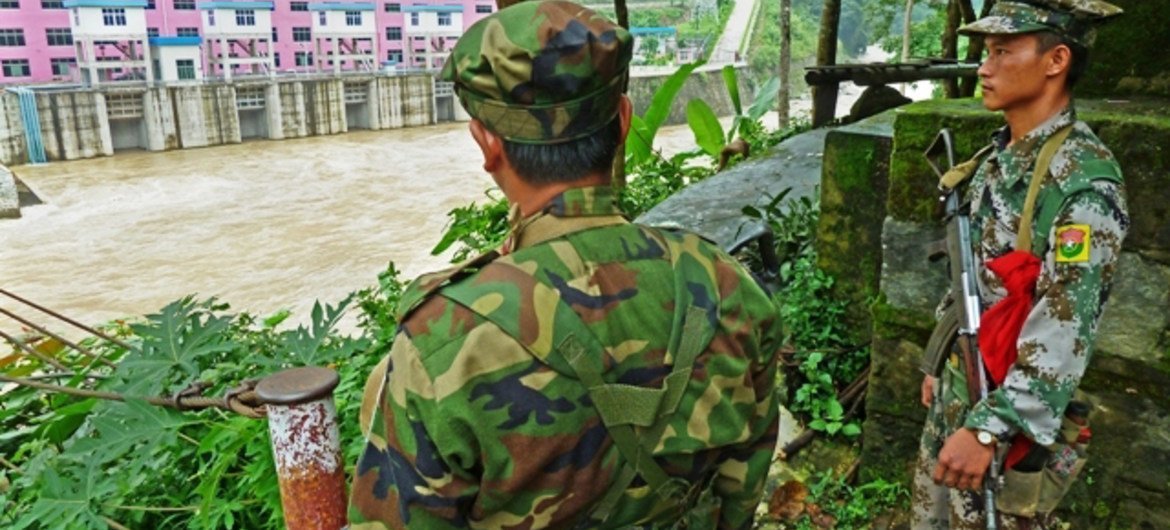
    Two soldiers stand guard at a post in northern Myanmar. (file)

    IRIN/Steve Sandford. Two soldiers stand guard at a post in northern Myanmar. (file)

    Human Rights

    The Independent Investigative Mechanism for Myanmar (IIMM) on Tuesday revealed compelling evidence of the country’s military and affiliate militias engaging in more frequent and audacious war crimes and crimes against humanity.

    These include indiscriminate attacks on civilians from aerial bombing, mass executions of civilians and detained combatants, and large-scale and intentional burning of civilian homes and buildings, resulting in the destruction of entire villages in some cases, the Mechanism said in a news release.

    Tiếp tục đọc “‘Increasingly brazen’ war crimes evident in Myanmar”

    Despite reforms, mining for EV metals in Congo exacts steep cost on workers

    washingtonpost.com
    After revelations of child labor and treacherous conditions in many cobalt mines, automakers and mineral companies said they would adhere to international safety standards

    The Shabara artisanal mine, where cobalt and copper are dug out by hand, near the Congolese boomtown of Kolwezi.

    By Katharine Houreld and  Arlette Bashizi

    Aug. 4 at 5:00 p.m.

    Correspondent Katharine Houreld and photographer Arlette Bashizi traveled together across southeastern Congo, visiting industrial and artisanal mines in the country’s three largest cobalt mining towns. Houreld is The Washington Post’s East Africa bureau chief, based in Nairobi, with responsibilities stretching from the Horn of Africa to the continent’s southern tip. Bashizi is a Congolese photographer, based in Goma, focusing on issues related to health, environment and culture.

    FUNGURUME, Democratic Republic of Congo — Alain Kasongo, burly and goateed, worked for four years driving the heavy trucks that hauled away tons of cobalt ore from a gaping hole at one of the biggest mines in Congo. The vibrations from the equipment and the jolts of driving over rough ground during his 12-hour shifts could be bone-rattling, he said. Finally, the pain in his spine grew so unbearable that he needed surgery.

    His older brother, Patchou Kasongo Mutuka, worked the same job at the same mine. He suffered the same injury and required the same surgery — as did 13 other drivers of excavators and trucks at the mine who were interviewed. They lifted their shirts to reveal surgical scars and spread out carefully folded medical records confirming their accounts. They in turn named seven more colleagues who had suffered the same fate, all within a two-year period.

    “It hurt so badly when I went home, I would lie awake at night,” said Alain Kasongo, 43, displaying bumps and ridges on his body from what he said were three operations.

    Tiếp tục đọc “Despite reforms, mining for EV metals in Congo exacts steep cost on workers”

    Vietnam’s human rights record is being scrutinized ahead of $15 billion climate deal

    May 26, 20235:06 AM ET

    By Michael Copley NPR

    Wealthy countries and investors are planning to give Vietnam billions of dollars to help it transition from coal to renewable energy. But the climate deal has come under fire because of Vietnam’s record on human rights.

    STR/AFP via Getty Images

    Vietnam is set to get billions of dollars from wealthy countries and investors over the next few years to help it move from coal to renewable energy. The goal is to fight climate change while boosting the country’s economic development.

    The money — at least $15.5 billion — was promised after climate activists in Vietnam pushed the government to commit to eliminating or offsetting the country’s carbon dioxide emissions by midcentury. The United States and other backers of the funding plan, known as the Just Energy Transition Partnership (JETP), say that kind of advocacy is critical for making sure the benefits of the climate deal are widely shared in Vietnam.

    Tiếp tục đọc “Vietnam’s human rights record is being scrutinized ahead of $15 billion climate deal”

    Universal Declaration of Human Rights

    Universal Declartion of Human Rights (1948) >>

    The Core International Human Rights Instruments and their monitoring bodies

    There are 9 core international human rights instruments. Each of these instruments has established a committee of experts to monitor implementation of the treaty provisions by its States parties. Some of the treaties are supplemented by optional protocols dealing with specific concerns whereas the Optional Protocol to the Convention against Torture establishes a committee of experts.

    DateMonitoring Body
    ICERDInternational Convention on the Elimination of All Forms of Racial Discrimination21 Dec 1965CERD
    ICCPRInternational Covenant on Civil and Political Rights16 Dec 1966CCPR
    ICESCRInternational Covenant on Economic, Social and Cultural Rights16 Dec 1966CESCR
    CEDAWConvention on the Elimination of All Forms of Discrimination against Women18 Dec 1979CEDAW
    CATConvention against Torture and Other Cruel, Inhuman or Degrading Treatment or Punishment10 Dec 1984CAT
    CRCConvention on the Rights of the Child20 Nov 1989CRC
    ICMWInternational Convention on the Protection of the Rights of All Migrant Workers and Members of Their Families18 Dec 1990CMW
    CPEDInternational Convention for the Protection of All Persons from Enforced Disappearance20 Dec 2006CED
    CRPDConvention on the Rights of Persons with Disabilities13 Dec 2006CRPD
    ICESCR – OPOptional Protocol to the Covenant on Economic, Social and Cultural Rights10 Dec 2008CESCR
    ICCPR-OP1Optional Protocol to the International Covenant on Civil and Political Rights16 Dec 1966CCPR
    ICCPR-OP2Second Optional Protocol to the International Covenant on Civil and Political Rights, aiming at the abolition of the death penalty15 Dec 1989CCPR
    OP-CEDAWOptional Protocol to the Convention on the Elimination of Discrimination against Women10 Dec 1999CEDAW
    OP-CRC-ACOptional protocol to the Convention on the Rights of the Child on the involvement of children in armed conflict25 May 2000CRC
    OP-CRC-SCOptional protocol to the Convention on the Rights of the Child on the sale of children, child prostitution and child pornography25 May 2000CRC
    OP-CRC-ICOptional Protocol to the Convention on the Rights of the Child on a communications procedure19 Dec 2011CRC
    OP-CATOptional Protocol to the Convention against Torture and Other Cruel, Inhuman or Degrading Treatment or Punishment18 Dec 2002SPT
    OP-CRPDOptional Protocol to the Convention on the Rights of Persons with Disabilities12 Dec 2006CRPD
    International Covenant on Civil and Political Rights (1966) >>

    International Covenent on Economic, Social and Cultural Rights (1967) >>

    “Tôi xin làm vật vô tri…”

    TƯỜNG ANH – 12/01/2023 06:51 GMT+7

    TTCTThừa nhận đa dạng giới là một chuyện, nhưng cùng lúc việc thúc đẩy chuyển giới trong năm qua đã bộc lộ nhiều vấn đề của nó.

    Một trong những vấn đề ít được công khai nhưng đã và đang len lỏi tới từng ngóc ngách các hoạt động năm qua trên thế giới: bản dạng giới và chuyển giới. Đấy cũng sẽ là vấn đề tiếp tục đặt ra những thách thức mới cho ứng xử của mỗi chúng ta và mỗi quốc gia.

    Tiếp tục đọc ““Tôi xin làm vật vô tri…””

    Thể thao sẽ phải chia mấy?

    HUY ĐĂNG – 12/04/2023 10:25 GMT+7

    TTCT Làng thể thao đỉnh cao thế giới đã trải qua hơn 100 năm lịch sử với mô hình hai nội dung nam – nữ. Nhưng đừng ngạc nhiên nếu trong tương lai, một hạng mục thứ ba, thứ tư… sẽ xuất hiện.

    Tuần rồi, Liên đoàn Điền kinh thế giới (IAAF) ra một quyết định được coi là đặt dấu chấm hết cho các VĐV chuyển giới. Cụ thể, VĐV chuyển giới đã trải qua giai đoạn dậy thì khi còn là nam giới sẽ không được tham gia thi đấu các giải nữ thuộc hệ thống IAAF nữa. 

    Tức để được thi đấu, VĐV chuyển giới phải phẫu thuật, hoặc trải qua những hình thức chuyển giới trước khi khoảng 12 tuổi.

    Coco Telfer: “VĐV chuyển giới có những thiệt thòi mà các VĐV nữ khác không trải qua”. Ảnh: Folxhealth.com
    Tiếp tục đọc “Thể thao sẽ phải chia mấy?”

    Freedom of expression under threat in Southeast Asia

    Chathamhouse.org

    Governments across Southeast Asia have little incentive to protect freedom of expression domestically but steps taken by both domestic and international actors could mean the difference between freedom and its opposite.

    All of the countries of Southeast Asia currently sit in the bottom half of the World Press Freedom Index, with four – Brunei, Laos, Singapore and Vietnam – ranked below 150 in the 180-country list, and Myanmar expected to join them following its February 2020 coup.

    In these countries, critical coverage is not formally banned but there is no presumption of the right to publish. In Cambodia, Indonesia, Malaysia, Philippines and Thailand, for example, a theoretical commitment to freedom of expression is marred by restrictive legislation, intimidation and even the killing of journalists.

    The media in Southeast Asia faces two problems – vaguely worded laws open to abuse and politically-motivated prosecutions – and, in the absence of robust independent courts willing to challenge these governments, politicians have been able to pursue personal vendettas against publications and individuals with few limitations.

    .

    Without independent courts, even those countries with rules-based legal systems, will fail to defend dissenting voices against politicians in power.


    Tiếp tục đọc “Freedom of expression under threat in Southeast Asia”

    Lao động đi làm việc ở nước ngoài phải trả phí bình quân 165 triệu đồng

    Thanh niên – Thu Hằng – 16/08/2022 16:38 GMT+7

    Chi phí tuyển dụng trung bình của lao động Việt Nam đi làm việc ở nước ngoài khoảng 165 triệu đồng. Con số này tương đương khoảng 8 tháng lương tại quốc gia tiếp nhận. Đặc biệt, ở một số ngành… chi phí lên đến 200 triệu.

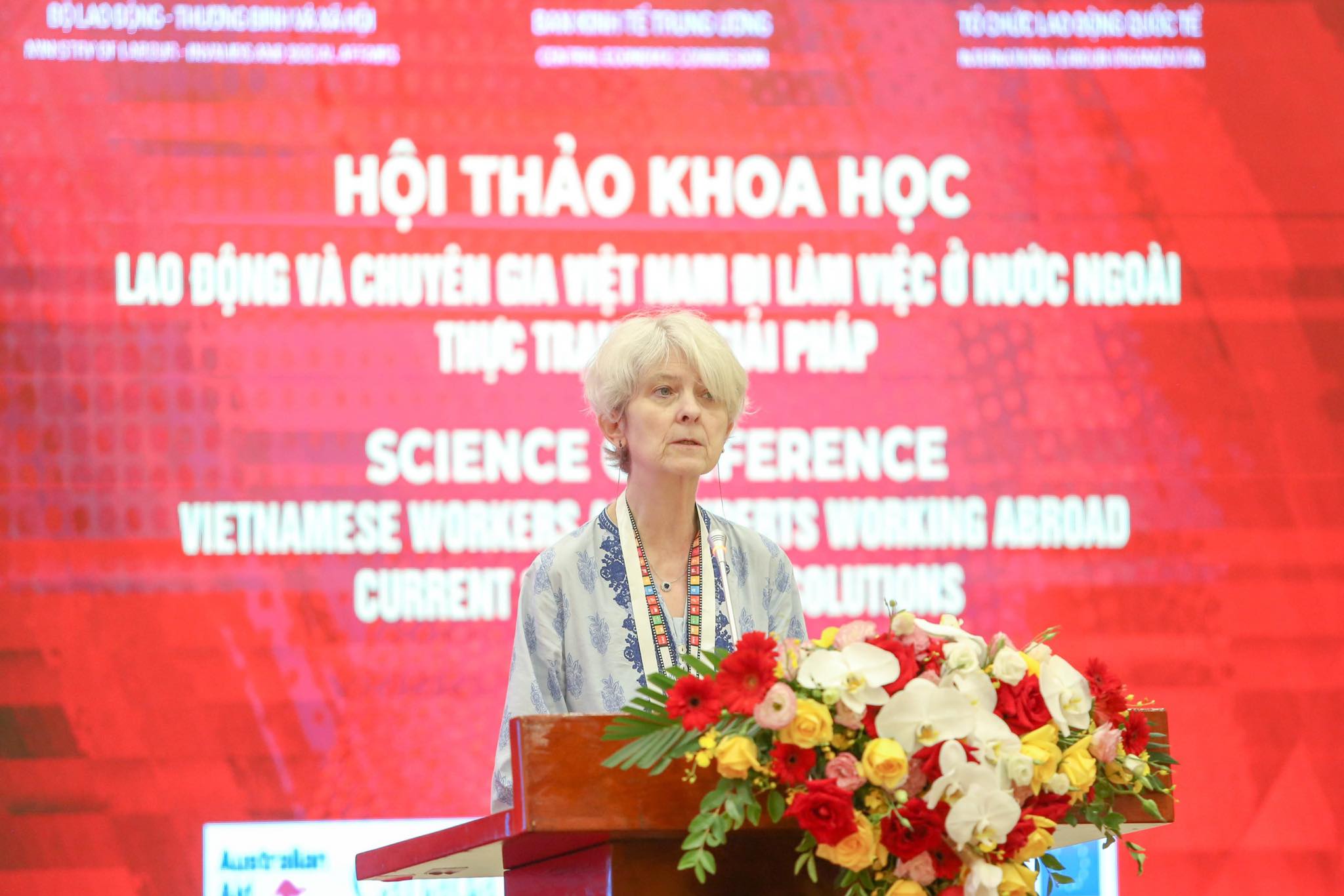
    Đây là thông tin được bà Ingrid Christensen, Giám đốc Văn phòng Tổ chức Lao động quốc tế (ILO) tại Việt Nam cho biết, tại Hội thảo “Lao động và chuyên gia Việt Nam đi làm việc ở nước ngoài – Thực trạng và giải pháp” do Ban Kinh tế T.Ư phối hợp với Bộ LĐ-TB-XH và ILO tổ chức ngày 16.8.

    Bà Ingrid Christensen, Giám đốc ILO tại Việt Nam
    HÀ QUÂN

    Tiếp tục đọc “Lao động đi làm việc ở nước ngoài phải trả phí bình quân 165 triệu đồng”

    Biden Signs Executive Order to Prohibit U.S. Government Use of Commercial Spyware that Poses Risks to National Security or Has Been Misused by Foreign Actors to Enable Human Rights Abuses

    MARCH 27, 2023 White House

    FACT SHEET: President Biden Signs Executive Order to Prohibit U.S. Government Use of Commercial Spyware that Poses Risks to National Security

    1. HOME
    2. BRIEFING ROOM
    3. STATEMENTS AND RELEASES

    Presidential Directive Will Serve as a Cornerstone Initiative During the Second Summit for Democracy

    Today, President Biden signed an Executive Order that prohibits, for the first time, operational use by the United States Government of commercial spyware that poses risks to national security or has been misused by foreign actors to enable human rights abuses around the world.

    Commercial spyware – sophisticated and invasive cyber surveillance tools sold by vendors to access electronic devices remotely, extract their content, and manipulate their components, all without the knowledge or consent of the devices’ users – has proliferated in recent years with few controls and high risk of abuse.

    The proliferation of commercial spyware poses distinct and growing counterintelligence and security risks to the United States, including to the safety and security of U.S. Government personnel and their families. U.S. Government personnel overseas have been targeted by commercial spyware, and untrustworthy commercial vendors and tools can present significant risks to the security and integrity of U.S. Government information and information systems.

    Tiếp tục đọc “Biden Signs Executive Order to Prohibit U.S. Government Use of Commercial Spyware that Poses Risks to National Security or Has Been Misused by Foreign Actors to Enable Human Rights Abuses”

    2022 Country Reports on Human Rights Practices

    US BUREAU OF DEMOCRACY, HUMAN RIGHTS, AND LABOR

     MARCH 20, 2023

    The annual Country Reports on Human Rights Practices – the Human Rights Report – cover internationally recognized individual, civil, political, and worker rights, as set forth in the Universal Declaration of Human Rights and other international agreements. The U.S. Department of State submits reports on all countries receiving assistance and all United Nations member states to the U.S. Congress in accordance with the Foreign Assistance Act of 1961 and the Trade Act of 1974.

    TRANSLATIONS

    Preface

    For nearly 50 years, the Country Reports on Human Rights Practices have served as a vital resource for governments, researchers, advocacy groups, journalists, and voices of conscience worldwide that work to promote respect for human rights and accountability for injustice.  The individual reports cover 198 countries and territories, providing factual, objective information based on credible reports of the events that occurred throughout 2022.  These reports are meticulously compiled by U.S. Department of State employees in Washington, D.C., and at our overseas missions throughout the world, who collectively spend thousands of hours preparing the reports using credible information from U.S. embassies and consulates abroad, foreign government officials, nongovernmental and international organizations, jurists and legal experts, journalists, academics, human rights defenders, labor activists, and published reports.  We take seriously our responsibility to ensure their accuracy.

    Tiếp tục đọc “2022 Country Reports on Human Rights Practices”

    Phía sau những ca phá thai để tìm “thằng cu nối dõi” – 3 bài

     Phía sau những ca phá thai để tìm “thằng cu nối dõi” – Bài 1: Giấc mơ sinh được con trai

    07/12/2021 – 06:25

    PNOTheo bản báo cáo ngày 5/7/2021 về tình hình thực hiện chiến lược dân số và sức khỏe sinh sản tại TP.HCM giai đoạn 2016-2020, trong năm 2020, tỷ lệ nạo phá thai ở TP.HCM là 33,46 ca nạo/100 ca sinh. Trong số các ca nạo phá thai, có những ca nhằm mục đích chọn giới tính thai nhi, tức bỏ con gái để chờ sinh cho được con trai.

    1. Buổi sáng Chủ nhật, tại phòng khám sản, Bệnh viện H.Bình Chánh, một vài bà bầu ngồi chờ đến lượt mình. Trong phòng, bác sĩ đang siêu âm bốn chiều cho một bà bầu khác. Vừa rê đầu máy siêu âm, bác sĩ vừa đọc tình trạng sức khỏe của thai nhi cho thai phụ nghe, nhưng bà mẹ vẫn luôn miệng hỏi: “Con trai hay con gái vậy bác?”. 

    Bác sĩ Bệnh viện H.Bình Chánh khám và tư vấn cho thai phụ
    Bác sĩ Bệnh viện H.Bình Chánh khám và tư vấn cho thai phụ

    Câu hỏi quen thuộc của trên 20 bà bầu khám thai sáng đó là con trai hay con gái: “Bác coi kỹ giúp em nha, phải chắc con trai không?”. Yêu thích con trai vẫn là giấc mơ của những cặp vợ chồng có con lần đầu tiên, càng thôi thúc hơn nếu sinh lần hai mà bé trước là con gái. Nhưng thực tế, ít ông bố, bà mẹ nào dám khẳng định rằng mình đang mong con trai. 

    Tiếp tục đọc “Phía sau những ca phá thai để tìm “thằng cu nối dõi” – 3 bài”

    Gian nan đường “danh phận” của các hội nhóm xã hội

    Thứ sáu, 23/03/2018 – 07:36

    (Dân trí) – Một cơ sở từ thiện bảo trợ trẻ mồ côi 20 năm hành trình xin cấp phép hoạt động không thành, cánh cửa đại học khó hé mở cho những đứa trẻ lớn lên tại đây. Một nhóm thanh niên ưu tú của Tây Nguyên lận đận đã 7-8 năm tìm kiếm sự “chính danh” để có thể lan tỏa cơ hội giáo dục cho lớp đàn em ở quê nhà…

    Chuyện 2 nữ sinh cầu cứu trước cánh cửa đại học

    Mái ấm truyền tin là một cơ sở từ thiện nuôi dưỡng trẻ em mồ côi, trẻ em dân tộc thiểu số điều kiện khó khăn, không nơi nương tựa đóng tại quận Bình Tân, TPHCM, đã hoạt động từ năm 1995 tới nay. Thực tế nhiều em đã được nuôi dưỡng, cho học hành tới trưởng thành từ ngôi nhà chung này, đi làm, lập gia đình… Trong hơn 20 năm hoạt động, mỗi năm mái ấm tiếp nhận, giúp đỡ trên dưới 20 trẻ nhỏ có hoàn cảnh éo le như vậy.

    Mục tiêu của những người hoạt động thiện nguyện tại mái ấm là chăm lo để trẻ có thể hòa nhập cộng đồng, được đến trường học hành với môi trường giáo dục đảm bảo. Dù vậy, cơ sở từng gặp rất nhiều khó khăn để có được giấy phép hoạt động.

    
Năm 2016, một nữ sinh từ Mái ấm truyền tin đã viết tâm thư cầu cứu vì em không làm được chứng minh nhân dân để thi đại học (bàn đầu, bên phải).
    Năm 2016, một nữ sinh từ Mái ấm truyền tin đã viết tâm thư cầu cứu vì em không làm được chứng minh nhân dân để thi đại học (bàn đầu, bên phải).

    Tiếp tục đọc “Gian nan đường “danh phận” của các hội nhóm xã hội”

    A very British way of torture

    A Very British Way of Torture | Featured Documentaries

    Al Jazeera English – 8-12-2022

    Between 1952 and 1960, Britain fought a vicious war in Kenya against the anticolonial Mau Mau movement. It was an exceptionally bloody conflict, with atrocities committed on both sides.

    For decades, many of the worst abuses by British colonial forces were kept hidden.

    Piecing together survivor testimonies and expert analysis from British and Kenyan historians, this film tells a complete and detailed story for the first time of how Britain was involved in systemic torture – including accounts of murders, rapes and forced castrations.

    A Very British Way of Torture is a film by Ed McGown and produced by Rob Newman.

    Document archive is courtesy of the UK National Archives.