Why it’s time to worry about India

AJ+ – 9 thg 9, 2023

India prides itself as the largest democracy in the world, with nearly 1 billion eligible voters for the upcoming 2024 general election. But what’s been holding that democracy together has changed drastically under Prime Minister Narendra Modi and his nationalist party, BJP. Modi’s influence has shifted Indian society and widened rifts between communities.

How has Indian democracy changed? And why is it time to worry about India?

I mourn the loss of Australia’s Indigenous voice vote – and won’t forgive the media’s mendacity

theguardian.com Thomas Keneally

Thomas Keneally

The polls had been favourable until a brutal press campaign kicked in against this kindly, long-overdue change

  • Thomas Keneally is the author of the Booker-winning Schindler’s Ark

Wed 18 Oct 2023 13.26 BST

Last Sunday, many in Australia profoundly mourned the loss of the Indigenous voice to parliament referendum, the greatest kindly amendment ever to be proposed for the Australian constitution, those dreary old articles of association by which our states and territories rub along together in far-flung federation.

When the referendum was announced in March this year, it was as a result of a message to mainstream Australia from Indigenous Australia, a statement made at Uluru near Alice Springs by Aboriginal representatives. They suggested constitutional recognition of the Aboriginal race’s ancient discovery and ownership of Australia, and proposed that their community’s disadvantages in modern Australia could be addressed through a group of Aboriginal delegates who would advise on federal laws affecting Aboriginal Australians.

https://9f16b9aa9979ae753e00d73da3e26298.safeframe.googlesyndication.com/safeframe/1-0-40/html/container.html

The ownership matter is no longer as controversial as it once was. In the 1970s a Torres Strait Islander named Eddie Mabo was shocked to hear that his garden on Murray Island belonged to the crown. He undertook a long, brave journey from regional courts all the way to the high court, to prove that his tropic garden was not the crown’s, but his own. That decision in 1992 declared that Indigenous Australians had never ceded sovereignty over their land. There were cries that every white-owned house and swimming pool would be imperilled, but the truth was that the decision allowed the Aboriginal people to claim in reality traditional and unalienated, as in not yet purchased under title and built-upon, land. With that decision began the custom of the “welcome to country”: a local tribesman, or at least an Aboriginal Australian, briefly, as a small polite gesture, welcoming people to public events and citing the local tribe and its elders, men and women, past and present. This will continue to be the practice; an acknowledgment of the established fact.

Tiếp tục đọc “I mourn the loss of Australia’s Indigenous voice vote – and won’t forgive the media’s mendacity”

Ban on protests supporting Palestinians is disproportionate attack on the right to protest in France

amnesty.org

Following the request from the Minister of the Interior Gerald Darmanin asking the prefects in France to ban all pro-Palestinian demonstrations, Jean-Claude Samouiller, President of Amnesty International France said:

“The ban on all demonstrations in support of the Palestinians in France constitutes a serious and disproportionate attack on the right to demonstrate.

Faced with the atrocities committed by Hamas in southern Israel, and also the blockade and very heavy bombings in the Gaza Strip, it is important that civil society actors can mobilize peacefully and publicly, in particular those calling on those engaged in the conflict to respect the rights of civilian populations. This is why there cannot be a systematic ban on the right to peacefully demonstrate support for the rights of the Palestinian populations.

Under international law, a ban on demonstrations can only be considered as a last resort. Authorities should always seek to protect and facilitate the rights to freedom of expression and peaceful assembly in the first place.Jean-Claude Samouiller, President of Amnesty International France

A ban can only be legal if it is motivated by a specific threat and if it is demonstrated that no other less restrictive measure could guarantee public order.”

Explainer: Australia has voted against an Indigenous Voice to Parliament. Here’s what happened

theconversation.com

A majority of Australian voters have rejected the proposal to establish an Aboriginal and Torres Strait Islander Voice to Parliament, with the final results likely to be about 40% voting “yes” and 60% voting “no”.

What was the referendum about?

In this referendum, Australians were asked to vote on whether to establish an Aboriginal and Torres Strait Islander Voice to Parliament. The Voice was proposed as a means of recognising Aboriginal and Torres Strait Islander peoples as the First Peoples of Australia in the Constitution.

The Voice proposal was a modest one. It was to be an advisory body for the national parliament and government. Had the referendum succeeded, Australia’s Constitution would have been amended with a new section 129:

In recognition of Aboriginal and Torres Strait Islander peoples as the First Peoples of Australia:

i. there shall be a body, to be called the Aboriginal and Torres Strait Islander Voice

Tiếp tục đọc “Explainer: Australia has voted against an Indigenous Voice to Parliament. Here’s what happened”

Questions and Answers: October 2023 Hostilities between Israel and Palestinian Armed Groups

HRW

The following questions and answers (Q&A) address issues relating to international humanitarian law (the laws of war) governing current hostilities between Israel and Hamas, and other Palestinian armed groups in Gaza. The purpose is to facilitate analysis of the conduct of all parties involved in the conflict with the aim of deterring violations of the laws of war and encouraging accountability for abuses.

Tiếp tục đọc “Questions and Answers: October 2023 Hostilities between Israel and Palestinian Armed Groups”

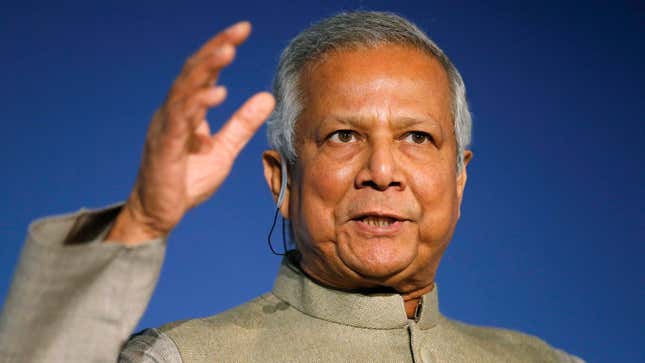
The Nobel laureate – Muhammad Yunus, the father of microfinance, is facing a prison sentence

qz.com

  • The Bangladesh government has brought an onslaught of legal cases against Muhammad Yunus over the last decade

By Ananya Bhattacharya PublishedSeptember 1, 2023

At the center of government lawsuits.

Among foreign economists and civil society activists, the Nobel laureate Muhammad Yunus is an icon for extending microloans to those too poor to access conventional banks. But at home, in Bangladesh, he has been increasingly vilified—and now faces time in prison.

Tiếp tục đọc “The Nobel laureate – Muhammad Yunus, the father of microfinance, is facing a prison sentence”

How much progress is being made on the UN’s Sustainable Development Goals?

weforum.org

A slowdown in progress on key areas is putting the 2030 Sustainable Development Goals 'in peril'.

A slowdown in progress on key areas is putting the 2030 Sustainable Development Goals ‘in peril’.

  • Multiple global crises continue to put the 2030 Sustainable Development Goals ‘in peril’, the UN says.
  • Its 2023 update report shows a significant reversal of progress in key areas such as child vaccination rates and income inequality between countries.
  • These challenges will be the focus of the World Economic Forum’s Sustainable Development Impact Meetings on 18-22 September 2023.

The 2030 Agenda for Sustainable Development was adopted by all United Nations’ (UN) member states in 2015. “A shared blueprint for peace and prosperity for people and the planet, now and into the future”, it is based on 17 Sustainable Development Goals (SDGs), which the UN describes as an urgent call for action. The organization says that ending global poverty requires focusing on strategies that reduce inequality and spur economic growth, while also tackling climate change.

The Sustainable Development Goals Report 2022 painted a worrying picture of progress in almost all areas, but the 2023 update delivers an even graver warning: “The promises enshrined in the SDGs are in peril,” the UN states. This year marks the halfway point to the 2030 Agenda deadline, increasing global urgency to ignite progress.

Tiếp tục đọc “How much progress is being made on the UN’s Sustainable Development Goals?”

Vài nét về Xã hội dân sự và kinh nghiệm đối với Việt Nam

>> Bài liên quan: Thúc đẩy không gian xã hội dân sự ở Việt Nam nhằm thực hiện nghĩa vụ quốc tế về quyền con người

Tạp chí Khoa học Pháp lý số 1(38)/2007, THS. VŨ VĂN NHIÊM – Đại học Luật TP. Hồ Chí Minh

Thuật ngữ “xã hội dân sự” đã xuất hiện cách đây hàng ngàn năm và trở nên tương đối thịnh hành vào thời Khai sáng. Một thời gian dài sau đó, nó ít được nhắc đến, hoặc có chăng, chỉ được giới khoa học đề cập một cách tản mạn.

Có thể do vai trò của xã hội dân sự ở Liên Xô và các nước Đông Âu trong thời kỳ chuyển đổi của những năm cuối thập niên 80, những năm đầu thập niên 90 thế kỷ XX và một vài lý do khác, nên ở nước ta, thuật ngữ xã hội dân sự ít được bàn luận vì nó thường được cho là mang hàm ý tiêu cực. Cho đến gần đây, cụm từ này đôi lúc vẫn còn được xem là nhạy cảm. Tuy nhiên, trong tiến trình dân chủ hóa ở nước ta hiện nay và trong xu thế hội nhập, “ xã hội dân sự” là thuật ngữ thường được nhắc đến  và được bàn luận khá cởi mở.

Trên tinh thần đó, chúng tôi mạnh dạn trao đổi một số vấn đề về xã hội dân sự thông qua bài viết sau đây.

I. MỘT VÀI NÉT VỀ “XÃ HỘI DÂN SỰ” VÀ SỰ PHÁT TRIỂN CỦA NÓ QUA CÁC GIAI ĐOẠN

Xã hội dân sự là thuật ngữ được xem xét và định nghĩa theo nhiều cách khác nhau trong lịch sử tư tưởng, chính trị, pháp lý thế giới, và hiện nay cũng vậy, nó được tiếp cận dưới những góc độ và bình diện khác rất khác nhau (kể cả trên thế giới và trong nước).[1] Chúng tôi cho rằng không cần thiết (và cũng không thể đặt ra mục đích phải có một khái niệm khuôn mẫu về xã hội dân sự). Tuy nhiên, trước khi bàn bạc, trao đổi về xã hội dân sự, nhất là trong điều kiện hiện nay ở nước ta, thì việc tìm hiểu những nội hàm cơ bản cũng như sự hình thành, phát triển của thuật ngữ này là rất cần thiết.

Tiếp tục đọc “Vài nét về Xã hội dân sự và kinh nghiệm đối với Việt Nam”

Statelessness Around the World

CFR.org

Without a country to call their own, millions of people experience discrimination and persecution. 

Last Updated January 10, 2023

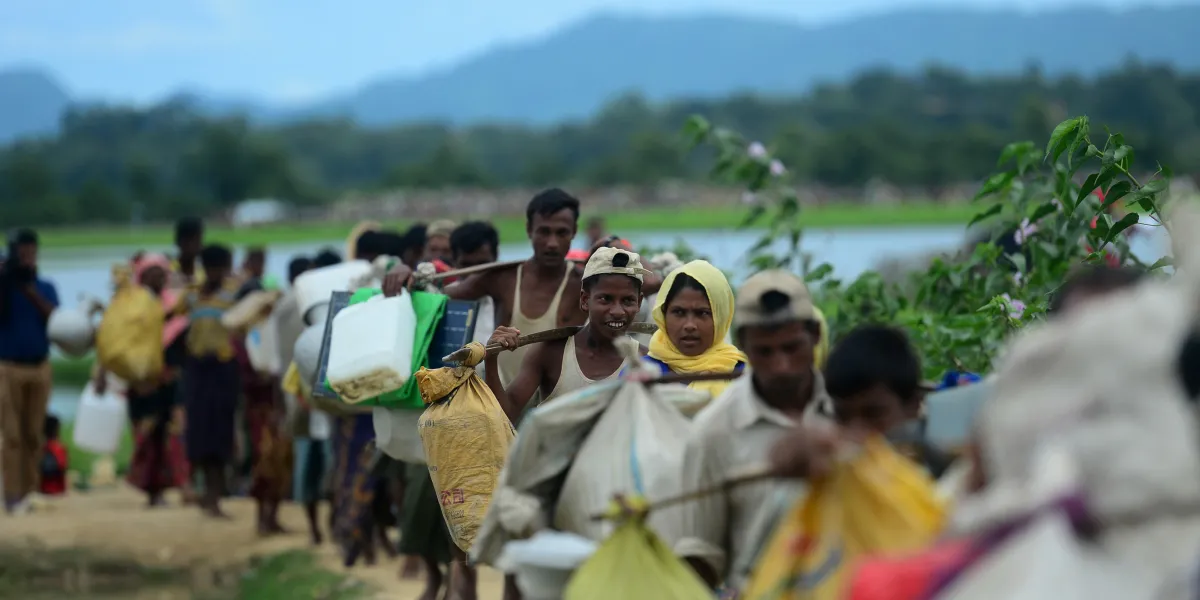
Rohingya walk near the no man's land area between Bangladesh and Myanmar in the Palongkhali area next to Ukhia on October 19, 2017.

Rohingya walk near the no man’s land area between Bangladesh and Myanmar in the Palongkhali area next to Ukhia on October 19, 2017. Source: MUNIR UZ ZAMAN/AFP via Getty ImagesSHARE

Teaching Resources—Building Blocks: Challenges (including lesson plan with slides)

Every two years, athletes from around the world gather to compete in the Olympic Games.

Competitions commence with host nations organizing spectacular opening ceremonies full of pageantry and, at times, peculiarities. At the 1992 Barcelona, Spain, opening ceremony, an archer lit the Olympic torch with a flaming arrow. At the 2012 London opening ceremony, organizers screened a film showing James Bond and Queen Elizabeth II, with stunt doubles later parachuting into the stadium. And in Sochi, Russia, in 2014, the Russian Police Choir kicked off the winter games with a rendition of Daft Punk’s disco-pop hit “Get Lucky.”

Tiếp tục đọc “Statelessness Around the World”

Nobel Foundation withdraws invitation to Russia, Belarus and Iran to attend ceremonies

APnews.com

FILE - The Nobel laureates and the royal family of Sweden during the Nobel Prize award ceremony at the Concert Hall in Stockholm, Saturday Dec. 10 2022. The Nobel Foundation has withdrawn its invitation for representatives of Russia, Belarus and Iran to attend this year’s Nobel Prize award ceremonies after the decision to invite them “provoked strong reactions.” Saturday's U-turn came after several Swedish lawmakers said they would boycott this year’s Nobel Prize award ceremonies. (Pontus Lundahl/TT via AP, File)

FILE – The Nobel laureates and the royal family of Sweden during the Nobel Prize award ceremony at the Concert Hall in Stockholm, Saturday Dec. 10 2022. The Nobel Foundation has withdrawn its invitation for representatives of Russia, Belarus and Iran to attend this year’s Nobel Prize award ceremonies after the decision to invite them “provoked strong reactions.” Saturday’s U-turn came after several Swedish lawmakers said they would boycott this year’s Nobel Prize award ceremonies. (Pontus Lundahl/TT via AP, File)

Updated 4:44 AM GMT+7, September 3, 2023Share

STOCKHOLM (AP) — The Nobel Foundation on Saturday withdrew its invitation for representatives of Russia, Belarus and Iran to attend this year’s Nobel Prize award ceremonies after the decision announced a day earlier “provoked strong reactions.”

Several Swedish lawmakers said Friday they would boycott this year’s Nobel Prize award ceremonies in the Swedish capital, Stockholm, after the private foundation that administers the prestigious awards changed its position from a year earlier and invited representatives of the three countries to attend, saying it “promotes opportunities to convey the important messages of the Nobel Prize to everyone.”

Some of the lawmakers cited Russia’s war on Ukraine and the crackdown on human rights in Iran as reasons for their boycott. Belarusian opposition figure Sviatlana Tsikhanouskaya on Friday called on the Swedish Nobel Foundation and the Norwegian Nobel Committee not to invite representatives of Belarusian President Alexander Lukashenko’s “illegitimate regime to any events.”

Tiếp tục đọc “Nobel Foundation withdraws invitation to Russia, Belarus and Iran to attend ceremonies”

‘Despair is settling in’: female suicides on rise in Taliban’s Afghanistan

theguardian.com

Unofficial figures point to a mental health crisis amid severe restrictions on Afghan women’s lives

Zahra Nader and Zan Times reportersMon 28 Aug 2023 10.00 BST

First, her dreams of becoming a doctor were dashed by the Taliban’s ban on education. Then her family set up a forced marriage to her cousin, a heroin addict. Latifa* felt her future had been snatched away.

“I had two options: to marry an addict and live a life of misery or take my own life,” said the 18-year-old in a phone interview from her home in central Ghor province. “I chose the latter.”

It was not an isolated act of desperation. Since the Taliban took control of Afghanistan in the summer of 2021, there has been a disturbing surge in the number of women taking their own lives or attempting to do so, data collected from public hospitals and mental health clinics across a third of Afghanistan’s provinces shows.

Tiếp tục đọc “‘Despair is settling in’: female suicides on rise in Taliban’s Afghanistan”

H&M says it will “phase out” sourcing from Myanmar

reuters.com

August 17, 20238:38 PM GMT+7Updated 6 days ago

Workers tailor and arrange clothing at a garment factory at Hlaing Tar Yar industry zone in Yangon

LONDON, Aug 17 (Reuters) – The world’s second-biggest fashion retailer H&M (HMb.ST) has decided to gradually stop sourcing from Myanmar, it told Reuters on Thursday, as reports of labour abuses in garment factories in the country increase.

H&M became the latest brand to cut ties with suppliers in the country after Zara owner Inditex (ITX.MC), Primark (ABF.L), Marks & Spencer (MKS.L) and others.

“After careful consideration we have now taken the decision to gradually phase out our operations in Myanmar,” H&M said in an email to Reuters.

“We have been monitoring the latest developments in Myanmar very closely and we see increased challenges to conduct our operations according to our standards and requirements.”

Taliban edicts suffocating women and girls in Afghanistan: UN experts

UN Human rights

GENEVA (19 June 2023) – Relentless edicts issued by the Taliban since taking power in Afghanistan in August 2021 have severely restricted the rights of women and girls and suffocated every dimension of their lives, UN experts* said today.

“Women and girls in Afghanistan are experiencing severe discrimination that may amount to gender persecution – a crime against humanity – and be characterised as gender apartheid, as the de facto authorities appear to be governing by systemic discrimination with the intention to subject women and girls to total domination,” the experts said.

Tiếp tục đọc “Taliban edicts suffocating women and girls in Afghanistan: UN experts”

Công ước quốc tế về các Quyền dân sự và chính trị 

moi.gov.vn

MỘT SỐ TÀI LIỆU LIÊN QUAN ĐẾN CÔNG ƯỚC VỀ CÁC QUYỀN DÂN SỰ – CHÍNH TRỊ (CÔNG ƯỚC ICCPR)

  • 2. Binh luan chung – VN.pdf
  • 3. Binh luan chung – EN.pdf
  • 4. Bao cao ICCPR lan thu 3 – VN.pdf
  • 4.1. Phu luc Bao cao ICCPR lan 3 – VN.pdf
  • 5. Bao cao ICCPR lan 3 – Phu luc – EN.pdf
  • Bộ Tư Pháp – Pháp Luật quốc tế

    Công ước Quốc tế về các Quyền Dân sự và Chính trị (tiếng Anh: International Covenant on Civil and Political Rights, viết tắt: ICCPR) là một công ước quốc tế do Đại hội đồng Liên Hiệp Quốc thông qua ngày 16 tháng 12 năm 1966 và có hiệu lực từ ngày 23 tháng 03 năm 1976, nêu tổng quan các quyền dân sự và chính trị cơ bản của con người. Cụ thể, các bên tham gia ký kết sẽ phải tôn trọng các quyền dân sự và chính trị của từng cá nhân, bao gồm quyền sống, quyền tự do tôn giáo, tự do phát biểu, tự do hội họp, quyền bầu cử và quyền được xét xử bình đẳng và theo đúng trình tự pháp luật. Công ước này, cùng với Tuyên ngôn toàn thế giới về nhân quyền (1948, viết tắt là UDHR) và Công ước quốc tế về các quyền kinh tế, xã hội và văn hóa (1966, viết tắt là ICESCR) hợp thành một “bộ luật nhân quyền quốc tế”. Ngoài ra, trong năm 2012, có thêm hai Nghị định thư bổ sung cho ICCPR liên quan đến giải quyết khiếu nại cá nhân và bãi bỏ hình phạt tử hình. Tính đến nay, đã có 72 nước ký vào Công ước và 167 bên tham gia. Việt Nam trở thành thành viên của ICCPR (Việt Nam gia nhập Công ước này vào ngày 24/9/1982).

    Tiếp tục đọc “Công ước quốc tế về các Quyền dân sự và chính trị “

    Thúc đẩy không gian xã hội dân sự ở Việt Nam nhằm thực hiện nghĩa vụ quốc tế về quyền con người

    Viện nghiên cứu lập pháp UBTVQH

    TS. NGUYỄN LINH GIANG – Viện Nhà nước và Pháp luật, Viện Hàn lâm KHXH Việt Nam. ThS. NGÔ THỊ THU HÀ – Phó Giám đốc Trung tâm Hỗ trợ giáo dục và nâng cao năng lực cho phụ nữ

    Trong những năm gần đây, sự tham gia tích cực của các tổ chức xã hội dân sự (XHDS) trong tiến trình bảo đảm và thúc đẩy quyền con người (QCN) trên toàn thế giới đã được Liên hợp quốc (LHQ) và các tổ chức quốc tế ghi nhận. Việc mở rộng không gian XHDS nhằm thực hiện nghĩa vụ quốc tế về QCN, vì thế đã trở thành một xu thế chung trên toàn thế giới và Việt Nam cũng không nằm ngoài tiến trình đó. 

    1. Thực hiện nghĩa vụ quốc tế về quyền con người

    Thực hiện nghĩa vụ quốc tế về QCN, trước tiên là thực hiện nghĩa vụ của một quốc gia thành viên của LHQ và thực hiện nghĩa vụ quốc gia thành viên của các Công ước quốc tế về QCN. Nếu xét ở nghĩa rộng, thực hiện nghĩa vụ quốc tế về QCN có rất nhiều việc phải làm, trong đó có những nghĩa vụ khá trừu tượng như tôn trọng Hiến chương LHQ, tôn trọng các nguyên tắc căn bản của pháp luật quốc tế, trong đó có pháp luật quốc tế về QCN. Nhưng cụ thể, để thực hiện nghĩa vụ một quốc gia thành viên của LHQ và thực hiện nghĩa vụ quốc gia thành viên của các Công ước quốc tế về QCN bao gồm những công việc sau:

    Tiếp tục đọc “Thúc đẩy không gian xã hội dân sự ở Việt Nam nhằm thực hiện nghĩa vụ quốc tế về quyền con người”