UN report: (Almost) no one is reading UN reports

UN report finds United Nations reports are not widely read 

reuters.com By Michelle Nichols August 2, 2025

UN Secretary-General Antonio Guterres

UNITED NATIONS, Aug 1 (Reuters) – A United Nations report seeking ways to improve efficiency and cut costs has revealed: U.N. reports are not widely read.

U.N. Secretary-General Antonio Guterres briefed countries on Friday on the report, produced by his UN80 reform that focused on how U.N. staff implement thousands of mandates given to them by bodies like the General Assembly or Security Council.

The Reuters Daily Briefing newsletter provides all the news you need to start your day. Sign up here.

He said last year that the U.N. system supported 27,000 meetings involving 240 bodies, and the U.N. secretariat produced 1,100 reports, a 20% increase since 1990.

Advertisement · Scroll to continueReport This Ad

“The sheer number of meetings and reports is pushing the system – and all of us – to the breaking point,” Guterres said.

“Many of these reports are not widely read,” he said. “The top 5% of reports are downloaded over 5,500 times, while one in five reports receives fewer than 1,000 downloads. And downloading doesn’t necessarily mean reading.”

Guterres launched the UN80 taskforce in March as the U.N. – which turns 80 this year – faces a liquidity crisis for at least the seventh year in a row because not all 193 U.N. member states pay their mandatory regular dues in full or on time.

The report issued by the taskforce late on Thursday covers just one of several reform angles being pursued.

Advertisement · Scroll to continueReport This Ad

Among the suggestions Guterres put forward on Friday: “Fewer meetings. Fewer reports, but ones that are able to fully meet the requirements of all mandates.”

(This story has been corrected to clarify that not all countries pay in full or on time, in paragraph 6)

Reporting by Michelle Nichols; editing by Diane Craft

Our Standards: The Thomson Reuters Trust Principles.

UNCTAD16: Countries to meet in Viet Nam to propel development in a multipolar world

UNCTAD

17 January 2025

UN Trade and Development’s 16th quadrennial conference is set for October with a focus on driving economic transformation for a more sustainable future.

Default image copyright and description© UNCTAD Photo | The Trade and Development Board meets for its 33rd special session in Geneva on 17 January.

The 16th session of the United Nations Conference on Trade and Development (UNCTAD16) will take place Viet Nam in October 2025 under the theme “Shaping the future: Driving economic transformation for equitable, inclusive and sustainable development”.

Tiếp tục đọc “UNCTAD16: Countries to meet in Viet Nam to propel development in a multipolar world”

Donald Trump poses the biggest danger to the world in 2024

economist.com

What his victory in America’s election would mean

image: andrea ucini

Nov 16th 2023ShareListen to this story.

 Enjoy more audio and podcasts on iOS or Android.

Ashadow looms over the world. In this week’s edition we publish The World Ahead 2024, our 38th annual predictive guide to the coming year, and in all that time no single person has ever eclipsed our analysis as much as Donald Trump eclipses 2024. That a Trump victory next November is a coin-toss probability is beginning to sink in.

Mr Trump dominates the Republican primary. Several polls have him ahead of President Joe Biden in swing states. In one, for the New York Times, 59% of voters trusted him on the economy, compared with just 37% for Mr Biden. In the primaries, at least, civil lawsuits and criminal prosecutions have only strengthened Mr Trump. For decades Democrats have relied on support among black and Hispanic voters, but a meaningful number are abandoning the party. In the next 12 months a stumble by either candidate could determine the race—and thus upend the world.

Tiếp tục đọc “Donald Trump poses the biggest danger to the world in 2024”

Lessons of Second World War Must Continue to Guide United Nations Work, General Assembly Told During Meeting Marking Seventieth Anniversary

UN.org SIXTY-NINTH GENERAL ASSEMBLY 5 MAY 2015

Several Speakers Call for Security Council Reform to Address Present Challenges

The lessons of World War II — on whose ashes the United Nations was founded — must continue to guide the Organization’s work, even as it adapted to meet the evolving challenges of the modern world, delegates commemorating the seventieth anniversary of the end of the war told the General Assembly today.

“We must never forget the international community’s responsibility to stand up to tyrants, despots and all those that attempt to suppress the enduring nature of the human spirit,” said Sam Kutesa (Uganda), Assembly President.  Having survived the catastrophe of the Second World War, humankind sought to embrace new means to prevent the recurrence of such tragic events.

To that end, he said, the Organization was established to ensure unity and harmony among nations.  As envisaged in the United Nations Charter, it was founded to “save succeeding generations from the scourge of war”.  Over the last seven decades, the war had not only shaped the Organization’s mission, but its lessons continued to guide its work around the world.

Tiếp tục đọc “Lessons of Second World War Must Continue to Guide United Nations Work, General Assembly Told During Meeting Marking Seventieth Anniversary”

What impact is Brexit having on the UK economy?

The UK’s trade has dropped in recent years, the pound has fallen considerably against the dollar and business investment is yet to return to its peak in 2016. While these factors are predicted to be a result of Brexit, ministers have blamed international issues.

The UK’s recent disastrous “mini” Budget can trace its origins back to Britain’s decision to leave the European Union. The economic costs of Brexit were masked by the Covid-19 pandemic and the crisis in Ukraine. But six years after the UK voted to leave, the effect has become clear. In this film, senior FT writers and British businesspeople examine how Brexit hit the UK economy, the political conspiracy of silence, and why there has not yet been a convincing case for a ‘Brexit dividend’.

Japan’s quiet leadership as it hosts the G7 summit in Hiroshima

brookings.edu

Mireya Solís, director of the Center for East Asian Policy Studies at Brookings, explains the significance of Japan hosting the G7 summit in Hiroshima, and how Tokyo centers its foreign policy on promoting a free and open Indo-Pacific region. “This is Japan’s grand strategy,” Solís says, “this is really the roadmap that Japan has charted to achieve its security and prosperity.”

Mireya Solís, director of the Center for East Asian Policy Studies at Brookings, explains the significance of Japan hosting the G7 summit in Hiroshima, and how Tokyo centers its foreign policy on promoting a free and open Indo-Pacific region. “This is Japan’s grand strategy,” Solís says, “this is really the roadmap that Japan has charted to achieve its security and prosperity.”

TRANSCRIPT

[music]

DOLLAR: Hi, I’m David Dollar, host of the Brookings Trade podcast Dollar and Sense. Today, my guest is Mireya Solís, director of the Center for East Asian Policy Studies here at Brookings. Mireya is a leading expert on Japan’s trade and economic diplomacy, and she has a book coming out this summer on Japan’s quiet leadership. And one aspect of this quiet leadership, or maybe not so quiet right now, is Japan will be hosting the G7 summit in Hiroshima starting on May 19. That’s the main thing we’re going to talk about.

Because of the Memorial Day holiday in the United States, we’re going to push back production one week. So, the next episode will come out on June 5th.

So, welcome to the show, Mireya.

SOLÍS: Thank you so much, David. It’s a pleasure to be here.

Tiếp tục đọc “Japan’s quiet leadership as it hosts the G7 summit in Hiroshima”

A Human Approach to World Peace

The 14th Dalai Lama of Tibet

When we rise in the morning and listen to the radio or read the newspaper, we are confronted with the same sad news: violence, crime, wars, and disasters. I cannot recall a single day without a report of something terrible happening somewhere. Even in these modern times it is clear that one’s precious life is not safe. No former generation has had to experience so much bad news as we face today; this constant awareness of fear and tension should make any sensitive and compassionate person question seriously the progress of our modern world.
 
It is ironic that the more serious problems emanate from the more industrially advanced societies. Science and technology have worked wonders in many fields, but the basic human problems remain. There is unprecedented literacy, yet this universal education does not seem to have fostered goodness, but only mental restlessness and discontent instead. There is no doubt about the increase in our material progress and technology, but somehow this is not sufficient as we have not yet succeeded in bringing about peace and happiness or in overcoming suffering.
 
We can only conclude that there must be something seriously wrong with our progress and development, and if we do not check it in time there could be disastrous consequences for the future of humanity. I am not at all against science and technology – they have contributed immensely to the overall experience of humankind; to our material comfort and well-being and to our greater understanding of the world we live in. But if we give too much emphasis to science and technology we are in danger of losing touch with those aspects of human knowledge and understanding that aspire towards honesty and altruism.
 
Science and technology, though capable of creating immeasurable material comfort, cannot replace the age-old spiritual and humanitarian values that have largely shaped world civilization, in all its national forms, as we know it today. No one can deny the unprecedented material benefit of science and technology, but our basic human problems remain; we are still faced with the same, if not more, suffering, fear, and tension. Thus it is only logical to try to strike a balance between material developments on the one hand and the development of spiritual, human values on the other. In order to bring about this great adjustment, we need to revive our humanitarian values.
 
I am sure that many people share my concern about the present worldwide moral crisis and will join in my appeal to all humanitarians and religious practitioners who also share this concern to help make our societies more compassionate, just, and equitable. I do not speak as a Buddhist or even as a Tibetan. Nor do I speak as an expert on international politics (though I unavoidably comment on these matters). Rather, I speak simply as a human being, as an upholder of the humanitarian values that are the bedrock not only of Mahayana Buddhism but of all the great world religions. From this perspective I share with you my personal outlook – that:

Tiếp tục đọc “A Human Approach to World Peace”

The New Industrial Age

America Should Once Again Become a Manufacturing Superpower

foreignaffairs.com

By Ro Khanna

January/February 2023

Taylor Callery

Download Article

For many citizens, the American dream has been downsized. In recent decades, the United States has ceased to be the world’s workshop and become increasingly reliant on importing goods from abroad. Since 1998, the widening U.S. trade deficit has cost the country five million well-paying manufacturing jobs and led to the closure of nearly 70,000 factories. Small towns have been hollowed out and communities destroyed. Society has grown more unequal as wealth has been concentrated in major coastal cities and former industrial regions have been abandoned. As it has become harder for Americans without a college degree to reach the middle class, the withering of social mobility has stoked anger, resentment, and distrust. The loss of manufacturing has hurt not only the economy but also American democracy.

Tiếp tục đọc “The New Industrial Age”

Thai court suspends Prime Minister Prayuth; Prawit made acting PM

asia.nikkei.com

5-4 decision gives judges time to consider opposition’s term limit petition

Thai Prime Minister Prayuth Chan-ocha: A surprising Constitutional Court ruling on Aug. 24 temporarily removes Prayuth from office.   © Reuters

APORNRATH PHOONPHONGPHIPHAT, Nikkei staff writerAugust 24, 2022 16:12 JSTUpdated on August 24, 2022 20:08 JST

BANGKOK — Thailand’s Constitutional Court on Wednesday suspended Prime Minister Prayuth Chan-ocha from duty until it rules on a petition filed by opposition parties that the one-time army chief has served beyond the constitutionally mandated eight years.

Prayuth first awarded himself the prime minister post in 2014, after staging a military coup.

“The court has determined by a 5-4 vote to suspend Gen. Prayuth from the duties of Prime Minister from Aug. 24 onward until the court reaches a [final] verdict,” the court said in a statement.

While Prayuth remains suspended from duty, Deputy Prime Minister Prawit Wongsuwan will serve as a caretaker prime minister, said Wissanu Krea-Ngam, another deputy prime minister and the government’s legal expert. Prawit is the most senior deputy.

Tiếp tục đọc “Thai court suspends Prime Minister Prayuth; Prawit made acting PM”

A tale of 2020 in 20 McKinsey charts

Mckinsey.cim

See the story of this unique year through data visualizations from our Charting the Path to the Next Normal series.
This year, we launched a new series to highlight our best charts and data visualizations—the ones that deserved lives of their own outside the articles they were originally created for. Every weekday, we post a selection from one of our highly skilled data-visualization editors to our collection page, Charting the Path to the Next Normal. As we look back at the year that was, these daily charts tell a story about our changing world, from the early days of lockdowns and a tumultuous summer to ending the year on a hopeful note. While uncertainty remains, and each chart in isolation offers but one lens on the landscape, the themes emerging from the collection as a whole provide unique insight into the many disruptions 2020 visited on us.

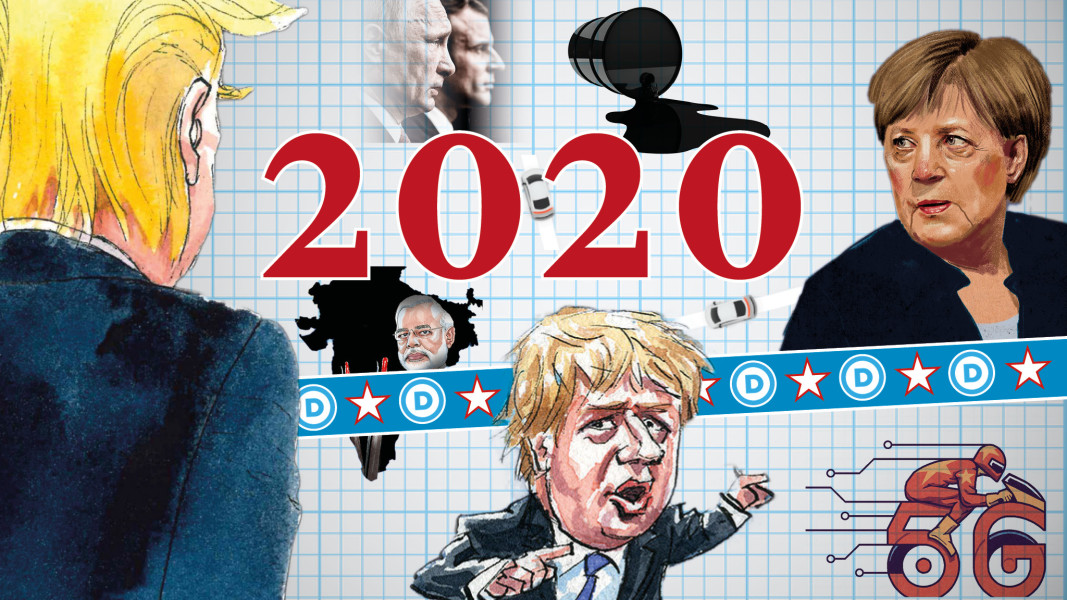
Forecasting the world in 2020

FT.com

Brexit was not stopped, populists made smaller gains than expected in May’s European parliament elections, and the S&P 500 beat our — and most other people’s — expectations. Along with Brazilian growth falling below the year before, the FT’s forecasting team got those predictions wrong for 2019, though Philip Stephens last year admitted he offered his forecast that Brexit would be reversed “as much in hope as expectation”.

Though the world may seem ever more unpredictable, four wrong answers was an improvement on our dismal eight the year before. And aside from Brexit, readers in our annual competition generally made the same mistakes we did — more than 70 per cent of you got the same three questions wrong. For a third straight year, though, the top-scoring readers beat the FT. Three tied on 19 correct answers out of 20. Tiếp tục đọc “Forecasting the world in 2020”

5 shocking facts about inequality, according to Oxfam’s latest report

weforum.org

  • Oxfam’s Time To Care report looks at wealth inequality and how it’s partly driven by the burden placed on women to provide unpaid – and underpaid – care work.
  • The charity proposes six solutions to “close the gap between care workers and the wealthy elite”.

“Governments around the world can, and must, build a human economy that is feminist and benefits the 99%, not only the 1%.”

That’s the message from Oxfam, the aid and development charity, in its latest report on the state of global inequality, Time To Care.

It focuses on the impact that unpaid and underpaid care work has on the prospects and livelihoods of women and girls across the world – and how that’s driving growing inequality.

Oxfam lists six recommendations to “close the gap between care workers and the wealthy elite who have profited most from their labour”, from ending extreme wealth to challenging harmful norms and sexist beliefs. Tiếp tục đọc “5 shocking facts about inequality, according to Oxfam’s latest report”

Critical Issues to Watch in 2018

Reprint |    |  Print | 

ipsnews_Martin Khor is Executive Director of the South Centre, a think tank for developing countries, based in Geneva

More than 480 billion plastic bottles were sold in the world in 2016, in 2018 we can expect international cooperation to reduce the use of plastic and how to treat plastic waste. Credit: Athar Parvaiz/IPS

PENANG, Malaysia, Jan 2 2018 (IPS) – Another new year has dawned, and on a world facing serious disruption on many fronts.  What are the trends and issues to watch out for in 2018?

One obvious answer is to anticipate how Donald Trump, the most unorthodox of American Presidents, will continue to upset the world order.  But more about that later.

Just as importantly as politics, we are now in the midst of several social and environmental trends that have important long-lasting effects.  Some are on the verge of reaching a tipping point, where a long-term trend produces critical and sometimes irreversible events. We may see some of that in 2018.
Tiếp tục đọc “Critical Issues to Watch in 2018”

Xu hướng Toàn cầu: Nghịch lý của Tiến bộ – Báo cáo của Uỷ ban tình báo quốc gia Hoa Kỳ

Xem toàn bộ báo cáo tại đây  Download Global Trends 2035 here

Suy tư về tương lai là quan trọng nhưng khó. Những cuộc khủng hoảng tiếp tục xâm lấn, khiến cho chúng ta gần như không thể có cái nhìn vượt quá tiêu đề báo chí hàng ngày về những gì  ở đường chân trời. Trong bối cảnh khó khắn đó, tư duy rộng mở bên ngoài cái hộp- think outside the bó, thuật ngữ được sử dụng một cách sáo rỗng, thường xuyên đánh mất những gì đang xảy ra trong cái hộp. Đó là lý do mỗi kỳ bốn năm Hội đồng Tình báo Quốc gia Hoa Kỳ (NIC) tiến hành đánh giá toàn diện về các lực lượng và sự lựa chọn định hình thế giới phía trước trong hai thập kỷ tới

Phiên bản này, là loạt thứ sáu có tiêu đề “Xu hướng Toàn cầu: Nghịch lý của Tiến bộ – Global Trends: The Paradox of Progress ” và chúng tôi rất tự hào về báo cáo này. Tài liệu có thể nhìn giống như một báo cáo, nhưng thực sự là một lời mời, một lời mời để thảo luận, tranh luận và đặt câu hỏi về tương lai có thể mở ra như thế nào. Chắc chắn, chúng ta không giả vờ có “câu trả lời” dứt khoát.

Tư duy dài hạn là then chốt để xây dựng chiến lược. Chuỗi xu hướng toàn cầu thúc đẩy chúng ta xem xét lại những giả định lớn, những kỳ vọng, và sự không chắc chắn về tương lai. Trong một thế giới đầy hỗn độn và kết nối với nhau, một viễn cảnh dài hơn đòi hỏi chúng ta phải đặt những câu hỏi khó về những vấn đề nào và sự lựa chọn sẽ được hậu quả nhất trong những thập niên tới – thậm chí nếu những lựa chọn không nhất thiết phải tạo ra được các tiêu đề lớn nhất. Một cái nhìn dài hạn hơn cũng là điều cần thiết vì những vấn đề như khủng bố, tấn công mạng, công nghệ sinh học và biến đổi khí hậu đòi có vai trò lớn sẽ đòi hỏi phải có sự hợp tác lâu dài để giải quyết. Nhìn vào tương lai có thể đáng sợ và chắc chắn là phải khiêm nhường. Các sự kiện diễn ra theo những cách phức tạp mà não của chúng ta không có các kết nối một cách tự nhiên. Các lực lượng kinh tế, chính trị, xã hội, công nghệ và văn hoá va chạm tương tác trong những cách chóng mặt, vì vậy có thể dẫn chúng ta đến sự nhầm lẫn giữa các sự kiện kịch tính gần đây với những diễn biến quan trọng hơn nhiều. Là sự cám dỗ, và thường là công bằng, cho rằng mọi người hành động một cách “hợp lý”, nhưng các nhà lãnh đạo, nhóm, tổ chức nhóm, và quần chúng có thể cư xử rất khác nhau – và bất ngờ – trong những hoàn cảnh tương tự. Tiếp tục đọc “Xu hướng Toàn cầu: Nghịch lý của Tiến bộ – Báo cáo của Uỷ ban tình báo quốc gia Hoa Kỳ”