Rabies is not considered to be a disease of economic importance, because it does not hurt international trade and mainly affects marginalised communities. A new study explores how the ancient zoonotic disease has spread across Southeast Asia post-pandemic, and how it can be eliminated.
One of the world’s oldest diseases has been spreading across Southeast Asia, infecting poor communities in remote parts of the region where it has not previously been considered to be a problem.
Rabies, a zoonotic disease caricaturised by aggressive, salivating dogs that is virtually 100 per cent fatal once it enters the central nervous system, has spread because the resources needed to control the disease have been diverted to control Covid-19, according to experts in a new study on the prevalence of the virus in Southeast Asia and how to fight it.
Philippines ‘failing to control’ rabies Read now →
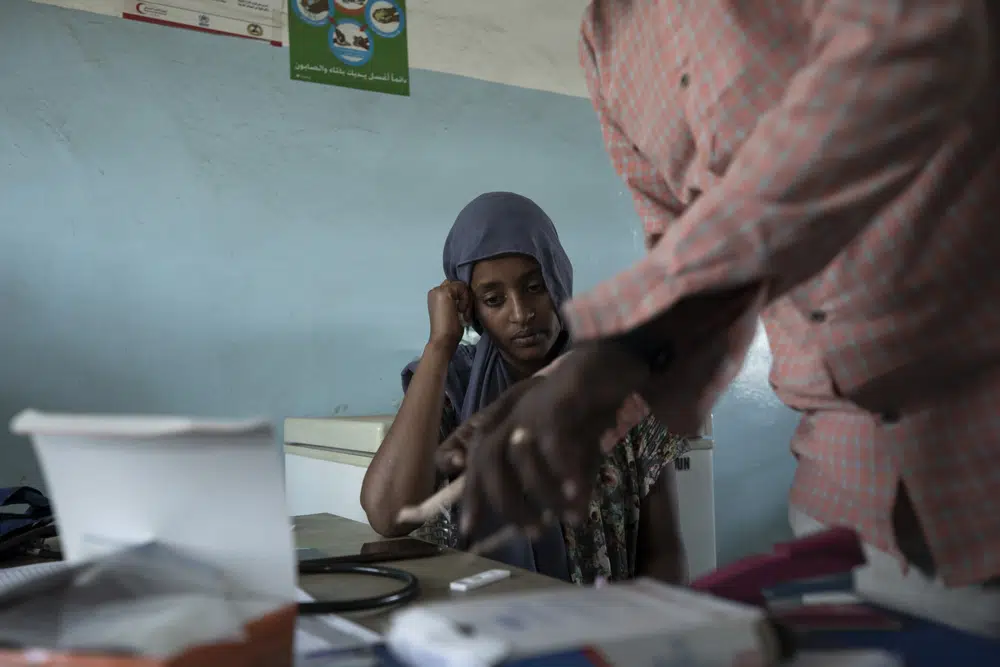
FILE – Surgeon and doctor-turned-refugee, Dr. Tewodros Tefera, prepares a malaria test for 23-year-old Tigrayan refugee Hareg from Mekele, Ethiopia, at the Sudanese Red Crescent clinic in Hamdayet, eastern Sudan, near the border with Ethiopia, on March 17, 2021. The coronavirus pandemic interrupted efforts to control malaria, resulting in 63,000 more deaths and 13 million more infections. That’s according to a World Health Organization report released Thursday Dec. 8, 2022. (AP Photo/Nariman El-Mofty, File)
The coronavirus pandemic interrupted efforts to control malaria, resulting in 63,000 additional deaths and 13 million more infections globally over two years, according to a report from the World Health Organization published Thursday.
Cases of the parasitic disease went up in 2020 and continued to climb in 2021, though at a slower pace, the U.N. health agency said Thursday. About 95% of the world’s 247 million malaria infections and 619,000 deaths last year were in Africa.
“We were off track before the pandemic and the pandemic has now made things worse,” said Abdisalan Noor, a senior official in WHO’s malaria department.
Alister Craig, dean of biological sciences at the Liverpool School of Tropical Medicine, noted that progress in reducing malaria deaths had stalled even before COVID-19.
“It is almost as if we have reached a limit of effectiveness for the tools we have now,” said Lister, who was not linked to the WHO report.
ADVERTISEMENT
Noor said he expected the wider rollout of the world’s first authorized malaria vaccine next year to have a “considerable impact” on reducing the number of severe illnesses and deaths if enough children get immunized, adding that more than 20 countries have applied to vaccines alliance Gavi for help in securing the shot. Still, the vaccine is only about 30% effective and requires four doses.
Bed nets can protect people from being bitten by the mosquitoes that spread malaria. The WHO report found that about three-quarters of nets provided by donors have been distributed, but there are major gaps in some of the worst-hit countries. Authorities in Nigeria, for example, gave out just over half their nets, while Congo distributed about 42% of theirs.
Officials also raised concerns about a new invasive mosquito species that thrives in cities, is resistant to many pesticides and which could undo years of progress against malaria. The invasive species has not yet significantly contributed to the continent’s overall malaria burden, but the insects are likely responsible for a recent spike in parts of the horn of Africa, Noor said.
David Schellenberg, a professor at the London School of Hygiene and Tropical Medicine, said there were promising new tools and strategies to tackle malaria, but that “the elephant in the room is the level of funding.” WHO estimated the total investment into malaria — about $3.5 billion — was less than half of what was needed to dramatically reduce its impact.
___
The Associated Press Health and Science Department receives support from the Howard Hughes Medical Institute’s Science and Educational Media Group. The AP is solely responsible for all content.
Climate change is creating many pathways for zoonotic diseases to reach people. Four cases show how the climate crisis is altering disease threats and how the world can respond.
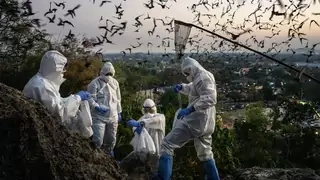
THAILAND: Infectious-disease researchers catch bats to study. Adam Dean/New York Times/Redux
The world is already witnessing the consequences of human-caused climate change, including hotter temperatures, rising sea levels, and more frequent and severe storms. What’s harder to see are climate change’s effects on the spread of disease: on the mosquito that carries a virus, or the pathogenic bacteria on a piece of fruit.
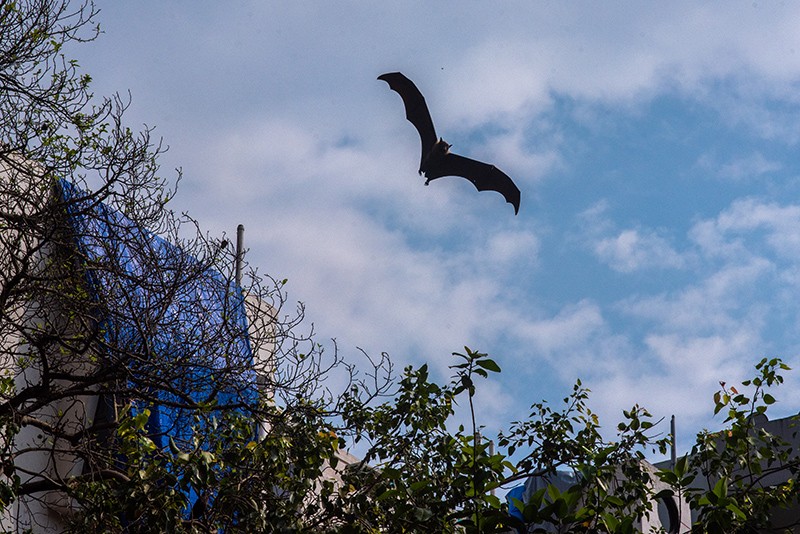
Bats will have a large contribution to virus transmission between species in the future, a modelling study finds.Credit: Pratik Chorge/Hindustan Times via Getty
Over the next 50 years, climate change could drive more than 15,000 new cases of mammals transmitting viruses to other mammals, according to a study published in Nature1. It’s one of the first to predict how global warming will shift wildlife habitats and increase encounters between species capable of swapping pathogens, and to quantify how many times viruses are expected to jump between species.
Many researchers say that the COVID-19 pandemic probably started when a previously unknown coronavirus passed from a wild animal to a human: a process called zoonotic transmission. A predicted rise in viruses jumping between species could trigger more outbreaks, posing a serious threat to human and animal health alike, the study warns — providing all the more reason for governments and health organizations to invest in pathogen surveillance and to improve health-care infrastructure.
The study is “a critical first step in understanding the future risk of climate and land-use change on the next pandemic”, says Kate Jones, who models interactions between ecosystems and human health at University College London.
The research predicts that much of the new virus transmission will happen when species meet for the first time as they move to cooler locales because of rising temperatures. And it projects that this will occur most often in species-rich ecosystems at high elevations, particularly areas of Africa and Asia, and in areas that are densely populated by humans, including Africa’s Sahel region, India and Indonesia. Assuming that the planet warms by no more than 2 °C above pre-industrial temperatures this century — a future predicted by some climate analyses — the number of first-time meetings between species will double by 2070, creating virus-transmission hotspots, the study says.
Human activity has made an ocean circulation pattern misbehave—triggering a weird confluence of events that has caused the infestations.
Desert locusts have swarmed into Kenya by the hundreds of millions from Somalia and Ethiopia, where such numbers haven’t been seen in a quarter-century. The insects are decimating farmland, threatening an already vulnerable region.
East Africa is in the midst of a crisis that sounds like something out of the Book of Exodus: A plague of locusts is spreading across the region, threatening the food supply of tens of millions. City-sized swarms of the dreaded pests are wreaking havoc as they descend on crops and pasturelands, devouring everything in a matter of hours. The scale of the locust outbreak, which now affects seven East African countries, is like nothing in recent memory. Tiếp tục đọc “A plague of locusts has descended on East Africa. Climate change may be to blame.”→
(TNO) Ông Ngô Hoàng Minh, người sống bằng nghề nuôi heo ở gần vườn nhà tôi, thỉnh thoảng sang làm giúp tôi một số việc, như cho heo ăn dặm hoặc coi ngó heo đẻ.
Ngành y tế đi phát tờ rơi nhiều khi người dân không đọc; đưa xe, loa phát thanh chỉ tới những khu dân cư cao ráo, ít có nguy cơ phát sinh dịch bệnh; còn những hẻm hóc nơi dễ xảy ra dịch bệnh thì xe, loa phát thanh không tới được nên việc tuyên truyền không hiệu quả.
Trong hai mươi năm qua, Việt Nam đã đạt được những thành tựu đầy ấn tượng về tăng trưởng kinh tế và phát triển xã hội song kết quả đạt được giữa các khu vực, các nhóm dân tộc và các nhóm ngôn ngữ còn chênh lệch khá lớn. Các yếu tố như tỷ lệ tử vong cao ở mẹ và trẻ sơ sinh, suy dinh dưỡng, điều kiện vệ sinh cá nhân và vệ sinh môi trường kém, chất lượng nước thấp, tỷ lệ lây truyền HIV từ mẹ sang con và tỷ lệ thương tích trẻ em tăng lên là những đe dọa không ngừng đến sự sống còn của trẻ. Tiếp tục đọc “Vì sự sống còn và phát triển của trẻ em”→
Đã liên tiếp hơn 10 năm nay, năm nào ngành chăn nuôi cả nước cũng chịu thiệt hại nặng nề vì dịch cúm gia cầm. Nhưng năm nay người chăn nuôi đặc biệt cùng quẫn hơn vì ảnh hưởng của dịch bệnh và suy thoái kinh tế, mặt hàng thịt, trứng tiêu thụ chậm và rớt giá.
Người chăn nuôi gia cầm trắng tay sau dịch cúm – Ảnh: Lê Lâm
UN – Trung Tâm Kiểm soát Khẩn cấp các Bệnh lây truyền từ Động vật Xuyên biên giới (ECTAD) FAO Việt Nam và Cục Thú Y (DAH), Bộ Nông Nghiệp và Phát triển Nông Thôn phát hành hai bộ phim phòng chống bệnh dại với mục địch vận động thực hiện chính sách và tập huấn cán bộ kỹ thuật. Hai phim có tên gọi “Vì một Việt Nam không bệnh dại” và “Xóa bỏ bệnh dại tại Việt Nam”. Hai bộ phim được sản xuất với sự hợp tác của Cục Y tế Dự phòng, Tổ chức Y tế Thế giới (WHO), Chi cục Thú Y Thái Nguyên và Tổ chức Bảo vệ Động vật. Tiếp tục đọc “Vì một Việt Nam không bệnh dại”→
Năm 2004, cả người dân và ngành chăn nuôi gia cầm ở Việt Nam đều bị ảnh hưởng nặng nề do dịch cúm gia cầm độc lực cao (HPAI) H5N1 bùng phát . Hậu quả là hơn 60 người tử vong và tổn thất kinh tế lên đến 45 triệu USD do số gia cầm bị chết vào thời gian cao điểm của dịch. Tiếp tục đọc “Chống dịch cúm gia cầm ở Việt Nam – cuốn sách về 8 năm hợp tác”→




 CVD
CVD 