A satellite image shows the Malaysian-contracted drillship West Capella in the South China Sea on April 22, 2020.
Vietnam’s government on Tuesday encouraged the nation’s fishermen to keep operating around the disputed Paracel Islands, despite China’s unilaterally imposed fishing ban in the South China Sea, and directed provincial authorities to support Vietnamese fishermen at sea.
That statement of defiance from Hanoi, calling the ban “invalid,” came as an oil exploration ship contracted by another South China Sea claimant, Malaysia, ended a survey farther south, off the Malaysian coast. The ship has been shadowed by Chinese ships for the past month. Tiếp tục đọc “Vietnam Encourages Fishermen to Defy China Ban”→
Tân Hoa Xã hôm 20-3 đưa tin Trung Quốc vừa thiết lập hai trạm nghiên cứu trên đá Chữ Thập và đá Xu Bi – đang bị Bắc Kinh chiếm đóng phi pháp ở quần đảo Trường Sa thuộc chủ quyền Việt Nam. Theo thông tin trên, 2 cơ sở mới có phòng thí nghiệm về sinh thái, địa chất và môi trường, nhằm hỗ trợ điều tra thực địa và nghiên cứu khoa học ở quần đảo Trường Sa. Tiếp tục đọc “Trung Quốc liên tục giở trò ngang ngược trên Biển Đông”→
Các nhóm hoạt động bảo vệ dòng Mekong yêu cầu Trung Quốc hợp tác và công khai thông tin liên quan đến các đập thủy điện mà nước này phát triển ở thượng nguồn.
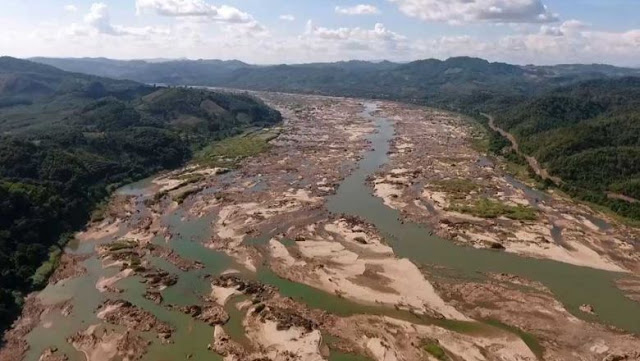
Vị trí được cho là sẽ có thêm một dự án đập thủy điện ở ngoại vi Luang Prabang (Lào). Ảnh: ReutersĐộng thái mới nhất vừa được loan đi sau khi nhiều quốc gia phía hạ nguồn sông Mekong đang trải qua một đợt hạn hán khốc liệt, gây thiệt hại nặng nề kéo dài suốt từ năm ngoái đến nay.
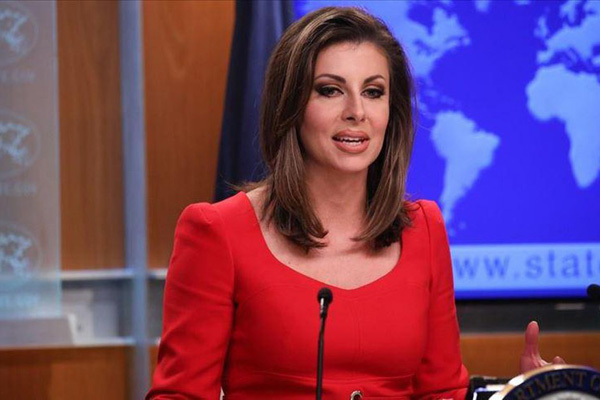
Người phát ngôn Bộ Ngoại giao Mỹ Morgan Ortagus nêu rõ: “Chúng tôi quan ngại sâu sắc trước thông tin về việc Trung Quốc đâm chìm 1 tàu cá của Việt Nam ở gần quần đảo Hoàng Sa”.
Bà Morgan Ortagus nhấn mạnh, đây là vụ việc mới nhất trong một loạt hành động của Trung Quốc nhằm khẳng định những tuyên bố hàng hải trái phép và gây thiệt hại cho các nước láng giềng Đông Nam Á ở Biển Đông.
Southeast Asia’s most critical river is entering uncharted waters Stefan Lovren – Bình Yên Đông lược dịch
National Geographic – January 31, 2020
Không ảnh, chụp ngày 28 tháng 10 năm 2019, cho thấy khúc sông Mekong dài 185 miles từ đập Xayaburi ở Lào. Đáy sông khô cạn ở hạ lưu đập đã khuấy động sự phản đối của các nhà bảo tồn và dân làng dựa vào hệ sinh thái đa dạng để sinh sống.
Dòng sông nầy đã nuôi dưỡng nhiều nền văn minh hàng ngàn năm. Ngày nay, nó đang khô cạn, bị tấn công bởi việc xây đập, đánh bắt bừa bãi, và khai thác cát.
PHNOM PENH, CAMBODIA – Nhiều tháng trước, một con cá heo Irrawaddy hiếm hoi bị vướng vào lưới và mất phương hướng ở rất xa nơi cư trú thông thường ở đông bắc Cambodia trên sông Mekong đang vùng vẫy ở Đông Nam Á (ĐNA). Các nhà bảo tồn đang tranh đua để đưa ra một kế hoạch giúp cho loài cá sắp tuyệt chủng trước khi quá trễ, nhưng thời gian không còn bao lâu. Tiếp tục đọc “Con sông quan trọng nhất Đông Nam Á đang đi vào vùng nước lạ”→
Source: Harvard John A. Paulson School of Engineering and Applied Sciences
Summary:If China is to meet and exceed its Paris Climate Agreement goal by 2030, it’s going to need to find a way to increase its wind capacity. Researchers found that offshore wind could be a big part of the solution.
Under the Paris Climate Agreement, China committed to rely on renewable resources for 20 percent of its energy needs by 2030. Currently, the country is on track to double that commitment, aiming to hit 40 percent by the next decade. Wind power is critical to achieving that goal. Over the past 20 years, China’s wind power capacity has exploded from 0.3 gigawatts to 161 gigawatts.
But, in recent years, that growth has slowed and the hopes for China’s wind-powered future have dampened.
People attend a vigil to mourn for doctor Li Wenliang on February 7, 2020 in Hong Kong, China. Photo by Anthony Kwan/Getty Images
An open letter signed by 10 Wuhan professors argues that the Chinese government needs to enforce its own freedom of speech articles in the Constitution of the People’s Republic of China.
The letter follows the death of Li Wenliang, a Wuhan doctor who was reprimanded by police for “making false comments” after warning people about the Wuhan coronavirus – which he later contracted.
The open letter, along with another letter signed by academics around China, demands that the government apologize to and compensate coronavirus whistleblowers and make Li a national martyr.
While China can mobilize a huge national response to the outbreak, its response to the crisis is also a lesson in how the country’s political weak points can carry grave consequences for world health.
Health care workers at the Wuhan Red Cross Hospital on Saturday.Credit…Hector Retamal/Agence France-Presse — Getty Image
Published Jan. 25, 2020Updated Jan. 26, 2020, 12:45 a.m. ET
It was the initial news reports that first suggested China’s political system might be getting in the way of its ability to confront the coronavirus outbreak.
pv-magazine.com
The Chinese government will extend duties on U.S. and South Korean polysilicon for another five years from today despite committing to buy $200 billion more American goods and services in the trade deal signed on Wednesday. Poly manufacturer REC Silicon says it expects polysilicon to form part of that trade agreement.
China’s latest trade tariff announcement appears to be at odds with the deal just signed with the U.S.
Image: Nathan Hughes Hamilton/Flickr
China’s Ministry of Commerce (MOFCOM) has announced the anti-dumping duties applied to U.S. and South Korean-made polysilicon will remain in place for another five years from today.
Norwegian poly producer REC Silicon, which manufactures almost all of its current output of the solar module raw material in the U.S., said this morning the extension of duties announced yesterday was expected as part of a pre-planned tariff review independent of the trade deal thrashed out by President Trump and China on Wednesday. Tiếp tục đọc “China holds firm on strategy to build self-sufficient domestic polysilicon industry”→
The oldest Confucius Institute in the United States is closing. In a letter to students and faculty and staff members at the University of Maryland at College Park, President Wallace D. Loh said the 15-year-old Chinese language and cultural center would shut down because of 2018 legislation that made colleges with the institutes, which are supported by the Chinese government, ineligible for certain Defense Department funding. Maryland is among nearly two dozen American colleges to close their Confucius Institutes in the last two years. And it’s the second in little more than a week —– the University of Missouri also will shutter its center. Colleges have faced pressure over Confucius Institutes from lawmakers who say the agreements lack transparency and amount to Chinese-government propaganda on American campuses. In his letter, Loh said Maryland remained committed to education and scholarship in Chinese language and culture.
Tuần này, truyền thông loan tin rằng Campuchia có thể đã bí mật ký thỏa thuận cho phép Trung Quốc sử dụng căn cứ hải quân Ream, đồng thời một dự án quy mô khác ở Dara Sakor cũng bị nghi ngờ là nhằm phục vụ mục đích quân sự.
Trên truyền thông xã hội Campuchia gần đây xôn xao đồn đoán khi thấy sự xuất hiện của một số bộ đội Việt Nam trên khu vực biên giới. Điều đó đã khiến Thủ tướng Hun Sen phải lên tiếng trấn an.
Having envisioned an 18-month transition to grid parity solar in the world’s biggest PV marketplace, developers of large scale projects are now reportedly being told the subsidy taps will be switched off at the end of December.
The latest subsidy decision from Beijing could come as a shock to the utility scale solar sector.
Reuters has reported the Chinese Ministry of Finance has confirmed no subsidies will be made available for large scale solar projects next year.
A report published on the news wire yesterday claimed ministry officials had said the RMB3 billion ($427 million) subsidy pile set aside for solar this year will be cut to RMB2.63 billion next year, and will only be available to small scale and poverty alleviation projects.
If accurate, that would mark a significant step back from the 18-month transition period envisaged for the switch to grid parity solar in the consultation draft of the Work plan for the construction of subsidized (grid parity) projects for wind and solar PV document which emerged from talks between renewables industry insiders and government officials in Beijing in April. Tiếp tục đọc “China reportedly ready to end large scale PV subsidies this year”→
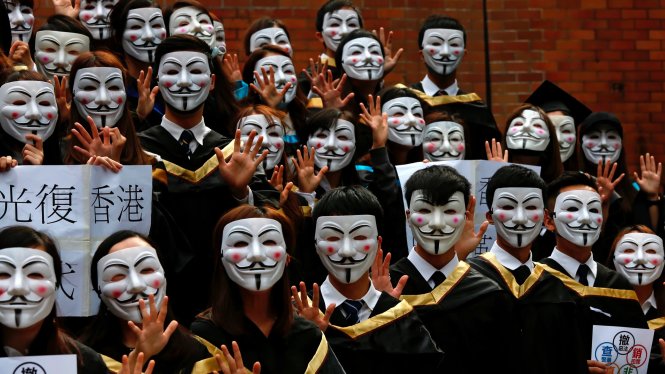
TTCT – Trong khi tám đại học lớn được chính quyền tài trợ ở Hong Kong có lịch sử đấu tranh chính trị đã lâu đời, những cuộc biểu tình do sinh viên khởi phát và đóng vai trò trụ cột khắp vùng lãnh thổ này suốt 5 tháng qua là chưa có tiền lệ. Những trận chiến âm thầm khác diễn ra ngay trong khuôn viên xanh mát của các trường đại học cũng vậy.
Sinh viên Đại học Bách khoa Hong Kong đeo mặt nạ trong lễ tốt nghiệp. Ảnh: Nikkei