Hong Kong in the Greater Bay Area: Can Pearl of the Orient regain its shine?

CNA Insider – 2-7-2024

Slowing growth, weak investor confidence and brain drain – Hong Kong, the Pearl of the Orient, may be losing its lustre. Could its future lie in the Greater Bay Area, an economic integration project joining the Special Administrative Region to Guangdong and Macau?

Over the next decade, greater transport, administrative and economic links will tie Hong Kong inextricably to Southern China. But will Hong Kong find opportunity or obsolescence in the Greater Bay Area? And with around two decades till the end of “One Country Two Systems” in 2047, is the Greater Bay Area a way to assimilate Hong Kong with the Mainland?

Tiếp tục đọc “Hong Kong in the Greater Bay Area: Can Pearl of the Orient regain its shine?”

Hong Kong’s teachers are leaving. Is the National Security Law behind it? 

CNA Insider – 26-9-2023

Teachers in Hong Kong are leaving in record numbers. About 6,550 resigned or retired in the last academic year, almost twice the average prior to 2021. One possible reason? The National Security Law. Changes to the curriculum and limits on what can be discussed have left liberal-minded educators feeling stifled. Teachers are also worried that they risk censure should class discussions run afoul of the law. At the same time, thousands of students have also dropped out of Hong Kong schools, as the emigration wave continues. Some classrooms now sit empty. How will Hong Kong schools emerge from this shake up, and what will they look like after?

00:00 Introduction
01:35 Hong Kong teachers are quitting in record numbers
05:06 The National Security Law and how it affected education
14:47 Teachers under pressure
19:42 Recent changes to school curriculum
24:01 Heightened scrutiny in classrooms
27:04 The emigration wave and falling student enrolment
38:15 More mainland students entering Hong Kong
42:49 Future of Hong Kong’s education sector

Asia Stream: the struggle for Hong Kong’s identity

25 years after taking control of the territory, how is Beijing trying to change Hong Kong — and how is Hong Kong pushing back?

Nikkei staff writersJuly 2, 2022 07:23 JST

Nikkei

NEW YORK — Welcome to Nikkei Asia’s podcast: Asia Stream.

Every other week, Asia Stream tracks and analyzes the Indo-Pacific with a mix of expert interviews and original reporting by our correspondents from across the globe.

Listen on: Apple Podcasts | Spotify | YouTube

This episode, we take measure of the economic impact of China’s stringent laws in Hong Kong and then take a deep dive into the social and political costs of Beijing’s crackdown on the special administrative region.

Tiếp tục đọc “Asia Stream: the struggle for Hong Kong’s identity”

Asia Stream: A tale of three cities

Asia is home to some of the world’s largest and most dynamic cities. Why do some of them fail?

Nikkei staff writersFebruary 18, 2022 11:59 JST

asia.nikkei.com

NEW YORK — Welcome to Nikkei Asia’s podcast: Asia Stream.

Every week, Asia Stream tracks and analyzes the Indo-Pacific with a mix of interviews and original reporting by our correspondents from across the globe.

New episodes are recorded weekly and available on Apple PodcastsSpotify and all other major platforms, and on our YouTube channel.

LISTEN HERE

Tiếp tục đọc “Asia Stream: A tale of three cities”

Cơn thịnh nộ cuối cùng của ông Trump

  • DANH ĐỨC
  • 11.12.2020, 12:00

TTCT – “Vui sướng nhất thế giới hiện giờ là các lãnh đạo Trung Quốc…” – Phải chăng phát biểu của Tổng thống Donald Trump phản ánh quan hệ giữa ông và Bắc Kinh vào cuối trào? Phải chăng cơn lốc trừng phạt Trung Quốc vừa rồi của ông chỉ là những nước đi cuối trước khi dẹp bàn cờ?

Cơn thịnh nộ cuối cùng của ông Trump
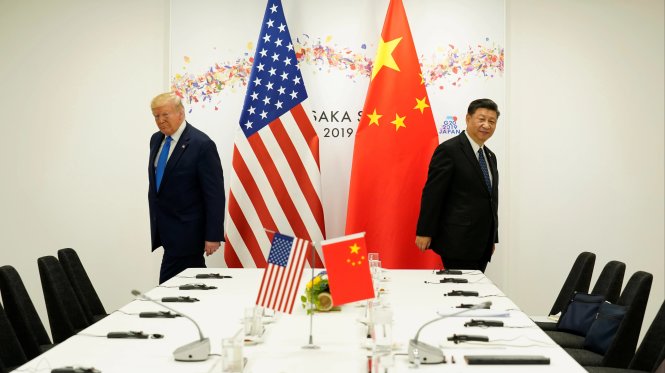
Ông Tập Cận Bình (phải) và ông Donald Trump ở hội nghị G20 Osaka, Nhật Bản 2019. Ảnh: Reuters

Song, có lẽ chính ông Trump cũng là một trong những nhà lãnh đạo “sung sướng” nhất hiện nay. Thứ bảy tuần rồi 5-12 tại Valdosta, bang Georgia, ông đi gặp các fan cứng trong một cuộc mittinh mà báo chí gọi là “cuộc tập hợp quần chúng đầu tiên kể từ bầu cử hôm 3-11”. 

Số là ông đi vận động tranh cử cho hai thượng nghị sĩ cùng Đảng Cộng hòa trong cuộc bầu cử ở bang này sắp tới, mà nếu thắng, đảng của ông sẽ tiếp tục giữ được ưu thế ở Thượng viện. Trong khung cảnh toàn “người nhà” đó, ông có “bông đùa” chút cũng chẳng sao.

Vấn đề là ông không chỉ nói tới các nhà lãnh đạo Trung Quốc, mà còn nêu danh cả lãnh đạo Iran, cho thấy thiệt ra ông đang rất nghiêm chỉnh và chuyện trừng phạt Trung Quốc của ông không hề là do tùy hứng cá nhân.

Tất nhiên, cùng với Tổng thống Trump, còn có Ngoại trưởng Mike Pompeo. Ông Pompeo là ngoại trưởng cuối cùng của trào Trump và có thái độ gay gắt với Trung Quốc hơn nhiều so với những người tiền nhiệm. Tiếp tục đọc “Cơn thịnh nộ cuối cùng của ông Trump”

Hong Kong’s fate is the future of globalism

A pro-democracy lawmaker in Hong Kong is arrested by police during a protest

Andrew Wan, a pro-democracy legislator, is arrested during a protest in Hong Kong, July 1. Photo: Yat Kai Yeung/NurPhoto via Getty Images

A new security law in Hong Kong is the latest blow to a globalist vision of the free movement of people, ideas and capital. Tiếp tục đọc “Hong Kong’s fate is the future of globalism”

US lawmakers seek more action on Hong Kong after arrests

Hong Kong protesters
Protesters chant slogans during a rally against a new national security law in Hong Kong on the anniversary of the city’s handover from Britain. (AFP/Anthony WALLACE)

WASHINGTON, DC: US lawmakers on Wednesday (Jul 1) urged further action against China over its imposition of a security law in Hong Kong, where police broke up defiant protests. Tiếp tục đọc “US lawmakers seek more action on Hong Kong after arrests”

Hong Kong police arrest more than 300 protesting China’s ‘birthday gift’ of security law

Asiachannel

Hong Kong police fire water cannon at crowds protesting new security law
A woman reacts after she was hit with pepper spray deployed by police as they cleared a street with protesters rallying against a new national security law in Hong Kong on Jul 1, 2020. (Photo: AFP/DALE DE LA REY)

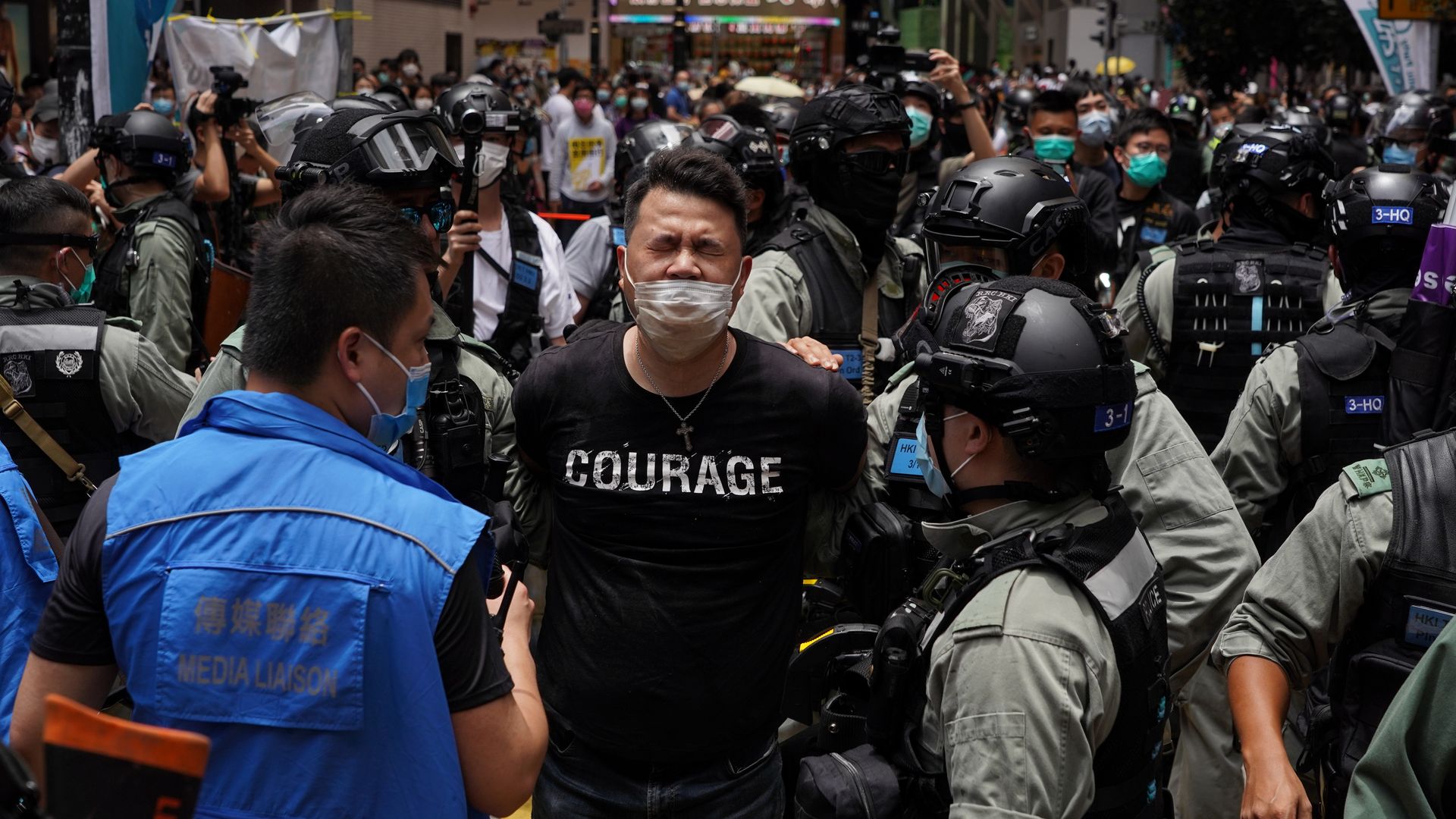
BEIJING: Hong Kong police fired water cannon and tear gas and arrested more than 300 people on Wednesday (Jul 1) as protesters took to the streets in defiance of a new security law. Tiếp tục đọc “Hong Kong police arrest more than 300 protesting China’s ‘birthday gift’ of security law”

Hong Kong to be governed by mysterious law secretly passed by China

By CNN


China’s new national security legislation for Hong Kong was written and passed behind closed doors, without the consultation of the city’s local government or legislature.
It reportedly came into force on June 30, potentially rewriting the city’s legal system – despite the fact the overwhelming majority of residents have no idea of what precisely it will entail.
According to reports in Communist Party-controlled media, the law is expected to criminalise offenses such as secession, subversion against the central Chinese government, terrorism, and colluding with foreign forces.
Riot police stop and search people during a protest against the national security law.
Riot police stop and search people during a protest against the national security law. (Getty)
But hours after its reported passage, details remain vague, capping a particularly opaque process that has left analysts and activists guessing.
Speaking at a weekly press conference this morning, the city’s leader Carrie Lam initially refused to answer questions about the law, saying it was “inappropriate for me to comment.”

Tiếp tục đọc “Hong Kong to be governed by mysterious law secretly passed by China”

European leaders condemn China over ‘deplorable’ Hong Kong security bill

Beijing move to stamp out anti-government protests poses diplomatic test for UK

The European Commission president, Ursula von der Leyen, against a backdrop of the EU and Chinese flags
 The European Commission president, Ursula von der Leyen, said EU member states were discussing possible measures in response to China’s move with international partners. Photograph: Anadolu Agency/Getty

European leaders condemned China’s “deplorable decision” to press ahead with its new security laws in Hong Kong, warning that it will speed up the reassessment of China as a trustworthy economic partner.

The European Union council president, Charles Michel, said “we deplore the decision” and the head of the European Commission, Ursula von der Leyen, said the bloc was now discussing with international partners on any possible measures in response.

The legislaton, passed by lawmakers in Beijing on Tuesday, is aimed at stamping out anti-government protests in Hong Kong. It will criminalise secession, subversion, terrorism and collusion with foreign forces.

The UK foreign secretary, Dominic Raab, facing the greatest test of British diplomatic clout since the Salisbury poisoning in March 2018, described the imposition of the new law as a grave step.

Despite the urging of the international community, Beijing has chosen not to step back from imposing this legislation. China has ignored its international obligations regarding Hong Kong. This is a grave step, which is deeply troubling.

He told MPs his offer to provide visas, and paths to citizenship, to millions of Hong Kong British National Overseas passport holders stood. “We urgently need to see the full legislation, and will use that to determine whether there has been a breach of the Joint Declaration and what further action the UK will take,” he added.

A further statement to MPs on Wednesday is possible if the bill has been translated and analysed by the foreign office by then.

The UK can try to punish China collectively through sanctions, or through selective sanctions against named individuals, but few expect that they will persuade China to step back.

Donald Trump, already on a pre-election collision course with China, has previously said the US will remove Hong Kong’s favoured trading status. The US secretary of state, Mike Pompeo, said on Monday the US would bar defence exports to Hong Kong and would soon require licenses for the sale of items to Hong Kong that had both civilian and military uses.

China has responded by saying it would impose a visa ban on US citizens seeking to interfere with Hong Kong’s security laws.

Pompeo believes he is also making headway in persuading the EU to take a more sceptical approach to Chinese investment, but the EU foreign affairs chief, Josep Borrell, on Monday said the EU had to retain the right to view China through its own lenses.

An EU-China Summit set for September has been postponed due to the coronavirus pandemic, but the German foreign minister, Heiko Maas, said it needed to be quickly rescheduled and it was essential that the EU spoke with one voice on China.

By leaving the EU, the UK has less ability to shape the bloc’s sanctions response, but the UK will welcome the signs of Europe-US convergence.

The authority of the US to condemn human rights abuses in Hong Kong has been diminished by revelations last week in the book by the former US national security adviser John Bolton that Trump repeatedly refused to condemn China, believing its cooperation was critical to his re-election chances.

Norbert Röttgen, a senior German CDU member, condemned “the complete lack of transparency” in the new Hong Kong law – which has not been published in full – and said 1 July marked the day “one country, two systems” no longer exists.

Lord Patten, the last British governor of Hong Kong, said: “This decision, which rides roughshod over Hong Kong’s elected legislature, marks the end of ‘one country, two systems’. It is a flagrant breach of the Sino-British joint declaration – a treaty lodged at the United Nations – and Hong Kong’s mini constitution, the Basic Law.

“It will throttle the city’s rule of law, presenting a major confrontation between what passes for law in China and the common law system in Hong Kong, which has allowed the city to function as one of most important financial hubs in Asia. The separation of powers is in danger of being shattered and the courts politicised by the provision that the chief executive will herself choose the judges for national security cases.”

Benedict Rogers, a co-founder of Hong Kong Watch, called for the appointment of a UN special envoy/rapporteur on Hong Kong, the passing of targeted sanctions against the perpetrators of human rights abuses, the formation of an international contact group to monitor the situation on the ground, and the coordination of an international life-boat policy “to help Hongkongers in need of a lifeline”.

Japan’s ambassador to the EU, Kazuo Kodama, told Euractiv news: “There was an important deal reached between the UK and China […] We understood that Hong Kong’s way of life would be maintained, liberalism and independence of judiciary would be maintained, as well as freedom of speech and press, as these values are protected in the US, Europe and Japan.”

A number of countries are experiencing strained relations with China. Australia, in a deepening security and trade dispute with China, has announced plans for a $A1.35bn (£755m) boost to its cyber security budget, including the recruitment of 500 cyber spies.

India, traditionally a non-aligned country but already at odds with China over deadly clashes on the eastern Ladakh border, on Monday announced it was banning more than 50 Chinese apps, including Bytedance’s TikTok and Tencent’s WeChat. China says it was concerned by the move and seeking details.

France is seeking stronger relations with India, and more recently Russia, to try to build an alliance of countries opposed to China. Other countries would prefer any anti-Chinese alliance to comprise democracies spreading from Europe, the US and Asia, but without Putin.

The test for China will come if it finds that by locking itself into so many disputes with the bulk of its major trade partners, moves such as clamping down on protest in Hong Kong end up backfiring by damaging the Chinese economy, and pushing previously neutral countries into the American orbit.

Người Hong Kong vật lộn giữ ‘danh tính’ sau 20 năm trao trả

VNE – Thứ bảy, 1/7/2017, 15:52

Khách sạn Hồng Kông, Hồng Kông: Giá rẻ, nhiều ưu đãi

Năm 97 rồng đổi màu

Năm 1997, Hoàn Châu Cách Cách bấm máy.

Một năm sau, đài ATV – ông lớn thứ hai của Hong Kong sau TVB – như phần lớn đài truyền hình khác của châu Á giai đoạn đó, nhập bộ phim này về. Năm 1999, lần đầu tiên trong lịch sử, ATV đánh bại TVB về số lượt người xem trong giờ vàng với cuộc phiêu lưu trong hoàng cung của Tiểu Yến Tử và Hạ Tử Vy. Tập cuối của phần 2 đạt rating 58%.

Đó là dấu hiệu cho một thời đại khác trong làng giải trí Hong Kong. Quyền lực gần như tuyệt đối của TVB bị đe dọa. Bởi các thế lực mới, từ Đài Loan và Trung Quốc. Tiếp tục đọc “Người Hong Kong vật lộn giữ ‘danh tính’ sau 20 năm trao trả”

Hong Kong: Học đường biến thành chiến trường và cội rễ sâu xa

  • LOAN PHƯƠNG, 23.11.2019, 08:00

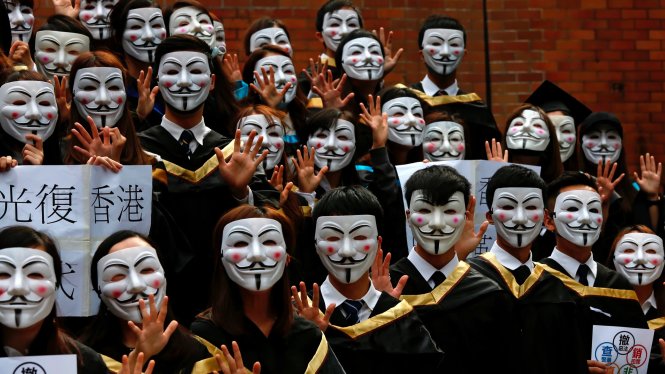
TTCT – Trong khi tám đại học lớn được chính quyền tài trợ ở Hong Kong có lịch sử đấu tranh chính trị đã lâu đời, những cuộc biểu tình do sinh viên khởi phát và đóng vai trò trụ cột khắp vùng lãnh thổ này suốt 5 tháng qua là chưa có tiền lệ. Những trận chiến âm thầm khác diễn ra ngay trong khuôn viên xanh mát của các trường đại học cũng vậy.

Hong Kong: Học đường biến thành chiến trường và cội rễ sâu xa
Sinh viên Đại học Bách khoa Hong Kong đeo mặt nạ trong lễ tốt nghiệp. Ảnh: Nikkei

Tiếp tục đọc “Hong Kong: Học đường biến thành chiến trường và cội rễ sâu xa”

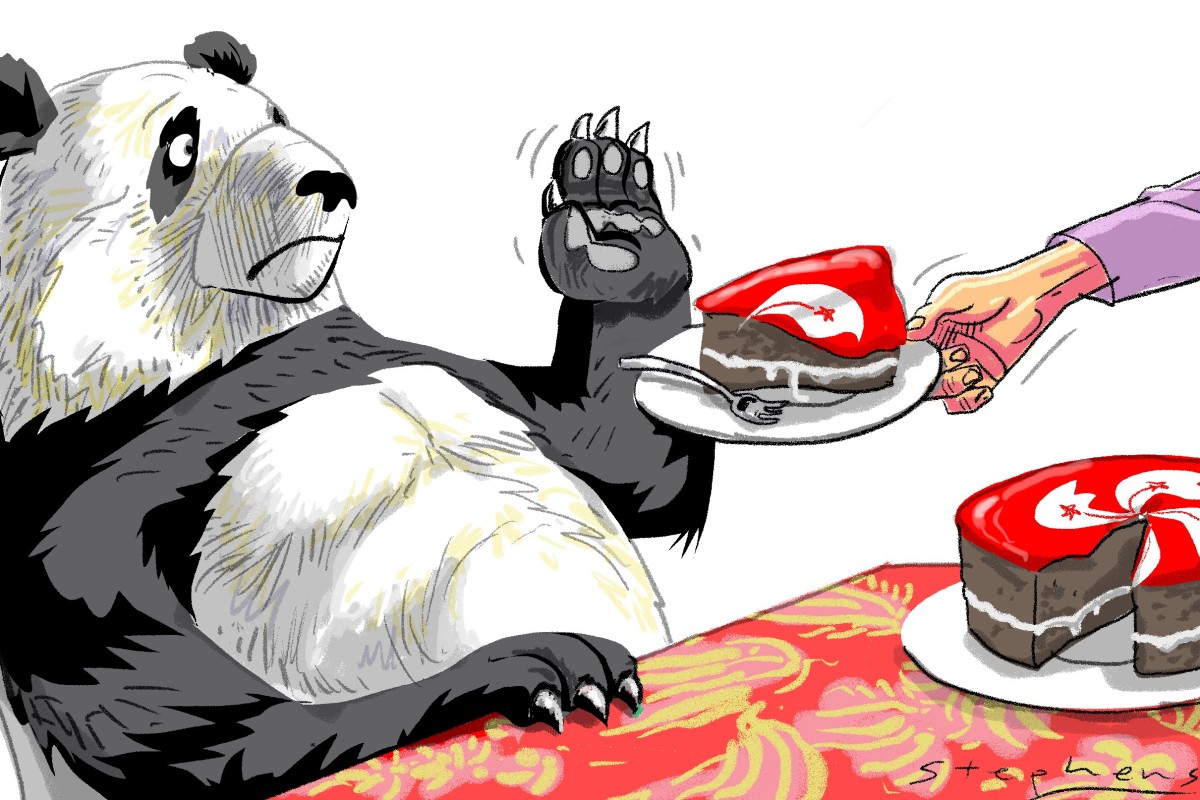
Hong Kong’s protests present Beijing with a no-win situation. Will it choose the path where it loses the least?

scmp.com 

  • Being dependent on international goodwill to maintain trade, it’s in Beijing’s interests to handle Hong Kong with patience. But with leaders stoking nationalism, they may be tempted to deal with protesters decisively, to bolster legitimacy at home