Mekong-Japan partnership strategy agreed at Tokyo summit

THE ASAHI SHIMBUN – October 9, 2018 at 15:45 JST

Photo/IllutrationJapanese Prime Minister Shinzo Abe, center, speaks at the 10th Mekong-Japan Summit Meeting held in the State Guest House in Tokyo’s Moto-Akasaka district on Oct. 9. (Pool)

Five Southeast Asian leaders joined Prime Minister Shinzo Abe at the State Guest House in Tokyo on Oct. 9 to adopt an agreement to strengthen ties between their nations and Japan.

The agreement, titled “Tokyo Strategy 2018,” was adopted by Cambodia, Laos, Myanmar, Thailand and Vietnam, as well as Japan, at the 10th Mekong-Japan Summit Meeting.

The document positions relations between Japan and the Mekong River region as a “strategic partnership,” and it describes “strengthening connectivity,” “raising human resources” and “environmental protection” as its pillars, with the aim of developing high-quality infrastructure. Tiếp tục đọc “Mekong-Japan partnership strategy agreed at Tokyo summit”
Hợp tác sông Mekong: Hãy xới to vấn đề

TVNTheo như châm ngôn của Eisenhower về việc xới tung vấn đề để giải quyết nó, việc mở rộng hợp tác vượt quá khuôn khổ nguồn nước tiến tới năng lượng và các lĩnh vực tài nguyên khác sẽ mở ra những cơ hội mới cho hợp tác khu vực trên cơ sở có qua có lại và hiệp lực. 

Khi được hỏi về thành công của mình với tư cách là một người lính và một chính trị gia, Tổng thống Mỹ Eisenhower đã trả lời: Bất cứ lúc nào tôi gặp phải vấn đề không thể giải quyết, tôi luôn luôn xới to nó lên. Tôi không thể giải quyết nó bằng cách cố gắng ép nó nhỏ đi, nhưng nếu tôi làm cho nó đủ lớn, tôi có thể nhìn thấy bản phác họa của giải pháp”.

Cách tiếp cận của Eisenhower có thể tương tự với tình hình của sông Mekong ngày nay.

Thủy điện,Mekong,Đồng bằng sông Cửu Long,Lào,Campuchia
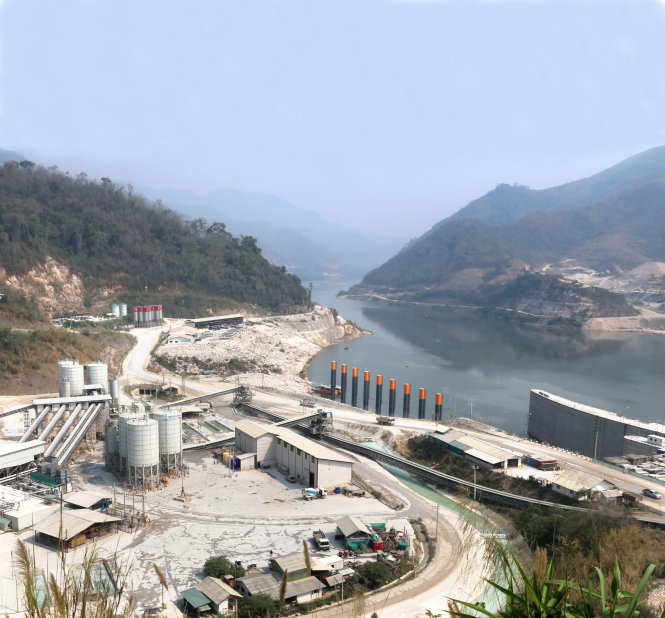
Hình ảnh công trình xây dựng đập thủy điện Xayaburi của Lào trong quá trình gấp rút hoàn thành (tháng 4/2016). Ảnh: TTO

Tiếp tục đọc “Hợp tác sông Mekong: Hãy xới to vấn đề”

Building tough, resilient towns in the Greater Mekong Subregion

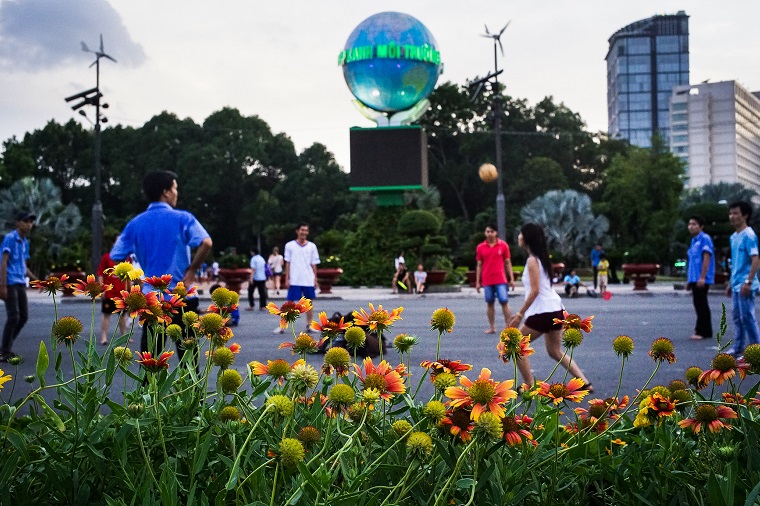
Building Tough, Resilient Towns in the Greater Mekong SubregionParks and other green spaces provide both health and environmental benefits, making them a key element in making towns and cities more livable and climate-resilient. Photo: ADB.
greatermekong – Vulnerable towns in Cambodia, Lao People’s Democratic Republic, and Viet Nam are using “green infrastructure” to stave off the impacts of climate change.

The towns of Battambang, Kaysone Phomvihane, and Dong Ha are very different but they have a few things in common. Each is threatened by flooding that stands to get worse in the face of climate change, and each is undergoing a climate resilience makeover to address the problem.

Battambang, Cambodia has a large flood- and drought-prone watershed area and sits near the Tonle Sap Lake. Kaysone Phomvihane in Lao People’s Democratic Republic faces frequent extreme flooding along the Mekong River. Dong Ha in Viet Nam is a typhoon-prone coastline city threatened by sea level rise, storm surge, and flash flooding.

These communities face long-term harm because of the diversion of their scarce resources from social services and other activities to emergency responses to floods and other climate-related disasters. Tiếp tục đọc “Building tough, resilient towns in the Greater Mekong Subregion”

The Greater Mekong Subregion: Rural no more

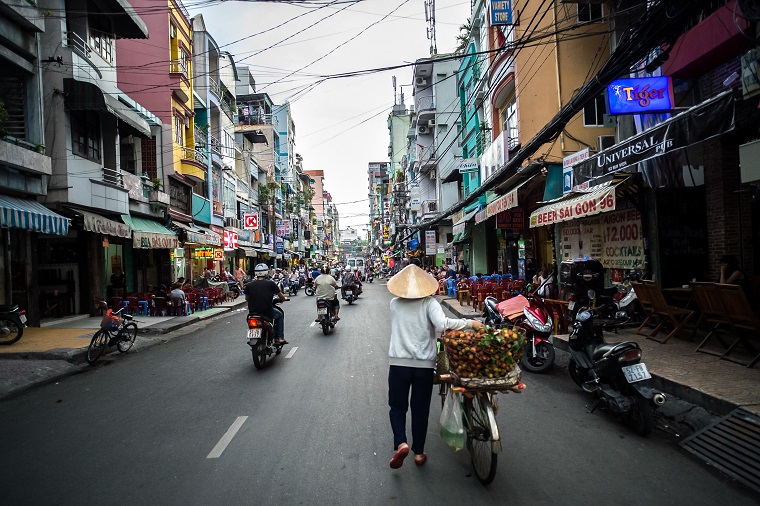
By 2030, more than 40% of the population in the Greater Mekong Subregion will be living in cities. Photo: ADB.By 2030, more than 40% of the population in the Greater Mekong Subregion will be living in cities. Photo: ADB.
greatermekong – The subregion is one of the least urbanized areas in the world, but its cities are growing and their economic impact is being felt. 

Urbanization levels in the Greater Mekong Subregion are low, ranging from 19.5% in Cambodia to 44.2% in Thailand. However, in all GMS countries, urban areas account for a much larger percentage of the gross domestic product (GDP)—at least half in most countries and about 75% in Thailand—than the share of its national populations.

Urbanization growth rates in the subregion range from 4.9% annually in Yunnan Province, People’s Republic of China (PRC) —six times the provincial population growth rate—to a low of 2.6% annually in Myanmar—1.7 times the national population growth rate. Tiếp tục đọc “The Greater Mekong Subregion: Rural no more”

$66b invested in Greater Mekong Sub-region: ADB official

VNN – Last update 14:39 | 14/03/2018

The Greater Mekong, including Vietnam, is expected to have a colossal US$66 billion poured in to strengthen regional economic co-operation in the next five years, said an Asian Development Bank (ADB) official on Tuesday.

$66b invested in Greater Mekong Sub-region: ADB official, vietnam economy, business news, vn news, vietnamnet bridge, english news, Vietnam news, news Vietnam, vietnamnet news, vn news, Vietnam net news, Vietnam latest news, Vietnam breaking news

Director of ADB’s division of regional co-operation and operations coordination in Southeast Asia Alfredo Perdiguero.

The money was upped by $2 billion compared to what ministers of the six Greater Mekong Sub-region (GMS) countries – Myanmar, Laos, Viet Nam, Cambodia, Thailand and China – agreed to in the action plan framework for 2018-2022 late last year. Tiếp tục đọc “$66b invested in Greater Mekong Sub-region: ADB official”

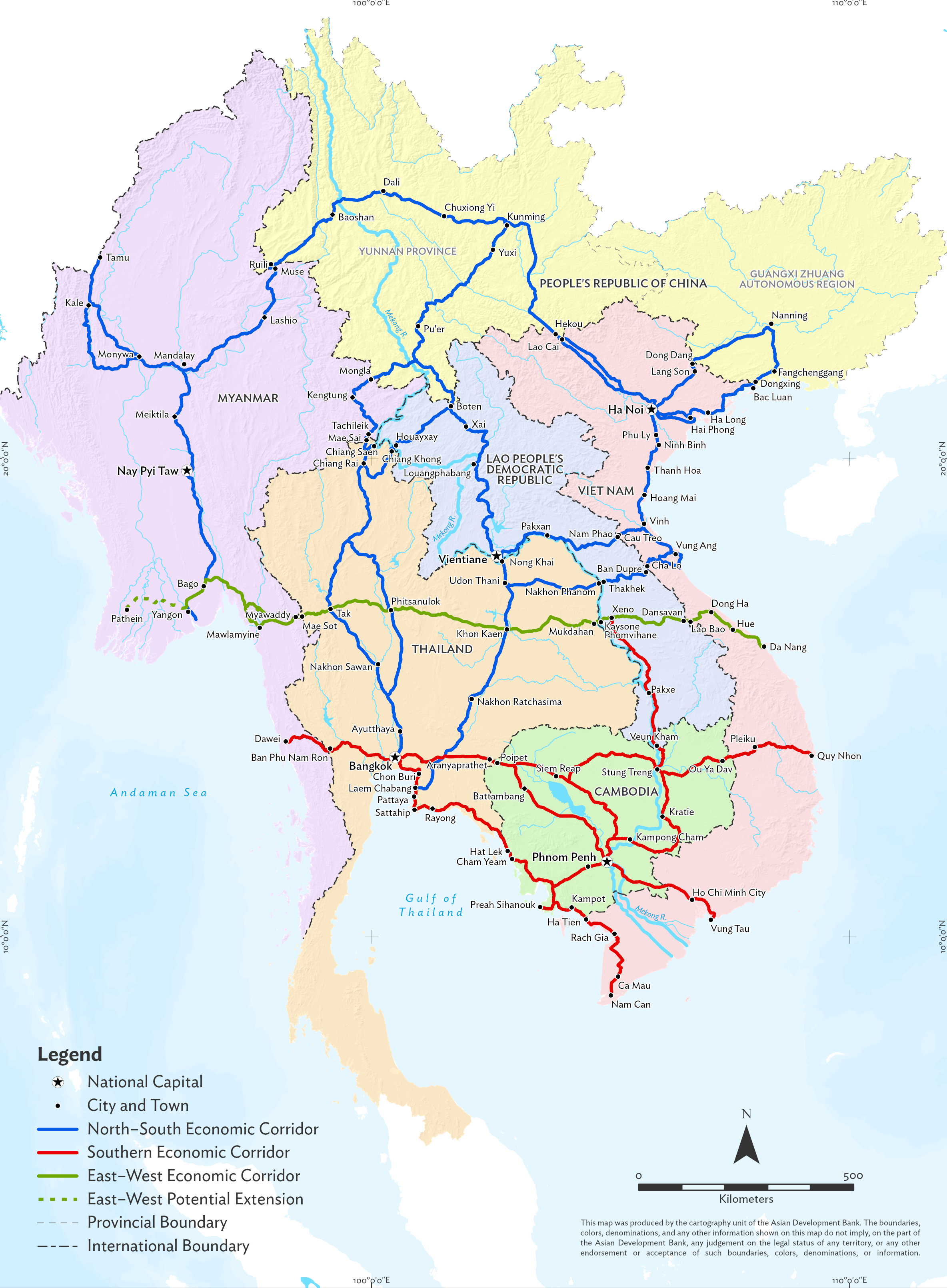
Economic Corridors in the Greater Mekong Subregion

greatermekongEconomic corridors are areas, usually along major roadways, that host a variety of economic and social activities. This includes factories, tourism, trade, environmental protection activities and other aspects of the economy and social development of an area.

An economic corridor is much more complex than a mere road connecting two cities. It involves not only the development of infrastructure but also the crafting of laws and regulations that make it easier to do business, access markets, and conduct other activities that support trade and development in a comprehensive manner.

Tiếp tục đọc “Economic Corridors in the Greater Mekong Subregion”

Mở rộng vận tải xuyên biên giới Tiểu vùng sông Mekong

10:57 SA, 16/03/2018

(Chinhphu.vn) – Bản ghi nhớ “Thu hoạch sớm” được các nước Tiểu vùng Mekong mở rộng (Việt Nam, Campuchia, Trung Quốc, Lào, Thái Lan và Myanmar) cho phép triển khai có hiệu quả Giấy phép vận tải đường bộ GMS và Sổ theo dõi tạm nhập cho xe thương mại.


Các nước thành viên GMS ký Bản ghi nhớ thực hiện “Thu hoạch sớm” Hiệp định GMS. Ảnh: VGP/Phan Trang

Hội nghị Ủy ban Hỗn hợp lần thứ 6 thực hiện Hiệp định Tạo thuận lợi vận chuyển người và hàng hóa qua lại biên giới 6 nước Tiểu vùng Mekong mở rộng (Hiệp định GMS-CBTA) cấp Bộ trưởng diễn ra chiều qua (15/3) đã thông qua và ký kết Bản ghi nhớ thực hiện “Thu hoạch sớm” và chính thức thực hiện từ tháng 6/2018. Tiếp tục đọc “Mở rộng vận tải xuyên biên giới Tiểu vùng sông Mekong”

Đồng bằng Sông Cửu Long: Những thách thức hiện nay và ngày mai

TS04/04/2016 11:14 Nguyễn Ngọc Trân

Hiện nay và trong thời gian tới, ĐBSCL phải đương đầu với ít nhất hai thách thức toàn cầu, một thách thức khu vực và một thách thức từ chính sự khai thác đồng bằng. Toàn cầu, đó là biến đổi khí hậu, nước biển dâng, và toàn cầu hóa kinh tế, hội nhập quốc tế. Các thách thức đó không tác động riêng lẻ mà cùng nhau và liên hoàn tác động, nhân lên hậu quả của các tác hại là thách thức tổng hợp đối với sự phát triển bền vững của đồng bằng.

Đồng bằng sông Cửu Long (ĐBSCL) nằm ở ngoài cùng của châu thổ sông Mekong giáp với biển, được hình thành từ khoảng 6000 năm nay, từ trầm tích mà sông Mekong tải ra biển cộng với quá trình biển lùi. Nước và trầm tích là hai yếu tố thuộc về bản chất của đồng bằng.
Tiếp tục đọc “Đồng bằng Sông Cửu Long: Những thách thức hiện nay và ngày mai”

Field Notes — Tonle Sap Lake

stimson_logo_blue 3

Announcement

Field Notes — Tonle Sap Lake

Stimson Southeast Asia program director Brian Eyler recently visited Plov Tuok, a community of 800 floating homes atop of Cambodia’s Tonle Sap Lake — the largest lake in Southeast Asia and the world’s largest inland fishery. The visit was facilitated by the International Union for the Conservation of Nature (IUCN), and Brian witnessed first-hand the progress of fish conversation zones that were established by local villagers and IUCN in 2014.

Click to read his Field Notes.

Eluding Censors, a Magazine Covers Southeast Asia’s Literary Scene

Minh Bui Jones looking at a previous issue of his magazine on the terrace of his house in Cambodia’s capital, Phnom Penh. CreditOmar Havana for The New York Times

HONG KONG — At Monument Books, a bookstore in Phnom Penh, Cambodia, the magazine racks are stacked with copies of The Economist and other titles from Britain, Australia, France and the United States.

But one top-selling magazine there was founded in Phnom Penh and takes its name — Mekong Review — from the mighty river that runs beside the city’s low-rise downtown.

Tiếp tục đọc “Eluding Censors, a Magazine Covers Southeast Asia’s Literary Scene”

Cứu dòng Mekong: Việt Nam nên tăng cường mua điện từ Lào?

Thủy điện không còn hấp dẫn và cơ hội của dòng Mekong

***

Cứu dòng Mekong: Việt Nam nên tăng cường mua điện từ Lào?

  19:50 | Thứ năm, 07/12/2017

Phát triển dựa vào dòng dòng Mekong, từ vấn đề và bài toán phát triển năng lượng của Lào hiện nay, theo các phân tích, Việt Nam có thể và nên đóng vai trò chủ động hơn nữa trong vấn đề phát triển thủy điện thượng nguồn sông Mekong.


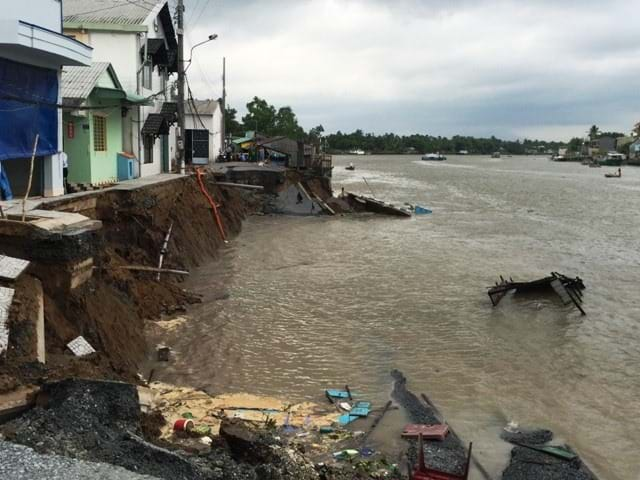
ĐBSCL hình thành là nhờ lượng phù sa của sông Mekong bồi đắp nên trong 6.000 năm qua. Việc xây thủy điện trên các dòng chính sông Mekong là một trong những nguyên nhân khiến ĐBSCL tăng sạt lở, dần “tan rã”. Ảnh: TL  Tiếp tục đọc “Cứu dòng Mekong: Việt Nam nên tăng cường mua điện từ Lào?”

Cambodia top court dissolves main opposition CNRP party

16 November 2017 BBC
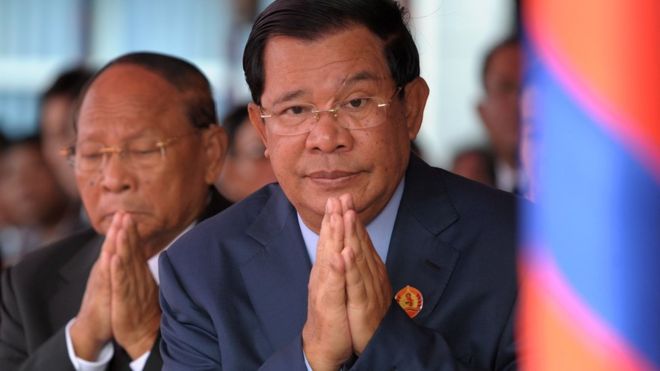
Image caption Prime Minister Hun Sen – who has ruled for 32 years – now has no rivals

Cambodia’s Supreme Court has dissolved the country’s main opposition party, leaving the government with no significant competitor ahead of elections next year.

The Cambodia National Rescue Party (CNRP) is accused of plotting to topple the government – charges it denies, and describes as politically motivated.

More than 100 party members are now banned from politics for five years.

Cambodia’s Prime Minister, Hun Sen, has ruled for 32 years.

The one-time commander in Pol Pot’s Khmer Rouge has long been accused of using the courts and security forces to intimidate opponents and crush dissent, but has for years allowed some measure of political opposition to his Cambodian People’s Party. Tiếp tục đọc “Cambodia top court dissolves main opposition CNRP party”

Kampot literary festival hopes to revive Cambodia’s lost art of storytelling

Guardian

Atmospheric Kampot is hosting the likes of Jung Chang and Madeleine Thien as it seeks to rebuild Cambodia’s literary scene and defend its freedom of speech

Boat on the Kampot river at sunset, Cambodia.
Words by the water … a boat on the Kampot river at sunset, Cambodia. The town’s literary festival begins on 1 November. Photograph: Alamy

Cambodia has long wooed visitors with its ancient temples and Phnom Penh’s chaotic charms, but next week the southern coastal town of Kampot will be in the spotlight as it hosts the Kampot Readers and Writers Festival (running from 1-5 November). Tiếp tục đọc “Kampot literary festival hopes to revive Cambodia’s lost art of storytelling”

Cambodian opposition MPs flee from crackdown

Al Jazeera
About half the country’s opposition members of parliament have left as government vows more arrests over alleged coup.

Opposition leader Kem Sokha was arrested on September 3 over coup allegations [Tang Chhin Sothy/AFP/Getty Images]

Half of Cambodia‘s opposition members of parliament have fled the country in fear of a crackdown by Prime Minister Hun Sen’s government after allegations of a US-backed coup attempt. Tiếp tục đọc “Cambodian opposition MPs flee from crackdown”

Violence can erupt in Cambodia without warning: US warns citizens

channelnewsasia

The US Embassy in Phnom Penh issued a security warning to Americans about possible violence in Cambodia amid the government’s anti-American rhetoric.

 
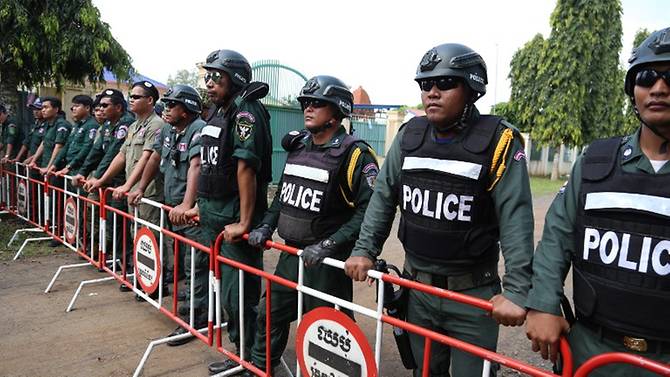
Cambodian police man a barricade outside a prison in Trapaing Phlong in Tbong Khmum province on Sep 11, 2017, where opposition leader Kem Sokha is being held after being detained last week. (Photo: AFP)

PHNOM PENH: The US Embassy in Phnom Penh issued a security warning to its citizens late Wednesday (Sep 13) about rising tensions in Cambodia following the arrest of opposition leader Kem Sokha, the expulsion of an American NGO and anti-American rhetoric by Cambodian officials. Tiếp tục đọc “Violence can erupt in Cambodia without warning: US warns citizens”