Climate threat as grave a risk as nuclear war

Climate threat as grave a risk as nuclear war

Climatenewsnetwork – An international scientific report commissioned by the UK government says the risks of climate change are comparable to those posed by nuclear conflict.

LONDON, 18 July, 2015 – The UK government says that climate change poses risks that demand to be treated as seriously as the threat  of nuclear war.

Scientists from the UK, US, India and China say in a report commissioned by the UK that deciding what to do about climate change depends on the value we put on human life, both now and in years to come. Tiếp tục đọc “Climate threat as grave a risk as nuclear war”

Môi trường là vấn đề tâm linh?

Environmentprotection

Chào các bạn,

Vâng, môi trường là vấn đề tâm linh.

Trong Phật pháp, nhất thiết pháp giai không, tất cả mọi sự đều là một phần của tuyệt đối gọi là Không. Chúng ta và mọi chúng sinh khác và môi trường ta sống đều ở trong Không, như những giọt nước ở cùng nhau trong đại dương Không. Cho nên, khi chúng ta hủy hoại môi trường, chúng ta hủy hoại chính chúng ta và các chúng sinh khác. Tiếp tục đọc “Môi trường là vấn đề tâm linh?”

Are countries legally required to protect their citizens from climate change?

A Dutch court recently ruled that greenhouse gas reduction is a state obligation. Here’s what that could mean for the rest of the world.
Intro imageUrgenda / Chantal Bekker

Tiếp tục đọc “Are countries legally required to protect their citizens from climate change?”

Why is it so incredibly hard to stop deforestation?

Who really holds power over land use decisions? Why are efforts to keep forests standing, such as REDD+ and other initiatives, still so far from altering development trajectories? CIFOR researchers Anne Larson and Ashwin Ravikumar explore.

Eco-business: Who really holds power over land use decisions? Why are efforts to keep forests standing, such as REDD+ and other initiatives, still so far from altering development trajectories?At the recent biennial conference of the International Association for the Study of the Commons (IASC), held in Edmonton, Canada, we presented preliminary findings of research on the politics of multilevel governance in land use change and climate policy. Tiếp tục đọc “Why is it so incredibly hard to stop deforestation?”

Thirsty Yet? Central Asia’s Coming Water Crisis

Thediplomat – “Water is life. Water is health. Water is dignity. Water is a human right,” UN Secretary General Ban Ki-moon said last week at a conference in Tajikistan aimed at assessing the results of the UN’s decade-long “Water for Life” initiative, launched in 2005.

Reportedly 2,000 participants attended the event, hearing more than 70 reports in the Tajik capital, Dushanbe. But, Eurasianet notes, “despite numerous statements of concern, the meeting produced no substantive measures.” Meaningless conferences apparently don’t just happen in Washington, DC. After an entire decade of concerted focus on the issue, Central Asia remains one of the most irresponsible regions when it comes to water.

Tiếp tục đọc “Thirsty Yet? Central Asia’s Coming Water Crisis”

Why we need to rethink ‘maladaptation’

By Lindsey Jones 29 June 2015


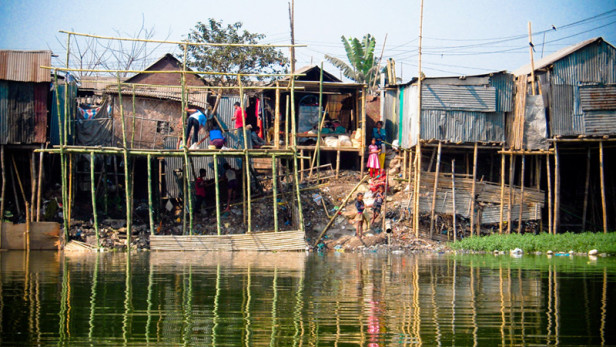
Urban poor communities built stilt houses in Dhaka, Bangladesh, to cope with flooding brought about by climate change. There is concern that actions taken to respond to climate change may end up increasing people’s vulnerability now or in the future. Photo by: Development Planning Unit / University College London / CC BY

Devex – “Maladaptation” is a hot topic in the climate change community. With increasing global attention and finance being poured into adaptation, people are understandably concerned that actions taken to respond to climate change may end up increasing people’s vulnerability now or in the future.

But what does maladaptation actually look like? One example comes from Ho Chi Minh City, Vietnam, where city planners drew up and started to implement many infrastructure projects to help mitigate the risk of flooding. The design of these infrastructural investments was based on the best information and predictions of future climate and development trends available at the time. Tiếp tục đọc “Why we need to rethink ‘maladaptation’”

Germany Gives Dirtiest Coal Plants Six Years for Phase Out

July 2, 2015 — 9:24 AM BST Updated on July 2, 2015 — 3:03 PM BST
A Coal-Fired Power Plant
A coal-fired power plant in Janschwalde, Germany. The government’s coal plans would mean immediate closures of lignite mines and power stations, RWE AG Chief Executive Officer Peter Terium told shareholders on April 23. Photographer: Krisztian Bocsi/Bloomberg

Bloomberg – Germany’s main political parties worked out a compromise plan to cut power-industry pollution by handing a six-year lifeline to some of the dirtiest coal-fired plants. Tiếp tục đọc “Germany Gives Dirtiest Coal Plants Six Years for Phase Out”

Thai Solar Energy Plans 300 MW Solar PV Capacity In Japan

July 2nd, 2015 by

Cleantechnica– Global interest in Japan’s renewable energy sector, specifically the solar power market, continues to strengthen with a major developer from Thailand looking to boost its footprint in the land of the rising sun.

Thai Solar Energy has announced that it will set up 300 MW worth of solar power capacity in Japan over the next 3 years. The company will start with the implementation of a 25 MW solar power plant, then expand the installed capacity to 100 MW by the end of 2016, which will eventually be increased to 300 MW.

Thai Solar Energy claims to be “the first company in Southeast Asia to have effectively applied solar energy commercially.” The company is moving into Japan as the government policies support development of renewable energy projects and a large number of solar power projects are already under construction. Tiếp tục đọc “Thai Solar Energy Plans 300 MW Solar PV Capacity In Japan”

Năm 2015: Việt Nam ‘đi ngược’ thế giới

Tuanvietnam – Từ nước xuất khẩu, từ năm 2015 VN phải nhập khẩu than. Thế giới chuyển sang phát triển năng lượng tái tạo, từ bỏ nhiệt điện than, điện nguyên tử, thì VN lại thúc đẩy.

Phần 1: Luật cũng không ngờ sự ‘táo bạo’ của con người
Phần 2: Không thể lấy tiền thuế dân đền quyết sách sai

Tuần Việt Nam giới thiệu phần cuối toạ đàm: “Tận thu tài nguyên đất nước” cùng ông Đào Trọng Tứ, GĐ Trung tâm Phát triển bền vững Tài nguyên nước và thích nghi biến đổi khí hậu; bà Ngụy Thị Khanh, GĐTrung tâm Sáng tạo Phát triển xanh Green ID và ông Nguyễn Minh Thuyết, nguyên là ĐBQH khoá XI, XII.

Play Tiếp tục đọc “Năm 2015: Việt Nam ‘đi ngược’ thế giới”

Climate change should be top foreign policy priority, G7 study says

Theguardian – Global warming ‘ultimate threat multiplier’ posing serious risk to world security, says report urging governments not to see it simply as a climate issue

Turkana men carry rifles as they herd goats inside the Turkana region of the Ilemi Triangle, northwest Kenya December 21, 2014. The Ilemi Triangle is a disputed region in East Africa, claimed by South Sudan and Kenya, bordering also Ethiopia. The dispute arose from unclear wording of a 1914 treaty which tried to allow free movement of the Turkana people, nomadic herders who had traditionally grazed the area. Picture taken on December 21, 2014.
Armed Turkana men herd goats inside the Ilemi Triangle region, northwest Kenya. Water scarcity has made it a disputed territory in east Africa, claimed by South Sudan and Kenya. Photograph: Goran Tomasevic/Reuters

Tackling climate change risks must become a top foreign policy priority if the world is to combat the global security threat it poses in the 21st century, according to a new study commissioned by the G7 countries. Tiếp tục đọc “Climate change should be top foreign policy priority, G7 study says”

Biến đổi khí hậu đe dọa sức khỏe con người

Biến đổi khí hậu đe dọa sức khỏe con người (P1)

07/05/2014 2:23:13 PM

Từ những kết quả nghiên cứu, các nhà khoa học cảnh báo biến đổi khí hậu đang trở thành mối đe dọa đến sức khỏe con người trên toàn thế giới.

Theo đánh giá của các nhà khoa học, biến đổi khí hậu đã trở thành một vấn đề vừa cấp thiết, vừa phổ biến đối với các quốc gia, biến đổi khí hậu đang ảnh hưởng đến cuộc sống của con người.

Biến đổi khí hậu khiến thời tiết trở nên khắc nghiệt và lũ lụt dễ làm phát sinh nhiều loại bệnh tật, gây ảnh hưởng đến sức khoẻ cộng đông

Biến đổi khí hậu làm nảy sinh bệnh tật Tiếp tục đọc “Biến đổi khí hậu đe dọa sức khỏe con người”

HẠN HÁN: Không còn là vấn đề của riêng ngành nông nghiệp 

24/06/2015 13:22 GMT+7

TTCT Cho đến nay, cả ba hình thái hạn nông nghiệp, hạn khí tượng thủy văn và hạn kinh tế – xã hội đều đã hiện diện tại Việt Nam.

 			Suy giảm lượng mưa đầu mùa (15-5 - 15-6) thập niên 2030 so với thập niên 1980 (biểu đồ do tác giả lập)
Suy giảm lượng mưa đầu mùa (15-5 – 15-6) thập niên 2030 so với thập niên 1980 (biểu đồ do tác giả lập)

Việt Nam đã chịu đựng những thiệt hại đáng kể về kinh tế – xã hội trong các thập kỷ qua do hạn hán. Các trận hạn hán lớn trong những năm 1997 và 2002 đã ảnh hưởng trực tiếp tới khoảng 3 triệu người (1997) và 1,3 triệu người (2002), gây thiệt hại kinh tế lần lượt là 407 triệu đôla Mỹ và 200 triệu đôla Mỹ (UNISDR và Ngân hàng Thế giới, 2010).

Suốt hơn 10 năm qua, ở khu vực miền Trung, Tây nguyên, vùng Đông Nam bộ chưa có lúc nào người dân phải hứng chịu những đợt khô hạn và nắng nóng nặng như năm nay. Tiếp tục đọc “HẠN HÁN: Không còn là vấn đề của riêng ngành nông nghiệp “

Hague climate change judgement could inspire a global civil movement

“886 Dutch citizens, including teachers, entrepreneurs, grandparents and students united to sue their government for its inaction on climate change. In a decision likely to reverberate across the world, the court ordered the state to reduce emissions by 25% within 5 years to protect its citizens from climate change.”

Theguardian – Dutch ruling could trigger similar cases worldwide with citizens taking their governments to courts to make them act on climate promises

Urgenda 's legal team celebrating after court ruling in The Hague
Urgenda’s legal team celebrate on Wednesday after court ruling in the Hague that ordered the Dutch government to cut emissions by 25% within five years. Photograph: Chantal Bekker/Urgenda

Tiếp tục đọc “Hague climate change judgement could inspire a global civil movement”

Climate Changes May Eradicate 50 Years Of World Health Progress (In Depth)

June 24th, 2015 by

Cleantecnica.com – “Recent decades have witnessed dramatic progress in global health,” says the US Agency for International Development. Smallpox has been eradicated within the past half century. In all but three countries (Afghanistan, Nigeria, and Pakistan), polio has been wiped out. Use of modern methods of contraception has increased from 10% in 1965 to more than 50% in 2013. Child deaths from diarrhea have been cut in half since 1990. Malaria deaths have fallen by more than a quarter globally since 2000. Only half as many mothers died in live childbirth in 2010, compared to 20 years earlier. Unheard of 50 years ago, HIV/AIDS has now transited from certain death to a chronic ailment.

Developed and developing photo, from Costello et al, 2009  (thelancet.com/journals/lancet/)But climate change could quickly wipe out the past 50 years of world health progress. Tiếp tục đọc “Climate Changes May Eradicate 50 Years Of World Health Progress (In Depth)”

QUẢN LÝ NƯỚC: Phối hợp chính sách là vấn đề lớn


16/06/2015 15:31 GMT+7

TT“Việt Nam vẫn là quốc gia nằm trong khu vực căng thẳng về điều kiện nước” – bà Josefina Maestu, điều phối viên Liên Hiệp Quốc của văn phòng Một thập kỷ hành động cho “Nước vì cuộc sống”, chỉ ra những thách thức của Việt Nam khi trao đổi bên lề hội thảo ASEM về nguồn nước vừa diễn ra ở Bến Tre. 

 			Người dân phải đào sâu xuống lòng con suối đã trơ đáy ở xã Phước Trung, huyện Bác Ái, Ninh Thuận để lấy nước. Ảnh: Thuận Thắng
Người dân phải đào sâu xuống lòng con suối đã trơ đáy ở xã Phước Trung, huyện Bác Ái, Ninh Thuận để lấy nước. Ảnh: Thuận Thắng

Mỗi năm vẫn có tới 22.000 người Việt Nam tử vong vì thiếu nước sạch. Bùng nổ dân số, phát triển khu công nghiệp, đô thị đe dọa nghiêm trọng nguồn nước ở châu Á, nơi hiện chỉ có 55% dân số tiếp cận được với nước sạch. Với các nước nghèo, thách thức này càng nghiêm trọng. Tiếp tục đọc “QUẢN LÝ NƯỚC: Phối hợp chính sách là vấn đề lớn”