UNESCO Hackathon in Vietnam on 13 – 14 October, 2018 on Climate Change and Sustainable Development – Cuộc thi lập trình của UNESCO tại Việt Nam, về Biến Đổi Khí hậu và Phát triển bền vững

[English Below]

Mời tham dự Cuộc thi lập trình của UNESCO tại Việt Nam, chủ đề Biến Đổi Khí hậu và Phát triển bền vững

Bạn đam mê lập trình và muốn thử thách bản thân? Bạn muốn tìm cho mình những cộng sự tiềm năng và gặp gỡ các chuyên gia trong lĩnh vực IT và mã nguồn mở? Bạn muốn góp phần vào giải quyết các vấn đề “nóng” hiện nay như biến đổi khí hậu, ô nhiễm môi trường và hướng đến mục tiêu phát triển bền vững thông qua ứng dụng nguồn mở?

Cùng tham gia UNESCO Hackathon để có cơ hội dành giải thưởng lên đến 2,400 USD từ chương trình và biến ý tưởng sáng tạo của bạn thành hiện thực. Ngoài ra, những phần quà hấp dẫn sẽ được dành tặng cho tất cả các bạn tham gia cuộc thi.

Thể lệ: Mỗi đội gồm 2-4 thành viên sẽ tham gia thử thách sáng tạo app và game với chủ đề “Biến đổi khí hậu và phát triển bền vững” trong thời gian 24h. Đừng lo lắng nếu bạn vẫn chưa tìm được đồng đội của mình. Các bạn sẽ có thời gian để trao đổi và lập đội vào ngày sự kiện diễn ra.

Thời gian: 13.10.2018 – 14.10.2018 Tiếp tục đọc “UNESCO Hackathon in Vietnam on 13 – 14 October, 2018 on Climate Change and Sustainable Development – Cuộc thi lập trình của UNESCO tại Việt Nam, về Biến Đổi Khí hậu và Phát triển bền vững”

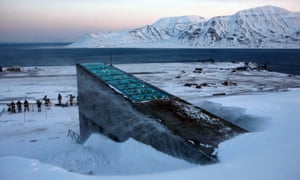
Arctic stronghold of world’s seeds flooded after permafrost melts

No seeds were lost but the ability of the rock vault to provide failsafe protection against all disasters is now threatened by climate change

The Svalbard ‘doomsday’ seed vault was built to protect millions of food crops from climate change, wars and natural disasters
 The Svalbard ‘doomsday’ seed vault was built to protect millions of food crops from climate change, wars and natural disasters. Photograph: John Mcconnico/AP

https://embed.theguardian.com/embed/video/environment/video/2015/may/20/svalbard-seed-vault-world-crop-varieties-video
Tiếp tục đọc “Arctic stronghold of world’s seeds flooded after permafrost melts”

Nhận đầu tư ngân hàng nước ngoài, Việt Nam đầu tư vào than bẩn

Miners at the Mao Khe Coal Company in Quang Ninh Province. While other countries move away from coal-fired power plants, Vietnam is building more of such plants. thi / Shutterstock.com

AUTHOR: Michael Tatarski, Xuan Bach Nguyen
PUBLISHED: 
TRANSLATIONS: English

newnaratif.comMột thư kiến nghị đến các ngân hàng lớn của Singapore yêu cầu dừng những khoản đầu tư vào các nhà máy nhiệt điện ở các nước phát triển như Việt Nam và Indonesia gây nhiều chú ý về tính phức tạp và quốc tế của những dự án này.

Lá thư ngỏ, được đăng vào tháng 2/2018 và ký bởi 14 nhóm thúc đẩy môi trường trên thế giới – bao gồm Greenpeace và Friends of the Earth, cho thấy các ngân hàng DBS, OCBC và UOB “thất bại trầm trọng, không chỉ trong việc thực hiện những chính sách thực tiễn nhằm đối phó với biến đổi khí hậu, mà ngược lại tiếp tục đầu tư hàng tỷ đô vào những nhà máy nhiệt điện chạy than và các cơ sở vật chất liên quan.” Tiếp tục đọc “Nhận đầu tư ngân hàng nước ngoài, Việt Nam đầu tư vào than bẩn”

An integrated system for real-time monitoring of rice production and climate risks – Hệ thống giám sát tức thời sản lượng gạo và rủi ro khí hậu

In the Mekong River Delta of Vietnam, a map-based system is being develop for real-time monitoring of rice production and raising the alarm for various climate-related risks. Photo: Eisen Bernardo (CCAFS SEA)
(view original)ccafs.cgiar

May 29, 2018

For quick response to the climate-related impacts to rice production in the Mekong River Delta, an integrated GIS-based system is being developed.

In 2017, the Department of Crop Production (DCP) of the Ministry of Agriculture and Rural Development (MARD) of Vietnam, in cooperation with the CGIAR Research Program on Climate Change, Agriculture and Food Security Southeast Asia (CCAFS SEA), developed and implemented the Climate-Smart Maps and Adaptation Plans (CS MAP) project. CS MAP maps drought, flooding, and salinity intrusion, and develop long- and medium-term adaptive plans in the Mekong River Delta (MRD). The methodology used promotes stakeholders’ participation in identifying feasible solutions to address specific local problems for sustainable rice production at provincial level. Tiếp tục đọc “An integrated system for real-time monitoring of rice production and climate risks – Hệ thống giám sát tức thời sản lượng gạo và rủi ro khí hậu”

Climate Change Is Melting ‘The Roof Of The World’

Huffingtonpost

Two “unprecedented” avalanches in once-stable western Tibet highlights the extent of global warming, researchers warn.
The Tibetan plateau is home to <a href="https://www.theguardian.com/commentisfree/2015/nov/11/tibet-climate-change-paris-talk

GETTY IMAGES
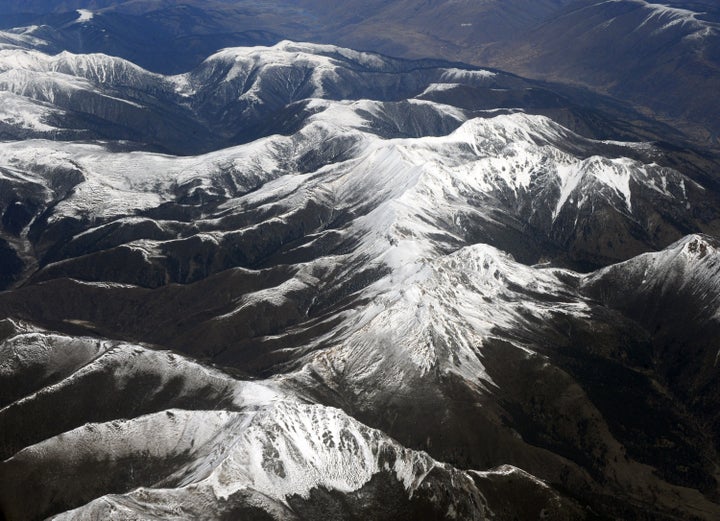
The Tibetan plateau is home to more than 46,000 glaciers. Sometimes referred to as the “Third Pole,” the area has the third largest concentration of ice after the polar regions.

The glaciers of western Tibet have been stable for thousands of years. But climate change is now threatening that status quo.

Two enormous ice avalanches ripped through the area in the summer, forever transforming the landscape. Global warming likely triggered the icefalls, new research suggests.

Once unheard of, such disasters could become more frequent in the region, scientists warn.

On July 17, more than 60 million cubic meters (or 24,000 Olympic swimming pools) of ice and rock broke off without warning from a glacier in Tibet’s Aru Mountains and hurtled down into a valley below. Within minutes, the avalanche had buried an area of almost four square miles in debris up to 100 feet deep. Nine herders were killed, along with hundreds of sheep and yaks.

Tiếp tục đọc “Climate Change Is Melting ‘The Roof Of The World’”

How the coffee industry is about to get roasted by climate change

theconverstion

Fall is always a good time to create new habits, and coffee chains know it.

These days, they are desperately trying to find any excuse to get you to drink their java.

Many chains used National or International Coffee Day, just passed, as a reason to offer their coffee at a discount, or even for free — with some conditions, of course.

For restaurant operators, there’s no better hook than coffee to get repeat business. It’s a great scheme that seems to be working for some. Given what’s looming on the horizon, however, offering free coffee may no longer be an option for businesses.

Coffee demand around the world is shifting. Europe still accounts for almost one third of the coffee consumed worldwide, but China has doubled its consumption in just the last five years. Tiếp tục đọc “How the coffee industry is about to get roasted by climate change”

Landslides in Mekong Delta get more severe

thesaigontimes.com
Van Huynh Tuesday,  May 29,2018,00:00 (GMT+7)
Zoom in

Zoom out

Add to Favorites

Print

Send to a friend

Five houses collapse after a landslide along the O Mon River’s in Can Tho City on May 21 – PHOTO: LE HOANG VU

CAN THO – Landslides across the Mekong Delta region are getting more unpredictable and increasing in terms of location and speed, according to the Southern Institute of Water Resources Research.

After two landslides along the O Mon River in Can Tho City this month, 12 houses sank into the river, 28 houses collapsed, 35 others were on the brink of sliding, and a long stretch of roads and riverside crops were destroyed.

According to the city’s committee for natural disaster prevention-control and search-rescue, the two landslides caused damages of some VND30 billion. The city has provided nearly VND600 million to support affected households.

Vung Liem District of Vinh Long Province nearby has also witnessed a serious landslide recently, resulting in several houses falling into the river. Following this, the provincial government has decided to ban sand exploitation at 19 sites along the rivers of Tien, Co Chien, Hau and Pang Tra with combined areas of over 1,200 hectares. Tiếp tục đọc “Landslides in Mekong Delta get more severe”

Lưu vực sông Mê Công trước các thách thức

Tiến sĩ Dương Văn Ni
Đại học CầnThơ, Việt Nam
dvni@ctu.edu.vn

Lưu vực sông Mê Công

Sông Mê Công bắt nguồn từTrung Quốc, chảy qua Myanmar, Lào, TháiLan, Campuchia và Việt Nam

Tổng chiều dài: 4.350 Km

Đứng thứ 10 thế giới về độ dài (4350 km = 2700 dặm)

Đứng thứ14 thế giới về dòng chảy

…nhưng đứng đầu thế giới về dao động thủy văn

1.250 –67.000 m3.s-1

Dân số tại lưu vực sông Mê Công ~60 Millions Tiếp tục đọc “Lưu vực sông Mê Công trước các thách thức”

Europe’s biggest insurance group Allianz stops insuring coal companies

DW

Europe’s biggest insurance group, Germany-based Allianz, stops selling policies to coal companies effective immediately under efforts to reduce the use of fossil fuel and foster climate-saving energy policies.

    
Allianz Versicherungskonzern Zentrale bei München (picture-alliance/dpa)

Munich, Germany-based Allianz Group announced on Friday that it would refuse insurance coverage of coal-fired power plants and coal mines with immediate effect, and would aim to get rid of all coal risks in its business by 2040.

Read more: How can the world move beyond fossil fuels?

In addition, Europe’s biggest insurer said it would stop investing in companies that do not cut their greenhouse gas emissions.

“We want to promote the transition to a climate-friendly economy,” said chief executive Oliver Bäte, adding that the company wanted to get “even more serious on global warming.” Tiếp tục đọc “Europe’s biggest insurance group Allianz stops insuring coal companies”

What the UN deal on shipping emissions means

Real hard work is about to begin after last week’s deal at the IMO, writes Bill Hemmings. [Dirk Dallas / Flickr]

Last week’s difficult deal on shipping emissions at the International Maritime Organisation (IMO) brought some good news. The not-so-good news is that there is far too little acceptance of the need for immediate action, writes Bill Hemmings.

Bill Hemmings is shipping director at Transport & Environment, a sustainability NGO. T&E has observer status at shipping climate talks as part of the Clean Shipping Coalition. Tiếp tục đọc “What the UN deal on shipping emissions means”

Nghị quyết Số 120/NQ-CP ngày 17/11/2017 về Phát triển bền vững ĐBSCL thích ứng với biến đổi khí hậu

CHÍNH PHỦ
——-

CỘNG HÒA XÃ HỘI CHỦ NGHĨA VIỆT NAM
Độc lập – Tự do – Hạnh phúc
—————

Số: 120/NQ-CP

Hà Nội, ngày 17 tháng 11 năm 2017


NGHỊ QUYẾT

VỀ PHÁT TRIỂN BỀN VỮNG ĐỒNG BẰNG SÔNG CỬU LONG THÍCH ỨNG VỚI BIẾN ĐỔI KHÍ HẬU

CHÍNH PHỦ

Căn cứ Luật Tổ chức Chính phủ ngày 19 tháng 6 năm 2015;

Căn cứ Nghị quyết số 24-NQ/TW ngày 03 tháng 6 năm 2013 của Ban Chấp hành Trung ương Đảng khóa XI về chủ động ứng phó với biến đổi khí hậu, tăng cường quản lý tài nguyên và bảo vệ môi trường;

Căn cứ Kết luận số 28-KL/TW ngày 14 tháng 8 năm 2012 của Bộ Chính trị về phương hướng, nhiệm vụ, giải pháp phát triển kinh tế – xã hội và bảo đảm an ninh, quốc phòng vùng đồng bằng sông Cửu Long đến năm 2020;

Trên cơ sở kết quả của Hội nghị về phát triển bền vững đồng bằng sông Cửu Long thích ứng với biến đổi khí hậu ngày 26 – 27 tháng 9 năm 2017; thảo luận, biểu quyết của các Thành viên Chính phủ tại phiên họp Chính phủ thường kỳ tháng 9 năm 2017,

QUYẾT NGHỊ:

Tiếp tục đọc “Nghị quyết Số 120/NQ-CP ngày 17/11/2017 về Phát triển bền vững ĐBSCL thích ứng với biến đổi khí hậu”

Nông lâm kết hợp: giải pháp ngày càng phổ biến cho một thế giới nóng và đói khát

Thoạt nhìn, các vùng phía Tây Cameroon trông có vẻ tươi tốt [phủ xanh bởi cây cối và rừng], nhưng khi nhìn gần hơn thì thấy đất đai ở khu vực này đã bị suy thoái do canh tác quá mức, kỹ thuật canh tác không bền vững, thảm thực vật bị tàn phá do bị khai thác làm củi và cháy rừng.

Tuy nhiên, ở một số khu vực vẫn tràn ngập đa dạng sinh học: cà phê phát triển dưới bóng mát của cây chuối, gần đó là những cây mận Châu Phi (tên địa phương là cây safou), cây cô la, cam và các loại cây lấy gỗ như gỗ gụ. Đối với người không chuyên thì đây trông giống như một khu rừng tự nhiên, nhưng thực tế đó là một hệ thống nông lâm – kết hợp cây cho bóng mát với cây trồng.

 [Hệ thống nông lâm kết hợp điển hình ở vùng Tây Bắc của Cameroon với chuối và các loại quả địa phương và cây lấy gỗ. Ảnh Ebernezar Asaah]

Visualizing Data to Build Climate Resilience

WRI.org

PREPdata, an open-source platform that improves access to the highly credible information that adaptation decision-makers and practitioners need to plan for climate change.

Webinar Recording

About the Webinar

Decision-makers from urban planners to corporate executives are grappling with tough questions in a changing climate. Should city officials in the Caribbean update building codes to climate-proof infrastructure against storm surges from monster hurricanes like Maria or move to higher ground? Should farmers in drought-prone regions of sub-Saharan Africa adopt more efficient irrigation systems or switch to climate-resilient seeds? Tiếp tục đọc “Visualizing Data to Build Climate Resilience”

Resource Kit for Building Resilience and Sustainability in Mekong Towns – Bộ công cụ Xây dựng khả năng chống chịu và tính bền vững cho các đô thị vùng sông Mekong

Project Description

Resource Kit for Building Resilience and Sustainability in Mekong Towns

Donor: Asian Development Bank (ADB)     |    Duration: 2013-2014   |    Location: Cambodia, Lao PDR and Vietnam

About: Natural systems are the essential foundation for Mekong town development and rehabilitation. The Resource Kit for Building Resilience and Sustainability in Mekong Towns is a seven-volume kit that promotes the maintenance and use of natural systems as a key strategy for building sustainability and resilience in urban areas. Tiếp tục đọc “Resource Kit for Building Resilience and Sustainability in Mekong Towns – Bộ công cụ Xây dựng khả năng chống chịu và tính bền vững cho các đô thị vùng sông Mekong”

Hiện tượng thủy triều đỏ trên các vùng biển và đề xuất với Việt Nam

T.S Dư Văn Toán

thiennhien.net

“Thuỷ triều đỏ” là thuật ngữ ngày càng phổ biến và quen thuộc. Nó không thuần chỉ là một hiện tượng tự nhiên tuyệt vời đầy kì bí như nhiều người vẫn nghĩ mà thực chất là một vấn đề môi trường nhức nhối cần quan tâm.

“Thủy triều đỏ” chỉ sự nở hoa của các loài vi tảo biển. Đây là hiện tượng tự nhiên xảy ra do mật độ tế bào vi tảo gia tăng lên đến hàng triệu tế bào/lít (thông thường có khoảng 10 – 100 tế bào vi tảo/ml nhưng trong trường hợp “nở hoa”, mật độ có thể lên trên 10.000 tế bào/ml), làm biến đổi màu của nước biển từ xanh lục đậm, đỏ cho đến vàng xám.
Tiếp tục đọc “Hiện tượng thủy triều đỏ trên các vùng biển và đề xuất với Việt Nam”