New era or false dawn? Rebuilding Bangladesh’s democracy after Sheikh Hasina

Al Jazeera English – 1-5-2025

Enforced disappearances, torture, extrajudicial killings: The human rights abuses allegedly committed by former Prime Minister Sheikh Hasina’s regime have left scores of Bangladeshis scarred and traumatised.

After a student-led movement overthrew the government in 2024, the full extent of the suffering is finally coming to light as an interim government, led by 84-year-old Nobel Peace Prize winner Muhammad Yunus, tries to rebuild a shattered nation.

From repairing the demoralised police force to seeking justice for victims and presiding over unstable relations with India, it’s a daunting task. How will Bangladesh rise from the rubble of a dictator’s rule? 101 East investigates.

China plans to build the world’s largest dam – but what does this mean for India and Bangladesh downstream?

theconversation.com

Published: April 8, 2025 5.33pm BST

Author Mehebub SahanaLeverhulme Early Career Fellow, Geography, University of Manchester

China recently approved the construction of the world’s largest hydropower dam, across the Yarlung Tsangpo river in Tibet. When fully up and running, it will be the world’s largest power plant – by some distance.

Yet many are worried the dam will displace local people and cause huge environmental disruption. This is particularly the case in the downstream nations of India and Bangladesh, where that same river is known as the Brahmaputra.

The proposed dam highlights some of the geopolitical issues raised by rivers that cross international borders. Who owns the river itself, and who has the right to use its water? Do countries have obligations not to pollute shared rivers, or to keep their shipping lanes open? And when a drop of rain falls on a mountain, do farmers in a different country thousands of miles downstream have a claim to use it? Ultimately, we still don’t know enough about these questions of river rights and ownership to settle disputes easily.

The Yarlung Tsangpo begins on the Tibetan Plateau, in a region sometimes referred to as the world’s third pole as its glaciers contain the largest stores of ice outside of the Arctic and Antarctica. A series of huge rivers tumble down from the plateau and spread across south and south-east Asia. Well over a billion people depend on them, from Pakistan to Vietnam.

Tiếp tục đọc “China plans to build the world’s largest dam – but what does this mean for India and Bangladesh downstream?”

Bangladesh lúng túng trước ngã ba lịch sử

ANTG – Thứ Tư, 28/08/2024, 10:00

Sau khi phong trào biểu tình của sinh viên lật đổ Thủ tướng Sheikh Hasina, Bangladesh đang đứng trước một ngã ba lịch sử. Nhưng, đất nước đông dân thứ 8 trên thế giới vẫn lúng túng, chưa biết lối đi nào an toàn.

Từ chuyện những sinh viên trở thành bộ trưởng

3 tháng trước, Nahid Islam còn bận rộn với các bài đăng trực tuyến về cuộc chiến ở Gaza và những cuộc thảo luận trong câu lạc bộ sách tại Đại học Dhaka. Hiện tại, sinh viên xã hội học 26 tuổi – người đã giúp lãnh đạo các cuộc biểu tình lật đổ cựu Thủ tướng Sheikh Hasina – là Bộ trưởng Công nghệ và Viễn thông của Bangladesh và đưa ra các quyết định ảnh hưởng đến 170 triệu người.

Tiếp tục đọc “Bangladesh lúng túng trước ngã ba lịch sử”

Students killed in Bangladesh job-quota protests

South China Morning Post – 17-7-2024

At least six students have been killed and over a hundred injured in protests calling for an end to civil service job quotas in Bangladesh. The violence in the capital Dhaka on July 16, 2024, was the latest flare-up in a deepening conflict over the issue. Hundreds of university students demonstrated against the local government job allocation system, which currently favours children of pro-government groups who back Prime Minister Sheikh Hasina. Thousands have taken part in protests in several cities since July 7.

Người vắng mặt ở COP28

TỊNH ANH – 12/12/2023 09:51 GMT+7

TTCT Tham dự không sót kỳ COP (hội nghị khí hậu của Liên Hiệp Quốc) nào, nhưng đến đúng lúc mọi thứ có vẻ dần thành hình thì lại vắng mặt, vì đã từ giã cõi đời đúng một tháng trước. Đó là chuyện của nhà khoa học người Bangladesh Saleemul Huq.

Saleemul Huq phát biểu tại một sự kiện ở Bangladesh năm 2022. Ảnh: IIED

Tiếp tục đọc “Người vắng mặt ở COP28”

Lý do dệt may Việt lao đao, dệt may nhiều nước vẫn sống khỏe

11/05/2023 | 06:15 – TÚ UYÊN

(PLO)- Đã có khoảng 50% doanh nghiệp dệt may Việt Nam rời khỏi cuộc chơi do không xanh hóa chuỗi sản xuất và cung ứng.

Đơn hàng ngành dệt may Việt Nam sụt giảm rất mạnh trong thời gian gần đây. Ảnh: TÚ UYÊN

Số liệu thống kê từ Hiệp hội Dệt may Việt Nam (VITAS) cho thấy tổng kim ngạch xuất khẩu hàng dệt may trong ba tháng đầu năm nay chỉ đạt hơn 8,7 tỉ USD, giảm gần 19% so với cùng kỳ năm ngoái. Hiện ngành dệt may Việt Nam đang đối mặt với nhiều khó khăn khi lượng đơn hàng sụt giảm 30%-60% so với cùng kỳ.

Điều đáng chú ý là trong khi xuất khẩu dệt may Việt Nam sụt giảm mạnh khiến hàng loạt công ty lao đao thì dệt may một số nước vẫn “sống khỏe”.

Tiếp tục đọc “Lý do dệt may Việt lao đao, dệt may nhiều nước vẫn sống khỏe”

Bangladesh’s Identity Crisis: To be or Not to be secular

Fifty years after it gained its independence, Bangladesh’s commitment to secularism remains shaky.

thediplomat – By Shafi Md Mostofa – December 06, 2021

Bangladesh’s Identity Crisis: To Be or Not to Be Secular
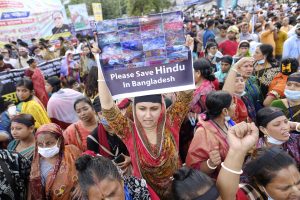
Hundreds of Hindus protesting against attacks on temples and the killing of two Hindu devotees shout slogans in Dhaka, Bangladesh, Monday, October 18, 2021.Credit: AP Photo/Mahmud Hossain Opu

In a couple of weeks, Bangladesh will celebrate the golden jubilee of its victory in the liberation war against Pakistan. Fifty years have passed since it became independent, and secular nationalist forces gained the upper hand over religious ones in the war. However, Bangladesh has not been able to secure its secularism.

Tiếp tục đọc “Bangladesh’s Identity Crisis: To be or Not to be secular”

China lays out three-point plan to ease Rohingya crisis

South China Morning Post

Beijing on more proactive tack in the region with offer to Bangladesh and Myanmar, observers say

PUBLISHED : Sunday, 19 November, 2017, 10:50pm
UPDATED : Sunday, 19 November, 2017, 11:26pm

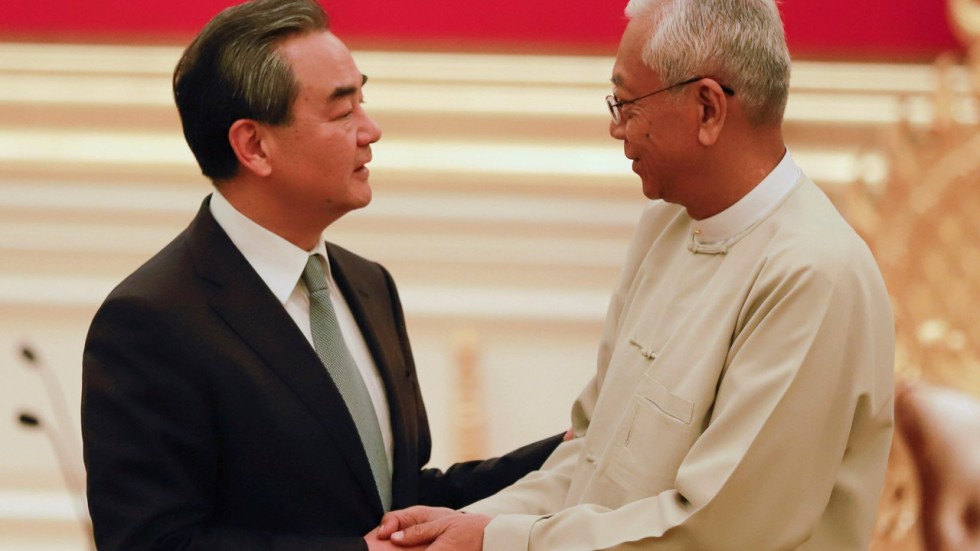
China has offered to help Bangladesh and Myanmar resolve the Rohingya crisis, a move Chinese analysts said reflected Beijing’s more proactive and conciliatory tack on regional affairs.

Arriving in Myanmar’s capital Naypyidaw on Sunday after a stop in Bangladesh, Chinese Foreign Minister Wang Yi also said the international community must help fight poverty and promote development in Myanmar’s Rakhine State.

Tiếp tục đọc “China lays out three-point plan to ease Rohingya crisis”

Rohingya refugee camp capacity exhausted in Bangladesh: UN

Daily Star

270,000 Rohingyas seek refuge in past two weeks

Reuters, Cox’s Bazar

Amid a dramatic increase in the number of refugees fleeing violence in Myanmar’s Northern Rakhine state, UNHCR today called for urgent action to address the root causes of the recent surge in violence, so that people are no longer compelled to flee and can eventually return home in safety and dignity.

In the last two weeks an estimated 270,000 Rohingya refugees have sought safety in Bangladesh, UNHCR spokesperson Duniya Aslam Khan told a press briefing in Geneva today. Tiếp tục đọc “Rohingya refugee camp capacity exhausted in Bangladesh: UN”

Can technology help Bangladesh end mass arsenic poisoning?

Monday, 28 August 2017 06:00 GMT

An estimated 5 percent of deaths in Bangladesh are attributable to drinking water with high levels of arsenic, researchers sayBy Thin Lei Win

BANGKOK, Aug 28 (Thomson Reuters Foundation) – Almost a quarter of a century after public health experts discovered mass public poisoning in Bangladesh caused by water contaminated with arsenic, the government is planning a new push to end the scourge, while researchers are designing an app to find safe sites for new wells.

About 20 million Bangladeshis, or one in eight, have been drinking water with arsenic levels higher than the government’s limit of 50 microgrammes (μg) per litre, said Kazi Matin Uddin Ahmed, geology department chair at the University of Dhaka. Tiếp tục đọc “Can technology help Bangladesh end mass arsenic poisoning?”

Rohingya flee for Bangladesh as fresh violence erupts in Myanmar

channelnewsasia

 
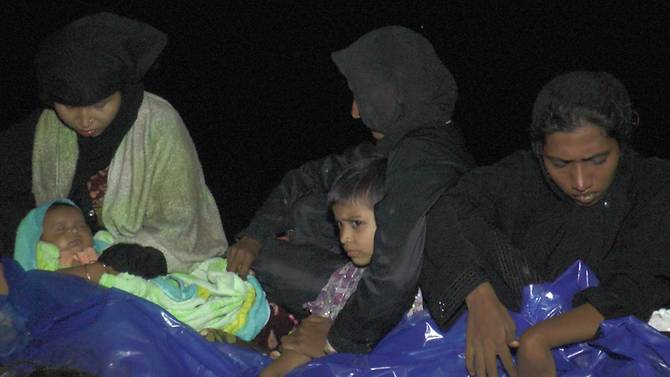
Displaced Rohingya people from Myanmar’s northern Rakhine state are gathered at the border town of Ukhiya after Bangladeshi border guards stopped them from entering Bangladesh on Aug 26. efugees towards Bangladesh. (Photo: AFP/STR)

Bangladesh reinstalls controversial statue after outcry

 
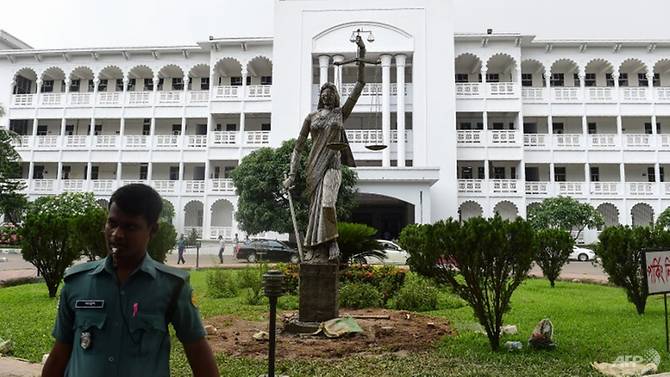
A statue denounced by religious hardliners as “un-Islamic” is pictured on the grounds of the Supreme Court in Dhaka after it was reinstalled on May 28, 2017. (Photo: AFP)

DHAKA: Bangladesh on Sunday (May 28) reinstalled a controversial statue deemed un-Islamic by religious hardliners on the grounds of the Supreme Court, just days after its removal had sparked angry protests by secular groups. Tiếp tục đọc “Bangladesh reinstalls controversial statue after outcry”

Rohingya Refugees in Bangladesh to Be Relocated to Remote Island

The Kutupalong refugee camp in Cox’s Bazar, Bangladesh, this month. The United Nations has called the Rohingya, a Muslim ethnic group denied citizenship in Myanmar, the most persecuted minority in the world. Credit Allison Joyce/Getty Images

DHAKA, Bangladesh — Bangladesh’s government is moving forward with a plan to relocate Rohingya refugees staying in camps near the country’s largest tourist resort towns to a remote island that is underwater for much of the year.

A cabinet order on Thursday directed officials to have the refugees transferred to Thengar Char, an island in the Bay of Bengal that is lashed by high tides year round and submerged during the monsoon season. The suggestion that they be moved to the largely uninhabitable marshland several hours by boat from the mainland drew criticism from around the world.

Continue reading on New York Times