Ngôn ngữ bí mật của tiếp viên trên máy bay

VNexpress.net

Tiếp viên của hãng easyJet tiết lộ các ngôn ngữ bí mật mà thành viên tổ bay hay sử dụng để giao tiếp trên máy bay mà không muốn hành khách biết.

Một tiếp viên hàng không đã tiết lộ “ngôn ngữ bí mật” mà các thành viên tổ bay của easyJet sử dụng để giao tiếp trên máy bay, gồm những cử chỉ mô phỏng hành động của một số loài động vật một cách hài hước. Tiếng ồn động cơ, kích thước khoang máy bay rộng và nhu cầu giao tiếp kín đáo khi có hơn 200 hành khách khiến họ phải dùng một hệ thống ký hiệu “bí mật” bằng cử chỉ.

Tiếp viên của aesyJet nói về các ký hiệu thường dùng để giao tiếp với đồng nghiệp trên máy bay. Video: DM !–more–>

Những ký hiệu này giúp tiếp viên trao đổi nhanh chóng và lặng lẽ, đặc biệt hữu ích trong lúc phục vụ bữa ăn. Nếu hành khách muốn một chiếc bánh mì kẹp giăm bông và phô mai, các tiếp viên sẽ làm động tác chập hai bàn tay vào nhau như miệng cá sấu. Nếu khách gọi món bánh kẹp thịt gà, họ sẽ làm động tác tay đập giống cánh gà, rồi xoay vòng hai bàn tay.

Trong phần bình luận dưới video, nhiều người đã bày tỏ sự kinh ngạc. “Quá đỉnh”, một người viết. “Tôi từng thấy một tiếp viên làm động tác này với đồng nghiệp, giờ mới biết là ngôn ngữ ký hiệu nội bộ”, người khác chia sẻ thêm.

“Tôi thường nhìn họ làm các động tác này và cố đoán xem họ đang nói gì, buồn cười thật”, một hành khách từng bay easyJet nói.

Jay Robert, cựu tiếp viên cao cấp của Emirates kiêm quản lý website về hàng không nổi tiếng Fly Guy’s Cabin Crew Lounge, tổ bay của các hãng khác cũng có những ngôn ngữ riêng.

“Nếu họ gọi bạn là VIP không có nghĩa họ coi bạn là người quan trọng”, Jay nói. Từ này có nghĩa là Very Irritating Person (hành khách khó chịu). Mật mã BOB (Babe on board hoặc Best on board) là kí hiệu tổ bay dùng để miêu tả các hành khách dễ chịu hoặc thu hút. Từ POS (Passenger Of Size), để miêu tả các vị khách quá khổ, cần dây an toàn nới rộng. Thuật ngữ nàng tiên cá (mermaid) để chỉ hành khách nằm vắt ngang một hàng ghế trống nhằm ngăn cản vị khách khác ngồi vào. HOB (Hotty On Board) cũng có nghĩa tương tự VIP, chỉ các hành khách khó chịu.

Các tiếp viên hàng không trò chuyện trên máy bay. Ảnh: Cabin crew hq
Các tiếp viên hàng không trò chuyện trên máy bay. Ảnh: Cabin crew hq

SSR (Special Services Reques) là yêu cầu dịch vụ đặc biệt hay ám chỉ tổ bay phải xử lý các tình huống nhạy cảm liên quan đến khách hàng. Khi hành khách bị trục xuất, nhân viên mặt đất có thể dùng mã DEPA hoặc DEPU (This passenger is being deported) để truyền đạt thông tin một cách kín đáo cho tiếp viên thay vì tuyên bố công khai “hành khách bị trục xuất”.

INAD chỉ một hành khách bị từ chối nhập cảnh vào một quốc gia và phải ngồi lên chuyến bay tiếp theo để quay về. ABP (Able Bodied Passenger or Person) là hành khách cần được để ý hoặc quan tâm đặc biệt trong chuyến bay để hỗ trợ.

Ngoài ra, hành khách cũng có thể nghe thấy một số từ tiếp viên thường sử dụng khi trao đổi với nhau.

Red-eye: thuật ngữ quen thuộc chỉ các chuyến bay qua đêm, thường hạ cánh vào sáng sớm.

Pink-eye: chuyến bay muộn vào ban đêm nhưng sớm hơn red-eye và không phải bay qua đêm.

Holding pen: khu vực quanh cổng ra máy bay, nơi hành khách đứng chờ hoặc đi lại trước khi lên máy bay.

Runner: hành khách đến trễ hoặc nối chuyến muộn và phải chạy thật sự để kịp máy bay.

Spinner: hành khách không có số ghế hoặc chưa biết ghế của mình, đứng giữa lối đi và quay vòng vòng để tìm.

Cross-check: một hoặc hai tiếp viên kiểm tra chéo để chắc chắn rằng cửa máy bay đã được đặt đúng chế độ để sẵn sàng trước khi khởi hành hoặc trước khi mở cửa máy bay.

All call: thông thường sau cross-check sẽ có một cuộc gọi “all call”, nơi tất cả tiếp viên sử dụng hệ thống điện thoại nội bộ để xác nhận với nhau rằng các cửa máy bay đã được xử lý đúng.

Jump seat: ghế nhỏ mà tiếp viên dùng khi cất cánh, hạ cánh hoặc khi buộc phải ngồi. Ghế này tự bật lên khi tiếp viên đứng dậy.

Specials: thuật ngữ chỉ những hành khách cần hỗ trợ đặc biệt, ví dụ người gặp khó khăn về di chuyển hoặc bất kỳ ai cần giúp đỡ thêm.

U.M: viết tắt của “unaccompanied minor”, trẻ vị thành niên đi máy bay một mình và được tiếp viên chăm sóc.

Blue room: cách tiếp viên gọi phòng vệ sinh trên máy bay, ám chỉ loại dung dịch màu xanh dùng trong bồn vệ sinh.

Service: là lúc tiếp viên chuẩn bị xe phục vụ để xuống lối đi và cung cấp nước, đồ ăn nhẹ hoặc bữa ăn cho hành khách.

Galley: căn bếp nhỏ trên máy bay, nơi tiếp viên chuẩn bị đồ ăn, nước uống.

Galley queen: từ lóng chỉ một tiếp viên rất khó tính hoặc thích sở hữu khu vực galley và không thích người khác đụng vào không gian của mình.

Anh Minh (Theo DM, Reader’s Digest)

Khách gây rối trên máy bay của Pháp sẽ bị phạt tới 20\.000 euro

Khách gây rối trên máy bay của Pháp sẽ bị phạt tới 20.000 euro

Pháp ban hành lệnh xử phạt mới với hành khách gây rối trên máy bay, với mức phạt tiền lên đến 20.000 euro (gần 610 triệu đồng) và cấm bay. 

Ký hiệu khách không muốn nhìn thấy trên vé máy bay

Ký hiệu khách không muốn nhìn thấy trên vé máy bay

Nhiều hành khách không biết một ký hiệu trên thẻ lên máy bay có thể báo hiệu rắc rối, biến chuyến đi thành trải nghiệm căng thẳng.  23

Lý do không nên mang theo vali xách tay lên máy bay

Lý do không nên mang theo vali xách tay lên máy bay

Xu hướng du lịch gọn nhẹ ngày càng trở nên phổ biến khi các hãng hàng không siết chặt quy định về hành lý xách tay.  35

The world is reducing its reliance on fossil fuels – except for in three key sectors

theguardian.com

Dramatic changes in energy industry and EVs reducing fossil fuel use, but shipping, aviation and industry a long way from net zero

@olliemilmanFri 9 Feb 2024 12.00 GMT

Humanity has made some uneven progress in reducing our addiction to fossil fuels – but there remain three areas of our lives in which we are notably not on track to kick the habit over the next 30 years, according to a new analysis.

Record levels of investment in clean energy (solar has been called the cheapest source of electricity in history by the International Energy Agency) and a decline in coal-powered generation means less and less of the world’s power will come from fossil fuels between now and 2050, the analysis from Rhodium shows.

Similarly, the blossoming electric vehicle market is going to drive down emissions from cars and trucks, with global oil consumption for on-road vehicles set to drop by 50% over the next three decades, the forecast finds.

But even with these dramatic changes reshaping two of the world’s hungriest consumers of fossil fuels, emissions are still a long way from hitting net zero by 2050, as scientists say they must if dangerous global heating – spurring worsening heatwaves, floods, droughts and more – is to be avoided.https://interactive.guim.co.uk/uploader/embed/2024/02/archive-zip/giv-13425ZCBwhBxEyLin/

A major reason for this is the stubborn, ongoing carbon pollution from three areas: aviation, shipping and industry.

.https://interactive.guim.co.uk/uploader/embed/2024/02/archive-zip/giv-13425v3zDOTaHHQGz/

There is currently no widespread alternative to jet fuel or ship diesel, meaning steady or even rising fossil fuel use as developing countries’ economies grow. A range of industrial processes – such as cement-making and the production of plastic – will collectively fail to meaningfully cut carbon-intensive fuels by 2050, too.

“We’ve made a lot of progress in the last few years – wind and solar are really poster children of success and electric vehicles are at a turning point now,” said Hannah Pitt, associate director at Rhodium, which made the projections based on anticipated policies until 2050.

“That makes up a good chunk of emissions but there is much less progress in other sectors. With aviation and shipping, there’s just not as much innovation and no clear cost-effective alternatives to fossil fuels.

“And then we have industrial processes that make up a huge fraction of emissions and each require their own tools and innovations to bring that down, and emissions are staying stubbornly high.”

All told, global fossil fuel use will likely flatten or decline by mid-century before starting to grow again due to rising energy demand in various parts of the world, according to the report’s projections. Gas will lead the way, rising significantly in use even as oil and coal decline.https://interactive.guim.co.uk/uploader/embed/2024/02/archive-zip/giv-13425v3zDOTaHHQGz/

Pitt said we are still a long way from breaking our dependence on fossil fuels in everything from switching on a light at home, to driving a car, to getting an Amazon package delivered, to flying to a holiday destination.

“The success with renewables and EVs shows it can be done, but it really will take a lot of different policies and innovations. There’s no one solution,” said Pitt.

“This is a good reminder that climate change touches every piece of our economies, and it needs solutions to each of those areas. There is a lot of work to do.”

Joint Statement on Higher Airspace Operations (HAO)

US DEPARTMENT OF STATE

MEDIA NOTE

OFFICE OF THE SPOKESPERSON

DECEMBER 18, 2023

The text of the following joint statement was released by the Governments of the United States of America, Canada, the European Union and its Member States (Belgium, Bulgaria, Czechia, Denmark, Germany, Estonia, Ireland, Greece, Spain, France, Croatia, Italy, Cyprus, Latvia, Lithuania, Luxembourg, Hungary, Malta, Netherlands, Austria, Poland, Portugal, Romania, Slovenia, Slovakia, Finland, Sweden), Japan, and the United Kingdom expressing support for ICAO’s efforts to address the challenges and opportunities associated with higher airspace operations.

Begin Text:

Tiếp tục đọc “Joint Statement on Higher Airspace Operations (HAO)”

Government formally approves Long Thanh international airport

vietnamnet 16/11/2020    15:48 GMT+7

Deputy Prime Minister Trinh Dinh Dung has approved the first phase of the Long Thanh International Airport in the southern province of Dong Nai.

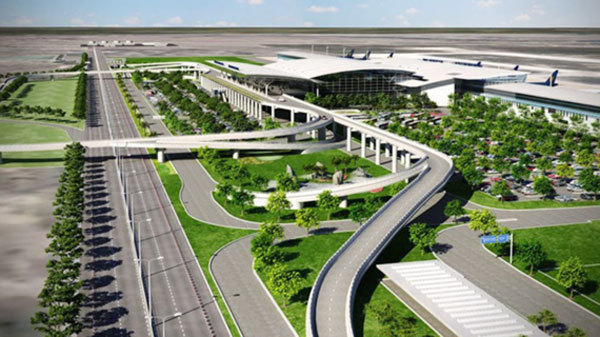
A rendering of the proposed Long Thanh International Airport in the southern province of Dong Nai. – Photo courtesy of Airports Corporation of Vietnam 

The project has four component projects such as headquarters of State management agencies, flight management services, essential airport facilities, and other works.

Major works such as airport buildings, the aircraft apron, passenger terminals, and cargo terminals will be built by the Airport Corporation of Vietnam (ACV), which operates 21 airports across the country.

ACV has to raise funding for the construction.

The first phase of the airport, expected to cost more than US$4.6 billion, is projected to be completed by 2025.

The investment was approved by the National Assembly in 2017, which also issued a resolution on compensation and resettlement of and support for affected individuals and organisations.

Prime Minister Nguyen Xuan Phuc urged Dong Nai Province authorities to hand over the required lands in October so that construction of the airport could begin early next year.

He also set a deadline for assessing cleared land for compensation purposes by the end of this month.

The Ministry of Transport should work closely with the province to promptly resolve all challenges to ensure the project remains on schedule, he said.

The airport work requires more than 5,000ha of land and more than 364ha elsewhere to build two resettlement sites.

Around 4,800 households and 26 organisations are expected to be relocated to make way for it. 

Spread over a total area of more than 5,580ha, the airport will straddle six communes in Long Thanh District. It is expected to cost VNĐ336.63 trillion ($14.47 billion), with the construction divided into three phases. 

In the first phase one runway with a length of 4,000m, taxiways, an apron, and a passenger terminal with other auxiliary works involving a total floor area of ​​373,000 sq.m will be built to serve 25 million passengers and 1.2 million tonnes of cargo each year. 

The airport is expected to have four runways, four passenger terminals and other auxiliary works to ensure a capacity of 100 million passengers and 5 million tonnes of cargo a year by 2040. 

Tan Son Nhat International Airport in HCM City, the country’s largest, has been seriously overloaded for years, both in the air and on the ground.

The Ministry of Transport said Long Thanh International Airport is a key national project that would have a significant impact on the southern key economic region.  VNS

Long Thanh Airport: investment rate high, ACV may lack money

The Ministry of Finance (MOF) has warned about problems with the Long Thanh International Airport project, ….

Long Thanh Airport project awaits disbursement of funds

The government’s report to the National Assembly on the implementation of the Long Thanh International ….

Vietnam blocks new airlines until 2022 despite market duopoly

Nikkei

Hanoi prioritizes existing carriers Vietnam Air and VietJet

A Jetstar Pacific plane at Noi Bai International Airport in Hanoi: Qantas Airways plans to sell its stake in the carrier to joint venture partner Vietnam Airlines.   © Reuters

HANOI — Vietnam plans to freeze approval for new entries to the airline industry until 2022, a move that threatens to solidify the virtual duopoly already in place.

The chilled business climate caused by the novel coronavirus makes supporting existing airlines the top priority, Transport Minister Nguyen Van The said.

Currently five commercial airlines operate within Vietnam, but two top players dominate the market. With Australia’s Qantas Airways offloading its 30% stake in Jetstar Pacific, a joint venture with Vietnam Airlines, the state’s move to block additional competition has raised concerns about higher ticket prices. Tiếp tục đọc “Vietnam blocks new airlines until 2022 despite market duopoly”

Why Vietnam Needs Six Airlines

Ralph Jennings

Vietnam already supports five operating commercial airlines and a sixth is on the way. That’s because so many of the country’s newly minted middle class is literally going places.

Vietnam’s civil aviation authority estimates air passenger traffic will reach 131 million by 2020 following average growth of 16% last year and this year. By 2030, the authority expects 280 million civilian air trips per year.

“All the airplanes are full. The Hanoi-Ho Chi Minh trip is packed every day,” says Mike Lynch, managing director with SSI Institutional Brokerage in Ho Chi Minh City. “They put up airlines and they just fill right up.” Tiếp tục đọc “Why Vietnam Needs Six Airlines”

Vietnam considers Swedish loans to build largest airport

NOV 26, 2019 / 11:09 Nguyen Tung

The Hanoitimes – A Swedish state-owned entity proposed a commercial loan of over US$1 billion for the construction of Long Thanh airport, the would-be largest of its kind in Vietnam.

Vietnam is considering Sweden’s loans to build Long Thanh International Airport and develop the air traffic control activities, according to Deputy Minister of Planning and Investment Vu Dai Thang.

 Illustrative photo.

Long Thanh International Airport is in need of huge investment capital, for which financial support from other countries, including Vietnam’s development partners such as Sweden, is very important, said Thang at a conference held last week discussing the financial mechanism for Long Thanh airport. Tiếp tục đọc “Vietnam considers Swedish loans to build largest airport”

These are the world’s ‘most excellent’ airlines for 2020, according to AirlineRatings.com

TĐH: Where are Vietnam Airlines and Viet Jet? Vietnam Airline, try hard, OK? I am embarrassed by Viet Jet! Come on, world! Fly our airline, Vietnamese women have great bodies. Look at them in bikini! Better than beer ôm and coffee ôm. Think about our women’s bodies while you fly with us. You will realize that our women have greatest bodies in the world.

That is surely a good way to get money from men with hormone at the level of teenager. It embarrasses both Vietnamese women and men. And looks like the driving force behind all this is a woman too. Is she a real woman, or a sick male chauvinist in disguise? Or she is simply sick by obsession with money making? Wow, money, mony, money! Such a great driving force of human psyche!

Francesca Street, CNN • Published 25th November 2019