Bribery, corruption plague Asia Pacific region, survey shows

India has the highest bribery rate among the 16 Asia Pacific countries surveyed in Transparency International's report.

India has the highest bribery rate among the 16 Asia Pacific countries surveyed in Transparency International’s report.  (Transparency International)

More than 900 million people in 16 Asian Pacific countries are experiencing bribery and corruption, according to a report by Transparency International published Tuesday.

This report was released at a crucial time — when many governments in the Asia Pacific region are preparing their plans to meet the United Nations Sustainable Development Goals (SDGs). Tiếp tục đọc “Bribery, corruption plague Asia Pacific region, survey shows”
Boeing to build satellite to increase Asia Pacific connectivity

Spaceflight Insider

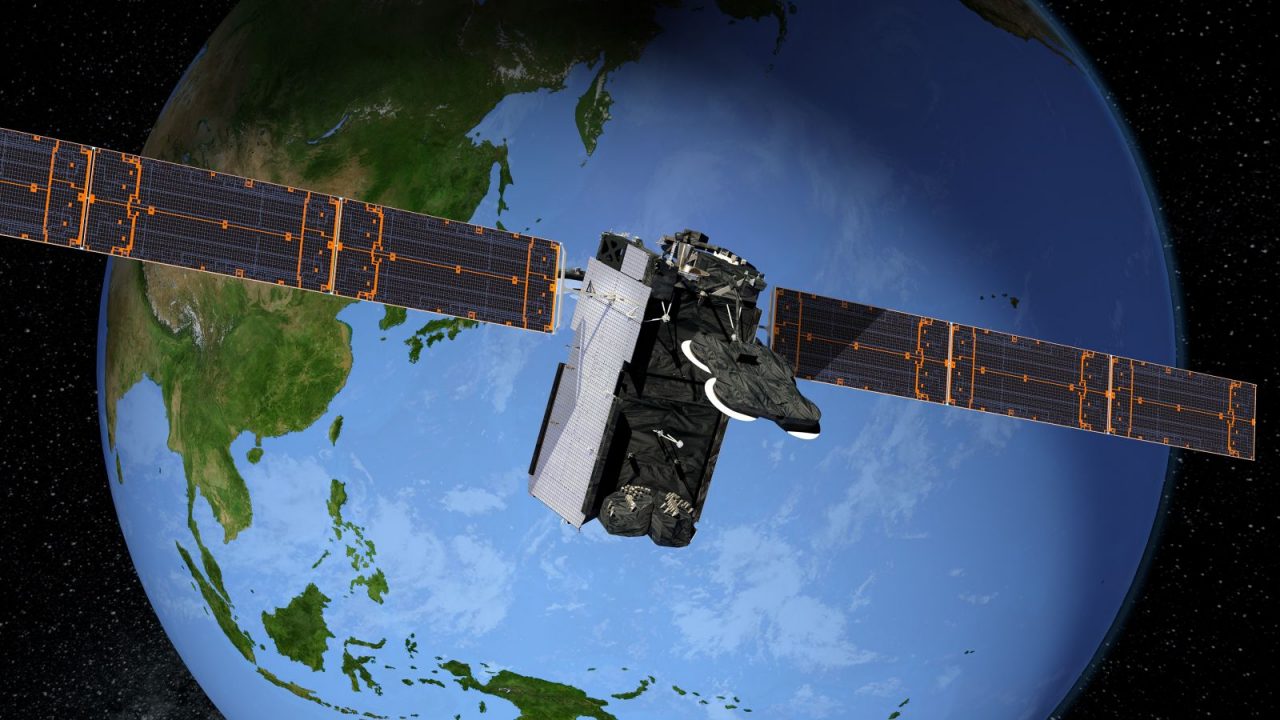
305787_jcsat-18_702_kacific_3-high-res-1280x720Boeing will build a 702 satellite to expand communication for mobile telephone, data and internet users throughout the Asia-Pacific region. Caption and Image Credit: Beoing

Boeing announced Feb. 20, 2017, that it has contracted to build a satellite for two customers: SKY Perfect JSAT Corporation and Kacific Broadband Satellites. The new “702 satellite” will provide expanded coverage for mobile, telephone, data, and internet users across the Asia Pacific region.

“The scalable Boeing 702 satellite is a flight-proven design that we are evolving to meet the future needs of our customers,” said Mark Spiwak, president of Boeing Satellite Systems International, in a press release. Tiếp tục đọc “Boeing to build satellite to increase Asia Pacific connectivity”

2 maps that explain US strategy in Asia-Pacific

Business Insider

The two countries are crucial US allies in Asia, and both face serious threats in their near abroad.

Discussing security threats, though, wasn’t the main goal of Mattis’s trip. He was there to assure both countries that the Trump administration will not abandon the US alliance structure in the Pacific. Tiếp tục đọc “2 maps that explain US strategy in Asia-Pacific”

E-mail click rates plunge 12.5% in Asia Pacific

shutterstock_computer

E-mail click rates in Asia Pacific in Q3 2016 (July to September) have plunged 12.5% from Q2 – a likely consequence of a 53% increase in the average number of e-mails delivered per company at the same period, the latest study from Epsilon showed.

The analysis was compiled from 772 million e-mails sent by approximately 60 company in Q3 2016 across Australia, mainland China, Hong Kong, Japan and Singapore.

E-mail open rates also showed a mild drop from 16.6% to 16.4%. In Q3 2015 the e-mail open rates was 19.6%. Non-bounce rates decreased slightly to 96.2% from 96.7% in Q2 2016 and are slightly higher than Q3 2015 (95.1%). Among all the email sent,  triggered messages accounted for 1.8% of total email volume in Q3 2016, above Q2 2016 (1.2%) and higher than Q1 2016 (0.8%). Tiếp tục đọc “E-mail click rates plunge 12.5% in Asia Pacific”

Russian Transport Strategy Prioritizes Cooperation With Asia Pacific Region

Vladimir Putin takes trip on newly launched Sapsan high-speed train
Sputnik/ Alexei Druzhinin 08.12.2016 Sputniknews
The high economic potential of Asia Pacific region makes it a key area for the Russian transport strategy, Russian President Vladimir Putin said Thursday, addressing the participants of a ministerial conference on transport endorsed by the UN Economic and Social Commission for Asia and the Pacific (ESCAP). MOSCOW (Sputnik) — The president added that conference’s agenda included a number of important issues, such as introduction of new materials and technologies, expansion of transport networks and improvement of the legislation that governs international logistics.

Tiếp tục đọc “Russian Transport Strategy Prioritizes Cooperation With Asia Pacific Region”

India, China, Russia consult on Asia Pacific; get Philippines backing

Bangkok | Fri, December 2, 2016 | 01:31 pm

India, China, Russia consult on Asia Pacific; get Philippines backing A woman walks past a billboard featuring an image of an island in South China Sea on display with Chinese words that read: “South China Sea, our beautiful motherland, we won’t let go an inch” in Weifang in east China’s Shandong province. (Chinatopix via AP/-)

Countries of the Asia-Pacific Region

Asia-Pacific Center for Security Studies

Countries of the Asia-Pacific Region Include:

Australia Flag Australia Japan Flag Japan Palau Flag Palau
Bangladesh Kiribati Flag Kiribati Papua New Guinea Flag Papua
New Guinea
Bhutan Laos Flag Laos Peru Flag Peru
Brunei Malaysia Flag Malaysia Philippines Flag Philippines
Myanmar Flag Burma (Myanmar) Maldives Flag Maldives Russian Flag Russia
Cambodia Flag Cambodia Marshall Islands Flag Marshall Islands Samoa Flag Samoa
Canada Micronesia Flag Micronesia Singapore Flag Singapore
China Flag China Mongolia Flag Mongolia Solomon Islands Flag Solomon Islands
Chile Flag Chile Nauru Flag Nauru South Korea Flag South Korea
Cook Island Flag Cook Islands Nepal Flag Nepal Sri Lanka Flag Sri Lanka
Fiji Flag Fiji New Zealand Flag New Zealand Thailand Flag Thailand
French Polynesia Flag French Polynesia** New Caledonia Flag New Caledonia** Timor-Leste Flag Timor-Leste
Indian Flag India Niue Flag Niue Tonga Flag Tonga
Indonesia Flag Indonesia North Korea flag North Korea * Tuvalu Flag Tuvalu
Pakistan Flag Pakistan Vanuatu Flag Vanuatu
Vietnam Flag Vietnam
U. S. Flag United States

* currently not eligible for invitation per U.S. State Department

** Territories of France

The Asia-Pacific Center for Security Studies is a Department of Defense institution providing a forum where current and future, military and civilian leaders from many Asia-Pacific nations gather to enhance Asia-Pacific security cooperation through programs of executive education, professional exchange and policy-relevant research.

Above is a listing of countries that are generally defined as the “Indo-Asia-Pacific” region and most are routinely invited to APCSS courses.

Other links to definitions of the Asia-Pacific Region:

Susan Rice: American Leadership in the Asia-Pacific Must Continue

National Interest

“Unmatched American leadership has laid a strong foundation for regional peace and prosperity in the region. But, in a dangerous and uncertain world, we cannot relinquish that leadership.”

November 12, 2016

Seven years ago, President Obama joined the leaders of 20 other economies for the APEC summit in Singapore—his first trip to Asia as president. When President Obama took office, the global economy was still reeling from the worst financial crisis since the Great Depression. The United States was consumed with two major, costly ground wars in Iraq and Afghanistan, but not nearly as engaged in the world’s fastest growing region, the Asia-Pacific. Tiếp tục đọc “Susan Rice: American Leadership in the Asia-Pacific Must Continue”

Food and job security: two challenges for Asia Pacific

Eco-business – Anna Simpson, curator of Forum for the Future’s Futures Centre discusses two mutually reinforcing pressure points that urge sustainable change in the Asia Pacific region.

The forest fires that raged across Chiang Mai in March may have dissipated, but the cancer risk for those who breathe in the dust particles year on year has not. Nor has the pressure on contract farmers to meet growing demand for animal feed and ethanol: a factor contributing to illegal slash-and-burn practices. According to one resident, an area more than six times that of Bangkok (which occupies 1,569 square kilometres) of dry corn stalks is set alight after the harvest to make way for the next crop.

A confluence of visible environmental and social crises has led to a surge of awareness of sustainability pressures facing the Asia-Pacific region. The vast human cost to a region that supplies much of the world’s cheap food and consumer goods is increasingly evident. In March, 80,000 Vietnamese workers at a factory making shoes for brands such as Adidas, Converse, Nike and Reebok went on strike in protest against changes to Vietnam’s social-insurance system. In May, a fire at another shoe factory north of Manila in the Philippines killed 72 workers. Tiếp tục đọc “Food and job security: two challenges for Asia Pacific”