Donald Trump and China on dangerous collision course, say experts

The Guardian

Report says ties between the two nuclear-armed countries could deteriorate into an economic or military confrontation
Chinese news papers showing US president Donald Trump at a newsstand in Shanghai.
Chinese news papers showing US president Donald Trump at a newsstand in Shanghai. Photograph: Aly Song/Reuters

A highly combustible cocktail of Donald Trump’s volatility and Xi Jinping’s increasingly aggressive and autocratic rule threatens to plunge already precarious US-China relations into a dangerous new era, some of the world’s leading China specialists say in a new report.

For the last 18 months a taskforce of prominent China experts, some of whom have dealt with Beijing for more than 50 years, hahes been formulating a series of recommendations on how the incoming White House should conduct relations with the world’s second largest economy.

The group’s report, which was handed to the White House on Sunday and will be published in Washington DC on Tuesday, says ties between the two nuclear-armed countries could rapidly deteriorate into an economic or even military confrontation if compromise on issues including trade, Taiwan and the South China Sea cannot be found.

Continue reading on The Guardian

China likely to build on reef near Philippines: Minister

In an interview with AFP, Delfin Lorenzana said he believed China would eventually reclaim Scarborough Shoal, just 230 kilometres from the main Philippine island of Luzon.

Beijing has already built up a number of islets and reefs in the Spratly Islands in the South China Sea, installing military facilities on several of them.

Analysts say similar installations on nearby Scarborough Shoal could give China effective military control over the disputed Sea – something the US has said it is not prepared to accept. Tiếp tục đọc “China likely to build on reef near Philippines: Minister” →

‘Irrational’ Coal Plants May Hamper China’s Climate Change Efforts

The China Kingho Energy Group’s coal-to-gas plant in Chuluqay, Xinjiang, China, in 2014. Credit Benjamin Haas/Bloomberg

YINING, China — When scientists and environmental scholars scan the grim industrial landscape of China, a certain coal plant near the rugged Kazakhstan border stands out.

On the outside, it looks like any other modern energy plant — shiny metal towers loom over the grassy grounds, and workers in hard hats stroll the campus. But in those towers, a rare and contentious process is underway, spewing an alarming amount of carbon dioxide, the main greenhouse gas accelerating climate change.

The plant and others like it undermine China’s aim of being a global leader on efforts to limit climate change.

The plant, in the country’s far west, converts coal to synthetic natural gas. The process, called coal-to-gas or coal gasification, has been criticized by Chinese and foreign scholars and policy makers. For one thing, it is relatively expensive. It also requires enormous amounts of water, which exacerbates the chronic water crisis in northern China. And worst of all, critics say, it emits more carbon dioxide than traditional methods of energy production, even other coal-based ways.

Continue reading on New York Times

The 30-Years War in Vietnam

Viet Minh in battle in Dien Bien Phu, Vietnam. Credit Collection Jean-Claude Labbe/Gamma-Rapho, via Getty Images

It should go without saying that the Vietnam War is remembered by different people in very different ways. Most Americans remember it as a war fought between 1965 and 1975 that bogged down their military in a struggle to prevent the Communists from marching into Southeast Asia, deeply dividing Americans as it did. The French remember their loss there as a decade-long conflict, fought from 1945 to 1954, when they tried to hold on to the Asian pearl of their colonial empire until losing it in a place called Dien Bien Phu.

The Vietnamese, in contrast, see the war as a national liberation struggle, or as a civil conflict, depending on which side they were on, ending in victory in 1975 for one side and tragedy for the other. For the Vietnamese, it was above all a 30-year conflict transforming direct and indirect forms of fighting into a brutal conflagration, one that would end up claiming over three million Vietnamese lives.

The point is not that one perspective is better or more accurate than the other. What’s important, rather, is to understand how the colonial war, the civil war and the Cold War intertwined to produce such a deadly conflagration by 1967.

Continue reading on New York Times

Debate Flares Over China’s Inclusion at Vatican Organ Trafficking Meeting

New York times, 

Dr. Huang Jiefu, co-chairman of the National Organ Donation and Transplantation Committee of China, at a meeting on organ trafficking at the Vatican on Tuesday. Credit Andrew Medichini/Associated Press

BEIJING — A politely worded but testy debate has flared over a Vatican conference on human organ trafficking, with a group of ethicists warning that China will use the participation of its most senior transplant official to convince the world that it has overhauled its organ procurement system.

In a letter to the Pontifical Academy of Sciences in Rome, where the two-day Summit on Organ Trafficking and Transplant Tourism began on Tuesday, 11 ethicists wrote: “Our concern is with the harvesting and trafficking of organs from executed prisoners in China.”

China has admitted that it extracted organs from death row prisoners for decades, in what critics have called a serious violation of the rights of inmates who cannot give genuine consent. Since Jan. 1, 2015, Chinese officials have said they no longer use prisoners’ organs, though doubts persist.

Continue reading on New York Times

Duterte Gives ‘Rotten’ Officers Choice: Go to Terrorist Hotbed or Go Home

President Rodrigo Duterte of the Philippines assailed police officers during a live broadcast on Tuesday. Credit Robinson Ninal/Presidential Photographers Division, via Associated Press

MANILA — President Rodrigo Duterte of the Philippines angrily dressed down more than 200 police officers on national television on Tuesday, presenting them with a thorny ultimatum: Resign or be shipped off to a terrorist hotbed known for beheadings and attacks on police stations.

Mr. Duterte accused the 228 officers of a litany of criminal and professional misdeeds, including corruption, drug use and dealing, and, in one high-profile case, the kidnapping and murder of a South Korean businessman.

Calling the group of National Police officers from Manila, the capital, “rotten to the core,” Mr. Duterte said he was ordering them to Basilan, an island in the country’s restive south and home to the Islamic terrorist organization Abu Sayyaf.

Continue reading on New York Times

Đà Nẵng “chạy nước rút” đón APEC 2017

LĐ THANH HẢI 9:19 AM, 03/02/2017

Chưa đầy 10 tháng nữa, APEC 2017 sẽ được tổ chức tại Đà Nẵng. Đây là một sự kiện lớn của Việt Nam, là cột mốc lịch sử của Đà Nẵng trong công cuộc phát triển kinh tế-xã hội. Ngay từ những ngày đầu tiên của năm mới Đinh Dậu 2017, không khí đón APEC đã ngập tràn Đà Nẵng …

Tiếp tục đọc “Đà Nẵng “chạy nước rút” đón APEC 2017″ →

US, Japan conduct test of joint missile

The two nations have been working together since 2006 to develop a variant of the Standard Missile-3, a ship-launched missile that operates as part of the Aegis Ballistic Missile Defence System.

Friday’s test off Kauai in Hawaii saw the Standard Missile-3 “Block IIA” successfully hit its target in space, the US Missile Defence Agency said.

According to the MDA, America has so far spent about US$2.2 billion on the system and Japan about US$1 billion.

“We are both deeply concerned about North Korea’s capabilities, and we are constantly working to improve our defense capabilities,” MDA spokesman Chris Johnson said Monday.

“It makes sense for the US and Japan to share some of that burden.”

Mitsubishi and Raytheon both make parts of the missiles, which are assembled in the United States, and which are designed to defeat medium- and intermediate-range missiles.

The test occurred as Pentagon chief Jim Mattis was in East Asia on his first overseas trip as defence secretary.

He said on Friday that any nuclear attack by North Korea would trigger an “effective and overwhelming” response, as he sought to reassure Asian allies rattled by President Donald Trump’s isolationist rhetoric.

South Korea is working with the United States to install another system, the Terminal High Altitude Area Defence (THAAD) system, this year to prevent against any missiles from the North.

Trump’s Unconstitutional Muslim Ban

JURIST Contributing Editor, Professor Emerita at Thomas Jefferson School of Law, and author Marjorie Cohn discusses the constitutional violations resulting from the executive order banning nationals from seven Muslim-majority countries …

On January 27, 2017, President Trump made good on his campaign promise to institute a ban on Muslims entering the US. Trump’s executive order (“EO”) is titled “Protecting the Nation From Foreign Terrorist Entry Into the United States.”

The EO bars nationals from seven Muslim-majority countries from the US for at least 90 days. They include Iraq, Iran, Libya, Syria, Somalia, Yemen, and Sudan. The EO also indefinitely prevents Syrian refugees, even those granted visas, from entering the US. And it suspends the resettlement of all refugees for 120 days.

None of the 9/11 hijackers came from the seven countries covered by the EO; 15 of the 19 men hailed from Saudi Arabia, which is not on the list. No one from the seven listed countries has mounted a fatal terrorist attack in the United States.

Countries exempted from the EO include Saudi Arabia, Pakistan, Egypt, Turkey, Lebanon and the United Arab Emirates — countries where Trump apparently has business ties. Tiếp tục đọc “Trump’s Unconstitutional Muslim Ban” →

Flight attendant saves teenage girl from human trafficking after seeing secret note

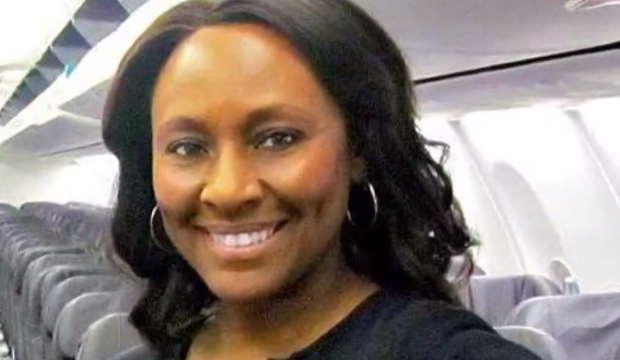
Ms Frederick noticed a ‘dishevelled’ looking girl accompanied by a well-dressed man and immediately knew something was wrong

indepentdent.co.uk_A flight attendant rescued a victim of human trafficking after she spotted the girl looking “dishevelled” on a plane accompanied by a well-dressed man.

Sheila Frederick, 49, was working on an Alaska Airlines flight from Seattle to San Francisco when she noticed the girl, who looked around 14 or 15 years old, and immediately knew something was wrong, according to 10 News.

“Something in the back of my mind said something was not right. He was well-dressed. That’s what got me because I thought why is he well-dressed and she is looking all dishevelled and out of sorts?” Ms Frederick told the programme.

When she tried to speak with the two passengers, the man reportedly became defensive and the girl wouldn’t engage in

Continue reading at indepentdent.co.uk

Một tư tưởng nữ quyền tiên phong và thấu đáo

DĐ – Bùi Trân Phượng

bia

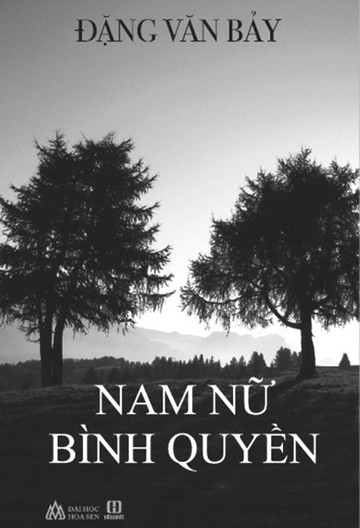
Nam nữ bình quyền do ĐH Hoa Sen và NXB Hồng Đức tái bản, quý 3/2014
(tin Thể Thao & Văn Hoá)

Đặng Văn Bảy (1903-1983) là tác giả sớm nhứt ở Nam bộ đã viết về nữ quyền. Nam nữ bình quyền được viết ở Vĩnh Long từ đầu tháng 8 năm 1925 đến đầu tháng 7 năm 1927, xuất bản năm 1928 ở Sài Gòn và bị cấm khoảng một năm sau đó.

Nay đọc lại, chúng ta thấy đây thực sự là một tiếng nói tiên phong đấu tranh cho quyền bình đẳng nam nữ, bảo vệ quyền làm người của phụ nữ. Là một trong những tiếng nói sớm nhứt về vấn đề nầy, Nam nữ bình quyền của Đặng Văn Bảy đồng thời xứng đáng được coi là suy nghĩ và diễn ngôn vào loại đi xa nhứt trong sự đặt lại vấn đề, thách thức trật tự lâu đời và hiện hữu, trật tự trong quan hệ giới, và cả trong quan hệ giữa người cai trị và bị trị, giữa người áp bức và bị áp bức. Tiếp tục đọc “Một tư tưởng nữ quyền tiên phong và thấu đáo” →

China’s nuclear power capacity likely to overtake America’s within a decade

Japan Times

by

Bloomberg Feb 1, 2017

China’s rapid nuclear expansion will result in it overtaking the U.S. as the nation with the largest atomic power capacity by 2026, according to BMI Research.

The world’s second-biggest economy will almost triple its nuclear capacity to nearly 100 gigawatts by 2026, making it the biggest market globally, analysts said in a note dated Jan. 27. The nation added about 8 gigawatts of nuclear power last year, boosting its installed capacity to about 34 million kilowatts, according to BMI.

China has committed to boosting nuclear power, which accounted for about 1.7 percent of its total generation in 2015, to help reduce reliance on coal, which accounts for two-thirds of its primary energy. The nation has 20 reactors currently under construction, according to the International Atomic Energy Agency. Another 176 are either planned or proposed, far more than any other nation, according to the World Nuclear Association. Tiếp tục đọc “China’s nuclear power capacity likely to overtake America’s within a decade” →

Bacteria to improve sanitation on Southeast Asia’s largest lake

KAMPONG CHHNANG, Cambodia: Piles of rotten garbage and a choking odour engulfed the bank of Tonle Sap near a small harbour in Chhnok Tru, Kampong Chhnang. Most of the rubbish, from plastic bags to human waste and animal carcasses, came from a fresh market a few steps away.

For visitors, the experience may be shocking. But for the inhabitants of Tonle Sap – Southeast Asia’s largest freshwater lake stretching 13,000 sqkm across five Cambodian provinces – that is the only environment they know, and it is getting worse. Tiếp tục đọc “Bacteria to improve sanitation on Southeast Asia’s largest lake” →

Hong Kong holds anti-Trump protest

Many were women from the Philippines and Indonesia employed in Hong Kong as domestic workers. Protesters chanted, “US imperialist, number one terrorist!”

“We are very worried that what Donald Trump is doing will also be adopted by other states who believe that their nation is the greatest nation without the migrants,” activist and domestic worker Eni Lestari said outside the US Consulate General. Tiếp tục đọc “Hong Kong holds anti-Trump protest” →

No Extra Forces Needed in Gulf [and South China Sea] Now, [US] Defense Chief Says

But Mr. Mattis said that the United States did not need to deploy additional military resources to signal its concern. “Right now, I do not think that is necessary,” he said.

Mr. Mattis also signaled restraint on another hot spot: the South China Sea. Mr. Mattis said that China’s territorial claim to almost all of its waters “has shredded the trust of nations in the region.” But he emphasized that he saw no need for more military maneuvers in the area.

“What we have to do is exhaust all diplomatic efforts to try to resolve this properly,” he said.