What are priority actions needed for Vietnam to become a more prosperous nation in the coming decades?


Vietnam has reaped impressive economic successes in 2019 and is expecting a bumper crop this year. Raymond Mallon, senior economic advisor to the Australia-Vietnam Economic Reform Program, analyses these achievements and discusses priority actions needed for Vietnam to become a more prosperous nation in the coming decades.

Vietnam’s growth of 7.0 percent in 2019 was led by 11.3 percent growth in the manufacturing sector. Total industrial sector output grew by 8.9 percent, services by 7.3 percent, and agriculture by 2 percent. Growth has been achieved with macro-economic stability, including an inflation rate below 3 percent and increased foreign reserves. Vietnam’s ratios of trade and foreign investment are amongst the highest in the world and continue to grow. Vietnam Investment Review (VIR) reports. Tiếp tục đọc “What are priority actions needed for Vietnam to become a more prosperous nation in the coming decades?” →
Vietnam bans all flights to and from China over coronavirus

FEBRUARY 1, 2020 / 11:14 PM /
HANOI (Reuters) – Vietnam declared a public health emergency over the coronavirus epidemic on Saturday and said it would halt all flights to and from China.
Tourists wear protective masks while visiting Hoan Kiem lake in Hanoi, Vietnam January 31, 2020. REUTERS/Kham

The government said it would also stop issuing visas for foreign visitors who had been in China in the past two weeks.

All permits granted for flights between Vietnam and China, including Hong Kong and Macau as well as self-ruled Taiwan which China claims as its territory, have been revoked until further notice, the government said in a statement.

But Taiwan’s Foreign Ministry said in a later statement that it had spoken to the Vietnamese government and had the ban on flights to the island lifted. Tiếp tục đọc “Vietnam bans all flights to and from China over coronavirus” →

WHO chief says widespread travel bans not needed to beat China virus

Stephanie Nebehay

GENEVA (Reuters) – World Health Organization chief Tedros Adhanom Ghebreyesus said on Monday there was no need for measures that “unnecessarily interfere with international travel and trade” in trying to halt the spread of a coronavirus that has killed 361 people in China.

FILE PHOTO: Director-General of the World Health Organization (WHO) Tedros Adhanom Ghebreyesus speaks during a news conference after a meeting of the Emergency Committee on the novel coronavirus (2019-nCoV) in Geneva, Switzerland January 30, 2020. REUTERS/Denis Balibouse

“We call on all countries to implement decisions that are evidence-based and consistent,” Tedros told the WHO executive board, reiterating his message from last week when he declared an international emergency.

China is facing increasing international isolation due to restrictions on flights to and from the country, and bans on travellers from China. Tiếp tục đọc “WHO chief says widespread travel bans not needed to beat China virus” →

Tình đồng bào bị tử thương


            Mai An Nguyễn Anh Tuấn

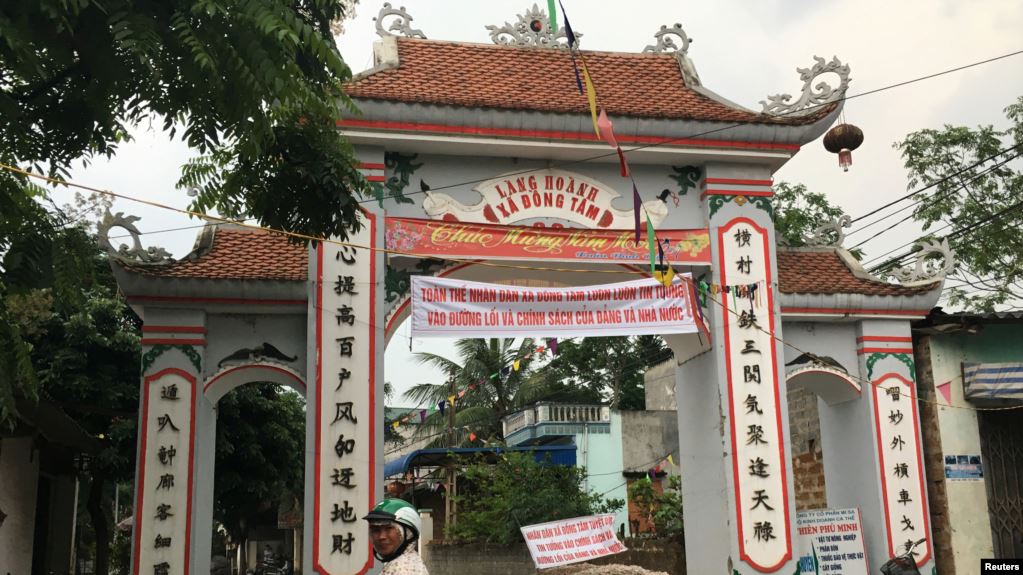
Chiều tối 29 Tết Canh Tý, tôi tới thăm gia đình nhà văn lão tướng Hoàng Quốc Hải- nhà văn tôi hằng quý mến, và đặc biệt kính phục bởi những bài viết của ông về thế sự suốt hơn chục năm qua… Nhà thơ Nguyễn Thị Hồng, vợ ông đắp chăn trong ánh đèn ngủ, còn ông về quê chưa ra. Căn nhà vắng lạnh, không có chút gì của không khí đón Tết. Thấy tôi đến, bà vui lên chút, rồi thấy tôi hơi ngỡ ngàng nhìn quanh, bà bảo: “Năm nay anh chị không đào quất gì em ạ… Buồn quá… Cứ nghĩ tới bà con Đồng Tâm năm nay chẳng có Tết, nhà cửa tan hoang, gia đình tan tác, xóm làng bị bao vây, anh chị chỉ muốn ứa nước mắt…” Tiếp tục đọc “Tình đồng bào bị tử thương” →

Hai công trình ngăn mặn bỏ hoang ở miền Tây

VNExpress – Thứ năm, 26/12/2019, 12:24 (GMT+7)

CÀ MAU – Âu thuyền Tắc Thủ và cống Cà Mau là hai công trình thủy lợi được đầu tư hơn trăm tỷ đồng nhưng không phát huy hiệu quả, hiện bỏ hoang.

Âu thuyền Tắc Thủ được khởi công năm 2001, khánh thành năm 2005, do Bộ Giao thông Vận tải làm chủ đầu tư, với gần 80 tỷ đồng. Dự án đặt tại ngã ba sông Ông Đốc – Cái Tàu – Sông Trẹm, thuộc xã Hồ Thị Kỷ (huyện Thới Bình) và xã Khánh An (huyện U Minh).

Âu thuyền Tắc Thủ chắn ngã ba sông Ông Đốc - Cái Tàu - Sông Trẹm. Ảnh: Minh Thanh.

Âu thuyền Tắc Thủ chắn ngã ba sông Ông Đốc – Cái Tàu – Sông Trẹm. Ảnh: Minh Thanh.

Tiếp tục đọc “Hai công trình ngăn mặn bỏ hoang ở miền Tây” →

APPLY NOW FOR THE 2020 ENERGY JOURNALISM INITIATIVE

COLUMBIA CENTER FOR ENERGY POLICY

We’re excited to announce  an open call for applications for the 2020 Energy Journalism Initiative, which will be held June 16-19, 2020, in New York at Columbia University. To apply, please complete our online application, and submit three samples of your work along with a letter of recommendation from your direct supervisor. Applications are due at 11:59 p.m. on Sunday, February 16, 2020.

APPLY NOW

Rapid changes are underway in the energy sector, we’re approaching a presidential election in the U.S., and climate change is getting more attention than ever before. It is imperative that journalists are equipped with the knowledge to report on the energy sector with insight and nuance. They are key to improving the dialogue around energy and environmental issues, creating a well-informed public and helping public and private sector leaders make good choices about our energy future. Tiếp tục đọc “APPLY NOW FOR THE 2020 ENERGY JOURNALISM INITIATIVE” →

Perceptions of climate related investment risk in Southeast Asia’s power sector

SEI.org

Given the growing international pressure to mitigate climate change and increasing fears around climate impacts, expectations of continued investment in fossil fuels in Southeast Asia’s power sector appear puzzling. This paper explores how power sector investors perceive climate-related risks and how they factor these risks into investment decision-making.

du Pont, P. Gueguen-Teil, C. and Johnson, O. (2020). Perceptions of Climate Related Investment Risk in Southeast Asia’s Power Sector. SEI Working Paper. Stockholm Environment Institute, Stockholm. http://www.sei.org/publications/perceptions-climate-investment-risk-southeast-asia-power-sector

Tiếp tục đọc “Perceptions of climate related investment risk in Southeast Asia’s power sector” →

Indonesian environment ministry ends WWF partnership amid public spat

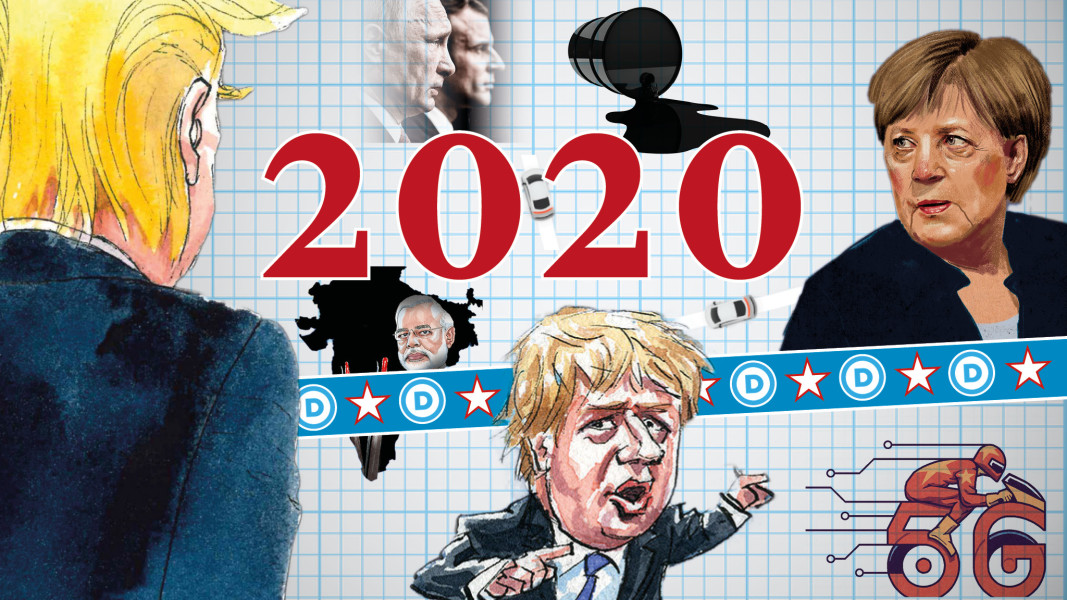
Forecasting the world in 2020

FT.com

Brexit was not stopped, populists made smaller gains than expected in May’s European parliament elections, and the S&P 500 beat our — and most other people’s — expectations. Along with Brazilian growth falling below the year before, the FT’s forecasting team got those predictions wrong for 2019, though Philip Stephens last year admitted he offered his forecast that Brexit would be reversed “as much in hope as expectation”.

Though the world may seem ever more unpredictable, four wrong answers was an improvement on our dismal eight the year before. And aside from Brexit, readers in our annual competition generally made the same mistakes we did — more than 70 per cent of you got the same three questions wrong. For a third straight year, though, the top-scoring readers beat the FT. Three tied on 19 correct answers out of 20. Tiếp tục đọc “Forecasting the world in 2020” →

Southeast Asia in 2020: Issues to Watch, Part 1

CSIS.org

January 14, 2020

In this two-part series, Dr. Amy Searight, senior adviser and director of the CSIS Southeast Asia Program, previews five key issues to watch in Southeast Asia in 2020. This installment addresses U.S.-ASEAN relations, climate change and the imperiled Mekong, and domestic politics. The next installment will cover economic trends and developments in the digital space.

Can Trump Reset U.S.-ASEAN Relations?

Disappointingly, 2019 was a pretty bad year for U.S.-ASEAN relations. Trump had a promising start in his first year in office, hosting four Southeast Asian leaders in the White House, traveling to Vietnam and the Philippines to unveil his “Free and Open Indo-Pacific” vision, and holding a U.S.-ASEAN summit. But Trump’s interest in Southeast Asia has since appeared to wane considerably. Although Trump traveled to Vietnam in February for a second summit with North Korean leader Kim Jong-un, he later called Vietnam the “single worst abuser” in trade relations with the United States. In November, President Trump skipped the East Asian Summit (EAS) for the third straight year, sending National Security Advisor Robert O’Brien instead. Trump’s absence in Bangkok and the historically low level of diplomatic representation at the summit ruffled a lot of feathers within ASEAN and led most of the Southeast Asian leaders to snub the U.S.-ASEAN summit held on the sidelines of the EAS (only Thailand, Vietnam, and Laos attended at the leader level). ASEAN’s disenchantment with the level of U.S. engagement came just as China was gaining new traction in the region, with a revamped Belt and Road Initiative that appeared to address regional concerns and progress toward launching the Regional Comprehensive Economic Partnership (RCEP), a trade agreement between ASEAN, China, and four other regional trade partners.
Tiếp tục đọc “Southeast Asia in 2020: Issues to Watch, Part 1” →

Children to bear the burden of negative health effects from climate change

sciencedaily.com 

Date: January 27, 2020

Source: University of Texas Health Science Center at Houston

Summary: The grim effects that climate change will have on pediatric health outcomes was the focus of a recent article.Share:

The grim effects that climate change will have on pediatric health outcomes was the focus of a “Viewpoint” article published in the Journal of Clinical Investigation by Susan E. Pacheco, MD, an expert at The University of Texas Health Science Center at Houston (UTHealth).

Pacheco, an associate professor of pediatrics at McGovern Medical School at UTHealth, along with professors from Johns Hopkins Medicine and the George Washington University, authored a series of articles that detail how increased temperatures due to climate change will negatively affect the health of humanity. In the article authored by Pacheco, she shines a light on the startling effects the crisis has on children’s health before they are even born. Tiếp tục đọc “Children to bear the burden of negative health effects from climate change” →

Commentary: The Wuhan virus and the problem with the wildlife trade

channelnewsasia.com

The Wuhan virus outbreak suggests we still haven’t learnt the lessons from SARS, says an expert.

A worker in a protective suit is seen at the closed seafood market in Wuhan
A worker in a protective suit is seen at the closed seafood market in Wuhan, Hubei province, China January 10, 2020. REUTERS/Stringer

NORWICH: The SARS outbreak in 2002 to 2003 was the first global pandemic of the 21st century.

There were over 8,400 reported cases and 11 per cent of those infected with the virus died. Its cause was a newly identified coronavirus (a type of virus that causes respiratory infections): SARS Co-V.

Early cases were linked to wildlife markets and restaurants in Guangdong, China, where researchers found SARS-like coronaviruses in animals including masked palm civets and a racoon dog.
Tiếp tục đọc “Commentary: The Wuhan virus and the problem with the wildlife trade” →

Revealed: the 20 firms behind a third of all carbon emissions

theguardian.com 

New data shows how fossil fuel companies have driven climate crisis despite industry knowing dangers

by  and 

The Guardian today reveals the 20 fossil fuel companies whose relentless exploitation of the world’s oil, gas and coal reserves can be directly linked to more than one-third of all greenhouse gas emissions in the modern era.

New data from world-renowned researchers reveals how this cohort of state-owned and multinational firms are driving the climate emergency that threatens the future of humanity, and details how they have continued to expand their operations despite being aware of the industry’s devastating impact on the planet.

The analysis, by Richard Heede at the Climate Accountability Institute in the US, the world’s leading authority on big oil’s role in the escalating climate emergency, evaluates what the global corporations have extracted from the ground, and the subsequent emissions these fossil fuels are responsible for since 1965 – the point at which experts say the environmental impact of fossil fuels was known by both industry leaders and politicians. Tiếp tục đọc “Revealed: the 20 firms behind a third of all carbon emissions” →