Why some researchers struggle to escape the ivory tower

theconversation.com

Academics are increasingly expected to share their research widely beyond academia. However, our recent study of academics in Australia and Japan suggests Australian universities are still very much focused on supporting the production of scholarly outputs. They offer relatively limited support for researchers’ efforts to engage with the many non-academics who can benefit from our research.

One reason engagement is expected is that government, industry and philanthropic sources fund research. And when academics share their research with the public, industry and policymakers, this engagement is good for the university’s reputation. It can also lead to other benefits such as research funding.


Tiếp tục đọc “Why some researchers struggle to escape the ivory tower” →

Understanding Gray Zone

Gray Zone – Gen. Joseph F. Dunford, Jr., Chairman of the US Joint Chiefs of Staff

Understanding Gray Zone

Gray Zone Tools: Information Warfare

Gray Zone Tools: Use of Ambiguous Forces

Gray Zone Tools: Economic Coercion

Gray Zone: Responding to the Threats

East Sea: What is gray zone? (Maritime Gray Zone Tactics: The Argument for Reviewing the 1951 U.S.-Philippines Mutual Defense Treaty)

By Adrien Chorn and Monica Michiko Sato – October 1, 2019, CSIS

Download PDF   |    

On August 31, 1951, representatives of the United States and the Republic of the Philippines signed the Mutual Defense Treaty (MDT) in Washington. In recognition that “an armed attack in the Pacific Area on either of the Parties would be dangerous to [the] peace and safety” of both countries, the treaty declared that each state would “act to meet the common dangers in accordance with its constitutional processes.”i However, like most conventional defense treaties and standards, the MDT is not clear about the increasingly common unconventional gray zone threats that skirt the definition of war to avoid prompting a kinetic response. Since its inception, the United States’ commitment to the MDT regarding attacks on Philippine assets in contested waters in the South China Sea has been unclear. Along with the controversial policies of the administration of Philippine President Rodrigo Duterte, the uncertainty of the MDT has strained U.S.-Philippine relations and caused Philippine Defense Secretary Delfin Lorenzana to call for a review of the relevance of the MDT in October 2018 with the main goal of determining whether the government should “maintain it, strengthen it, or scrap it.”ii

Tiếp tục đọc “East Sea: What is gray zone? (Maritime Gray Zone Tactics: The Argument for Reviewing the 1951 U.S.-Philippines Mutual Defense Treaty)” →

How to transform systems: The World Resources Institute Q&A with Andrew Steer

Mongabay.com

  • Between the pandemic, rising food insecurity and poverty, and catastrophic disasters like wildfires, storms and droughts, 2020 was a year of challenges that prompted widespread calls for systemic change in how we interact with one another, with other species, and with the environment. Bringing about such changes will require transforming how we produce food and energy, how we move from one place to another, and how we define economic growth.
  • But it’s a lot easier to talk about transforming systems than to actually do it. Because real change is hard, we’re more likely to slip back into old habits and return to business as usual than embrace paradigm shifts.
  • Recognizing this limitation, World Resources Institute (WRI), a Washington, D.C.-based organization that operates in 60 countries, works across sectors by creating tools that increase transparency, create a common understanding, and provide data and analysis that enable action.
  • WRI’s development of these platforms and tools has grown by leaps and bounds since the early 2010s when Andrew Steer joined the organization as president and CEO from the World Bank. Steer spoke with Mongabay during a December 2020 interview.

Between the pandemic, rising food insecurity and poverty, and catastrophic disasters like wildfires, storms and droughts, 2020 was a year of challenges that prompted widespread calls for systemic change in how we interact with one another, with other species, and with the environment. Bringing about such changes will require transforming how we produce food and energy, how we move from one place to another, and how we define economic growth. But it’s a lot easier to talk about transforming systems than to actually do it. Because real change is hard, we’re more likely to slip back into old habits and return to business as usual than embrace paradigm shifts. Tiếp tục đọc “How to transform systems: The World Resources Institute Q&A with Andrew Steer” →

As House [of Representatives] Was Breached, a Fear ‘We’d Have to Fight’ to Get Out

The New York Times

What unfolded on Wednesday was a tableau of violence and mayhem that shocked the nation, one of the most severe intrusions of the Capitol since the British burned down the building in 1814.

Representative Jason Crow, Democrat of Colorado, and other lawmakers found themselves captive in the House chamber as a mob broke into the Capitol on Wednesday.
Representative Jason Crow, Democrat of Colorado, and other lawmakers found themselves captive in the House chamber as a mob broke into the Capitol on Wednesday.Credit…Andrew Harnik/Associated Press
Zolan Kanno-Youngs
Sabrina Tavernise
Emily Cochrane

By Zolan Kanno-Youngs, Sabrina Tavernise and Emily Cochrane

  • Published Jan. 6, 2021Updated Jan. 7, 2021, 12:01 p.m. ET

WASHINGTON — The mob of Trump supporters pressed through police barricades, broke windows and battered their way with metal poles through entrances to the Capitol. Then, stunningly, they breached the “People’s House” itself, forcing masked police officers to draw their guns to keep the insurgents off the chamber floor.

Tiếp tục đọc “As House [of Representatives] Was Breached, a Fear ‘We’d Have to Fight’ to Get Out” →

Big Tech tiếp tục bị phán xét

HOA KIM 5/1/2021 10:05 GMT+7

TTCT – Sự kiên nhẫn dành cho nhóm Big Tech, gồm năm công ty công nghệ Mỹ Amazon, Apple, Google, Facebook và Microsoft, rốt cuộc đã cạn.

Liên tiếp ở châu Âu và cả trên sân nhà, một loạt đơn kiện của chính quyền nhắm vào những gã khổng lồ công nghệ trong năm 2020 cho thấy những tượng đài này không hề “bất khả xâm phạm” như ta tưởng. Tiếp tục đọc “Big Tech tiếp tục bị phán xét” →

Kỳ vọng về việc đàm phán hợp đồng mua bán điện (PPA) ngay trong tháng 8/2020 và ký kết PPA vào cuối năm 2020 đã không thành hiện thực

Báo Đầu Tư

TIN LIÊN QUAN

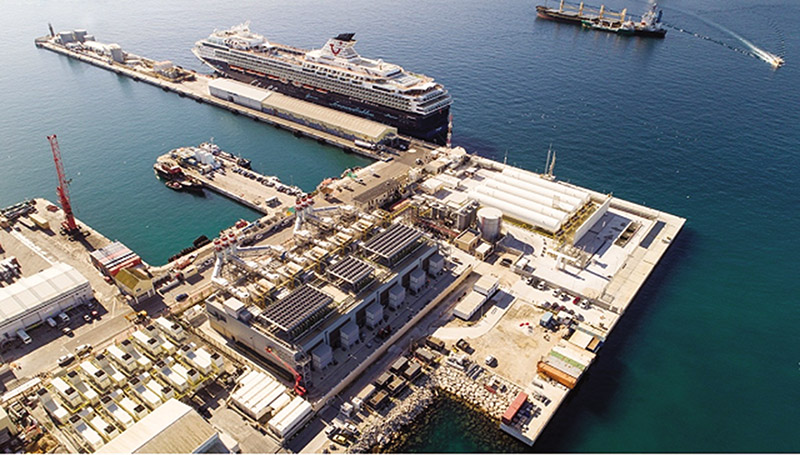
Các Dự án LNG đều yêu cầu được bao tiêu dài hạn. Trong ảnh: Mặt bằng một Dự án điện khí LNG hoàn chỉnh
Các dự án LNG đều yêu cầu được bao tiêu dài hạn. Trong ảnh: Mặt bằng một dự án điện khí LNG hoàn chỉnh

Khó đàm phán

Trao đổi với phóng viên Báo Đầu tư mới đây, một quan chức của Cục Điện lực và Năng lượng tái tạo (Bộ Công thương) cho hay, Dự án Điện khí LNG Bạc Liêu đã không thể ký được PPA trong năm 2020. Như vậy, kỳ vọng về việc “đàm phán PPA ngay trong tháng 8/2020 và ký kết PPA vào cuối năm 2020” đã không thành hiện thực.

Tiếp tục đọc “Kỳ vọng về việc đàm phán hợp đồng mua bán điện (PPA) ngay trong tháng 8/2020 và ký kết PPA vào cuối năm 2020 đã không thành hiện thực” →

Renewable Energy Lab. NREL’s Updated System Advisor Model

The latest version of NREL’s popular System Advisor Model (SAM) is now available, providing more robust data and seamless integration with other NREL models to help the renewable energy industry make informed project decisions.

SAM is free, publicly available modeling software for technical performance simulation and financial analysis of renewable energy projects and includes a desktop application, software development kit, and open-source code.

Updates to the model include:

  • The addition of the latest solar resource data from NREL’s National Solar Radiation Database, including yearly and sub-hourly data and covering Europe, Africa, and Asia for the first time
  • Improved battery dispatch for both front-of-meter and behind-the-meter battery storage applications
  • Improved electricity bill calculations for distributed behind-the-meter financial models
  • Implementation of NREL’s Solar Position Algorithm for sun angle calculations of solar performance models
  • Integration of NREL’s Land-Based Balance-of-System Systems Engineering Model for improved wind power plant system cost estimation and design.

“With the recent improvements, we’re excited to continue to ensure that complex energy analysis questions can be answered quickly and easily,” said Janine Freeman, NREL lead for the SAM model.

Thăm Lăng Ông, tìm lại những dấu chân Anh Quốc đầu tiên ở Sài Gòn – Gia Định

NĐT –  14:37 | Thứ năm, 17/12/2020 “Thật thú vị khi nghĩ rằng gần 200 năm trước đã có một người đồng hương của tôi đến diện kiến Tả quân với nhiệm vụ cũng giống như của tôi hiện nay: thúc đẩy ngoại giao và thương mại giữa hai nước…” – Tổng lãnh sự Anh tại TP.HCM và Giám đốc Thương vụ Anh tại Việt Nam Emily Hamblin.

Khu Lăng Ông rộng khoảng 18.500 m2, tọa lạc giữa bốn con đường thuộc quận Bình Thạnh, TP.HCM: Phan Đăng Lưu, Trịnh Hoài Đức, Vũ Tùng, Đinh Tiên Hoàng. Từ ngày 16.9.2020, đường Đinh Tiên Hoàng (từ Cầu Bông đến giao lộ Phan Đăng Lưu) được đổi tên thành đường Lê Văn Duyệt. Ảnh: Thành Nguyễn Tiếp tục đọc “Thăm Lăng Ông, tìm lại những dấu chân Anh Quốc đầu tiên ở Sài Gòn – Gia Định” →

Từ 5 “kho báu” di sản quận Ba nghĩ đến việc thúc đẩy kinh tế di sản

NĐT –   16:54 | Thứ năm, 24/12/2020 Ăn quận Năm, nằm quận Ba… Ai đó đã đúc kết thành tục ngữ. Nhưng quận Ba đâu chỉ có những con đường biệt thự “cây dài bóng mát” – mơ ước nhà cửa của thị dân. Quận Ba còn có nhiều “kho báu” khác mà người viết nhân dự Hội thảo “Tiềm năng phát triển đô thị của quận Ba, TP.HCM” vào ngày 22.12 vừa qua, đã đề nghị khai thác. Mong rằng việc nhận diện các kho báu di sản của từng quận/huyện cụ thể sẽ góp thêm việc thúc đẩy kinh tế di sản cho toàn thành phố và các nơi khác.

Biệt thự 110 – 112 Võ Văn Tần (quận 3, TP.HCM) đã có kế hoạch trùng tu để trả lại một kiến trúc ẩn chứa nhiều giá trị Việt Nam. Ảnh: Trung Dũng Tiếp tục đọc “Từ 5 “kho báu” di sản quận Ba nghĩ đến việc thúc đẩy kinh tế di sản” →

Solar power boom poses a distribution challenge

By Dat Nguyen   January 5, 2021 | 08:31 pm GMT+7 vnexpressSolar power boom poses a distribution challengeA worker installs solar power panels in Ninh Thuan Province, central Vietnam. Photo by VnExpress/Quynh Tran.The increasing solar power capacity has made it difficult for national utility Vietnam Electricity (EVN) to ensure stable power distribution nationwide.

The nature of solar power capacity, which accounts for 25 percent of the total, is to produce high volumes during the day and no production in the evening. This poses difficulties for EVN in operating the national grid, the national utility has said in a report.

There have been times when the grid was oversupplied during the low-demand hours between 10 a.m. and 2 p.m. when solar radiation is at peak, the report says.

On the contrary, when power demand is at the highest, the 5:30-6:30 p.m. period, solar power production falls to nearly zero and the traditional power generators have to be mobilized.

“The ratio of renewable power generation is increasing and with it comes instability in operation,” the report says.

Vietnam’s solar power capacity was roughly 16,500 megawatt by the end of last year, nearly 48 percent of it coming from rooftop panels and the rest from plants.

Solar power production reached 10.6 billion kilowatt-hours last year, accounting for 4.3 percent of total.

There was a surge in the number of solar power projects after the government offered an incentive feed-in tariff scheme to promote renewable energy production to meet rising demand in a fast-growing economy.

Sau thời hoàng kim là gánh nặng

K.TÂM – T.MẠNH – L.DÂN – C.CÔNG 4/1/2021 6:00 GMT+7

TTCT – 25 năm trước, Chính phủ triển khai “Chương trình 1 triệu tấn đường” và năm 2000 đạt được mục tiêu này. 20 năm sau, 2020 là năm mà cây mía đã trở thành gánh nặng với nhiều người.

“Nhắc tới cây mía, tui nổi da gà. Mần lúa, nuôi tôm còn có năm trúng năm thất, chứ cây mía gần 10 năm nay chưa một lần được giá, riết rồi nản, bà con bỏ gần hết”, chị Võ Thị Trang (xã An Thạnh 2, huyện Cù Lao Dung, Sóc Trăng) nói. Tiếp tục đọc “Sau thời hoàng kim là gánh nặng” →

Chính trường Israel: Ăn tiền và ở tù

SÁNG ÁNH 2/1/2021 9:00 GMT+7 – TTCT

12 giờ đêm ngày 22-12-2020, Quốc hội Israel tự giải tán vì không thông qua được ngân sách quốc gia cho năm 2021. Bầu cử được ấn định vào ngày 23-3-2021. Chuyện này cũng không quá lạ. Việc Quốc hội Israel không hoàn tất nhiệm kỳ định lệ 4 năm không hiếm: từ lập quốc và bầu cử 1949 đến giờ mới có… 10 lần, đây cũng đã là lần thứ 4 phải tổ chức bầu cử chỉ trong 2 năm sau bầu cử lần trước.

Quốc hội Israel gồm 120 ghế đại biểu. Đảng nào có 61 ghế đa số sẽ cầm quyền, nhưng từ 1949, chưa từng có một đảng đơn lẻ nào kiếm đủ số ghế đó – nhiều nhất là 56 ghế. Tất cả các chính phủ cầm quyền tại Israel đều là liên minh giữa nhiều đảng khác nhau. Chuyện này âu cũng là thường tình, cho đến nay.

Ảnh: The New York Times

Tiếp tục đọc “Chính trường Israel: Ăn tiền và ở tù” →

What Does Vietnam Want from the US in the South China Sea?

The Diplomat

Despite seeking a balance between the superpowers, Vietnam desires more robust security ties with Washington.

Derek Grossman

By Derek GrossmanJanuary 04, 2021   

What Does Vietnam Want from the US in the South China Sea?
Sailors signal to an MH-60S Sea Hawk helicopter as it hovers over the flight deck of the guided-missile destroyer USS McCampbell during a training exercise in the South China Sea, July 22, 2016.Credit: Flickr/U.S. Navy

As the incoming Biden administration formulates its South China Sea strategy, one regional partner that looms large is Vietnam. Over the last few years, tensions between China and Vietnam in the South China Sea have remained high, impacting fishing and natural resource exploration in disputed waters. While the Biden administration is likely to continue the positive momentum in bilateral ties, it is less clear what specifically Hanoi seeks from Washington to help it effectively deter Beijing.

Tiếp tục đọc “What Does Vietnam Want from the US in the South China Sea?” →

A tale of 2020 in 20 McKinsey charts

Mckinsey.cim

See the story of this unique year through data visualizations from our Charting the Path to the Next Normal series.
This year, we launched a new series to highlight our best charts and data visualizations—the ones that deserved lives of their own outside the articles they were originally created for. Every weekday, we post a selection from one of our highly skilled data-visualization editors to our collection page, Charting the Path to the Next Normal. As we look back at the year that was, these daily charts tell a story about our changing world, from the early days of lockdowns and a tumultuous summer to ending the year on a hopeful note. While uncertainty remains, and each chart in isolation offers but one lens on the landscape, the themes emerging from the collection as a whole provide unique insight into the many disruptions 2020 visited on us.