Trước thế kỷ thứ II, vùng đất của vương quốc Chăm Pa cổ đã được nhắc đến với tên Hồ Tôn Tinh (trong truyền thuyết), rồi tên huyện Tượng Lâm (thuộc quận Nhật Nam thời nhà Hán) khi nằm dưới sự thống trị của Trung Quốc. Lãnh thổ này được ghi nhận là từ miền Trung trở vào miền NamViệt Nam, thay đổi tùy thời kỳ. Từ 1694 đến 1832, chúa Chăm Pa (Trấn vương Thuận Thành) nằm dưới sự đô hộ của các chúa Nguyễn, vua nhà Tây Sơn và vua nhà Nguyễn cho đến lúc bị sáp nhập hoàn toàn.
We, the G7 Foreign Ministers of Canada, France, Germany, Italy, Japan, the United Kingdom, and the United States of America, and the High Representative of the European Union, condemn in the strongest terms the atrocities committed by the Russian armed forces in Bucha and a number of other Ukrainian towns. Haunting images of civilian deaths, victims of torture, and apparent executions, as well as reports of sexual violence and destruction of civilian infrastructure show the true face of Russia’s brutal war of aggression against Ukraine and its people. The massacres in the town of Bucha and other Ukrainian towns will be inscribed in the list of atrocities and severe violations of international law, including international humanitarian law and human rights, committed by the aggressor on Ukrainian soil.
In the presence of the Foreign Minister of Ukraine, Dmytro Kuleba, we expressed today our heart-felt solidarity with the Ukrainian people and our deepest condolences to the victims of this war and their families. We underline our unwavering support for Ukraine within its internationally recognised borders and express our readiness to assist further, including with military equipment and financial means, to allow Ukraine to defend itself against Russia’s aggression and to rebuild Ukraine.
We underscore that those responsible for these heinous acts and atrocities, including any attacks targeting civilians and destruction of civilian infrastructure, will be held accountable and prosecuted. We welcome and support the ongoing work to investigate and gather evidence of these and other potential war crimes and crimes against humanity, including by the ICC Office of the Prosecutor, the Commission of Inquiry mandated by the UN Human Rights Council, the Human Rights Monitoring Mission Ukraine of the OHCHR, and the OSCE’s mission of experts mandated by OSCE Participating States. We will provide investigative support, technical experts and funding. We will continue to promote accountability for all those complicit in Moscow’s war of choice, including the Lukashenka regime in Belarus. We are convinced that now is the time to suspend Russian membership of the Human Rights Council.
Russia must immediately comply with the legally binding order of the International Court of Justice (ICJ) to suspend the military operations that it commenced on 24 February 2022 in the territory of Ukraine. Further, we urge Russia to withdraw completely its military forces and equipment from the entire territory of Ukraine within its internationally recognised borders.
We warn against any threat or use of chemical, biological or nuclear weapons. We recall Russia’s obligations under international treaties of which it is a party, and which protect us all. Any use by Russia of such a weapon would be unacceptable and result in severe consequences. We condemn Russia’s unsubstantiated claims and false allegations against Ukraine, a respected member of the Biological and Toxin Weapons Convention and the Chemical Weapons Convention that is in compliance with its legal obligations under those instruments. We express concern about other countries and actors that have amplified Russia’s disinformation campaign.
We express our gravest concern with Russia forcefully seizing control of nuclear facilities, and other violent actions in connection with a number of nuclear facilities, nuclear and other radioactive material, which have caused and continue to pose serious and direct threats to the safety and security of these facilities and their civilian personnel, significantly raising the risk of a nuclear accident or incident, which endangers the population of Ukraine, neighbouring States and the international community.
We reiterate our demand that Russia upholds its obligations under international humanitarian law and desists from further blatant abuses. The Russian leadership must immediately provide for safe, rapid and unimpeded humanitarian access and make safe passages work, enabling humanitarian aid to be delivered to besieged cities and civilians to reach safety.
We commit to supporting the Government of Ukraine’s humanitarian coordination structure and to disburse humanitarian support quickly. We ask others to join in this effort. A humanitarian push including more funding is urgently needed for Ukraine and beyond as Russia’s ruthless war and actions are having massive consequences on global commodity and food prices. The resulting rise in food insecurity is being felt disproportionately by the most vulnerable. We stand in solidarity with our partners across the world who have to bear the rising price of President Putin’s unilateral choice to wage war in Europe. We will make coherent use of all instruments and funding mechanisms to address food insecurity, keep markets open, and build resilience in the agriculture sector on all continents. We will actively counter Russia’s narrative that Western sanctions have caused the rise in global food prices and call it out for what it is: a blatant lie.
In light of Russia’s ongoing aggression against Ukraine, carried out with Belarus’ complicity, we have already adopted unprecedented and coordinated economic and financial sanctions against Russia that impose a significant cost on its economy. We stress the necessity of further increasing the economic pressure inflicted on Russia and the Lukashenka regime in Belarus. Together with international partners, the G7 will sustain and increase pressure on Russia by imposing coordinated additional restrictive measures to effectively thwart Russian abilities to continue the aggression against Ukraine. We will work together to stop any attempts to circumvent sanctions or to aid Russia by other means. We are taking further steps to expedite plans to reduce our reliance on Russian energy, and will work together to this end.
We commend those neighbouring states to Ukraine that demonstrated great solidarity and humanity by welcoming Ukrainian refugees and third country nationals affected by the conflict. We confirm the need for increased international assistance and will continue to support these countries, including by receiving more refugees. President Putin’s war of aggression against Ukraine has already forced millions of civilians, especially women, children, and elderly, to flee their homes. Over 4.2 million crossed the border to other countries, almost all of them to the EU and the Republic of Moldova. We reiterate our concern about the risk to this vulnerable population, including the risk of human trafficking and our commitment to protect these refugees.
Ministers paid special attention to the Republic of Moldova, which hosts the largest group of refugees from Ukraine per capita. The Ministers agreed to further coordinate their assistance for Moldova’s humanitarian response and long-term resilience following the Moldova Support Conference co-hosted by Germany, France and Romania on 5 April in Berlin and the establishment of the Moldova Support Platform.
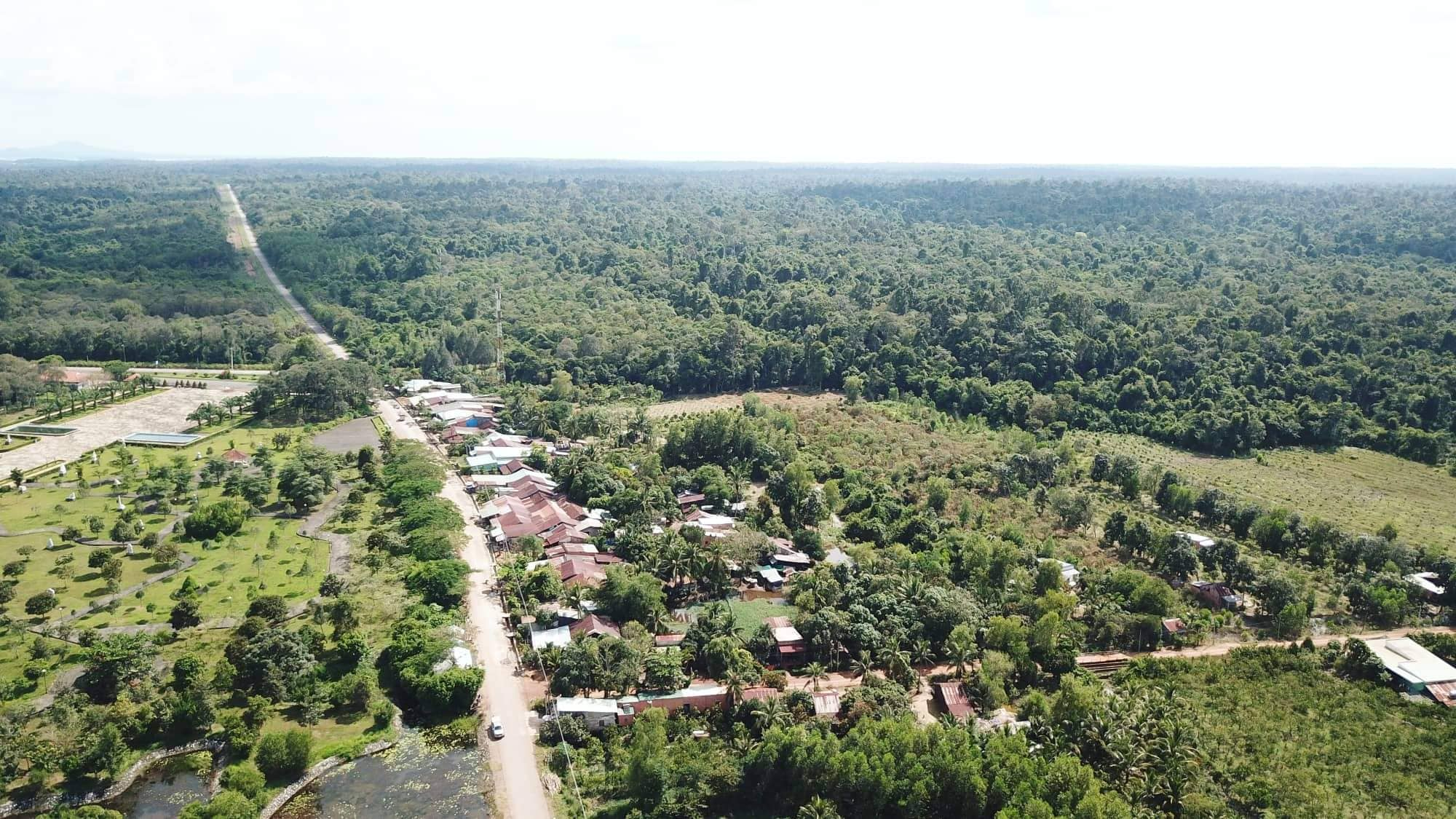
TTO – Sau khi tỉnh Bình Phước có ý kiến làm cầu Mã Đà nối vào tuyến quốc lộ 13C đã quy hoạch, tỉnh Đồng Nai đã họp bàn và yêu cầu có giải pháp để bảo vệ Khu bảo tồn thiên nhiên – văn hóa Đồng Nai vì đây là khu dự trữ sinh quyển thế giới.
Khu bảo tồn thiên nhiên – văn hóa Đồng Nai nhìn từ trên cao – Ảnh: NGỌC KHẢI
Thời tôi còn công tác, tỉnh Bình Phước muốn làm cầu Mã Đà qua Đồng Nai. Hai tỉnh họp bàn, lo ngại kết nối tuyến đường với 2 tỉnh sẽ ảnh hưởng đến việc bảo vệ rừng ở khu bảo tồn nên dừng lại không làm. Tỉnh Bình Phước cũng đình chỉ bến đò tự phát ngang sông Mã Đà. Nay lại có kiến nghị muốn làm cầu Mã Đà để kết nối với tuyến quốc lộ 13C đi xuyên qua khu bảo tồn. Làm đường có nhiều vị trí và phương án khác không đụng đến rừng sao không lựa chọn, lại muốn làm đường xuyên rừng thì liệu có động cơ khác không? Đồng Nai đã đổ bao mồ hôi, nước mắt để bảo vệ rừng mấy chục năm nay, không thể chỉ vì tuyến đường được rút ngắn hơn mà để rừng tự nhiên biến mất vĩnh viễn. Dứt khoát không đụng đến rừng và không nên làm đường qua khu bảo tồn. Nếu cho làm tức là chấp nhận phá bỏ khu dự trữ sinh quyển thế giới. Bởi đường đi vào rừng sẽ chia cắt đa dạng sinh học, làm thú nhát, không sinh sản được, mất dần, tuyệt chủng và chúng ta sẽ trả giá rất đắt.. Ông Trần Văn Mùi, nguyên giám đốc Khu bảo tồn thiên nhiên – văn hóa Đồng Nai
Southeast Asian nations have been rather subdued in their responses to Russia’s invasion of Ukraine, although all but two—Vietnam and Laos—voted in the United Nations in early March to condemn Moscow’s aggression. The fighting erupted thousands of miles away, but the effects, particularly of the sanctions imposed by the United States, Europe, Japan, Australia, and others, will still have economic reverberations in Southeast Asia.
Overall, Russia and Ukraine are relatively minor economic players in Southeast Asia, with Russia making up just over 0.64 percent of global trade with the region while Ukraine accounts for just 0.11 percent, according to ASEANstats. But Moscow’s Economic Development Ministry has said that it will work to boost trade and economic links with Asia to balance sanctions.
The Ministry of Public Security’s Investigation Police Agency on April 8 launched criminal proceedings against and detained two other suspects for assisting Trinh Van Quyet, former Chairman of the FLC Group JSC, in manipulating the stock market.
VNA Friday, April 08, 2022 21:42
Functional forces seal and seize documents at the FLC headquarters. (Photo: VNA)
Hanoi (VNA) – The Ministry of Public Security’s Investigation Police Agency on April 8 launched criminal proceedings against and detained two other suspects for assisting Trinh Van Quyet, former Chairman of the FLC Group JSC, in manipulating the stock market.
This paper discusses the evolving rules and policies of wholesale markets that can create barriers to local governments’ achievement of an effective and rapid clean energy transition. The report reviews the current barriers associated with transmission, market rules, and stakeholder processes across these markets while considering how these barriers affect local government clean energy and decarbonization goals, and the role of effective engagement in addressing these barriers.
As Russian artillery and rockets land on Ukrainian hospitals and apartment blocks, devastating residential districts with no military value, the world is watching with horror what is, for Russia, an increasingly standard practice.
Its forces conducted similar attacks in Syria, bombing hospitals and other civilian structures as part of Russia’s intervention to prop up that country’s government.
Moscow went even further in Chechnya, a border region that had sought independence in the Soviet Union’s 1991 breakup. During two formative wars there, Russia’s artillery and air forces turned city blocks to rubble and its ground troops massacred civilians in what was widely seen as a deliberate campaign to terrorize the population into submission.
Now, Vladimir V. Putin, whose rise to Russia’s presidency paralleled and was in some ways cemented by the Chechen wars, appears to be deploying a similar playbook in Ukraine, albeit so far only by increments.
A VietJet Air Airbus A320(SL) departs from Suvarnabhumi Airport in Bangkok, Thailand, on September 18, 2017.Credit: Flickr/Alec Wilson
The low-cost carrier Thai VietJet Air has been forced to make a public apology after an April Fool’s tweet prompted a flood of criticism in Thailand, one of its major markets, for making fun of Thailand’s King Vajiralongkorn. The post described the creation of a fake new route between the city of Nan in northern Thailand and Munich, Germany, where the king has for many years spent considerable amounts of time.
Russia’s invasion of Ukraine has already driven millions of people from their homes and left many without water, power and food. As hostilities continue, the humanitarian and economic consequences will expand far beyond the region, putting potentially millions of people around the world at risk of hunger.
And these aren’t just short-term threats. The decisions that farmers and policymakers make over the next few weeks and months will have long-term consequences for the future of the world’s food systems. The right responses can keep the world on track for a sustainable food future. The wrong ones will worsen food insecurity and fuel climate change.
Ukrainian refugees escape to the border town of Medyka, Poland. Millions of Ukrainian residents have fled their homes in recent weeks, due to the Russian invasion. Photo by Damian Pankowiec/Shutterstock
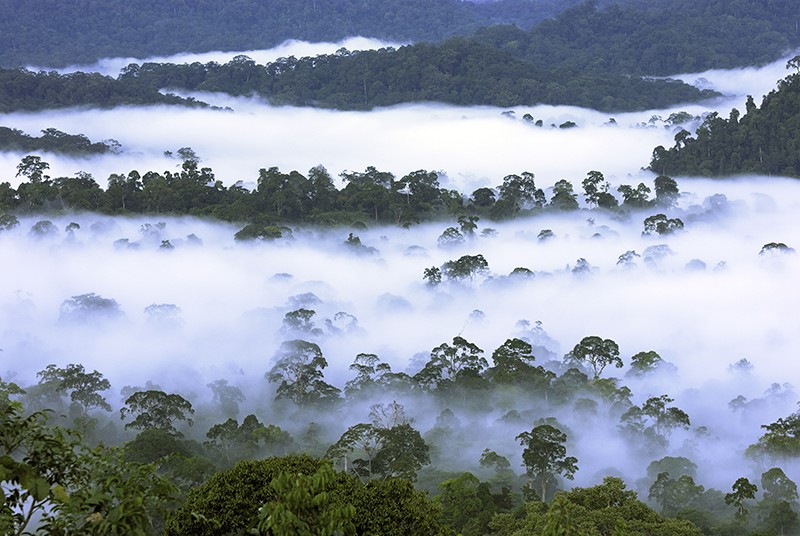
Tropical forests create cloud cover that reflects sunlight and cools the air.Credit: Thomas Marent/Minden Pictures
Tropical forests have a crucial role in cooling Earth’s surface by extracting carbon dioxide from the air. But only two-thirds of their cooling power comes from their ability to suck in CO2 and store it, according to a study1. The other one-third comes from their ability to create clouds, humidify the air and release cooling chemicals.
This is a larger contribution than expected for these ‘biophysical effects’ says Bronson Griscom, a forest climate scientist at the non-profit environmental organization Conservation International, headquartered in Arlington, Virginia. “For a while now, we’ve assumed that carbon dioxide alone is telling us essentially all we need to know about forest–climate interactions,” he says. But this study confirms that tropical forests have other significant ways of plugging into the climate system, he says.
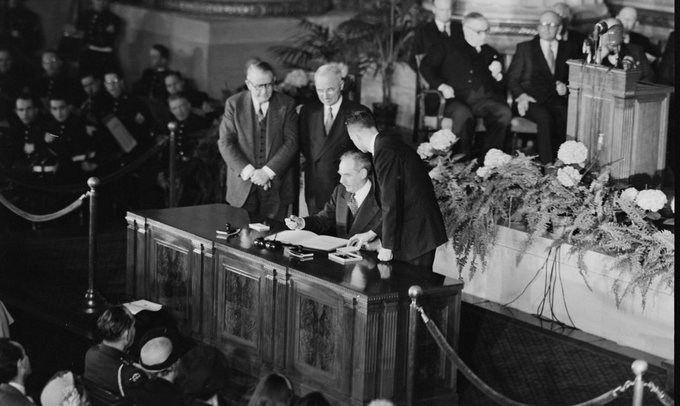
On April 4, 1949, Secretary of State Dean Acheson and President Harry S Truman were present for the signing of the treaty that created North Atlantic Treaty Organization.
OVERVIEW
Formed in 1949 with the signing of the Washington Treaty, NATO is a security alliance of 30 countries from North America and Europe. NATO’s fundamental goal is to safeguard the Allies’ freedom and security by political and military means. NATO remains the principal security instrument of the transatlantic community and expression of its common democratic values. It is the practical means through which the security of North America and Europe are permanently tied together. NATO enlargement has furthered the U.S. goal of a Europe whole, free, and at peace.
Article 5 of the Washington Treaty — that an attack against one Ally is an attack against all — is at the core of the Alliance, a promise of collective defense. Article 4 of the treaty ensures consultations among Allies on security matters of common interest, which have expanded from a narrowly defined Soviet threat to the critical mission in Afghanistan, as well as peacekeeping in Kosovo and new threats to security such as cyber attacks, and global threats such as terrorism and piracy that affect the Alliance and its global network of partners.
In addition to its traditional role in the territorial defense of Allied nations, NATO leads the UN-mandated International Security Assistance Force (ISAF) in Afghanistan and has ongoing missions in the Balkans and the Mediterranean; it also conducts extensive training exercises and offers security support to partners around the globe, including the European Union in particular but also the United Nations and the African Union.
MEMBER STATES
The NATO Alliance consists of 30 member states from North America and Europe. Article Five of the treaty states that if an armed attack occurs against one of the member states, it should be considered an attack against all members, and other members shall assist the attacked member, with armed forces if necessary.
Over the past two decades, the Alliance has developed a network of structured partnerships with countries from the Euro-Atlantic area, the Mediterranean and the Gulf region, as well as individual relationships with other partners across the globe. NATO pursues dialogue and practical cooperation with many partner countries and engages actively with other international actors and organisations on a wide range of political and security-related issues.
NATO is comprised of two main parts, the political and military components. NATO Headquarters is where representatives from all the member states come together to make decisions on a consensus basis. It also offers a venue for dialogue and cooperation between partner countries and NATO member countries, enabling them to work together in their efforts to bring about peace and stability.The key elements of NATO’s military organisation are the Military Committee, composed of the Chiefs of Defence of NATO member countries, its executive body, the International Military Staff, and the military Command Structure (distinct from the Force Structure), which is composed of Allied Command Operations and Allied Command Transformation, headed respectively by the Supreme Allied Commander Europe (SACEUR) and the Supreme Allied Commander, Transformation (SACT).
The primary role of Alliance military forces is to protect peace and to guarantee the territorial integrity, political independence and security of the member states. Alliance forces must be able to deter and defend effectively. The Alliance remains subject to a wide variety of military and non-military risks that are multi-directional and often difficult to predict.
The term NATO Military Exercise includes all exercises for which NATO is the initiating or the joint initiating authority. Associated with NATO Military Exercises are building blocks, such as: seminars, study periods and workshops.
A NATO Military Exercise is scheduled by a NATO Commander. It aims to establish, enhance and display NATO’s Military Capability across the Alliance’s full mission spectrum which is based on the three Alliance military missions:
Article 5 Collective Defence;
Non-Article 5 Crisis Response; and
Consultation and Co-operation.
OPERATIONS
NATO is an active and leading contributor to peace and security on the international stage. It promotes democratic values and is committed to the peaceful resolution of disputes. However, if diplomatic efforts fail, it has the military capacity needed to undertake crisis-management operations, alone or in cooperation with other countries and international organisations. Through its crisis-management operations, the Alliance demonstrates both its willingness to act as a positive force for change and its capacity to meet the security challenges of the 21st century.
Foreign Ministers Meetings and Defense Ministers Meetings provide an opportunity for NATO Allies to address many of NATO’s most pressing security challenges at the some of the highest levels of government. Key strategic issues discussed at these meetings have included Afghanistan, Capabilities, Kosovo, and Missile Defense. Generally attended also by many of NATO’s partners, these meetings are a chance for NATO to strengthen its relationships around the world.
WHY NATO MATTERS
As a political and military alliance, what we do together at NATO directly contributes to the security, the prosperity, and liberty of the people of the United States and every Ally.Our NATO links are solid, forged over 70 years of history. NATO promotes democratic values and encourages consultation and cooperation on defense and security issues to build trust and, in the long run, prevent conflict. NATO is committed to the peaceful resolution of disputes. If diplomatic efforts fail, it has the military capacity needed to undertake crisis-management operations. These are carried out under Article 5 of the Washington Treaty — NATO’s founding treaty — or under a UN mandate, alone or in cooperation with other countries and international organizations. In the history of NATO, Article 5 has been invoked just once, and that was in response to the 9/11 terrorist attacks in the United States.
TTCT – Dân Mỹ nói riêng và dân tình cả thế giới nói chung đều hoang mang trước cơn bão giá đang ập đến. Dù chỉ số giá cả chính thức ở Mỹ tăng 7,9% vào tháng 2 so với cùng kỳ năm ngoái, giá cả thực tế tăng cao hơn thế nhiều lần: giá xăng đã tăng chừng 40%, giá món nào trong siêu thị cũng tăng vài ba chục phần trăm.
Trong bối cảnh đó, Cục Dự trữ liên bang (FED) nước này chỉ nâng lãi suất điều hành thêm 0,25 điểm phần trăm vào tuần trước, làm sao thuyết phục thị trường họ đang sử dụng vũ khí hạng nặng để chống lạm phát?
Lạm phát 14,8%, lãi suất phải trên 20%
Nếu đơn giản hóa mọi yếu tố khác chỉ còn tiền với hàng, sẽ dễ thấy nếu tiền nhiều lên mà hàng giữ nguyên, ắt hẳn giá sẽ tăng. Giá còn tăng mạnh hơn nữa nếu cùng lúc đó hàng giảm xuống.
TTCT – Để hiểu được cuộc xung đột ở Ukraine hiện tại, không thể không nhìn lại một lịch sử rất dài, ít ra là từ những ngày ngay sau cuộc chiến lớn gần nhất ở châu Âu.
Việc mở rộng NATO là một trong những vướng mắc lớn nhất của quan hệ Nga – Mỹ suốt thời gian ông Putin cầm quyền, trải 5 đời tổng thống Mỹ. Ảnh: The New York Times
Ngày 5-3-1946, trong bài phát biểu tại Đại học Westminster, bang Missouri, Mỹ, Thủ tướng Anh Winston Churchill, người kiên định sự nghi kỵ không giới hạn với nhà lãnh đạo Liên Xô Joseph Stalin (ngược lại cũng thế), tuyên bố: “Từ Stettin ở Baltic tới Trieste ở Adriatic, một bức màn sắt đã buông xuống trên khắp lục địa”.