President Zelensky makes his case for Ukraine to the Russian people

Americans are used to wars against people who don’t so casually speak our language. Zelensky can respond to Russian propaganda by directly addressing the Russian people — in Russian.

Photo illustration by Vanessa Saba

By Keith Gessen

NYtime – Published March 11, 2022Updated March 13, 2022

The thing about the videos from the war in Ukraine in 2014 was that there were very few war videos. It was, at least at first, a small-arms war. Fighting, when it erupted, happened on city streets. As soon as shots were fired, whoever was making the video would put away the phone and run.

The videos that characterized the conflict were not of rifle fire but of protests: riot police beating demonstrators as people shouted, “What are you doing?”; later, young men on the same square, outfitted in motley assortments of helmets and kneepads, counterattacking; videos of people arguing; videos of people being forced, in eastern Ukraine, to get on their knees. After pro-Russian forces took over cities in the east and the Ukrainian Army finally moved to restore its authority, there were videos of pro-Russian protesters trying to prevent tanks from entering their towns. These were the images of a country falling apart.

Tiếp tục đọc “President Zelensky makes his case for Ukraine to the Russian people”

International law: Crimes against humanity – Luật quốc tế: Hình tội chống loài người

Crimes Against Humanity

Definition

Rome Statute of the International Criminal Court

Article 7

Crimes Against Humanity

  1. For the purpose of this Statute, ‘crime against humanity’ means any of the following acts when committed as part of a widespread or systematic attack directed against any civilian population, with knowledge of the attack:
    1. Murder;
    2. Extermination;
    3. Enslavement;
    4. Deportation or forcible transfer of population;
    5. Imprisonment or other severe deprivation of physical liberty in violation of fundamental rules of international law;
    6. Torture;
    7. Rape, sexual slavery, enforced prostitution, forced pregnancy, enforced sterilization, or any other form of sexual violence of comparable gravity;
    8. Persecution against any identifiable group or collectivity on political, racial, national, ethnic, cultural, religious, gender as defined in paragraph 3, or other grounds that are universally recognized as impermissible under international law, in connection with any act referred to in this paragraph or any crime within the jurisdiction of the Court;
    9. Enforced disappearance of persons;
    10. The crime of apartheid;
    11. Other inhumane acts of a similar character intentionally causing great suffering, or serious injury to body or to mental or physical health.
  2. For the purpose of paragraph 1:
    1. ‘Attack directed against any civilian population’ means a course of conduct involving the multiple commission of acts referred to in paragraph 1 against any civilian population, pursuant to or in furtherance of a State or organizational policy to commit such attack;

Nguồn Crimes Against Humanity>>

Hình tội chống loài người

Định nghĩa

Đạo luật Rome về Tòa án Hình sự Quốc tế

Điều 7 

Hình tội chống loài người

  1. Cho mục đích của Đạo luật Rome về Tòa án Hình sự Quốc tế, “tội chống loài người” nghĩa là bất kỳ hành vi nào sau đây khi được thực hiện như một phần của cuộc tấn công trên diện rộng hoặc tấn công có hệ thống, với ý thức về cuộc tấn công, nhằm vào bất kỳ nhóm dân thường nào: 
    1. Giết người;
    2. Tiêu diệt;
    3. Nô lệ hóa;
    4. Trục xuất hoặc cưỡng chế chuyển nhóm dân;
    5. Bỏ tù hoặc tước nghiêm trọng  quyền tự do thể chất vi phạm các quy tắc cơ bản của luật quốc tế;
    6. Tra tấn;
    7. Hiếp dâm, nô lệ tình dục, cưỡng bức mại dâm, cưỡng bức mang thai, cưỡng bức triệt sản, hoặc bất kỳ hình thức bạo lực tình dục nào khác có mức nghiêm trọng tương đương;
    8. Bách hại bất kỳ nhóm nào hoặc tập thể nào có thể nhận dạng về chính trị, chủng tộc, quốc gia, dân tộc, văn hóa, tôn giáo, giới tính như được định nghĩa trong đoạn 3, hoặc với các lý do khác được  công nhận trên thế giới là bị cấm theo luật quốc tế, trong khi thực hiện bất kỳ hành vi nào được nêu trong đoạn này hoặc bất kỳ hình tội  nào thuộc thẩm quyền của Tòa án này;
    9. Cưỡng chế mất tích người;
    10. Tội phân biệt chủng tộc;
    11. Các hành vi tương tự vô nhân đạo khác  cố ý gây ra đau đớn lớn, hoặc làm tổn thương nghiêm trọng đến cơ thể hoặc sức khỏe tinh thần hoặc thể chất.
  2. Cho mục đích của đoạn 1:
    1. ‘Tấn công nhằm vào bất kỳ nhóm dân thường nào’ nghĩa là một quá trình ứng xử  thực hiện nhiều  hành động  được đề cập trong đoạn 1 chống lại bất kỳ nhóm dân thường nào,  thể theo hoặc đẩy mạnh chính sách của Nhà nước hoặc của một tổ chức nhằm thực hiện cuộc tấn công đó;
(Phạm Thu Hương dịch)


 mmmmmmmmmm

Chuỗi bài:

2022 Hong Kong Policy Act Report

US Department of State

2022 Hong Kong Policy Act Report

REPORT

BUREAU OF EAST ASIAN AND PACIFIC AFFAIRS

MARCH 31, 2022Share

Consistent with Sections 205 and 301 of the United States-Hong Kong Policy Act of 1992 (the “Act”) (22 U.S.C. §§ 5725 and 5731) and section 7043(f)(3)(C) of the Department of State, Foreign Operations, and Related Programs Appropriations Act, 2022 (Div. K, P.L. 117-103), the Department submits this report and the enclosed certification on conditions in Hong Kong from March 2021 through March 2022 (“covered period”).

Summary

The Department of State assesses that during the covered period, the central government of the People’s Republic of China (PRC) took new actions directly threatening U.S. interests in Hong Kong and that are inconsistent with the Basic Law and the PRC’s obligation pursuant to the Sino-British Joint Declaration of 1984 (Sino-British Joint Declaration) to allow Hong Kong to enjoy a high degree of autonomy.  In the Certification of Hong Kong’s Treatment under United States Laws, the Secretary of State certified Hong Kong does not warrant treatment under U.S. law in the same manner as U.S. laws were applied to Hong Kong before July 1, 1997.

Tiếp tục đọc “2022 Hong Kong Policy Act Report”

How Britain let Russia hide its dirty money – podcast


This week, as Russia continues its invasion of Ukraine, we revisit this piece by Oliver Bullough from 2018. For decades, politicians have welcomed the super-rich with open arms. Now they’re finally having second thoughts. But is it too late?

 theguardianFri 4 Mar 2022 

Listen here

Read the text version here

Photo by Amer Ghazzal Sale of Chelsea football club, Stamford Bridge.
 Photograph: Amer Ghazzal/REX/Shutterstock


***

Tiếp tục đọc “How Britain let Russia hide its dirty money – podcast”

Was it inevitable? A short history of Russia’s war on Ukraine

To understand the tragedy of this war, it is worth going back beyond the last few weeks and months, and even beyond Vladimir Putin

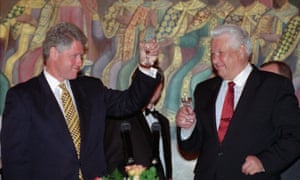
US president Bill Clinton raises his glass to toast with Russian president Boris Yeltsin at a dinner reception in the Kremlin Hall in 1995.
 Photograph: Alexander Zemlianichenko/AP


theguardian – 

Listen here

 Read the text version here

Tiếp tục đọc “Was it inevitable? A short history of Russia’s war on Ukraine”

When presidents lie to make a war

theguardianDD Guttenplan – Sat 2 Aug 2014 10.00 BST

Fifty years on we know the trigger for war with Vietnam was a fiction. Will it be another 50 before we know the truth about Iraq?

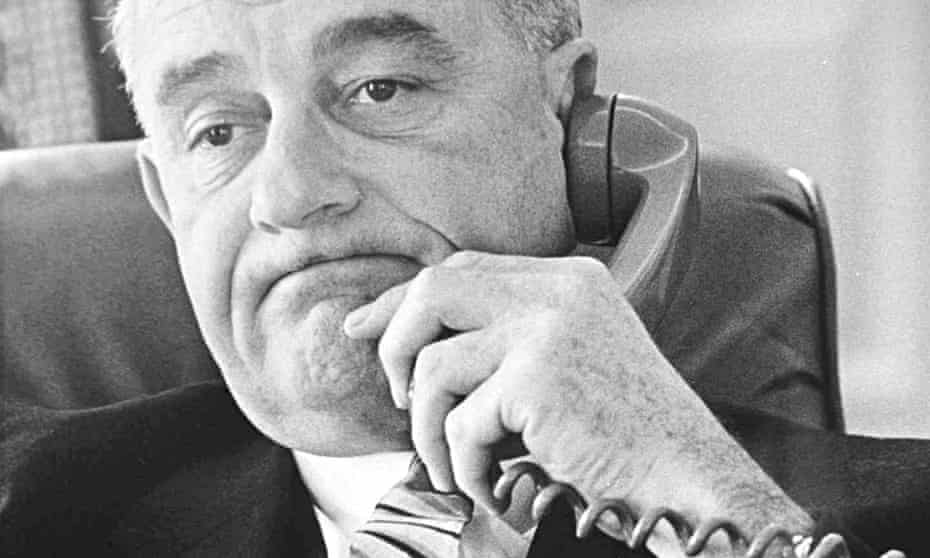
Lyndon Johnson in 1964
Lyndon Johnson’s repeated accusation that the Gulf of Tonkin attacks were unprovoked was the beginning of a disillusion that would lead Daniel Ellsberg to leak the Pentagon Papers. Photograph: Yoichi R Okamoto/AP Photograph: Yoichi R Okamoto/AP

Once there was a president who warned the world about conduct his government would not tolerate. And when this “red line” was crossed, or seemed to be, he took the US to war. Though this might sound like America’s involvement in Iraq, or Afghanistan, or Belgrade, or Libya, and what may yet become a wider war in Syria, this story began 50 years ago, on 4 August 1964.

Tiếp tục đọc “When presidents lie to make a war”

19 năm cuộc chiến Iraq: Kế hoạch loại bỏ Saddam Hussein được chuẩn bị “bài bản” thế nào?

Soha –  Đại sứ Nguyễn Quang Khai – 24/03/2022 20:12

Ngày 20/3 năm nay, người Iraq tưởng nhớ lại 19 năm ngày liên quân 49 nước do Mỹ cầm đầu xâm lược đất nước của họ vào năm 2003, lật đổ chế độ của Tổng thống Saddam Hussein.

Rạng sáng ngày 20/3/2003, cuộc tấn công mở màn bằng các cuộc không kích nhắm vào toà nhà chính phủ và bộ máy lãnh đạo Iraq. Tổng thống Mỹ George W. Bush tuyên bố chiến dịch “Tự do cho Iraq – Operation Iraqi Freedom” bắt đầu. Các lực lượng bộ binh của Mỹ và Anh được máy bay, xe tăng, đại bác… yểm trợ từ Kuwait vượt biên giới tràn vào lãnh thổ Iraq.

Iraq bị đánh hội đồng. Hội đồng Bảo an Liên hợp quốc không có cuộc họp nào, không có lệnh trừng phạt được áp đặt, không có nghị quyết lên án Mỹ và đồng minh.

Tiếp tục đọc “19 năm cuộc chiến Iraq: Kế hoạch loại bỏ Saddam Hussein được chuẩn bị “bài bản” thế nào?”

International law : Crime of Genocide — Luật quốc tế: Hình tội diệt chủng

Genocide was first recognised as a crime under international law in 1946 by the United Nations General Assembly (A/RES/96-I). It was codified as an independent crime in the 1948 Convention on the Prevention and Punishment of the Crime of Genocide (the Genocide Convention). The Convention has been ratified by 149 States (as of January 2018). The International Court of Justice (ICJ) has repeatedly stated that the Convention embodies principles that are part of general customary international law. This means that whether or not States have ratified the Genocide Convention, they are all bound as a matter of law by the principle that genocide is a crime prohibited under international law. The ICJ has also stated that the prohibition of genocide is a peremptory norm of international law (or ius cogens) and consequently, no derogation from it is allowed.

The definition of the crime of genocide as contained in Article II of the Genocide Convention was the result of a negotiating process and reflects the compromise reached among United Nations Member States in 1948 at the time of drafting the Convention. Genocide is defined in the same terms as in the Genocide Convention in the Rome Statute of the International Criminal Court (Article 6), as well as in the statutes of other international and hybrid jurisdictions. Many States have also criminalized genocide in their domestic law; others have yet to do so. 

(Note: The Rome Statute of the International Criminal Court (ICC) is the law that established the  ICC)

Definition

Convention on the Prevention and Punishment of the Crime of Genocide


(Rome Statue of International Court, Part II, Art. 6)


Article II

In the present Convention, genocide means any of the following acts committed with intent to destroy, in whole or in part, a national, ethnical, racial or religious group, as such:

  • Killing members of the group;
  • Causing serious bodily or mental harm to members of the group;
  • Deliberately inflicting on the group conditions of life calculated to bring about its physical destruction in whole or in part;
  • Imposing measures intended to prevent births within the group;
  • Forcibly transferring children of the group to another group.
Elements of the crime

The Genocide Convention establishes in Article I that the crime of genocide may take place in the context of an armed conflict, international or non-international, but also in the context of a peaceful situation. The latter is less common but still possible. The same article establishes the obligation of the contracting parties to prevent and to punish the crime of genocide.

The popular understanding of what constitutes genocide tends to be broader than the content of the norm under international law. Article II of the Genocide Convention contains a narrow definition of the crime of genocide, which includes two main elements:

A mental element: the “intent to destroy, in whole or in part, a national, ethnical, racial or religious group, as such”; and

A physical element, which includes the following five acts, enumerated exhaustively:
  • Killing members of the group;
  • Causing serious bodily or mental harm to members of the group;
  • Deliberately inflicting on the group conditions of life calculated to bring about its physical destruction in whole or in part;
  • Imposing measures intended to prevent births within the group;
  • Forcibly transferring children of the group to another group.

The intent is the most difficult element to determine. To constitute genocide, there must be a proven intent on the part of perpetrators to physically destroy a national, ethnical, racial or religious group. Cultural destruction does not suffice, nor does an intention to simply disperse a group. It is this special intent, or dolus specialis, that makes the crime of genocide so unique. In addition, case law has associated intent with the existence of a State or organizational plan or policy, even if the definition of genocide in international law does not include that element.

Importantly, the victims of genocide are deliberately targeted – not randomly – because of their real or perceived membership of one of the four groups protected under the Convention (which excludes political groups, for example). This means that the target of destruction must be the group, as such, and not its members as individuals. Genocide can also be committed against only a part of the group, as long as that part is identifiable (including within a geographically limited area) and “substantial.”

Nguồn Genocide >>

Diệt chủng được Đại hội đồng Liên hợp quốc công nhận lần đầu tiên là hình tội theo luật quốc tế vào năm 1946 (A/RES/96-I). Diệt chủng được đưa vào hệ thống luật như hình tội độc lập trong Công ước Ngăn ngừa và Trừng phạt Tội Diệt chủng (Công ước Diệt chủng) năm 1948. Công ước được 149 Quốc gia phê chuẩn (tính đến tháng 1 năm 2018). Tòa Công lý Quốc tế (ICJ) đã nhiều lần tuyên bố Công ước là hiện thân của các nguyên tắc đã là một phần của luật tục quốc tế chung. Điều này nghĩa là dù các Quốc gia có phê chuẩn Công ước Diệt chủng hay không, thì tất cả các Quốc gia đều bị ràng buộc về mặt pháp lý bởi nguyên tắc diệt chủng là hình tội bị cấm theo luật quốc tế truyền thống. Tòa Công lý Quốc tế cũng tuyên bố cấm diệt chủng là quy tắc bắt buộc của luật pháp quốc tế (gọi là jus cogens) và do đó, không được phép làm yếu tội diệt chủng.

Định nghĩa tội diệt chủng được nêu trong Điều II của Công ước Diệt chủng là kết quả của quá trình thương lượng và phản ánh sự thỏa hiệp đã đạt được giữa các Quốc gia Thành viên Liên hợp quốc vào năm 1948 tại thời điểm soạn thảo Công ước. Diệt chủng cũng được định nghĩa trong Đạo luật Rome về Tòa Hình sự Quốc tế (ở Điều 6) với từ ngữ tương tự như định nghĩa trong Công ước Diệt chủng, cũng như trong các đạo luật của các thẩm quyền quốc tế và thẩm quyền hỗn hợp khác. Nhiều Quốc gia cũng hình sự hóa diệt chủng trong luật trong nước của họ; một số Quốc gia khác thì chưa làm như vậy.

(Chú thích: Đạo luật Rome về Tòa Hình sự Quốc tế (ICC) là đạo luật thiết lập Tòa Hình sự Quốc tế)

Định nghĩa

Công ước về Ngăn ngừa và Trừng phạt Tội diệt chủng

(Đạo luật Rome về Tòa Hình sự Quốc Tế, Phần II, Điều 6)

Điều II

Trong Công ước này, diệt chủng nghĩa là bất kỳ hành vi nào sau đây được thực hiện với chủ ý tiêu diệt, toàn bộ hoặc một phần, của một nhóm quốc gia, dân tộc, chủng tộc hoặc tôn giáo, như:
  • Giết các thành viên trong nhóm;
  • Gây hại nghiêm trọng về thể xác hoặc tinh thần cho các thành viên trong nhóm;
  • Cố ý gây ra cho nhóm các điều kiện sống được tính toán để dẫn đến hủy diệt toàn bộ hoặc một phần thể chất của nhóm;
  • Áp đặt các biện pháp có chủ ý ngăn cản sinh đẻ trong nhóm;
  • Ép chuyển trẻ em thuộc nhóm này sang nhóm khác.
Các yếu tố cấu thành tội diệt chủng

Công ước Diệt chủng quy định tại Điều I rằng tội diệt chủng có thể diễn ra trong bối cảnh xung đột vũ trang, ở trong nước hoặc ở các nước với nhau, nhưng cũng có thể diễn ra trong bối cảnh hòa bình. Bối cảnh hòa bình ít phổ biến hơn nhưng vẫn có thể xảy ra. Điều I này cũng thiết lập nghĩa vụ ngăn ngừa và trừng phạt tội diệt chủng của các nước ký Công ước.

Cách hiểu phổ thông về những gì cấu thành tội diệt chủng có khuynh hướng rộng hơn điều khoản luật theo luật quốc tế. Điều II của Công ước Diệt chủng có định nghĩa tội diệt chủng hẹp hơn, gồm hai yếu tố chính:

Yếu tố ý định: “chủ ý tiêu diệt, toàn bộ hoặc một phần, của một nhóm quốc gia, dân tộc, chủng tộc hoặc tôn giáo”; và

Yếu tố thể chất, gồm 5 hành vi sau đây, được liệt kê đầy đủ:
  • Giết các thành viên trong nhóm;
  • Gây hại nghiêm trọng về thể xác hoặc tinh thần cho các thành viên trong nhóm;
  • Cố ý gây ra cho nhóm các điều kiện sống được tính toán để dẫn đến hủy diệt toàn bộ hoặc một phần thể chất của nhóm;
  • Áp đặt các biện pháp có chủ ý ngăn cản sinh đẻ trong nhóm;
  • Ép chuyển trẻ em thuộc nhóm này sang nhóm khác.

Chủ ý là yếu tố khó xác định nhất. Để cấu thành tội diệt chủng, phải chứng minh người thủ phạm có chủ ý tiêu diệt thân thể một nhóm quốc gia, dân tộc, chủng tộc hoặc tôn giáo. Hủy diệt văn hóa thì không đủ để cấu thành tội diệt chủng. Chủ ý chỉ phân tán nhóm (không cho nhóm sống tập trung với nhau) cũng không đủ để  cấu thành tội diệt chủng.  Đây là  chủ ý đặc biệt, tiếng Latinh là dolus specialis,  và chủ ý đặc biệt này làm cho tội diệt chủng trở thành khác thường. Thêm vào đó, án lệ thường xem những kế hoạch  hoặc chính sách diệt chủng của Nhà nước hoặc của một tổ chức là bằng chứng chủ ý diệt chủng, dù rằng  định nghĩa diệt chủng trong luật quốc tế không nói đến kế hoạch và chính sách.

Điều quan trọng là, các nạn nhân diệt chủng bị cố ý nhắm vào – không phải là vô tình  – vì họ là thành viên thực sự hay bị hiểu nhầm là thành viên  của một trong bốn nhóm được bảo vệ theo Công ước (các nhóm khác, ví dụ nhóm chính trị, thì không được bảo vệ).  Điều này có nghĩa là mục tiêu bị hủy diệt phải là một nhóm, chứ không phải là các thành viên với tư cách cá nhân. Diệt chủng cũng có thể nhắm vào chỉ một phần của nhóm, không hẳn là toàn bộ nhóm, miễn là phần đó có thể nhận dạng (kể cả phần đó nằm trong khu vực địa lý giới hạn) và diệt chủng “với số lượng người đáng kể”, không phải là làm hại vài người lẻ tẻ.

(Phạm Thu Hương dịch và chú thích)

mmmmmmmmmmmmmmmmmmmmmmm

Chuỗi bài:

The Struggle for Myanmar – Podcast

Is Myanmar heading into civil war — or already there?

Nikkei – Nikkei staff writers – February 5, 2022 09:29 JST

NEW YORK — Welcome to Nikkei Asia’s podcast: Asia Stream.

Every week, Asia Stream tracks and analyzes the Indo-Pacific with a mix of interviews and reporting by our correspondents from across the globe.

New episodes are recorded weekly and available on Apple PodcastsSpotify and all other major platforms, and on our YouTube channel

LISTEN HERE

Tiếp tục đọc “The Struggle for Myanmar – Podcast”

How the US created a world of endless war – podcast

In 2008, many of Barack Obama’s supporters hoped he would bring the global war on terror to a close. Instead, he expanded it – and his successors have done nothing to change course. By Samuel Moyn

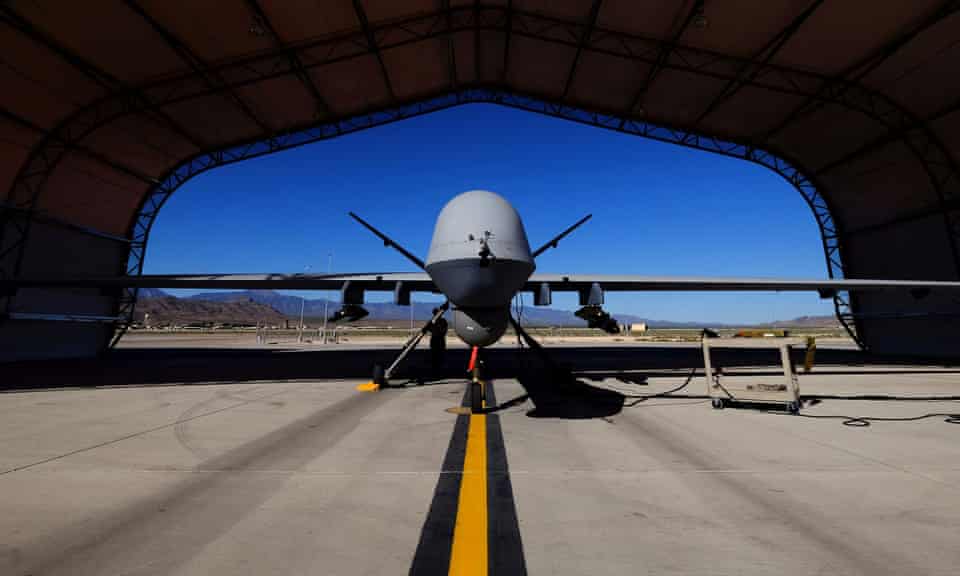
A US Reaper drone at a base in Nevada.

A US Reaper drone at a base in Nevada. Photograph: Josh Smith/Reuters

 theguardian – Fri 17 Sep 2021 12.00 BST

Written by Samuel Moyn, read by Christopher Ragland and produced by Esther Opoku-Gyeni

Listen here

Read the text version here

Tiếp tục đọc “How the US created a world of endless war – podcast”

Joint Statement on Armed Forces Day in Myanmar

MEDIA NOTE

US Department of StateOFFICE OF THE SPOKESPERSON

MARCH 26, 2022

Following is a joint statement on Armed Forces Day in Myanmar issued by the High Representative on behalf of the European Union and the Foreign Ministers of Albania, Australia, Bosnia and Herzegovina, Canada, Georgia, Iceland, Liechtenstein, Marshall Islands, the Federated States of Micronesia, Montenegro, New Zealand, North Macedonia, Norway, Palau, Republic of Korea, Serbia, Switzerland, Ukraine, the United Kingdom, and the United States.

Begin text: 

On Armed Forces Day, we remember those killed and displaced by violence over the last year, including at least 100 people killed on this day alone one year ago.

Some countries continue to supply lethal assistance to Myanmar’s military regime, enabling its violence and repression. We urge all countries to support the people of Myanmar by immediately stopping the sale or transfer of arms, military equipment, materiel, dual-use equipment, and technical assistance to Myanmar, in line with UN General Assembly Resolution A/RES/75/287.  We reiterate our call on the military to cease its violence and restore Myanmar’s path to democracy.

End text.

Interview with Ukrainian President Volodymyr Zelenskyy | DW News

Mar 23, 2022
In an exclusive interview for Eurovision News in Kyiv, Ukrainian President Volodymyr Zelenskyy has told TV reporters that he is ready to discuss a commitment from his country not to seek NATO membership in exchange for a cease-fire, Russian troop withdrawal and guarantee of Ukraine’s security.

In an exclusive interview for Eurovision News in Kyiv, Ukrainian President Volodymyr Zelenskyy has told TV reporters that he is ready to discuss a commitment from his country not to seek NATO membership in exchange for a cease-fire, Russian troop withdrawal and guarantee of Ukraine’s security.

The revolt against liberalism: what’s driving Poland and Hungary’s nativist turn? – podcast

For the hardline conservatives ruling Poland and Hungary, the transition from communism to liberal democracy was a mirage. They fervently believe a more decisive break with the past is needed to achieve national liberation. By Nicholas Mulder

theguardian

Written by Nicholas Mulder, read by Tanya Cubric and produced by Esther Opoku-Gyeni

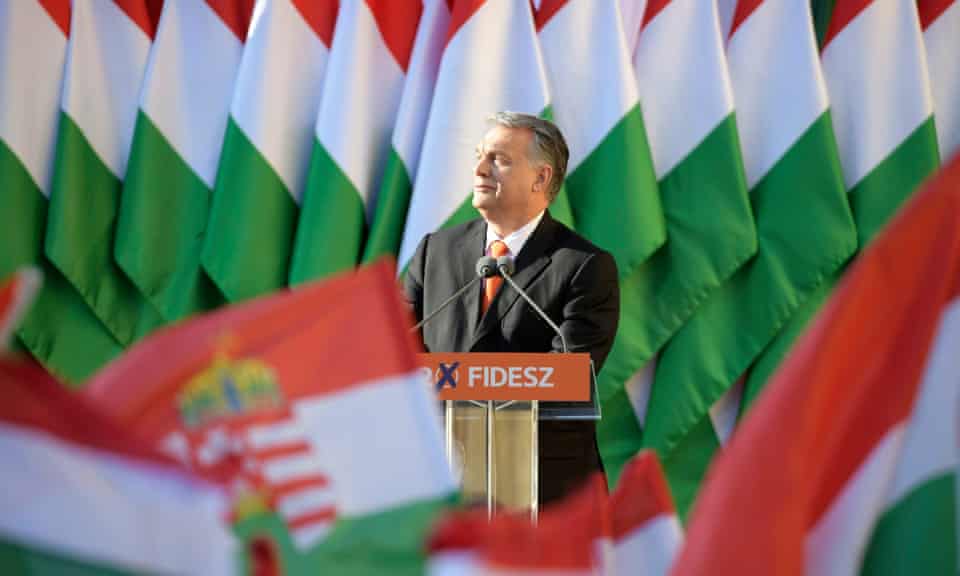
Hungary’s prime minister Viktor Orbán at an electoral rally in April 2018.
Hungary’s prime minister Viktor Orbán at an electoral rally in April 2018. Photograph: Zsolt Szigetvary/EPA

Sat 21 Aug 2021 12.00 BST – Last modified on Mon 23 Aug 2021 09.19 BST

Listen here

  • Read the text version here

Tiếp tục đọc “The revolt against liberalism: what’s driving Poland and Hungary’s nativist turn? – podcast”