
 |
| March 8, 2023 | AMTI Brief (Almost) Everyone is Drilling Inside the Nine-Dash Line China’s military, law enforcement, and militia engaged in regular standoffs between 2018 and 2021 with Southeast Asian neighbors over oil and gas exploration inside Beijing’s nine-dash line claim in the South China Sea. By contrast, 2022 was comparatively quiet when it came to tensions over hydrocarbons, aside from one encounter involving the Philippines. But as several claimants forge ahead with new offshore projects in 2023, oil and gas development could reemerge as a primary flashpoint in the disputes. This feature details new exploration and development projects by claimants across the South China Sea. Many of the new projects lie in disputed waters, some at the sites of previous confrontations. With the China Coast Guard increasing the frequency of patrols across disputed waters, the prospect of confrontation between Chinese law enforcement and oil and gas operators at many of these locations is high.All of the projects detailed here and more are available to explore on AMTI’s newly updated map of Energy Exploration and Development in the South China Sea. Continue reading on CSIS website >> |
Gia Lai: Làng hiếu học ở Rbai
11/03/2022 10:22 | TTXVN
Làng Rbai, xã Ia Piar, huyện Phú Thiện (tỉnh Gia Lai), ngôi làng có 90% là người đồng bào dân tộc thiểu số nhưng nổi tiếng khắp vùng là ngôi làng hiếu học. Mặc cho cảnh đói nghèo bủa vây lấy đời sống người dân, nhưng họ vẫn đồng lòng cho con cái theo học cái chữ. Cũng bởi lẽ vậy, làng Rbai có rất nhiều người con hiện là cán bộ, công chức, viên chức, đại biểu quốc hội đã và đang đóng góp xây dựng quê hương ngày càng vững mạnh.

Gia đình ông Nay Trơ là một trong những điển hình tiêu biểu của gia đình hiếu học trong làng với 8 đứa con đều đã tốt nghiệp đại học, cao đẳng. Ảnh: Hồng Điệp – TTXVN
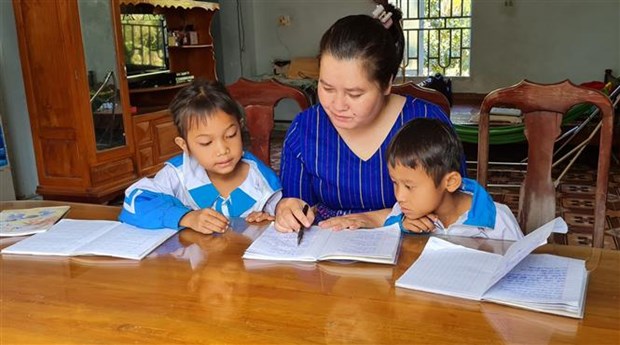
Truyền thống hiếu học được người dân làng Rbai, xã Ia Piar, huyện Phú Thiện (Gia Lai) lưu truyền từ nhiều đời nay. Ảnh: Hồng Điệp – TTXVN.
Ảnh: Hồng Điệp – TTXVN
Giành giật ĐBSCL với ‘cát tặc’
Trúc Tùng – 31/10/2022 16:25 GMT+7
Ở Đồng bằng sông Cửu Long (ĐBSCL), chỉ riêng năm 2011, lượng cát khai thác là 50 triệu tấn, dẫn đến hệ lụy không có giặc ngoại xâm mà đất đai vẫn bị mất dần. Theo ước tính của Bộ NN-PTNT, mỗi năm ĐBSCL bị mất 500ha, chỉ vài chục năm sau, diện tích ĐBSCL sẽ mất đi một nữa.
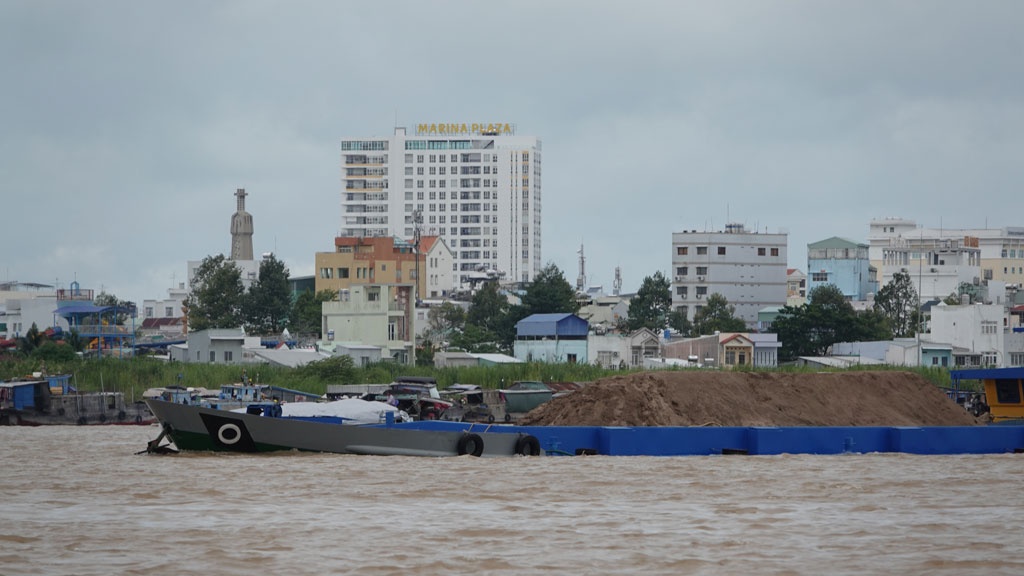 |
| Nhu cầu về cát cho xây dựng ở ĐBSCL hiện rất lớn, trong khi nguồn cát bồi đắp từ sông Mê Kông ngày một ít đi |
| ĐÌNH TUYỂN |
Nguồn tài nguyên quý hiếm không thể tái sinh
Một “mỏ cát” thường được hình thành vài trăm năm, thậm chí cả ngàn năm, nên nhiều nhà khoa học cho rằng đây là loại tài nguyên không tái tạo vì khi nó bị mất đi thì rất khó và rất lâu mới hình thành một khối lượng cát giá trị khai thác.
Cát sa mạc hình thành do sự ma sát, bào mòn chủ yếu do gió nên bị tròn nhẵn, mất khả năng kết dính với các loại vữa xi măng nên gần như không sử dụng cho xây dựng, nhiều quốc gia có sa mạc như ở vùng Trung Đông vẫn phải nhập cát về xây dựng.
The problem with our dwindling sand reserves: Sand and Sustainability: 10 Strategic Recommendations to Avert a Crisis,
Report from UNEP, titled Sand and Sustainability: 10 Strategic Recommendations to Avert a Crisis,
Sand is the foundation of human construction and a fundamental ingredient in concrete, asphalt, glass and other building materials.
But sand, like other natural resources, is limited and its ungoverned extraction is driving erosion, flooding, the salination of aquifers and the collapse of coastal defences.
The United Nations Environment Programme (UNEP) has partnered with Kenyan spoken word poet Beatrice Kariuki to shed light on the problems associated with sand mining, part of a wider push towards a zero waste world.
“We must redouble our efforts to build a circular economy, and take rubble to build structures anew,” Kariuki says in a new video. “Because without new thinking, the sands of time will run out.”
Sand is the second-most used resource on Earth, after water. It is often dredged from rivers, dug up along coastlines and mined. The 50 billion tonnes of sand thought to be extracted for construction every year is enough to build a nine-storey wall around the planet.
A 2022 report from UNEP, titled Sand and Sustainability: 10 Strategic Recommendations to Avert a Crisis, found that sand extraction is rising about 6 per cent annually, a rate it called unsustainable. The study outlined the scale of the problem and the lack of governance, calling for sand to be “recognized as a strategic resource” and for “its extraction and use… to be rethought.”
The report builds on UNEP research from 2019 that found increasing demand for sand, which saw a three-fold growth over 20 years, had caused river pollution and flooding, while also shrinking aquifers and deepening droughts.
UNEP has identified solutions to the problems linked to sand mining, including the creation of legal frameworks for sand extraction. There is also a need to develop a circular economy for sand and other building materials, accurately map and monitor sand resources, and restore ecosystems damaged by sand mining.
Recycling construction material from demolition sites and developing the potential of ore-sand are two simple ways to reduce the consumption of new sand, while contributing to global circular economy ambitions, the Sand and Sustainability report found. Ore-sand is a by-product of mineral processing designed for construction and industrial application that reduces the production of mine tailings and potentially provide an alternative source of sand.
To fight the pervasive impact of pollution on society, UNEP launched #BeatPollution, a strategy for rapid, large-scale and coordinated action against air, land and water pollution. The strategy highlights the impact of pollution on climate change, nature and biodiversity loss, and human health. Through science-based messaging, the campaign showcases how transitioning to a pollution-free planet is vital for future generations.
A real-life spy story
| By David Leonhardt, The New Yrok Times |
| Good morning. We tell you about a real-life spy caper involving a General Electric engineer and his handler in Nanjing. |
 Illustrations by Hokyoung Kim Illustrations by Hokyoung Kim |
| Intelligence Inc. |
| The invitation seemed like an exciting honor. Hua, as The New York Times is referring to him, was an engineer at GE Aviation in Cincinnati, and a Chinese aeronautical university had asked him to come back to China in 2017 to deliver a lecture about his field. |
| But Hua knew that GE might deny him permission to give the talk out of a concern that it would betray proprietary information. So he accepted the invitation — and traveled to Nanjing — without telling his bosses. When a suspicious F.B.I. agent later interviewed him about the trip, Hua dissembled and said he was only visiting friends and family. |
| By this point, Hua was facing likely criminal charges for lying to a federal agent, and he agreed to participate in a counterintelligence operation rather than being charged. Over the next six months, one of his hosts in Nanjing — a Ministry of State Security employee who had posed as a regional economic development official — tried to persuade Hua to download sensitive material from GE computers. All the while, the F.B.I. was coaching Hua and ultimately hoping to set up a meeting in a European country where Hua’s handler could be arrested and extradited to the United States. |
Threat of rising seas to Asian megacities could be way worse than we thought, study warns

By Tara Subramaniam, CNN
Published 8:48 PM EST, Tue March 7, 2023
The study predicts Asian megacities such as Manila, the capital of the Philippines, are particularly at risk from rising sea levels.Dante Diosina Jr/Anadolu Agency/Getty ImagesHong KongCNN —
Parts of Asia’s largest cities could be under water by 2100 thanks to rising sea levels, according to a new study that combines both the impact of climate change with natural oceanic fluctuations.
Sea levels have already been on the rise due to increasing ocean temperatures and unprecedented levels of ice melting caused by climate change.
But a report published in the journal Nature Climate Change offers fresh insight and stark warnings about how bad the impact could be for millions of people.
Tiếp tục đọc “Threat of rising seas to Asian megacities could be way worse than we thought, study warns”Thuyền năng lượng mặt trời cải tiến của nông dân Đồng Tháp
Để nâng công suất hoạt động của thuyền, ông Liêm cải tiến thân thuyền rộng lắp tấm pin năng lượng lớn, dùng thêm bộ phát điện chạy bằng sức nước.
Hơn hai tháng nay, “kỹ sư nông dân” Huỳnh Thiện Liêm (xã Trường Xuân, Tháp Mười, Đồng Tháp) đi sớm về khuya cùng cộng sự Huỳnh Văn Trăng và một số công nhân cải tiến chiếc thuyền du lịch chạy bằng năng lượng mặt trời. Ông từng giới thiệu mô hình thuyền tại hội chợ công nghệ Techmart 2015 ở Hà Nội khiến nhiều người chú ý, một số đơn vị đặt hàng để phục vụ du lịch.

Chiếc thuyền ban đầu hoạt động trên nguyên tắc tích trữ năng lượng từ ánh sáng mặt trời qua tấm pin rồi nạp vào bình ắc quy, giúp chạy khoảng 30 km liên tục trong 3 tiếng với vận tốc 8-12 km/giờ. Thuyền được đánh giá là phương tiện đầu tiên ở đồng bằng sông Cửu Long ứng dụng được năng lượng xanh để khai thác du lịch.
Tiếp tục đọc “Thuyền năng lượng mặt trời cải tiến của nông dân Đồng Tháp”
High Seas Treaty secured after marathon UN talks
‘This is a massive success for multilateralism,’ UN General Assembly President Csaba Kőrösi says.

MARCH 5, 2023 9:49 AM CET
More than 100 countries reached agreement on a United Nations treaty to protect the high seas, following marathon talks at U.N. headquarters in New York that ended late Saturday.
The High Seas Treaty will put 30 percent of the planet’s seas into protected areas by 2030, aiming to safeguard marine life.
“This is a massive success for multilateralism. An example of the transformation our world needs and the people we serve demand,” U.N. General Assembly President Csaba Kőrösi tweeted after the U.N. conference president, Rena Lee, announced the agreement.
Tiếp tục đọc “High Seas Treaty secured after marathon UN talks”Mapped: Asia’s Biggest Sources of Electricity by Country
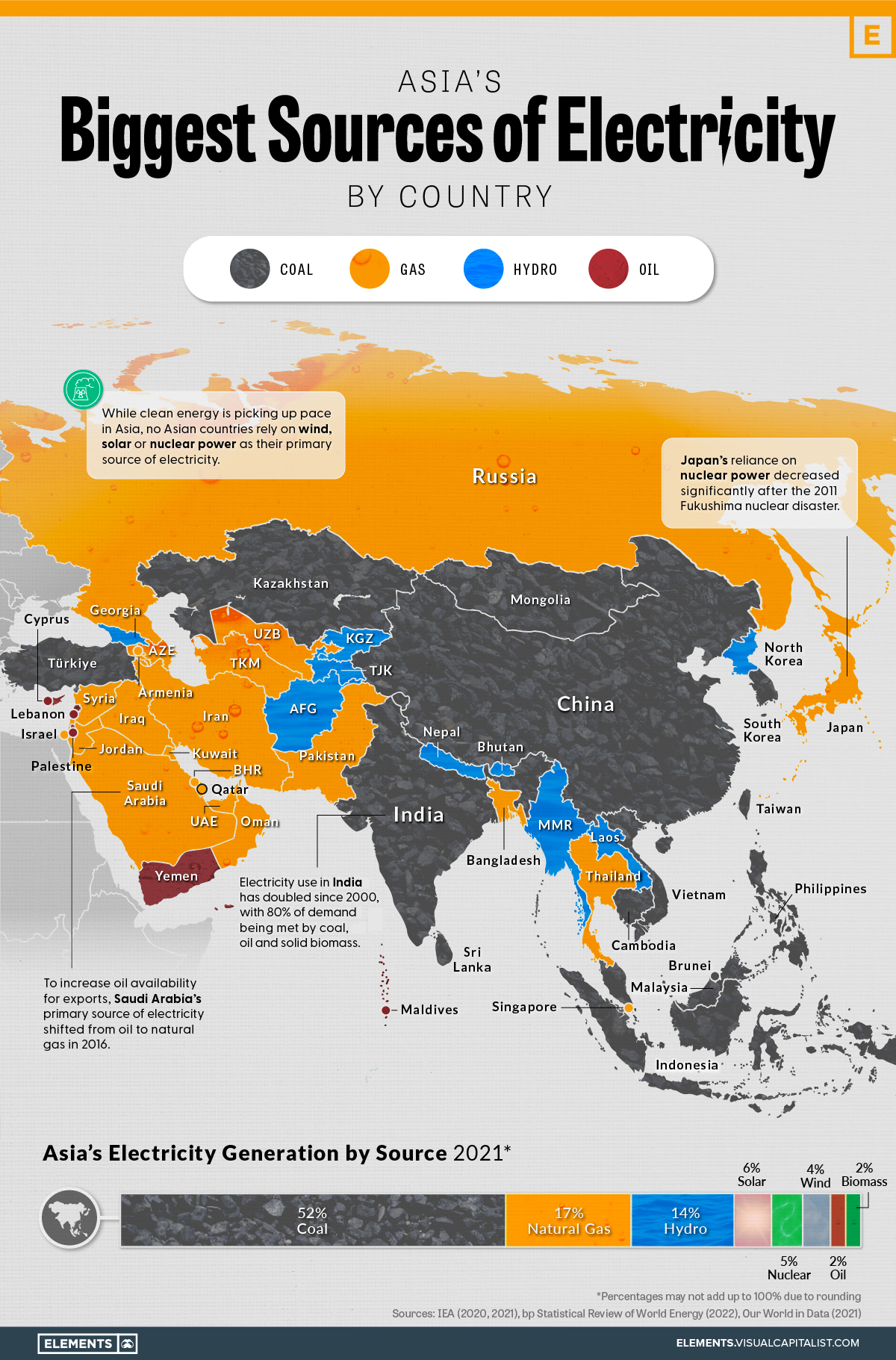
Mapped: Asia’s Biggest Sources of Electricity by Country
The International Energy Agency (IEA) predicts that Asia will account for half of the world’s electricity consumption by 2025, with one-third of global electricity being consumed in China.
To explore how this growing electricity demand is currently being met, the above graphic maps out Asia’s main sources of electricity by country, using data from the BP Statistical Review of World Energy and the IEA.
A Coal-Heavy Electricity Mix
Although clean energy has been picking up pace in Asia, coal currently makes up more than half of the continent’s electricity generation.
No Asian countries rely on wind, solar, or nuclear energy as their primary source of electricity, despite the combined share of these sources doubling over the last decade.
| % of total electricity mix, 2011 | % of total electricity mix, 2021 | |
|---|---|---|
| Coal | 55% | 52% |
| Natural Gas | 19% | 17% |
| Hydro | 12% | 14% |
| Nuclear | 5% | 5% |
| Wind | 1% | 4% |
| Solar | 0% | 4% |
| Oil | 6% | 2% |
| Biomass | 1% | 2% |
| Total Electricity Generated | 9,780 terawatt-hours | 15,370 terawatt-hours |
The above comparison shows that the slight drops in the continent’s reliance on coal, natural gas, and oil in the last decade have been absorbed by wind, solar, and hydropower. The vast growth in total electricity generated, however, means that a lot more fossil fuels are being burned now (in absolute terms) than at the start of the last decade, despite their shares dropping.
Following coal, natural gas comes in second place as Asia’s most used electricity source, with most of this demand coming from the Middle East and Russia.
Zooming in: China’s Big Electricity Demand
Tiếp tục đọc “Mapped: Asia’s Biggest Sources of Electricity by Country”
Huế dạy môn nữ công gia chánh trong trường học, khôi phục nét đẹp ‘tiếng dạ, tiếng thưa’
TPO – Ngoài việc bồi dưỡng kỹ năng về nữ công gia chánh, các tiết học của môn này còn là nơi truyền dạy nét văn hóa ứng xử, tác phong của người phụ nữ Huế từ “tiếng dạ, tiếng thưa” đến cách ăn mặc, đi đứng, giao tiếp với bạn bè, thầy cô, gia đình và cộng đồng…
Chiều 12/3, thông tin từ Văn phòng UBND tỉnh TT-Huế cho biết, Chủ tịch UBND tỉnh Phan Ngọc Thọ vừa họp với đại diện các sở, ngành, tổ chức, đoàn thể trên địa bàn, nhằm thống nhất chủ trương cho thí điểm khôi phục lại việc dạy nữ công gia chánh tại Trường THPT Hai Bà Trưng (TP Huế) để làm cơ sở nhân rộng ra toàn tỉnh.

Trường THPT Hai Bà Trưng (Huế) được chọn thực hiện thí điểm. – Nguồn internet
Trường nữ sinh Đồng Khánh Hà Nội một thế kỷ trước – Nhìn lại các trường nữ trung học nổi tiếng của miền Nam trước năm 1975
Ảnh hiếm: Trường nữ sinh Đồng Khánh Hà Nội một thế kỷ trước
Cập nhật lúc: 12:25 12/03/2019
(Kiến Thức) – Thành lập năm 1917, trường nữ sinh Đồng Khánh là một trong các cơ sở giáo dục lâu đời nhất của Hà Nội và Việt Nam. Cùng xem những hình ảnh quý về ngôi trường này do người Pháp thực hiện vào thập niên 1920.

Giờ tan trường tại trường nữ sinh Đồng Khánh (nay là trường Trung học cơ sở Trưng Vương ở 26 Hàng Bài) ở Hà Nội đầu thế kỷ 20.
Tài nguyên núi rừng giúp đổi thay thân phận những người phụ nữ của bản làng
PNVN – 20/12/2022 10:00
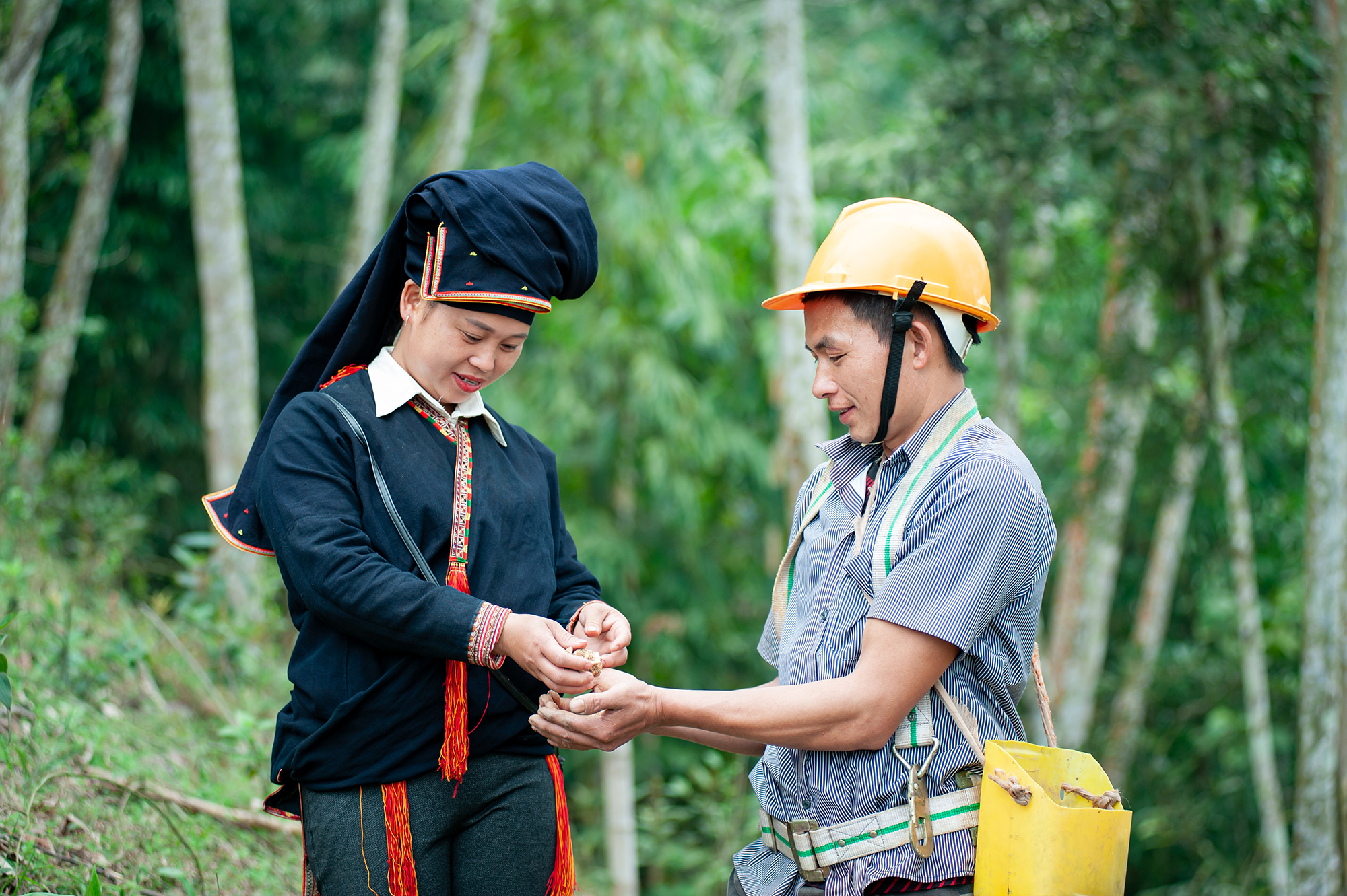
“Ngày trước phụ nữ chúng tôi không có mấy ngày vui, giờ thì cuộc sống của tôi đã thay đổi hoàn toàn”. Đó là tâm sự của những người phụ nữ Dao khi được tiếp cận với khoa học kỹ thuật, biết cách khai thác tài nguyên quý giá của núi rừng để mang về sự ấm no và hạnh phúc.
Đón chúng tôi vào thăm nhà, chị Triệu Thị Liều, xã Nậm Tha, huyện Văn Bàn, tỉnh Lào Cai vui vẻ mời khách ngồi uống nước, trò chuyện cùng các chị em đang làm một công việc góp phần giúp họ “đổi đời”. Những người phụ nữ Dao tay thoăn thoắt cầm dao để cạo những khối đá cứng như thạch anh.
Chị Liều giới thiệu: “Đây là nhựa của cây bồ đề chúng tôi vừa thu hoạch, đang sơ chế để bán cho công ty đấy”. Tiếp đó là tiếng nói cười rộn ràng của các chị khi kể lại câu chuyện “bén duyên” cùng nhựa bồ đề của mình. Ẩn hiện lẫn trong làn khói mờ ảo đang tỏa ra từ chiếc bếp củi, là những nụ cười hạnh phúc của các chị khi được làm công việc mới, mang đến thu nhập cho gia đình.
Tiếp tục đọc “Tài nguyên núi rừng giúp đổi thay thân phận những người phụ nữ của bản làng”
The Push to Conserve 30 Percent of the Planet: What’s at Stake?
See how six countries are faring amid efforts to protect 30 percent of the planet’s land and waters by 2030, and what will be saved if they succeed.
Article by Lindsay Maizland, CFR
Last updated March 6, 2023 1:16 pm (EST)

During the 2022 UN biodiversity conference, COP15, countries reached a landmark agreement that aims to reverse the unprecedented destruction of nature. One of the agreement’s twenty-three targets, known as 30×30, aims to protect at least 30 percent of the planet’s land and water by 2030. That goal, which almost doubles the target for 2020 that was set through the UN process more than a decade ago, was the inspiration behind a 2023 UN agreement to protect biodiversity in the high seas, the international waters that comprise more than half the world’s oceans. So far, nearly 16 percent of all land and inland waters have been protected, as have 8 percent of marine areas.
Protected areas are those that are designated and managed in order to achieve conservation goals, according to the UN Convention on Biological Diversity. Human activities, such as farming, resource extraction, and settlement, are generally allowed in these areas as long as they are done sustainably. But there are no formal mechanisms to monitor these activities, and countries report their own progress with limited oversight.
One of the main motivations for the goal is to protect biodiversity, which refers to the variety of all living things on Earth and the natural systems they form. In recent decades, animal populations have plummeted and more species have gone extinct than ever before. This loss has sweeping consequences for livelihoods, economic growth, medicine, food systems, and climate resilience. To put a price on it, the world lost $4–20 trillion per year [PDF] from 1997 to 2011 because of changes in how humans use land, according to the Organization for Economic Cooperation and Development.
Conservation is also critical to achieving climate goals. Forests, peatlands, and oceans are carbon sinks, meaning they absorb massive amounts of planet-warming carbon dioxide. When they’re destroyed, all that carbon goes back into the atmosphere. Some ecosystems can also guard against climate disasters. Coral reefs and mangroves, for example, form natural barriers against extreme storms.
Protected Areas and Wilderness Around the World

*Land estimated to be habitat unmodified by humans. Areas that are important for biodiversity can occur within and outside of these areas.
Notes: Includes terrestrial areas only. Data for protected areas in China, Estonia, India, Ireland, New Zealand, and Turkey is not complete due to limited reporting.
Sources: Protected Planet; UN Environment Program World Conservation Monitoring Center.
The 30×30 goal is a global target. More than one hundred countries have voiced support, but that doesn’t mean they’ve pledged to protect 30 percent of their own land and waters. Experts say that’s not necessarily a bad thing. “The hope is that each nation will set the most ambitious goal that it can,” says the Pew Charitable Trusts’ Masha Kalinina.
Tiếp tục đọc “The Push to Conserve 30 Percent of the Planet: What’s at Stake?”The weaponizing of social media: A Private Company Is Using Social Media to Track Down Russian Soldiers
Open-source investigations were once potent journalistic tools, but in Ukraine, they’re being used on the battlefield.
MARCH 2, 2023, 6:00 AM
By Jack Hewson, FP
On Oct. 12, 2022, Russian soldier Aleksey Lebedev logged onto VKontakte, Russia’s most popular social network, and uploaded a photo of himself in military fatigues crouching in a large white tent. He had been smart enough to obscure his face with a balaclava, but unfortunately for Lebedev and his comrades, he did not obscure the exact location from which he had posted: Svobodne village in southern Donetsk.
Russian soldier Aleksey Lebedev posted on the social media site VKontakte
Russian soldier Aleksey Lebedev posted on the social media site VKontakte on Oct. 12. The Ukrainian military investigations company Molfar noted the location on Google Maps (inset); a satellite version from Google Maps is pictured in the bottom inset. VKONTAKTE/GOOGLE MAPS VIA MOLFAR
Lebedev’s post was picked up by a Ukrainian military investigations company called Molfar. This lead was transferred to an analyst in its open-source intelligence (OSINT) branch, and investigators spent the next few hours constructing a target location profile for Lebedev and his military unit. The unit’s location was believed to be a training base for Russian and pro-Russian separatist troops. After discovering two other photos posted from the same location by pro-Russian servicemen—as well as other corroborating evidence, which was shared with Foreign Policy—Molfar passed its findings onto Ukrainian intelligence.
Phụ nữ dân tộc thiểu số tự tin làm du lịch cộng đồng

Phụ nữ VN – Nhiều khách du lịch có dịp quay lại các thôn bản vùng cao Tây Bắc đã vô cùng bất ngờ trước sự tự tin và năng động của những người phụ nữ dân tộc Mường, dân tộc Thái, dân tộc Mông. So với tính cách trầm lặng trước đây, họ dường như đã trở nên vui vẻ hơn, độc lập hơn và cũng cởi mở hơn từ khi làm du lịch cộng đồng.
Đến bản Sà Rèn (thị xã Nghĩa Lộ, tỉnh Yên Bái), điều chúng tôi ấn tượng hơn cả, đó là sự tự tin, cởi mở, tràn đầy tâm huyết của những người phụ nữ – các “bà chủ” homestay nơi đây. Đón đoàn chúng tôi là bà Hoàng Thị Loan, chủ homestay Loan Khang – người đi đầu mở đường cho phong trào làm du lịch cộng đồng tại bản.
Tiếp tục đọc “Phụ nữ dân tộc thiểu số tự tin làm du lịch cộng đồng”

