
Letter by 3 ranking US Senators to Pres. Biden about China hostile & unlawful actions against Philippines in SCS
Conversations on Vietnam Development

Gaza Teen Describes What Life For Her & Other Children Is Like Right Now. Sara Besasio, a 16-year-old who grew up in Gaza. Sara said she’s lived through 7 major Israeli military operations in her lifetime. She called on the global community to answer why kids like her have to suffer so much merely for growing up in Gaza.
We, President Biden and Prime Minister Albanese, inaugurated a new era of U.S.-Australia strategic cooperation during the Prime Minister’s Official Visit and State Dinner in Washington, D.C., today.
Our nations are inseparably linked by our common democratic values and the three pillars of our alliance: defense, economic, and climate and clean energy cooperation. As our alliance cooperation reaches new heights, we are expanding our partnership into new domains to reflect the evolution of our relationship and the growing complexity of global and regional challenges. At the core of our cooperation is a shared commitment to a peaceful, open, stable, and prosperous Indo-Pacific. We reaffirm our commitment to work with Indo-Pacific partners and institutions to respond to shared challenges and ensure a region that is thriving, connected, resilient, and secure. These commitments are based on respect for international law, including as it pertains to the protection and promotion of human rights, and the sovereignty and territorial integrity of states.
Today we announce the pursuit of new areas of cooperation on science and critical and emerging technologies so that we can build an “Innovation Alliance.” These initiatives will augment and complement our robust economic cooperation and trade; our foundational security and defense ties; our newly inaugurated cooperation on climate, critical minerals, and clean energy; and our enduring people-to-people connections.
Steadfast in these values, we condemn in the strongest possible terms Hamas’ heinous terrorist attack on Israel. The terrorist actions of Hamas can have no justification, no legitimacy, and must be universally condemned. We call for the immediate and unconditional release of all hostages. Hamas offers nothing but terror and bloodshed. It does not represent the Palestinian people, nor their legitimate needs and aspirations.
Our countries will support Israel as it defends itself and its people against such atrocities. We affirm Israel’s inherent right to defend itself. In doing so, in line with the values we share as democracies, we call on all parties to act consistent with the principles of international law and to protect civilians as an utmost priority. We are concerned at the humanitarian situation in Gaza and call on all actors to ensure the provision of humanitarian supplies to populations in need.
Our two countries support equal measures of dignity, freedom, and self-determination for Israelis and Palestinians alike and we mourn every civilian life lost in this conflict. We continue to support Palestinian aspirations for a state of their own and consider a two-state solution as the best avenue towards a lasting peace.
Promoting Advanced Technology and Space Cooperation
We welcome the announcement of a $3 billion investment in Australia by Microsoft, which will expand the company’s data center and Artificial Intelligence (AI) infrastructure in Australia over the next two years, train more than 300,000 Australians with the skills required for a cloud and AI-enabled economy, and create the Microsoft-Australian Signals Directorate Cyber Shield to harden Australia from cyber-threats to individuals, businesses, and governments. We also welcome the close partnership between the U.S. National Science Foundation (NSF) and Australia’s Commonwealth Scientific and Industrial Research Organisation (CSIRO), including bilateral cooperation through the NSF’s Global Centers initiative with up to $16.3 million for climate and clean energy research, and an AI partnership supported by a combined $6.2 million in grants to drive ground-breaking research. Additionally, the development of a Memorandum of Understanding between Los Alamos National Laboratory and the Australian National University intends to strengthen cooperation in research and education between the United States and Australia.
Our focus on innovation also extends to space, where we look forward to tomorrow’s signing of a space Technology Safeguards Agreement that creates the potential for new space-related commercial opportunities while providing the legal and technical framework to protect sensitive U.S. space launch technology and data in Australia consistent with our shared non-proliferation goals. We also welcome progress in negotiations of a bilateral space framework agreement, and encourage further joint commercial investment across all sectors, including space situational awareness and commercial space stations.
Building Clean Energy Supply Chains and Addressing the Climate Crisis
In May, we launched the historic Australia-United States Climate, Critical Minerals, and Clean Energy Transformation Compact (the Compact), which affirmed our shared determination to make climate and clean energy cooperation the third pillar of our alliance and counter the threat to global security and prosperity posed by climate change. We recognize that achieving the goals of the Paris Agreement will require rapid deployment of clean energy and decarbonization technologies, and increased electrification in our countries this decade, alongside the phasedown of unabated coal power.
Under the Compact, we convened the ministerial-level United States-Australia Clean Energy Dialogue between the U.S. Department of Energy (DOE) and Australia’s Department of Climate Change, Energy, the Environment and Water. As part of our enhanced cooperation, we plan to collaborate on clean energy supply chains with the intent to leverage our comparative advantages and sovereign capabilities, beginning with a battery supply chain working group to explore the deepening of both countries’ manufacturing capability and work on battery technology research and development. We also announced our intention for a Memorandum of Understanding between the U.S. DOE Office of Clean Energy Demonstrations and Australian entities. Australia and the U.S. DOE intend to establish the Australia-United States Clean Energy Industry Council, which will draw on the expertise of business and public finance leaders to advise our governments on clean energy industry development and cooperation.
Recognizing that climate change poses the single greatest threat to the livelihoods, security, and wellbeing of people and ecosystems in the Indo-Pacific, we announce today that the United States and Australia are working to jointly develop an Indo-Pacific Net-Zero Transition bond series to mobilize funding for small-medium sized enterprises with a focus on clean energy transition.
The United States and Australia intend to work to enhance access to the resources of the Green Climate Fund, and other relevant multilateral funds, especially for those most vulnerable to the adverse effects of climate change, including least developed countries (LDCs) and small island developing states (SIDS). This effort will be advanced, including through targeted bilateral technical assistance from USAID to LDCs and SIDS, and in coordination with DFAT’s program of support to Pacific Island countries
Inside China’s People’s Liberation Army | Preparing For Dangerous Storms – Part 1 | CNA Documentary
CNA Insider 6-5-2023
China’s People’s Liberation Army celebrates its centenary in 2027, what are its goals for this date? The PLA is already the largest army in the world with over 2 million soldiers. It also has the biggest number of warships. But China’s defense budget is still climbing amidst increasing geopolitical tensions. How exactly is the PLA “preparing for Dangerous Storms” as tasked by President Xi?
CNA.com
Minister for Trade and Industry Gan Kim Yong says Singapore needs to build capabilities to understand advanced nuclear energy technologies.

SINGAPORE: Singapore has not made any decision to deploy nuclear energy yet but must keep its options open and build expertise in the area, Minister for Trade and Industry Gan Kim Yong said on Monday (Oct 23) during the Singapore International Energy Week.
Mr Gan said on the first day of the annual event that Singapore was exploring low-carbon energy sources, including hydrogen and nuclear energy.
The use of nuclear energy was one of three possible scenarios previously set out by Singapore in its Energy 2050 Committee Report released last year. The report identified nuclear energy as a potential power source to achieve net-zero emissions by 2050, with this form of energy potentially able to supply about 10 per cent of the country’s needs.
Tiếp tục đọc “No decision on use of nuclear energy yet, Singapore to keep options open”thoibaonganhang.vn | 20/09/2023
Ngày 20/9, tại Hà Nội, Hiệp hội Ngân hàng Việt Nam (VNBA) và Hiệp hội Blockchain Việt Nam phối hợp tổ chức Hội nghị “Quy định về phòng, chống rửa tiền và vai trò của phòng, chống rửa tiền trong giao dịch tiền mã hóa” trong khuôn khổ triển khai Luật Phòng, chống rửa tiền, Nghị định số 19/2023/NĐ-CP ngày 28/4/2023 hướng dẫn chi tiết một số điều của Luật Phòng, chống rửa tiền và Thông tư số 09/2023/TT-NHNN ngày 28/7/2023 hướng dẫn thực hiện Luật Phòng, chống rửa tiền.
Chia sẻ tại Hội nghị, Phó Chủ tịch kiêm Tổng thư ký Hiệp hội Ngân hàng ông Nguyễn Quốc Hùng cho biết, Luật Phòng, chống rửa tiền được Quốc hội thông qua và có hiệu lực từ tháng 3/2023, ngay sau đó Chính phủ đã ban hành Nghị định 19/2023/NĐ-CP qui định chi tiết một số điều của Luật Phòng, chống rửa tiền và Ngân hàng Nhà nước đã ban hành Thông tư số 09/2023/TT-NHNN hướng dẫn thực hiện một số điều của Luật Phòng, chống rửa tiền.
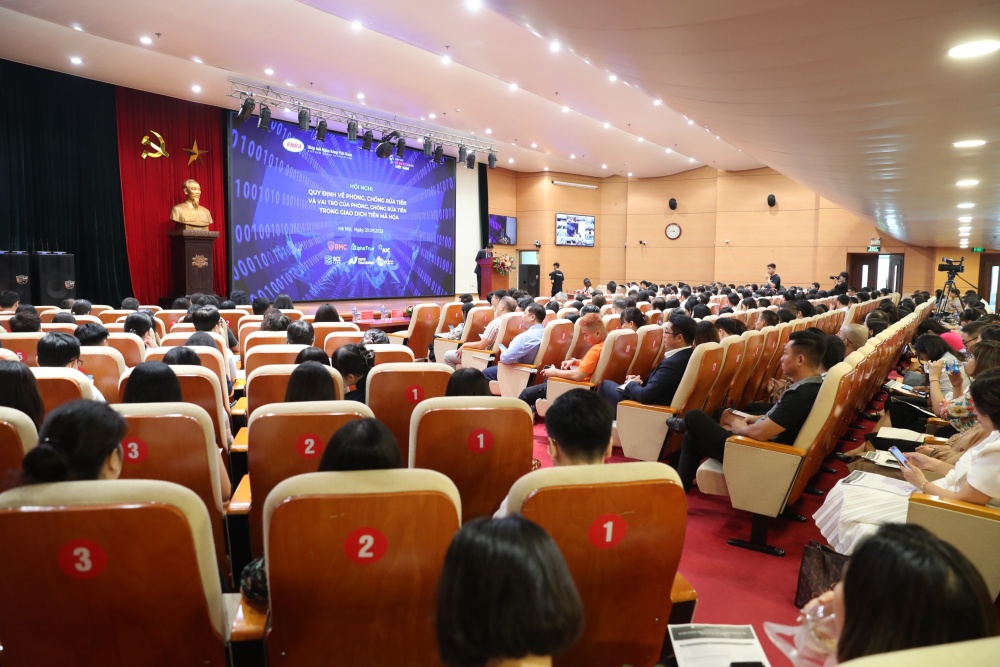 |
| Toàn cảnh Hội nghị |
A new Europol report has found that 70% of criminal enterprises are utilizing money laundering techniques to hide wealth and garner assets, outpacing authorities who are struggling to uncover their crimes.
By Eve Sampson September 26, 2023

Criminal networks in Europe are increasingly mixing illicit finances with seemingly legal businesses, and exploiting new technology to grow their operations and launder money faster than authorities can keep up, a new Europol report revealed.
Nearly 70% of criminal elements operating in the European Union use money-laundering techniques to garner revenue and hide assets, degrading the region’s financial stability and impeding its economic growth, according to the European Financial and Economic Crime Threat Assessment report released last week by the EU’s law enforcement arm, Europol. The increasing speed of deception is outpacing authorities which are struggling to uncover and prosecute financial crimes.
Though trade and technology have connected a globalized world, criminals are increasingly using modern advances to profit, Catherine De Bolle, the executive director of Europol, wrote in the report.
“Organised crime has built a parallel global criminal economic and financial system around money laundering, illicit financial transfers and corruption,” De Bolle said. “The ability to launder illicit proceeds on an industrial scale, to move them through a web of criminal financial brokers, and to corrupt the relevant actors, has become indispensable for modern organised crime.”
Tiếp tục đọc “Money-laundering criminals are adapting to new technology faster than authorities can keep up, EU report says”webmd.com Medically Reviewed by Poonam Sachdev on November 10, 2022 Written by Amber Felton
“It’s important to note that being intersex is not a disease, disorder, or condition…It’s estimated that around 2% of individuals worldwide fit into the intersex category”
So, what is intersex?
Intersex is an umbrella term used to categorize various reproductive and sexual anatomy differences that don’t fit the usual male or female definitions. In short, intersex individuals may have chromosomes, genitals, or internal reproductive organs that don’t fit into the typical male or female category or may possess characteristics of both male and female sexes.
Intersex, by definition, is when someone generally appears to be one sex but has the dominant anatomy of the other sex or when someone is born in between the typical male and female sexes. An example of this would be a female-presenting person having mostly male anatomy. Another example of someone born intersex is someone born with an in-between presentation of male and female genitals, such as someone born with a larger-than-usual clitoris and without a vaginal opening or someone who has been born with a scrotum that is divided into a labia-like form. A person may also be born with mosaic genetics or cells with XX and XY chromosomes.
While intersex is usually detected and assigned at birth, intersex anatomy isn’t always present then. Sometimes a person must reach the age of puberty before discovering they’re intersex. Some people may not even discover that they’re intersex until adulthood, when they discover that they’re infertile. In rare instances, intersex people are only diagnosed after they have passed away and are discovered through an autopsy.
Tiếp tục đọc “What Is Intersex? What cause it? Treatment options?”
UNwomen.org Publication year: 2023
This publication is the latest instalment in the annual series jointly produced by UN Women and UN DESA. The report provides a comprehensive analysis of gender equality progress across all 17 Sustainable Development Goals (SDGs).
Halfway to the end point of the 2030 Agenda for Sustainable Development, the world is failing to achieve gender equality, making it an increasingly distant goal. If current trends continue, more than 340 million women and girls will still live in extreme poverty by 2030, and close to one in four will experience moderate or severe food insecurity. Growing vulnerability brought on by human-induced climate change is likely to worsen this outlook, as many as 236 million more women and girls will be food-insecure under a worst-case climate scenario.
The gender gap in power and leadership positions remains entrenched, and, at the current rate of progress, the next generation of women will still spend on average 2.3 more hours per day on unpaid care and domestic work than men. No country is within reach of eradicating intimate partner violence, and women’s share of workplace management positions will remain below parity even by 2050. Fair progress has been made in girls’ education, but completion rates remain below the universal mark.
With the clock ticking, urgency mounts.
This report advocates for an integrated, holistic approach to advancing gender equality, involving multistakeholder collaboration and sustained financial backing. Neglecting to amplify efforts and invest in gender parity jeopardizes the entire 2030 Agenda for Sustainable Development.
October 24, 2023 Pacific Forum
President Joe Biden visited Hanoi in September and announced that the United States and Vietnam had upgraded relations from a “comprehensive partnership” to a “comprehensive strategic partnership.” Washington and Hanoi agreed to deepen cooperation in areas of diplomacy, trade, investment, and collaboration in the areas of artificial intelligence, R&D, governance, health and medical science, climate science, biotechnology, and conservation. Yet despite the pledges of cooperation and partnership, economic, security, and political factors limit full expression of the enhanced partnership.
Tiếp tục đọc “To counter China, the United States seeks a comprehensive strategic partner in Vietnam”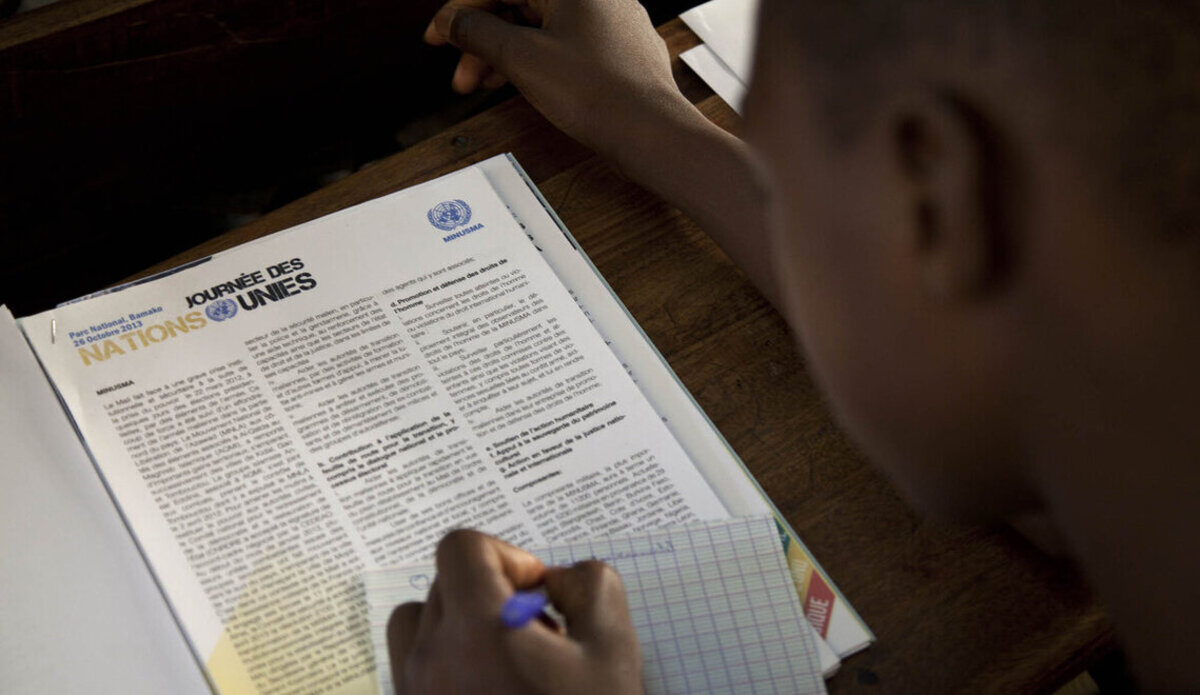
The United Nations is a reflection of the world as it is – and an aspiration of the world we know it can be.
It is our responsibility to help build that world of peace, sustainable development and human rights for all.
I know we can do it. The Charter of the United Nations – which entered into force 78 years ago today – points the way.
Above all, it is rooted in a spirit of determination to heal divisions, repair relations, and build peace.
To expand opportunities, and leave no one behind.
To ensure justice, equality and empowerment for women and girls.
To provide life-saving relief to those in need.
And to be flexible enough to address challenges that did not even exist when the UN was born – from the existential climate crisis to the perils and promise of artificial intelligence.
The United Nations is guided by timeless values and principles, but it must never be frozen in time. That is why we must always keep strengthening ways of working and applying a 21st century lens to all we do.
On this United Nations Day, let us commit with hope and determination to build the better world of our aspirations.
Let us commit to a future that lives up to the name of our indispensable organization.
We are a divided world. We can and must be united nations.
Source:
https://minusma.unmissions.org/en/united-nations-day-message-24-october-2023
FIFA Published 3 Aug 2023
Vietnam’s female football referees are inspiring a new generation of women in their country
Shilarze Saha Roy
In a sport predominantly dominated by men, Vietnam’s female referees are taking centre stage – and how! With their exceptional skills, dedication, and passion for the game, these women are not only shattering stereotypes but also inspiring a new generation of girls to dream big and reach for the stars. Among these trailblazers are Truong Thi Le Trinh and Ha Thi Phuong, who made history as the first female referee assistants to officiate in men’s V. League 2 matches during the 2021 season. Their journey began with determination, as they passed the rigorous Vietnam Football Federation referee test alongside 70 other referees and assistant referees, proving that women can excel in men’s football as well.
Tiếp tục đọc “Trendsetters! How Vietnam’s female referees are breaking barriers”
Both sides are guilty of invoking the Holocaust, but the Palestinians do it defensively, the Israelis offensively.
In truth, the Palestinians have been so impacted by the implications of the Holocaust, albeit indirectly, that they have never truly understood its essence or comprehended its evil. Arabs are no strangers to colonial, imperial or ethnic violence, but nothing like the industrial-scale crimes perpetrated by Nazi Germany.
Aggrieved and angry, the Palestinians have long believed that it was they who paid the price for the horrors inflicted upon Jews in Europe…
…After all, the early Zionists chose to settle and build a homeland for Jews in Palestine nearly half a century before the Holocaust, knowing all too well that it is the homeland of another people. They wished it cleansed of its non-Jewish inhabitants.
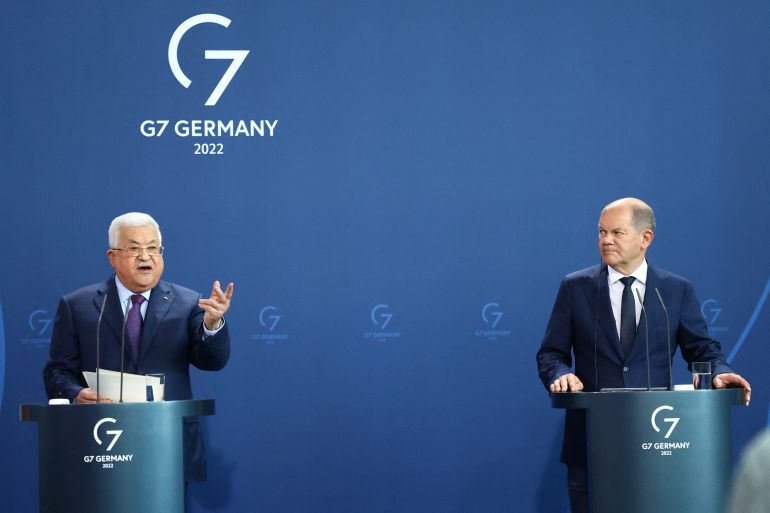

·It’s been 17 days since Hamas launched its horrific attack against Israel, killing over 1,400 Israeli citizens, including defenseless women, children and the elderly. In the aftermath of such unspeakable brutality, the U.S. government and the American people have shared in the grief of families, prayed for the return of loved ones, and rightly declared solidarity with the Israeli people. Tiếp tục đọc “Barack Obama: Thoughts on Israel and Gaza”

