Why does Vietnam have no historical sites in the form of temple? If it does, not as much as Indonesia or Thailand.

QUORA.

Profile photo for Vũ Song Vũ

Vũ Song Vũ · Lives in Ho Chi Minh City7yr

Unlike other Asian nations, Vietnam doesn’t have many large or massive temples and pagodas. As Tim Tran and others have already stated, Vietnamese culture is heavily influenced by Confucianism. However, it’s wrong to say that Vietnam has NO HISTORICAL SITES IN THE FORM OF TEMPLE. Just because we didn’t build it big doesn’t mean we own none. Vietnamese believe in the harmony of nature so every shrine, temple and pagoda is always built within nature like on mountain, by the river/stream, etc. Furthermore, most of Vietnamese religious building (except for Christianity) tend to bend Buddhism, Taoism and indigenous religions together so they are considered highly sacred, seeking spirituality rather than emphasising on the architecture and size. Most of Vietnamese temples are small YET SUBTLE in terms of the decorating. Below are some of my favourite temples and pagodas.

Chùa Hương (Perfume Pagoda)

Tiếp tục đọc “Why does Vietnam have no historical sites in the form of temple? If it does, not as much as Indonesia or Thailand.”

Tăng quyền cho trẻ em gái dân tộc thiểu số để chấm dứt nạn tảo hôn

Tảo hôn vẫn diễn ra dai dẳng ở nhiều nhóm dân tộc thiểu số tại Việt Nam. Để giải quyết tình trạng này, Nhà nước cần tạo mọi điều kiện nhằm giúp trẻ em DTTS, đặc biệt là trẻ em gái, được dễ dàng tiếp cận các cơ hội học tập và tìm kiếm việc làm. Khi thấy tương lai rộng mở phía trước, các em gái DTTS sẽ thêm vững tin trên con đường học tập và tự chủ kinh tế. Từ đó, các em có thể làm chủ cuộc đời mình và góp phần nâng cao nhận thức cộng đồng để đẩy lùi nạn tảo hôn.

An An

  1. Non cao còn lời ru buồn? (Bài 1): “Giấc mơ hẹp”
  2. Tảo hôn ở các dân tộc thiểu số đã giảm nhưng vẫn phức tạp
  3. Những giải pháp tăng cường quyền tiếp cận giáo dục cho trẻ em gái dân tộc thiểu số

***

Non cao còn lời ru buồn? (Bài 1): “Giấc mơ hẹp”

(vhds.baothanhhoa.vn) – Tảo hôn. Học sinh bỏ trường, bỏ lớp đi… “lấy chồng”, rồi lại làm bố, làm mẹ ở cái tuổi “ăn chưa no, lo chưa tới”. Giấc mơ đời, vì thế cứ quẩn quanh…

Thứ 6, 27/06/2025 | 08:00 GMT+7

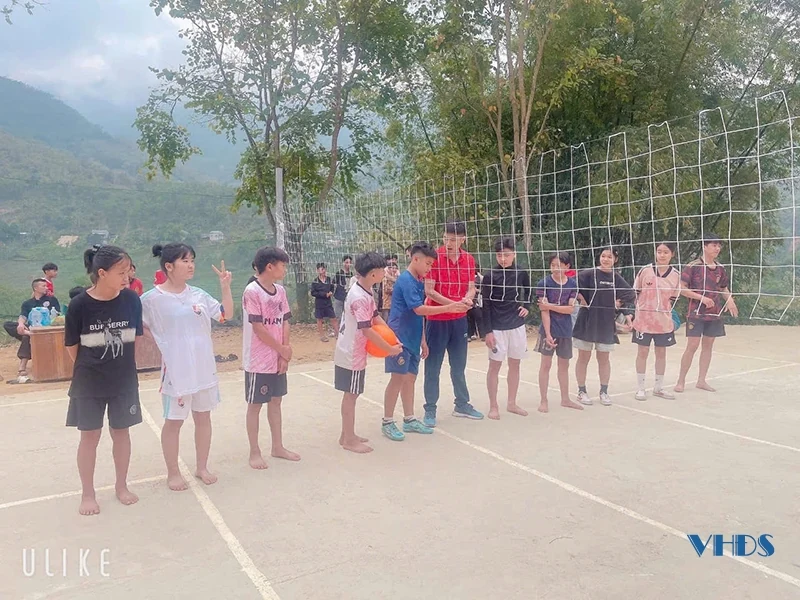
Non cao còn lời ru buồn? (Bài 1): “Giấc mơ hẹp”Trường PTDT Bán trú THCS Trung Lý (Mường Lát) tổ chức cho học sinh thi bóng chuyền.

Tiếp tục đọc “Tăng quyền cho trẻ em gái dân tộc thiểu số để chấm dứt nạn tảo hôn”

Would China protect Vietnam if it is being attacked by another country?

QUORA

Profile photo for Mo Chen

Mo Chen · Lives in China (1989–present) 7y

Would China protect Vietnam if it is being attacked by another country?

Are you serious!

Whoever would start a war in Southeast Asia has got to be the single most delusional person in this universe!

Look. Around.

It’s a pile of black powder barrel in here!

What? You think all you hear in the news is Vietnam being pushed around by China, that Vietnam is weak?

Tiếp tục đọc “Would China protect Vietnam if it is being attacked by another country?”

Where did Vietnamese originate from?

QOURA

Icon for Vietnam-The Rising Dragon

Vietnam-The Rising Dragon · 

It seems that Many of the Chinese consider Nanyue Kingdom of Trieu Day/Zhou Tao as the Vietnamese state. It means that the Guangdong and Guangxi provinces today should be historical territories of Vietnam?

Profile photo for Ang Chi Siang

Ang Chi Siang Lived in Vietnam, Wife is Vietnames 9y

Where did Vietnamese originate from?

This is not going to make a lot of my Vietnamese friends happy here, I’m afraid.

I suggest all Vietnamese readers read it with an open mind.

Most people are only willing to consider the history of Vietnam up to the Nam Viet Kingdom era which was established in 204 BC.

Tiếp tục đọc “Where did Vietnamese originate from?”

Vietnam’s 1,500-Year Empire brought down by regional wars: The Champa Kingdom


CNA Insider
– 27- 1-2026

Linked to ancient seafarers from Taiwan, the Champa were expert sailors and vital players in global trade. On land, they were skilled builders and innovative agriculturalists who also made their mark on the modern world. Curator and scholar Peter Lee embarks on a quest to uncover the story of the Champa Kingdom and its glory years.

From visiting the ancient, hallowed grounds of My Son Sanctuary where grand temples showcase the king’s authority, to learning about modern Cham identity with a local rap artist, Peter traces the great heights that the kingdom reached before its eventual decline. But in recent years, a new generation of Cham people are striving for pride and recognition of their ancient heritage.

Tiếp tục đọc “Vietnam’s 1,500-Year Empire brought down by regional wars: The Champa Kingdom”

Should China, South Korea, and Vietnam quit eating dog meat?

QUORA

Profile photo for Thang Luu

Thang Luu · Updated 8y

I am a Vietnamese guy who casually eats dog meat. Normally, I eat dog meat with my friend in a party, simply because dog meat is tasty (there’s no religious or monetary issue here). I think it is hypocritical to ask us to stop eating dog meat, simply because dogs are considered a “friend” in some areas of the world. Besides, there are a lot of other practices that should receive the same attention outside of the eating of dog meat, such as:

  • Japan’s whalin
  • Canada’s clubbing of seals
Tiếp tục đọc “Should China, South Korea, and Vietnam quit eating dog meat?”

Why did the Khmer Rouge attack Vietnam in 1975-1978 while they are weaker obviously?

QUORA

[TĐH: I am not sure that the US actively supported Khmer Rouge, as asserted in the following article. At that time, US had just lost South Vietnam (The Republic of VN) to North Vietnam (The Socialist Republic of VN), so US was depressed, angry at North Vietnam, embargoing the newly united Vietnam, and shy from involving Vietnam in anything. So, US was doing nothing related to Vietnam (except the embago), acting like US knew nothing about the astrocities happening in Cambodia. And EU simply followed its leader US. The entire Western world turned a blind eye toward Cambodia.

China punished Vietnam in 1979 for “invading” Cambodia but got black-eyed from Vietnam.

Call it anything you want, but Vietnam did eliminate Khmer Rouge and save the Cambodians from the worst astrocities in Cambodia’s history. You can ask Hun Sen directly about this.]

Profile photo for Lucia Millar
Why did Kmer Rouge attacked Vietnam in 1975-1978 while they are weaker obviously?

Tiếp tục đọc “Why did the Khmer Rouge attack Vietnam in 1975-1978 while they are weaker obviously?”

China ruled Vietnam for over 1,000 years, why is Vietnam not an “ancient, inseparable part of China” like Taiwan is?

QUORA

Profile photo for Hongtao Zhang

Hongtao Zhang · Manchu Chinese From Tangshan.Updated 8y

Good question, you got the point.

This question tells us a very important thing: you do NOT have to lie for independence.

If you want independence, just fight for it.

Don’t be a liar.

Tiếp tục đọc “China ruled Vietnam for over 1,000 years, why is Vietnam not an “ancient, inseparable part of China” like Taiwan is?”

Văn học Việt Nam và điểm cần tập trung

Văn học VN đang loay hoay, hay, nói chính xác hơn, nhà văn VN đang loay hoay. Vì sao?

Vì họ không có điểm tập trung.

Nhà văn, cũng như những người lao động nghệ thuật khác (nhạc sĩ, họa sĩ…), nên chú tâm vào nghệ thuật. Khi bắt đầu chú tâm vào những điều khác ngoài nghệ thuật (như tiền bạc, danh tiếng, độc giả, khuynh hướng chính trị của quan chức – dù là có thật hay do mình tưởng tượng…), nhà văn sẽ đánh mất chính mình, và nghệ thuật của họ khó được trong sáng và sâu sắc.

Hãy tập trung vào nghệ thuật. Dù chẳng có mấy ai đọc bài mình, dù chẳng có nhà xuất bản nào in bài mình, dù mình chẳng có tiền từ chất xám của mình…, hãy tập trung vào nghệ thuật. Và mọi chuyện còn lại để Trời Đất lo.

PTH (cũng là nhà văn)

***

Khi văn học thôi làm ta khó chịu

NGUYỄN THANH SƠN – 25/11/2025 12:01 GMT+7

TTCTVà nếu có điều gì cần cho văn học Việt bây giờ thì đó chỉ là một điều giản dị: thêm một chút can đảm để đi xa hơn vùng an toàn, và thêm một chút trung thực để nói ra một điều gì đó thật, dù nhỏ.

văn học việt nam - Ảnh 1.
Tiếp tục đọc “Văn học Việt Nam và điểm cần tập trung”

Trade an alliance for an island? That’s a bad deal

Aurora borealis lights up the night sky over residential houses in Nuuk, Greenland, on Friday, January 23.

Aurora borealis lights up the night sky over residential houses in Nuuk, Greenland, on Friday, January 23. Jonathan Nackstrand/AFP/Getty Images


Analysis by Brett H. McGurk, Jan. 25, 2026 CNN

In 416 BC, the city-state of Athens was in a prolonged conflict with Sparta, its archrival. For years, Athens had enjoyed comparative advantage over Sparta, particularly alliances and mutual defense pacts with smaller city-states known as the Delian League. By 416 BC, the Delian League had been in place for nearly 70 years, roughly the same as NATO, the modern equivalent of a prolonged and successful mutual defense alliance.

That was also the year that Athens came to view the Mediterranean island of Melos as vital for its strategic position. Melos had no military of its own, but it sat geographically at the intersection of maritime routes that helped both protect and project Athenian power. The island had long claimed neutrality, but for Athens, that would no longer suffice.

When an Athenian delegation demanded that Melos become a part of Athens, the Melians refused and appealed to Athenian traditions of logic and justice to work out a compromise. The Athenians responded with a famous line about power: “You know as well as we do that right, as the world goes, is only a question between equals in power — while the strong do what they can, and the weak suffer what they must.”

Tiếp tục đọc “Trade an alliance for an island? That’s a bad deal”

Bảo tồn di sản Nghề làm tranh Đông Hồ

LĐOHuy Tuấn  –  Chủ nhật, 14/12/2025 08:48 (GMT+7)

Nghề làm tranh dân gian Đông Hồ của tỉnh Bắc Ninh đã chính thức được UNESCO ghi danh vào danh sách Di sản văn hóa phi vật thể cần bảo vệ khẩn cấp.

Đây là dấu mốc lịch sử, mở ra cơ hội mới trong hành trình bảo tồn và phát huy giá trị một di sản truyền thống đang đứng trước nguy cơ mai một.

Phóng viên Báo Lao Động đã có cuộc trao đổi với ông Mai Sơn – Ủy viên Ban Thường vụ Tỉnh ủy, Phó Chủ tịch Thường trực UBND tỉnh Bắc Ninh, Trưởng Đoàn công tác của tỉnh Bắc Ninh tham dự kỳ họp của UNESCO diễn ra tại New Delhi (Ấn Độ) về quá trình tỉnh Bắc Ninh phối hợp xây dựng và hoàn thiện hồ sơ đề cử trong thời gian qua, chương trình hành động để bảo vệ và phát huy giá trị của di sản trong tình hình mới.

Tranh “Đám cưới chuột“. Ảnh: Tư liệu
Tiếp tục đọc “Bảo tồn di sản Nghề làm tranh Đông Hồ”

Tóm tắt bài phỏng vấn của đài SBS Radio (Úc) về nguồn gốc Việt (Nam) của Ngọ – ngũ – ngựa (ngày 14/1/2026)

Nguyễn Cung Thông 1

Phóng viên Phan Bách (từng làm cho đài phát thanh BBC, hiện nay làm cho SBS Radio Australia) có cuộc ‘mạn đàm dã chiến’ (không soạn trước) với người viết về đề tài nguồn gốc Việt (Nam) của tên 12 con giáp, đặc biệt là cho năm nay, Bính Ngọ 2026. Sau đây là các điểm chính được ghi lại rất tóm tắt từ buổi phỏng vấn dã chiến này:

1. Người Việt không cần đến trường học mà vẫn biết năm Mão Mẹo có biểu tượng là con mèo (khẩu ngữ, dễ nhớ), cũng như Sửu – tlu – tru – trâu, Mùi – Vị – *mdê, Dậu – *rga – gà, Tý – *chút – chuột, Thân – *khân – *khôn – khọn (khỉ), Ngọ – *ngu(a) – ngựa … Không như ở Trung Quốc, tên 12 con giáp thường đi kèm theo là tên con vật để cho biết sự liên hệ: Sửu – ngưu 丑牛 (ngưu là bò), Mùi dương 未羊, Dậu kê 酉雞, Tý thử 子鼠, Thân – hầu 申猴, Ngọ – mã 午馬 …v.v…

Đây có phải là ngẫu nhiên trùng hợp, một cách nhớ dùng cận âm hay có một nguyên nhân nào khác hơn? Có phải người Việt đã dùng tên 12 con giáp để tạo ra tên của 12 con vật như Mão trở thành mèo, Hợi trở thành cúi (heo) … Nói cách khác quá trình biến hóa từ trừu tượng (hệ thống gọi tên thời gian) thành cụ thể (tên con vật): Mão > mèo, Hợi > cúi (heo) …?

Tiếp tục đọc “Tóm tắt bài phỏng vấn của đài SBS Radio (Úc) về nguồn gốc Việt (Nam) của Ngọ – ngũ – ngựa (ngày 14/1/2026)”

The first photos of Hiroshima’s nuclear bomb toll

thebulletin.org By David A. Wargowski | August 6, 2025 

Photojournalist Yoshito Matsushige, in front of the first image he took at Miyuki-bashi Bridge, a little over two hours after the United States dropped a nuclear bomb on Hiroshima. He took a total of 5 images, the only recorded evidence of that day that changed history. (Photo by John van Hasselt/Corbis via Getty Images)Share

In the late morning hours of August 6, 1945, a single shutter clicked in Hiroshima and recorded what no camera had ever captured before, and none has again: the immediate, lived aftermath of a city annihilated by nuclear weapons.

Equipped with one camera and two rolls of film, totaling just 24 possible exposures, Yoshito Matsushige, then a 32-year-old photojournalist, ventured toward the city that morning to report for duty. Fires blocked access to his office, so he turned back and reached Miyuki Bridge (about 2,300 meters from ground zero) where he encountered the unfathomable: charred schoolgirls, civilians with melted skin, and a landscape of human agony.

He could barely bring himself to document it. But his five surviving images—the only known photographs of Hiroshima’s destruction on the day of the bombing itself—are among the most harrowing visual records of the nuclear age.

Tiếp tục đọc “The first photos of Hiroshima’s nuclear bomb toll”

Bảo vệ di sản trước nguy cơ bị xâm hại bằng sức mạnh cộng đồng

Trước thực trạng di tích lịch sử và bảo vật quốc gia đang bị xâm hại tại nhiều địa phương, bên cạnh sự quản lý của Nhà nước, cộng đồng cũng đóng vai trò quan trọng trong việc gìn giữ và bảo vệ di sản.

Khi ý thức cộng đồng được nâng cao, các tổ chức xã hội hoạt động rộng rãi, chính người dân và toàn xã hội sẽ giúp đất nước một tay để bảo vệ di sản quốc gia.

An An

Tổng cộng 4 bài

  1. Di sản bị xâm phạm – Báo động đỏ về công tác bảo tồn (Nhân Dân)
  2. Cú hích sống còn từ Luật Di sản văn hóa sửa đổi, Bài cuối: Bước ngoặt thể chế, trao quyền cho cộng đồng (Tiền Phong)
  3. Chung tay phát triển cộng đồng (Anh Hoành)
  4. Khi người trẻ nặng lòng cùng di sản (Nhân Dân)

***

Di sản bị xâm phạm – Báo động đỏ về công tác bảo tồn

Chỉ trong vòng chưa đầy 1 tháng, liên tiếp 2 vụ việc liên quan di sản văn hóa bị xâm hại khiến dư luận bức xúc. Đầu tháng 5, Lăng mộ vua Lê Túc Tông – Di tích lịch sử cấp quốc gia tại huyện Thọ Xuân, tỉnh Thanh Hóa bị đào bới, phá vỡ bia đá. Mới đây, ngày 24/5, Ngai vua triều Nguyễn tại Di tích Cố đô Huế bị xâm hại.

ND – Chủ Nhật, ngày 25/05/2025 – 17:40

Ngai vua triều Nguyễn tại Di tích Cố đô Huế. (Ảnh: Cục Di sản văn hóa)

Dù chưa có kết luận chính thức về mức độ thiệt hại hay nguyên nhân của vụ việc tại khu vực điện Thái Hòa, song các sự cố liên tiếp xảy ra trong thời gian ngắn, ở nhiều loại hình di sản khác nhau, từ bảo vật quốc gia đến nơi thờ tự tâm linh một lần nữa cho thấy những lỗ hổng đáng lo ngại trong công tác bảo tồn di sản.

Tiếp tục đọc “Bảo vệ di sản trước nguy cơ bị xâm hại bằng sức mạnh cộng đồng”