Food, medicine and fuel shortages have driven Cubans to protest for “patria y vida” or “homeland and life”. And then there’s the pandemic. #AJStartHere with Sandra Gathmann looks at why life in Cuba is so tough.
China forgets who was the real aggressor in Korean War
Voice of America – 9-8-2022
July 27 marked the 69th anniversary of the signing the Korean War armistice between military commanders from the U.S.-led United Nations forces, North Korea and China.
During the 1950-1953 war on the peninsula, the People’s Republic of China backed North Korea with help from the Soviet Union, while U.S.-led U.N. forces defended South Korea.
A year after US withdrawal from Afghanistan, some frustration at lack of lessons learned
Voice of America – 12-8-2022
–
US State and Defense Departments are conducting ongoing internal after-action reports on the withdrawal, but timeline of release remains unclear
Between two superpowers: Indonesia’s position in the US-China rivalry
South China Morning Post – 25-7-2022
Indonesia is the largest developing economy in Southeast Asia, with a gross domestic product of over US$1 trillion. The country’s size and location have made it Indonesia an attractive strategic partner for China and the United States to influence the Asean region. Indonesia has attempted to remain neutral in the China-U.S rivalry, but if tensions between the two continue to rise, will Indonesia be forced to take sides or adopt a foreign policy that doesn’t align with either superpower?
How hard would it be for China to invade Taiwan? | Project Force
Al Jazeera English – 4-4-2022
When Russian forces went into Ukraine, concern grew in Taiwan that an attack by China could be next. But how difficult would it be for China to invade Taiwan? @Alex Gatopoulos takes a look, in Project Force.
What’s the fallout from Nancy Pelosi’s visit to Taiwan? | Inside Story
Al Jazeera English – 4-8-2022
U.S. House Speaker Nancy Pelosi has ended her controversial tour of Taiwan.
Despite warnings from China, the most senior American politician to visit in 25 years pledged an ‘iron-clad’ commitment to the self-ruled Island’s democracy.
Beijing is responding with live-fire military drills and import bans.
So how will Taipei and Washington deal with the consequences?
Presenter: Kim Vinnell
Guests:
Vincent Chao – Former Director of the Political Division, Taipei Economic and Cultural Representative Office in the United States.
June Teufel Dreyer – Professor of Political Science, University of Miami.
Henry Huiyao Wang- Founder and President, Center for China and Globalization.
The Vietnam War has been called the first truly televised war – and the Caravelle Hotel in old Saigon was one of its most vital media hubs.
As American involvement in the Vietnam War increased in the 1960s, so did the world’s media attention. International news crews, reporters and photojournalists descended on Saigon, the capital of then-South Vietnam, to beam war stories to the world.
They set up camp in the city’s hotels, especially those on the strategically located Lam Son Square. Media, military and intelligence personnel rubbed shoulders as war stories were sniffed out in the bars and restaurants.
TTO – Xung đột bùng nổ hoặc kinh tế suy thoái đều tác động đến giá dầu thô. Trong 50 năm qua, kinh tế thế giới đã nhiều lần đương đầu với giá dầu tăng cao trong các cú sốc dầu mỏ năm 1973, năm 1979, năm 2008 hoặc giá dầu giảm sâu năm 1986.
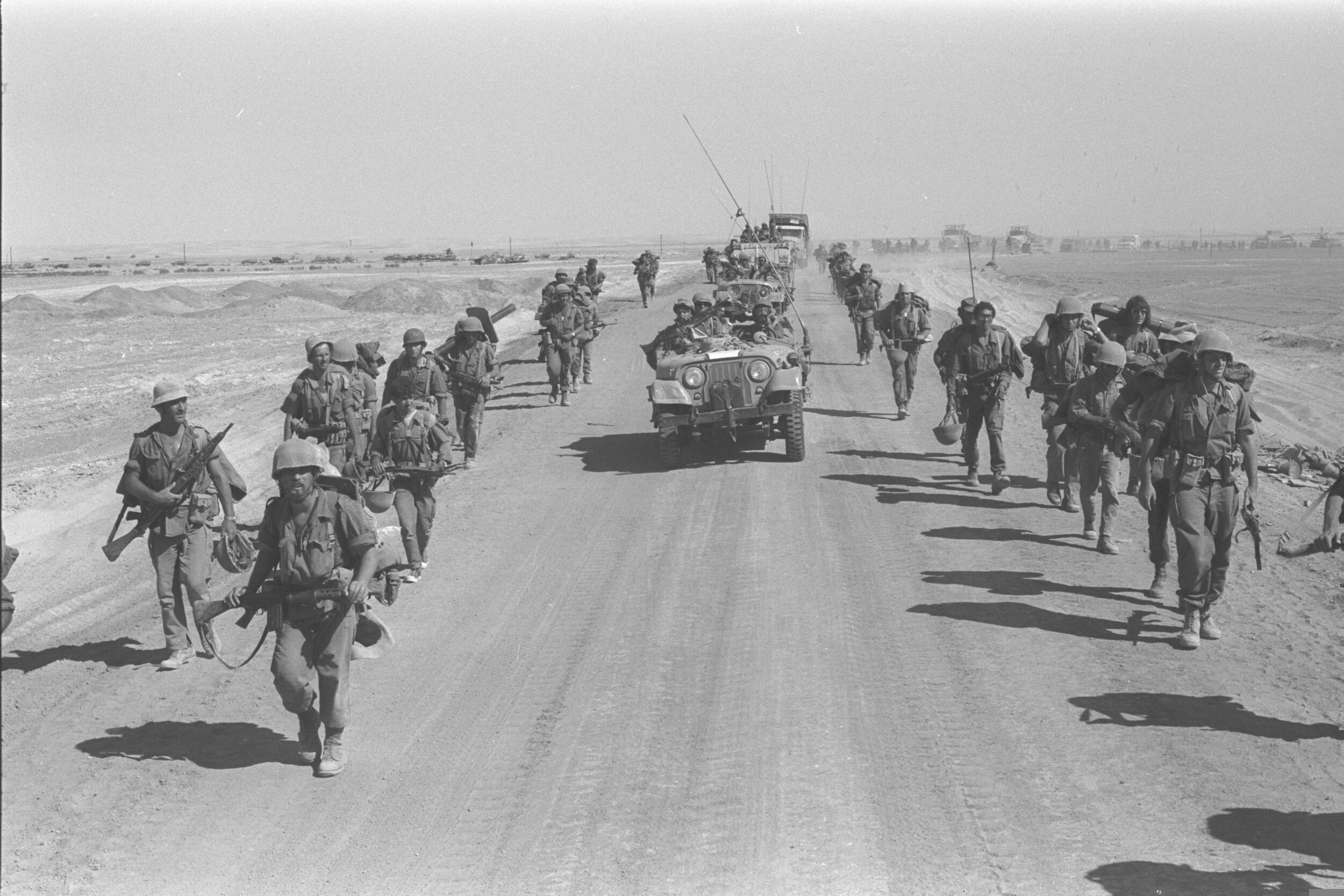
Quân đội Israel hành quân dọc bờ tây kênh đào Suez – Ảnh: Cục Báo chí Israel
Kỳ 1: Chiến tranh Yom Kippur và cú sốc dầu thô đầu tiên
Chiến sự ở Ukraine tiếp diễn, mối quan tâm về hậu quả kinh tế ngày càng tăng. Thương mại quốc tế vừa phục hồi sau đại dịch COVID-19 lại chuẩn bị gánh chịu cú sốc mới về giá dầu thô có thể xảy ra.
Days after U.S. President Joe Biden made his tour of the Middle East, the leaders of Iran, Russia, and Turkey meet in Tehran for a three-way summit.
Raisi and Putin are trying to talk Turkey out of war. With Russia engaged in Ukraine, Turkey is planning its own “special military operation”—this time against the Kurds in Syria’s north.
The United States is principally responsible for creating the crisis in Ukraine, according to University of Chicago political science professor John Mearsheimer, and it has no current interest in reaching a negotiated settlement now.
Mearsheimer sees US sanctions against Moscow as an attempt to knock Russia out of the ranks of the great powers.
The way he sees it, the US has declared war against Russia, in effect, but the Ukrainian people are doing the fighting.
Join host Steve Clemons for this wide-ranging conversation about how both sides consider themselves locked in an existential threat, with no way out.
Russian forces fire missiles and shells across Ukraine after military announces it is stepping up its onslaught.
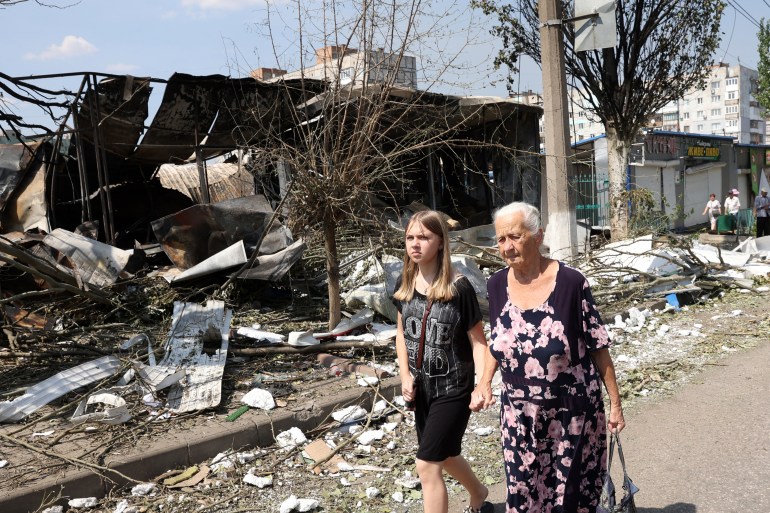
People walk by debris of a destroyed local market after a Russian missile attack in the town of Bakhmut, Donetsk region, Ukraine [Anatolii Stepanov/AFP]
Published On 16 Jul 202216 Jul 2022
Russian forces have fired missiles and shells at cities and towns across Ukraine after Russia’s military announced it was stepping up its onslaught against its neighbour, with Ukrainian officials reporting that at least 17 more civilians had been killed.
Russian Defence Minister Sergei Shoigu gave “instructions to further intensify the actions of units in all operational areas, in order to exclude the possibility of the Kyiv regime launching massive rocket and artillery attacks on civilian infrastructure and residents of settlements in the Donbas and other regions,” his ministry said on Saturday.
The most advanced category of mass-produced semiconductors — used in smartphones, military technology and much more — is known as 5 nm. A single company in Taiwan, known as TSMC, makes about 90 percent of them. U.S. factories make none.
The U.S.’s struggles to keep pace in semiconductor manufacturing have already had economic downsides: Many jobs in the industry pay more than $100,000 a year, and the U.S. has lost out on them. Longer term, the situation also has the potential to cause a national security crisis: If China were to invade Taiwan and cut off exports of semiconductors, the American military would be at risk of being overmatched by its main rival for global supremacy.
Shinzo Abe could sometimes look like yet another one of the world’s modern breed of nationalist leaders, alongside Viktor Orban in Hungary, Vladimir Putin in Russia, Xi Jinping in China and Donald Trump in the U.S.
Abe came from a family of Japanese nationalist politicians, including a grandfather whom the U.S. accused of war crimes during World War II. Abe himself downplayed Japan’s wartime atrocities and spoke of the importance of patriotism and “traditional values.” Above all, he pushed his country to shed its post-1945 pacifism and become more militaristic.
The news leaking from the White House is that President Biden may finally ease tariffs against some Chinese goods—a mere 18 months into his Administration. The extended indecision underscores that Mr. Biden essentially has no trade policy while the rest of the world moves ahead with new trade deals.