8 người phụ nữ săn thần chết

19/10/2014 16:11 GMT+7

TT – “Bom mìn là thần chết, nhưng công việc của chúng tôi là đi tìm thần chết ấy.

Rà phá bom, mìn luôn đầy rẫy hiểm nguy

14 năm lăn lộn khắp vùng rừng rú của tỉnh Quảng Trị này, chúng tôi đã phát hiện và phá hủy hàng ngàn quả bom, quả đạn, mìn và các vật liệu chưa nổ” – chị Trần Thị Thảo, 39 tuổi, đội trưởng đội 1 của dự án MAG Quảng Trị (viết tắt của Mines Advisory Group – nhóm cố vấn bom mìn do Vương quốc Anh tài trợ), nói.

Trước khi ra hiện trường thực hiện phóng sự này, quy định bắt buộc chúng tôi phải đăng ký nhóm máu của mình với nhân viên y tế để xử lý cấp cứu nếu xảy ra rủi ro. Trên tấm bảng thông tin ở các điểm rà phá bom mìn luôn nổi bật sơ đồ chuyển thương ngắn nhất đến các bệnh viện. Tiếp tục đọc “8 người phụ nữ săn thần chết”

Con đường lên nắm quyền của Ngô Đình Diệm, 1945-54 (3 Phần)

Con đường lên nắm quyền của Ngô Đình Diệm, 1945-54 (P1)

Posted on by NCQT

ngo-dinh-diem1

Nguồn: Edward Miller “Vision, Power and Agency: The Ascent of Ngô Ðình Diệm, 1945–54“, Journal of Southeast Asian Studies, 35 (3), October 2004, pp 433–458.

Biên dịch: Hoài Phi & Vy Huyền

Tóm lược: Bài viết này phản bác lại những diễn giải hiện có về Ngô Ðình Diệm bằng cách xem xét những hoạt động của ông trong vòng một thập kỷ trước khi ông trở thành lãnh đạo của miền Nam Việt Nam vào năm 1954. Ngô Ðình Diệm đã chủ động tìm cách nắm quyền trong những năm đó, và ông thành công chủ yếu nhờ nỗ lực của chính mình và của những đồng minh người Việt của ông. Cùng thời gian đó, ông và em trai là Ngô Ðình Nhu cũng phác thảo ra viễn kiến đặc biệt về quá trình hiện đại hoá, so rõ cho chúng ta thấy chiến lược xây dựng quốc gia ở miền Nam Việt Nam sau năm 1954. Tiếp tục đọc “Con đường lên nắm quyền của Ngô Đình Diệm, 1945-54 (3 Phần)”

The U.S. Navy Wants to Show China Who’s Boss

FP Report

The U.S. Navy Wants to Show China Who’s Boss

Worried about China’s increasing naval might, the U.S. Navy is scrambling to buy new anti-ship missiles for the first time in decades, and throwing out its old playbook for war strategy in the Pacific.

Since the end of the Cold War, the American military has enjoyed unrivaled dominance on the high seas, with no other navy posing a serious threat. But over the past decade, China has rapidly built up a naval force to be reckoned with, spending tens of billions of dollars annually to produce dozens of new warships of every size, and a formidable arsenal of missiles aimed at undercutting America’s naval reach. Tiếp tục đọc “The U.S. Navy Wants to Show China Who’s Boss”

Mine Risk Education

Team Leader Truong Cong Vinh taking notes from Hoa and Phien, ninth graders at Trieu Van School, whose information guided a RENEW team to four different locations littered with more than 500 wartime unexploded ordnance (UXO).

LM – The main objective of Project RENEW’s Mine Risk Education is the risk of ERW accidents among chilren and adults is reduced and eventually eliminated through education, information, and public awareness in support of EOD quick response.

World War I and World War II-era bombs are still found by the thousands in European countries, even today. According to Spiegel Online, in Germany alone, more than 2,000 tons of aerial bombs and all sorts of munitions ranging from hand grenades and tank mines to artillery shells are recovered each year.  So it is impossible – and not necessary –  to clean up every bomb and mine in Vietnam.  The real goal must be to make Quang Tri safe ­– which means placing priority on removing cluster bombs, grenades, mortar and artillery rounds, and other small ordnance on the ground or just under the surface – the main items that kill and injure children, farmers, and other adults. Tiếp tục đọc “Mine Risk Education”

The Hillary Clinton Doctrine

What Does Hillary Clinton Believe In?

Former Secretary of State Hillary Clinton speaks about gun violence and stricter gun control during a townhall meeting in New Hampshire on Oct. 5, 2015. (Melina Mara/Washington Post via Getty Images)

For four years she was Obama’s loyal secretary of state. Her critics call her an interventionist, her admirers tough-minded. What kind of president would she be?

By James Traub

On Jan. 13, 2011, Secretary of State Hillary Clinton gave what turned out to be a remarkably prescient speech in Doha, Qatar. “The region’s foundations are sinking into the sand,” she warned. If you do not manage to “build a future that your young people will believe in,” she told the Arab heads of state in the audience, the status quo they had long defended would collapse. The very next day, Tunisia’s dictator was forced to flee the country. Almost two weeks later, hundreds of thousands of Egyptians thronged Cairo’s Tahrir Square demanding that then-President Hosni Mubarak step down. Over the following week, Clinton and her colleagues in the Barack Obama administration engaged in an intense debate over how to respond to this astonishing turn of events. Should they side with the young people in the streets demanding an immediate end to the deadening hand of autocratic rule, or with the rulers whom Clinton had admonished, but who nevertheless represented a stable order underpinned by American power and diplomacy?

Tiếp tục đọc “The Hillary Clinton Doctrine”

US Government Accountabily Office’s Report to Congressional Requesters, Oct. 2015

TRENDS IN US AND CHINA ECONOMIC ENGAGEMENT IN INDONASIA AND VIETNAM

Excerpt:

Vietnam

In 2014, U.S. imports from Vietnam exceeded China’s, while Chinese exports to Vietnam exceeded U.S. exports (see figure)
.
As in Indonesia, the United States and China compete more often with other countries than with each other in goods exported to Vietnam and win contracts in different sectors. The United States and Vietnam are both participants inthe proposed regional Trans-Pacific Partnership, while China and Vietnam are both parties to a regional FTA and the RCEP negotiations.

In fiscal years 2009 through 2014, U.S. agencies’ financing for exports to, and investment in, Vietnam totaled about $205 million, compared with at least $4.5 billion in Chinese financing, according to the Department of State.

In 2007 through 2012, China’s reported FDI of $1.2 billion was more than twice the United States’ reported FDI of $472 million, according to available data.

Download the Report

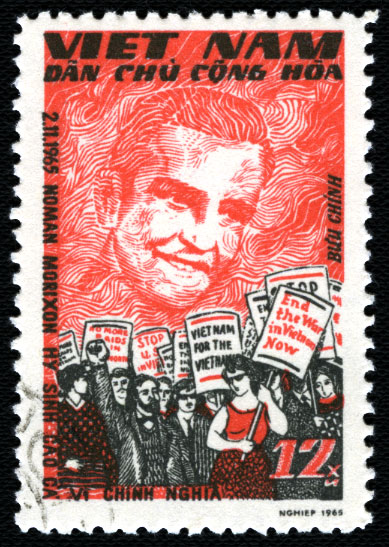
Norman Morrison Commemoration on the 50th Anniversary of His Sacrifice On Behalf of the Vietnamese

 Brian’s Blog

November 2​, 2015Morrison-Stamp

Fifty years ago today, November 2, 2015, at about 5:20 p.m., a 31-year-old Quaker named Norman Morrison immolated himself 40 feet from the window of US Secretary of War Robert McNamara’s office at the Pentagon. I was a law student in Washington, DC at the time.

Most US Americans know little of our nation’s history and seldom reflect on the moral issues relating to its genocidal origins and imperial nature. And, it seems, they avoid at all costs reflection on anything that may produce “negative” feelings (i.e., the truth). Tiếp tục đọc “Norman Morrison Commemoration on the 50th Anniversary of His Sacrifice On Behalf of the Vietnamese”

170,000 người thoát khỏi nguy cơ bị phơi nhiễm dioxin

19-03-2015 image

UNDP – Hà Nội, ngày 19 tháng 3 năm 2015 – 170,000 người dân sống ở khu vực gần sân bay Biên Hòa ở miền Nam và các vùng lân cận của căn cứ không quân Phù Cát ở miền Trung sẽ không còn phải đối mặt với nguy cơ bị phơi nhiễm dioxin.

Văn phòng Ban Chỉ đạo Quốc gia (Văn phòng 33) và Chương trình Phát triển Liên Hợp Quốc (UNDP) đã công bố kết quả này trong hội nghị tổng kết dự án tại Hà Nội vào ngày 19 tháng 3 năm 2015. Tại hội nghị, các kết quả chính của dự án “Xử lý dioxin tại các vùng ô nhiễm nặng ở Việt Nam” đã được chia sẻ với Chính phủ và các đối tác phát triển cũng như các chuyên gia, các nhà nghiên cứu trong nước và quốc tế. Tiếp tục đọc “170,000 người thoát khỏi nguy cơ bị phơi nhiễm dioxin”

Cluster bomb is safely destroyed so construction of a new clan temple in Quang Tri Province can continue

Hai Lang District, Quang Tri Province – 30 October 2015

The O Lau River flows through Hai Lang District in Quang Tri Province.  Along its banks is historic Luong Dien Village, one of the oldest villages in the province. In 1508, people migrating from Tonkin settled in this area and founded a small village named Ke Lang.  Called Luong Phuc in the 18th century, the village was chosen by the Nguyen Lords as the location to be their headquarters and army base for their conquest of the south. Luong Phuc was again renamed as Luong Dien in 1804; two years after Emperor Gia Long – the first king of the Nguyen Dynasty – ascended the throne. Tiếp tục đọc “Cluster bomb is safely destroyed so construction of a new clan temple in Quang Tri Province can continue”

Dàn Cảnh Dân Chủ: Nam Việt Nam Trưng Cầu Dân Ý Truất Phế Bảo Đại Năm 1955

Viện Đại Học California
Chương trình Nghiên cứu Vành đai Thái Bình Dương

Năm 2005
Tiến Sĩ Jessica Chapman

Full English text: Staging Democracy – South Vietnam’s 1955 Referandum to Depose Bao Dai

Tóm tắt tiếng Việt của Đào Văn Bình:

Phóng viên Donald Lancaster, người ở Sài Gòn đã và chứng kiến biến cố ồn ào 1955 này, ghi nhận như sau “ Bởi vì Bảo Đại không có cơ hội tự biện hộ cho nên hệ truyền thông và báo chí do chính phủ kiểm sóat đã tha hồ nhục mạ ông.” Lancaster viết “ Diệm thích đánh bại kẻ thù hơn là nói chuyện với kẻ thù, ” và ông kết luận rằng điều này trước mắt đem lại sự ổn định tạm thời cho vùng nông thôn. Tuy nhiên ông hàm ý rằng thái độ đàn áp của Ô. Diệm tạo nên một sự yên bình nho nhỏ trong điều kiện tốt nhất, nhưng không hé mở một chi tiết nào về tương lai chính trị lâu dài của Miền Nam.

Cooper nhớ lại Diệm và Nhu, cả hai đã ra lệnh và khuyến khích vi phạm trắng trợn bầu cử, nhưng người Hoa Kỳ lại cố giữ bộ mặt tốt đẹp cho cuộc bầu cử. Lúc bấy giờ, với sự hợp tác của người Hoa Kỳ, Diệm có thể đạt được mọi mục đích và củng cố quyền lực tại NamViệt Nam vào cuối năm 1955. Tuy nhiên theo Cooper, những chương trình và chính sách của Diệm từ thời điểm đó “ đã đưa tới thảm họa không sao tránh khỏi.” Tiếp tục đọc “Dàn Cảnh Dân Chủ: Nam Việt Nam Trưng Cầu Dân Ý Truất Phế Bảo Đại Năm 1955”

CSIS: Vietnam Eyes Greater International Integration— & That’s Good News for the United States

By Phuong Nguyen

Street in the business district of Ho Chi Minh City, Vietnam. Source: Jo.sau's flickr photostream, used under a creative commons license.

For the first time since Vietnam opened up to the world in the late 1980s, the country’s trajectory could shape the future geopolitics of Southeast Asia in significant ways. What that trajectory ought to look like has been a topic of intense discussions among Vietnamese leaders in recent months, as Vietnam gears up for the twelfth Communist Party Congress, expected to take place in early 2016. Tiếp tục đọc “CSIS: Vietnam Eyes Greater International Integration— & That’s Good News for the United States”

Two UXO call-ins from local people lead RENEW teams to dangerous munitions caches left from the war

Project RENEW

Hai Lang, Trieu Phong Districts, Quang Tri (22 October 2015)

On Tuesday local Quang Tri residents made two urgent phone calls to Project RENEW’s hotline to report their discovery of wartime ordnance, and to ask for assistance.

35-year-old Hoang Van Ty, a villager in Trieu Van Commune of Trieu Phong District, was preparing land to build a temple in the village cemetery when he encountered unexploded ordnance (UXO).  He reported the discovery immediately to commune military officer Nguyen Van Lam, who used his mobile phone to call to Project RENEW. Tiếp tục đọc “Two UXO call-ins from local people lead RENEW teams to dangerous munitions caches left from the war”

‘Chưa hề thấy dự án TQ chống sốt rét’

    Bài cùng chuỗi:
    – Nobel Prize goes to modest woman who beat malaria for China
    – Bà Đồ U U và ‘thuốc chữa bộ đội VN’
    – For Vietnam: Artemisinin From China, Agent Orange From America
    – ‘Chưa hề thấy dự án TQ chống sốt rét’


BBC

13 tháng 10 2015 Cập nhật lúc 20:24 ICT

Đã không có hợp tác giữa Trung Quốc với Việt Nam để giúp miền Bắc Việt Nam điều trị hoặc nghiên cứu chống bệnh sốt rét trong thời kì chiến tranh, theo lời một nhân chứng, cựu chuyên gia chống sốt rét của Bắc Việt.

Một phần giải Nobel y học 2015 được trao cho nhà khoa học Trung Quốc, bà Đồ U U, nhờ chiết xuất được Thanh hao tố (Artemisinin) dùng để chữa bệnh sốt rét từ cây thanh hao hoa vàng. Tiếp tục đọc “‘Chưa hề thấy dự án TQ chống sốt rét’”

Bà Đồ U U và ‘thuốc chữa bộ đội VN’

    Bài cùng chuỗi:
    – Nobel Prize goes to modest woman who beat malaria for China
    – Bà Đồ U U và ‘thuốc chữa bộ đội VN’
    – For Vietnam: Artemisinin From China, Agent Orange From America
    – ‘Chưa hề thấy dự án TQ chống sốt rét’

      BBC

  • 6 tháng 10 2015
 Image copyright AFP

Một chương trình bí mật do Mao Trạch Đông cho lập ra để tìm thuốc chống sốt rét cho quân đội Bắc Việt Nam thời chiến tranh giúp bà Đồ U U được giải Nobel Y học 2015, theo báo Anh.

Là giáo sư Học viện Y học Cổ truyền Trung Quốc, bà Đồ U U, 84 tuổi, là người thứ ba nhận giải Nobel Y học năm nay, cùng nhà khoa học William Campbell, người Cộng hòa Ireland và giáo sư Satoshi Omura từ Nhật Bản. Tiếp tục đọc “Bà Đồ U U và ‘thuốc chữa bộ đội VN’”

For Vietnam: Artemisinin From China, Agent Orange From America

    Bài cùng chuỗi:
    – Nobel Prize goes to modest woman who beat malaria for China
    – Bà Đồ U U và ‘thuốc chữa bộ đội VN’
    – For Vietnam: Artemisinin From China, Agent Orange From America
    – ‘Chưa hề thấy dự án TQ chống sốt rét’

Four-ship formation on a defoliation spray run. (U.S. Air Force photo)       Operation Ranch Hand, spraying Agent Orange over Vietnam.

One half of this year’s Nobel Prize for Physiology or Medicine went to Tu Youyou for her discovery of the antimalarial drug artemisinin. Many of us who do research in the biological sciences have felt that this award was long overdue.

The discovery of artemisinin has saved the lives of millions. And so the Nobel is proper recognition for Dr. Tu, for China and for the advancing role of women in science here and around the world.

There is an interesting and illuminating back story to Dr. Tu’s discovery. India’s The Hindu relates the story here:

(In the 1960s North Vietnam and the Vietcong were were at war with the U.S. which had launched a massive invasion, and malaria was rampant in the region. jw) Struggling to deal with a malaria-ridden army, Vietnamese Prime Minister Ho Chi Minh requested Chairman Mao to establish a secret military research programme to look for a cure for malaria within the traditional Chinese medicine. Project 523 (as it began on May 23) began its search for a cure in 1967. It was officially shut down in 1981.

Mao’s prompting led to Tu’s discovery Tiếp tục đọc “For Vietnam: Artemisinin From China, Agent Orange From America”