Unicef Report Describes Grim Trends for the Poorest Children

Unicef warned Monday of what it described as grim trend lines for the world’s poorest children over the next 15 years, saying in a new report that many millions face preventable deaths, diseases, stunted growth and illiteracy.

The forecasts in the report by Unicef, the United Nations Children’s Fund, suggested that despite reductions of poverty and other deprivations in underdeveloped countries since 2000, as seen in improved national averages, those statistics had obscured a worsening trend among the poorest segments of their populations and may have impeded overall progress.

UNICEF – Progress for Children Report

– See more at: http://www.data.unicef.org/resources/progress-for-children-report#sthash.W5DZHAA5.dpuf

UNICEF: Số trẻ em Việt Nam dưới 5 tuổi tử vong đã giảm hơn một nửa

Nguyễn Hồng Điệp (TTXVN/Vietnam+) lúc : 24/06/15 05:28 Bản in

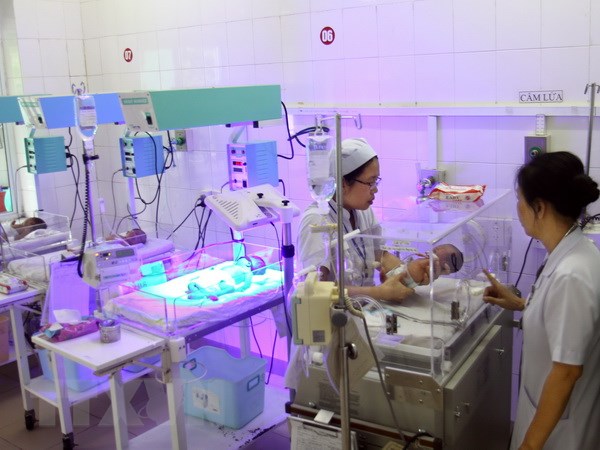
Chăm sóc trẻ sơ sinh thiếu tháng. (Ảnh: Hồ Cầu/TTXVN)

Ngày 23/6, Quỹ Nhi đồng Liên hợp quốc (UNICEF) tại Việt Nam cho biết UNICEF vừa công bố Báo cáo “Tiến bộ cho Trẻ em,” trong đó nêu bật những bài học kinh nghiệm từ các Mục tiêu phát triển Thiên niên kỷ.

Đây là báo cáo cuối cùng của Quỹ Nhi đồng Liên hợp quốc về những Mục tiêu phát triển Thiên niên kỷ liên quan đến trẻ em. Tiếp tục đọc “UNICEF: Số trẻ em Việt Nam dưới 5 tuổi tử vong đã giảm hơn một nửa”

Renewables 2015 Global Status Report

First released in 2005, REN21’s Renewables Global Status Report (GSR) provides a comprehensive and timely overview of renewable energy market, industry, investment and policy developments worldwide. It enables policymakers, industry, investors and civil society to make informed decisions. The Renewables Global Status Report relies on up-to-date renewable energy data, provided by an international network of more than 500 contributors, researchers, and authors.

More information and Download reports HERE

Châu Á cân nhắc hạn chế và bỏ án tử hình

VNN – Một số nước châu Á đang cân nhắc xem xét giảm, hạn chế, thậm chí xóa bỏ hình phạt tử hình đối với nhiều tội danh, trong đó có tội buôn bán ma túy với chủ trương đề cao hiệu quả phòng ngừa và tính nhân đạo trong việc xử lý người phạm tội.

Kêu gọi xóa án tử hình ở châu Á

tử hình, ECPM, ADPAN, Malaysia, Kuala Lumpur, Nepal, Bhutan, Philippines, Campuchia, Mông Cổ, Timor Lester, Lào, Myanmar, Brunei
140 nước đã bỏ hình phạt tử hình trên luật hoặc trên thực tế. Trong đó, 98 nước (màu xanh lá cây) bỏ hình phạt tử hình; 7 nước bỏ hình phạt tử hình cho các tội danh thông thường (tím); 35 nước có án tử hình nhưng không thi hành trên thực tế (vàng nhạt); còn lại 58 nước – đỏ) vẫn duy trì hình phạt tử hình.

Cân nhắc án tử hình

Một bộ trưởng trong Văn phòng Thủ tướng Malaysia, ông Datuk Paul Low Seng Kuan hôm 11/6 đã công khai lên tiếng ủng hộ việc xem xét lại hình phạt tử hình đối với tội buôn bán chất ma túy. Tiếp tục đọc “Châu Á cân nhắc hạn chế và bỏ án tử hình”

Biển Đông dậy sóng tại Hội nghị Liên Hiệp Quốc

TNTại Liên Hiệp Quốc, đại diện Việt Nam và Philippines đều lên tiếng cảnh báo về hậu quả từ những hoạt động bồi đắp quy mô lớn phi pháp ở Biển Đông.
Trung Quốc xây đại công trình phi pháp ở đá Gạc Ma thuộc Trường Sa - Ảnh: Mai Thanh Hải
Trung Quốc xây đại công trình phi pháp ở đá Gạc Ma thuộc Trường Sa – Ảnh: Mai Thanh Hải

Từ ngày 8 – 12.6 (giờ địa phương) tại trụ sở của Liên Hiệp Quốc ở thành phố New York, Mỹ diễn ra Hội nghị lần thứ 25 các quốc gia thành viên Công ước Liên Hiệp Quốc về luật Biển (UNCLOS) với sự tham dự của 136/167 quốc gia thành viên cùng các nước quan sát viên và nhiều tổ chức quốc tế.

Tiếp tục đọc “Biển Đông dậy sóng tại Hội nghị Liên Hiệp Quốc”

Kêu gọi xóa án tử hình ở châu Á

Cập nhật : 08:27 | 10/06/2015

VNN – Hàng trăm đại diện ủng hộ việc xóa bỏ án tử hình từ nhiều nước trên khắp thế giới sẽ họp mặt ở Malaysia để thảo luận trong hai ngày 11-12/6.


tử hình, án tử hình, châu Á, Malaysia, nhân quyền, Anti-Death Penalty Asia Network, ADPAN, Together Against the Death Penalty, ECPM
Phong trào kêu gọi hủy bỏ án tử hình

Hội nghị khu vực châu Á về án tử hình do Together Against the Death Penalty (ECPM) và Anti-Death Penalty Asia Network (ADPAN) tổ chức nhằm kêu gọi các nước châu Á đi hướng theo xu hướng của thế giới là xóa bỏ án tử hình. Tiếp tục đọc “Kêu gọi xóa án tử hình ở châu Á”

The State of Food and Agriculture

FAO 39th Session, June 2015

Overcoming hunger and extreme poverty requires a comprehensive and proactive strategy to complement economic growth and productive approaches. This document focuses on the role of social protection in fighting hunger and extreme poverty, and linking this dimension to productive support.

Focus on rural areas and agriculture, especially on family farms and rural workers, is imperative in order to address the preponderant concentration of extreme poverty and food insecurity in rural areas within the context of the intrinsic interlinkage of agriculture with hunger and rural poverty.

Part A of this document provides a brief overview of the most recent FAO sources of information on trends in food and agriculture at world and regional levels. Part B provides information for discussion under the Conference theme: Breaking the Cycle of Rural Poverty and Hunger by Strengthening Rural Resilience: Social Protection and Sustainable Agricultural Development.

 
Download: The State of Food and Agriculture

International Year of Soils: Asia regional soil partnership promoted

 FAO

13/05/2015 Bangkok, Thailand Representatives and scientists from 19 countries in Asia are examining best practices and common challenges they face in protecting and managing the region’s soils – the very foundation for food production relied on by billions of people. Tiếp tục đọc “International Year of Soils: Asia regional soil partnership promoted”

UNESCO: Rethinking Education in a Changing World

Rethinking Education in a Changing World

As an international laboratory of ideas, UNESCO has launched a process of rethinking the fundamental principles that guide our approaches to education and learning in the current context of globalization. In order to do so, the Director-General of UNESCO has established a Senior Experts’ Group chaired by Ms. Amina Mohammed, the United Nations Secretary-General’s Special Adviser on Post-2015 Development Planning. A first meeting of the Senior Experts’ Group was organized in February 2013 in order to initiate the process. See report of meeting

Download:

Eng | Fr | Sp

UNESCO: Learning – The Treasure Within (Delors Report)

Learning: The Treasure Within

Learning: The Treasure Within, commonly referred to as the ‘Delors Report’, proposes a holistic and integrated vision of education based on the paradigms of lifelong learning, and the four pillars of learning to be, to know, to do, and to live together.

Download:

Arabic | Chinese | English | French | PortugueseRussianSpanish

UNESCO: Learning to Be – The world of education today and tomorrow

Learning to Be: The world of education today and tomorrow

The Faure Report builds on the two key ideas of lifelong education and the learning society. It claims that “learning is a process that lasts a lifetime, both in its duration and its diversity”. While lifelong education is considered to be the cornerstone of educational policies, the learning society is seen as a strategy aimed at committing society as a whole to education.

Download:

ArabicEnglish | French | Spanish

UNESCO: Four Pillars of Learning – Bốn Cột Trụ Giáo Dục

The four pillars of learning

The four pillars of learning are fundamental principles for reshaping education:

Learning to know: to provide the cognitive tools required to better comprehend the world and its complexities, and to provide an appropriate and adequate foundation for future learning.

Learning to do: to provide the skills that would enable individuals to effectively participate in the global economy and society.

Learning to be: to provide self analytical and social skills to enable individuals to develop to their fullest potential psycho-socially, affectively as well as physically, for a all-round ‘complete person.

Learning to live together: to expose individuals to the values implicit within human rights, democratic principles, intercultural understanding and respect and peace at all levels of society and human relationships to enable individuals and societies to live in peace and harmony.

Tiếp tục đọc “UNESCO: Four Pillars of Learning – Bốn Cột Trụ Giáo Dục”

UNESCO: Visions of Learning

Visions of Learning

UNESCO has long promoted a humanistic vision of learning based on principles of respect for life, human dignity, and cultural diversity, as well as social justice and international solidairty. This vision has been outlined in the two landmark publications, Learning to Be (1972) and Learning: The Treasure Within (1996). UNESCO is now building on these reports to rethink education in the current context of change, complexity, and uncertainty.

Rethinking Education in a Changing World

As an international laboratory of ideas, UNESCO has launched a process of rethinking the fundamental principles that guide our approaches to education and learning in the current context of globalization. In order to do so, the Director-General of UNESCO has established a Senior Experts’ Group chaired by Ms. Amina Mohammed, the United Nations Secretary-General’s Special Adviser on Post-2015 Development Planning. A first meeting of the Senior Experts’ Group was organized in February 2013 in order to initiate the process. See report of meeting

Download:

Eng | Fr | Sp

Tiếp tục đọc “UNESCO: Visions of Learning”

Việt Nam nỗ lực thực hiện cam kết quốc tế về quyền con người

Pháp Luật
2015-03-05T10:11:38

Thứ trưởng Nguyễn Quốc Cường đã nêu bật những nỗ lực của Việt Nam trong thực hiện các cam kết quốc tế về quyền con người, trong đó có việc các khuyến nghị cơ chế Rà soát Định kỳ Phổ quát (UPR) chu kỳ 2 đã được chấp thuận, các cam kết tự nguyện với tư cách thành viên HĐNQ, phê chuẩn Công ước Chống tra tấn và Công ước về Quyền của Người Khuyết tật.

Tiếp tục đọc “Việt Nam nỗ lực thực hiện cam kết quốc tế về quyền con người”