FILE PHOTO: Russian President Vladimir Putin and Turkish President Tayyip Erdogan leave after their joint news conference following the talks in Moscow, Russia March 5, 2020. Sputnik/Mikhail Klimentyev/Kremlin via REUTERS
ANKARA (Reuters) – Turkish President Tayyip Erdogan urged his Russian counterpart Vladimir Putin on Sunday to declare a ceasefire in Ukraine, open humanitarian corridors and sign a peace agreement, his office said.
NATO member Turkey shares a maritime border with Russia and Ukraine in the Black Sea and has good ties with both. Ankara has called Russia’s invasion unacceptable and offered to host talks, but has opposed sanctions on Moscow.
Russian troops seize Europe’s largest nuclear power plant in southeastern Ukraine, after attack sparks fire.
Published On 4 Mar 20224 Mar 2022
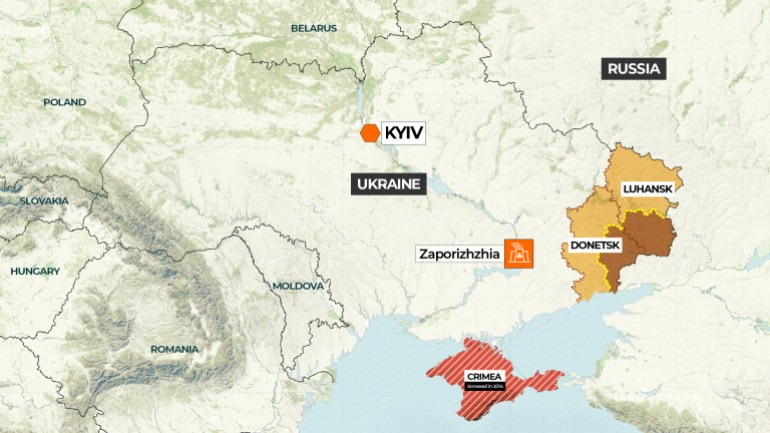
Russian forces have captured Ukraine’s Zaporizhzhia nuclear power plant, the largest in Europe, according to regional officials.
Ukrainian authorities said on Friday Russian shelling had caused a fire at a building in the plant complex that was later put out. The blaze raised alarm from leaders worldwide of a potential massive disaster. Russia blamed the attack on Ukrainian saboteurs, calling it a “monstrous provocation”.
Here is what we know so far:
Where is it located?
The Zaporizhzhia nuclear power plant is located in the southern Ukraine steppe on the Dnieper River, some 550 kilometres (342 miles) southeast of Ukraine’s capital, Kyiv, and about 525km (325 miles) south of Chernobyl, the site of the world’s worst nuclear power plant accident in 1986, which has also now been seized by Russian forces.
The plant has a total capacity of about 6,000 megawatts, enough to power about roughly four million homes.
On Wednesday, residents carrying Ukrainian flags had blocked the road to the plant, in an apparent standoff with Russian forces.
What happened?
But on Friday Russian troops were accused of attacking the plant, in an assault Ukraine’s President Volodymyr Zelenskyy branded “nuclear terror” and said could endanger the continent.
A video feed from the plant showed shelling and smoke rising near a building at the plant compound.
It is the first time in 40 years the security council has referred a crisis to the assembly and only the 11th time an emergency session of the UN general assembly has been called since 1950.
The United Nations has voted overwhelmingly for a resolution deploring Russia’s invasion of Ukraine and called for the immediate withdrawal of its forces, in a global expression of outrage that highlighted Russia’s increasing isolation.
In an emergency session of the UN’s general assembly, 141 of the 193 member states voted for the resolution, 35 abstained, and five voted against. The only countries to vote no in support of Moscow were Belarus, North Korea, Eritrea and Syria. Longstanding allies Cuba and Nicaragua joined China in abstaining.
The resolution said the UN “deplores in the strongest terms the aggression by the Russian Federation against Ukraine”. It demanded that “the Russian Federation immediately cease its use of force against Ukraine” and “immediately, completely and unconditionally withdraw all of its military forces”.
The resolution is not legally binding, but is an expression of the views of the UN membership, aimed at increasing pressure on Moscow and its ally, Belarus.
“It isn’t going to stop Russian forces in their stride, but it’s a pretty enormous diplomatic win for the Ukrainians and the US, and everyone who has got behind them,” Richard Gowan, UN director at the International Crisis Group, said.
Speaking before the vote, the US ambassador to the UN, Linda Thomas-Greenfield, compared the Russian invasion to the Nazi conquest of Europe.
“A few of the eldest Ukrainians and Russians might recall a moment like this, a moment when one aggressive European nation invaded another without provocation to claim the territory of its neighbour, a moment when a European dictator declared he would return his empire to its former glory and invasion that caused a war so horrific, that it spurred this organization into existence,” Thomas-Greenfield said.
TTO – Tiền đề dẫn đến căng thẳng giữa Nga và Ukraine, đỉnh điểm là “chiến dịch quân sự đặc biệt” của Nga ở đông Ukraine sáng 24-2, không xảy ra trong một sớm một chiều. Đây là kết quả của tương tác chính trị giữa 2 nước trong suốt 30 năm qua.
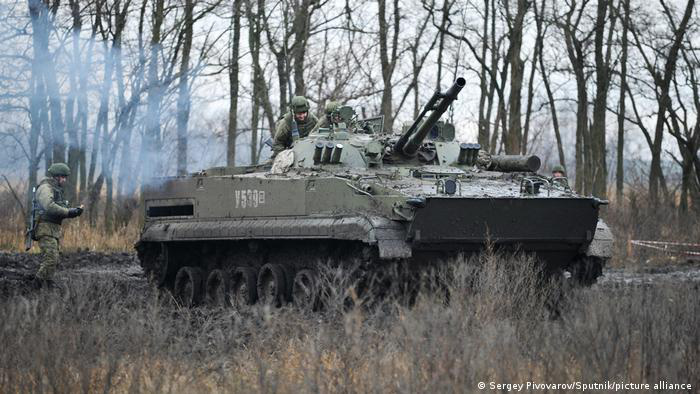
Thiết giáp Nga tập trận gần biên giới Ukraine tháng 12-2021 – Ảnh: SPUTNIK
Quãng đường 30 năm có thể chia làm 3 giai đoạn, mỗi giai đoạn kéo dài một thập niên với những sự kiện bước ngoặt riêng. Đài DW của Đức tóm tắt như sau:
By Stephen M. Walt, a columnist at Foreign Policy and the Robert and Renée Belfer professor of international relations at Harvard University.
JANUARY 19, 2022, 5:49 AM
The situation in Ukraine is bad and getting worse. Russia is poised to invade and demanding airtight guarantees that NATO will never, ever expand farther to the east. Negotiations do not appear to be succeeding, and the United States and its NATO allies are beginning to contemplate how they will make Russia pay should it press forward with an invasion. A real war is now a distinct possibility, which would have far-reaching consequences for everyone involved, especially Ukraine’s citizens.
(VOVWORLD) – A nuclear science and technology research center with a 10-MWt nuclear reactor will be built in Vietnam, according to the Vietnam Atomic Energy Institute.
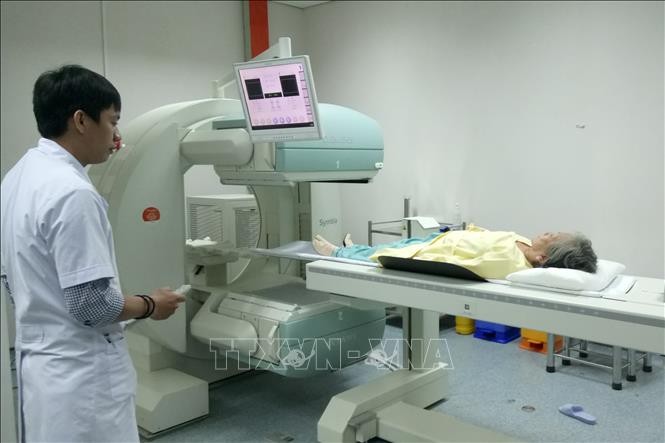
The Dong Nai General Hospital uses nuclear technology in early diagnosis of cancer. (Photo: VNA)
Dr. Tran Chi Thanh, Director of the Vietnam Atomic Energy Institute, said procedures to build the research center started in 2019.
The project is part of an agreement between Vietnam and Russia signed in November, 2011. The new research center will replace a nuclear reactor in Da Lat in Central Vietnam to boost nuclear applications for socio-economic development.
TTCT – Gần như ngay khi Thủ tướng Việt Nam Phạm Minh Chính rời Nhật Bản, kết thúc tốt đẹp chuyến thăm chính thức nước này, chuyên cơ chở Chủ tịch nước Nguyễn Xuân Phúc đã hạ cánh xuống Geneva, Thụy Sĩ vào sáng 26-11, mở đầu một vòng ngoại giao quan trọng khác.
Giống như nhiều lĩnh vực khác, công tác ngoại giao cũng gặp nhiều trở ngại trong năm 2021 vừa qua vì đại dịch COVID-19, nhưng càng về cuối năm, hoạt động đối ngoại của VN lại càng tấp nập.
Chủ tịch nước Nguyễn Xuân Phúc trong chuyến thăm Thụy Sĩ. Ảnh: VNA
Mới đây, Mỹ và Australia đã tiến hành cuộc tham vấn thường niên theo cơ chế “2+2” lần thứ 31, trong đó nhấn mạnh tới những quan ngại về Biển Đông, cũng như đề cao việc thượng tôn luật pháp quốc tế, bao gồm Công ước Liên hợp quốc về Luật Biển năm 1982 (UNCLOS).
(Từ trái qua phải) Bộ trưởng Quốc phòng Australia Peter Dutton, Ngoại trưởng Australia Marise Payne, Ngoại trưởng Mỹ Anthony Blinken, Bộ trưởng Quốc phòng Mỹ Lloyd Austin trong cuộc gặp tại Thủ đô Washington, Mỹ trong tuần trước. Ảnh: REUTERS
QĐND Online – 76% người dân Liên Xô ngày 17-3-1991 đã bày tỏ ủng hộ việc duy trì Liên bang, mà không hề biết rằng, họ đang bỏ phiếu ủng hộ cho Liên Xô sụp đổ.
Mikhail Gorbachev – Tổng thống đầu tiên và cũng là duy nhất của Liên Xô.
Sắp tới, ngày 17-3, tròn 30 năm ngày Liên Xô tổ chức cuộc trưng cầu dân ý lịch sử dẫn đến sự sụp đổ của cường quốc này (17-3-1991 – 17-3-2021). Tờ “Pronedra” của Nga mới đây đăng bài viết của tác giả Yulia Yakobson với nhan đề “Liên Xô sụp đổ và vai trò của Mikhail Gorbachev trong việc làm tan rã một nhà nước rộng lớn”. Tiếp tục đọc “Liên Xô sụp đổ và vai trò của Mikhail Gorbachev”→
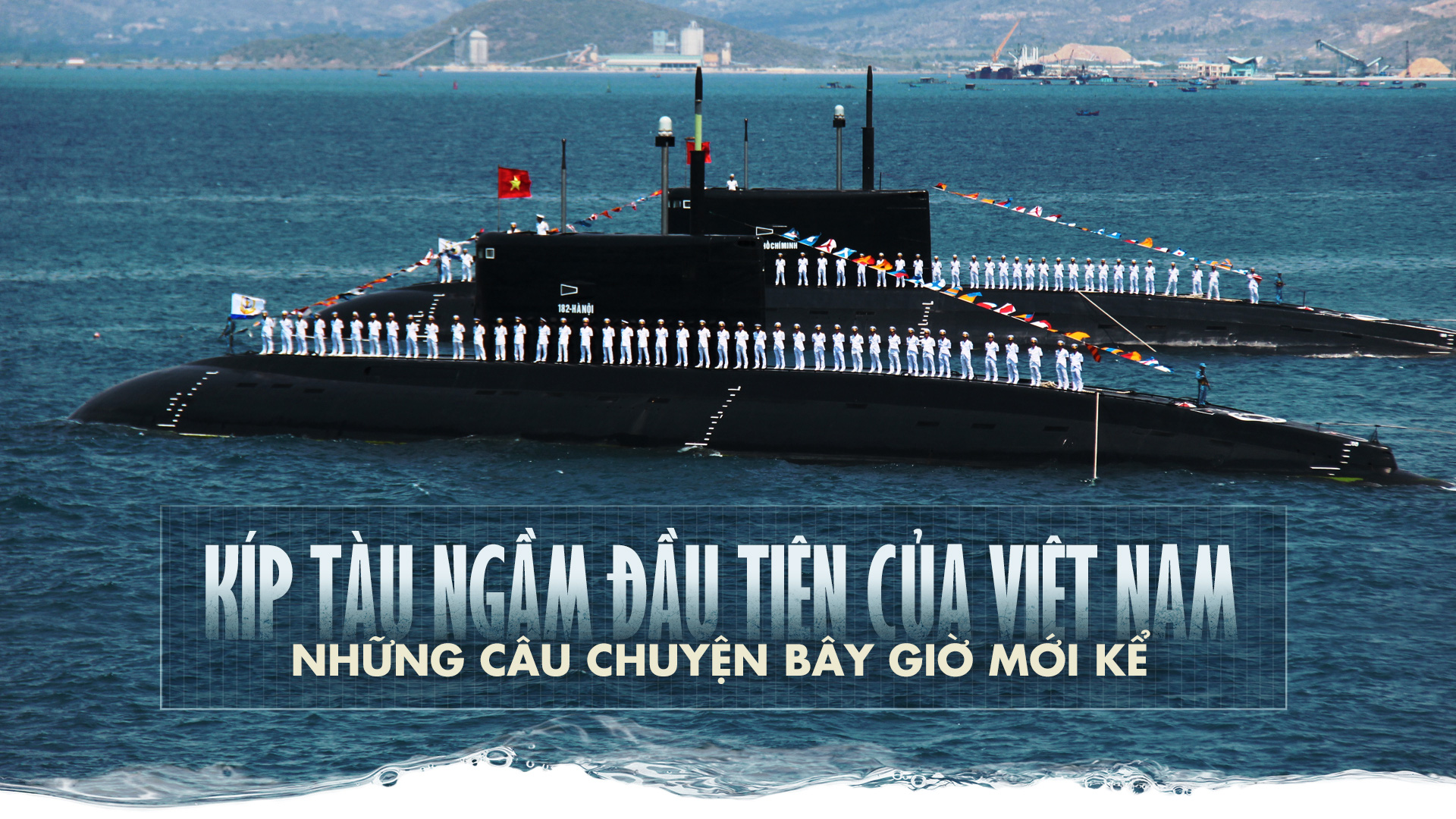
TTO – Đúng 9h ngày 2-6-2017, lần đầu tiên trong lịch sử Hải quân nhân dân Việt Nam và cả Tổ quốc, quả tên lửa phóng đi từ tàu ngầm bắn trúng trực tiếp mục tiêu, ghi dấu mốc đầy tự hào với kíp tàu ngầm lớp kilo 636 số hiệu 182-Hà Nội.
Đây cũng chính là kíp tàu ngầm đầu tiên được đi Nga học.
Nhớ lại những dấu mốc không thể nào quên với tàu ngầm kilo số hiệu 182, thiếu tá Nguyễn Trọng Khôi, thuyền trưởng tàu ngầm mang tên thủ đô Hà Nội, nói: “Khi bước chân sang Nga học, chúng tôi đã quyết tâm học, không chỉ vì danh dự của mỗi cá nhân mà còn học vì Tổ quốc”. Tiếp tục đọc “Kíp tàu ngầm đầu tiên của Việt Nam – những câu chuyện bây giờ mới kể”→
Microsoft has uncovered new Russian hacking efforts targeting U.S. political groups ahead of the midterm elections.
The company said Tuesday that a group tied to the Russian government created fake websites that appeared to spoof two American conservative organizations: the Hudson Institute and the International Republican Institute. Three other fake sites were designed to look as if they belonged to the U.S. Senate. Tiếp tục đọc “Microsoft uncovers more Russian hacking ahead of midterms”→
Facebook’s Mark Zuckerberg testifies before two Senate committees in April 2018.Chip Somodevilla/Getty Images
Facebook revealed on Tuesday that it has removed about 650 pages, groups, and accounts it determined are part of a coordinated disinformation campaign out of Russia — and Iran. Also on Tuesday, Twitter said it had suspended 284 Iran-linked accounts.
Menlo Park, California-based Facebook said that it has scrapped 652 fake accounts and pages that targeted Facebook users in the United States, United Kingdom, Latin America, and the Middle East. Facebook said that it undertook four separate investigations into aspects of the suspicious activity, three of which were related to Iran, and the fourth to Russian military intelligence services. The Iranian and Russian campaigns were unrelated, Facebook CEO Mark Zuckerberg said in a call with reporters on Tuesday evening.
Zuckerberg said Facebook banned the fake accounts and announced the decision was “because authenticity matters, and people need to be able to trust the connections that they make on Facebook.”
This is the second time in less than a month that Facebook has identified and removed suspicious activity on its platform, and it comes amid concern that Russia and others are trying to disrupt the 2018 midterm elections. Facebook has stepped up enforcement as a result of those concerns, but it’s not clear whether any of the activity Facebook revealed Tuesday was specifically targeted at swaying the November contest in the US.







/cdn.vox-cdn.com/uploads/chorus_image/image/60974665/944682778.jpg.0.jpg)
 CVD
CVD 