Impact of global South research ‘should be recognised’

scidev.net

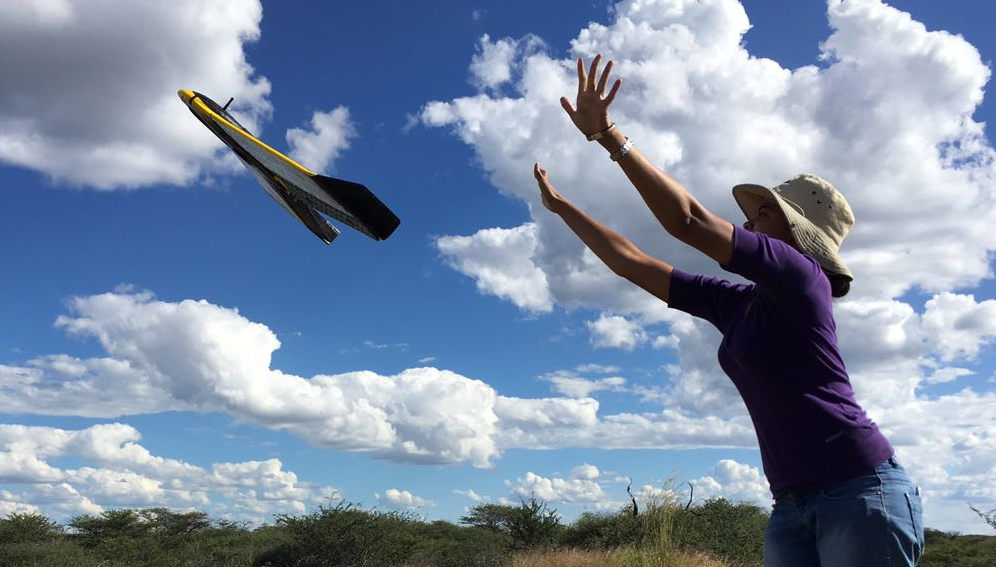
A female researcher flying a drone in the field in Namibia

A Namibian female researcher flying a drone to capture images in the field. Perceptions around quality of global South research ‘need to change’, a panel of research funders and observers heard during the science summit on the sidelines of the UN General Assembly. Copyright: Miggan91 (CC BY-SA 4.0)

Speed read

  • Perceptions around quality of global South research ‘need to change’
  • Equitable partnerships key to research impact – report
  • North-South funding imbalances ‘must be challenged’

By: Sarah Wild

 The quality and applicability of research done by institutions in low- and middle-income countries needs to be more broadly recognised, a panel of research funders and observers heard as part of a science summit held on the sidelines of the UN General Assembly.

“When researchers in the global North produce research, it’s understood as if it was universal, whereas when research is done in the global South, then it’s only local and applicable to those settings,” Andrea Ordonez Llanos, executive director of Southern Voice, a network of think tanks in the global South, told the panel discussion on Thursday (21 September).

Tiếp tục đọc “Impact of global South research ‘should be recognised’”

Frankenswine? No, but research on “zombie pigs” raises life-or-death ethics questions

thebulletin.org

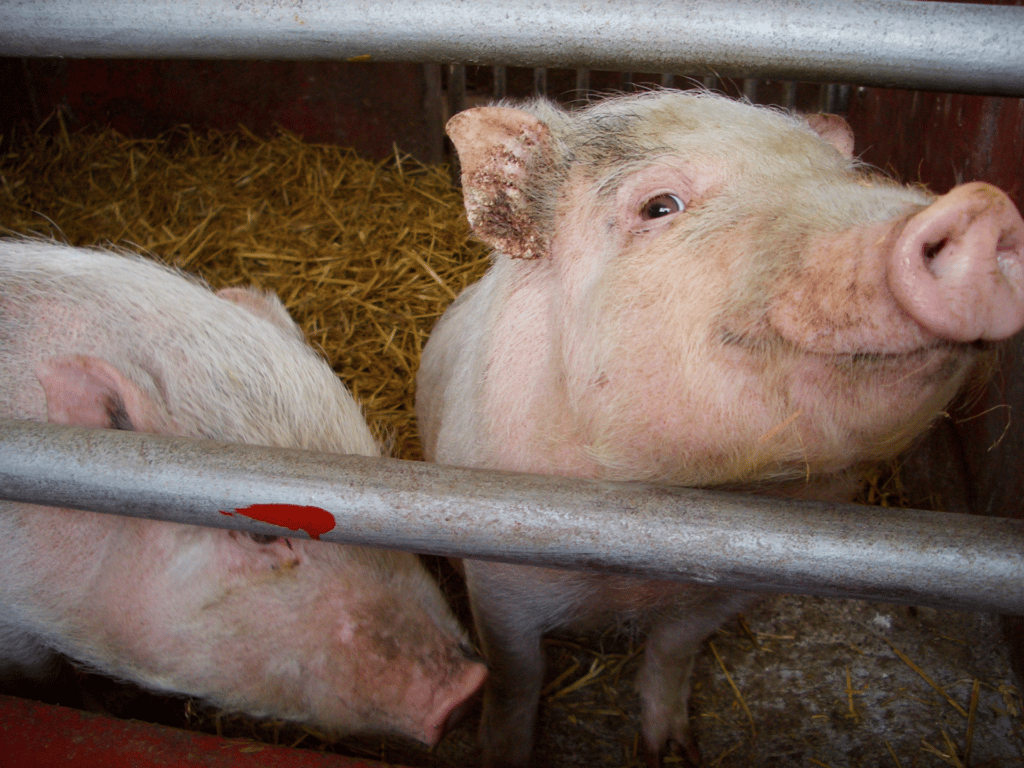
Pigs. Pigs. Credit: or titanium22. CC BY-SA 2.0
It used to be that nothing was certain but death and taxes. Now scientists have taken a step that casts some doubt on the former claim. In a study published Wednesday in Nature, Yale University researchers described a technology for restoring significant organ activity in pigs that had died of a cardiac arrest an hour before. The main goal for the work, they say, will be to improve the harvesting of organs for transplant, but the technique could also potentially be used to revive, for example, drowning victims.

Using a “device similar to a heart-lung machine” and a fluid containing the animals’ blood and a variety of drugs, including anticoagulants, the Yale team was able to observe several signs of restored function in the dead pigs, including heart contraction and some liver and kidney activity. Their hearts were contracting (though not fully beating), their organs were showing signs of metabolism, and genes responsible for cellular repair were active. “These cells are functioning after they should not be,” Nenad Sestan, a Yale University professor and one of the authors of the new study told The Wall Street Journal.

Tiếp tục đọc Frankenswine? No, but research on “zombie pigs” raises life-or-death ethics questions

The shifting sands of ‘gain-of-function’ research

nature.com

The mystery of COVID’s origins has reignited a contentious debate about potentially risky studies and the fuzzy terminology that describes them.

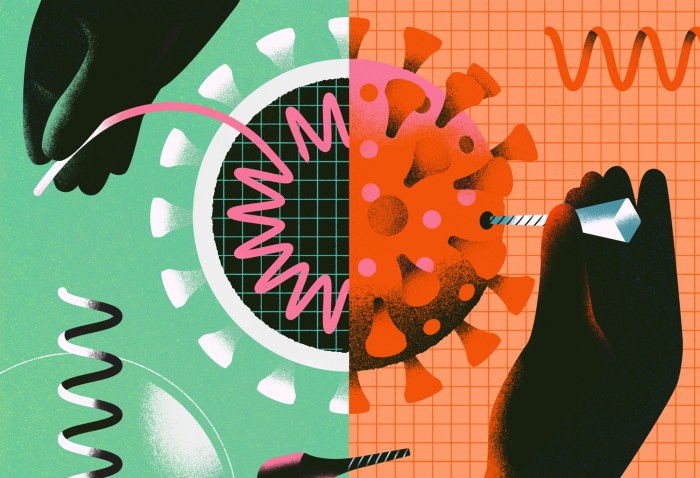
Conceptual illustration showing a virus being edited.
Illustration by Kasia Bojanowska

In Greek mythology, the Chimaera was a fire-breathing monster, a horrifying mishmash of lion, goat and snake that laid waste to the countryside. In 2015, virologists led by Ralph Baric at the University of North Carolina in Chapel Hill reported the creation of their own chimaera. They took a version of the coronavirus responsible for the deadly outbreak of severe acute respiratory syndrome (SARS) in the early 2000s — now known as SARS-CoV — and adorned it with surface proteins from a different coronavirus taken from Chinese horseshoe bats. In the laboratory, this particular mash-up was able to break into human cells and also make mice ill1. This chimaera came with a message: other coronaviruses have the potential to spark a human pandemic. In just a few years’ time, that warning would prove prescient, as a distant cousin of SARS-CoV has now killed more than 4.9 million people worldwide.

Tiếp tục đọc “The shifting sands of ‘gain-of-function’ research”

How to get the most out of research when universities and industry team up

theconversation.com

Australia has long been seen as failing to fully capitalise on its ground-breaking research. A consultation paper on university research commercialisation is the latest federal government effort to increase the impact of research. Its focus is on creating incentives for industry-university collaboration to translate and commercialise research.

Any government scheme resulting from these consultations might boost the number of such collaborations. Yet our research suggests many of these projects are unlikely to reach their full potential unless academics and their research partners working in industry strengthen their collaborative relationships.


Read more: Who cares about university research? The answer depends on its impacts Tiếp tục đọc “How to get the most out of research when universities and industry team up”

Quá trình tái chế đơn giản, hiệu quả năng lượng cho pin Lithium-Ion

&English: Simple, Energy-Efficient Recycling Process for Lithium-Ion Batteries

Có một quá trình tái chế mới chỉ cần một nửa năng lượng so với kỹ thuật thông thường và sản xuất những vật liệu âm cực sẵn sàng để sử dụng.

Một quá trình tái chế mới đơn giản phục hồi cực âm của pin lithium cũ chỉ sử dụng một nửa năng lượng của quá trình tái chế hiện tại. Không giống như những phương pháp tái chế hiện nay, phá vỡ cực âm thành những phần tử riêng biệt mà rồi lại cần ghép chúng lại một lần nữa, công nghệ mới tạo ra hợp chất mà đã sẵn sàng để đi vào một cục pin mới.

Phương pháp này sử dụng được trong pin lithium coban oxit dung trong máy tính xách tay và điện thoại thông minh, và trong pin phức hợp lithium-niken-mangan-coban có trong xe điện. Tiếp tục đọc “Quá trình tái chế đơn giản, hiệu quả năng lượng cho pin Lithium-Ion”

Vietnam launches innovation network to tap diaspora expertise

By Staff reporters   August 20, 2018 | 08:45 am GMT+7

Vietnam launches innovation network to tap diaspora expertise

Vietnam’s officials and scientists launch Vietnam Innovation Network in Hanoi on Sunday. Photo by VnExpress/Ngu Hiep

The Vietnam Innovation Network, launched Sunday by the Prime Minister, aims to connect Vietnamese scientists across the world.

“The new network will enable Vietnamese experts working in technologically advanced countries to assist their home country in preparing for the Fourth Industrial Revolution,” Prime Minister Nguyen Xuan Phuc said at the launch.

The network has been joined by over 100 Vietnamese scientists and tech experts living overseas as well as hundreds of their peers in Vietnam.

Tiếp tục đọc “Vietnam launches innovation network to tap diaspora expertise”

The father of lithium-ion batteries

Chemistryworld

journey to winning Japan’s highest scientific honour

Akira Yoshino was about nine years old when his teacher gave him a book: Michael Faraday’s A chemical history of a candle. He’s never looked at a candle the same since. ‘There was a TV programme on the other day about candles and how they can only really be used on Earth. What happens when you’re in a zero gravity environment? The flame looks like it’s extinguished (it actually burns almost invisibly at a very slow rate). That fascinated me,’ he says with the broadest smile.

Why it’s so hard for doctors to understand your pain

theconversation

We’re all human beings, but we’re not all alike.

Each person experiences pain differently, from an emotional perspective as well as a physical one, and responds to pain differently. That means that physicians like myself need to evaluate patients on an individual basis and find the best way to treat their pain.

Today, however, doctors are under pressure to limit costs and prescribe treatments based on standardized guidelines. A major gap looms between the patient’s experience of pain and the limited “one size fits all” treatment that doctors may offer.

Concerns about the opioid epidemic make the problem worse. Opioids – including heroin and fentanyl – killed more than 42,000 people in the U.S. in 2016. Four in 10 of these deaths involved prescription painkillers such as hydrocodone and oxycodone. Physicians are increasingly reluctant to prescribe opioids for pain, fearing government scrutiny or malpractice lawsuits.

https://datawrapper.dwcdn.net/i4IlW/1/

Where does this leave the patient whose experience of pain is outside the norm? How can physicians in all specialties identify these patients and do our best to manage their pain, even when their needs don’t match our expectations or experience?

Pain differences

Tiếp tục đọc “Why it’s so hard for doctors to understand your pain”

Natural selection gave a freediving people in Southeast Asia bigger spleens

Date:April 19, 2018
Source:Cell Press
FULL STORY

This image shows a Bajau diver hunting fish underwater using a traditional spear.
Credit: Melissa Ilardo

The Bajau people of Southeast Asia, known as Sea Nomads, spend their whole lives at sea, working eight-hour diving shifts with traditional equipment and short breaks to catch fish and shellfish for their families. In a study published April 19 in the journal Cell, researchers report that the extraordinary diving abilities of the Bajau may be thanks in part to their unusually large spleens. The adaptation, the researchers say, is a rare example of natural selection in modern humans — and one that could provide medically relevant insight into how humans manage acute hypoxia.

Tiếp tục đọc “Natural selection gave a freediving people in Southeast Asia bigger spleens”

Trung Quốc đã nhân bản vô tính khỉ, người chỉ còn là thời gian

25/01/2018 09:58 GMT+7

TTO – Lần đầu tiên các nhà khoa học Trung Quốc ứng dụng thành công kỹ thuật nhân bản vô tính từng tạo ra cừu Dolly để tạo ra những con khỉ khỏe mạnh.

Hai con khỉ cái được tạo ra bằng phương pháp nhân bản vô tính của Trung Quốc – Nguồn: TELEGRAPH/YOUTUBE

Tiếp tục đọc “Trung Quốc đã nhân bản vô tính khỉ, người chỉ còn là thời gian”

UN approves declaration banning all forms of human cloning – UN thông qua tuyên bố cấm mọi hình thức nhân bản vô tính người, năm 2005

UN.org

8 March 2005 –The United Nations General Assembly today approved a non-binding declaration calling on all UN Member States to ban all forms of human cloning, including cloning for medical treatment, as incompatible with human dignity and the protection of human life.

By a vote of 84 in favour, 34 against and 37 abstaining, with 36 absent, the Assembly acted on the recommendation of its Legal, or Sixth, Committee to adopt the text, called the United Nations Declaration on Human Cloning. But some delegates said they opposed banning therapeutic cloning.

The Declaration, negotiated by a Working Group last month, also banned “genetic engineering techniques that may be contrary to human dignity.” It called on States “to prevent the exploitation of women in the application of life sciences” and “to protect adequately human life in the application of life sciences.” Tiếp tục đọc “UN approves declaration banning all forms of human cloning – UN thông qua tuyên bố cấm mọi hình thức nhân bản vô tính người, năm 2005”

Scientist pioneers regenerative medicine research

vietnamnews Update: November, 19/2017 – 09:00

Dr Nguyễn Thị Hiệp

Viet Nam News

Dr Nguyễn Thị Hiệp, a 36-year-old lecturer in the biomedical engineering department at HCM City International University under Việt Nam National University-HCM City, has conducted research for more than 10 years on the use of biomaterials in regenerative medicine and tissue cells. 

For her research achievements on using homecare solutions, Hiệp won the top prize at the third annual ASEAN-US Science Prize for Women 2017. She is the first Vietnamese woman to receive the award. Tiếp tục đọc “Scientist pioneers regenerative medicine research”