Định kiến giới ngay trong sách giáo khoa ảnh hưởng gì đến học sinh?

thanhnien.vn 02/05/2023 17:03 GMT+7

Hàng ngàn học sinh nói sách giáo khoa mang định kiến giới khi nam giới thường gắn với công việc được cho rằng có địa vị cao, trong khi nghề nghiệp của nữ giới có địa vị thấp hơn hoặc chỉ đóng vai trò phụ tá.

Nghề nghiệp của nam giới thường có địa vị cao

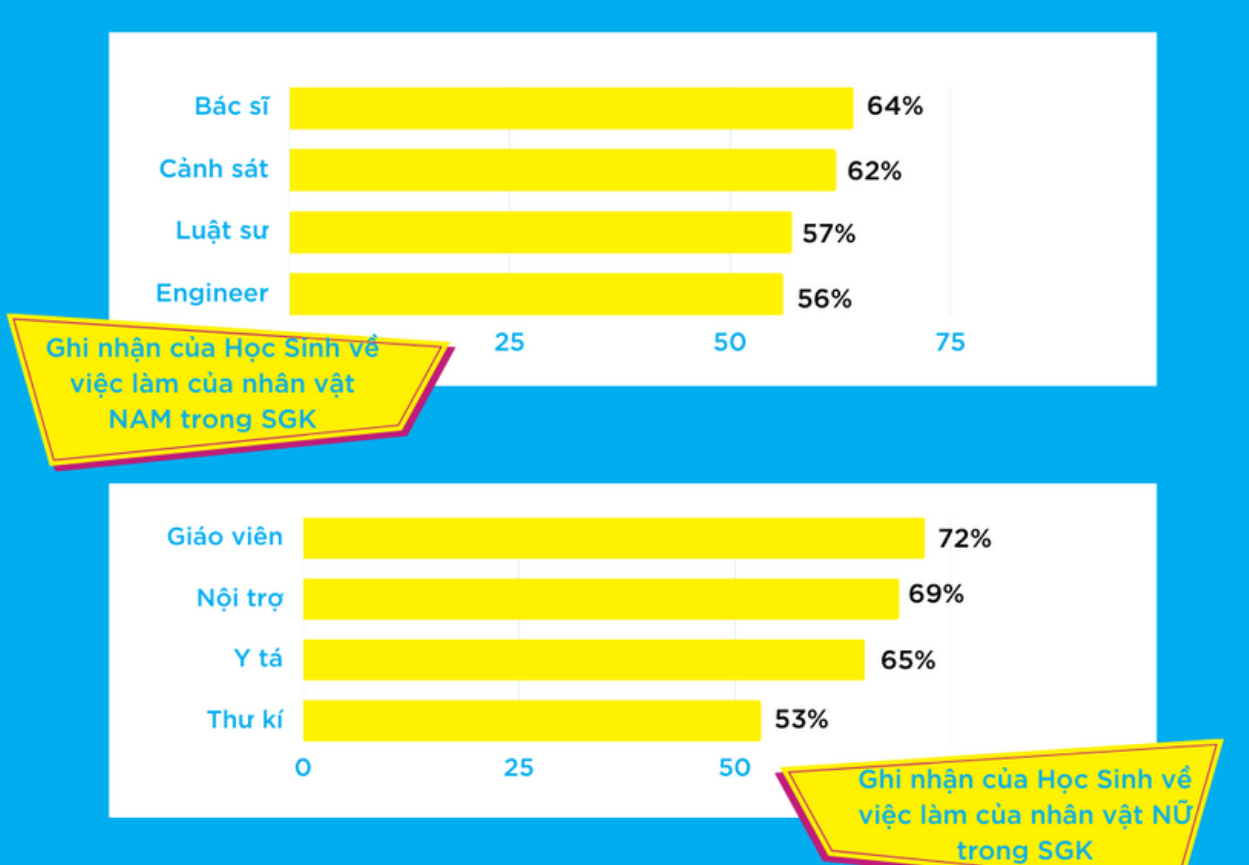
Khi khảo sát gần 7.000 học sinh về định kiến giới ở trường học, tổ chức Saigon Children’s Charity (saigonchildren) và Viện Nghiên cứu quản lý phát triển bền vững (MSD) cho hay phần lớn học sinh nói sách giáo khoa thường gắn nhân vật nam với các công việc đòi hỏi sức mạnh hoặc kỹ thuật cao, chẳng hạn như bác sĩ, cảnh sát, luật sư và kỹ sư. Ngược lại, nhân vật nữ thường liên quan đến hoạt động giáo dục hoặc chăm sóc như giáo viên, nội trợ, y tá hoặc thư ký.

Trong sách giáo khoa, nghề nghiệp của nam giới thường có địa vị cao - Ảnh 1.
Ghi nhận của học sinh về việc làm của các nhân vật trong sách giáo khoa, theo báo cáo của tổ chức Saigon Children’s Charity và Viện Nghiên cứu quản lý phát triển bền vững

“Những địa vị được miêu tả dành riêng cho hai giới trong sách giáo khoa hàm chứa định kiến, với phần lớn các nghề nghiệp do nam giới đảm nhận là những việc có địa vị cao, trong khi các nghề nghiệp được khắc họa dành cho nữ giới có địa vị thấp hơn hoặc nữ giới chỉ đảm nhận vai trò là phụ tá cho ngành nghề của nam giới”, nhóm nghiên cứu nhấn mạnh trong báo cáo công bố ngày 27.4.

Với kết quả khảo sát như trên, nhóm nghiên cứu chỉ ra rằng việc thể hiện các nghề nghiệp khác nhau trong sách giáo khoa dựa trên giới tính có thể ảnh hưởng đáng kể đến lựa chọn nghề nghiệp và vai trò trong xã hội của học sinh, đặc biệt ở Việt Nam, nơi vai trò giới và thứ bậc xã hội truyền thống vẫn còn ảnh hưởng mạnh mẽ đến kỳ vọng của xã hội.

Điều này cũng ảnh hưởng đến nguyện vọng chọn ngành của nữ sinh, khi các em có thể tự cho rằng khả năng của bản thân bị giới hạn trong một số ngành nghề được cho là “phù hợp” với giới tính, hoặc không có hứng thú để tìm hiểu về các lĩnh vực khác, chẳng hạn như khoa học, công nghệ, kỹ thuật và toán học (STEM).

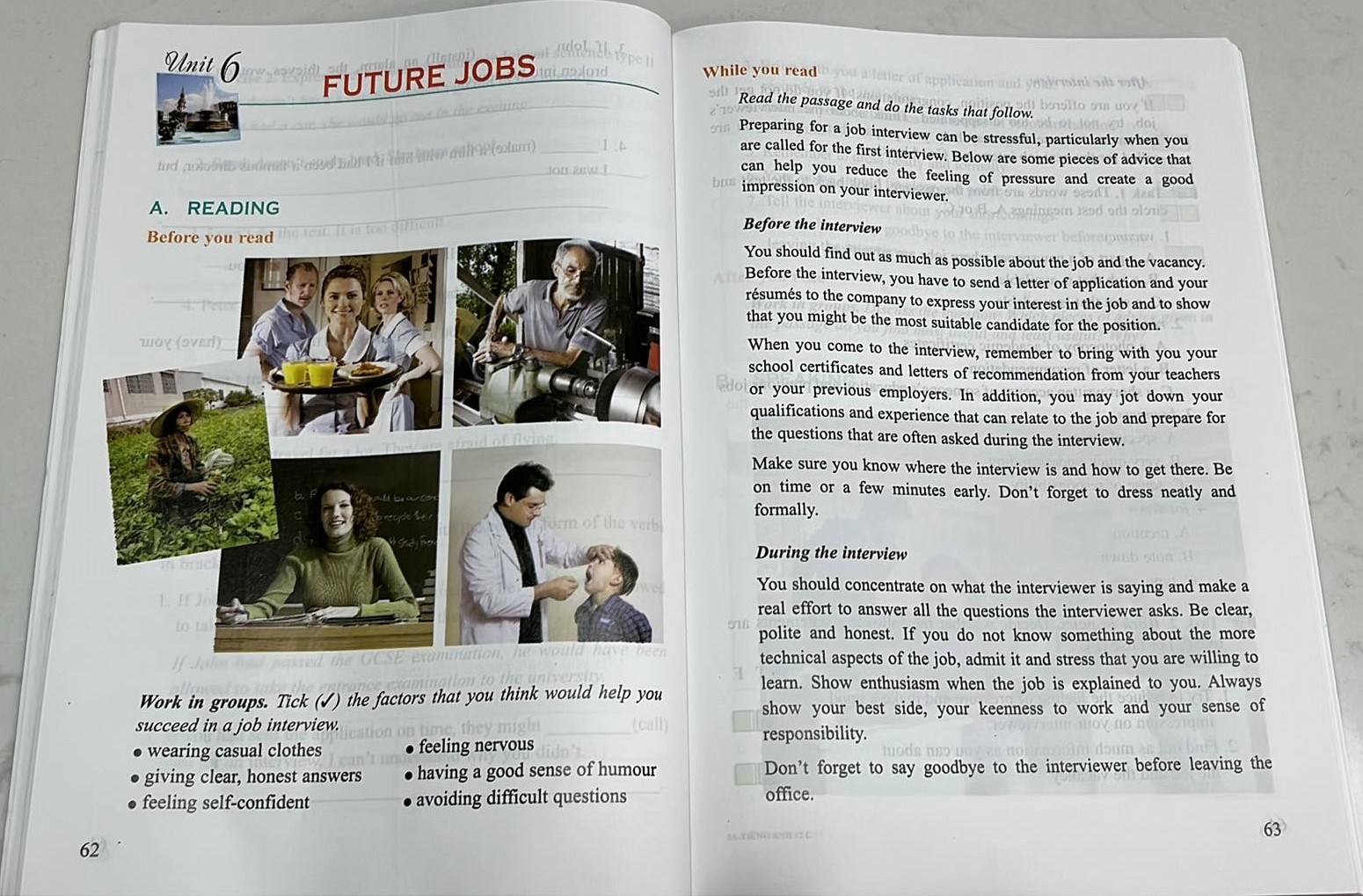
Trong sách giáo khoa, nghề nghiệp của nam giới thường có địa vị cao - Ảnh 2.
Ở chủ đề về nghề nghiệp tương lai trong sách giáo khoa tiếng Anh lớp 12 chương trình hiện hành, nam giới gắn với công việc bác sĩ, kỹ sư, còn nữ giới là giáo viên, phục vụ

Tiếp tục đọc “Định kiến giới ngay trong sách giáo khoa ảnh hưởng gì đến học sinh?”

Nhóm ‘nhặt sạn định kiến giới trong sách giáo khoa Tiếng Việt’ đoạt giải nhất Hội thi Sáng kiến Giới

tamviet.tienphong.vn 30/09/2023 | 20:02

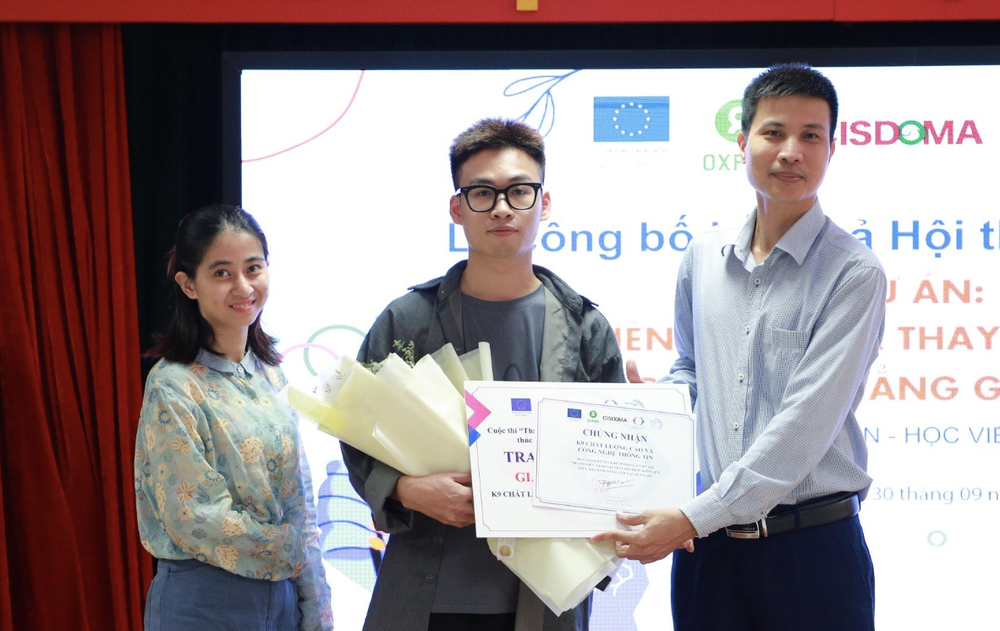
TPO – Chiều 30/9, Khoa Giới và Phát triển tại Học viện Phụ nữ Việt Nam đã tổ chức trao giải mùa thứ 3 cho Hội thi Sáng kiến Giới. 

Cụ thể, chiều 30/9, Khoa Giới và Phát triển tại Học viện Phụ nữ Việt Nam, đơn vị tổ chức Dự án “Thanh niên tham gia thay đổi định kiến giới, thúc đẩy bình đẳng giới tại Việt Nam”, đã trao giải mùa thứ 3 cho Hội thi Sáng kiến Giới.

https://image.tienphong.vn/w1000/Uploaded/2023/tpuokbj/2023_09_30/screen-shot-2023-09-30-at-182854-2973.png
Tiến sĩ Nguyễn Tuấn Minh, đại diện Ban tổ chức trao giải cho sinh viên.

Buổi Lễ được dẫn dắt bởi TS. Dương Kim Anh, Phó Giám đốc Học viện Phụ nữ Việt Nam và Trưởng Khoa Giới và Phát triển, cùng ông Đào Ngọc Ninh, Phó viện trưởng Viện Tư vấn Phát triển Kinh tế Xã hội Nông thôn và Miền núi (CISDOMA). Sự kiện diễn ra trong không khí phấn khích của chuỗi hoạt động chào mừng tân sinh viên khóa K11 và kỷ niệm 8 năm thành lập Khoa Giới & Phát triển.

Tiếp tục đọc “Nhóm ‘nhặt sạn định kiến giới trong sách giáo khoa Tiếng Việt’ đoạt giải nhất Hội thi Sáng kiến Giới”

Countries are still falling short in developing textbooks free of gender-based stereotypes

UNESCO.org Global Education Monitoring Report

2020 Gender Report DOWNLOAD PDF

The Beijing Declaration and Platform for Action called on countries to develop curricula, textbooks and teaching aids free of gender-based stereotypes for all levels of education, including teacher training

Textbooks can perpetuate stereotypes by associating certain characteristics with particular groups. Inappropriate images and descriptions can make students from non-dominant backgrounds feel misrepresented, misunderstood, frustrated and alienated.

Textbooks are powerful factors in construction of gender identities. They transmit knowledge and present social and gender norms, shaping the world view of children and young people. Gender norms and values not only shape attitudes and practices but also influence aspirations and dictate expected behaviours and attributes for males and females (Heslop, 2016). In some contexts, textbooks are the first – and sometimes only – books a young person reads, and so can have a lasting impact on their perceptions. That means that, through textbooks, discriminatory norms and values can be challenged. Strategic objective B.4 of the Beijing Declaration and Platform for Action called on countries to develop curricula, textbooks and teaching aids free of gender-based stereotypes for all levels of education, including teacher training, in cooperation with all concerned – publishers, teachers, public authorities and parents’ associations.

WOMEN ARE UNDER-REPRESENTED IN TEXTBOOKS

In many countries, girls and women are under-represented in textbooks, and when they are included, they are depicted in traditional roles. In Afghanistan, women were almost completely absent from grade 1 textbooks published in the 1990s. Since 2001, they have been represented more frequently, but usually in passive and domestic roles, shown as mothers, caregivers, daughters and sisters. They are mostly represented as dependent, with teaching being the only career open to them (Sarvarzade and Wotipka, 2017). A review of 95 primary and secondary compulsory education textbooks in the Islamic Republic of Iran showed that women accounted for 37% of images. About half the images showing women were related to family and education, while work environments appeared in less than 7%. There were no images of women in about 60% of Farsi and foreign language textbooks, 63% of science textbooks and 74% of social science textbooks (Paivandi, 2008).

Tiếp tục đọc “Countries are still falling short in developing textbooks free of gender-based stereotypes”

Home – Ngôi nhà Trái đất

Home –  là một bộ phim tài liệu bởi đạo diễn Yann Arthus-Bertrand, ra mắt vào ngày 5/6/2009 nhân Ngày môi trường thế giới. Bộ phim được quay trong vòng 18 tháng, tại 54 quốc gia, với một chiếc máy quay Cineplex & tốn chi phí 12 triệu USD. Bộ phim khắc họa nguồn gốc và đa dạng sự sống trên Trái Đất cũng như mối đe dọa từ các hoạt động của con người tới sự cân bằng sinh thái Trái Đất. Phim lập kỷ lục công chiếu trên hơn 50 quốc gia trên các kênh truyền hình và Youtube

How much progress is being made on the UN’s Sustainable Development Goals?

weforum.org

A slowdown in progress on key areas is putting the 2030 Sustainable Development Goals 'in peril'.

A slowdown in progress on key areas is putting the 2030 Sustainable Development Goals ‘in peril’.

  • Multiple global crises continue to put the 2030 Sustainable Development Goals ‘in peril’, the UN says.
  • Its 2023 update report shows a significant reversal of progress in key areas such as child vaccination rates and income inequality between countries.
  • These challenges will be the focus of the World Economic Forum’s Sustainable Development Impact Meetings on 18-22 September 2023.

The 2030 Agenda for Sustainable Development was adopted by all United Nations’ (UN) member states in 2015. “A shared blueprint for peace and prosperity for people and the planet, now and into the future”, it is based on 17 Sustainable Development Goals (SDGs), which the UN describes as an urgent call for action. The organization says that ending global poverty requires focusing on strategies that reduce inequality and spur economic growth, while also tackling climate change.

The Sustainable Development Goals Report 2022 painted a worrying picture of progress in almost all areas, but the 2023 update delivers an even graver warning: “The promises enshrined in the SDGs are in peril,” the UN states. This year marks the halfway point to the 2030 Agenda deadline, increasing global urgency to ignite progress.

Tiếp tục đọc “How much progress is being made on the UN’s Sustainable Development Goals?”

As Ocean Oxygen Levels Dip, Fish Face an Uncertain Future

e360.yale.edu

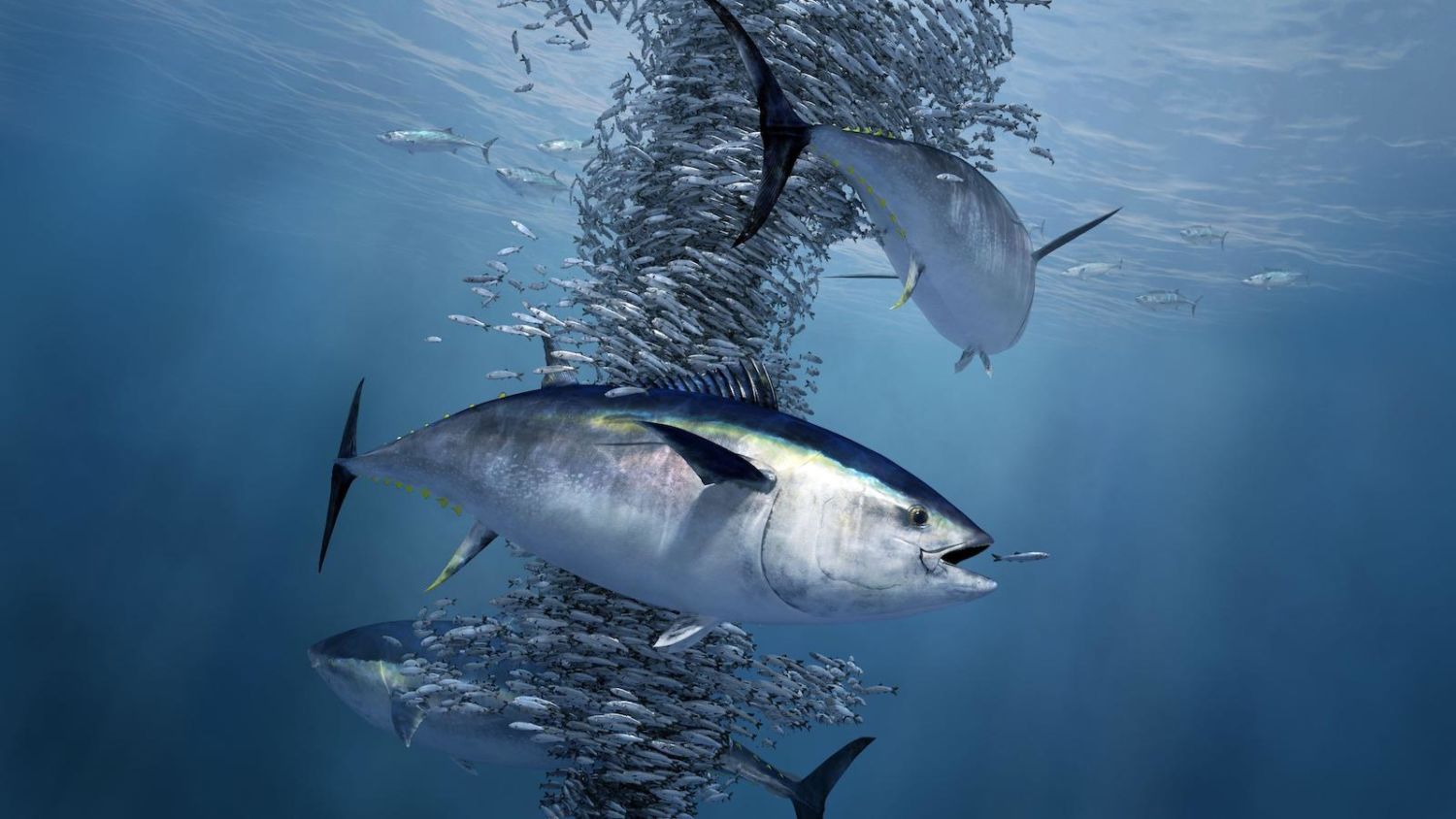
Atlantic bluefin tuna, shown feeding on a school of herring, have been driven into narrower layers of water by oxygen declines.
Atlantic bluefin tuna, shown feeding on a school of herring, have been driven into narrower layers of water by oxygen declines. MARKO STEFFENSEN / ALAMY STOCK PHOTO

Global warming not only increases ocean temperatures, it triggers a cascade of effects that are stripping the seas of oxygen. Fish are already moving to new waters in search of oxygen, and scientists are warning of the long-term threat to fish species and marine ecosystems.

BY NICOLA JONES • MAY 11, 2023

Off the coast of southeastern China, one particular fish species is booming: the oddly named Bombay duck, a long, slim fish with a distinctive, gaping jaw and a texture like jelly. When research ships trawl the seafloor off that coast, they now catch upwards of 440 pounds of the gelatinous fish per hour — a more than tenfold increase over a decade ago. “It’s monstrous,” says University of British Columbia fisheries researcher Daniel Pauly of the explosion in numbers.

The reason for this mass invasion, says Pauly, is extremely low oxygen levels in these polluted waters. Fish species that can’t cope with less oxygen have fled, while the Bombay duck, part of a small subset of species that is physiologically better able to deal with less oxygen, has moved in.

The boom is making some people happy, since Bombay duck is perfectly edible. But the influx provides a peek at a bleak future for China and for the planet as a whole. As the atmosphere warms, oceans around the world are becoming ever more deprived of oxygen, forcing many species to migrate from their usual homes. Researchers expect many places to experience a decline in species diversity, ending up with just those few species that can cope with the harsher conditions. Lack of ecosystem diversity means lack of resilience. “Deoxygenation is a big problem,” Pauly summarizes.

Tiếp tục đọc “As Ocean Oxygen Levels Dip, Fish Face an Uncertain Future”

UN chief hails SE Asia for vital role ‘building bridges of understanding’

news.un.org

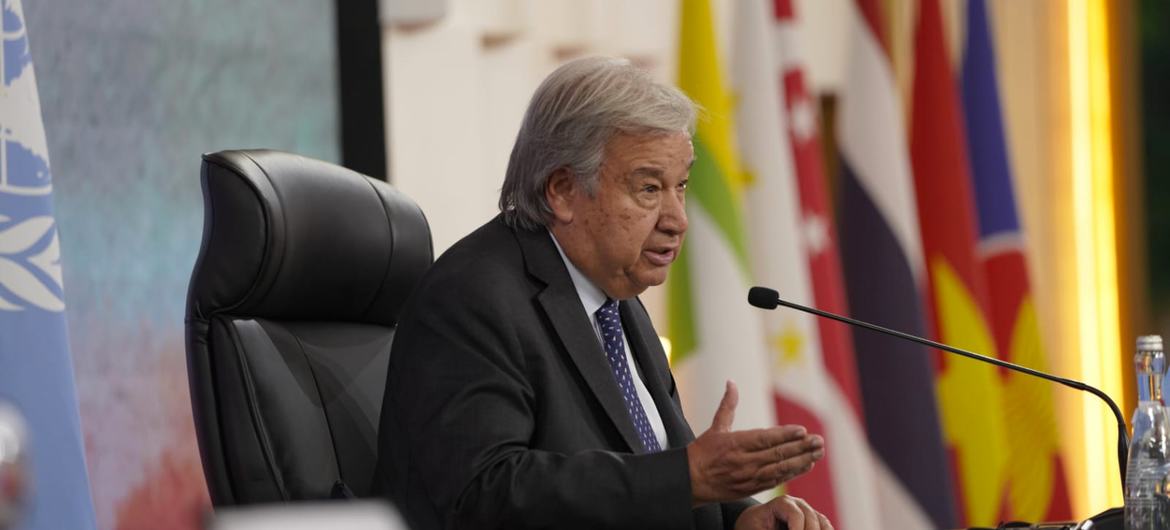
UN Secretary-General António Guterres adresses the media at the Association of Southeast Asian Nations (ASEAN) Summit in Jakarta, Indonesia.

UN Indonesia/Lufty Ferdiansyah

UN Secretary-General António Guterres adresses the media at the Association of Southeast Asian Nations (ASEAN) Summit in Jakarta, Indonesia.

Peace and Security

Amid rising geopolitical tension, Southeast Asia is fulfilling a “vital role in building bridges of understanding” worldwide said the UN chief on Thursday.

António Guterres was speaking in Jakarta, Indonesia, at the opening of the ASEAN-United Nations Summit, addressing Member States of the Association of Southeast Asian Nations and declaring “our partnership is more important than ever.”

Tests ‘as far as eye can see’

Tiếp tục đọc “UN chief hails SE Asia for vital role ‘building bridges of understanding’”

EU CORPORATE SUSTAINABILITY REPORTING DIRECTIVE (CSRD): THE WHY, HOW & IMPACT ON VIETNAM

sustainablevietnam.com September 5, 2023

EU Corporate Sustainability Reporting Directive (CSRD):  The Why, How & Impact on Vietnam

By Christina Ameln, Sustainability Strategist and Advisor –

The EU’s Corporate Sustainability Reporting Directive (CSRD) is the most ambitious reporting directive putting climate, nature and social impacts (non-financial) equal to financial reporting. While it might seem as a regulation aimed exclusively at companies in the EU, the impact will be wide-reaching. Non-EU companies will also feel the impact, including in Vietnam. The potential significance of this regulation on Vietnamese companies, investments and especially Vietnam’s supply chain cannot be ignored.

For us to understand the impact, let’s review the:

  • EU Green Deal;
  • Corporate Sustainability Reporting Directive (CSRD);
  • European Sustainability Reporting Standards (ESRS);
  • Impact on Vietnam with a focus on company, investors and value chain with suppliers as the focus; and
  • How this is not just about compliance but how organizations will put sustainability strategically front and center.

EU Ambitions: Green Deal

Let’s take a step back to understand where this all originates. In 2020, the European Commission launched its ambitious European Green Deal. The goal is to become the first climate-neutral continent by 2050. And among other sustainability related goals, the Green Deal aims to reduce Europe’s greenhouse gas emissions by 2030.

But the EU cannot do it alone.

Market participants, such as corporates to financial market players, play an important role in achieving and contributing to these targets in shifting away from an economy that encourages carbon-intensive business to one that drives transformation to a zero-carbon society. There is also the question of funding: According to the EU Commission, Europe will need an estimated EUR 350 billion in additional investment per year over this decade to meet its 2030 emissions-reduction target in energy systems alone, alongside the EUR 130 billion it will need for other environmental goals.

Tiếp tục đọc “EU CORPORATE SUSTAINABILITY REPORTING DIRECTIVE (CSRD): THE WHY, HOW & IMPACT ON VIETNAM”

Intersectional Gender Context Assessment of the Plastic Value Chain in Viet Nam

Download full report here weforum.com

Rapid economic progress in Viet Nam has been accompanied
by a huge increase in consumption and, as a result, waste –
particularly plastic waste. It is estimated that Viet Nam’s
post-consumer plastic waste will rise by 36% from 2018 levels
by the year 2030. 1 Despite major commitments from the
government, business and civil society, plastic waste leakage
into the country’s water bodies is expected to increase by
106% between 2018 and 2030, to 373,000 tonnes per year.2
The intersectional gender context assessment report on
the plastic value chain in Viet Nam is an initiative under
the framework of the NPAP Viet Nam. Its aim is to highlight
the gender and inclusion gaps and inequalities that exist
throughout the plastic value chain, which can inform the
development of gender-responsive and inclusive policy
options for addressing plastic waste pollution in Viet Nam.
Executive summaryGender Context Assessment of the Plastic Value Chain in Viet Nam
6

World Bank: Social Sustainability in Development – Meeting the Challenges of the 21st Century

Thumbnail Image

Abstract

All development is about people: the transformative process to equip, link, and enable groups of people to drive change and create something new to benefit society. Development can promote societies where all people can thrive, but the change process can be complex, challenging, and socially contentious. Continued progress toward sustainable development is not guaranteed. The current overlapping crises of COVID-19, climate change, rising levels of conflict, and a global economic slowdown are inflaming long-standing challenges—exacerbating inequality and deep-rooted systemic inequities. Addressing these challenges will require social sustainability in addition to economic and environmental sustainability. Social Sustainability in Development: Meeting the Challenges of the 21st Century seeks to advance the concept of social sustainability and sharpen its analytical foundations. The book emphasizes social sustainability’s four key components: social cohesion, inclusion, resilience, and process legitimacy. It posits that •Social sustainability increases when more people feel part of the development process and believe that they and their descendants will benefit from it. •Communities and societies that are more socially sustainable are more willing and able to work together to overcome challenges, deliver public goods, and allocate scarce resources in ways perceived to be legitimate and fair so that all people may thrive over time. By identifying interventions that work to promote the components of social sustainability and highlighting the evidence of their links to key development outcomes, this book provides a foundation for using social sustainability to help address the many challenges of our time.

Tiếp tục đọc “World Bank: Social Sustainability in Development – Meeting the Challenges of the 21st Century”

CLIMATE INEQUALITY REPORT 2023, FAIR TAXES FOR A SUSTAINABLE FUTURE IN THE GLOBAL SOUTH

World Inequality Database

The climate crisis has begun to disrupt human societies by severely  affecting the very foundations of human livelihood and social organisation. Climate impacts are not equally distributed across the world: on average,  low- and middle-income countries suffer greater impacts than their richer counterparts. At the same time, the climate crisis is also marked by significant inequalities within countries. Recent research reveals a high concentration of global greenhouse gas emissions among a relatively small fraction of the population, living in emerging and rich countries. In addition, vulnerability to numerous climate impacts is strongly linked to income and wealth, not just between countries but also within them.

The aim of this report is twofold. It endeavours first to shed light on these various dimensions of climate inequality in a systematic and detailed analysis, focusing on low- and middle-income countries in particular. It then builds on these insights, together with additional empirical work and interviews with experts, to suggest pathways to development cooperation,and tax and social policies that tackle climate inequalities at their core.

Full report: https://wid.world/wp-content/uploads/2023/01/CBV2023-ClimateInequalityReport-2.pdf

The world needs more women coaches,

Olympics.com 23 Jan 2023

While great strides have been made to balance the number of male and female athletes participating in the Olympic Games, the number of female coaches at elite level remains remarkably low. This new series will highlight the various initiatives taken by the International Olympic Committee (IOC) to tackle this important issue and share the journeys of inspirational women coaches who are beating the odds and proving that “if she believes it, she can be it”. 

Getty Images 2016

In the first article of the series, the IOC speaks to the canoe coach and two-time Olympian, Myriam Fox-Jerusalmi, who has called for more female coaches at elite level, reminding women there is a “door open for them” to become coaches.

Last December, Myriam Fox-Jerusalmi was honoured with an IOC Coaches Lifetime Achievement Award, which recognises coaches who have dedicated their lives to their athletes. Fox-Jerusalmi has done just that and gone above and beyond. After representing France in K1 at Barcelona 1992 and Atlanta 1996, where she won bronze, Fox-Jerusalmi has gone on to create a successful coaching career over the past 25 years. On top of helping her daughter Jessica Fox to win 12 world titles and four Olympic medals, she’s been instrumental in helping to develop the women’s canoe slalom Olympic programme and achieve gender equality.

Fox-Jerusalmi welcomed the visibility that the Lifetime Achievement Award had brought to Australia and to canoeing, adding it showed that women could become Olympic coaches too. “Maybe now it shows that it’s possible and there’s recognition for the coaching job, because there’s not enough women coaching around the globe,” she said.

Tiếp tục đọc “The world needs more women coaches,”

Deep-sea mining for minerals: What is the issue?

IUCN.org

What is the issue?
Why is this important?
What can be done?
More information

  • Deep-sea mining is the process of retrieving mineral deposits from the deep seabed – the ocean below 200m.
  • Depleting terrestrial deposits and rising demand for metals mean deep-sea mining may begin soon, even thoughresearch suggests that it could destroy habitats and wipe out species.
  • Deep-sea mining should be halted until the criteria specified by IUCN are met, including the introduction of assessments, effective regulation and mitigation strategies.
  • Comprehensive studies are neededto improve our understanding of deep-sea ecosystems and the vital services they provide to people, such as food and carbon sequestration.

What is the issue?

Deep-sea mining is the process of extracting and often excavating mineral deposits from the deep seabed. The deep seabed is the seabed at ocean depths greater than 200m, and covers about two-thirds of the total seafloor. Research suggests deep-sea mining could severely harm marine biodiversity and ecosystems, but we still lack the knowledge and means to implement protections.

Despite this, there is growing interest in the mineral deposits of the seabed. This is said to be due to depleting terrestrial deposits of metals such as copper, nickel, aluminium, manganese, zinc, lithium and cobalt. Demand for these metals is also increasing to produce technologies like smartphones, wind turbines, solar panels and batteries.

featured image

ISA, 2021

By May 2022, the International Seabed Authority (ISA), which regulates activities in the seabed beyond national jurisdiction (‘the Area’), had issued 31 contracts to explore deep-sea mineral deposits. More than 1.5 million km2 of international seabed, roughly the size of Mongolia, has been set aside for mineral exploration.

Tiếp tục đọc “Deep-sea mining for minerals: What is the issue?”

ATLAS of SDGs – Sustainable Development Goals 2023

datatopics.worldbank.org

The Atlas of Sustainable Development Goals 2023 presents interactive storytelling and data visualizations about the 17 Sustainable Development Goals. It highlights trends for selected targets within each goal and introduces concepts about how some SDGs are measured.

Explore stories for the 17 SDGs

The Atlas draws from the World Bank’s World Development Indicators database, as well as from a wide variety of relevant data sources, including international organizations, scientists, and other researchers worldwide.

We hope readers will find this fourth edition in the Atlas series engaging and informative, and will be inspired to discover, understand, and visualize progress towards achieving the SDGs, adopted by all member states of the United Nations in 2015.

Renewable energy jobs rise by 700,000 in a year, to nearly 13 million

news.un.org 22 September 2022 Climate and Environment

Worldwide employment in the renewable energy sector reached 12.7 million last year, a jump of 700,000 new jobs in just 12 months, despite the lingering effects of COVID-19 and the growing energy crisis, according to a new report published by the International Renewable Energy Agency (IRENA) in collaboration with the UN’s International Labour Organization (ILO).

Renewable Energy and Jobs: Annual Review 2022, identifies domestic market size as a major factor influencing job growth in renewables, along with labour and other costs.

Solar growing fastest

Solar energy was found to be the fastest-growing sector. In 2021 it provided 4.3 million jobs, more than a third of the current global workforce in renewable energy.

With rising concerns about climate change, COVID-19 recovery and supply chain disruption, countries are turning inwards to boost job creation at home, focusing on local supply chains.

The report describes how strong domestic markets are key to anchoring a drive toward clean energy industrialization. Developing renewable technology export capabilities is also dependent on this, it adds.

‘Just transition for all’

ILO Director-General, Guy Ryder, said that “beyond the numbers, there is a growing focus on the quality of jobs and the conditions of work in renewable energies, to ensure decent and productive employment.

“The increasing share of female employment suggests that dedicated policies and training can significantly enhance the participation of women in renewable energy occupations, inclusion and ultimately, achieve a just transition for all.”

Mr. Ryder encouraged governments, organized labour and business groups “to remain firmly committed to a sustainable energy transition, which is indispensable for the future of work.”

Resilient and reliable

Tiếp tục đọc “Renewable energy jobs rise by 700,000 in a year, to nearly 13 million”