Công trình thủy điện – ‘Đặc sản’ du lịch của Hòa Bình

Thứ năm, 25/12/2014 | 09:02 GMT+7

Ngoài việc tham quan nhà máy, du khách còn có thể ngồi thuyền lướt trên mặt hồ rộng lớn, ghé thăm động thác Bờ, đền thờ Long Vương, đền Bà Chúa Thượng Ngàn hay các bản làng dân tộc gần đó.

“Ngư trường đặc biệt” trên lòng hồ thủy điện Sơn La

Ghé thăm mô hình nuôi cá lồng trên lòng hồ thủy điện Sơn La | VTC16
https://youtu.be/EyeaVbcRsBk

“Ngư trường đặc biệt” trên lòng hồ thủy điện Sơn La

Sau một thời gian tích nước để phục vụ vận hành 6 tổ máy của nhà máy thủy điện Sơn La, hồ tích nước trên thượng nguồn sông Đà đã trở thành “biển hồ” lớn nhất Tây Bắc, giáp ranh ba tỉnh Lai Châu, Điện Biên, Sơn La. Tiếp tục đọc ““Ngư trường đặc biệt” trên lòng hồ thủy điện Sơn La”

Họp Ban Chỉ đạo tỉnh về công tác tái định cư các công trình thủy điện Sơn La

Tin Thủy điện Sơn La Tue, 19/09/2017 14:00 | GMT +7

Dự cuộc họp có các đồng chí: Cầm Ngọc Minh, Phó Bí thư tỉnh ủy, Chủ tịch UBND tỉnh; Bùi Minh Sơn, Ủy viên Ban thường vụ tỉnh ủy, Phó Chủ tịch Thường trực HĐND tỉnh; Tráng Thị Xuân, Ủy viên Ban Thường vụ tỉnh ủy, Phó Chủ tịch Thường trực UBND tỉnh; Nguyễn Thái Hưng, Ủy viên Ban Thường vụ tỉnh ủy, Bí thư thành ủy Sơn La; cùng các đồng chí thành viên Ban Chỉ đạo, lãnh đạo các huyện, thành phố. Tiếp tục đọc “Họp Ban Chỉ đạo tỉnh về công tác tái định cư các công trình thủy điện Sơn La”

Thúc đẩy chuyển dịch Năng lượng tái tạo toàn cầu

Những điểm nổi bật Báo cáo hiện trạng năng lượng tái tạo toàn cầu REN21 – 2017

Ấn phẩm năm 2017 của báo cáo Hiện trạng Năng lượng Tái tạo Toàn cầu REN21 (GSR) cho thấy một sự chuyển đổi năng lượng. toàn cầu đang diễn tiến thuận lợi với những con số về công suất lắp đặt mới của năng lượng tái tạo, chi phí giảm nhanh, đặc biệt là năng lượng mặt trời và năng lượng gió, cùng với tăng trưởng kinh tế và giảm phát thải khí nhà từ ngành năng lượng (CO2) liên tiếp trong ba năm. Bằng việc áp dụng giải pháp sáng tạo và bền vững hơn để đáp ứng nhu cầu năng lượng thông qua quy hoạch liên ngành, các mô hình kinh doanh mới và ứng dụng sáng tạo hơn các công nghệ, chúng ta đang đẩy nhanh quá trình chuyển đổi toàn diện để thoát khỏi một thế giới đang cạn kiệt nhiên liệu hóa thạch

XEM BÁO CÁO BẰNG TIẾNG VIỆT TẠI ĐÂY http://www.ren21.net/wp-content/uploads/2017/09/GSR2017_KF_vietnamese_low2.pdf

Và các ngôn ngữ khác http://www.ren21.net/status-of-renewables/global-status-report/


Living in a state of suspense near water reservoirs

Last update 09:33 | 20/09/2017
VietNamNet Bridge – Though thousands of water reservoirs have been found unsafe, it is impossible to upgrade all of them because of a lack of funds.

The Ministry of Agriculture and Rural Development (MARD) reported that 1,150 out of 6,648 water reservoirs are in bad condition and need to be repaired in 2016-2022. Tiếp tục đọc “Living in a state of suspense near water reservoirs”

Đồng Nai fish hunters flock to hydropower dam

vietnamnews

Update: September, 05/2017 – 23:00

A resident catches a 0.5-metre shark catfish.

ĐỒNG NAI — Hundreds of residents living near the Trị An hydropower plant in the southern province of Đồng Nai went to the dam to catch fish right after the plant closed its spillway on Tuesday morning.At 10am, the plant dammed up its water following eight consecutive days of release. As water near the dam started to recede, nearby residents used nets, small canoes and even the electric shock method to catch big fish, many of which weighed up to 8kg. Tiếp tục đọc “Đồng Nai fish hunters flock to hydropower dam”

Developing small-scale hydropower is a big mistake: experts

Last update 07:50 | 19/06/2017
VietNamNet Bridge – As requested by the National Assembly, in 2013 the Ministry of Industry and Trade (MOIT) decided to remove 400 small-scale hydropower projects out of the hydropower development program. But many projects were then carried out in the mountainous provinces of Ha Giang and Cao Bang.

vietnam economy, business news, vn news, vietnamnet bridge, english news, Vietnam news, news Vietnam, vietnamnet news, vn news, Vietnam net news, Vietnam latest news, Vietnam breaking news, hydropower, MARD, deforestation

In other countries, small-scale hydropower plants with capacity of several megawatts which serve a small number of households are located in areas far from the national grid. The don’t interfere with agricultural production.

Twenty years ago, Vietnam was thirsty for capital and power and called for investments in the power sector from different sources.

As requested by the National Assembly, in 2013 the Ministry of Industry and Trade (MOIT) decided to remove 400 small-scale hydropower projects out of the hydropower development program.

In the first years of the 21st century, thousands of hydropower projects were approved, designed and executed on thousands of rivers and streams.

Many projects were still on paper, but the supporting works were completed: the forests were felled to create roads to the sites and agricultural land was taken back to make room for the project. Tiếp tục đọc “Developing small-scale hydropower is a big mistake: experts”

VN Environment Administration proposes to revive hydropower plants

Last update 10:25 | 06/08/2017

VietNamNet Bridge – If 300-400 more small- and medium-sized hydropower plants are built, the total capacity would be 3,000-4,000 MW, or 15 billion kwh of electricity, according to the Vietnam Environment Administration (VEA).

vietnam economy, business news, vn news, vietnamnet bridge, english news, Vietnam news, news Vietnam, vietnamnet news, vn news, Vietnam net news, Vietnam latest news, Vietnam breaking news, hydropower, EVN, MOIT

VEA’s chair Tran Viet Ngai has proposed reconsidering the decision to remove small & medium hydropower projects and allow investment to resume.

Many hydropower plants were built in 2010-2014, affecting the forest environment. Because of this, the NA decided to remove 400 projects from the hydropower development program. Tiếp tục đọc “VN Environment Administration proposes to revive hydropower plants”

Myanmar đau đầu với đập thủy điện Trung Quốc

Thứ Hai,  10/4/2017, 09:25 (GMT+7)
Người dân sống ở hai bên sông Irrawaddy sẽ bị ảnh hưởng nặng nề bởi dự án thủy điện. Ảnh: AFP

(TBKTSG) – Myitsone – dự án đập thủy điện lớn nhất của Trung Quốc tại Myanmar – đang có nguy cơ bị khai tử do vấp phải sự phản đối dữ dội từ người dân. Nhưng, đối với các nhà lãnh đạo Myanamar, nói “không” với Trung Quốc chẳng phải dễ dàng.

Tiến thoái lưỡng nan

Bà Daw Kaw Bu đã chờ đợi suốt sáu năm qua ngày trở về ngôi làng mà bà buộc phải chuyển đi để nhường chỗ cho đập thủy điện Myitsone. Con đập này đến nay đang được xây dựng dở dang và bị đình chỉ vì gây tranh cãi. Tiếp tục đọc “Myanmar đau đầu với đập thủy điện Trung Quốc”

Nông dân đổi nghề vì năng lượng trên sông Srepok

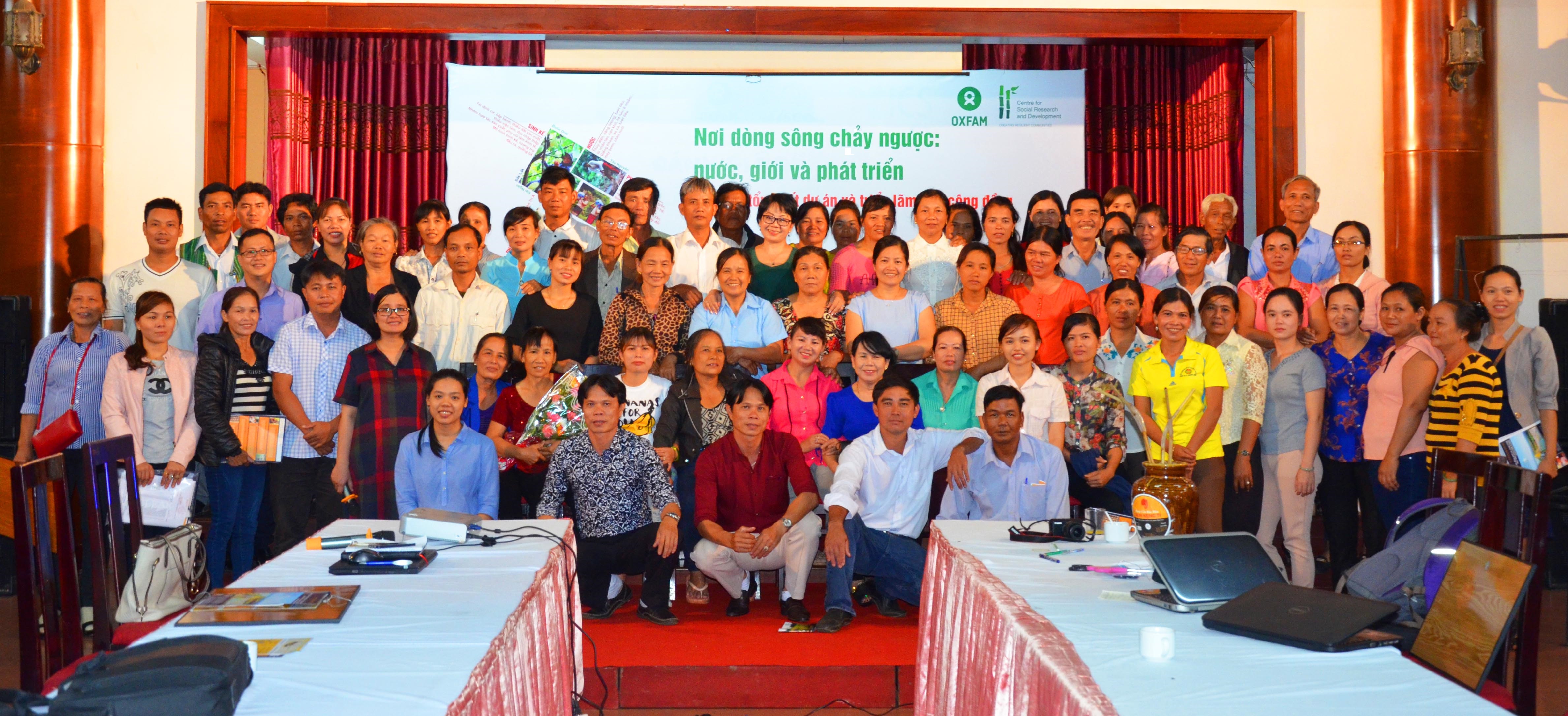
Ngày 23/6/2017, trong hội thảo “Nơi dòng sông chảy ngược: Nước, giới và phát triển” tổng kết dự án “Đánh giá tác động giới từ các công trình thủy điện trên sông Srepok” do Oxfam tài trợ, tổ chức tại TP Buôn Ma Thuột, Trung tâm Nghiên cứu và Phát triển xã hội (CSRD) trao giải Ảnh đẹp cho nhiều tác giả nông dân đã được dự án tặng máy ảnh, hướng dẫn cách chụp để tự kể về câu chuyện của cộng đồng qua ảnh, góp hơn 100 ảnh để triển lãm, in sách.

Các nhóm nông dân được dự án tài trợ chụp ảnh lưu niệm cùng đại biểu

Tiếp tục đọc “Nông dân đổi nghề vì năng lượng trên sông Srepok”

Lazard’s Levelized Cost of Energy Analysis – December 2016

Summary Considerations

Lazard has conducted this study comparing the levelized cost of energy for various conventional and Alternative Energy generation technologies in order to understand which Alternative Energy generation technologies may be cost – competitive with conventional generation technologies, either now or in the future, and under various operating assumptions, as well as to understand which technologies are best suited for various applications based on locational requirements, dispatch characteristics and other factors. We find that Alternative Energy technologies are complementary to conventional generation
technologies, and believe that their use will be increasingly prevalent for a variety of reasons, including RPS requirements, carbon regulations, continually improving economics as underlying technologies improve and production volumes increase, and government subsidies in certain regions.

In this study, Lazard’s approach was to determine the levelized cost of energy, on a $/MWh basis, that would provide an after – tax IRR to equity holders equal to an assumed cost of equity capital. Certain assumptions (e.g., required debt and equity returns, capital structure, etc.) were identical for all technologies, in order to isolate the effects of key differentiated inputs such as investment costs, capacity factors, operating costs, fuel costs (where relevant) and other important metrics on the levelized cost of energy. These inputs were originally developed with a leading consulting and engineering firm to the Power & Energy Industry, augmented with Lazard’s commercial knowledge where relevant. This study (as well as previous versions) has benefited from additional input from a wide variety of industry participants.

Lazard has not manipulated capital costs or capital structure for various technologies, as the goal of the study was to compare the current state of various generation technologies, rather than the benefits of financial engineering. The results contained in this study would be altered by different assumptions regarding capital structure (e.g., increased use of leverage) or capital costs (e.g., a willingness to accept lower returns than those assumed herein).

Key sensitivities examined included fuel costs and tax subsidies. Other factors would also have a potentially significant effect on the results contained herein, but have not been examined in the scope of this current analysis. These additional factors, among others, could include: capacity value vs. energy value; stranded costs related to distributed generation or otherwise; network upgrade, transmission or congestion costs; integration costs; and costs of complying with various environmental
regulations (e.g., carbon emissions offsets, emissions control systems).

The analysis also does not address potential social and environmental externalities, including, for example, the social costs and rate consequences for those who cannot afford distribution generation solutions, as well as the long-term residual and societal consequences of various conventional
generation technologies that are difficult to measure (e.g., nuclear waste disposal, environmental impacts, etc.).

Download: L A Z A R D ‘ S L E V E L I Z E D C O S T O F E N E R G Y A N A L Y S I S

Hydro vs. Wind vs. Solar Power?

Linkedin

 Introduction

Electricity is energy produced by behavior of electrons and protons. Electrical energy or power is not actually or potentially supplied by nature; it has to be produced or generated by various secondary means, converting one form of energy into another. In the modern world, there is an unending need for energy to power electrical appliances, such as fans, lights, communication infrastructures, machines and computing systems, and other devices operated by electrical energy. Nowadays, power can be generated from several renewable and non-renewable energy sources, including fossil fuels, nuclear, geothermal, solar, wind, hydro, wood, biomass, and more.

Tiếp tục đọc “Hydro vs. Wind vs. Solar Power?”

Hydropower plant drowns kids

vietnamnews

Update: May, 27/2017 – 09:48

A hydropower plant in the central province of Phú Yên that opened its floodgates without warning caused the death of four students in the downstream area earlier this week, officials reported.— Photo vietnammoi.vn

PHÚ YÊN — A hydropower plant in the central province of Phú Yên that opened its floodgates without warning caused the death of four students in the downstream area earlier this week, officials reported.

The man-made flood in the current dry season was characterised as “unseen in 40 years” by Cao Minh Hoà, deputy secretary of Sơn Hoà District’s Party Committee.

The remark was made in a meeting with inspection group sent by the Ministry of Industry and Trade (MoIT) to hydropower plant Ba Hạ River, a member of the state-owned Việt Nam Electricity (EVN), following the May 24 incident. Tiếp tục đọc “Hydropower plant drowns kids”

Đắk Lắk scraps plans for 17 hydropower plants

Môi trườngvietnamnews Update: May, 16/2017 – 18:00

The removal of hydropower projects and potential sites is because most of them are located in forest areas, meaning hydropower plant construction would seriously affect forest resources and local ecology.—VNA/VNS Photo

Viet Nam News HÀ NỘI — Authorities in the Central Highlands province of Đắk Lắk have made the decision to scrap plans for constructing 17 small and medium hydropower plants with total capacity of 27.4 megawatts.

The province has also axed 69 sites which have potential to become future stations, with combined capacity totalling 117 megawatts.

The move comes following the Prime Minister’s directive to close natural forests in the Central Highlands to deal with climate change during the 2016-2020 period, Đắk Lắk vice chairman Y Giang Gry Nie Knong said. Tiếp tục đọc “Đắk Lắk scraps plans for 17 hydropower plants”

Năng lượng Gió và Mặt trời: Cơ hội và triển vọng cho Việt Nam

Renewable Energy Network – Wind and Solar Energy: opportunities and perspectives for Vietnam

Gặp gỡ lần thứ 2 của Cộng đồng Năng lượng Tái tạo

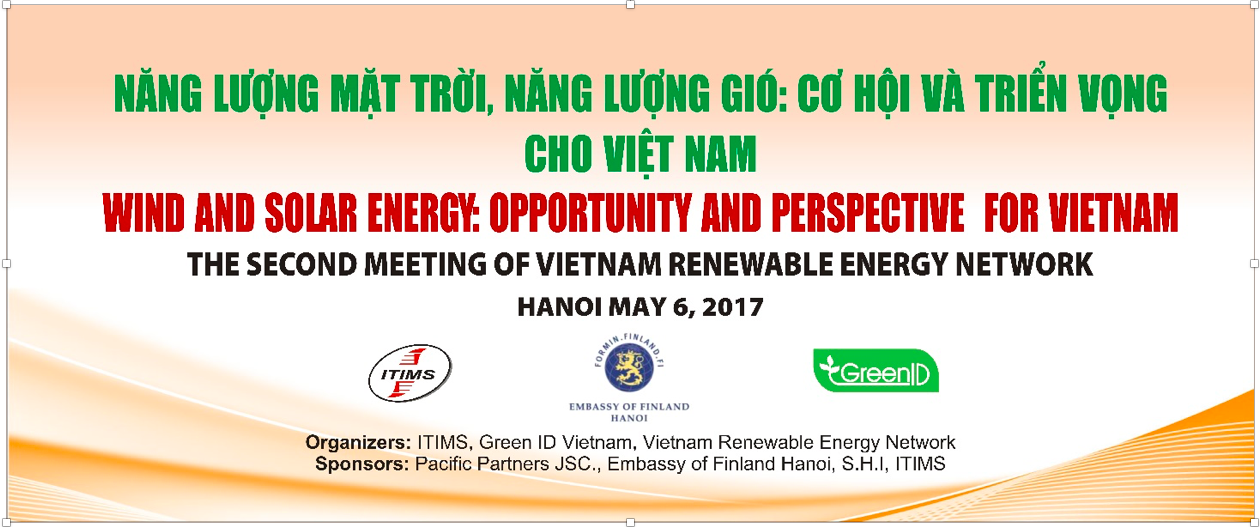
Ngày 6/5 tại Hà Nội, đã diễn ra cuộc Gặp gỡ lần thứ 2 của cộng đồng năng lượng tái tạo Việt Nam (The second Meeting of Vietnam Renewable Energy Network). Sự kiện này có sự góp mặt của các nhà hoạch định chính sách, nhà sản xuất, lắp đặt, vận hành, cung cấp và các nhà khoa học. Cuộc gặp gỡ được tổ chức nhằm 01) làm rõ một số chính sách, định hướng của cơ quan quản lý về năng lượng tái tạo nói chung, năng lượng mặt trời nói riêng, những tác động của chính sách này tới sản xuất, nghiên cứu khoa học và nguồn nhân lực trình độ cao; 02) tìm kiếm đối tác đầu tư, triển khai lắp đặt, vận hành và bảo hành bảo trì; 03) cập nhật thông tin về tình hình công nghệ và khoa học trên thế giới và trong nước; 04) thảo luận về cơ hội nghề nghiêp, về khả năng tổ chức khóa học ngắn hạn về năng lượng tái tạo nói chung cho các bên có nhu cầu tại Việt Nam.

Chính sách mới được ban hành đang theo hướng có lợi cho NLTT

Tiếp tục đọc “Năng lượng Gió và Mặt trời: Cơ hội và triển vọng cho Việt Nam”